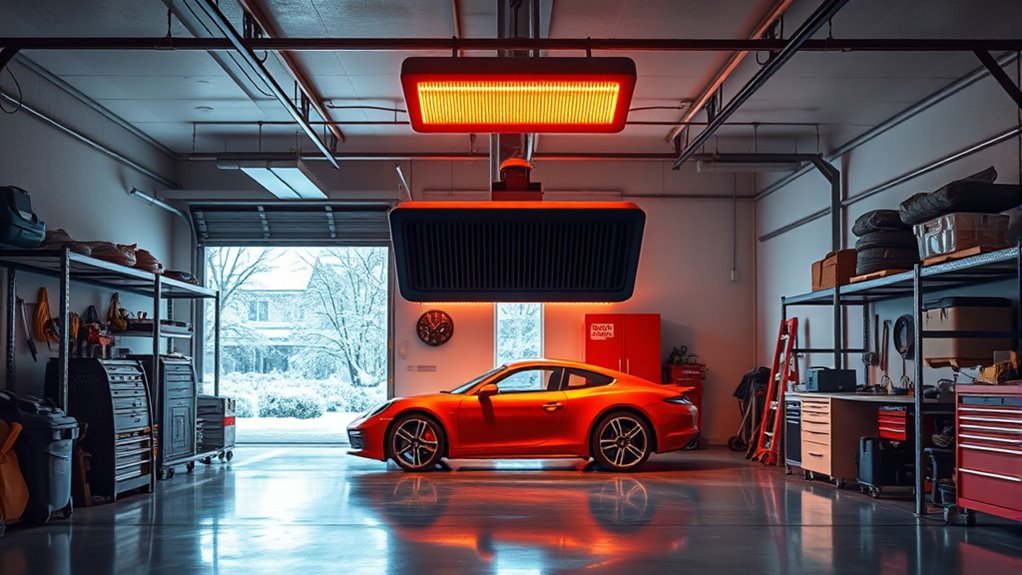

For a garage heater for cold climates, my best overall pick is the TEMPWARE 7500W Electric Garage Heater with WiFi App Control, which pairs high-output 240V heating with app control. The Mr. Heater Big Maxx is a strong alternative for buyers who want a permanently installed gas unit, while the CAMMOO 85,000 BTU heater suits temporary, powerful heat where fuel-heater ventilation is practical. The main tradeoffs are installation requirements, operating fuel, heat coverage, and whether you need steady warmth or quick spot heating. Smaller electric wall and ceiling heaters are easier to fit into select spaces but may not suit a large, poorly insulated garage during prolonged cold. Read on for the full comparison and guidance on matching a heater to your garage.

Get your wardrobe favorites delivered free with Prime
- Fast, free delivery on millions of items
- Prime Video, Amazon Music and more included
- Member-only deals all year
Key Takeaways
- The TEMPWARE and InoKraft 7,500W electric heaters are the strongest choices here for buyers with 240V service who want substantial electric heat; app control separates TEMPWARE, while the other model keeps the focus on straightforward high output.
- The Mr. Heater Big Maxx is a different kind of commitment: its 50,000 BTU forced-air design can suit a garage needing sustained heat, but installation and fuel-system planning make it less plug-and-play than electric options.
- Portable fuel heaters trade installation convenience for ventilation and fuel handling. The CAMMOO kerosene model and InoKraft propane model are better treated as task or temporary heat choices than unattended, sealed-room solutions.
- The 1,500W Heat Storm and 120V Shinic ceiling heater fit smaller or targeted heating needs. Their lower electrical demands can simplify placement, but they are not direct substitutes for a high-output 240V heater in a large, very cold garage.
- Mounting and heat delivery matter as much as headline output. Infrared models such as the Dr. Infrared DR-239 warm people and surfaces directly, while forced-air and electric garage units distribute heat differently; insulation and ceiling height affect the result.
| Dr. Infrared Heater DR-239 3000W Indoor/Outdoor Infrared Patio Heater |  | Best for Exposed or Damp Garage Areas | Power: 3000 W | Heat output: 10,260 BTU | Voltage: 220–240 V | VIEW ON AMAZON | See Our Full Breakdown |
| Heat Storm HS-1500-PHX-WIFI Wi-Fi Infrared Wall Heater |  | Best for Small, Insulated Garages | Power: 1500 W | Heat output: 5200 BTU | Voltage: 110 V | VIEW ON AMAZON | See Our Full Breakdown |
| Shinic 120V Ceiling-Mount Electric Garage Heater with Remote |  | Best for a Compact Workbench Zone | Voltage: 120 V | Power settings: 750 W and 1500 W | Heating element: Dual quartz radiant tubes | VIEW ON AMAZON | See Our Full Breakdown |
| CAMMOO 85,000 BTU Portable Forced-Air Kerosene Heater |  | Best for Large, Unheated Garages | Heat output: 85,000 BTU | Coverage: Up to 2,200 sq. ft. | Fuel type: Kerosene | VIEW ON AMAZON | See Our Full Breakdown |
| InoKraft MAXHEAT MH68 68,000 BTU Forced Air Propane Heater |  | Best Portable Propane Pick | Heat output: 30,000–68,000 BTU | Coverage: Up to 1,600 sq. ft. | Fuel type: Propane | VIEW ON AMAZON | See Our Full Breakdown |
| TEMPWARE 7500W Electric Garage Heater with WiFi App Control |  | Best for App-Based Control | Voltage: 240V | Power: 5,000–7,500W | Heat output: 25,590 BTU | VIEW ON AMAZON | See Our Full Breakdown |
| Mr. Heater Big Maxx 50,000 BTU Forced-Air Unit Heater |  | Best for Large, Gas-Ready Garages | Model: F260550 | Heat output: 50,000 BTU | Stated coverage: Up to 1,667 sq. ft. | VIEW ON AMAZON | See Our Full Breakdown |
| InoKraft 7,500W Electric Garage Heater, 240V |  | Best for Flexible Mounting | Model: IK05088001 | Power and voltage: 7,500W; 240V | Amperage: 31.25A | VIEW ON AMAZON | See Our Full Breakdown |
| Omberr 4000W Electric Garage Heater, 240V, Yellow |  | Best Compact Hardwired Pick | Model: GHA40 | Heat output: 4,000W | Voltage and amperage: 240V; 16.6A | VIEW ON AMAZON | See Our Full Breakdown |
| garage heater for cold climate | Heat output | Mounting |
|---|---|---|
| Dr. Infrared Heater DR-239 300 | 10,260 BTU | Wall or ceiling |
| Heat Storm HS-1500-PHX-WIFI Wi | 5200 BTU | Wall mount |
| Shinic 120V Ceiling-Mount Elec | — | Ceiling or wall |
| CAMMOO 85,000 BTU Portable For | 85,000 BTU | — |
| InoKraft MAXHEAT MH68 68,000 B | 30,000–68,000 BTU | — |
| TEMPWARE 7500W Electric Garage | 25,590 BTU | — |
| Mr. Heater Big Maxx 50,000 BTU | 50,000 BTU | Ceiling mount |
| InoKraft 7,500W Electric Garag | — | Wall or ceiling |
| Omberr 4000W Electric Garage H | 4,000W | — |
More Details on Our Top Picks
Dr. Infrared Heater DR-239 3000W Indoor/Outdoor Infrared Patio Heater
For a garage that gets cold without being fully enclosed, I’d favor the DR-239’s 10,260 BTU radiant output and IP55 weather resistance over the smaller Heat Storm HS-1500-PHX-WIFI. Radiant heat warms people and nearby objects directly, so it can feel useful quickly without relying on heating all the surrounding air. Its wall- or ceiling-mounting options keep the heater out of the way, and the remote and two power levels make adjustments easier once installed.
The tradeoff is a firm electrical requirement: this unit needs 220–240 V, unlike the 110 V Heat Storm. It is also a fixed installation rather than a heater to roll between work areas. I’d choose it for a damp or partly exposed garage with suitable wiring, not as a whole-garage air heater for a large, drafty space.
Pros:- IP55 weather-resistant aluminum construction suits indoor and outdoor locations.
- 10,260 BTU radiant output provides direct heat to people and objects.
- Wall or ceiling mounting keeps floor and work surfaces clear.
- Remote, two power levels, overheat protection, and automatic shut-off are included.
Cons:- Requires a 220–240 V power supply, limiting use where only standard outlets are available.
- Fixed mounting makes it less adaptable than the portable CAMMOO kerosene heater.
- Radiant heat is directional and may not warm an entire large, drafty garage evenly.
Best for: Owners of damp or partly exposed garages with 220–240 V wiring who want mounted radiant heat over a workbench or vehicle bay.
Not ideal for: Renters or owners without a 220–240 V circuit, and anyone who needs a portable heater or broad whole-room air heating.
- Power:3000 W
- Heat output:10,260 BTU
- Voltage:220–240 V
- Heating method:Radiant infrared
- Weather resistance:IP55
- Mounting:Wall or ceiling
- Dimensions:41.2 × 3.4 × 5.9 in
- Safety certification:ETL listed
Our verdict“Choose the DR-239 for mounted, weather-resistant radiant warmth when your garage has the required 220–240 V supply.”
Heat Storm HS-1500-PHX-WIFI Wi-Fi Infrared Wall Heater
The Heat Storm HS-1500-PHX-WIFI is a sensible pick when I want zone heat without using floor space. Its 1500 W infrared output is aimed at a primary area of up to 150 sq. ft. in a well-insulated room, making it a closer fit for a compact workshop than the 85,000 BTU CAMMOO, which is designed for much larger spaces and uses fuel. Wi-Fi schedules, a digital thermostat, and a remote give this wall-mounted unit convenient control for a regular work routine.
That convenience does not change its limited heating reach: the listed 750 sq. ft. figure is for supplemental heating, not primary heat. Unlike the 3000 W Dr. Infrared DR-239, it uses 110 V, but its output is also lower. The wall-mounted version has no feet, so I’d skip it if I need to move the heater or heat a cold, poorly insulated garage.
Pros:- Wi-Fi controls allow temperature changes and heating schedules from a phone.
- Wall mounting preserves floor space in a compact work area.
- Digital thermostat and remote provide two ways to adjust operation.
- 110 V operation avoids the 220–240 V requirement of the Dr. Infrared DR-239.
Cons:- Primary heating coverage is limited to up to 150 sq. ft. in a well-insulated room.
- The wall-mounted version does not include feet for freestanding use.
- Its 5200 BTU output is a poor match for a large or poorly insulated garage.
Best for: People with a well-insulated garage or dedicated work area up to about 150 sq. ft. who want scheduled, app-controlled zone heating.
Not ideal for: Owners of large, drafty garages or anyone needing a portable unit; the wall-mounted model has no feet and its primary coverage is limited.
- Power:1500 W
- Heat output:5200 BTU
- Voltage:110 V
- Heating method:Infrared
- Primary heating coverage:Up to 150 sq. ft. in a well-insulated room
- Supplemental heating coverage:Up to 750 sq. ft.
- Mounting:Wall mount
- Dimensions:4 × 19 × 16 in
Our verdict“Pick the Heat Storm for scheduled, space-saving supplemental heat in a small, insulated garage rather than as a cold-climate whole-garage heater.”
Shinic 120V Ceiling-Mount Electric Garage Heater with Remote
The Shinic stands out for a garage work area where I want directed radiant heat and task lighting in one mounted unit. Its dual quartz tubes and two power settings let me choose between 750 W and 1500 W, while the head can angle up to 90° toward a bench or other occupied spot. The built-in halogen light adds practical visibility. Compared with the Heat Storm HS-1500-PHX-WIFI, the Shinic gives up app scheduling but adds adjustable direction and a work light; compared with the Dr. Infrared DR-239, it uses a standard 120 V supply and offers lower maximum power.
The listed 200–300 sq. ft. coverage should not be read as uniform whole-garage warmth: radiant heat is strongest in its path. It mounts on a wall or ceiling, so it is not a portable floor heater, and the remote batteries are not included. I’d choose it for a defined work zone, not for evenly heating a large, cold garage.
Pros:- Two power settings, 750 W and 1500 W, allow a choice of heat level.
- Adjustable angle helps direct radiant warmth toward a work area.
- Built-in halogen light combines heat and task illumination.
- ETL listing, overheat protection, and a grounded plug add practical safety features.
Cons:- Radiant warmth is strongest for people and objects directly in front of the heater.
- Wall or ceiling mounting limits portability and placement changes.
- Remote batteries are not included.
Best for: DIYers working at a fixed bench in a compact garage who want adjustable radiant direction and a built-in light from a 120 V unit.
Not ideal for: People seeking even whole-garage heat, app-based scheduling, or a heater they can move around; its radiant output is directional and it requires mounting.
- Voltage:120 V
- Power settings:750 W and 1500 W
- Heating element:Dual quartz radiant tubes
- Heating coverage:200–300 sq. ft.
- Adjustable angle:Up to 90°
- Mounting:Ceiling or wall
- Features:Halogen work light, remote, indicator lights, overheat protection
- Certification:ETL listed
Our verdict“Choose the Shinic for a mounted, directional workbench heater with a light, but not for broad, even heat across a cold garage.”
CAMMOO 85,000 BTU Portable Forced-Air Kerosene Heater
For a large garage that starts out very cold, the CAMMOO’s 85,000 BTU forced-air output and listed coverage up to 2,200 sq. ft. make it the strongest scale match in this group. Unlike the wall-mounted Heat Storm or the directional Shinic, it is built to push heated air through a much larger space. Its wheels and handle help reposition the 32.2-pound unit, while the adjustable thermostat can cycle heat between the listed 40°F and 110°F settings rather than relying only on manual switching.
The added capacity comes with a different operating burden: this is a fuel-burning heater, not a plug-in electric option like the Dr. Infrared DR-239. It uses a 5-gallon tank and recommends 1-K kerosene; diesel requires extra fresh-air ventilation, and fuels must not be mixed. I’d reserve it for suitably ventilated, spacious garages where portability and high output matter more than quiet, fume-free operation.
Pros:- 85,000 BTU output is suited to spaces listed up to 2,200 sq. ft.
- Adjustable thermostat cycles heat automatically within its stated temperature range.
- Wheels and handle make the unit easier to reposition than mounted electric heaters.
- Flame-sensing and overheat protections provide automatic shutdown safeguards.
Cons:- Requires fuel handling and a 5-gallon tank, unlike the electric models in this lineup.
- Diesel use requires extra fresh-air ventilation; 1-K kerosene is recommended.
- Fuel types must not be mixed, and combustion heating is unsuitable for spaces without appropriate ventilation.
Best for: Owners of large, unheated garages who need portable high-output heat and can follow the fuel and fresh-air ventilation requirements.
Not ideal for: Small, enclosed, or poorly ventilated garages, and buyers who want quiet, fume-free electric heat without fuel handling.
- Heat output:85,000 BTU
- Coverage:Up to 2,200 sq. ft.
- Fuel type:Kerosene
- Recommended fuel:1-K kerosene
- Temperature settings:40°F to 110°F
- Tank capacity:5 gallons
- Weight:32.2 lb
- Certification:ETL
Our verdict“Choose the CAMMOO when a large, ventilated garage needs portable, high-output heat and kerosene operation fits your setup.”
InoKraft MAXHEAT MH68 68,000 BTU Forced Air Propane Heater
The InoKraft MAXHEAT MH68 offers a useful middle ground for a cold garage that needs more reach than the electric wall heaters but not the CAMMOO’s 85,000 BTU output. Its adjustable 30,000–68,000 BTU range lets the user tune output for spaces listed up to 1,600 sq. ft., and the tilt head helps direct forced air toward a work zone. The included 10-foot hose and regulator reduce the need to source those parts separately. Compared with the CAMMOO, this model runs on propane rather than kerosene and has lower maximum output; compared with the Dr. Infrared DR-239, it is portable but requires fuel and ventilation.
This is not a plug-in-only solution: it needs a 20 lb. propane tank or larger, AC power, and well-ventilated use. Its forced-air design also suits buyers who value broader air movement more than the quiet, direct radiant warmth of the Shinic. I’d skip it for an enclosed garage where combustion heat cannot be used safely.
Pros:- Adjustable 30,000–68,000 BTU output offers more control than a single-output heater.
- Rated for spaces up to 1,600 sq. ft., exceeding the small-zone reach of the Heat Storm.
- Included 10-foot hose and regulator simplify connection to a propane tank.
- Adjustable tilt, overheat auto-shutoff, and gas leak auto-cutoff are included.
Cons:- Requires a 20 lb. propane tank or larger, which adds fuel storage and handling.
- Needs AC power despite using propane for heat.
- Requires well-ventilated use, so it is not suitable for every enclosed garage.
Best for: Owners of medium-to-large garages who want adjustable forced-air heat, can provide AC power and ventilation, and already use or can accommodate a 20 lb. propane tank.
Not ideal for: People who need fume-free heat in a closed garage, lack an AC outlet, or want a compact wall-mounted heater without a fuel tank.
- Heat output:30,000–68,000 BTU
- Coverage:Up to 1,600 sq. ft.
- Fuel type:Propane
- Heating method:Forced air
- Power source:AC
- Included accessories:10 ft hose and regulator
- Safety features:Overheat auto-shutoff and gas leak auto-cutoff
- Certification:CSA certified
Our verdict“Choose the MAXHEAT MH68 for adjustable portable heat in a ventilated garage when propane access and AC power are available.”
TEMPWARE 7500W Electric Garage Heater with WiFi App Control
The TEMPWARE GR7500ERNEMASC-EC suits a cold-climate garage where adjustable output and control from across the room matter. Its 5,000–7,500W range and stated coverage of up to 1,250 sq. ft. give it more reach than the InoKraft 7,500W, which is rated for 750 sq. ft.; actual warmth will still depend on insulation, ceiling height, and outdoor temperatures. WiFi, remote, and touch controls let you change settings without climbing to a ceiling-mounted unit, while ECO mode and a 12-hour timer add scheduling flexibility. The included NEMA 14-50P cord and plug simplify connection only if a compatible 240V outlet is already available. Compared with the Mr. Heater Big Maxx, this avoids gas venting but offers less stated coverage and depends on electricity. It also needs ceiling installation and a suitable high-capacity circuit.
Pros:- Adjustable 5,000–7,500W output and stated coverage up to 1,250 sq. ft.
- WiFi app, remote, and touch-panel controls provide several ways to adjust settings.
- Includes an 8.2-foot cord and NEMA 14-50P plug for a compatible outlet.
- ECO mode, digital thermostat, and 12-hour timer support scheduled temperature control.
Cons:- Requires a compatible 240V outlet and electrical capacity for its high output.
- Ceiling mounting is required for the intended installation.
- Its electric heat is less suited than the gas-fired Big Maxx to garages without dependable electrical capacity.
Best for: Owners of insulated or moderately insulated garages up to the stated coverage who already have a compatible 240V outlet and want app or remote control.
Not ideal for: Buyers without a 240V NEMA 14-50 outlet, anyone unable to mount a heater on the ceiling, or people heating a large, poorly insulated space through severe cold.
- Voltage:240V
- Power:5,000–7,500W
- Heat output:25,590 BTU
- Stated coverage:Up to 1,250 sq. ft.
- Thermostat range:45°F–95°F
- Controls:WiFi app, remote, and touch panel
- Mounting and plug:Ceiling mount; NEMA 14-50P
- Safety:Automatic overheat protection
Our verdict“Choose the TEMPWARE if your garage has a suitable 240V outlet and you want high output with app-based control rather than gas venting.”
Mr. Heater Big Maxx 50,000 BTU Forced-Air Unit Heater
For a large cold-climate garage with fuel access and proper venting, the Mr. Heater Big Maxx F260550 offers a different scale of heating from the electric picks. Its 50,000 BTU output and stated coverage up to 1,667 sq. ft. exceed the TEMPWARE’s listed 1,250 sq. ft. and the InoKraft’s 750 sq. ft., making it the strongest fit here for a spacious workshop. The included conversion kit supports natural gas or propane, and vertical or horizontal venting gives installers options. That capacity comes with substantial installation constraints: the heater needs at least 8 feet of clearance below and a minimum 10-foot ceiling, and a thermostat is not included. Unlike the plug-in electric TEMPWARE, it requires fuel connections and venting; it also needs 120V AC power. Its stated coverage is not a promise of uniform warmth in a drafty or poorly insulated building.
Pros:- 50,000 BTU forced-air output with stated coverage up to 1,667 sq. ft.
- Includes a conversion kit for natural gas or propane.
- Supports vertical or horizontal venting.
- Angle brackets for ceiling mounting are included.
Cons:- Requires at least 8 feet of clearance below the heater and a minimum 10-foot ceiling.
- A compatible thermostat must be purchased separately.
- Gas connections, venting, and 120V AC power make installation more involved than the electric TEMPWARE or InoKraft.
Best for: Owners of large garages or workshops with natural gas or propane access, adequate ceiling height, and the ability to arrange proper venting and installation.
Not ideal for: Low-ceiling garages, renters, or buyers seeking a simple plug-in setup; skip it if you do not want to source a thermostat or manage gas venting.
- Model:F260550
- Heat output:50,000 BTU
- Stated coverage:Up to 1,667 sq. ft.
- Fuel:Natural gas; includes natural-gas-to-propane conversion kit
- Mounting:Ceiling mount
- Venting:Vertical or horizontal
- Clearance:At least 8 ft below heater; minimum 10 ft ceiling height
- Thermostat compatibility:Standard 24V or WiFi-enabled thermostat; sold separately
- Safety:High-temperature safety shut-off and flame sensor
Our verdict“Pick the Big Maxx for a large, properly vented gas-ready garage; choose an electric model if simpler fuel-free installation matters more than coverage.”
InoKraft 7,500W Electric Garage Heater, 240V
The InoKraft IK05088001 is a practical choice when a garage needs fixed electric heat but its layout does not dictate a ceiling-only installation. It supports wall or ceiling mounting, with adjustable airflow direction to help aim warmth toward a work area. Its stated 750 sq. ft. coverage is notably narrower than the TEMPWARE’s 1,250 sq. ft., despite both listing 7,500W maximum output; buyers should not treat wattage alone as a measure of cold-weather coverage. The 40°F–99°F thermostat range, ECO mode, and 1–24-hour timer offer useful control, and the included NEMA 14-50P cord avoids a hardwired-only design. However, its 240V, 31.25A requirement calls for professional electrical installation according to the product information. At a stated 65 dB, fan noise may also be noticeable in a quiet workspace.
Pros:- Wall or ceiling mounting gives more placement flexibility than the ceiling-only TEMPWARE.
- Adjustable airflow direction helps target heat toward a work area.
- Digital thermostat, ECO mode, and a 1–24-hour timer support temperature and run-time control.
- Includes an 8.2-foot cord with NEMA 14-50P plug.
Cons:- Stated coverage is 750 sq. ft., less than the TEMPWARE’s listed 1,250 sq. ft.
- Requires a 240V supply and professional electrical installation.
- The listed 65 dB noise level may be distracting in quieter workspaces.
Best for: DIYers and workshop owners with a suitable 240V supply who want a 7,500W fixed heater that can be mounted on a wall or ceiling and aimed toward a work zone.
Not ideal for: People without 240V service, buyers needing coverage beyond the stated 750 sq. ft., or anyone seeking a quiet heater for an adjacent living area.
- Model:IK05088001
- Power and voltage:7,500W; 240V
- Amperage:31.25A
- Stated coverage:750 sq. ft.
- Temperature range:40°F–99°F
- Mounting:Wall or ceiling
- Timer:1–24 hours
- Plug and cord:NEMA 14-50P; 8.2 ft.
- Safety:Overheat protection and automatic shut-off
Our verdict“Choose the InoKraft over the ceiling-only TEMPWARE when flexible mounting matters and 750 sq. ft. of stated coverage is enough.”
Omberr 4000W Electric Garage Heater, 240V, Yellow
The Omberr GHA40 is the compact, lower-output option in this group, suited to a defined work area rather than a large, cold-soaked garage. Its 4,000W output is well below the 7,500W TEMPWARE and InoKraft, so it is the more restrained choice for a smaller space or supplemental heat—not the pick for broad coverage in severe cold. A widened outlet, adjustable louvers, and tilting mount let users direct airflow, while the remote and 0.5–9-hour timer make adjustments easier once it is installed. The product describes graphene elements as supporting quick heat conduction, but gives no coverage figure, so I would not infer room size from that claim. Unlike the cord-and-plug electric models, this heater is hardwired and requires 240V installation; its compact form does not remove that electrical work.
Pros:- Compact 13.3-pound design with a stated height of 7.6 inches.
- Adjustable louvers and mounting angle help direct airflow toward a work area.
- Remote control and a 0.5–9-hour timer allow adjustments without reaching the unit.
- Overheat protection stops heating above 95°C while the fan continues to cool the unit.
Cons:- At 4,000W, it has less output than the 7,500W TEMPWARE and InoKraft.
- No heating-coverage figure is provided, making cold-weather sizing harder.
- Requires hardwired 240V installation and has no included plug.
Best for: Owners of a smaller garage or focused work zone who need a compact ceiling-mounted heater and can arrange hardwired 240V installation.
Not ideal for: Buyers who need a stated coverage rating, broad high-output heating for a large cold garage, or a plug-in heater they can connect to an existing outlet.
- Model:GHA40
- Heat output:4,000W
- Voltage and amperage:240V; 16.6A
- Installation:Hardwired; ceiling mount
- Temperature setting:40°F–90°F
- Timer:0.5–9 hours
- Airflow adjustment:Louver adjustment 0–130°; wall-mount angle 0–40.5°
- Dimensions and weight:7.6 × 21.73 × 5.43 in.; 13.3 lb
- Overheat behavior:Stops heating above 95°C while fan continues running
Our verdict“Choose the Omberr for compact, directed heat in a smaller work zone if hardwired 240V installation is acceptable.”

How We Picked
I ranked these heaters around the problems cold-climate garage owners actually face: reaching a useful temperature, maintaining warmth during long cold spells, and matching the heater to available power or fuel. I compared output class and heat-delivery style alongside installation demands, controls, mounting options, portability, and the practical limits of each design. A high BTU figure or wattage alone does not make a heater the best fit if the garage lacks the required circuit, ventilation, or fuel setup.
The order favors models that can serve as a primary heat source for a typical garage when correctly sized and installed, then distinguishes options by convenience and specialized use. The TEMPWARE leads for its combination of high electric output and app control; the Mr. Heater Big Maxx ranks highly for sustained gas heat, with added installation complexity. Portable fuel models and lower-output electric heaters rank lower for whole-garage heating in severe cold, but remain useful for specific layouts, temporary work, or localized warmth. I treat safety, installation, and operating conditions as part of performance rather than fine print.
| garage heater for cold climate | Mounting |
|---|---|
| Dr. Infrared Heater DR-239 300 | Wall or ceiling |
| Heat Storm HS-1500-PHX-WIFI Wi | Wall mount |
| Shinic 120V Ceiling-Mount Elec | Ceiling or wall |
| CAMMOO 85,000 BTU Portable For | — |
| InoKraft MAXHEAT MH68 68,000 B | — |
| TEMPWARE 7500W Electric Garage | — |
| Mr. Heater Big Maxx 50,000 BTU | Ceiling mount |
| InoKraft 7,500W Electric Garag | Wall or ceiling |
| Omberr 4000W Electric Garage H | — |
Factors to Consider When Choosing Garage Heater For Cold Climates
Before choosing a model, decide how you will use the garage and what the building can support. The right heater for a short workshop session can be a poor fit for keeping a two-car garage warm every day. These factors help narrow the field beyond wattage or BTU claims.
Size the heater for the building, not just the floor area
Garage area is only a starting point; ceiling height, insulation, air leakage, and outdoor temperatures all change the heating load. A tall, drafty garage can lose heat faster than a smaller insulated one, so copying a wattage or BTU recommendation from another space can lead to disappointing results. Note whether the goal is to raise the temperature quickly for a work session or hold a modest temperature through the day. If possible, use a heating-load estimate that accounts for local winter design temperatures and the garage envelope. Oversizing can cause uneven or short-cycling heat, while undersizing may leave the heater running without catching up.
Check electrical capacity before buying an electric heater
A 240V heater needs a compatible circuit, wiring, and often professional installation; a standard 120V outlet cannot simply power a high-wattage unit. Check the heater nameplate and installation manual against the panel, breaker, wire gauge, and receptacle or hardwired connection. Do not assume that an empty breaker position means the electrical service has enough capacity. Also account for other large loads, such as a compressor or EV charger, that may run at the same time. If adding a circuit is outside your plans, a lower-output 120V heater may be easier to deploy, though its heating reach will be more limited.
Treat fuel and ventilation as a system decision
Propane and kerosene forced-air heaters can deliver substantial heat without a large electric circuit, but fuel storage, refueling, exhaust, and ventilation become part of everyday use. Follow the manual’s clearance and ventilation instructions, and never use a fuel-burning heater in a way the manufacturer prohibits. Combustion heaters can introduce exhaust and moisture, a poor combination for a closed garage or a space with paints and solvents. A vented, installed gas unit has different requirements from a portable forced-air heater, so do not treat them as interchangeable. If you need a heater running while the garage is unattended, favor a model and installation explicitly suited to that use.
Choose heat delivery for the work you do
Forced-air heaters move warmth through a space, which can help when you want the general garage temperature to rise. Infrared heaters direct energy toward people and nearby surfaces, making them useful for a workbench or occupied zone even when heating the whole room is inefficient. Ceiling and wall mounting can free floor space and reduce the chance of bumps, but placement determines whether warmth reaches the area where you work. Air movement may be welcome in a large garage yet irritating around dust, finishing work, or lightweight materials. Match the delivery style to your routines rather than assuming every heater warms the room in the same way.
Plan controls, placement, and clearances together
Thermostats, timers, and app controls can make regular heating easier, but they do not compensate for poor placement or inadequate capacity. A thermostat near a warm ceiling or close to the heater may read a different temperature from the workbench area. Check required clearances from vehicles, shelving, stored fuel, and combustible materials, along with mounting height and directional limits. Remote controls are most useful when the heater is mounted out of reach; app control can help with scheduling, but depends on a suitable network and setup. Keep access for cleaning and service in the plan so a convenient location does not become difficult to maintain.
Pay for capacity or convenience only when it solves your problem
Higher-output units, app-connected controls, and permanently installed gas systems can justify extra complexity when the garage sees frequent use or needs dependable heat through severe winters. For occasional projects, a portable or targeted heater may better match the hours of operation, even if it will not warm every corner. Compare the full setup, including a new electrical circuit, gas-line work, fuel, and any required ventilation, rather than focusing only on the heater itself. A well-insulated door and sealed gaps can reduce the load and improve comfort regardless of the model. Prioritize capacity for cold-weather recovery; prioritize controls and installation quality when the heater will run as part of a regular routine.
Frequently Asked Questions
Can a 120V garage heater keep a two-car garage warm in severe winter weather?
It may provide useful warmth in a small, insulated garage or a limited work area, but a 120V heater is generally a constrained choice for a large, drafty space in prolonged cold. Results depend on heat loss, ceiling height, and how much temperature rise you expect. A heater can make a bench area more comfortable without bringing the whole garage to indoor-room temperature. If whole-space heating is the goal, compare the required output with what a dedicated 240V circuit or fuel system can support. Improving insulation and sealing drafts can help, but does not turn a low-output heater into a high-capacity one.
Should I choose a portable propane or kerosene heater instead of a fixed electric unit?
Choose a portable fuel heater when temporary high-output heat and portability matter more than simple, unattended operation. You will need to manage fuel, follow ventilation instructions, and respect clearances every time it runs. A fixed electric heater avoids combustion exhaust at the point of use, but high-output models require suitable electrical service and may need professional wiring. A vented gas unit is another category, with installation needs of its own. The better choice depends on the garage’s utilities, how often you heat it, and whether your intended use matches the manufacturer’s safety directions.
Is infrared heat a good choice if I do not need to heat the entire garage?
Infrared can be a sensible match for a person who stays near a workbench or a defined task area because it warms people and nearby objects directly. That can feel useful before the whole room’s air has warmed, especially during short work sessions. It is less suited to buyers expecting uniform warmth across a large garage or around multiple work areas. Placement and line of sight matter, and the heater still needs its specified mounting clearances. For broad, sustained heating, compare it with a higher-output forced-air or garage-rated electric unit.
Do I need a 240V circuit for a cold-climate garage heater?
Not for every heater, but the higher-output electric models in this roundup use 240V and need a compatible, correctly sized circuit. That electrical work can be a major part of the purchase decision, especially if the panel has limited spare capacity. A 120V model avoids that particular upgrade but offers less heating output, so it may not meet whole-garage needs during severe cold. Have an electrician check the panel and wiring before ordering a hardwired or high-wattage unit. Never adapt a plug or circuit beyond the heater’s stated requirements.
What should I improve first if my garage heater runs constantly but the room stays cold?
Check for heat loss before assuming the heater is defective: gaps around the garage door, an uninsulated door, and air leaks can overwhelm a heater in cold weather. Verify that the heater is sized for the space and that its thermostat is not in a misleading location. Confirm that airflow or infrared coverage reaches the area you want to warm, and keep required clearances unobstructed. For a fuel-burning model, follow the manual’s operating and ventilation rules rather than blocking openings to retain heat. If the building remains very cold after these checks, reassess the heating load and whether a higher-capacity or different installation type is needed.
Conclusion
Best overall: I’d choose the TEMPWARE 7500W Electric Garage Heater with WiFi App Control for a buyer with suitable 240V service who wants high electric output and app control. Best value: the InoKraft 7,500W Electric Garage Heater is the straightforward high-output alternative for buyers who do not need app features. Best premium: the Mr. Heater Big Maxx makes sense for a garage that needs sustained forced-air gas heat and can support a properly installed gas system. Best for beginners: the Heat Storm HS-1500-PHX-WIFI is a more approachable option for modest, targeted heating where 120V power is preferred, though I would not pick it to heat a large garage through severe cold. For specific needs, choose the Dr. Infrared DR-239 for localized radiant warmth, the Shinic for ceiling-mounted 120V use, or the CAMMOO and InoKraft portable fuel models when temporary heat and careful ventilation fit the job. Match the heater to the garage’s insulation, utilities, and daily use before deciding.
Halloween Picks
halloween
As an affiliate, we earn on qualifying purchases.