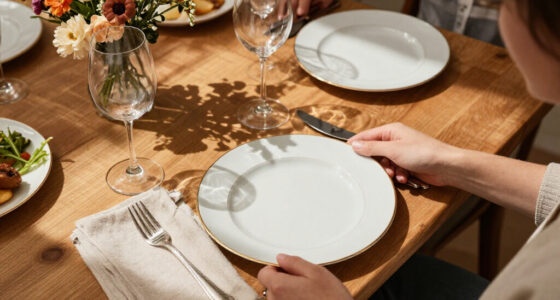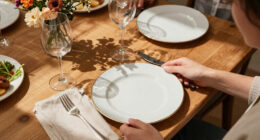
Choosing an elegant dinnerware set often comes down to a practical style decision: do you want the light, refined look of porcelain, or the weight and relaxed character of stoneware? Both can make a table feel considered, and both come in designs that work beyond special occasions. Their differences show up in handling, appearance, care, and price.

Get your wardrobe favorites delivered free with Prime
- Fast, free delivery on millions of items
- Prime Video, Amazon Music and more included
- Member-only deals all year

Joseph Sedgh Collection Romantic Bloom Bone China Dinnerware Set, 57-Piece
- ✔ Material: Bone china
- ✔ Service size: 8 people
- ✔ Piece count: 57

BrylaneHome Medici 40-Piece Golden Porcelain Dinnerware Set
- ✔ Material: Porcelain
- ✔ Service size: 8 people
- ✔ Piece count: 40

Mikasa Trellis Gold 12-Piece Bone China Dinnerware Set
- ✔ Material: Bone china
- ✔ Service size: 4 people
- ✔ Piece count: 12
Porcelain dinnerware sets suit buyers who want a crisp, versatile backdrop for dinner parties and daily meals alike. Stoneware sets appeal to those who prefer an earthy, substantial look and want a more casual table at a lower typical price. The right choice depends less on which material sounds more formal and more on how you eat, store, wash, and entertain.
At a Glance
| Criteria | Porcelain dinnerware sets | Stoneware dinnerware sets | Winner |
|---|---|---|---|
| Appearance and formality | Fine, smooth finish with a light, refined presentation | Textured, earthy finish with a relaxed, substantial presentation | A |
| Weight and handling | Usually lighter and easier to lift or stack | Usually heavier and more solid in hand | A |
| Durability in daily use | Often durable, though thin pieces can chip if struck | Sturdy feel, but glaze chips and utensil marks can occur | Depends |
| Care and convenience | Many sets are dishwasher and microwave safe; check the maker’s guidance | Often dishwasher and microwave safe; heavier pieces take more space | A |
| Design versatility | Works with both formal settings and simple everyday styling | Best suited to casual, rustic, or contemporary tables | A |
| Typical value | Usually costs more; worthwhile for a polished look and broad use | Often less expensive; strong value for an informal everyday set | B |
Joseph Sedgh Collection Romantic Bloom Bone China Dinnerware Set, 57-Piece
For shoppers who want an elegant set to do more than cover the basic place settings, Romantic Bloom is the broadest choice here. Its light-blue trim, floral pattern, and delicate gold accents give the table a more ornate character than the restrained border on BrylaneHome Medici or the geometric trellis on Mikasa. The set is listed for eight people and includes a 14-inch serving platter, salad bowl, salt and pepper dispensers, and a 1,200 ml teapot, which makes it better equipped for a hosted meal than either smaller, plate-and-bowl-focused alternative.Those extras matter when we want serving pieces to feel coordinated with the place settings. The 10.5-inch dinner plates and 8-inch salad plates cover familiar meal portions, while the 8.5-inch soup plates and 5.5-inch bowls give the assortment more range. It is also the only option in this comparison described as dishwasher-safe, a practical advantage over the hand-wash-only BrylaneHome and Mikasa sets.The tradeoff is that this is a large, decorative collection, and its gold accents call for thoughtful handling over time. Bone china can be more fragile than stoneware or porcelain, according to the supplied product details, so it may not suit a household that wants robust, informal tableware above all. Choose it when a floral, fully coordinated table and service for eight matter more than a minimalist look or a compact cupboard footprint.
Pros:
- 57 pieces provide a broad assortment for service to eight.
- Includes a serving platter, salad bowl, salt and pepper dispensers, and teapot.
- Floral pattern, light-blue trim, and gold accents create a more decorative look than the other two sets.
- Listed as dishwasher-safe and BPA-free.
Cons:
- Bone china may be more fragile than stoneware or porcelain.
- Gold trim may need careful handling to help avoid scratching over time.
Best for: Hosts who want a floral bone-china service for eight with coordinated serving pieces and a teapot.
Not ideal for: Buyers who prefer minimalist tableware, need especially rugged everyday dishes, or want to avoid gold-accent care considerations.
Bottom line: Choose Romantic Bloom when we want the most complete and decorative service for eight, and can give its bone china and gold accents considerate care.
“Choose Romantic Bloom when we want the most complete and decorative service for eight, and can give its bone china and gold accents considerate care.”
BrylaneHome Medici 40-Piece Golden Porcelain Dinnerware Set
BrylaneHome Medici suits a buyer who wants a traditional gold-border table without the floral detail of Joseph Sedgh or the crosshatched pattern of Mikasa. The classic motif keeps the look formal and orderly, and the 40-piece assortment serves eight. For a holiday meal or a dining room where a coordinated, understated border feels more appropriate than an all-over pattern, this set has a distinct place in the lineup.Its listed pieces include dinner plates, salad plates, soup bowls, saucers, and cups, so it reads as a conventional place-setting service. The 10.5-inch dinner plate matches Joseph Sedgh’s diameter, while the 7.5-inch salad plate is slightly smaller than Joseph’s 8-inch plate and Mikasa’s 9-inch version. That makes Medici’s presentation comparatively compact at the salad course. The porcelain construction also separates it from the two bone-china sets.The main compromise is daily convenience. Hand wash only and not microwave safe means cleanup and reheating require more thought than with the dishwasher-safe Joseph Sedgh set. Mikasa has similar care limitations, but its smaller four-person scope serves a different need. Medici makes most sense when a full service for eight and a classic gold edge lead the decision; we should skip it if quick cleanup or microwave use is central to our routine.
Pros:
- 40-piece set is listed to serve eight.
- Classic gold-border motif offers a quieter look than Joseph Sedgh’s floral decoration.
- Includes cups and saucers as well as plates and soup bowls.
- Porcelain construction provides an alternative to the bone china options.
Cons:
- Hand washing is required.
- Not microwave-safe, limiting reheating convenience.
Best for: Households that want a conventional gold-bordered place-setting service for eight for formal dinners and holidays.
Not ideal for: Buyers who rely on dishwasher cleanup or want to reheat food directly on their dinnerware in a microwave.
Bottom line: Medici is the sensible classic choice for a full table of eight when we accept hand washing and keeping the dishes out of the microwave.
“Medici is the sensible classic choice for a full table of eight when we accept hand washing and keeping the dishes out of the microwave.”
Mikasa Trellis Gold 12-Piece Bone China Dinnerware Set
Mikasa Trellis Gold is the focused option for a household that wants an elegant look for four without taking on a large hosting set. Its crisp white bone china, crosshatched trellis pattern, and gold borders create a more structured, geometric table than Joseph Sedgh’s flowers. Compared with BrylaneHome’s traditional border, the trellis gives the decoration more visual texture while keeping the overall palette restrained.The 12 pieces are the essentials listed for four: dinner plates, salad plates, and soup and cereal bowls. At 11 inches, its dinner plate is larger than the 10.5-inch plates in the other two sets; its 9-inch salad plate is also the largest listed here. That can suit generous portions and a more open plate presentation, but the set does not include the cups, saucers, or serving pieces found in the larger assortments. It is therefore compact in scope, rather than a small version of a complete hosting service.Mikasa is described as chip-resistant and lightweight, appealing qualities for a refined set intended to be handled regularly. But its care instructions are the least forgiving in practical terms: hand wash with mild detergent, rinse, and dry immediately. Like Medici, it is not microwave-safe. Choose it for a four-person table where its geometric design and proportions are the draw; look to Joseph Sedgh or Medici if we need one purchase to cover a gathering of eight.
Pros:
- 12-piece set supplies dinner plates, salad plates, and bowls for four.
- Lightweight bone china and a crosshatched trellis pattern distinguish it from the floral and classic-border designs.
- Listed as chip-resistant.
- Largest listed dinner and salad plate diameters in this comparison.
Cons:
- Hand washing, rinsing, and immediate drying are recommended.
- Not microwave-safe.
- No cups, saucers, or serving pieces are listed in the set.
Best for: A household of four seeking lightweight bone china with a crisp white, geometric gold-accented design.
Not ideal for: Hosts who need service for more than four or buyers who want dishwasher and microwave convenience.
Bottom line: Trellis Gold is a polished, smaller-scale choice for four when we value its geometric bone-china look more than hosting capacity or easy-care flexibility.
“Trellis Gold is a polished, smaller-scale choice for four when we value its geometric bone-china look more than hosting capacity or easy-care flexibility.”
As an Amazon Associate we earn from qualifying purchases.
Key Differences
Porcelain wins on visual range. Its smooth, often bright surface reads as elegant without requiring ornate decoration, so the same plates can suit a weekday dinner or a more formal gathering. It is typically lighter than stoneware, which makes serving, carrying, and stacking easier. The difference is moderate rather than absolute: patterned porcelain can be quite formal, while simple white stoneware can look restrained.
Stoneware wins on approachable value and tactile presence. Its weight and often varied glaze give the table a grounded, handmade feel, and a complete set commonly costs less than a comparable porcelain set. That heft can feel reassuring, but it also takes up more cupboard space and can be tiring when carrying several pieces. Neither material is immune to chips or scratches, so actual longevity depends on construction, glaze, handling, and the maker’s care instructions.
For a single set that needs to move between ordinary meals and guests, porcelain is the stronger all-round choice. Stoneware makes more sense when casual style and lower upfront cost matter more than easy handling or a formal finish. Paying extra for porcelain is justified when its lighter feel and polished presentation will get regular use; it is harder to justify if the set will mostly serve relaxed meals and its appearance is the only upgrade.
Detailed Comparison
Appearance and formality (Porcelain dinnerware sets wins — moderate)
Porcelain has the edge for a polished, adaptable table. Its smooth surface and lighter visual profile pair easily with cloth napkins, glassware, or simple linens, and plain designs can feel elegant without looking ornate. Stoneware brings more texture and visual weight, which suits a relaxed or rustic setting. The gap is moderate: finish and color matter as much as material, but porcelain is easier to dress up.
Weight and handling (Porcelain dinnerware sets wins — moderate)
Porcelain usually wins because its pieces tend to be lighter and easier to carry, stack, and pass around. Stoneware’s heavier plates can feel substantial, but a full load from the dishwasher or a stack of bowls is less convenient. This is a minor difference for occasional use and a moderate one for older users, children, or anyone who handles dishes frequently.
Durability in daily use (moderate difference)
Neither material takes a clear overall win. Stoneware’s thickness can make it feel robust, while porcelain can be durable despite its finer appearance. Both can chip from hard impacts, and a damaged glaze changes how a piece should be used. The practical choice is to compare construction and warranty details, rather than assume heavier means unbreakable or finer means fragile. The gap is minor without specific product evidence.
Care and convenience (Porcelain dinnerware sets wins — minor)
Porcelain has a small advantage because lighter pieces are easier to load, unload, and store. Many porcelain and stoneware sets are labeled dishwasher and microwave safe, but that is product-specific; metallic trim, reactive finishes, and manufacturer restrictions can change the answer. Confirm the care label before buying. If both sets meet your appliance needs, handling gives porcelain the modest win.
Design versatility (Porcelain dinnerware sets wins — moderate)
Porcelain is more versatile across occasions. A neutral set can support a formal meal, a family lunch, or seasonal accents without changing the base setting. Stoneware is especially effective for relaxed meals and contemporary or rustic styling, but its weightier look may feel less suited to some formal tables. The advantage is moderate for households that entertain in different styles.
Typical value (Stoneware dinnerware sets wins — moderate)
Stoneware usually wins on upfront value: it often provides a substantial-looking set at a lower price. Porcelain asks buyers to pay more for a lighter feel and a more refined presentation. The price gap is only meaningful if those qualities matter in regular use. For frequent entertaining or one set serving many occasions, porcelain can earn its premium; for casual daily meals, stoneware is often the better buy.
Porcelain dinnerware sets: Pros and Cons
Pros:
- Polished look works for everyday meals and formal gatherings
- Typically lighter and easier to carry or stack
- Neutral designs pair readily with varied table linens and serving pieces
Cons:
- Often costs more than a comparable stoneware set
- Thin or delicate-feeling pieces may concern buyers who prefer heft
- Durability and appliance safety still vary by product
Stoneware dinnerware sets: Pros and Cons
Pros:
- Relaxed, tactile style suits casual and rustic tables
- Heavier feel can be appealing and substantial
- Often offers a lower-cost route to a coordinated set
Cons:
- Weight can make handling and storage less convenient
- Visual style may be harder to dress up for formal occasions
- Glaze and surface can show chips or utensil marks with use
Who Should Choose What
Choose Porcelain dinnerware sets if:
- You want one set for weeknight dinners and more formal hosting
- Lightweight pieces and easy stacking matter to you
- You prefer a clean, refined look that works with changing decor
Choose Stoneware dinnerware sets if:
- Your meals are mostly casual and you like an earthy, substantial table
- You want to spend less on a coordinated set
- You value tactile character more than lighter handling
Skip both if: Skip both if you need dishes specifically proven for heavy-duty commercial use, or if you have strict requirements for impact resistance, oven use, or specialized care that a particular set cannot document.
Value for Money
Stoneware is usually the better value when the priority is a coordinated set for casual meals at a lower upfront cost. Its visual weight and texture can make an everyday table feel complete without paying a premium for a fine, polished finish.
Porcelain is worth paying more for when you will use the set across different occasions and appreciate lighter handling. Its value comes from versatility and presentation, not a guarantee that it will outlast every stoneware set. Compare the number of place settings, replacement-piece availability, care instructions, and return terms before judging price alone.
Final Verdict
Choose porcelain for the best all-purpose elegant dinnerware set. It is the stronger fit for households that want a polished table, lighter pieces, and a look that can move from ordinary dinners to hosting. Choose stoneware if your style is deliberately casual and its lower price and substantial feel matter more than easy handling.
The biggest deciding factor is whether the set needs to serve formal and everyday occasions with equal ease. If yes, porcelain earns its higher typical price. If the table is mostly relaxed and budget is the priority, stoneware is the sensible buy. Check each product’s care guidance and construction before committing; material alone does not settle durability.
Frequently Asked Questions
Is porcelain more elegant than stoneware?
Porcelain more often reads as formal because of its smooth finish and lighter profile. Stoneware can also look elegant, especially in simple colors, but its texture and heft usually create a more relaxed impression.
Which is better for everyday use?
Either can work for daily meals if the specific set suits your appliances and care routine. Porcelain is easier to handle and style across occasions; stoneware is a good fit when you prefer a casual look and heavier pieces.
Does stoneware last longer than porcelain?
Not automatically. Stoneware often feels thicker, while porcelain can be durable despite its refined appearance. Both can chip or scratch, so check the product construction, care instructions, and replacement availability.
Is porcelain worth the higher price?
It is worth paying more if you will use its polished look and lighter handling regularly, especially for a set that serves both daily meals and guests. For mostly casual dining, stoneware is often better value.