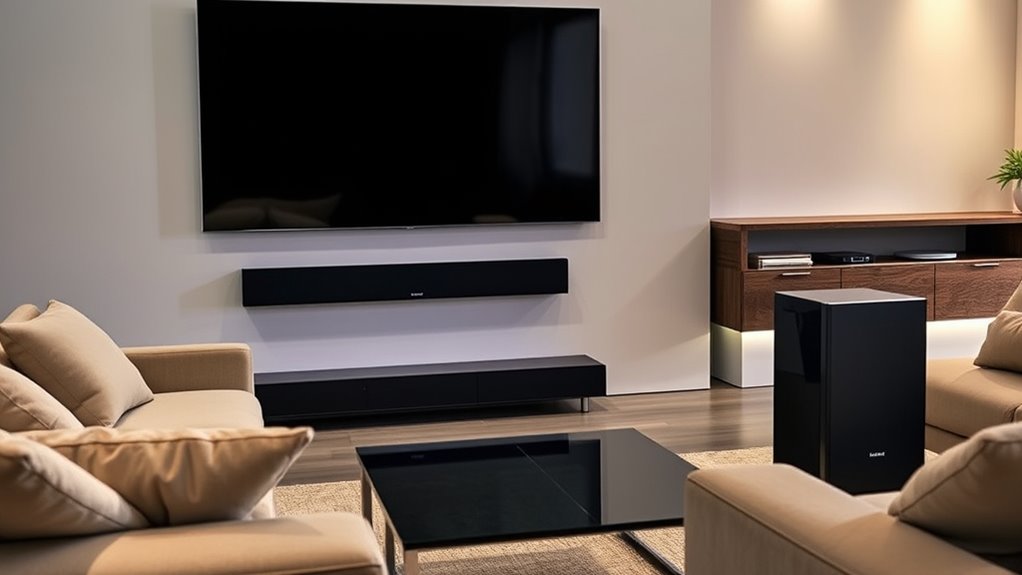

When shopping for soundbars with subwoofers, the key tradeoffs usually revolve around sound quality, ease of setup, and price. The best overall pick, the Hisense HS2100, combines Dolby Audio and DTS Virtual:X for immersive sound at a reasonable price. For a more premium experience, the LG S40TR offers rear surround speakers and AI sound optimization, but comes with a higher cost. Budget-conscious buyers might prefer the Samsung HW-B400F with a built-in subwoofer and simple setup. Keep reading to see how these options compare and find the best fit for your needs.

Get your wardrobe favorites delivered free with Prime
- Fast, free delivery on millions of items
- Prime Video, Amazon Music and more included
- Member-only deals all year
Key Takeaways
- The top models balance sound quality with ease of use, often including smart features like voice enhancement or app control.
- Wireless subwoofers tend to offer more flexible placement options, but may add to overall cost compared to built-in subwoofers.
- Dolby Atmos and DTS:X support are more common in higher-end models, providing more immersive surround sound experiences.
- Price often correlates with features — more expensive models typically include rear speakers, better connectivity, and advanced sound processing.
- Compatibility with existing TV setups and remote controls can significantly impact ease of integration and daily usability.
| Hisense HS2100 2.1ch Soundbar with Wireless Subwoofer |  | Best Basic All-Rounder | Channels: 2.1 | Peak power: 240W maximum | Speaker configuration: Two front-facing speakers and one wireless subwoofer | VIEW ON AMAZON | See Our Full Breakdown |
| ULTIMEA Poseidon M60 5.1CH Soundbar with Subwoofer |  | Best for Sound Customization | Channels: 5.1 | Power output: 300W | Driver configuration: Five full-range drivers and one wired wooden subwoofer | VIEW ON AMAZON | See Our Full Breakdown |
| Polk Audio Signa S2 Sound Bar with Wireless Subwoofer |  | Best for Dialogue | Driver array: Five full-range drivers | Soundbar height: Just over 2 inches | Subwoofer: Wireless | VIEW ON AMAZON | See Our Full Breakdown |
| Saiyin Sound Bar with 5-Inch Subwoofer |  | Best for PCs and Older TVs | Subwoofer driver: 5 inches | Bass enclosure: Dual bass-reflex ports | Sound dispersion: 28 degrees | VIEW ON AMAZON | See Our Full Breakdown |
| Samsung HW-B550F 2.1ch Soundbar with Wireless Subwoofer |  | Best Automatic Tuning | Channels: 2.1 | Subwoofer: Included wireless subwoofer | Spatial processing: DTS Virtual:X | VIEW ON AMAZON | See Our Full Breakdown |
| Saiyin 100W Detachable Soundbar with 5-Inch Subwoofer |  | Best Convertible Design | System Power: 100W | Subwoofer: 5-inch | Speaker Design: Detachable soundbar or two tower speakers | VIEW ON AMAZON | See Our Full Breakdown |
| JBL Bar 2.1 Deep Bass (MK2) | 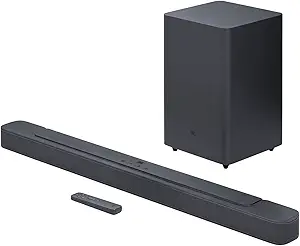 | Best for Big Bass | Channel Configuration: 2.1-channel | Maximum System Output: 300W | Subwoofer: 6.5-inch wireless | VIEW ON AMAZON | See Our Full Breakdown |
| ULTIMEA Poseidon M30 Soundbar with Wireless Subwoofer |  | Best App Control | Channel Configuration: 2.1-channel | Peak Output: 240W | Subwoofer: Wireless, 6.5 L tuned cabinet | VIEW ON AMAZON | See Our Full Breakdown |
| LG S40TR 4.1-Channel Soundbar System |  | Best True Surround | Channel Configuration: 4.1-channel | Subwoofer: Wireless | Rear Speakers: Included with wireless connectivity | VIEW ON AMAZON | See Our Full Breakdown |
| Samsung HW-B630F 3.1-Channel Soundbar |  | Best Dialogue Clarity | Channel Configuration: 3.1-channel | Center Channel: Dedicated | Subwoofer: Wireless | VIEW ON AMAZON | See Our Full Breakdown |
| LG S60T 3.1 ch. Soundbar with Wireless Subwoofer, Dolby Audio, TV Synergy, Wow Interface, AI Sound Pro |  | Best Overall for Cinematic Sound and Smart Features | Audio Channels: 3.1 | Wireless Subwoofer: Yes | Dolby Audio: Yes | VIEW ON AMAZON | See Our Full Breakdown |
| Samsung B-Series Soundbar HW B400F 2.0 ch Soundbar with Built in Subwoofer (2025 Model) |  | Best Value for Balanced Sound with Built-in Subwoofer | Audio Channels: 2.0 | Built-in Subwoofer: Yes | Voice Enhance Mode: Yes | VIEW ON AMAZON | See Our Full Breakdown |
| Sony HT-S400 2.1ch Soundbar with Powerful Wireless subwoofer, S-Force PRO Front Surround Sound, and Dolby Digital, Black |  | Best for Effortless Surround with Wireless Subwoofer and Easy Setup | Audio Channels: 2.1 | Wireless Subwoofer: Yes | Dolby Digital: Yes | VIEW ON AMAZON | See Our Full Breakdown |
| Sony BRAVIA Theater Bar 5, 3.1 Channel Home Theater Soundbar for TV with Powerful Wireless Subwoofer, Surround Sound by Dolby Atmos® & DTS:X®, Bluetooth, HT-B500, 2026 Model |  | Best for True Immersive Cinema Experience with Atmos and DTS:X | Audio Channels: 3.1 | Dolby Atmos: Yes | Wireless Subwoofer: Yes | VIEW ON AMAZON | See Our Full Breakdown |
| soundbars with subwoofer | Subwoofer |
|---|---|
| Hisense HS2100 2.1ch Soundbar | — |
| ULTIMEA Poseidon M60 5.1CH Sou | — |
| Polk Audio Signa S2 Sound Bar | Wireless |
| Saiyin Sound Bar with 5-Inch S | — |
| Samsung HW-B550F 2.1ch Soundba | Included wireless subwoofer |
| Saiyin 100W Detachable Soundba | 5-inch |
| JBL Bar 2.1 Deep Bass | 6.5-inch wireless |
| ULTIMEA Poseidon M30 Soundbar | Wireless, 6.5 L tuned cabinet |
| LG S40TR 4.1-Channel Soundbar | Wireless |
| Samsung HW-B630F 3.1-Channel S | Wireless |
| LG S60T 3.1 ch. Soundbar with | — |
| Samsung B-Series Soundbar HW B | — |
| Sony HT-S400 2.1ch Soundbar wi | — |
| Sony BRAVIA Theater Bar 5 | — |
More Details on Our Top Picks
Hisense HS2100 2.1ch Soundbar with Wireless Subwoofer
I rank the Hisense HS2100 as the best basic all-rounder because it combines a wireless subwoofer, 240W peak output, and HDMI ARC without pushing buyers toward a larger multichannel system. Compared with the Polk Audio Signa S2, it offers DTS Virtual:X and six listening modes, giving movies and games more spatial scale and allowing quicker tonal changes. The Polk remains the smarter choice when dialogue control and a slimmer bar matter more. The Samsung HW-B550F’s adaptive processing also asks for less manual adjustment. I place the Hisense ahead on accessible features, not realism: its 2.1 layout cannot create true rear effects, and the subwoofer still needs a nearby power outlet. Buyers seeking eARC, app tuning, or dedicated surround speakers should move up the list.
Pros:- 240W peak output gives movies and games more impact than typical TV speakers
- Wireless subwoofer allows flexible placement without an audio cable
- DTS Virtual:X broadens the presentation from a simple 2.1 layout
- HDMI ARC cable and six EQ modes support a quick, adaptable setup
Cons:- Virtual processing cannot reproduce true rear-channel sound
- No app-based EQ or detailed manual frequency controls are listed
- The wireless subwoofer still requires its own power connection
Best for: I recommend this for first-time soundbar buyers who want stronger bass, HDMI ARC, and useful sound modes without adding rear speakers.
Not ideal for: I would skip this for home-theater enthusiasts who want physical surround channels, app-based EQ, or HDMI eARC.
- Channels:2.1
- Peak power:240W maximum
- Speaker configuration:Two front-facing speakers and one wireless subwoofer
- Spatial processing:DTS Virtual:X
- Audio format:Dolby Audio
- TV connection:HDMI ARC; HDMI cable included
- Wireless connection:Bluetooth 5.3
- EQ modes:Six presets
- Control:Included remote with EZ Play support
Our verdict“I recommend the Hisense HS2100 as a balanced first upgrade for buyers who want capable bass and spatial processing without surround-system complexity.”
ULTIMEA Poseidon M60 5.1CH Soundbar with Subwoofer
I place the ULTIMEA Poseidon M60 highest for buyers who want maximum control over surround and bass without stepping into the Sony BRAVIA Theater Bar 5 tier. Its 5.1 layout, 300W output, Dolby Atmos, and HDMI eARC give films more scale than the 2.1 Hisense HS2100, while VoiceMX targets dialogue that can get buried under effects. The real separator is the 10-band EQ, 121 presets, and 13 surround levels; I see that flexibility as valuable for mixed rooms and varied content, but excessive for someone who wants one-button setup. The wired wooden subwoofer can deliver a firm low end, yet its cable narrows placement choices. Although Atmos adds height cues, the LG S40TR’s separate rear speakers remain the better route to physical rear-channel sound.
Pros:- 5.1-channel Dolby Atmos presentation offers more scale than basic 2.1 systems
- 10-band EQ and 121 presets provide unusually deep sound customization
- VoiceMX supports clearer speech during effects-heavy scenes
- HDMI eARC and Bluetooth 5.4 provide current connection options
Cons:- Wired subwoofer limits placement and adds a visible cable
- Large menu of presets and surround levels can complicate setup
- Integrated 5.1 arrangement cannot match the rear placement of separate surround speakers
Best for: I recommend this for home-theater tinkerers who want Atmos, eARC, and extensive app control over EQ, bass, voices, and surround intensity.
Not ideal for: I would skip this for buyers who dislike app setup, have limited floor space, or need a wireless subwoofer that can sit away from the bar.
- Channels:5.1
- Power output:300W
- Driver configuration:Five full-range drivers and one wired wooden subwoofer
- Frequency response:45 Hz–18 kHz
- Maximum SPL:99 dB
- Surround format:Dolby Atmos
- Connectivity:HDMI eARC, CEC, and Bluetooth 5.4
- App controls:10-band graphic EQ, 121 presets, and 13 surround levels
- Model year:2026
Our verdict“I recommend the Poseidon M60 to buyers who value Atmos and detailed app tuning more than wireless subwoofer placement or one-button simplicity.”
Polk Audio Signa S2 Sound Bar with Wireless Subwoofer
I rank the Polk Audio Signa S2 as the best dialogue-focused slim option. VoiceAdjust gives speech its own tuning priority, which can be more useful for news, dramas, and late-night viewing than the Hisense HS2100’s broader EQ presets. At just over two inches tall, the bar is also less likely to block a TV or its IR sensor, and the wireless subwoofer keeps bass placement flexible. Compared with the Samsung HW-B550F, though, Polk relies on manual dialogue adjustment rather than content-aware Adaptive Sound, and its listed features omit the Samsung’s DTS Virtual:X processing. I also see HDMI ARC and Dolby Digital decoding as straightforward rather than future-facing; buyers building an Atmos system should skip it. This pick earns its place by making voices and setup simple, not by offering the widest sound field or deepest control.
Pros:- VoiceAdjust provides dedicated control over dialogue prominence
- Bar height of just over two inches suits low-clearance TV setups
- Wireless subwoofer adds bass without an audio cable across the room
- Included HDMI and optical cables simplify initial installation
Cons:- No Dolby Atmos or DTS Virtual:X support is listed
- HDMI ARC is less capable than the eARC connection on newer models
- Sound customization is limited compared with app-controlled alternatives
Best for: I recommend this for dialogue-focused viewers with a low TV stand who need a slim bar that will not obstruct the screen or remote sensor.
Not ideal for: I would skip this for Atmos buyers, app-based EQ enthusiasts, or gamers seeking a more expansive virtual-surround presentation.
- Driver array:Five full-range drivers
- Soundbar height:Just over 2 inches
- Subwoofer:Wireless
- Dialogue technology:Polk VoiceAdjust
- Audio decoding:Dolby Digital
- Wired inputs:HDMI ARC, optical, and AUX
- Wireless streaming:Bluetooth
- Placement:Tabletop or wall-mounted
- Included cables:HDMI and optical
Our verdict“I recommend the Polk Signa S2 for speech-heavy viewing and tight TV stands, provided Atmos and extensive EQ controls are not priorities.”
Saiyin Sound Bar with 5-Inch Subwoofer
I position the Saiyin Sound Bar as the best choice for a PC, bedroom, or older TV, where optical, AUX, and Bluetooth 5.3 matter more than HDMI control. Its 5-inch subwoofer and dual bass-reflex ports offer a more substantial bass path than a TV alone, while the visible volume and bass indicator removes guesswork during adjustment. Against the Hisense HS2100, however, Saiyin gives up HDMI ARC, Dolby Audio, DTS Virtual:X, and three extra EQ modes. That is a large gap for streaming films: I would need to set both the TV and streaming box to PCM/stereo, so this is not a plug-in answer for every source. The remote story is mixed, too; Fire TV support helps, but Roku compatibility varies and Insignia Roku TVs are excluded.
Pros:- Five-inch subwoofer with dual bass-reflex ports strengthens low-frequency output
- Optical, AUX, and Bluetooth 5.3 cover PCs and older televisions
- Volume and bass progress indicators make adjustments easy to read
- Three EQ modes provide simple tuning for news, movies, and music
Cons:- No Dolby or DTS format support; connected devices must output PCM or stereo
- No HDMI ARC connection for TV power and volume integration
- Remote compatibility varies across Roku devices and excludes Insignia Roku TVs
Best for: I recommend this for PC users and owners of older TVs who rely on optical or AUX audio and are comfortable selecting PCM output.
Not ideal for: I would skip this for Dolby or DTS streaming setups, HDMI ARC users, and households that need dependable universal-remote compatibility.
- Subwoofer driver:5 inches
- Bass enclosure:Dual bass-reflex ports
- Sound dispersion:28 degrees
- Wireless input:Bluetooth 5.3
- Wired inputs:Optical and AUX
- EQ modes:News, movie, and music
- Indicators:Three-color input light plus volume and bass progress display
- Supported audio output:PCM or stereo; Dolby and DTS are unsupported
- Remote compatibility:Fire TV supported; selected Roku remotes available by request
Our verdict“I recommend this Saiyin system for straightforward PCM-based setups where adjustable bass matters more than HDMI control or surround-format support.”
Samsung HW-B550F 2.1ch Soundbar with Wireless Subwoofer
I give the Samsung HW-B550F the best automatic sound adjustment role because Adaptive Sound changes processing with the content, while Voice Enhance and Bass Boost offer focused corrections when dialogue or impact needs help. That makes it easier to live with than the Hisense HS2100’s six manual EQ presets, especially for households that jump between sports, films, and quiet TV. Compared with the Polk Signa S2, Samsung pairs its speech aid with DTS Virtual:X for a broader virtual field and leaves a path to optional wireless rear speakers. The catch is that this remains a 2.1 system: without a dedicated center channel, dialogue separation cannot match the Samsung HW-B630F 3.1, and virtual surround does not replace physical rear channels. I rank it above simpler 2.1 bars for hands-off daily viewing.
Pros:- Adaptive Sound adjusts processing for different types of content
- Voice Enhance helps speech stand apart from background audio
- Bass Boost adds extra low-frequency impact when desired
- Optional wireless rear speakers provide a later expansion path
Cons:- Two-channel bar lacks the dedicated center speaker found in 3.1 alternatives
- DTS Virtual:X creates simulated rather than physical surround effects
- Reaching true surround sound requires an additional rear-speaker purchase
Best for: I recommend this for mixed-content households that want the soundbar to adapt automatically while retaining quick dialogue and bass controls.
Not ideal for: I would skip this for buyers who need a dedicated center channel or genuine surround sound without purchasing optional rear speakers.
- Channels:2.1
- Subwoofer:Included wireless subwoofer
- Spatial processing:DTS Virtual:X
- Automatic processing:Adaptive Sound
- Dialogue mode:Voice Enhance
- Bass mode:Bass Boost
- Surround expansion:Supports optional wireless rear speakers
- Model year:2025
Our verdict“I recommend the Samsung HW-B550F for buyers who want convenient automatic tuning and expandable 2.1 sound more than dedicated center-channel clarity.”
Saiyin 100W Detachable Soundbar with 5-Inch Subwoofer
I rank the Saiyin 100W Detachable Soundbar as the most adaptable option here. Unlike the JBL Bar 2.1, it splits into two tower speakers, producing wider stereo separation when the room permits. That layout can make music and effects feel broader, although it cannot place sounds behind me like the LG S40TR’s rear speakers. A 5-inch subwoofer and ten bass levels provide useful low-end control, while horn tweeters favor clarity and projection. Its 100W output offers less headroom than the 240W ULTIMEA Poseidon M30, making this a better fit for everyday viewing than very loud movie nights. Three DSP modes keep setup approachable, but the bass control has no visual indicator. I also find the remote compatibility limitations worth factoring into a Roku-based setup.
Pros:- Detachable design creates either one soundbar or two tower speakers
- Ten adjustable bass levels provide more control than fixed-bass systems
- Horn tweeters and dedicated driver array support clear, room-filling playback
- Five-year service coverage and lifetime accessory replacements add long-term value
Cons:- Bass level changes have no numerical or visual indicator
- 100W output has less headroom than the JBL and ULTIMEA alternatives
- Remote support excludes Insignia Roku TVs and varies with other TV brands
Best for: Buyers with medium or large rooms who want to switch between a conventional soundbar and a wider two-speaker layout
Not ideal for: Insignia Roku TV owners or listeners seeking the high-volume headroom and physical rear effects of a larger surround system
- System Power:100W
- Subwoofer:5-inch
- Speaker Design:Detachable soundbar or two tower speakers
- Main Drivers:Two silk-dome tweeters and two 53 x 83 mm woofers
- Bass Adjustment:10 levels
- DSP Modes:Movie, Music and News
- Bluetooth:Bluetooth 5.3
- Wired Inputs:HDMI ARC, optical and AUX
- Remote Compatibility:Fire TV; selected Roku remotes available on request
Our verdict“I recommend this Saiyin system when flexible speaker placement matters more than maximum output or genuine rear-channel surround.”
JBL Bar 2.1 Deep Bass (MK2)
I place the JBL Bar 2.1 Deep Bass high for buyers who want impact without adding rear speakers. Its 300W maximum output and 6.5-inch wireless subwoofer give it more stated power than the ULTIMEA Poseidon M30, while wireless placement makes the bass easier to balance around furniture. JBL Surround Sound and Dolby Digital add scale to films, yet this remains a 2.1-channel system; the LG S40TR provides more convincing directional effects through physical rear speakers. JBL also favors simplicity over experimentation. HDMI, optical and Bluetooth cover common sources, but there is no app-based 10-band EQ like ULTIMEA offers. With no dedicated center channel, dialogue may not stay as firmly anchored as it does on the Samsung HW-B630F. I see this as the straightforward bass-first choice, not the most adjustable one.
Pros:- 300W maximum system output provides substantial volume headroom
- 6.5-inch wireless subwoofer supports deep, flexible bass placement
- Dolby Digital and JBL Surround Sound broaden movie playback
- Simple HDMI, optical and Bluetooth connectivity
Cons:- No dedicated center channel for firmly anchored dialogue
- Virtual surround cannot match the LG S40TR’s physical rear speakers
- No app-based multi-band EQ is listed
Best for: Movie and music listeners who want strong room-filling bass from a simple 2.1-channel system
Not ideal for: Dialogue-focused viewers or home-theater buyers who want rear speakers, detailed EQ controls or Dolby Atmos
- Channel Configuration:2.1-channel
- Maximum System Output:300W
- Subwoofer:6.5-inch wireless
- Surround Processing:JBL Surround Sound
- Audio Format:Dolby Digital
- Wireless Streaming:Bluetooth
- TV Connections:HDMI and optical
Our verdict“I would choose the JBL when powerful bass and simple operation matter more than detailed tuning or real rear-channel surround.”
ULTIMEA Poseidon M30 Soundbar with Wireless Subwoofer
I choose the ULTIMEA Poseidon M30 for listeners who want to shape their sound rather than accept a few fixed modes. Its app supplies a 10-band equalizer and 121 preset matrices, far more adjustment than the JBL Bar 2.1 or LG S40TR. VoiceMX targets vocal frequencies, while BassMX manages the 45–150 Hz range for tighter low-end output. That combination makes the M30 easier to tailor for quiet dialogue, games or bass-heavy music. JBL counters with a higher 300W maximum rating, and the Samsung HW-B630F uses a physical center channel instead of DSP alone for dialogue placement. The M30’s wireless subwoofer and Bluetooth 6.0 support a tidy, current setup, but 2.1-channel sound remains front-focused. Its quoted 240W is also a peak figure, so it does not provide a direct comparison with systems measured under different power standards.
Pros:- 10-band EQ and 121 presets allow unusually detailed sound adjustment
- VoiceMX provides targeted dialogue processing
- BassMX combines adjustable processing with a dedicated wireless subwoofer
- Bluetooth 6.0 supports fast pairing and stable wireless streaming
Cons:- 2.1-channel design lacks dedicated center and rear speakers
- Full tuning flexibility depends on using the companion app
- Peak-power rating is difficult to compare directly with RMS-rated systems
Best for: App-comfortable viewers who want detailed EQ control for switching among films, games, music and dialogue-heavy programs
Not ideal for: Buyers who dislike app-based configuration or want physical center and rear channels for stronger positional sound
- Channel Configuration:2.1-channel
- Peak Output:240W
- Subwoofer:Wireless, 6.5 L tuned cabinet
- Frequency Response:45 Hz–18 kHz
- Maximum SPL:95 dB
- Voice Processing Range:120 Hz–6 kHz
- App EQ:10 bands with 121 preset matrices
- Bluetooth:Bluetooth 6.0
- Connections:HDMI, optical and Bluetooth
Our verdict“I recommend the Poseidon M30 to buyers who value deep app-based control more than physical surround channels.”
LG S40TR 4.1-Channel Soundbar System
I give the LG S40TR the surround-focused role because its package includes a wireless subwoofer and physical rear speakers. Compared with the Samsung HW-B630F’s DTS Virtual:X processing, LG can place effects behind the seating area instead of simulating that direction from the front. Dolby Digital and DTS Digital support suit mainstream films and television, while the Smart Up-Mixer spreads stereo sources across all four channels. This added immersion comes with more speakers to position, and Dolby Atmos is not listed. LG television owners gain the most from WOW Orchestra and WOW Interface, which combine TV and soundbar speakers while placing controls on screen. Other TV owners receive less of that integration. The app’s three-band EQ is also modest beside the ULTIMEA Poseidon M30’s 10-band system. I rank LG ahead for enveloping sound, but behind ULTIMEA for fine adjustment.
Pros:- Included rear speakers produce more convincing surround placement than virtual processing
- Wireless subwoofer adds dedicated low-frequency impact
- Dolby Digital and DTS Digital compatibility covers common television and movie audio
- WOW features provide convenient integration with compatible LG TVs
Cons:- Additional rear speakers require more room and setup effort
- Dolby Atmos support is not listed
- Three-band app EQ offers much less control than the ULTIMEA system
Best for: LG TV owners and film fans who want physical rear-channel effects without buying a receiver-based theater system
Not ideal for: Minimalist rooms, non-LG TV owners seeking full ecosystem integration or Atmos buyers who want overhead effects
- Channel Configuration:4.1-channel
- Subwoofer:Wireless
- Rear Speakers:Included with wireless connectivity
- Audio Support:Dolby Audio, Dolby Digital and DTS Digital
- Sound Processing:AI Sound Pro, Clear Voice Plus and Smart Up-Mixer
- LG TV Integration:WOW Orchestra and WOW Interface
- App Equalizer:Three-band bass, midrange and treble control
- Design:Crest design with metal grille
Our verdict“I would pick the LG S40TR for affordable physical surround, especially when pairing it with a compatible LG television.”
Samsung HW-B630F 3.1-Channel Soundbar
I rank the Samsung HW-B630F as the dialogue specialist because its dedicated center channel anchors speech at the screen. That physical channel gives it an advantage over the 2.1-channel ULTIMEA Poseidon M30, which relies on VoiceMX processing, particularly when several sounds compete in a busy scene. Adaptive Sound changes the presentation for different content, while Voice Enhance offers extra help with quiet conversations. DTS Virtual:X creates a broader field without rear speakers, keeping the system tidier than the LG S40TR; LG still wins when I want effects placed physically behind the sofa. Samsung TV owners also gain single-remote control, but that convenience is less persuasive with another television brand. The product data omits both total output and subwoofer size, making its bass capability harder to judge against the 300W JBL Bar 2.1. I favor it for speech-first viewing and low-clutter rooms.
Pros:- Dedicated center channel keeps dialogue anchored to the screen
- Voice Enhance and Adaptive Sound reduce manual mode switching
- DTS Virtual:X adds spaciousness without rear speakers
- Bluetooth multi-connection supports switching between two source devices
Cons:- Virtual surround is less directional than the LG S40TR’s physical rear channels
- Total power and subwoofer dimensions are not provided in the product data
- One Remote integration is most useful with compatible Samsung TVs
Best for: Samsung TV owners who watch dialogue-heavy dramas, news and films in rooms where rear speakers would be inconvenient
Not ideal for: Bass-focused shoppers who need published power figures or viewers seeking genuine rear-channel surround effects
- Channel Configuration:3.1-channel
- Center Channel:Dedicated
- Subwoofer:Wireless
- Spatial Audio:DTS Virtual:X
- Dialogue Feature:Voice Enhance Mode
- Automatic Processing:Adaptive Sound
- Gaming Audio:Directional processing with crosstalk noise cancellation
- Bluetooth:Multi-connection for up to two devices
- TV Control:Samsung One Remote compatibility
Our verdict“I recommend the HW-B630F when clear speech and a tidy three-channel setup outweigh the appeal of physical rear speakers.”
LG S60T 3.1 ch. Soundbar with Wireless Subwoofer, Dolby Audio, TV Synergy, Wow Interface, AI Sound Pro
The LG S60T stands out for its 3.1 channel setup, which delivers clear dialogue with a dedicated center speaker, making it a strong choice for home theater enthusiasts. Unlike the Samsung HW B400F, which offers a simpler 2.0 design, the S60T provides a richer soundstage with Dolby Audio support and AI Sound Pro, enhancing specific content types like sports and music. Its sleek crest design and metal grill add style, while the Wow Interface allows seamless control with LG TVs, reducing remote clutter. However, the setup relies heavily on LG-compatible TVs to maximize features, limiting flexibility for non-LG users. Additionally, with a weight of 18.2 pounds and a width of 33.5 inches, it may be less ideal for small spaces. Overall, this pick suits users seeking cinematic sound with smart TV integration, willing to invest in LG ecosystem benefits.
Pros:- Dedicated center channel for clear dialogue
- Dolby Audio and AI Sound Pro for enhanced content experience
- Seamless LG TV remote control integration
- Stylish crest design with dust-resistant metal grill
Cons:- Primarily optimized for LG TVs, limiting feature use with other brands
- Relatively heavy and large, less suitable for small spaces
- Limited to a 3.1 channel setup, lacking surround speakers
Best for: Owners of LG TVs who want a stylish, feature-rich soundbar with cinematic sound and smart controls
Not ideal for: Non-LG TV owners or those seeking ultra-compact setups due to its size and ecosystem focus
- Audio Channels:3.1
- Wireless Subwoofer:Yes
- Dolby Audio:Yes
- Control Method:Remote, TV Synergy
- Speaker Size:3.5 Inches
- Dimensions:3.5″D x 33.5″W x 2.5″H
Our verdict“This soundbar makes the most sense for LG TV owners looking for cinematic sound and smart features, despite size and compatibility considerations.”
Samsung B-Series Soundbar HW B400F 2.0 ch Soundbar with Built in Subwoofer (2025 Model)
The Samsung HW B400F offers a straightforward 2.0 channel setup with a built-in subwoofer, making it a practical choice for those who want rich bass without extra clutter. Compared to the Sony HT-S400, which includes a wireless subwoofer and advanced surround features, the B400F emphasizes ease of use and integrated design, ideal for smaller spaces or budget-conscious buyers. Its ability to connect seamlessly with Samsung TVs using just one remote simplifies operation, while the sound expansion features fill a room with immersive audio. Nonetheless, the 2.0 configuration limits the soundstage, especially for larger rooms or those seeking true surround effects. The built-in subwoofer, while convenient, may not deliver the same depth as dedicated wireless subwoofers. This model is best for users who prioritize simplicity and solid bass matching a tight budget.
Pros:- Built-in subwoofer for deep bass
- One remote control for Samsung TV integration
- Room-filling sound with sound expansion features
- Compact and clutter-free design
Cons:- Limited to 2.0 channels, no surround sound
- Bass depth may be less compared to wireless subwoofer setups
- Less suitable for large or open spaces
Best for: Samsung TV owners seeking a cost-effective, easy-to-use soundbar with built-in bass
Not ideal for: Audio enthusiasts wanting surround sound or larger rooms requiring more expansive soundscapes
- Audio Channels:2.0
- Built-in Subwoofer:Yes
- Voice Enhance Mode:Yes
- Connectivity:Samsung TV remote, Bluetooth
- Dimensions:Not specified
- Wireless Subwoofer:Yes
Our verdict“This model is perfect for Samsung TV users prioritizing ease of setup and balanced sound in smaller rooms or budgets.”
Sony HT-S400 2.1ch Soundbar with Powerful Wireless subwoofer, S-Force PRO Front Surround Sound, and Dolby Digital, Black
The Sony HT-S400 provides a 2.1 channel system with a wireless subwoofer, offering a simple yet immersive audio experience. Its S-Force PRO front surround creates a cinematic feel without the need for rear speakers, making it a good choice for those who want surround sound without complexity. Compared with the LG S60T, which offers more channels and smart features, the HT-S400 is more straightforward, focusing on ease of setup and solid bass. Its X-Balanced speakers enhance clarity and wide-ranging sound, while the OLED display simplifies control. However, the lack of true surround speakers limits spatial precision in larger rooms, and some users may find the bass less customizable than with dedicated subwoofers. This pick fits well for consumers seeking a sleek, easy-to-operate soundbar with good surround effects and wireless convenience.
Pros:- Wireless subwoofer for deep bass
- S-Force PRO front surround technology
- Simple, quick setup with HDMI ARC
- X-Balanced speakers for clarity
Cons:- Limited to 2.1 channels, no rear speakers
- Less precise surround positioning
- Bass may lack customization compared to multi-sub setups
Best for: Casual viewers looking for simple setup and immersive sound in medium-sized rooms
Not ideal for: Audiophiles or users wanting advanced surround sound or multi-channel configurations
- Audio Channels:2.1
- Wireless Subwoofer:Yes
- Dolby Digital:Yes
- Sound Technology:S-Force PRO
- Bluetooth:Yes
- Dimensions:Not specified
Our verdict“Ideal for users wanting a streamlined, wireless surround experience with minimal fuss and good bass in medium rooms.”
Sony BRAVIA Theater Bar 5, 3.1 Channel Home Theater Soundbar for TV with Powerful Wireless Subwoofer, Surround Sound by Dolby Atmos® & DTS:X®, Bluetooth, HT-B500, 2026 Model
The Sony HT-B500 excels in delivering an authentic cinema experience, thanks to its 3.1 channel setup with Dolby Atmos and DTS:X support. The dedicated center speaker ensures dialogue clarity, similar to the LG S60T, but with a more advanced surround technology that creates a multi-dimensional soundscape, even without rear speakers. Its wireless subwoofer enhances bass depth, and the Vertical Surround Engine provides immersive overhead sound effects, setting it apart from typical soundbars like the Sony HT-S400. The integration with Sony’s BRAVIA TVs and the intuitive BRAVIA Connect app simplifies control and setup. The only potential tradeoff is its premium price, which might not suit budget-conscious buyers. This model is tailored for cinephiles craving immersive, multi-layered sound from their home theater system.
Pros:- Dolby Atmos and DTS:X support for multi-dimensional sound
- Dedicated center channel for clear dialogue
- Wireless subwoofer for deep bass
- Vertical Surround Engine for overhead effects
Cons:- Higher price point compared to simpler soundbars
- Requires compatible Sony TV for full feature set
- Size and weight may be less suited for small rooms
Best for: Owners of Sony BRAVIA TVs or home theater enthusiasts seeking Dolby Atmos and DTS:X immersion
Not ideal for: Those with limited space or on a tight budget, as it leans toward premium features and cost
- Audio Channels:3.1
- Dolby Atmos:Yes
- Wireless Subwoofer:Yes
- DTS:X:Yes
- Connectivity:Bluetooth, HDMI eARC
- Size:Not specified
Our verdict“This soundbar is perfect for dedicated home theater setups aiming for cinema-quality surround sound with immersive overhead effects, despite its premium cost.”

How We Picked
These soundbars were evaluated based on sound quality, build durability, ease of installation, connectivity options, and value for price. Priority was given to models that deliver rich audio with meaningful subwoofer support, whether wired or wireless. We also considered user-friendly features like app control, voice enhancement, and compatibility with common TV interfaces. The ranking reflects a balance between performance, versatility, and affordability, highlighting options suitable for different budgets and usage scenarios.Factors to Consider When Choosing Soundbars With Subwoofer
Choosing the right soundbar with subwoofer requires understanding several key factors that influence your overall experience. Beyond raw sound quality, consider how the device integrates with your existing setup, the type of connectivity it offers, and your budget. Making an informed decision can prevent buyer’s remorse and ensure your home theater truly shines.Sound Quality and Soundstage
Sound quality is the foundation of a good soundbar. Look for models that support Dolby Atmos or DTS:X if you want immersive, multi-dimensional audio. The size and power of the subwoofer also influence bass depth and clarity, especially in larger rooms. Keep in mind that higher-end models often provide richer, more nuanced sound, but this can come with a higher price tag.
Connectivity and Compatibility
Ensure the soundbar supports your TV’s inputs, whether HDMI ARC, optical, or Bluetooth. Wireless options offer cleaner setups and flexible placement, particularly for subwoofers, but may introduce slight latency or interference. Compatibility with smart home systems or remote controls can enhance usability, especially if you want seamless integration with other devices or voice assistants.
Design and Size
The size and style of a soundbar should match your TV and room decor. Slim, unobtrusive designs work well in compact spaces, while larger units can house more drivers for richer sound. Consider whether you prefer a soundbar with a built-in subwoofer or one that requires an external wireless subwoofer for flexibility in placement.
Price and Value
More expensive models often include advanced features like rear speakers or room calibration, but many mid-range options deliver excellent sound for less. Beware of models that cut corners on build quality or connectivity; sometimes paying a bit more results in a significantly better experience and longer-lasting device. Always compare features against your specific needs and budget.
Ease of Setup and Use
Simpler models with fewer wires and straightforward controls are ideal for less tech-savvy users. Features like automatic room calibration, app control, and remote integration can save time and frustration. Remember, a well-placed subwoofer can make a noticeable difference, so choose a model that offers flexibility in placement if you prefer a clean look or have space constraints.
Frequently Asked Questions
Should I buy a soundbar with a wired or wireless subwoofer?
Wireless subwoofers typically offer more placement flexibility, allowing you to position them for optimal bass performance without running long cables. However, wired subwoofers often provide more stable connections and slightly better sound quality due to direct wiring. Your choice depends on your room setup and preference for convenience versus potential audio fidelity.
Is Dolby Atmos necessary in a soundbar with subwoofer?
Dolby Atmos enhances the spatial dimension of sound, making it more immersive, especially in larger or dedicated home theaters. While not essential for everyday TV watching, it significantly improves experiences with movies and content designed for Atmos. If you prioritize surround sound realism, models supporting Atmos are worth the investment.
Can I connect a soundbar with subwoofer to my gaming console?
Yes, most soundbars with HDMI ARC or optical inputs work well with gaming consoles, providing richer audio than built-in TV speakers. Ensure the soundbar supports the necessary connectivity options and has low latency modes. A good subwoofer will also deepen the bass for gaming effects, enhancing immersion.
What’s the benefit of a soundbar with rear surround speakers?
Rear surround speakers create a more enveloping soundstage, especially when paired with a subwoofer, simulating a true home theater environment. They can significantly boost immersion but add to the setup complexity and cost. For casual viewers, a good soundbar with a strong front soundstage may suffice, but enthusiasts will appreciate the extra surround sound.
Is it better to buy a soundbar with a built-in or external subwoofer?
Built-in subwoofers save space and simplify setup, making them ideal for smaller rooms or less complex systems. External subwoofers, whether wired or wireless, typically deliver deeper and more powerful bass, which benefits larger spaces or those seeking cinematic sound. Your choice depends on your room size, aesthetic preferences, and bass performance expectations.
Conclusion
For general home use, the Hisense HS2100 offers a balanced mix of features and affordability, making it the best overall choice. If you’re seeking a premium setup with surround sound and smart features, the LG S40TR stands out as the top-tier option. Budget buyers will find the Samsung HW-B400F provides solid performance with minimal complexity. Beginners should opt for models with straightforward setup, while enthusiasts prioritizing immersive audio should consider models supporting Dolby Atmos or with rear speakers. Choose based on your room size, usage habits, and desired sound experience to make the best investment for your home theater.Halloween Picks
halloween
As an affiliate, we earn on qualifying purchases.