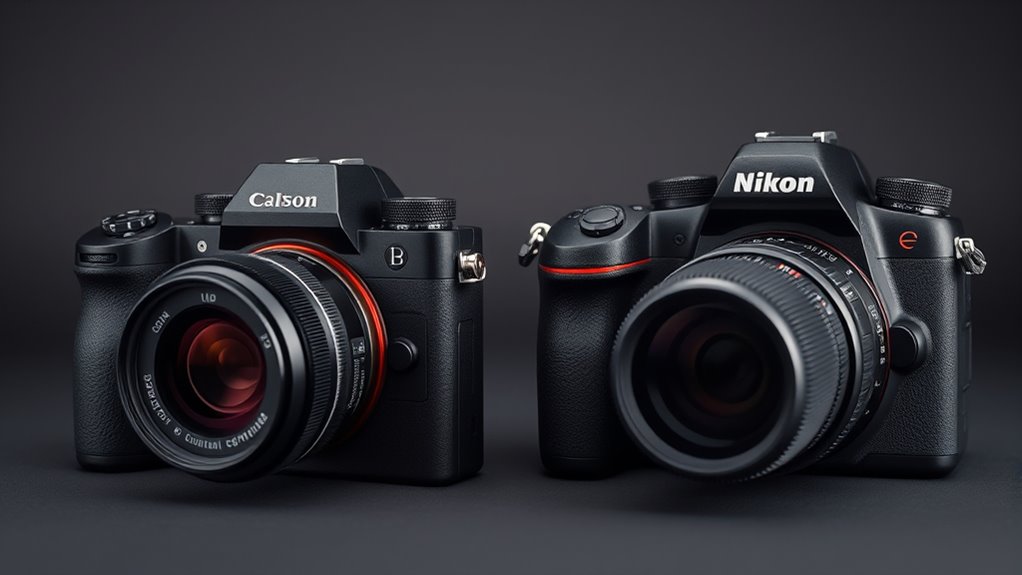
For most professionals comparing mirrorless vs DSLR cameras, I recommend the Sony Alpha 7 IV as the best overall choice for its balanced full-frame stills and video capabilities. The Canon EOS R6 Mark II bundle is a strong alternative for responsive autofocus and an included zoom lens, while the Nikon D7500 remains a practical DSLR option for photographers invested in compatible F-mount lenses. Mirrorless bodies offer newer autofocus and video tools, while a DSLR can suit photographers who value an optical viewfinder and an established lens kit. The right choice depends on your work, your lenses, and whether resolution, speed, or portability matters most. Read on for the full comparison and guidance for choosing the right fit.

Get your wardrobe favorites delivered free with Prime
- Fast, free delivery on millions of items
- Prime Video, Amazon Music and more included
- Member-only deals all year
Key Takeaways
- Sony Alpha 7 IV is my best overall pick: it offers a flexible full-frame foundation for mixed photo and video work, while the kit version adds a 28–70mm zoom.
- Canon EOS R6 Mark II favors speed and a ready-to-shoot setup: its 24–105mm bundle is a practical choice for varied assignments, while the 45MP EOS R5 suits detail-heavy stills.
- High resolution is not exclusive to one brand: the Canon EOS R5 and Nikon Z 7II both offer 45MP-class full-frame capture, so lens choice and handling can weigh more than pixel count.
- The Fujifilm X-T5 brings high resolution to a smaller sensor format: its 40.2MP APS-C sensor and included zoom make it distinct from the larger full-frame bodies in this group.
- The Nikon D7500 serves a narrower but useful role: it makes the most sense for photographers who prefer a DSLR or already own compatible DX and F-mount lenses, while the Canon EOS R1 is the specialist choice for demanding action work.
| Fujifilm X-T5 Mirrorless Camera with XF 16-50mm F2.8-4.8 Lens, Black |  | Best High-Resolution APS-C Kit | Sensor: 40.2MP X-Trans CMOS 5 HR BSI | Lens: XF 16-50mm F2.8-4.8 R LM WR | Mount: Fujifilm X | VIEW ON AMAZON | See Our Full Breakdown |
| Canon EOS R5 45MP Full-Frame Mirrorless Camera Bundle |  | Best Premium Resolution and Video | Sensor: 45MP full-frame CMOS | Mount: Canon RF | Video: 8K RAW; 4K at up to 120 fps | VIEW ON AMAZON | See Our Full Breakdown |
| Canon EOS R6 Mark II Mirrorless Camera with 24-105mm Lens Bundle |  | Best Action-Ready Full-Frame Kit | Sensor: 24.2MP full-frame CMOS | Processor: DIGIC X | Lens: Canon RF 24-105mm f/4-7.1 IS STM | VIEW ON AMAZON | See Our Full Breakdown |
| Sony Alpha 7 IV Full-Frame Mirrorless Camera |  | Best Hybrid Body for Lens Owners | Sensor: 33MP full-frame Exmor R back-illuminated CMOS | Image processor: BIONZ XR | Video recording: Up to 4K 60p, 10-bit 4:2:2 | VIEW ON AMAZON | See Our Full Breakdown |
| Sony Alpha 7 IV Full-Frame Mirrorless Camera with 28–70mm Zoom Lens |  | Best Ready-to-Shoot Sony Hybrid Kit | Sensor: 33MP full-frame Exmor R back-illuminated CMOS | Image processor: BIONZ XR | Included lens: 28-70mm zoom | VIEW ON AMAZON | See Our Full Breakdown |
| Nikon D7500 20.9MP DSLR Camera with AF-S DX NIKKOR 18-140mm VR Lens |  | Best DSLR Kit for Versatile Fieldwork | Camera type: DSLR | Resolution: 20.9MP | Lens: AF-S DX NIKKOR 18-140mm f/3.5-5.6G ED VR | VIEW ON AMAZON | See Our Full Breakdown |
| Nikon Z 7II Full-Frame Mirrorless Camera, 45.7 MP |  | Best for High-Resolution Professional Work | Camera type: Mirrorless | Sensor: Full-frame | Resolution: 45.7MP | VIEW ON AMAZON | See Our Full Breakdown |
| Canon EOS R1 Full-Frame Mirrorless Camera Body |  | Best for Professional Action and Speed | Mount: Canon RF | Sensor: 24.2MP full-frame back-illuminated stacked CMOS | Image stabilization: Sensor-shift | VIEW ON AMAZON | See Our Full Breakdown |
| mirrorless vs dslr cameras for professional | Sensor | Continuous shooting | Video | Autofocus |
|---|---|---|---|---|
| Fujifilm X-T5 Mirrorless Camer | 40.2MP X-Trans CMOS 5 HR BSI | Up to 15 fps | Up to 6.2K | — |
| Canon EOS R5 45MP Full-Frame M | 45MP full-frame CMOS | Up to 20 fps | 8K RAW; 4K at up to 120 fps | Dual Pixel AF II |
| Canon EOS R6 Mark II Mirrorles | 24.2MP full-frame CMOS | Up to 40 fps | 4K 60p | Dual Pixel CMOS AF II with subject tracking |
| Sony Alpha 7 IV Full-Frame Mir | 33MP full-frame Exmor R back-illuminated CMOS | — | — | — |
| Sony Alpha 7 IV Full-Frame Mir | 33MP full-frame Exmor R back-illuminated CMOS | Up to 10 fps | — | 759-point Fast Hybrid AF, Real-time Eye AF |
| Nikon D7500 20.9MP DSLR Camera | — | Up to 8 fps | 4K UHD and 1080p Full HD with stereo sound | 51-point system with 15 cross-type sensors and group-area AF |
| Nikon Z 7II Full-Frame Mirrorl | Full-frame | — | 4K UHD (2160p) at 60p | — |
| Canon EOS R1 Full-Frame Mirror | 24.2MP full-frame back-illuminated stacked CMOS | Up to 40 fps | — | — |
More Details on Our Top Picks
Fujifilm X-T5 Mirrorless Camera with XF 16-50mm F2.8-4.8 Lens, Black
I’d pick the X-T5 for professional work where detail, portability of the system, and hands-on controls matter more than a full-frame sensor. Its 40.2MP APS-C sensor gives substantial cropping room, while up to seven stops of in-body stabilization can help when shooting handheld in slower light. The included 16-50mm zoom makes this a more immediately usable kit than the body-only Sony Alpha 7 IV, and its 6.2K recording adds flexibility for video. Compared with the full-frame Canon EOS R6 Mark II, however, this kit gives up sensor size and the Canon’s faster stated burst rate. The X-T5 is also listed at 3.4 pounds, and the lens’s variable aperture plus the lack of a built-in flash are practical compromises for travel or run-and-gun assignments.
Pros:- 40.2MP sensor provides strong detail and cropping flexibility
- In-body stabilization is rated for up to seven stops
- Records video at up to 6.2K
- Includes a versatile 16-50mm zoom lens
Cons:- Listed weight of 3.4 pounds may be tiring on long shoots
- The included lens has a variable f/2.8-4.8 maximum aperture
- No built-in flash
Best for: Working photographers who want high-resolution APS-C files, stabilized handheld shooting, and a useful zoom lens included in the kit.
Not ideal for: Professionals who need full-frame depth-of-field control, a built-in flash, or the lighter carry they expect from a compact camera setup.
- Sensor:40.2MP X-Trans CMOS 5 HR BSI
- Lens:XF 16-50mm F2.8-4.8 R LM WR
- Mount:Fujifilm X
- Image stabilization:Sensor-shift, up to 7 stops
- Continuous shooting:Up to 15 fps
- Video:Up to 6.2K
- Display:3-inch tilting LCD
- Weight:3.4 lbs
Our verdict“Choose the X-T5 if high-resolution APS-C files and an included zoom matter more than full-frame performance or a lighter kit.”
Canon EOS R5 45MP Full-Frame Mirrorless Camera Bundle
The EOS R5 is my pick for professionals who want a high-resolution full-frame body with ambitious video options. Its 45MP sensor supports detailed stills, while 8K RAW and 4K at up to 120 fps give video teams more latitude than the Sony Alpha 7 IV’s 4K ceiling. The stated 20 fps burst rate and in-body stabilization also make it a flexible choice for assignments that mix fast action with handheld work. This bundle includes a memory card and shoulder bag, but unlike the Canon EOS R6 Mark II kit, no lens is listed. That makes the R5 a less complete ready-to-shoot package and means buyers need to plan for compatible RF glass. Its 8K RAW capabilities also suit workflows prepared to handle demanding files better than casual or storage-limited production.
Pros:- 45MP full-frame sensor captures detailed images
- Records 8K RAW and 4K video at up to 120 fps
- In-body image stabilization supports handheld shooting
- Includes a 64GB UHS-II SDXC card and shoulder bag
Cons:- No lens is listed in the bundle contents
- 8K RAW is more capability than many streamlined video workflows need
- No built-in flash
Best for: Professional photographers and video teams who already own RF lenses and need high-resolution stills alongside advanced 8K and high-frame-rate recording.
Not ideal for: Buyers assembling their first Canon kit who need an included lens, or crews whose workflow does not call for large 8K RAW files.
- Sensor:45MP full-frame CMOS
- Mount:Canon RF
- Video:8K RAW; 4K at up to 120 fps
- Image stabilization:Sensor-shift in-body stabilization
- Autofocus:Dual Pixel AF II
- Continuous shooting:Up to 20 fps
- Viewfinder:Electronic
- Included accessories:64GB UHS-II SDXC memory card and Canon EOS 200ES shoulder bag
Our verdict“Choose the EOS R5 if your professional work needs high-resolution full-frame files and advanced video, and you already have a lens plan.”
Canon EOS R6 Mark II Mirrorless Camera with 24-105mm Lens Bundle
For a working photographer who needs a complete kit for fast-moving assignments, the R6 Mark II bundle makes a stronger immediate case than the body-only EOS R5. It pairs a 24.2MP full-frame sensor with a 24-105mm zoom, dual UHS-II card slots, and burst shooting up to 40 fps. That combination favors event, sports, and general assignment coverage where dependable reach and speed can matter more than maximum resolution. The R5 remains the better fit for 45MP stills or 8K RAW capture; this Canon tops out at 4K 60p. Its included lens has optical stabilization, but the f/4-7.1 variable aperture limits light gathering as you zoom. The listed 6.2-pound weight also makes this package a heavier carry than its spec sheet’s compact body might suggest.
Pros:- 40 fps continuous shooting supports fast action
- Includes a full-frame 24-105mm zoom lens
- Dual UHS-II SD card slots
- Records 4K video at up to 60p
Cons:- Listed item weight is 6.2 pounds
- The included lens’s maximum aperture varies from f/4 to f/7.1
- 24.2MP resolution is lower than the EOS R5 and Sony Alpha 7 IV
Best for: Event and action photographers who want a full-frame Canon kit with a general-purpose zoom, rapid bursts, and dual card slots.
Not ideal for: Professionals who prioritize high-resolution cropping, 8K video, or a light setup for all-day handheld shooting.
- Sensor:24.2MP full-frame CMOS
- Processor:DIGIC X
- Lens:Canon RF 24-105mm f/4-7.1 IS STM
- Lens stabilization:Up to 5 stops
- Continuous shooting:Up to 40 fps
- Video:4K 60p
- Autofocus:Dual Pixel CMOS AF II with subject tracking
- Memory card slots:Dual UHS-II SD
- Item weight:6.2 pounds
Our verdict“Choose this R6 Mark II bundle for fast full-frame work when an included zoom and rapid shooting matter more than resolution or a light load.”
Sony Alpha 7 IV Full-Frame Mirrorless Camera
I’d point existing Sony E-mount users toward this Alpha 7 IV body when their work spans high-resolution stills and polished video. Its 33MP full-frame sensor sits between the 24.2MP Canon EOS R6 Mark II and 45MP EOS R5, a useful middle ground for photographers who want room to crop without making maximum resolution the whole brief. For video, 10-bit 4:2:2 recording and S-Cinetone give editors more grading latitude and a ready color profile; 4K 60p is capable, though less ambitious than the R5’s 8K RAW and 4K 120 fps modes. This listing does not specify an included lens, so I’d treat it as a body for buyers with compatible glass. The 4K recording ceiling may also be restrictive for productions that need higher-resolution capture.
Pros:- 33MP full-frame back-illuminated sensor
- 10-bit 4:2:2 video recording
- S-Cinetone color profile
- 4K 30p uses 7K oversampling without pixel binning
Cons:- No included lens is specified in the product details
- Video resolution tops out at 4K 60p, below the EOS R5’s listed modes
- Its 33MP resolution is below the 45MP EOS R5
Best for: Professional Sony E-mount photographers and hybrid creators who already own lenses and want 33MP stills plus 10-bit video.
Not ideal for: New system buyers who need an included lens, or video teams that require 8K capture or 4K at 120 fps.
- Sensor:33MP full-frame Exmor R back-illuminated CMOS
- Image processor:BIONZ XR
- Video recording:Up to 4K 60p, 10-bit 4:2:2
- 4K 30p mode:7K oversampling, no pixel binning
- Color profile:S-Cinetone
- Operating temperature:0 to 40 °C (32 to 104 °F)
Our verdict“Choose this Alpha 7 IV body if you own Sony lenses and want a balanced stills-and-video tool rather than the R5’s higher-resolution video options.”
Sony Alpha 7 IV Full-Frame Mirrorless Camera with 28–70mm Zoom Lens
This Alpha 7 IV kit is the more practical Sony choice for professionals who need a working zoom immediately, rather than another body to add to an existing setup. It keeps the 33MP full-frame sensor, 10-bit 4:2:2 video, and S-Cinetone found in the body-only Alpha 7 IV, then adds a 28-70mm zoom for everyday coverage. The 759-point autofocus system with Real-time Eye AF and two card slots also suit mixed assignments where reliable subject tracking and flexible recording media matter. Compared with the Canon EOS R6 Mark II bundle, Sony offers higher resolution and 4K 60p 10-bit 4:2:2, while Canon lists faster 40 fps shooting and a wider-reaching 24-105mm lens. The Sony’s 955g listed weight can add up during long handheld days, and video tops out at 4K.
Pros:- 33MP full-frame sensor supports detailed stills
- Includes a 28-70mm zoom lens
- 759-point Fast Hybrid AF with Real-time Eye AF
- Two card slots support CFexpress Type A/SD and SD media
Cons:- Listed weight of 955g may feel heavy during extended handheld use
- Video resolution is limited to 4K 60p
- The included 28-70mm range is shorter than the R6 Mark II bundle’s 24-105mm lens
Best for: Professional hybrid shooters starting or expanding a Sony E-mount kit who want a standard zoom, detailed stills, and capable 4K video in one package.
Not ideal for: Sports specialists who need the Canon R6 Mark II’s stated 40 fps burst rate, or video teams that require 8K capture.
- Sensor:33MP full-frame Exmor R back-illuminated CMOS
- Image processor:BIONZ XR
- Included lens:28-70mm zoom
- Autofocus:759-point Fast Hybrid AF, Real-time Eye AF
- Video recording:Up to 4K 60p, 10-bit 4:2:2
- Continuous shooting:Up to 10 fps
- Memory card slots:2; CFexpress Type A/SD and SD
- Weight:955 g
Our verdict“Choose this Alpha 7 IV kit if you want a ready-to-shoot Sony hybrid setup and value included glass over faster burst shooting.”
Nikon D7500 20.9MP DSLR Camera with AF-S DX NIKKOR 18-140mm VR Lens
The D7500 is the DSLR pick for professionals who want a broad-use lens included and prefer an optical-era camera system to a high-resolution mirrorless body. Its 18-140mm VR zoom covers a useful range of subjects without requiring frequent lens changes; on this DX setup, the listed focal-length equivalent is about 1.5 times the lens focal length. The 51-point autofocus system and burst rate of up to 8 fps suit general event and outdoor work, while the tilting touchscreen makes low- or high-angle framing easier. Compared with the 45.7MP Nikon Z 7II, it gives up resolution and full-frame imaging, and it cannot match the EOS R1’s 40 fps burst rate. The tradeoff is a less specialized, DSLR-based kit with a variable-aperture lens and 20.9MP files.
Pros:- 18-140mm VR lens covers a broad range of everyday shooting needs
- 51-point autofocus system includes 15 cross-type sensors and group-area AF
- Shoots up to 8 fps for action and event sequences
- Tilting touchscreen supports flexible framing, with 4K UHD video available
Cons:- 20.9MP resolution offers less cropping headroom than the Nikon Z 7II
- The lens has a variable f/3.5-5.6 maximum aperture, limiting light gathering as you zoom
- Its up-to-8-fps burst rate falls well short of the Canon EOS R1
Best for: Working photographers who want a versatile DX zoom included for events, travel, and general field assignments, and who prefer a DSLR.
Not ideal for: Photographers who need full-frame image capture, very high resolution for heavy cropping, or the extreme burst speed of the Canon EOS R1.
- Camera type:DSLR
- Resolution:20.9MP
- Lens:AF-S DX NIKKOR 18-140mm f/3.5-5.6G ED VR
- Display:3.2-inch, 922K-dot tilting touchscreen
- Autofocus:51-point system with 15 cross-type sensors and group-area AF
- Continuous shooting:Up to 8 fps
- Video:4K UHD and 1080p Full HD with stereo sound
- FX-format equivalent focal length:Approximately 1.5× the lens focal length
Our verdict“Choose the D7500 if you want a capable DSLR and a versatile zoom in one kit, not full-frame resolution or leading burst speed.”
Nikon Z 7II Full-Frame Mirrorless Camera, 45.7 MP
The Z 7II makes the strongest case here for professionals who prioritize fine detail, large prints, or room to crop: its 45.7MP full-frame sensor has more than twice the resolution of the Nikon D7500. It also records 4K UHD at 60p and provides dual card slots in CFexpress/XQD and UHS-II SD formats, giving photographers storage flexibility on demanding assignments. USB-C power and charging can also help when working around compatible power sources. Compared with the Canon EOS R1, the Z 7II is the more natural fit for high-resolution stills, while the R1 is built for much faster action capture. The Z 7II’s tradeoffs are its less action-focused role and the separate FTZ adapter needed to use F-mount lenses; the D7500, by contrast, includes a native DX zoom.
Pros:- 45.7MP full-frame imaging provides substantial detail and cropping flexibility
- Dual CFexpress/XQD and UHS-II SD slots offer two card-format options
- Records 4K UHD video at 60p
- USB-C power and charging support compatible power setups
Cons:- FTZ adapter for F-mount NIKKOR lenses is sold separately
- High-resolution files call for more storage than the D7500’s 20.9MP files
- Its high-resolution emphasis is less suited to photographers who prioritize the EOS R1’s 40-fps action capture
Best for: Landscape, portrait, and commercial photographers who need high-resolution full-frame files, dual card slots, and 4K 60p recording.
Not ideal for: Sports photographers who need the EOS R1’s up-to-40-fps burst rate, or Nikon DSLR owners who expect to mount F-mount lenses without buying an adapter.
- Camera type:Mirrorless
- Sensor:Full-frame
- Resolution:45.7MP
- Video:4K UHD (2160p) at 60p
- Card slots:CFexpress/XQD and UHS-II SD
- Lens compatibility:NIKKOR Z lenses and approximately 360 F-mount NIKKOR lenses with FTZ adapter
- Power:USB-C power and charging
Our verdict“Pick the Z 7II for detailed full-frame files and flexible card storage, but choose the EOS R1 when action speed matters more than resolution.”
Canon EOS R1 Full-Frame Mirrorless Camera Body
The EOS R1 is the specialist in this group for assignments where a fleeting moment matters more than maximum pixel count. Its up-to-40-fps continuous shooting, Dual Pixel autofocus with Action Priority, and pre-continuous capture—which records images from the half-second before the shutter release—are aimed squarely at fast, unpredictable subjects. Internal 6K RAW and 4K 120p video add flexibility for hybrid productions. Compared with the Nikon Z 7II, the R1 trades resolution for speed: its 24.2MP sensor gives less cropping latitude than the Z 7II’s 45.7MP sensor, but its burst specification makes it the clearer action choice. The D7500 is a simpler DSLR kit with a zoom included; this Canon is a professional body whose advanced feature set and 2.5-pound weight are not a fit for every assignment.
Pros:- Shoots up to 40 fps for fast-moving subjects
- Pre-continuous capture can preserve moments from before shutter release
- Dual Pixel autofocus includes Action Priority
- Records internal 6K RAW and 4K 120p video
Cons:- 24.2MP resolution provides less cropping room than the Nikon Z 7II
- At 2.5 pounds, the body adds weight to long assignments
- Its specialized professional feature set may be unnecessary for general-purpose photography
Best for: Professional sports, wildlife, and news photographers who need high-speed bursts, action-oriented autofocus, and pre-continuous capture.
Not ideal for: Photographers who prioritize maximum resolution for cropping or printing, casual users who do not need advanced action tools, or anyone seeking a camera-and-lens kit.
- Mount:Canon RF
- Sensor:24.2MP full-frame back-illuminated stacked CMOS
- Image stabilization:Sensor-shift
- Continuous shooting:Up to 40 fps
- Video capabilities:Internal 6K 60 RAW and 4K 120 10-bit video
- Screen:3.2-inch articulating LCD, 2,100,000 dots
- Connectivity:Bluetooth, Wi-Fi, Ethernet, and HDMI
- Weight:2.5 pounds
Our verdict“Choose the EOS R1 for demanding action work and high-speed hybrid capture, not for maximum resolution or a lightweight general-purpose kit.”

How We Picked
I compared these eight cameras by how well they serve professional assignments, not by treating the newest or highest-resolution model as an automatic winner. My criteria included autofocus responsiveness, image and video flexibility, sensor format, handling, build, and the practical value of each included lens. I also considered how much a camera can support different jobs, since a portrait specialist, event photographer, and sports shooter do not need the same strengths.
I rank the Sony Alpha 7 IV first for its broad full-frame versatility, then distinguish cameras that better serve particular workloads: the Canon EOS R6 Mark II for fast-moving general work, high-resolution options for detailed stills, and the Canon EOS R1 for demanding action. The Nikon D7500 is not a direct feature-for-feature match with newer mirrorless bodies, but remains relevant for DSLR users and compatible lens owners. I treat the two Sony A7 IV listings as the same camera body, with the kit version gaining an included zoom rather than a different imaging platform.
| mirrorless vs dslr cameras for professional | Continuous shooting |
|---|---|
| Fujifilm X-T5 Mirrorless Camer | Up to 15 fps |
| Canon EOS R5 45MP Full-Frame M | Up to 20 fps |
| Canon EOS R6 Mark II Mirrorles | Up to 40 fps |
| Sony Alpha 7 IV Full-Frame Mir | — |
| Sony Alpha 7 IV Full-Frame Mir | Up to 10 fps |
| Nikon D7500 20.9MP DSLR Camera | Up to 8 fps |
| Nikon Z 7II Full-Frame Mirrorl | — |
| Canon EOS R1 Full-Frame Mirror | Up to 40 fps |
Factors to Consider When Choosing Mirrorless Vs Dslr Cameras For Professionals
Choosing between these cameras is also a decision about how you work, what lenses you own, and which compromises you can live with. I would start with the assignment and your existing kit, then compare the camera features that affect your daily shooting rather than chasing a single headline specification.
Match Autofocus and Shooting Speed to the Assignment
For weddings, wildlife, sports, and events, subject tracking and dependable focus can matter more than maximum resolution. Mirrorless cameras show exposure and focus changes in the electronic viewfinder, which can help when lighting shifts quickly. A DSLR’s optical viewfinder gives a direct view without an electronic display, a preference some photographers keep for fast-paced work. Do not judge speed from burst rate alone; buffer depth, subject recognition, and lens response shape how useful that rate is on a real assignment. I would favor the R1 or R6 Mark II for action-focused work, while the D7500 can still suit less demanding DSLR workflows.
Choose Resolution for Your Output, Not Your Crop Habit
The 45MP-class R5 and Z 7II give room for large prints and substantial cropping, but their files take more storage and processing time. The X-T5 also delivers high resolution, though on an APS-C sensor, so its field of view and depth-of-field behavior differ from full-frame models. If most assignments end as web images or standard-sized prints, a lower-resolution full-frame body may leave more room for efficient file handling. Cropping can rescue framing, but it cannot replace choosing the right lens and position. I would pay for extra pixels when the final output or crop demands them, not simply because the number is larger.
Account for Lenses Before Changing Camera Systems
Lens investment can outweigh body differences when deciding between DSLR and mirrorless. List the lenses you own, check their mount compatibility, and confirm autofocus and stabilization behavior with any adapter you plan to use. A mount change can add costs and handling compromises even when an adapter lets a lens attach. The included 24–105mm or 28–70mm zooms can make a bundle more useful on day one, but neither replaces specialty glass for every assignment. I would compare the complete lens path for your next several years of work, not just the body in isolation.
Decide Whether Full Frame or APS-C Fits Your Work
Full frame and APS-C solve different problems, rather than forming a simple professional-versus-amateur divide. Full-frame models offer a wider angle of view for a given focal length, while APS-C can make a telephoto setup feel tighter and may support a smaller overall kit. Sensor size also affects depth of field and low-light behavior, but lens choice and exposure technique remain part of the result. The D7500 and X-T5 are APS-C options here, yet they differ sharply in age, camera design, and resolution. I would choose by the lenses and working distances you use most, then weigh sensor format against kit size.
Think Through Viewfinder, Battery, and Video Needs
Handling differences show up over long workdays, so try to judge grip, controls, menus, and viewfinder style alongside image quality. Mirrorless electronic viewfinders can preview exposure and white balance, while optical DSLR viewfinders show the scene directly without a live electronic image. Battery demands, screen use, and video recording habits can affect how many spare batteries or cards you carry. Hybrid shooters should check the recording formats and controls they need rather than assuming every modern mirrorless camera suits every production. I would also plan for card capacity, backup storage, and a consistent file workflow before selecting a high-resolution body.
Frequently Asked Questions
Should a working photographer replace a DSLR with a mirrorless camera?
Not automatically: a DSLR can remain productive if its autofocus, image quality, and lens system meet your assignments. Mirrorless models add electronic viewfinder previews and newer tracking features, but a change can require new lenses, adapters, and revised habits. I would switch when a specific mirrorless capability solves a recurring problem, such as tracking subjects or recording video more easily. If your current DSLR already delivers the work you need, keeping it while building a mirrorless kit gradually may be the more practical choice.
Is the Nikon D7500 suitable for paid professional work in 2027?
It can still suit paid work when its 20.9MP APS-C files, autofocus, and DSLR handling fit the assignment. It is a more natural choice for photographers who already own compatible Nikon DX or F-mount lenses than for someone starting a system from scratch. Compared with the mirrorless bodies here, it offers a less current platform for video and subject-tracking features. I would check that its file output and workflow meet client delivery needs before choosing it as a primary camera.
Do I need a 45MP camera for professional photography?
Many professionals do not need 45MP for routine delivery, especially when images are mainly viewed online or printed at modest sizes. The EOS R5 and Nikon Z 7II make more sense when cropping flexibility, large prints, or detailed commercial work matters. Higher-resolution files call for more storage and can slow editing on an older computer. I would match resolution to the largest expected output and the amount of cropping your assignments actually require.
Should I choose the Sony A7 IV body or the version with the 28–70mm lens?
The camera body is the same, so the choice comes down to whether the included zoom fits your work and existing kit. The lens version gives a general-purpose starting range, which can be useful for travel, events, and everyday assignments. Photographers with specialist lenses or a preferred zoom may get more value from choosing a body-only setup that fits their system. I would compare the kit lens with the focal lengths you use most before deciding, rather than treating the bundle as a different camera.
Can I adapt my DSLR lenses to a mirrorless camera and keep their autofocus?
Sometimes, but compatibility depends on the lens, camera mount, and adapter. Autofocus speed, tracking, stabilization, and available lens functions can vary, so an adapted lens may not behave exactly as it did on a DSLR. Check compatibility information for each lens you plan to keep, especially if your work depends on fast subject tracking. I would price out the lenses you may need to replace as well as the adapter before making a system change.
Conclusion
For the broadest mix of professional stills and video, I recommend the Sony Alpha 7 IV as the best overall; choose its 28–70mm kit version if that zoom suits your assignments. The Canon EOS R6 Mark II bundle is my best value-oriented ready-to-shoot choice, while the Canon EOS R5 is the best premium fit for detail-heavy work and the EOS R1 is better reserved for demanding action assignments. For a photographer building a first professional kit, I would start with the R6 Mark II bundle for its full-frame body and included 24–105mm lens. Choose the Nikon D7500 for DSLR handling and existing compatible lenses, the Fujifilm X-T5 for a compact high-resolution APS-C setup, or the Nikon Z 7II when high-resolution full-frame capture is the priority. Your best choice is the one whose sensor, lens path, and handling align with the jobs you take—not simply the newest camera in the group.
Halloween Picks

Halloween Inflatable Haunted House Maze – 20×20 ft with Removable Roof and Blower

8.5 Foot Halloween Inflatable Haunted House Castle with Skeleton, Ghost & Skulls

11.2-Foot Halloween Inflatable Pumpkin with LED Lights
As an affiliate, we earn on qualifying purchases.