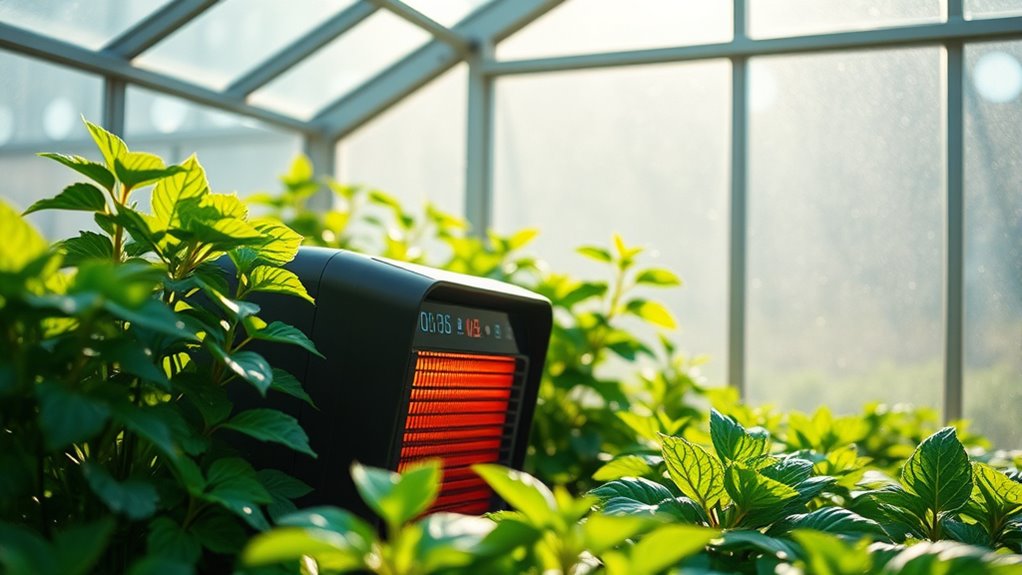

For most small greenhouses, I’d start with the VEVOR 1500W Greenhouse Heater with Thermostat as the best overall pick for straightforward thermostatic heat. The BioGreen PALMA stands out for growers who want a digital thermostat and fan in one unit, while the VIVOSUN AeroFlux 700W suits smaller grow tents where app and VPD features matter more than maximum wattage. The main tradeoffs are heating capacity, control convenience, and how much power a space can use safely. Read on for the full comparison and guidance on matching a heater to your greenhouse.

Get your wardrobe favorites delivered free with Prime
- Fast, free delivery on millions of items
- Prime Video, Amazon Music and more included
- Member-only deals all year
Complete the kit


Key Takeaways
- Thermostat control is the clearest dividing line. Several 1500W models list thermostat control, while the SEEYANG, BioGreen PALMA, and TRUSTECH specifically identify digital thermostats; choose based on the control style you need, not wattage alone.
- The VIVOSUN AeroFlux is a different-size solution. Its 700W output and app and VPD features point toward smaller grow tents, not a direct substitute for the lineup’s 1500W heaters.
- Fan-equipped models serve more than one purpose. The BioGreen PALMA and multiple VEVOR options combine heat with airflow, but buyers should check whether circulation is a priority or whether simpler heating is enough.
- Protection features vary by model name. ORAVIONA and one VEVOR listing call out overheat protection, so buyers focused on that feature should verify the exact model rather than assume it is shared across similar listings.
- Repeated VEVOR listings make exact model identification important. The lineup includes several similarly named 1500W heaters; compare control and fan details carefully instead of treating them as interchangeable.
| VEVOR 1500W Greenhouse Heater with Thermostat |  | Best for Adjustable Airflow | Model: BGP1506-150 | Power: 1500 watts | Heating method: Forced air | VIEW ON AMAZON | See Our Full Breakdown |
| SEEYANG 1500W Greenhouse Heater with Digital Thermostat |  | Best for Larger Rated Coverage | Model: PTC02 | Heating power: 1500W | Fan power: 25W | VIEW ON AMAZON | See Our Full Breakdown |
| ORAVIONA 1500W PTC Greenhouse Heater with Overheat Protection |  | Best for Directing Warm Air | Model: JH-H15p | Power modes: 25W fan-only; 750W low heat; 1500W high heat | Voltage: 120V | VIEW ON AMAZON | See Our Full Breakdown |
| Dr. Infrared Heater DR218 Greenhouse Heater, 1500 W |  | Best for Splash-Prone Greenhouses | Model: DR218-1500W | Power: 1500 watts | Voltage: 120 volts | VIEW ON AMAZON | See Our Full Breakdown |
| VEVOR 1500W Electric Greenhouse Heater with Fan |  | Best Lightweight Pick | Model: BGP2001-15 | Heat output: 1500 watts | Heating method: Forced air | VIEW ON AMAZON | See Our Full Breakdown |
| Pasapair 1500W WiFi PTC Greenhouse Heater with Thermostat |  | Best for Remote Scheduling | Power: 1500 watts | Heating method: PTC ceramic | Temperature range: 41°F to 108°F | VIEW ON AMAZON | See Our Full Breakdown |
| BioGreen PALMA Electric Greenhouse Heater and Fan with Digital Thermostat |  | Best for Damp Greenhouses | Power settings: 750W or 1500W | Temperature range: 32°F to 185°F | Air circulation: Up to 5,800 ft³/h | VIEW ON AMAZON | See Our Full Breakdown |
| SmterCon Greenhouse Heater with Thermostat |  | Best for Straightforward Automatic Heating | Model: GHH | Power: 1500 watts | Heating method: Convection | VIEW ON AMAZON | See Our Full Breakdown |
| TRUSTECH Greenhouse Heater with Digital Thermostat, 1500W |  | Best for Flexible Heat Settings | Model: PTC-1500R | Power settings: 750W or 1500W | Heating method: PTC ceramic | VIEW ON AMAZON | See Our Full Breakdown |
| Roodike 1500W Blower Heater with Thermostat |  | Best Basic Compact Pick | Model: RD-1267-E | Power: 1500W | Heat settings and modes: 1500W, 750W, and fan-only | VIEW ON AMAZON | See Our Full Breakdown |
| VEVOR 1500W Greenhouse Heater with Fan |  | Best for Simple, Portable Heating | Power: 1500 watts | Heating method: Forced air | Modes: Low heat, high heat, and fan | VIEW ON AMAZON | See Our Full Breakdown |
| VEVOR 1500W Greenhouse Heater with Overheat Protection |  | Best for Documented Safety Features | Power: 1500 W | Heat output: 5100 BTU | Heating coverage: 150–200 square feet | VIEW ON AMAZON | See Our Full Breakdown |
| VIVOSUN AeroFlux 700W PTC Grow Tent Heater with Thermostat, App & VPD |  | Best Smart Heater for Grow Tents | Power output: 700 watts | Heating method: PTC heating | Heat levels: 5 | VIEW ON AMAZON | See Our Full Breakdown |
| VEVOR 1500W Greenhouse Heater with Thermostat and Fan |  | Best for Manual Thermostat Control | Power: 1500 W | Modes: Low heat, high heat, and fan | Thermostat: Separate thermostat | VIEW ON AMAZON | See Our Full Breakdown |
| greenhouse heater | Model | Power | Heating method |
|---|---|---|---|
| VEVOR 1500W Greenhouse Heater | BGP1506-150 | 1500 watts | Forced air |
| SEEYANG 1500W Greenhouse Heate | PTC02 | — | — |
| ORAVIONA 1500W PTC Greenhouse | JH-H15p | — | Forced air |
| Dr. Infrared Heater DR218 Gree | DR218-1500W | 1500 watts | — |
| VEVOR 1500W Electric Greenhous | BGP2001-15 | — | Forced air |
| Pasapair 1500W WiFi PTC Greenh | — | 1500 watts | PTC ceramic |
| BioGreen PALMA Electric Greenh | — | — | — |
| SmterCon Greenhouse Heater wit | GHH | 1500 watts | Convection |
| TRUSTECH Greenhouse Heater wit | PTC-1500R | — | PTC ceramic |
| Roodike 1500W Blower Heater wi | RD-1267-E | 1500W | — |
| VEVOR 1500W Greenhouse Heater | — | 1500 watts | Forced air |
| VEVOR 1500W Greenhouse Heater | — | 1500 W | — |
| VIVOSUN AeroFlux 700W PTC Grow | — | — | PTC heating |
| VEVOR 1500W Greenhouse Heater | — | 1500 W | — |
More Details on Our Top Picks
VEVOR 1500W Greenhouse Heater with Thermostat
The VEVOR BGP1506-150 is a flexible pick for growers who want to switch between warmth and air circulation without buying separate equipment. Its three speed settings and independent thermostat offer more ways to adjust operation than the single-speed Dr. Infrared Heater DR218. At 4.5 pounds and under nine inches tall, it is also easier to reposition than that 11.5-pound alternative. The tradeoff is protection: its IP20 rating is for indoor use, so I would keep it away from greenhouse splash zones and damp conditions. Overheat protection and ETL certification add safety measures, but this compact forced-air model is best treated as a controlled, dry-area heater rather than an outdoor-weather solution.
Pros:- Independent thermostat supports adjustable temperature control
- Three speed settings offer more operating flexibility than the single-speed Dr. Infrared Heater DR218
- Fan ventilation mode can circulate air without heating
- ETL certification and overheat protection are listed
Cons:- IP20 rating makes it a poor fit for splash-prone greenhouse areas
- 1500W output may be insufficient as the sole heat source in a large or poorly insulated greenhouse
Best for: Growers with a dry indoor greenhouse or grow tent who want thermostat control and multiple airflow settings in a portable unit
Not ideal for: Anyone placing a heater where irrigation spray or damp conditions are likely; IP20 protection is intended for indoor use
- Model:BGP1506-150
- Power:1500 watts
- Heating method:Forced air
- Speed settings:3
- Thermostat:Independent thermostat included
- Protection:IP20; overheat protection; ETL certified
- Dimensions:6.29 × 6.29 × 8.66 inches
- Weight:4.5 pounds
Our verdict“Choose this VEVOR for a dry greenhouse where adjustable airflow and thermostat control matter more than water resistance.”
SEEYANG 1500W Greenhouse Heater with Digital Thermostat
The SEEYANG is the lineup’s clearest choice for shoppers prioritizing a stated coverage figure: it is specified for spaces up to 200 square feet, more than the Dr. Infrared Heater DR218’s 150-square-foot coverage. Its digital thermostat spans 40°F to 108°F, giving growers a broad adjustment range, while fan-only operation can move air when heat is unnecessary. The 7.5-foot cord may also offer more placement flexibility than a short lead, though the product data does not specify cord placement or mounting options. Its stainless steel shell and overheat protection are useful practical details, but no water-resistance rating is listed; I would not assume it can tolerate spray just because it is described for indoor and outdoor use. It is also a relatively wide floor unit.
Pros:- Coverage is specified for up to 200 square feet
- Digital thermostat adjusts from 40°F to 108°F
- Fan-only mode provides air movement without heating
- 7.5-foot power cord gives placement flexibility
Cons:- No water-resistance rating is provided for use near irrigation or splashes
- Its 13.99-inch width takes more floor space than compact options such as the ORAVIONA
- A 1500W ceiling may not maintain target temperatures in a poorly insulated space at the stated coverage limit
Best for: Greenhouse owners seeking a floor-standing 1500W heater with a stated coverage area above the Dr. Infrared Heater DR218
Not ideal for: Growers who need a compact heater for tight shelving or a unit with a specified splash-resistance rating
- Model:PTC02
- Heating power:1500W
- Fan power:25W
- Coverage:Up to 200 sq ft
- Thermostat range:40°F–108°F
- Modes:Fan and heating
- Material:Stainless steel shell
- Power cord:7.5 ft
Our verdict“Pick the SEEYANG if its larger stated coverage and broad digital thermostat range suit your floor space and moisture conditions.”
ORAVIONA 1500W PTC Greenhouse Heater with Overheat Protection
The ORAVIONA’s defining advantage is control over where its heat goes: its outlet angle adjusts from 0° to 135°, a useful distinction from the fixed-direction VEVOR 1500W Electric Greenhouse Heater with Fan. It also provides fan-only, 750W low heat, and 1500W high heat, so a grower can use less power for mild conditions instead of running at full output. The handle and anti-slip base suit a portable floor setup, and ETL listing plus overheat protection add stated safety features. Its limits are straightforward: the 1500W maximum makes it a supplemental heater for many larger or colder greenhouses, and the supplied specifications give no coverage area or water-resistance rating. I would choose it for targeted airflow, not assume it can heat a broad, damp space.
Pros:- Adjustable airflow angle from 0° to 135° helps direct heat where needed
- 750W low-heat setting offers a lower-output option
- Fan-only mode circulates air without heating
- Portable handle, anti-slip base, and overheat protection support floor use
Cons:- Maximum output is 1500W, which may fall short as the primary heat source in larger spaces
- No coverage area or water-resistance rating is specified
- At 12.5A and 120V, it requires a suitable electrical circuit
Best for: Growers who want to aim airflow at a particular bench or plant area and switch between low and high heat
Not ideal for: Owners of large greenhouses who need a documented coverage area or buyers who need a stated splash-resistance rating
- Model:JH-H15p
- Power modes:25W fan-only; 750W low heat; 1500W high heat
- Voltage:120V
- Amperage:12.5A
- Heating method:Forced air
- Heating element:PTC ceramic
- Airflow adjustment:0°–135°
- Safety:ETL listed; overheat protection
Our verdict“Choose the ORAVIONA when directing heat and selecting a lower output matter more than documented coverage or water resistance.”
Dr. Infrared Heater DR218 Greenhouse Heater, 1500 W
The DR218 is the most clearly specified pick here for a greenhouse where occasional splashes are a concern: its housing carries an IPX4 rating, unlike the IP20 VEVOR BGP1506-150. That rating helps distinguish it for damp working areas, though it is not a reason to expose the heater to direct spray or standing water. The unit offers 1500W output, an adjustable thermostat from 32°F to 104°F, and stated coverage of up to 150 square feet. In exchange for that clearer coverage and splash-resistance information, it has only one speed and weighs 11.5 pounds, making it less nimble than the lighter VEVOR models. I see it as a straightforward fixed-position option, not the pick for growers who want multiple heat levels or frequent repositioning.
Pros:- IPX4 housing is specified to resist water splashes
- Coverage is stated for up to 150 square feet
- Adjustable thermostat range runs from 32°F to 104°F
- Overheat protection is included
Cons:- One speed offers less adjustment than the three-speed VEVOR BGP1506-150
- At 11.5 pounds, it is heavier than the other portable models in this group
- Coverage is limited to 150 square feet according to the supplied specifications
Best for: Greenhouse owners who need a 1500W floor heater with a stated splash-resistance rating and coverage figure
Not ideal for: Growers who want multiple speeds, a lightweight heater for frequent moves, or coverage beyond 150 square feet
- Model:DR218-1500W
- Power:1500 watts
- Voltage:120 volts
- Amperage:12.5 A
- Heating coverage:150 sq. ft.
- Temperature range:32–104 °F
- Water protection:IPX4
- Weight:11.5 lb
Our verdict“The DR218 makes sense for a splash-prone greenhouse up to its stated coverage limit where one-speed operation is acceptable.”
VEVOR 1500W Electric Greenhouse Heater with Fan
At 3.1 pounds, this VEVOR is the easiest option in this group to carry between a grow tent, greenhouse, and other small spaces. Its two heat settings and fan mode cover the basic jobs without the independent thermostat found on the VEVOR BGP1506-150 or the digital temperature control on the SEEYANG. That simpler setup may suit growers who prefer manual mode selection, but it means less precise temperature management. A handle, stable base, tip-over shut-off, and overheat protection support portable floor use. The manufacturer describes it for smaller spaces and provides no coverage figure, so I would not choose it to heat a large greenhouse on its own. Its compactness and portability are the main reasons to pick it over the more control-focused alternatives.
Pros:- Lightweight 3.1-pound design is easy to reposition
- Low heat, high heat, and fan modes cover basic heating and circulation needs
- Tip-over shut-off and overheat protection are listed
- Compact dimensions suit smaller floor spaces
Cons:- No thermostat is listed, unlike the VEVOR BGP1506-150 and SEEYANG models
- Intended for smaller spaces, with no coverage area provided
- No water-resistance rating is specified
Best for: Growers who need a lightweight heater to move among small greenhouses, grow tents, or nearby indoor work areas
Not ideal for: Buyers seeking thermostat-led temperature control or a heater with a documented coverage area for a larger greenhouse
- Model:BGP2001-15
- Heat output:1500 watts
- Heating method:Forced air
- Modes:Low heat, high heat, and fan
- Amperage:12.5 A
- Dimensions:8.27 × 5.12 × 10.24 in
- Weight:3.1 lb
- Safety features:Overheat protection; tip-over shut-off
Our verdict“Choose this VEVOR for portable, manual heating in a small greenhouse or grow tent, not for precise temperature control or broad coverage.”
Pasapair 1500W WiFi PTC Greenhouse Heater with Thermostat
I’d choose the Pasapair when controlling heat around a greenhouse schedule matters as much as the heater itself. Its Smart Life app and 7-day program let growers adjust operation remotely or set routines, while the wired temperature probe can measure conditions closer to plants instead of relying only on the heater’s location. That gives it more monitoring flexibility than the simpler Roodike 1500W Blower Heater, which has an adjustable thermostat but no listed app or external probe. The tradeoff is that this is still a 1500W floor heater rated for 215 sq. ft., not a weatherproof fixture: it must be kept away from rain and direct water. App control also requires 2.4 GHz WiFi, so buyers with only a 5 GHz network should skip this pick.
Pros:- Smart Life app supports remote monitoring and adjustment over 2.4 GHz WiFi.
- Wired external probe can sense temperature away from the heater.
- Seven-day schedule and 24-hour countdown timer support routine operation.
- Portable 5-pound design includes a weighted base, non-slip feet, and overheat protection.
Cons:- Not intended for rain or direct water exposure.
- WiFi control does not support 5 GHz networks.
- The listed 215-square-foot coverage may not suit larger or especially cold greenhouses.
Best for: Greenhouse growers who want to schedule heating remotely and measure temperature near plants or a workbench.
Not ideal for: Growers with only 5 GHz WiFi or an exposed greenhouse location where rain or direct water can reach the heater.
- Power:1500 watts
- Heating method:PTC ceramic
- Temperature range:41°F to 108°F
- Heating coverage:215 sq. ft.
- Control options:Onboard panel, remote, wired thermostat, and Smart Life app
- WiFi requirement:2.4 GHz
- Schedule and timer:7-day programmable schedule; 24-hour countdown
- Safety features:Overheat protection, child lock, flame-retardant materials, weighted base, and non-slip feet
Our verdict“Choose the Pasapair if app scheduling and a remote temperature probe matter more than weather exposure tolerance.”
BioGreen PALMA Electric Greenhouse Heater and Fan with Digital Thermostat
The BioGreen PALMA is the strongest fit here for a greenhouse where damp air is a routine concern. Its IPX4 splash-proof stainless steel housing is a meaningful distinction from the Pasapair and TRUSTECH models, whose supplied details do not list a splash-resistance rating. Two heat settings let growers choose 750W or 1500W, and the thermostat can be set across a notably broad 32°F–185°F range. Its fan mode also moves up to 5,800 cubic feet of air per hour, making it useful beyond cold spells. The compromise is modest listed heating coverage: at 120 square feet, it suits a compact greenhouse better than the Pasapair’s stated 215-square-foot coverage. It also needs a 120V, 15A supply, so buyers should check their circuit before choosing it.
Pros:- IPX4 splash-proof stainless steel housing is suited to damp greenhouse conditions.
- Two heat settings provide 750W and 1500W options.
- Thermostat range spans 32°F to 185°F.
- Fan mode circulates up to 5,800 cubic feet of air per hour.
Cons:- Listed heating coverage is limited to 120 square feet.
- Requires a 120V, 15A supply.
- Tabletop placement may be less convenient than a floor-standing portable heater.
Best for: Owners of compact, humid greenhouses who want splash-resistant construction and a fan for air circulation outside heating periods.
Not ideal for: Growers with larger structures or those without a suitable 120V, 15A electrical supply.
- Power settings:750W or 1500W
- Temperature range:32°F to 185°F
- Air circulation:Up to 5,800 ft³/h
- Heating coverage:120 sq. ft.
- Heat output:5,118 BTU
- Electrical requirements:120V, 15A
- Water resistance and material:IPX4 splash-proof; stainless steel
- Mounting type:Tabletop
Our verdict“Pick the BioGreen PALMA for a compact, damp greenhouse where splash resistance and year-round air circulation outweigh wider coverage.”
SmterCon Greenhouse Heater with Thermostat
I’d shortlist the SmterCon GHH for growers who want automatic temperature control without app setup or a long list of operating options. Its digital thermostat adjusts heating to maintain a set temperature, and adjustable ventilation, temperature, and wind-speed settings offer some control over how warmth is distributed. Compared with the Pasapair, it gives up remote app access, a wired probe, and programmable weekly scheduling; in return, its appeal is a simpler floor-based setup with independent overheat protection. The listed coverage is up to 120 square feet, so this is a compact-greenhouse choice rather than a solution for larger structures. The product data also lists AC/DC power but provides no detailed voltage information, so I’d verify electrical compatibility before purchase.
Pros:- Digital thermostat automatically controls heating to maintain a selected temperature.
- Adjustable ventilation and wind-speed settings offer airflow control.
- Independent overheat protection is listed.
- Compact floor-mounted design measures 9.5 × 8.5 × 9.5 inches.
Cons:- Coverage is limited to spaces up to 120 square feet.
- No app, external probe, or programmable schedule is listed, unlike the Pasapair.
- Electrical details are limited to an AC/DC power description and 15A current.
Best for: Growers with a small greenhouse or grow tent who want thermostat-led heating and adjustable airflow without app-based controls.
Not ideal for: Owners of larger greenhouses or buyers who need documented voltage details, remote scheduling, or a temperature probe placed near plants.
- Model:GHH
- Power:1500 watts
- Heating method:Convection
- Coverage:Up to 120 sq. ft.
- Thermostat:Digital, automatic temperature control
- Current:15A
- Safety feature:Independent overheat protection
- Dimensions and mounting:9.5 × 8.5 × 9.5 inches; floor
Our verdict“Choose the SmterCon for simple thermostat-controlled heating in a small space, but look elsewhere for smart controls or broader coverage.”
TRUSTECH Greenhouse Heater with Digital Thermostat, 1500W
The TRUSTECH PTC-1500R makes sense for growers who want to dial heat output down rather than run a single full-power setting. Its 750W and 1500W levels pair with a fan-only mode, giving it more operating flexibility than the SmterCon, whose listed power options do not include a lower wattage setting. The digital thermostat covers 40°F–108°F, and the 90° tilt can direct warm airflow toward a chosen area. At up to 160 square feet, its stated coverage falls between the SmterCon and the Pasapair, though coverage alone does not establish how well a heater will perform in a particular climate or greenhouse. Overheat protection and flame-retardant materials are listed, but the unit still needs an outlet and is not described as splash-proof.
Pros:- 750W and 1500W settings allow a lower-power option.
- Fan-only mode provides airflow without heating.
- Digital thermostat covers 40°F to 108°F.
- 90° adjustable tilt, overheat protection, and flame-retardant materials are listed.
Cons:- Coverage is listed at up to 160 square feet, below the Pasapair’s stated 215 square feet.
- Requires an electrical outlet and is not described as splash-proof.
- No app control or programmable schedule is listed.
Best for: Greenhouse and grow-tent owners who want two heat levels, fan-only operation, and directional airflow in a space up to 160 square feet.
Not ideal for: Growers who need a splash-proof heater, remote app scheduling, or heat for a space larger than the stated coverage.
- Model:PTC-1500R
- Power settings:750W or 1500W
- Heating method:PTC ceramic
- Operating modes:Low heat, high heat, and fan only
- Temperature range:40°F to 108°F
- Coverage:Up to 160 sq. ft.
- Tilt:90° adjustable
- Power cord:7.5 ft.
Our verdict“Choose the TRUSTECH when adjustable heat levels and directed airflow are more useful than app control or damp-location protection.”
Roodike 1500W Blower Heater with Thermostat
The Roodike RD-1267-E is a practical match for growers who need a compact heater with the basic controls covered: two heat levels, fan-only operation, and an adjustable thermostat. Its 32°F–158°F temperature range is broader at the upper end than the TRUSTECH’s listed range, but the Roodike’s coverage is limited to 120 square feet. That makes it better suited to a small greenhouse or a localized growing area than to a larger structure; the Pasapair is the more feature-rich option for buyers who want app scheduling and a remote probe. Roodike lists overheat protection and automatic power reduction, but gives no splash-resistance rating. I’d treat it as an indoor-use-style choice for a dry, sheltered location, not a heater to expose to greenhouse water or weather.
Pros:- Three operating modes include 1500W, 750W, and fan-only.
- Adjustable thermostat covers 32°F to 158°F.
- Compact dimensions support placement in smaller spaces.
- Overheat protection and automatic power reduction are listed.
Cons:- Heating coverage is limited to up to 120 square feet.
- No splash-resistance rating is provided.
- Lacks the app scheduling and external probe offered by the Pasapair.
Best for: Growers heating a small, sheltered greenhouse or plant area who want simple thermostat control and multiple operating modes.
Not ideal for: Owners of larger or damp greenhouses, or anyone seeking app control, a remote temperature probe, or listed splash protection.
- Model:RD-1267-E
- Power:1500W
- Heat settings and modes:1500W, 750W, and fan-only
- Heating coverage:Up to 120 sq. ft.
- Temperature range:32°F to 158°F
- Heating element:Ceramic
- Electrical requirements:120V, 15A
- Safety features:Overheat protection and automatic power reduction
Our verdict“Pick the Roodike for straightforward heating in a small, dry greenhouse area, but skip it if you need broader coverage or smart controls.”
VEVOR 1500W Greenhouse Heater with Fan
This is the straightforward portable pick for buyers who want heat and air circulation without app controls or a listed thermostat. Its two heat settings and fan-only mode let me switch between warming a small work area and moving air, while the 40° adjustable angle helps direct airflow toward a bench or plant zone. At 2.8 pounds, it is easier to reposition than the 3.6-pound VEVOR 1500W Greenhouse Heater with Overheat Protection. The tradeoff is fewer documented greenhouse-specific safeguards: this model lists overheat shutoff, but no IP rating or ETL certification, and its data says it is designed for indoor use. I’d choose it for occasional, attended use in a dry greenhouse workspace, not a damp environment or unattended temperature control.
Pros:- Two heat settings plus fan-only operation support both warming and air circulation.
- 40° adjustable angle helps aim airflow at a specific bench or workspace.
- Lightweight 2.8-pound body and carry handle make repositioning easy.
- Overheat shutoff is listed as a safety feature.
Cons:- No thermostat is listed, so it cannot regulate a target temperature automatically.
- Designed for indoor use, with no stated dust or moisture protection rating.
- No ETL certification is listed in the provided product data.
Best for: Growers who want a lightweight heater with a fan mode for a small, dry greenhouse work area and plan to manage temperature themselves.
Not ideal for: Growers needing a thermostat, documented moisture protection, or a certified heater for a humid greenhouse; the product data specifies indoor use and lists no thermostat or IP rating.
- Power:1500 watts
- Heating method:Forced air
- Modes:Low heat, high heat, and fan
- Adjustable angle:40°
- Amperage:12.5 A
- Dimensions:7.09 × 6.3 × 8.46 in
- Weight:2.8 pounds
- Safety feature:Overheat shutoff
Our verdict“Choose this for portable, manually managed heat in a dry greenhouse workspace, but pick the VEVOR 1500W Greenhouse Heater with Overheat Protection if documented certification matters more.”
VEVOR 1500W Greenhouse Heater with Overheat Protection
Among these compact VEVOR heaters, this model gives me the clearest stated safety and coverage details: it lists ETL certification, overheat protection, and IP20, along with a stated heating area of 150–200 square feet. That makes it easier to evaluate than the VEVOR 1500W Greenhouse Heater with Fan, whose supplied specs do not include a coverage figure or certification. Three speed settings and ventilation mode add flexibility, while the 40–75°F temperature range offers a defined control range. Still, IP20 provides only limited protection from dust and moisture, so I would keep it away from wet conditions. Its 3.6-pound weight is also higher than the lighter fan-model alternative, and the stated coverage makes it a fit for modest spaces rather than a large greenhouse.
Pros:- ETL certification and overheat protection are listed in the product data.
- Three speed settings and heating or ventilation modes offer more adjustment than a basic two-heat-setting model.
- Stated 150–200-square-foot coverage helps buyers gauge suitability for a small space.
- Temperature range is specified at 40–75°F.
Cons:- IP20 offers limited protection from dust and moisture.
- The stated coverage is limited for larger greenhouse spaces.
- At 3.6 pounds, it is heavier than the VEVOR 1500W Greenhouse Heater with Fan.
Best for: Growers with a small indoor greenhouse or grow area who want stated coverage, ETL certification, and overheat protection in a portable heater.
Not ideal for: Owners of large or humid greenhouses who need broad heating coverage or stronger protection against dust and moisture.
- Power:1500 W
- Heat output:5100 BTU
- Heating coverage:150–200 square feet
- Temperature range:40–75°F
- Voltage:120 V
- Protection:IP20; overheat protection; ETL certified
- Dimensions:6.29 × 6.29 × 8.66 in
- Weight:3.6 lb
Our verdict“Pick this VEVOR when you want stated coverage and certification for a small indoor growing area, but not for damp or expansive greenhouse conditions.”
VIVOSUN AeroFlux 700W PTC Grow Tent Heater with Thermostat, App & VPD
The AeroFlux takes a different route from the 1500W VEVOR models: its 700W output and app-based controls favor a contained grow tent and fine adjustments over heating a larger space quickly. Built-in sensors track temperature and VPD, while five heat levels and programmable day/night recipes let me set changing conditions without relying only on manual mode changes. That gives it a more specialized control setup than the VEVOR 1500W Greenhouse Heater with Thermostat and Fan, which lists a separate thermostat but no app or VPD monitoring. The compromise is scale and dependence on connected features: the stated maximum setting is 30°C, and app functions rely on compatible hardware and stable Wi-Fi. Its compact tabletop design and tip-over and overheat protections suit indoor tent use, but I would not choose it as the sole heater for a large greenhouse.
Pros:- Built-in sensors and app provide temperature and VPD monitoring.
- Five heat levels and programmable day/night recipes allow more tailored control than the basic VEVOR fan heaters.
- Compact tabletop format suits grow tents with limited floor space.
- V0 flame-retardant materials, tip-over protection, and overheat shutoff are listed.
Cons:- 700W output may not adequately heat a large greenhouse or very cold space.
- Maximum temperature setting is 30°C.
- App functionality depends on smartphone compatibility and stable Wi-Fi.
Best for: Indoor grow-tent users who want app-based temperature and VPD monitoring, programmable day/night settings, and lower-wattage heat.
Not ideal for: Growers heating a large greenhouse or cold, uninsulated space who need higher output or do not want climate controls tied to a smartphone and Wi-Fi.
- Power output:700 watts
- Heating method:PTC heating
- Heat levels:5
- Maximum temperature setting:30°C
- Dimensions:9.45 × 4.72 × 9.45 in
- Mounting type:Tabletop
- Room type:Grow tent
- Safety features:V0 flame-retardant; tip-over protection; overheat shutoff
Our verdict“Choose the AeroFlux for connected climate control in a small grow tent, but use a higher-output heater such as the VEVOR 1500W models for broader greenhouse heating.”
VEVOR 1500W Greenhouse Heater with Thermostat and Fan
This model is the better fit for growers who want a separate thermostat alongside straightforward heat and fan modes. That control gives it an advantage over the VEVOR 1500W Greenhouse Heater with Fan, which lists two heat settings but no thermostat, while its 15° angle adjustment is much narrower than that model’s 40° tilt. The cold-rolled steel construction, stable base, and carry handle make it a practical stationary or occasionally repositioned option for a greenhouse bench or workspace. It also includes overheat shutoff. The supplied details do not state a coverage area, temperature range, certification, or moisture rating, so I would not assume it suits a large or damp greenhouse. The angle is adjusted manually, and the available information gives less control detail than the VEVOR model with a specified 40–75°F range.
Pros:- Separate thermostat adds temperature control beyond fixed low and high heat settings.
- Fan mode allows air circulation when heat is not needed.
- Cold-rolled steel construction is specified.
- Portable handle, stable base, and overheat shutoff support practical indoor use.
Cons:- 15° adjustment offers less airflow direction than the 40° VEVOR Greenhouse Heater with Fan.
- No coverage area, temperature range, IP rating, or certification is specified in the provided data.
- Angle adjustment is manual.
Best for: Growers who want a 1500W heater with a separate thermostat and fan mode for a dry, modest greenhouse workspace.
Not ideal for: Buyers who need a stated heating area, a wide adjustable airflow angle, or documented dust and moisture protection.
- Power:1500 W
- Modes:Low heat, high heat, and fan
- Thermostat:Separate thermostat
- Adjustable angle:15°
- Safety feature:Overheat shutoff
- Material:Cold-rolled steel
- Design features:Portable handle and stable base
Our verdict“Choose this for thermostat-led control and a steel body in a dry greenhouse workspace, but favor the other VEVOR model if wider airflow adjustment or clearer coverage details matter more.”
How We Picked
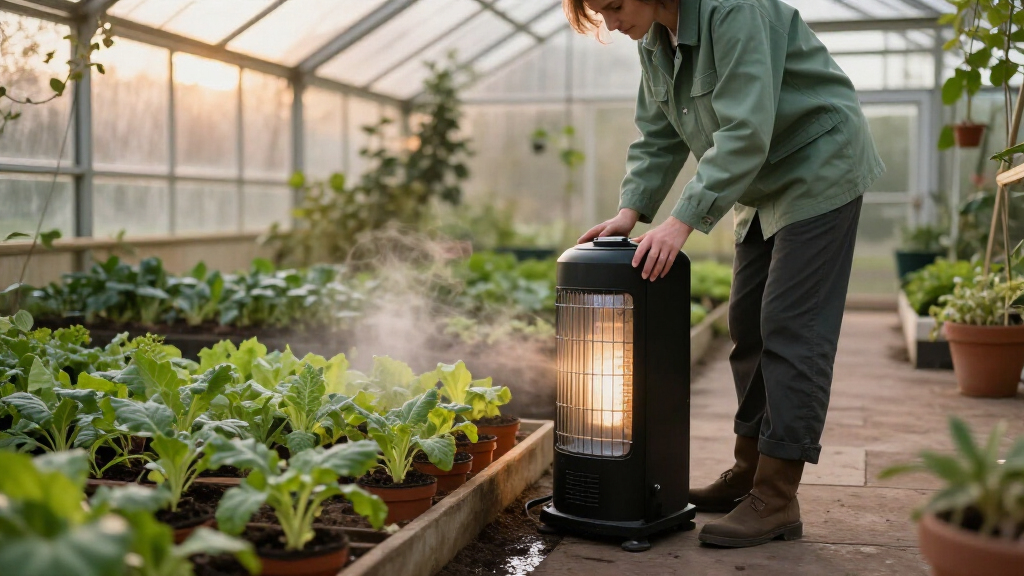
I compared the 14 listed heaters on the factors that most affect greenhouse use: stated wattage, thermostat type, fan or airflow functions, named safety features, and fit for different growing spaces. I gave greater weight to clear, useful distinctions than to broad feature claims: a heater with a defined digital control or an explicit overheat-protection feature is easier to match to a specific need than one with fewer details in its name.
The ranking favors versatility and practical control for a typical small greenhouse, which puts the VEVOR 1500W thermostat model first as a straightforward starting point. Models with digital controls, added airflow, or app-based functions rank higher for buyers who need those capabilities, while the 700W VIVOSUN is judged for compact grow tents rather than raw heating coverage. Several listings share similar names and specifications, so I treat their stated differences cautiously and recommend confirming the exact model details before buying.
| greenhouse heater | Heating method |
|---|---|
| VEVOR 1500W Greenhouse Heater | Forced air |
| SEEYANG 1500W Greenhouse Heate | — |
| ORAVIONA 1500W PTC Greenhouse | Forced air |
| Dr. Infrared Heater DR218 Gree | — |
| VEVOR 1500W Electric Greenhous | Forced air |
| Pasapair 1500W WiFi PTC Greenh | PTC ceramic |
| BioGreen PALMA Electric Greenh | — |
| SmterCon Greenhouse Heater wit | Convection |
| TRUSTECH Greenhouse Heater wit | PTC ceramic |
| Roodike 1500W Blower Heater wi | — |
| VEVOR 1500W Greenhouse Heater | Forced air |
| VEVOR 1500W Greenhouse Heater | — |
| VIVOSUN AeroFlux 700W PTC Grow | PTC heating |
| VEVOR 1500W Greenhouse Heater | — |
Factors to Consider When Choosing Greenhouse Heaters
Picking a greenhouse heater starts with the space and the conditions you need to maintain, not the longest feature list. These factors can help you avoid paying for controls you will not use—or choosing a heater that cannot keep up with cold nights.
Match Heater Output to the Space and Coldest Nights
A 1500W label tells you the heater’s electrical draw, not exactly how warm your greenhouse will stay. Heat loss depends on enclosure size, insulation, glazing, drafts, and the gap between outdoor and target temperatures. A small, sheltered greenhouse may need less continuous heating than a larger structure with thin panels and frequent air leaks. Before choosing, estimate the coldest conditions you expect and check the heater’s stated coverage, if available, against those conditions. A common mistake is sizing for daytime comfort rather than overnight frost protection. If your space is large or exposed, reducing drafts and adding insulation may help more than expecting one portable heater to solve every cold spot.
Choose Controls for the Way You Grow
A thermostat can reduce manual adjustments by switching heat in response to temperature, but control type affects how easy it is to set and monitor. A digital thermostat may make setpoints easier to read, while app features can be useful when you want remote access or grow-room data. Simpler controls can be a better fit if you only need basic frost protection and prefer fewer setup steps. Check whether the thermostat’s sensor placement and temperature range suit your layout; a sensor beside the heater may not reflect conditions at plant height across the greenhouse. Also think about what happens after a power interruption and whether the unit resumes its prior settings. Paying extra for connected control makes the most sense when remote monitoring changes how you manage the space.
Decide Whether You Need Air Circulation
A fan can distribute warm air more evenly than a heater that radiates heat from one position, which may help limit cold pockets in a compact enclosure. However, airflow is not automatically beneficial for every crop or setup: a strong direct stream can dry foliage or disturb delicate seedlings. Consider whether you already use circulation fans and whether the heater’s fan can serve both roles. Fan-equipped options add moving parts and may create more operating noise than a simple heating unit. Position airflow to mix greenhouse air rather than blast plants, and keep the heater clear of leaves, curtains, and stored supplies. If your only goal is maintaining a minimum temperature in a small area, an added fan may not be worth the extra complexity.
Treat Electrical Capacity and Placement as Part of the Purchase
Many models in this roundup are rated at 1500W, so check that the outlet and circuit can handle the load alongside other equipment. Avoid assuming that an extension cord is suitable; follow the manufacturer’s instructions and local electrical guidance, especially in a damp greenhouse. Keep the heater on a stable surface with clear space around air intakes and outlets, and prevent water from reaching the unit. Overheat protection is a useful named feature, but it does not replace safe placement or supervision. If your greenhouse has moisture, consider how the heater is rated for that environment rather than relying on its use in a greenhouse listing. A qualified electrician can help if the circuit capacity or outdoor electrical setup is uncertain.
Compare Safety Features Without Treating Them as Guarantees
Product names sometimes call out overheat protection, but safety details can differ even among heaters with similar wattage and appearance. Look for the full manufacturer specifications and instructions for automatic shutoff, placement clearance, and use around moisture. Do not infer that every VEVOR model includes the same protection just because several have similar names. A thermostat controls temperature; it is not a substitute for a safety cutoff or careful installation. Keep combustible materials away and inspect cords and plugs regularly for wear. If the listing does not clearly describe a feature you need, verify it with the seller or manufacturer before purchase.
Think About Operating Cost and Maintenance Before Upsizing
Electric resistance heaters convert electricity into heat at the unit, so a higher wattage can warm a space faster but also draws more power while running. Your actual energy use depends on how long the thermostat calls for heat, local electricity rates, and how quickly the greenhouse loses warmth. Better sealing, thermal curtains, or insulating the north-facing wall can reduce run time and may be a smarter first investment than moving to a more feature-rich heater. Fans and digital controls also add components that may need occasional cleaning or checking. Leave access around vents so dust and plant debris do not build up, and follow the care instructions for each model. Buyers who need dependable overnight protection should weigh running conditions over a season, not just the initial feature list.
Frequently Asked Questions
Is a 1500W greenhouse heater enough for my greenhouse?
It depends on the greenhouse’s volume, insulation, air leakage, and the temperature difference you need to maintain. The 1500W models in this roundup are a common format, but wattage alone does not establish a reliable coverage area. Check the manufacturer’s coverage guidance and compare it with the coldest nights in your location. A small, well-sealed greenhouse may need less heat than a larger, drafty one. If you are unsure, improve insulation and monitor temperatures at plant level before relying on a single heater for frost protection.
Should I choose a digital thermostat or an app-controlled heater?
A digital thermostat is a practical choice if you want clear settings at the unit without adding connectivity. App control can help when you need to check or adjust conditions remotely, but it is useful only if the app features fit your routine and the greenhouse has a dependable connection. The VIVOSUN AeroFlux adds app and VPD functions, making it more specialized than a basic thermostatic heater. Confirm which readings and controls are included rather than assuming every app feature is available on every model. If you mainly need automatic frost protection, straightforward thermostat control may be enough.
Do I need a heater with a fan, or should I buy a separate circulation fan?
A built-in fan can spread heated air around a small greenhouse and reduce the chance that warmth stays concentrated beside the unit. A separate circulation fan gives you more freedom to position airflow and run it independently when heat is not needed. Think about crop sensitivity, existing ventilation, and whether the heater’s fan can provide gentle air movement without drying plants. The BioGreen PALMA and several VEVOR listings combine heat and fan functions, while other models focus more directly on heating. If even distribution is a recurring problem, compare airflow details before choosing a combined unit.
Can I run a greenhouse heater through an extension cord?
Do not assume an extension cord is safe for a high-draw heater. A 1500W appliance can place a substantial load on a circuit, and cord suitability depends on its rating, length, condition, and the manufacturer’s directions. Greenhouse moisture adds another concern, since plugs and connections need protection appropriate to the environment. Use a properly rated outlet and follow the heater manual and local electrical rules; ask an electrician if you are uncertain about the circuit. Avoid daisy-chaining cords or leaving connections where water can collect.
Which type is better for a small grow tent: a 1500W heater or the 700W VIVOSUN AeroFlux?
The 700W VIVOSUN is the more directly targeted option among these listings for a compact grow tent, especially if its app and VPD features match your growing setup. A 1500W model may be more heat output than a small enclosure needs, though the right choice still depends on insulation and local temperatures. More wattage does not automatically mean more precise temperature control or lower operating cost. Check the heater’s specified coverage and minimum settings, then monitor the tent at plant level. If you want simple heating without connected features, a smaller suitable heater with a thermostat may be the less complicated route.
Conclusion
For a typical small greenhouse, I’d choose the VEVOR 1500W Greenhouse Heater with Thermostat as the best overall starting point because its stated thermostat function addresses the basic need for controlled heat. The VEVOR 1500W Electric Greenhouse Heater with Fan is my best-value style pick for buyers who want heat plus airflow in one unit, while the BioGreen PALMA is the stronger premium fit for growers who prioritize a digital thermostat and integrated fan. Beginners may prefer a straightforward thermostatic model over app-based controls; the SEEYANG is worth a look if a digital thermostat is a priority. For a compact grow tent with app and VPD needs, choose the VIVOSUN AeroFlux 700W. Before ordering any similarly named VEVOR model, verify the exact fan and protection features, then match the heater to your greenhouse’s electrical capacity and expected heat loss.
Columbus Day / Indigenous Peoples' Day Picks
long weekend sales
As an affiliate, we earn on qualifying purchases.