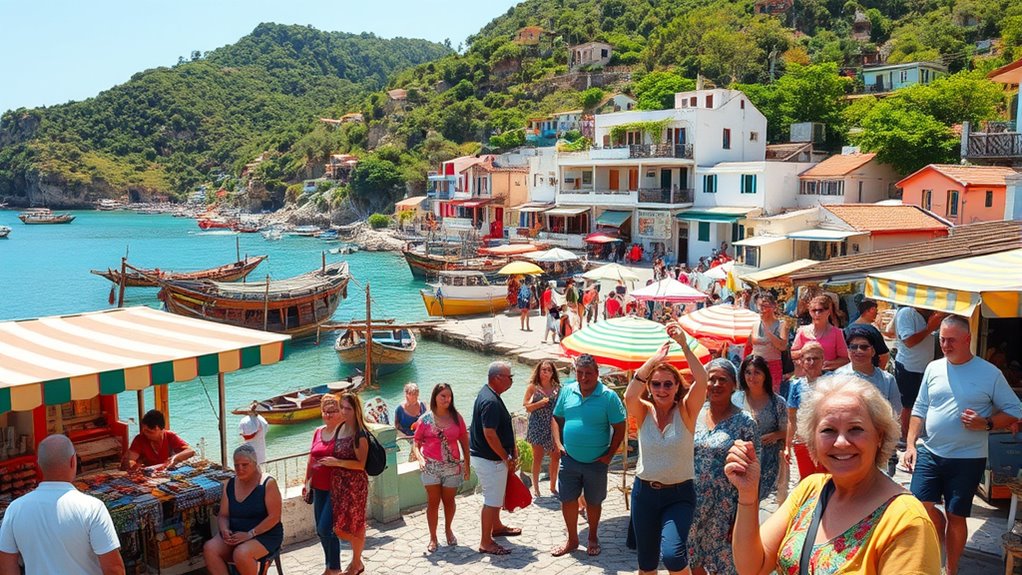

Travel and tourism can both help and hurt local communities. When you visit responsibly, you support local artisans, preserve traditions, and boost the economy. However, if you’re not careful, tourism can lead to cultural erosion, commercialization, and environmental damage. Over-tourism may cause communities to lose their authenticity and strain local resources. To make a positive impact, it’s essential to understand how your choices influence destinations—discover more about fostering sustainable travel practices.
Key Takeaways
- Travel boosts local economies but can cause cultural erosion and commercialization of traditions.
- Responsible tourism promotes cultural preservation, respectful interactions, and supports local artisans.
- Over-tourism can lead to environmental degradation, habitat destruction, and waste management issues.
- Authentic cultural experiences may diminish as communities cater to tourist expectations.
- Sustainable practices and eco-friendly initiatives help balance economic benefits with environmental and cultural preservation.

Have you ever wondered why travel and tourism play such an essential role in our world? It’s because they connect us to different cultures, create economic opportunities, and foster understanding among diverse communities. But as you explore new destinations, it’s important to contemplate how your visits impact local communities and environments. Travel isn’t just about sightseeing; it’s a powerful force that can either support cultural preservation or contribute to its erosion. When tourists flock to popular sites, they often unintentionally alter the local way of life, sometimes leading to the commercialization of traditions or even the loss of authenticity. Small communities may feel pressured to cater solely to tourist expectations, diluting their unique cultural identity. Conversely, responsible tourism encourages respect for local customs and supports efforts to preserve traditions, arts, and language. By choosing to engage with local artisans or participate in cultural exchanges, you help sustain the intangible heritage that makes each community special.
At the same time, your travel choices have a significant environmental impact. Increased foot traffic in fragile ecosystems can lead to habitat destruction, pollution, and resource depletion. Popular destinations often struggle with waste management and overuse of water and energy, which can harm local flora and fauna. If you’re mindful of your environmental footprint—by minimizing waste, respecting protected areas, and supporting eco-friendly accommodations—you can help mitigate these issues. Sustainable tourism practices are designed to balance the economic benefits of travel with the health of the environment, ensuring that future generations can enjoy these destinations too. It’s up to you to educate yourself about the places you visit and to make conscious choices that prioritize conservation. When you support local businesses that prioritize eco-friendly practices, you contribute to a more sustainable tourism industry. Additionally, understanding the regulations and policies related to travel and tourism can help you navigate your responsibilities as a visitor and advocate for ethical tourism practices.
Ultimately, your role as a traveler is to be a positive influence rather than a source of harm. When you approach travel with awareness and respect, you can help preserve cultural heritage and lessen environmental impact. It’s a delicate balance—your curiosity and desire to explore shouldn’t come at the expense of the communities and ecosystems you visit. Instead, your travel can become a force for good, fostering cultural preservation and environmental sustainability. By making informed decisions, supporting local initiatives, and practicing responsible tourism, you actively contribute to the well-being of the places you love to visit. In this way, you’re not just a visitor—you become a steward of the world’s diverse cultures and natural landscapes.

1Mii Y8+ Hybrid Active Noise Cancelling Headphones, 100H Ultra Playtime, Bluetooth 6.0 Over Ear, Wireless Hi-Res Audio & Deep Bass, Comfort for Travel & Home Office, AI Chat & Custom EQ via APP, Black
AI, SEAMLESSLY INTEGRATED: The 1Mii Y8+ enables on-the-go AI voice chat, English practice, contextual learning, and real-time translation...
As an affiliate, we earn on qualifying purchases.
Frequently Asked Questions
How Can Travelers Ensure They Support Sustainable Tourism?
To guarantee you support sustainable tourism, focus on responsible packing by minimizing waste and choosing eco-friendly products. Practice cultural sensitivity by respecting local customs, traditions, and communities. Engage with local businesses and artisans, and avoid activities that harm the environment or exploit people. Your mindful choices help preserve destinations, benefit local economies, and foster genuine connections, making your travel positive for both you and the communities you visit.
What Are the Long-Term Impacts of Tourism on Local Cultures?
Tourism can greatly impact local cultures over time. Your visits might promote cultural preservation by supporting local artisans and traditions, but they can also lead to authenticity erosion if you don’t engage respectfully. By being mindful, you help maintain cultural identity and ensure that tourism benefits the community. Avoid superficial experiences and seek genuine interactions to help preserve the unique aspects of the culture you’re visiting.
How Do Local Communities Benefit Financially From Tourism?
You see, local communities benefit financially from tourism through economic benefits like job creation and increased income for small businesses. Tourism boosts community development by attracting investments in infrastructure and services, which improves residents’ quality of life. When you visit, you’re helping these communities grow stronger, supporting local economies, and fostering sustainable development, ensuring that tourism brings lasting positive change rather than just short-term gains.
What Measures Can Be Taken to Reduce Overtourism?
Think of overtourism as a wildfire threatening your favorite destination. To tame it, you can support crowd management strategies that spread visitors more evenly and advocate for responsible infrastructure development. These measures act like firebreaks, preventing damage and preserving local charm. By actively participating in or promoting sustainable tourism practices, you help protect communities, ensuring tourism benefits everyone without overwhelming the very places we cherish.
Are There Ways to Promote Eco-Friendly Travel Practices?
You can promote eco-friendly travel by choosing eco-conscious accommodations that prioritize sustainability and reduce environmental impact. Opt for green transportation options like biking, walking, or using public transit instead of cars. When planning trips, support local businesses that follow eco-friendly practices. By making these choices, you help protect the environment, reduce your carbon footprint, and encourage more sustainable tourism, ultimately benefiting both travelers and the communities you visit.

Soundcore Anker Life Q20 Hybrid Active Noise Cancelling Headphones, Wireless Over Ear Bluetooth Headphones, 60H Playtime, Hi-Res Audio, Deep Bass, Foam Ear Cups, Travel, Office, USB-C Charging
Incredible Sound Loved by 20 Million+ People
As an affiliate, we earn on qualifying purchases.
Conclusion
As you explore new destinations, remember you’re holding a double-edged sword. Your choices can either nurture local communities like a gentle rain or threaten them like a storm. By traveling responsibly, you become a steward of change, ensuring that tourism becomes a bridge rather than a barrier. So, choose wisely—your journey has the power to plant seeds of growth or cause roots to wither. Together, we can turn travel into a force for good.

Active Noise Cancelling Headphones, Upgraded Wireless Bluetooth Headphones Over Ear with ENC Mic, HiFi Stereo Deep Bass, Noise Canceling Headphones Lightweight, BT 5.4, for Travel/Office/Home, Black
Industry-Leading 96.6% Noise Cancellation: Equipped with advanced Active Noise Cancelling (ANC) technology, these wireless Bluetooth headphones can reduce...
As an affiliate, we earn on qualifying purchases.

Amazon Basics Hybrid Active Noise Cancelling Headphones, 35 Hours Playtime with ANC on and 45 Hours with ANC Off, Wireless, Over Ear Comfortable Fit, Bluetooth, One Size, Black
EXPERIENCE THE PERFECT SOUND BALANCE – Hybrid active noise cancellation technology and dual 40mm drivers (speakers) provide a...
As an affiliate, we earn on qualifying purchases.

Emma is a culinary expert from New York City, USA, with extensive experience in gourmet cooking and food journalism. She collaborates with prestigious food publications and high-end restaurants, bringing exquisite taste and culinary insights to the A Luxury Lifestyle platform. Emma’s expertise elevates our gastronomic offerings.