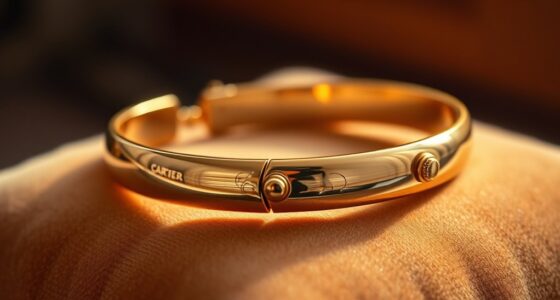
To care for vintage and antique pieces, handle them gently and use appropriate cleaning methods that won’t damage their delicate surfaces or patina. Store or display items in stable, secure environments with controlled humidity and lighting to prevent deterioration. Avoid aggressive cleaning or irreversible repairs, instead opting for gentle, reversible techniques that respect the item’s original craftsmanship. If you want to learn how to preserve these treasures properly, keep exploring reliable tips and expert advice.
Key Takeaways
- Use gentle cleaning methods and avoid harsh chemicals to preserve the item’s patina and delicate surfaces.
- Support and handle items carefully, supporting weight evenly to prevent stress or damage.
- Maintain stable environmental conditions—control humidity, temperature, and lighting—to prevent deterioration.
- Regularly inspect for signs of damage or deterioration and address issues promptly with professional guidance.
- Store and display items securely on padded mounts in low-traffic areas to prevent accidents and ensure safety.
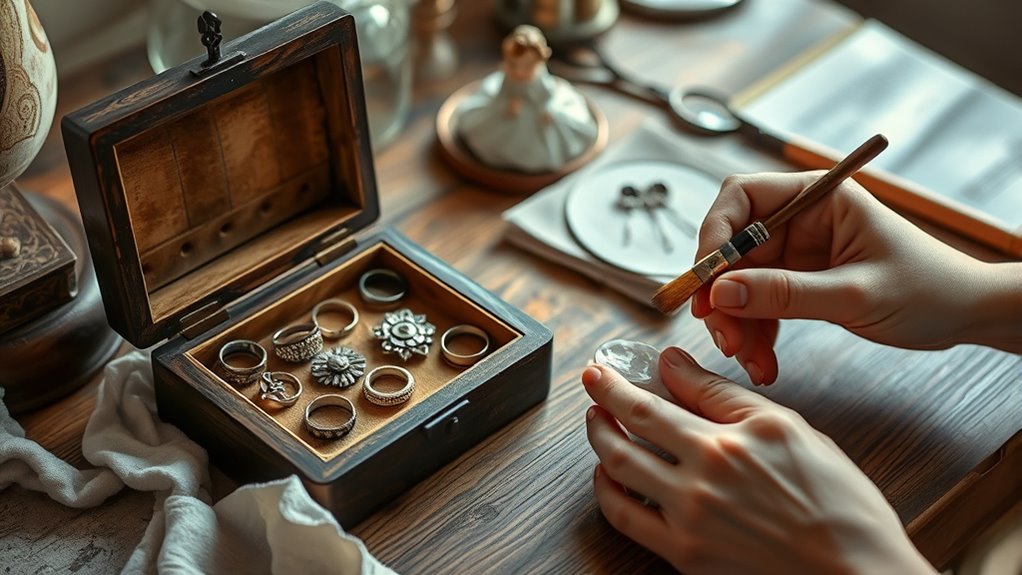
Caring for vintage and antique pieces requires more than just regular cleaning; it demands understanding their unique materials and histories. These items often carry the marks of time, and preserving their integrity involves careful techniques tailored to their specific needs. When it comes to restoration, you must be cautious and precise, using appropriate restoration techniques that respect the original craftsmanship. Avoid aggressive methods that could damage delicate surfaces or remove valuable patina, as this can markedly diminish their worth and authenticity. Instead, focus on gentle cleaning, consolidating fragile parts, and, when necessary, consulting professionals for repairs that require specialized skills. Proper restoration can stabilize your pieces and extend their lifespan, but over-restoring can strip away their character, so always aim for subtle, reversible interventions. Additionally, staying informed about emerging trends in cybersecurity can help protect digital records of your collection from potential threats.
Display safety is equally important when caring for vintage and antique items. Many of these pieces are fragile and can pose risks if not handled or displayed properly. For example, old ceramics, glassware, or wooden furniture might have weakened joints or surfaces prone to cracking. To prevent accidents, ensure your display areas are stable and secure. Use padded stands or mounts that evenly distribute weight and avoid placing items in high-traffic zones where they could be knocked over. Keep an eye out for any signs of deterioration—such as cracks, wobbling, or loose parts—and address these issues before placing items on display. Additionally, consider environmental factors like humidity, temperature, and lighting. Excess moisture can cause wood to warp or mold, while bright lights might fade delicate paints or textiles. Maintaining a controlled environment not only protects your pieces but also ensures they remain safe for display.
Handling your vintage and antique pieces with care is essential for their preservation. Always wash your hands before touching fragile surfaces, and use gloves if necessary to prevent oils and dirt from transferring. When moving or repositioning items, do so gently, supporting their weight and avoiding sudden movements that could cause stress or breakage. If you’re unsure about how to clean or restore a particular piece, seek guidance from experts or reputable resources. Remember, patience and attention to detail are your best tools for preserving these treasures. By applying proper restoration techniques and prioritizing display safety, you ensure that your vintage and antique collection remains beautiful, valuable, and safe for years to come.

Horace Whitlock's Clock Oil Kit: This kit Comes Complete to Clean and Oil Any Mechanical Clock; Including a downloadable, Easy to Follow Step by Step Instructions.
Tested on over 3,000 Grandfather clocks, Wall clocks as well as mantle clocks over the past 10 years…
As an affiliate, we earn on qualifying purchases.
As an affiliate, we earn on qualifying purchases.
Frequently Asked Questions
How Do I Identify Authentic Vintage Versus Replica Items?
To identify authentic vintage items versus replicas, start with authentication tips like examining craftsmanship, materials, and markings. Authentic pieces often show signs of age, such as patina or wear, while replicas may have uniform finishes or modern tags. Watch for replica indicators like plastic parts, incorrect logos, or machine-made details. Trust your instincts, do thorough research, and compare with verified sources to confidently distinguish genuine vintage from counterfeit.
What Are Common Mistakes to Avoid When Restoring Antiques?
Think of restoring antiques as dancing with history; rushing can lead to restoration pitfalls. Avoid common preservation mistakes like over-restoring, which strips character, or using harsh chemicals that damage delicate surfaces. You should respect the piece’s original craftsmanship, knowing when to preserve its patina and when to carefully repair. Patience and gentle attention keep the soul of your antique alive, preventing unnecessary damage and ensuring it retains its true vintage charm.
How Can I Determine the Age of My Vintage Pieces?
To determine the age of your vintage pieces, start with age estimation by examining maker’s marks, labels, or stamps. Research the historical context of design styles, materials, and manufacturing techniques. Look for signs of wear, craftsmanship details, or unique features. Consulting antique guides or experts can also help refine your estimate. Combining these clues allows you to accurately gauge your piece’s age and appreciate its historical significance.
What Are Eco-Friendly Methods for Cleaning Fragile Antiques?
Your antique treasures deserve gentle care, so skip harsh chemicals and opt for eco-friendly cleaning methods. Use a soft cloth dampened with organic preservation solutions like diluted white vinegar or mild soap, avoiding excess moisture. Consider natural options like baking soda paste or essential oils for delicate surfaces. These eco-friendly cleaning techniques protect your pieces and the environment, ensuring your vintage collection remains stunning for generations to come—truly a preservation miracle.
How Should I Store Vintage Jewelry to Prevent Tarnish?
You should store your vintage jewelry in airtight containers or anti-tarnish pouches to prevent tarnish. Keep pieces separated using soft cloth or individual compartments to avoid scratches. Store jewelry in a cool, dry place away from sunlight and humidity, which can accelerate tarnishing. Regularly clean and check your jewelry to catch tarnish early. Proper jewelry storage and tarnish prevention techniques help maintain its vintage charm and value over time.

NIUBEE Acrylic Display Case, Clear Display Case for Funko Pop Figures, Wall Mounted or Desktop Dustproof Display Cabinet Box for Collectibles,Rock,Crystals,Mini Toys,Amiibo (2 Tiers
【Size Will Fit Your Figures?】This display case is suitable for figures with a max height of less than…
As an affiliate, we earn on qualifying purchases.
As an affiliate, we earn on qualifying purchases.
Conclusion
Remember, a stitch in time saves nine. By handling your vintage and antique pieces with care, you preserve their beauty and value for generations to come. Regular cleaning, gentle storage, and mindful maintenance go a long way in keeping these treasures looking their best. Treat each item as a precious link to the past, and you’ll ensure they remain timeless reminders of history and craftsmanship. After all, taking care of your antiques today guarantees their charm tomorrow.

Sosoport 2pcs Transparent Nursery Pot Lids for Control Heat Preservation for Healthier Plant Growth for and Garden Use
Humidity dome: made of quality plastic material, it is safe and durable for use.
As an affiliate, we earn on qualifying purchases.
As an affiliate, we earn on qualifying purchases.
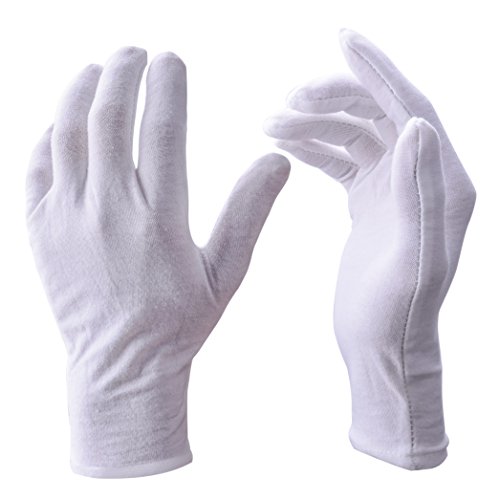
Zealor 12 Pairs White Cotton Gloves Soft Cloth Dust Hand Gloves Work for Men Women Art Crafting Handling, Eczema, BBQ, Coin Jewelry Watch Inspection, Dry Hands Sleeping, Archival, Large
Great Value Cotton Gloves: You will get 12 pairs white cotton gloves, total 24pcs; Enough to meet your…
As an affiliate, we earn on qualifying purchases.
As an affiliate, we earn on qualifying purchases.

Born in Dubai to Pakistani parents, Aisha deeply understands Middle Eastern and South Asian luxury markets. She excels in forging strategic partnerships with top-tier luxury brands worldwide, fostering cross-cultural collaborations that enhance our global presence.