
TL;DR

Get your wardrobe favorites delivered free — and shop member deals
- Fast, free delivery on millions of items
- Access to Prime Big Deal Days deals on October 6–7
- Prime Video, Amazon Music and more included
Luxury men’s watches bring together movement, materials, design, and brand heritage, but their value depends on how well they suit your wrist, routine, and budget. Compare mechanical and quartz movements, try on different case shapes, account for service and insurance, and verify authenticity when buying pre-owned.
You’ll learn what you’re paying for, how movement and fit change the experience, and what to check before buying new or pre-owned. That way, you can choose a watch you’ll enjoy wearing long after the first glance.
Try a watch on and judge thickness, lug-to-lug length, bracelet shape, and balance as well as case diameter.
Choose mechanical for the winding ritual and engineering; choose quartz for typical accuracy and convenience.
Check service guidance, water resistance, and potential care costs before purchase.
For a pre-owned watch, verify condition, seller terms, and service history; papers alone do not establish authenticity.
Buy for the design and wearing experience you enjoy, since resale prices can shift.
What makes a luxury watch worth wearing every day?
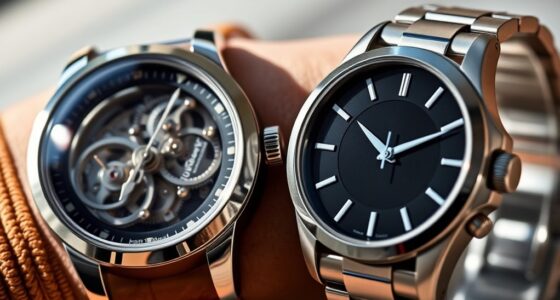
A luxury men’s watch is a watch positioned around a blend of design, construction, materials, movement, and brand history, rather than one universal price or quality standard. Its value to you comes from how those qualities meet your taste and routine. A refined steel case and a dependable movement may matter more than an elaborate logo or precious metal.
Look closely at the details your hand and eye meet every day: the smooth turn of a crown, the way light catches a brushed bracelet, or the crisp edge of a sapphire crystal. The phrase “Swiss-made” refers to a regulated origin designation, but it does not, by itself, tell you whether a watch suits you or how it performs.
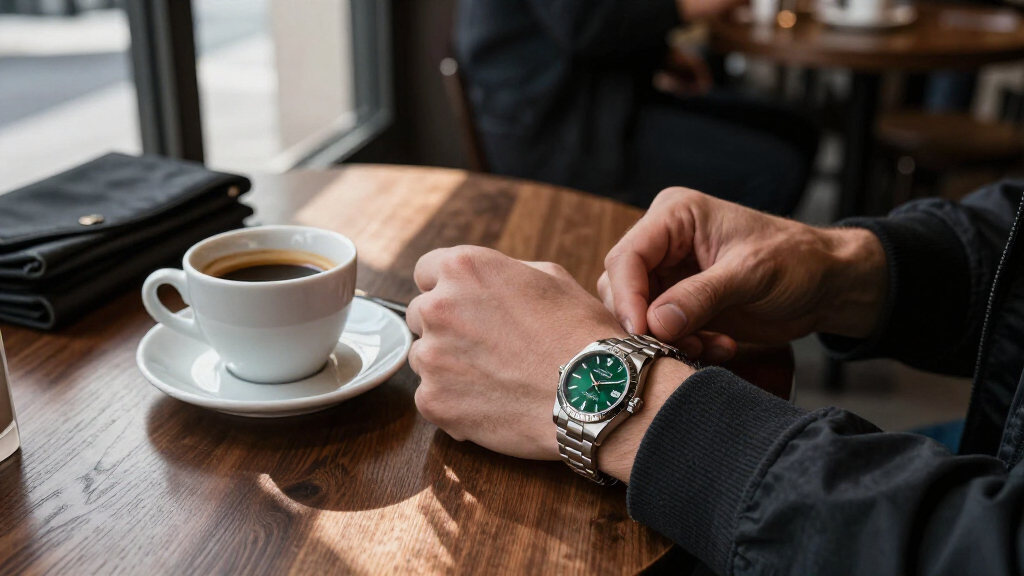
Imagine comparing two watches over coffee. One carries a familiar name; the other fits under your shirt cuff and feels balanced as you lift your cup. That small daily comfort can make the quieter choice the one you reach for most.
Which movement fits your routine: mechanical or quartz?
Luxury men’s watches use several movement types, and the best fit depends on whether you value hands-on tradition, convenience, or precision. Mechanical movements store energy in a mainspring; automatic models wind as your wrist moves, while manual-wind watches need regular winding. Quartz watches run on a battery and are generally more accurate and lower maintenance.
If winding your watch each morning sounds like a satisfying ritual, a manual mechanical model may suit you. If you want to pick up a watch after a week in a drawer and trust it to keep close time, quartz can be the practical choice. Some makers also use spring-drive or other hybrid technologies, blending different approaches to timekeeping.
Mechanical watches can gain or lose seconds each day, depending on the movement and conditions, while quartz is typically more accurate. Certification can show that a movement was tested to defined standards, but it cannot promise identical performance on every wrist. According to the supplied research overview, accuracy varies by watch and conditions.
How do you pick a watch that fits your wrist and week?
Choose a watch by trying it on and imagining where you’ll wear it, because comfort depends on more than case diameter. Thickness, lug-to-lug length, bracelet shape, and how the watch balances on your wrist all matter. A case that looks neat on a product page can feel top-heavy beneath a jacket sleeve.
Start with these steps when you’re comparing candidates:
- Name your main use. A dress watch suits a formal outfit; a dive-style watch may suit weekends and water activities; a chronograph adds a stopwatch function.
- Check the proportions. Try on the case, fasten the bracelet, and notice whether the lugs extend comfortably across your wrist.
- Test the details. See whether you can read the dial quickly and use the crown or pushers without fuss.
- Match the care to your habits. Check water resistance and ask about servicing before you wear a watch in conditions that could damage it.
For example, if you spend the day at a desk and wear fitted cuffs, a slim case may feel easier than a thick sports model. A dive watch’s water-resistance rating is not a blanket promise: seals age, so have a watch intended for swimming checked periodically.
What do materials and complications add to the price?
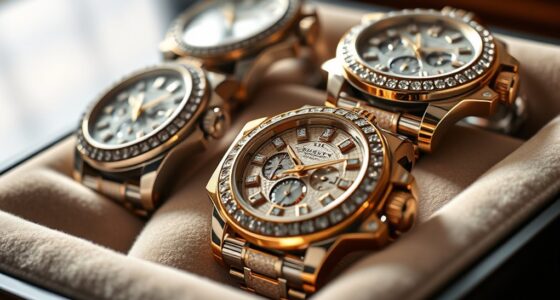
Materials and finishing shape both the look and feel of a watch, while extra functions can add mechanical complexity. Stainless steel, gold, platinum, titanium, ceramic, and sapphire crystal each bring different colors, weights, and care needs. Case finishing, bracelet construction, dial work, and movement assembly can all contribute to a watch’s price.
A polished gold case flashes warmly in evening light, while titanium feels lighter on the wrist than steel. Neither material is automatically the better choice: think about comfort, everyday wear, and what you enjoy seeing when you glance down. Dial colors such as green, blue, salmon, and textured finishes have gained visibility in recent years, but trends vary by model.
Complications are functions beyond basic time display, such as a date, moon phase, or chronograph. They can make a dial more engaging and useful; they can also increase price and service complexity. If you rarely time anything, a chronograph may appeal mainly for its layered subdials and pushers—and that’s a perfectly reasonable reason to choose one.
How should you buy new or pre-owned with confidence?
Buy new if you value a straightforward purchase history and direct brand warranty; buy pre-owned if you want access to discontinued models or a different price point. Either route deserves careful research, because documentation and a familiar brand name do not prove authenticity. A reputable seller should welcome questions about condition, return terms, service records, and original parts.
Before buying pre-owned, ask who inspected the watch, whether parts have been replaced, and what service history comes with it. Serial numbers, provenance, and records help, but have a qualified watchmaker or brand service center inspect the watch when appropriate. For instance, an online listing with attractive photographs may still leave you unable to judge bracelet wear or whether the movement needs attention.
Pre-owned markets and certified programs have become more visible, while digital tools make it easier to compare listings. Yet seeing a watch in person lets you judge dial color and fit under ordinary light. If you buy from an authorized dealer, ask what warranty coverage applies; from any seller, read the return terms before paying.
What will owning a luxury watch really cost?
The purchase price covers only part of ownership: servicing, repairs, insurance, and secure storage can add costs over time. Mechanical watches need periodic servicing, but the right interval depends on the maker, movement, age, condition, and use. Follow the guidance for the specific model, and ask a watchmaker to assess an older watch or one that is running poorly.
Resale value is uncertain. Some sought-after models from Rolex, Patek Philippe, and Audemars Piguet have held value well in certain periods, but prices fluctuate with demand, condition, originality, provenance, and timing. A limited production run does not guarantee a future premium.
Picture someone buying a watch for a milestone and enjoying it at family dinners for years. That enjoyment can be worth the purchase even if resale prices change. Treat a watch as a personal possession or collectible you value—not a substitute for diversified investments.
Frequently Asked Questions
Are mechanical watches better than quartz?
They offer different experiences. Mechanical watches appeal to many wearers for their engineering and winding ritual; quartz watches are typically more accurate and convenient. Pick the one that suits how you want to wear and care for your watch.
Which luxury watch brands should I consider?
That depends on your budget, style, intended use, and service access. You may encounter Rolex, Omega, Cartier, Jaeger-LeCoultre, IWC, and Grand Seiko across different styles and categories. Compare particular models and how they fit rather than choosing by brand name alone.
Do luxury men’s watches hold their value?
Some sought-after models have held value well in certain periods, but no resale result is guaranteed. Demand, condition, originality, provenance, and market timing all affect price. Buy primarily because you enjoy wearing or collecting the watch.
Can I swim or shower with my watch?
Check the specific model’s water-resistance rating and current condition before exposing it to water. Water resistance can decline as seals age, and hot water, soap, or temperature changes can pose extra risks. Have a watch intended for water use checked periodically.
How can I check if a pre-owned luxury watch is authentic?
Buy from a seller with clear return terms, request service history and condition details, and have the watch inspected by a qualified watchmaker or brand service center when appropriate. Papers and serial numbers can help establish a history, but neither proves authenticity on its own.
Conclusion
Choose the watch that feels right on your wrist, fits your routine, and leaves room in your budget for care. A good watch should make the moment you glance at it feel a little more yours—whether its quiet tick comes from steel, gold, or a movement you wind by hand.Fall Picks
fall essentials
As an affiliate, we earn on qualifying purchases.