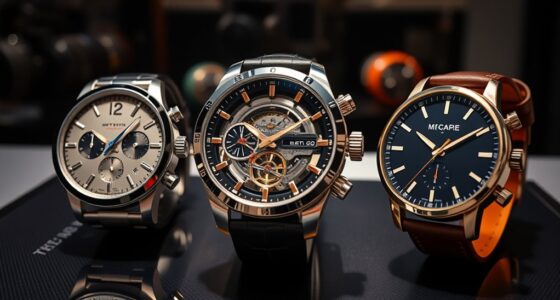

To assess a watch’s visual quality without opening it, start by examining the strap—look for precise stitching on leather, tight links on metal bracelets, and smooth surfaces on rubber straps, as these indicate good craftsmanship. Check the dial’s finish for smoothness, clarity, and perfect alignment of markers and hands. Look for signs of attention to detail and consistent surface treatments on the case. Continuing further will reveal even more tips to spot high-quality craftsmanship.

Get your wardrobe favorites delivered free with Prime
- Fast, free delivery on millions of items
- Prime Video, Amazon Music and more included
- Member-only deals all year
Key Takeaways
- Examine the strap for precise finishing, consistent texture, and high-quality materials, indicating durability and craftsmanship.
- Check the dial surface for smoothness, even finish, and accurate marker alignment, reflecting attention to detail.
- Inspect the case for sharp, well-finished edges and uniform surface treatments, revealing craftsmanship.
- Look for signs of careful assembly, such as tight links in metal bracelets and seamless strap connections.
- Observe overall consistency in surface quality and finishing details to assess the watch’s manufacturing standards.
Ever wonder how to quickly assess the quality of a watch just by looking at it? When you examine a watch without opening it, your eyes should focus on a few key details that reveal its craftsmanship. First, look at the watch strap. A high-quality strap, whether leather, metal, or rubber, will display precise finishing. Leather straps should have even stitching, smooth edges, and a consistent texture. Metal bracelets should feel solid, with tight links and smooth finishing, free of rough edges or sharp corners. Rubber straps, if present, should have a uniform surface without visible imperfections or seams. The strap’s quality gives you an immediate sense of the watch’s overall durability and attention to detail. Additionally, the manufacturing standards evident in the strap’s craftsmanship can reveal much about the watch’s overall quality.
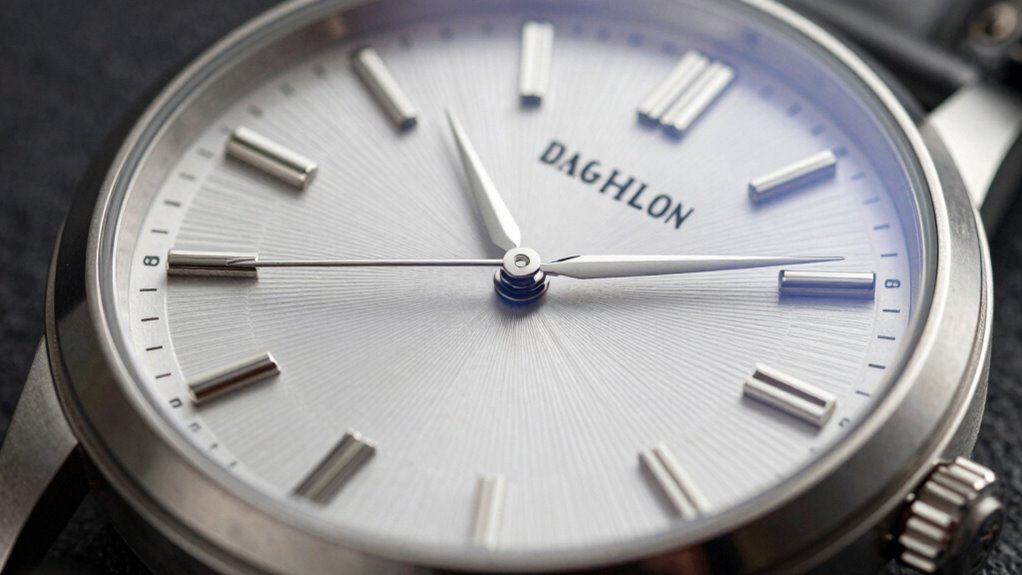
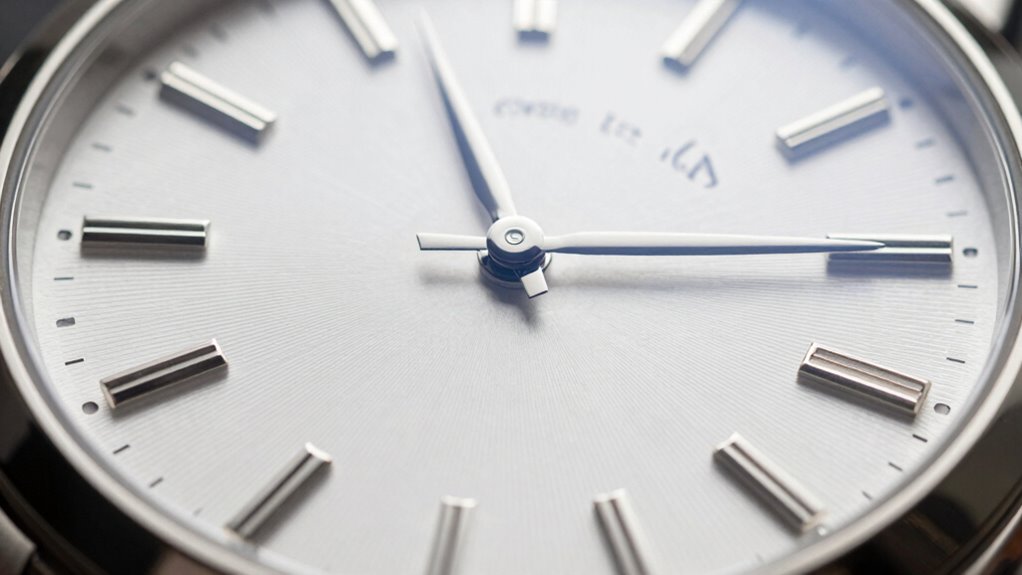
Next, shift your focus to the dial finish. This is where many watches reveal their true craftsmanship. A well-made dial will have a clean, even surface, with no visible blemishes or inconsistencies. The finish—matte, sunburst, or glossy—should be smooth and well-applied, with no uneven patches or streaks. Light should reflect evenly off the dial if it’s a sunburst or glossy finish, indicating good quality. Also, check the clarity of the markers and hands. They should be perfectly aligned, without any smudges or misprints. The printing on the dial, including brand logos or minute markers, should be sharp and precise, not blurry or faded. These details reflect the attention to detail and precision manufacturing in the process. In addition, visual inspection can help identify signs of poor craftsmanship or low-quality materials. A closer look at the finishing techniques used on the case can also reveal the level of craftsmanship involved. Paying attention to the overall craftsmanship can help identify watches that are built with care and quality components.
Popular right now

Bose QuietComfort Headphones, White Smoke

Roborock Q7 M5+ Robot Vacuum and Mop with Self-Emptying Dock

Ninja Foodi DZ401 DualZone XL Air Fryer, 10 Qt, 6-in-1, Grey
As an affiliate, we earn on qualifying purchases.
Frequently Asked Questions
Can You Tell a Watch’s Movement Quality Just by Looking at It?
Yes, you can get a sense of a watch’s movement quality by examining its dial texture and hand finish. A smooth, well-crafted dial and precisely finished hands indicate good manufacturing standards. Look for clean, detailed textures and consistent finishing, which reflect the movement’s craftsmanship. While you can’t see the internal mechanics, these visual cues help you assess overall quality and attention to detail, giving you a good idea of the watch’s movement performance.
How Can You Identify a Fake or Counterfeit Watch Visually?
Did you know that about 3.3 million counterfeit watches are seized annually worldwide? To spot a fake, check the brand markings—they should be clean, precise, and consistent. Examine the dial craftsmanship closely; genuine watches feature detailed, high-quality printing and proper alignment. Fake watches often have blurry logos, uneven fonts, or misaligned elements. Trust your eyes, and remember that inconsistencies in these details usually reveal a counterfeit.
What Signs Indicate a Watch Has Been Poorly Maintained or Damaged?
You can tell a watch has been poorly maintained or damaged if you notice uneven or dull polished surfaces, which suggest neglect or rough handling. Look for visible scratch marks on the case, crystal, or bracelet, indicating rough use or accidental impacts. These signs show the watch hasn’t been cared for properly, which could affect its functionality and overall appearance. Regular cleaning and careful handling help maintain its visual quality.
Is It Possible to Determine a Watch’s Age From Its Appearance?
Yes, you can often gauge a watch’s age by examining its vintage charm and wear patterns. Look for signs like faded logos, patina on the dial, or scratches on the case, which suggest age. These visual cues tell you if a watch has been well-loved over time. However, keep in mind that some modern watches mimic vintage styles, so consider other details for a more accurate estimate.
How Do Different Materials Affect the Visual Quality of a Watch?
Different materials considerably influence a watch’s visual quality through their finish and surface reflections. For example, stainless steel often has a polished finish that creates bright reflections, while matte finishes on titanium reduce glare, giving a subtle look. Ceramic cases appear smooth and glossy, enhancing sleekness. You can tell how well a watch is made by observing these surface reflections and the consistency of the material finish, which indicates quality craftsmanship.
Conclusion
By inspecting a watch’s dial, case, and bracelet, you can confidently gauge its visual quality without opening it. Remember, a well-crafted watch often features clean, precise details and high-quality materials. Did you know that over 70% of watch buyers say their initial impression of a watch’s quality comes from its visual appearance? So, paying close attention to these details not only saves you time but helps you make smarter, more informed choices.