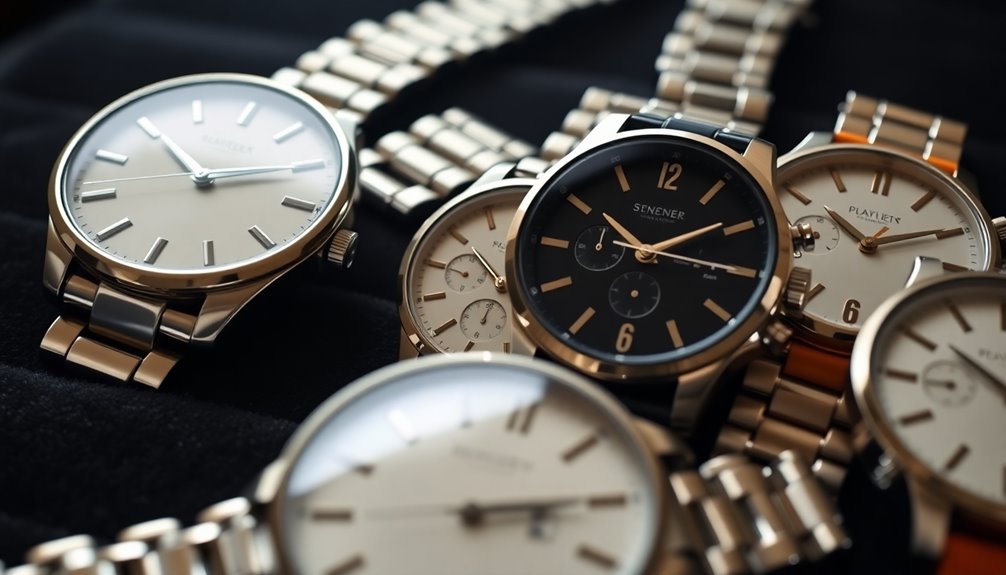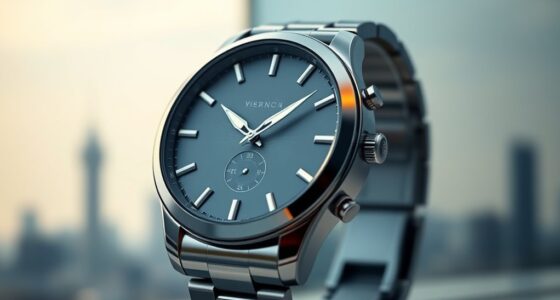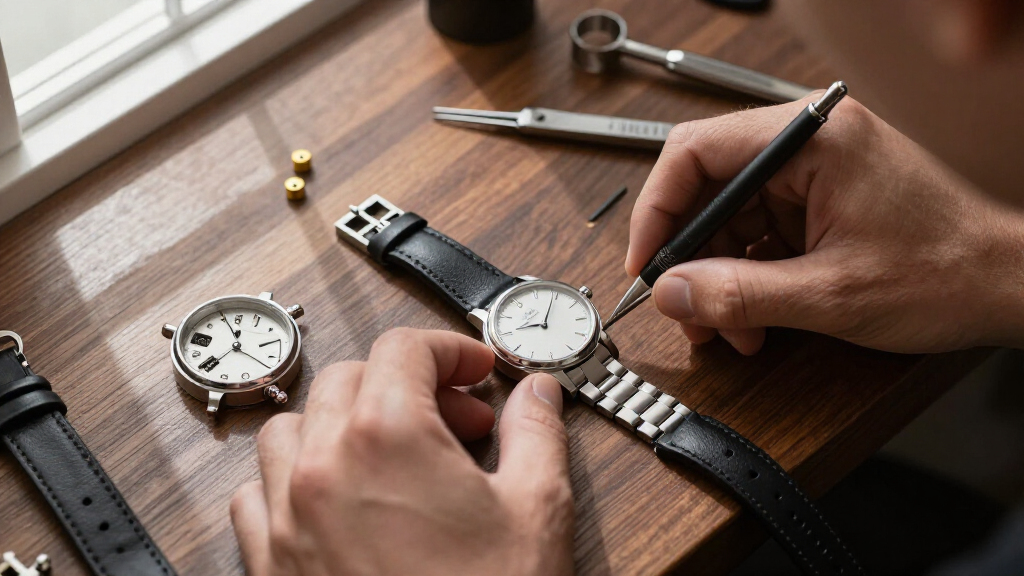

Rolex and Patek Philippe appeal to buyers who want a mechanical watch with lasting appeal, but they answer different questions. Rolex is the more practical all-rounder: its familiar designs, robust construction, and broad service network make it easy to wear often. Patek Philippe is the more specialized choice, with a stronger focus on hand finishing, traditional complications, and restrained exclusivity. That distinction matters more than a simple ranking of prestige. A buyer seeking one luxury watch for daily life may get more from Rolex; someone who values fine finishing and traditional watchmaking above convenience may find Patek Philippe worth the additional cost. The comparisons below describe the brands broadly, since details vary by model and availability.

Get your wardrobe favorites delivered free with Prime
- Fast, free delivery on millions of items
- Prime Video, Amazon Music and more included
- Member-only deals all year

Citizen Men’s Eco-Drive Blue Angels World Chronograph Watch
- ✔ Movement: Eco-Drive, light-powered
- ✔ Timekeeping: Radio-controlled atomic time; 26 time zones
- ✔ Chronograph: 1/20-second, measures up to 60 minutes

Bulova Men’s Marine Star Series B Stainless Steel Chronograph Watch, Blue Dial (96B256)
- ✔ Movement: Quartz
- ✔ Case and bracelet: Stainless steel
- ✔ Dial: Blue

Bulova Men’s Classic Sutton Automatic Watch with 24-Hour Subdial, Open Aperture, and Exhibition Caseback
- ✔ Movement: Automatic, self-winding
- ✔ Display: 4-hand with open aperture, sub-second hand, and 24-hour subdial
- ✔ Case: Silver-tone stainless steel
At a Glance
| Criteria | Rolex | Patek Philippe | Winner |
|---|---|---|---|
| Everyday durability | Strong reputation for robust cases and movements suited to regular wear; water resistance varies by model. | Well made, but many models emphasize refined dress or collectible wear; water resistance is model specific. | A |
| Watchmaking and finishing | Consistent, high-quality industrial production with careful assembly and finishing. | Greater emphasis on traditional haute horlogerie, detailed finishing, and intricate mechanisms. | B |
| Design and recognition | Highly recognizable designs and strong public brand awareness. | High status among watch enthusiasts, often expressed through more understated designs. | Depends |
| Versatility | Broad range of sport, dress, and everyday styles; many models work across settings. | Strong dress-watch and refined sports-watch choices, with a narrower practical range than Rolex. | A |
| Complications | Clear strengths in core functions such as time, date, and chronograph, depending on model. | Notable breadth of complex mechanisms and traditional complications across the collection. | B |
| Service and ownership | Large international service presence and a well-established ownership ecosystem. | Specialist service and ownership support; planning and cost can be more demanding. | A |
| Value for money | Lower entry point than Patek Philippe within the luxury category, though demand and availability can complicate buying. | Higher purchase and servicing costs buy finer finishing and watchmaking detail that enthusiasts value most. | Depends |
Citizen Men’s Eco-Drive Blue Angels World Chronograph Watch
The Citizen is the most complete all-rounder here because its luxury cues support day-to-day practicality. The anti-reflective sapphire crystal offers a more scratch-resistant choice than the mineral crystals on both Bulovas, and its Eco-Drive movement uses light rather than a replaceable battery. Atomic time synchronization and support for 26 time zones add value for frequent travelers or anyone who wants a watch that keeps itself aligned with minimal intervention.Its 1/20-second chronograph, perpetual calendar, day and date display, and power-reserve indicator make it the most function-rich option in this lineup. That breadth is also the main compromise: buyers seeking a quiet, uncluttered dial may find it visually and operationally busy. The Marine Star offers a similarly sporty chronograph approach with fewer stated timekeeping features, while the Sutton is more expressive and mechanical. With 200-meter water resistance, the Citizen is also the most capable choice for wet use, though its aviation-inspired styling may not suit a formal wardrobe as naturally as the Sutton.
Pros:
- Eco-Drive light-powered movement avoids routine battery replacement
- Atomic time synchronization and 26 time zones support travel
- Anti-reflective sapphire crystal is the strongest crystal specification in this group
- 200-meter water resistance exceeds both Bulova models
Cons:
- The multiple functions may make the dial feel busy
- Its Blue Angels styling is more sporty than traditionally formal
Best for: Buyers who want a versatile steel chronograph with low-maintenance light-powered operation, world-time utility, and stronger water resistance.
Not ideal for: Those who prefer a restrained dress watch, a mechanical movement, or a simpler dial with fewer functions.
Bottom line: For one watch to cover travel, everyday wear, and wet conditions, the Citizen offers the broadest mix of useful features and durable materials.
“For one watch to cover travel, everyday wear, and wet conditions, the Citizen offers the broadest mix of useful features and durable materials.”
Bulova Men’s Marine Star Series B Stainless Steel Chronograph Watch, Blue Dial (96B256)
The Marine Star makes the case for a luxury-leaning sports watch through stainless steel construction, a blue dial, and a six-hand chronograph. Its 1/20-second timing function measures intervals up to 60 minutes, while the calendar and small seconds hand add everyday utility. With 100-meter water resistance, it is better suited to active routines and wet conditions than the dress-oriented Sutton, although it does not match the Citizen’s 200-meter rating.Compared with the Citizen, the Marine Star keeps its proposition more focused: it supplies a conventional quartz chronograph rather than atomic synchronization, multiple time zones, or light-powered operation. That can be a plus for shoppers who want a familiar, direct setup. The important concession is the mineral crystal, which is less scratch-resistant than the Citizen’s sapphire. The stated item width is 4.1 inches, an unusual measurement for assessing watch fit, so buyers should confirm case dimensions from the seller before ordering if wrist proportions are a deciding factor. It suits a sporty wardrobe better than the Sutton’s leather-strap presentation.
Pros:
- Stainless steel case and bracelet create a cohesive sports-watch look
- Chronograph measures 1/20-second intervals up to 60 minutes
- 100-meter water resistance suits more wet-use situations than the Sutton
- Includes calendar, small seconds hand, and a 3-year limited warranty
Cons:
- Mineral crystal is less scratch-resistant than the Citizen’s sapphire
- Lacks the Citizen’s atomic synchronization, time-zone range, and Eco-Drive power
- The listed 4.1-inch item width is not enough to judge wrist fit
Best for: Buyers seeking a blue-dial stainless steel chronograph for everyday sporty wear, with useful water resistance and a straightforward quartz movement.
Not ideal for: Those who want sapphire crystal, advanced travel timekeeping, an automatic movement, or a watch primarily for formal dress.
Bottom line: The Marine Star is the sensible pick for a classic steel chronograph look, provided sapphire and travel-focused features are not priorities.
“The Marine Star is the sensible pick for a classic steel chronograph look, provided sapphire and travel-focused features are not priorities.”
Bulova Men’s Classic Sutton Automatic Watch with 24-Hour Subdial, Open Aperture, and Exhibition Caseback
The Sutton is the most traditional choice in spirit, even though its open aperture gives the dial a contemporary focal point. Its self-winding automatic movement draws power from wrist motion, and the exhibition caseback makes the movement part of the watch’s visual appeal. A sub-second hand and 24-hour subdial add detail, while the silver-tone steel case and brown croc-embossed leather strap set it apart from the two bracelet-based chronographs.This is the pick for someone who values the character of a mechanical watch over the convenience features offered by the Citizen. It does not provide the same atomic accuracy, time-zone flexibility, or battery-free light charging, and its 30-meter water resistance makes it the least suitable for swimming or frequent exposure to water in this group. The mineral crystal also falls behind the Citizen’s sapphire for scratch resistance. Against the Marine Star, the Sutton trades sporty timing and a steel bracelet for a dressier profile and a more visible movement. The leather strap needs more care than steel, especially around moisture.
Pros:
- Self-winding automatic movement offers mechanical character
- Open aperture and exhibition caseback reveal the movement
- 24-hour subdial and sub-second hand create a distinctive display
- Silver-tone steel case balances the brown embossed leather strap
Cons:
- 30-meter water resistance is the lowest in this comparison
- Mineral crystal offers less scratch resistance than sapphire
- Leather strap needs more care than a steel bracelet, especially around water
Best for: Buyers who want an automatic watch with visible mechanical details and a dressier leather-strap look.
Not ideal for: Those who need robust water resistance, sapphire crystal, low-maintenance precision, or a versatile sports chronograph.
Bottom line: Choose the Sutton when an automatic movement and expressive dress-watch styling matter more than ruggedness or low-maintenance accuracy.
“Choose the Sutton when an automatic movement and expressive dress-watch styling matter more than ruggedness or low-maintenance accuracy.”
As an Amazon Associate we earn from qualifying purchases.
Key Differences
The central tradeoff is practical reach versus watchmaking refinement. Rolex puts much of its value into dependable performance, recognizable designs, and a collection that can cover everyday, travel, and formal use. Patek Philippe makes a more specialist case: its appeal rests on traditional finishing, mechanical complexity, and the satisfaction of owning a watch made for a buyer who cares about those details. That does not make every Patek Philippe more suitable or every Rolex interchangeable; individual models can reverse the general pattern.
Price changes the decision. Patek Philippe generally asks substantially more, and the premium makes the most sense when the buyer can name what it adds: a particular complication, a specific design, finer finishing, or the brand’s distinctive collecting appeal. For a wearer who mainly wants an excellent watch for frequent use, Rolex is usually the stronger value and easier recommendation. Neither brand should be treated as a guaranteed investment. Demand, condition, model, purchase channel, and future costs all affect resale, so buy for ownership rather than an assumed return.
Detailed Comparison
Everyday durability (Rolex wins — moderate)
Rolex takes the practical win for regular wear. The brand is closely associated with sturdy cases and movements designed for dependable use, although water resistance and shock tolerance still depend on the model. Patek Philippe also makes carefully engineered watches, but many are chosen for their refined design and complications rather than as carefree daily tools. The gap is moderate: a suitable Patek can be worn often, but a Rolex is generally easier to choose when the watch will accompany varied routines. Neither should be exposed to impacts, water, or activities beyond its specifications.
Watchmaking and finishing (Patek Philippe wins — major)
Patek Philippe wins for buyers who closely inspect movement architecture, hand finishing, and traditional complications. Its prestige rests in large part on this craft-centered identity. Rolex’s production is also highly sophisticated, with close attention to precision, consistency, and reliability, but its broad appeal is less dependent on ornate finishing. The difference is major for a watch enthusiast who studies the movement and minor for someone who mostly values how the watch looks and works on the wrist. Patek’s advantage is real, but it matters only if those details matter to the owner.
Design and recognition (moderate difference)
Rolex wins on instant public recognition: its signature shapes and name are familiar well beyond specialist circles. Patek Philippe carries exceptional prestige among collectors, often with less overt visibility to casual observers. The gap is moderate, and the preferred result depends on whether the buyer wants a watch that is immediately legible as a luxury object or one whose appeal is more likely to be recognized by fellow enthusiasts. Both brands have enduring designs, but individual references vary in how subtle or conspicuous they appear.
Versatility (Rolex wins — moderate)
Rolex has the edge for someone building a one-watch collection. Its range includes robust sports watches, classic everyday designs, and dressier options, so a buyer can find a model that moves between work, weekends, and travel. Patek Philippe offers both formal and sportier watches, yet the collection is narrower in practical character and often carries a more refined feel. This is a moderate advantage rather than a rule: a particular Patek sports watch may suit daily use better than a dress-focused Rolex alternative. Match the reference to your wardrobe and routine.
Complications (Patek Philippe wins — major)
Patek Philippe wins for range and traditional complexity. Its collection includes watches with mechanisms and calendar functions that appeal to experienced collectors, though added complexity can mean a higher purchase price and more involved maintenance. Rolex focuses more heavily on core timekeeping and useful functions such as date or chronograph features, depending on the model. The difference is major if a complication is central to the purchase; it is minor if the buyer wants a clear, reliable time display. More functions do not automatically make a watch more enjoyable to wear.
Service and ownership (Rolex wins — moderate)
Rolex is usually simpler to own thanks to its broad international service presence and the familiarity of its models to many authorized retailers and watchmakers. Patek Philippe has specialist service support, but ownership can require more planning, and servicing intricate watches may carry greater cost and lead time. The difference is moderate: both are established luxury houses with long-term service in mind, yet convenience favors Rolex. Before buying either brand, check current service options in your region and ask about the specific reference’s maintenance schedule and cost.
Value for money (major difference)
There is no single winner because the brands charge for different strengths. Rolex is usually the more accessible purchase and delivers a compelling combination of build, utility, design, and service reach. Patek Philippe costs more, and that premium is justified for buyers who value its finishing, complications, or particular design enough to use and appreciate them. If those qualities are not part of the decision, the extra spend is hard to defend on practical grounds. Availability and secondary-market prices can alter the numbers, so compare actual purchase options rather than relying on general brand reputation.
Rolex: Pros and Cons
Pros:
- Practical reputation for regular wear.
- Broad collection with versatile choices.
- Strong recognition and an established service network.
- Generally lower cost of entry than Patek Philippe.
Cons:
- Less emphasis on elaborate movement finishing than Patek Philippe.
- Familiar designs may feel conspicuous or common to some buyers.
- High demand can make particular models difficult to obtain at retail.
Patek Philippe: Pros and Cons
Pros:
- Strong traditional watchmaking identity and detailed finishing.
- Wide choice of sophisticated complications.
- Collector prestige that can be relatively understated.
- Distinctive options for buyers seeking refined design.
Cons:
- Substantially higher purchase costs for many models.
- More involved ownership and servicing can add expense.
- Some references are less suited to casual or rough daily use.
- Its premium is difficult to justify if the buyer does not value its specialist strengths.
Who Should Choose What
Choose Rolex if:
- You want one luxury watch for frequent wear across work, travel, and weekends.
- You value durability, public recognition, and convenient service.
- You want strong luxury-watch quality without paying primarily for traditional complications and finishing.
Choose Patek Philippe if:
- You actively value movement finishing, traditional complications, and collector-focused watchmaking.
- You prefer refined prestige that may be less obvious to people outside watch circles.
- You have a specific Patek Philippe reference in mind and can comfortably account for its purchase and service costs.
Skip both if: Neither brand fits if you want a low-maintenance, low-cost watch, or if buying at a premium would depend on resale gains that are not assured.
Value for Money
For most buyers, Rolex offers the stronger practical value. Its combination of design recognition, robust everyday character, range, and service access covers needs that would otherwise require more than one watch. That does not make every Rolex a bargain: popular references may be hard to buy at list price, and paying a large premium simply for access can weaken the value case.
Patek Philippe is worth paying more for when its specific strengths are the point of the purchase. A buyer who notices movement finishing, wants a particular complication, or values the brand’s restrained collector appeal may find that the additional cost buys a meaningfully different ownership experience. Someone who will wear the watch casually and judge it mainly by appearance and reliability is less likely to feel that difference. Compare the complete cost of ownership, including servicing and the actual price available to you, and do not assume either watch will appreciate.
Final Verdict
Choose Rolex if you want a versatile luxury watch to wear often, value accessible service, and prefer a design people readily recognize. For the majority of buyers choosing a first high-end watch, it is the more balanced recommendation. Choose Patek Philippe if you are deliberately paying for traditional watchmaking, finer movement detail, or a specific complication and can support the higher cost without relying on resale. The deciding factor is whether the premium’s craft and collector appeal will matter to you every time you wear the watch. If it will, Patek Philippe earns its place; if not, Rolex makes more sense.
Frequently Asked Questions
Is Patek Philippe better than Rolex?
It is better for buyers who prioritize traditional finishing, mechanical complexity, and collector appeal. Rolex is generally the better fit for versatile everyday use, broad recognition, and convenient service. The better watch depends on the job it needs to do.
Is Patek Philippe worth the higher price?
It can be worth more when a buyer values the specific craftsmanship, complication, or design of a chosen reference. If the main goals are a dependable luxury watch and easy daily wear, Rolex usually gives stronger practical value for less.
Which brand is better for a first luxury watch?
Rolex is the safer general recommendation because its collection covers many routines and its ownership network is broad. A first-time buyer with a strong interest in traditional complications or a particular Patek design may reasonably choose Patek Philippe instead.
Which is better for everyday wear?
Rolex has the general advantage because many of its models are designed around regular use and the brand offers a broad range of versatile watches. Check the specifications of the exact reference: water resistance, materials, and intended use vary across both brands.
Fall Picks
fall essentials
As an affiliate, we earn on qualifying purchases.