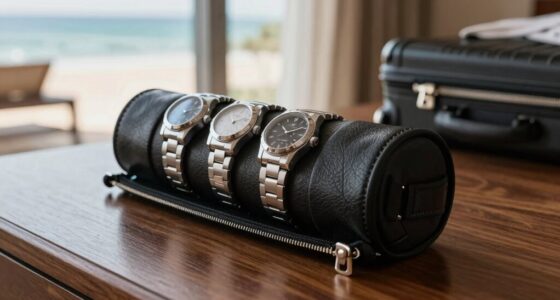
Start by focusing on the craftsmanship behind each watch, paying attention to the tiny gears, finishing techniques, and how components come together with precision. Notice the harmony in the case, dial, and hands, and observe the details like lugs and crown knurling that enhance the overall feel. Recognize the artistry that blends engineering with aesthetic choices, creating a timeless piece. If you keep exploring, you’ll discover even more about a watch’s storytelling power and design subtleties.

Get your wardrobe favorites delivered free with Prime
- Fast, free delivery on millions of items
- Prime Video, Amazon Music and more included
- Member-only deals all year
Key Takeaways
- Study the mechanical movement to understand the craftsmanship and engineering behind the watch’s functionality.
- Focus on design elements like dial layout, proportions, and material choices to appreciate aesthetic harmony.
- Learn to recognize fine finishing techniques such as Geneva stripes and perlage that showcase craftsmanship.
- Observe minute details like lugs, crown knurling, and case finishing to evaluate overall quality and design intent.
- Develop curiosity by exploring different brands’ design languages and storytelling aspects beyond their names.
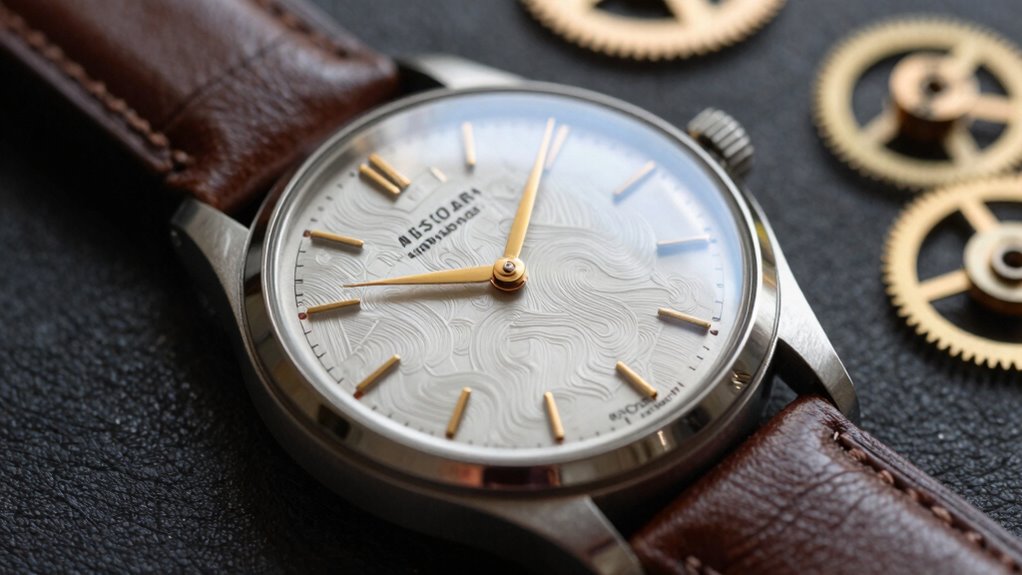
If you’ve ever admired a watch but felt unsure about what makes its design special, you’re not alone. Many people get captivated by watches but overlook the intricate details that elevate a piece beyond its brand name. To truly appreciate watch design, start by observing the mechanical craftsmanship. The heart of a watch, especially mechanical ones, lies in its movement—tiny gears, springs, and levers working in perfect harmony. When you look closely, you notice how each component is meticulously assembled, often showcasing fine finishing techniques like Geneva stripes or perlage. Recognizing this craftsmanship helps you understand the skill involved and deepens your appreciation for the watch as a piece of art and engineering. It’s not just about telling time; it’s about marveling at the mechanical complexity and dedication poured into creating something so complex yet seamless. Appreciating these details can also deepen your understanding of the engineering principles that underpin watchmaking, as they influence both the durability and functionality of the timepiece. Paying attention to craftsmanship details like these allows you to see beyond surface appearances and appreciate the true artistry involved.
Next, pay attention to aesthetic harmony. A well-designed watch balances form and function, combining visual appeal with practicality. Notice the proportions of the case, dial, and hands—how they complement each other and create a cohesive look. The choice of materials, whether polished steel, matte ceramic, or intricate engravings, also contributes to this harmony. Observe the dial layout: does it feel balanced, with markers and numerals placed thoughtfully? Are the colors and textures chosen to evoke a certain mood or style? When all these elements work together seamlessly, they form a visual symphony that captures your eye and holds your interest. This sense of aesthetic harmony isn’t accidental; it’s the result of deliberate design choices aimed at creating beauty and readability simultaneously. Paying attention to these design elements enhances your ability to distinguish thoughtful craftsmanship from superficial decoration.
As you develop your eye for watch design, consider the details that often go unnoticed—such as the lugs connecting the strap, the crown’s knurling, or the case finishing. These tiny elements contribute to the overall feel and look, revealing the watchmaker’s attention to detail. Over time, you’ll start recognizing how different brands emphasize certain aspects of their design language, but your appreciation should extend beyond branding. Focus on the craftsmanship and how the designer achieves harmony in every element. With patience and curiosity, you’ll learn to distinguish a well-crafted watch from one that merely looks good on the surface. Ultimately, appreciating watch design is about understanding the artistry behind each piece and seeing it as a blend of engineering, aesthetics, and storytelling—an elegant fusion that turns a functional object into a timeless work of art.
As an affiliate, we earn on qualifying purchases.
Frequently Asked Questions
What Materials Are Commonly Used in Watch Cases and Straps?
You’ll find watch cases made from stainless steel, titanium, ceramic, and sometimes precious metals like gold or platinum, chosen for their durability and aesthetic appeal. Straps often use leather, silicone, nylon, or metal links, balancing material durability and strap comfort. When selecting a watch, consider how durable the materials are and whether they feel comfortable against your skin, helping you appreciate the craftsmanship beyond just brand names.
How Do Different Watch Complications Affect Design?
Think of watch complications as the orchestra behind a symphony, each adding depth and complexity to the horological aesthetics. They influence design by requiring space for extra dials, hands, or indicators, which can enhance or challenge the watch’s overall harmony. When you appreciate complication integration, you see how these features transform a timepiece from simple to sophisticated, making every glance a journey through craftsmanship and inventive design.
What Are the Key Elements of a Well-Balanced Watch Dial?
A well-balanced watch dial features minimalist aesthetics, avoiding clutter and focusing on clarity, while maintaining visual interest. You should look for harmonious color schemes that complement each other, creating a unified appearance. Symmetry also plays an essential role, helping to distribute visual weight evenly. Clear markers, legible hands, and a clean layout guarantee the dial looks refined and functional, making it easier to appreciate the watch’s craftsmanship beyond just brand recognition.
How Does Movement Type Influence Watch Aesthetics?
Movement type dramatically influences watch aesthetics, creating a visual story you can’t ignore. Imagine the intricate dance of mechanical gears versus the sleek, minimal sweep of quartz—each showcasing movement mechanics that set the tone. Mechanical movements often add complexity and a sense of craftsmanship, fostering aesthetic harmony with detailed dials. Quartz movements, on the other hand, emphasize clean lines and simplicity. Your choice reveals your style, blending form with function in a mesmerizing way.
Can Design Trends Impact the Longevity of a Watch’s Appeal?
Design trends profoundly impact a watch’s appeal over time. You’ll find that fashion cycles and cultural influences constantly shift styles, making some designs feel outdated quickly while others become timeless. By understanding these trends, you can select watches that resonate with your taste today and remain relevant longer. Embracing classic elements and staying aware of current influences helps you appreciate watch design beyond fleeting fads and brand names.
Conclusion
Remember, beauty is in the eye of the beholder. As you explore different watch designs, take your time to notice the details—the craftsmanship, the materials, the subtle curves. Don’t just rely on brand names; let your curiosity guide you. The more you appreciate the unique elements, the more your love for watch design will grow. After all, “The journey is the reward,” so enjoy every moment of discovering what truly speaks to you.
Columbus Day / Indigenous Peoples' Day Picks
long weekend sales
As an affiliate, we earn on qualifying purchases.