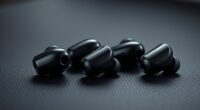
Choosing the right wireless lavalier microphones can feel overwhelming given the sheer volume of options flooding the market. My top overall pick is the DJI Mic Mini due to its exceptional balance of ultralight design, reliable connectivity, and pristine audio quality that rivals larger systems. For those prioritizing multi-device compatibility and advanced monitoring, the Hollyland Lark M2 stands out as a robust alternative, particularly for professional videographers who need flexible receiver options. The primary tradeoff you face in this category is between battery life and form factor; smaller mics often compromise on range or recording duration, while larger systems offer more features at the cost of portability. Continue reading to see how these and twelve other models stack up against each other in real-world scenarios.

Get your wardrobe favorites delivered free with Prime
- Fast, free delivery on millions of items
- Prime Video, Amazon Music and more included
- Member-only deals all year
Complete the kit



Key Takeaways
- Ultralight form factors like the DJI Mic Mini have largely replaced bulky transmitters for mobile creators, reducing visual clutter without sacrificing signal stability.
- USB-C and Lightning direct-connect receivers are becoming the standard for smartphone users, eliminating the need for bulky camera adapters or Bluetooth pairing.
- Internal recording capabilities on transmitters are no longer a luxury but a necessary safety feature, with top-tier kits now including this as a baseline requirement.
- Noise reduction algorithms vary wildly between brands; some aggressively process audio to the point of robotic artifacts, while others preserve natural voice texture better.
- Charging cases have evolved from simple storage to essential workflow tools, with some models offering significant extra battery life that extends shooting days by hours.
| Hollyland Lark M2 Wireless Microphone System (Black, Camera RX + USB-C RX) |  | Best for Lightweight Camera-and-Phone Flexibility | Transmitter weight: 9 g each | Audio quality: 48 kHz/24-bit | Transmission range: 300 m line of sight | VIEW ON AMAZON | See Our Full Breakdown |
| DJI Mic Mini (1 Transmitter + 1 Receiver) – Ultralight, Detail‑Rich Audio |  | Best for Solo Creators Recording in Variable Conditions | Transmitter weight: 10 g | Sampling rate: 48 kHz | Transmission range: Up to 400 m | VIEW ON AMAZON | See Our Full Breakdown |
| MAYBESTA Wireless Mini Lavalier Microphones, 2-Pack |  | Best Plug-and-Play Pick for Two Phone Speakers | Microphone count: 2 | Connectivity: Wireless | Connectors: Lightning and USB Type-C | VIEW ON AMAZON | See Our Full Breakdown |
| Labstandard Professional Wireless Lavalier Lapel Microphone for iPhone, iPad, Mini Video Recording Mic for Interview, Podcast, Vlog, YouTube & Livestream, Noise Reduction, Plug & Play |  | Best for Low-Latency Lightning and USB-C Recording | Microphone channels: 2 | Latency: 0.008 seconds | Battery life: Approximately 6 hours | VIEW ON AMAZON | See Our Full Breakdown |
| DJI Mic Mini (2 TX + 1 RX + Charging Case), Ultralight, Detail-Rich Audio | 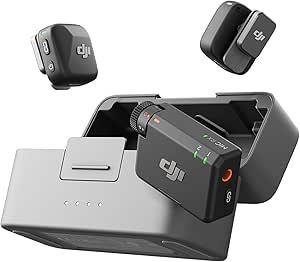 | Best for Two-Person Shoots and Long Sessions | Transmitters: 2 | Receiver: 1 | Transmitter weight: 10 g each | VIEW ON AMAZON | See Our Full Breakdown |
| TONOR Wireless Microphone System with Handheld, Headset, and Lavalier Mics |  | Best Multi-Format System for Stage and Events | Microphone Types: 2 Handheld, 2 Headset, 2 Lavalier | Wireless Range: Up to 200 ft (60 m) | Connectivity: XLR, 6.35 mm Aux | VIEW ON AMAZON | See Our Full Breakdown |
| Hollyland Lark A2 Mini Duo Wireless Microphone |  | Best for Smartphone Vloggers with AI Noise Control | Audio Quality: 48 kHz / 24-bit | Wireless Range: Up to 200 m (650 ft) | Battery Life (Case): Up to 42 hours | VIEW ON AMAZON | See Our Full Breakdown |
| Wireless Mini Microphone for iPhone, Android, 2 Pack |  | Best Budget Entry Point for Smartphone Creators | Connectors: USB-C and Lightning (included) | Battery Life: Up to 6 hours | Charging Time: 1 hour | VIEW ON AMAZON | See Our Full Breakdown |
| DJI Mic Mini Wireless Microphone Kit (Mobile Receiver) |  | Best for Mobile-First Content Creators | Transmission Range: Up to 300 m | Operating Time: Up to 11.5 hours | Transmitter Weight: 10 g | VIEW ON AMAZON | See Our Full Breakdown |
| DJI Mic Mini Wireless Microphone (2 Transmitters, 1 Receiver) |  | Best All-Rounder for Hybrid Camera and Phone Use | Transmission Range: Up to 400 m | Operating Time: Up to 10 hours | Transmitter Weight: 10 g | VIEW ON AMAZON | See Our Full Breakdown |
| Hollyland Lark M2 Wireless Microphone (2 TX + 3 RX + Charging Case) | 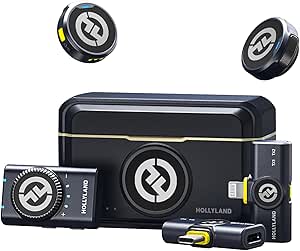 | Best for Multi-Camera Setups | Weight: 6.08 ounces | Battery Life: 40 hours (with case) | Transmission Range: 300 meters | VIEW ON AMAZON | See Our Full Breakdown |
| Mini Mic Pro Wireless Lavalier Microphone for iPhone and Android | 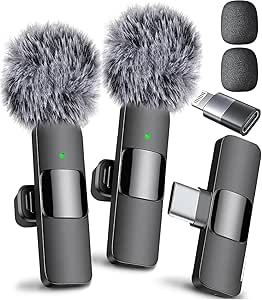 | Best Plug-and-Play Simplicity | Connectivity: Wireless (USB-C/Lightning) | Recording Time: Up to 6 hours | Weight: 80 g | VIEW ON AMAZON | See Our Full Breakdown |
| DJI Mic 3 Wireless Microphone Kit (2 Transmitters, 1 Receiver, Charging Case) |  | Best for High-Fidelity Recording | Channels: 4 | Features: 32-bit float, Adaptive Gain | Battery Life: Up to 28 hours | VIEW ON AMAZON | See Our Full Breakdown |
| Hollyland Lark M2 Wireless Lavalier Microphone | 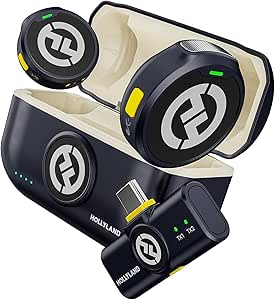 | Best Balanced Performance | Weight: 9 g | Audio Format: 48 kHz/24-bit | Wireless Range: Up to 1,000 ft | VIEW ON AMAZON | See Our Full Breakdown |
| wireless lavalier microphone | Connectivity | Battery life |
|---|---|---|
| Hollyland Lark M2 Wireless Mic | 2.4 GHz wireless, 3.5 mm, USB-C | 10 hours per charge; up to 40 hours with case |
| DJI Mic Mini | Bluetooth, DJI OsmoAudio, USB-C | Approximately 10 hours |
| MAYBESTA Wireless Mini Lavalie | Wireless | — |
| Labstandard Professional Wirel | — | Approximately 6 hours |
| DJI Mic Mini | — | — |
| TONOR Wireless Microphone Syst | XLR, 6.35 mm Aux | — |
| Hollyland Lark A2 Mini Duo Wir | — | — |
| Wireless Mini Microphone for i | — | Up to 6 hours |
| DJI Mic Mini Wireless Micropho | USB Type-C Mobile Receiver | — |
| DJI Mic Mini Wireless Micropho | USB Type-C Receiver | — |
| Hollyland Lark M2 Wireless Mic | 2.4 GHz, 3.5 mm, USB-C | 40 hours (with case) |
| Mini Mic Pro Wireless Lavalier | Wireless (USB-C/Lightning) | — |
| DJI Mic 3 Wireless Microphone | Bluetooth, Wi-Fi, USB-C | Up to 28 hours |
| Hollyland Lark M2 Wireless Lav | — | Up to 30 hours |
More Details on Our Top Picks
Hollyland Lark M2 Wireless Microphone System (Black, Camera RX + USB-C RX)
The Hollyland Lark M2 is a strong fit for creators who move between a camera and a USB-C phone or computer: the kit includes separate 3.5 mm camera and USB-C receivers, so you are not limited to one recording setup. Its 9 g transmitters are lighter than the DJI Mic Mini’s 10 g units, a small difference that may matter during long wear or when keeping a mic discreet on camera. The stated 300 m line-of-sight range and noise cancellation suit outdoor pieces where the speaker may be some distance from the camera, while the case supplies up to 40 hours of total battery life. The tradeoff is a less universal connection arrangement: you need the receiver that matches your device, and changing mono/stereo mode on the camera receiver requires a 3.5 mm connection. Choose the DJI for its longer stated range and automatic limiting; choose this Hollyland for its included camera-and-USB-C pairing.
Pros:- Very light 9 g transmitters are discreet and comfortable for extended wear.
- Includes both a 3.5 mm camera receiver and a USB-C receiver.
- Charging case brings stated total battery life to 40 hours.
- 48 kHz/24-bit audio and noise cancellation support clear voice capture.
Cons:- Separate receivers mean choosing the correct unit for each recording device.
- Camera receiver mono/stereo switching requires a 3.5 mm connection.
- Its 300 m stated range is shorter than the DJI Mic Mini’s 400 m claim.
Best for: Creators who record both to a camera with a 3.5 mm input and to a USB-C phone or computer, and want very light transmitters.
Not ideal for: People who want one receiver to work across every device type or who need to switch camera audio modes without a 3.5 mm connection.
- Transmitter weight:9 g each
- Audio quality:48 kHz/24-bit
- Transmission range:300 m line of sight
- Battery life:10 hours per charge; up to 40 hours with case
- Connectivity:2.4 GHz wireless, 3.5 mm, USB-C
- Signal-to-noise ratio:70 dB
- Maximum sound pressure level:115 dB
- Included receivers:Camera RX (3.5 mm) and USB-C RX
Our verdict“Choose the Lark M2 if you want an especially light kit that includes dedicated camera and USB-C receivers.”
DJI Mic Mini (1 Transmitter + 1 Receiver) – Ultralight, Detail‑Rich Audio
This single-transmitter DJI Mic Mini suits solo creators who want a compact wireless lavalier with room to record outdoors or around louder sounds. Its 400 m stated range exceeds the Hollyland Lark M2’s 300 m line-of-sight figure, and the 120 dB maximum SPL plus automatic limiting are useful safeguards when a voice or nearby sound suddenly gets loud. Two noise-cancelling levels let you adjust cleanup to the setting rather than applying the same strength everywhere. The 10 g transmitter remains light enough for discreet wear, and the 48 kHz recording specification matches the Lark M2’s sampling rate, though Hollyland specifies 24-bit audio. This is a one-person kit, not the better pick for two-speaker interviews; the two-transmitter DJI bundle provides that flexibility and a charging case. Also, the listed CR5 battery requirement makes power planning less straightforward than relying on a rechargeable case.
Pros:- 400 m stated transmission range is longer than the Lark M2’s listed range.
- Two noise-cancelling levels offer a choice for quieter and noisier settings.
- Automatic limiting helps reduce clipping when input levels spike.
- 10 g transmitter and omnidirectional pickup suit discreet voice recording.
Cons:- One transmitter does not cover two speakers at once.
- The listed CR5 battery requirement can mean carrying replacements.
- The kit lacks the charging case and extended total runtime of the two-transmitter DJI bundle.
Best for: Solo vloggers and mobile interviewers who need a light transmitter, adjustable noise reduction, and a long stated wireless range.
Not ideal for: Two-person interview crews or creators who prefer a rechargeable case-based kit and do not want to manage replacement batteries.
- Transmitter weight:10 g
- Sampling rate:48 kHz
- Transmission range:Up to 400 m
- Battery life:Approximately 10 hours
- Maximum SPL:120 dB
- Noise cancellation:Two levels: Basic and Strong
- Polar pattern:Omnidirectional
- Connectivity:Bluetooth, DJI OsmoAudio, USB-C
Our verdict“Pick this single-transmitter DJI kit for solo recording where long range and automatic level protection matter more than multi-speaker coverage.”
MAYBESTA Wireless Mini Lavalier Microphones, 2-Pack
The MAYBESTA two-microphone set puts simple phone recording ahead of camera-system flexibility. Its plug-and-play receiver and included Lightning and USB-C connectors make it a practical choice for paired speakers recording on compatible phones or tablets, without requiring an app. That straightforward setup is a contrast with the Hollyland Lark M2, whose separate camera and USB-C receivers make more sense for creators moving between dedicated cameras and phones. MAYBESTA also lists a longer receiver intended to fit many phones with cases, which can reduce fiddling before a quick recording. Noise reduction and windscreens help with basic voice capture, but the provided information does not specify transmission range, battery runtime, or an audio sampling rate. The battery details are described as inconsistent, so this is less reassuring for long shoots than either DJI Mic Mini option. I would keep it to casual mobile content rather than rely on it for a tightly planned production.
Pros:- Two microphones support recording two speakers.
- Lightning and USB-C connector options cover many compatible phones and tablets.
- Plug-and-play operation avoids an app-based setup.
- Longer receiver is designed to fit many phones with cases.
Cons:- Battery information in the listing is inconsistent.
- No transmission range or battery runtime is provided in the supplied specifications.
- The listed connection options are more phone-oriented than the Lark M2’s dedicated camera receiver.
Best for: Two-person creators recording casual interviews, social clips, or lessons directly on compatible Lightning or USB-C phones and tablets.
Not ideal for: Camera-focused videographers or anyone who needs clearly documented battery runtime, transmission range, and recording specifications.
- Microphone count:2
- Connectivity:Wireless
- Connectors:Lightning and USB Type-C
- Microphone pattern:Omnidirectional
- Features:Mute function, noise reduction, plug and play
- Compatible devices:Android devices, laptops, smartphones, tablets, iPad
- Signal-to-noise ratio:80 dB
- Audio sensitivity:15 dB
Our verdict“Choose MAYBESTA for simple two-speaker phone recordings, but skip it if your work depends on documented runtime or camera connectivity.”
Labstandard Professional Wireless Lavalier Lapel Microphone for iPhone, iPad, Mini Video Recording Mic for Interview, Podcast, Vlog, YouTube & Livestream, Noise Reduction, Plug & Play
The Labstandard dual-mic set is aimed at phone and tablet creators who want two speakers recorded with audio that stays close to the picture. Its stated 0.008-second latency is the standout point: keeping voice and video aligned can reduce correction work when editing interviews or livestream clips. Interchangeable Lightning and USB-C adapters also make it more adaptable across mobile devices than a connector-specific setup, while its built-in noise-reduction chip targets intelligibility in busy surroundings. Compared with the MAYBESTA two-pack, Labstandard provides a specific latency claim and an approximately six-hour runtime, but its battery information is awkward: the listing says it is battery-powered and identifies two included C batteries, so buyers should confirm the intended power setup before a shoot. It is also heavier at 0.05 kg than the 9 g-per-transmitter Lark M2. I would favor it for mobile dual-speaker work, not for minimal-weight wear or camera-first recording.
Pros:- Two wireless microphones support interviews and paired presentations.
- Stated 0.008-second latency is intended to keep audio and video closely synchronized.
- Interchangeable Lightning and USB-C adapters broaden mobile-device compatibility.
- Noise reduction is built in for voice capture in busier surroundings.
Cons:- The listing’s C-battery details make the power arrangement less clear than a stated rechargeable runtime.
- At 0.05 kg, it is heavier than the Lark M2’s 9 g transmitters.
- The supplied platform details focus on smartphones and tablets rather than camera connections.
Best for: Interviewers and livestreamers recording two people on Lightning or USB-C phones and tablets who value stated low latency.
Not ideal for: Camera operators seeking a dedicated 3.5 mm receiver, or creators who want a particularly light wearable transmitter and clear rechargeable-battery details.
- Microphone channels:2
- Latency:0.008 seconds
- Battery life:Approximately 6 hours
- Connectors:Lightning and USB Type-C
- Polar pattern:Omnidirectional
- Connectivity technology:Bluetooth
- Item weight:0.05 kg
- Power information:Battery powered; listing specifies two included C batteries
Our verdict“Pick Labstandard for two-person mobile recording where its low-latency claim and interchangeable phone adapters suit your setup.”
DJI Mic Mini (2 TX + 1 RX + Charging Case), Ultralight, Detail-Rich Audio
For interviews, livestreams, or paired presentations, this two-transmitter DJI Mic Mini bundle adds the second speaker channel and charging case that the single-transmitter DJI kit lacks. Its advertised 48-hour total battery life is the strongest endurance claim among these five options, making it more suitable for extended recording days than the Hollyland Lark M2’s stated 40 hours with its case. Both DJI transmitters weigh 10 g and offer two levels of noise cancellation, while automatic limiting can help contain sudden loud inputs. The 400 m maximum range also exceeds the Lark M2’s listed 300 m line-of-sight range, though actual performance depends on recording conditions. The tradeoff is a larger kit than a solo setup, and the listed CR5 battery information may require more planning than a simple rechargeable-only workflow. This bundle makes sense when two speakers and long sessions are routine; solo creators can avoid carrying the extra transmitter with the single-transmitter version.
Pros:- Two transmitters allow simultaneous recording of two speakers.
- Charging case is advertised to provide up to 48 hours of total use.
- 400 m maximum transmission range is longer than the Lark M2’s stated range.
- Two noise-cancellation levels and automatic limiting support changing sound conditions.
Cons:- The two-transmitter case bundle is more kit than a solo creator needs.
- It does not list a 3.5 mm camera receiver, unlike the Lark M2 camera-and-USB-C kit.
- CR5 battery details in the listing may complicate power planning.
Best for: Interviewers, livestreamers, and small video crews who regularly record two speakers and need extended runtime between charging opportunities.
Not ideal for: Solo creators who want the lightest, simplest kit or users who need a dedicated 3.5 mm camera receiver like the Hollyland Lark M2 includes.
- Transmitters:2
- Receiver:1
- Transmitter weight:10 g each
- Sampling rate:48 kHz
- Maximum transmission range:400 m
- Advertised total battery life:Up to 48 hours with charging case
- Maximum SPL:120 dB
- Noise cancellation:Two levels: Basic and Strong
Our verdict“Choose this DJI bundle for two-speaker shoots and long recording days; solo creators are better served by the one-transmitter kit.”
TONOR Wireless Microphone System with Handheld, Headset, and Lavalier Mics
This system stands out because it is the only option here offering three distinct microphone formats (handheld, headset, lavalier) in a single kit. While the DJI Mic Mini focuses exclusively on compact content creation, the TONOR TW362 is built for live events and stage performances where a presenter might need a handheld mic and a speaker needs a headset. It connects via XLR and Aux, making it ideal for mixing boards rather than direct smartphone recording. The tradeoff is significant: it lacks the modern digital audio processing and USB-C direct connectivity found in the Hollyland Lark A2 Mini. You also need to supply AA batteries, which adds ongoing cost and bulk compared to the rechargeable lithium-ion systems in the rest of this roundup.
Pros:- Includes handheld, headset, and lavalier options in one kit
- XLR and Aux outputs ensure compatibility with professional audio gear
- Automatic pairing simplifies setup for live environments
- 10 channels per mic reduce interference in crowded RF environments
Cons:- Requires AA batteries, which are not included
- No direct USB-C connection for smartphones or computers
- Bulkier form factor compared to modern clip-on systems
Best for: Event coordinators, worship leaders, or DJs who need a versatile kit for live PA systems and mixers.
Not ideal for: Content creators filming directly with smartphones, as it lacks USB-C receivers and digital noise cancellation.
- Microphone Types:2 Handheld, 2 Headset, 2 Lavalier
- Wireless Range:Up to 200 ft (60 m)
- Connectivity:XLR, 6.35 mm Aux
- Power Source:AA Batteries (not included)
- Channels:10 per microphone/bodypack
- SNR:60 dB
- Included Accessories:Receiver, mic covers, anti-slip rings, cables
Our verdict“Choose this if you need a versatile PA system for live events, but skip it if you are recording video with a smartphone.”
Hollyland Lark A2 Mini Duo Wireless Microphone
The Hollyland Lark A2 Mini Duo differentiates itself with advanced AI audio processing, including three levels of noise cancellation and a safety track that prevents clipped audio. Compared to the DJI Mic Mini, which offers two noise levels, the Lark A2 provides more granular control for challenging environments like windy streets. Its 48 kHz/24-bit recording quality is a step up from many basic kits, ensuring professional-grade fidelity. However, the reliance on AI processing can sometimes introduce artifacts if set too aggressively. While the DJI Mic Mini is lighter and simpler for quick setups, the Lark A2 is better suited for creators who want post-production flexibility and robust noise reduction without needing external editing software.
Pros:- AI-powered noise cancellation with three adjustable levels
- Safety Track (-6 dB) prevents audio clipping during loud peaks
- USB Type-C receiver for direct smartphone connection
- Charging case provides up to 42 hours of total battery life
Cons:- AI processing may alter natural voice tone if misconfigured
- Omnidirectional pattern picks up more background noise than directional mics
- Listed battery requirements in some documentation can be confusing
Best for: Vloggers and podcasters who record in noisy outdoor environments and want advanced noise cancellation features.
Not ideal for: Users who prefer simple, analog-style audio without AI processing or those needing multi-channel camera receivers.
- Audio Quality:48 kHz / 24-bit
- Wireless Range:Up to 200 m (650 ft)
- Battery Life (Case):Up to 42 hours
- Noise Cancellation:AI-powered, 3 levels
- Transmitter Weight:8.5 g
- Connector:USB Type-C
- Special Features:AI Auto-Limit, Safety Track, Voice Tuning
Our verdict“This is the best choice for creators who prioritize intelligent noise reduction and safety tracks over raw simplicity.”
Wireless Mini Microphone for iPhone, Android, 2 Pack
This 2-in-1 system is the most accessible option for beginners, offering instant pairing without apps or Bluetooth. Unlike the DJI Mic Mini or Hollyland Lark A2, which require specific receiver setup, this mic plugs directly into your device’s USB-C or Lightning port. It includes both USB-C and Lightning receivers, making it universally compatible with modern phones. However, the build quality and audio fidelity are noticeably lower than premium kits; the plastic enclosure** and basic DSP noise reduction struggle in high-wind or complex acoustic environments. It is a functional tool for casual vlogging, but serious creators will find the 6-hour battery life and lack of monitoring features limiting compared to the rechargeable cases of its competitors.
Pros:- Includes both USB-C and Lightning receivers for universal compatibility
- No app or Bluetooth pairing required for instant use
- Real-time headphone monitoring via the receiver
- Very lightweight and easy to hide on clothing
Cons:- Basic plastic build quality lacks durability of premium metal housings
- Noise reduction is less effective than AI-powered competitors like Hollyland
- No charging case, requiring separate charging for each unit
Best for: Casual content creators and students who need a simple, plug-and-play solution for occasional smartphone recording.
Not ideal for: Professional videographers or podcasters who require high-fidelity audio and long-duration recording sessions.
- Connectors:USB-C and Lightning (included)
- Battery Life:Up to 6 hours
- Charging Time:1 hour
- Noise Reduction:DSP with windshields
- Monitoring:Real-time headphone jack on receiver
- Modes:Standard, Reverb, Mute
- Weight:Under 1 oz
Our verdict“Ideal for those who want the lowest barrier to entry for wireless audio, but inadequate for professional production.”
DJI Mic Mini Wireless Microphone Kit (Mobile Receiver)
The DJI Mic Mini Mobile Kit strikes a balance between portability and performance, offering a 10g transmitter that is barely noticeable on clothing. Compared to the standard DJI Mic Mini (B0FKL8JYGQ), this kit is optimized specifically for smartphone and tablet users with a dedicated mobile receiver. It features two levels of noise cancellation and automatic limiting, which is sufficient for most vlogging scenarios, though it lacks the three-level AI precision of the Hollyland Lark A2. The 11.5-hour battery life is impressive for such a small form factor, outlasting many competitors. However, it is not waterproof, and extreme temperatures can degrade battery performance, a limitation shared by most consumer-grade wireless mics in this class.
Pros:- Ultra-lightweight 10g transmitters for discreet wear
- Up to 300 m transmission range for flexible staging
- Long 11.5-hour operating time reduces charging anxiety
- Automatic audio limiting protects against loud peaks
Cons:- Not waterproof or weather-resistant
- Battery performance drops in extreme cold or heat
- Mobile receiver limits direct camera integration without adapters
Best for: Travel vloggers and mobile journalists who need a lightweight, high-endurance kit for smartphone recording.
Not ideal for: Users requiring camera connectivity via 3.5mm jack or those working in wet or extreme temperature environments.
- Transmission Range:Up to 300 m
- Operating Time:Up to 11.5 hours
- Transmitter Weight:10 g
- Noise Cancellation:2 levels (Basic, Strong)
- Connectivity:USB Type-C Mobile Receiver
- SNR:70 dB
- Kit Contents:2 Transmitters, 1 Mobile Receiver
Our verdict“The go-to choice for mobile creators who prioritize battery life and discretion over multi-device connectivity.”
DJI Mic Mini Wireless Microphone (2 Transmitters, 1 Receiver)
This version of the DJI Mic Mini offers the same ultralight 10g design as the mobile kit but extends the transmission range to 400 m, making it superior for large-scale productions or distant camera placements. While the Hollyland Lark A2 Mini focuses on AI audio tweaks, the DJI Mic Mini emphasizes raw reliability and range. It includes a receiver that works with cameras and phones, providing more flexibility than the mobile-only kit (B0FQJH54TR). The tradeoff is a slightly shorter battery life (10 hours vs. 11.5 in the mobile kit) and the presence of magnets that may interfere with certain medical devices or compasses. It is a robust choice for creators who need consistent performance across different recording setups without the complexity of advanced AI processing.
Pros:- Extended 400 m transmission range for large venues
- Versatile receiver compatible with cameras and mobile devices
- Ultralight 10g transmitters remain discreet on clothing
- Two-level noise cancellation handles varied environments
Cons:- Magnets in transmitters may interfere with some devices
- Not waterproof
- Slightly shorter battery life than the mobile-specific variant
Best for: Filmmakers and hybrid creators who need long-range transmission and compatibility with both cameras and smartphones.
Not ideal for: Users with pacemakers or sensitive magnetic devices, or those who only record with smartphones and want maximum battery life.
- Transmission Range:Up to 400 m
- Operating Time:Up to 10 hours
- Transmitter Weight:10 g
- Noise Cancellation:2 levels (Basic, Strong)
- Connectivity:USB Type-C Receiver
- SNR:70 dB
- Dimensions:1.81 x 1.14 x 0.75 inches
Our verdict“Choose this for its superior range and hybrid camera/phone compatibility, provided you don’t need the extra battery life of the mobile kit.”
Hollyland Lark M2 Wireless Microphone (2 TX + 3 RX + Charging Case)
This kit stands out for creators who need to record multiple subjects simultaneously without juggling multiple receivers. With three receivers included, you can feed audio to two cameras and a backup recorder or phone at once, a flexibility the DJI Mic 3 struggles to match in its standard configuration. The 9g transmitters are virtually invisible on clothing, preserving the visual integrity of your shot. However, the reliance on a C-type battery for the transmitter adds a layer of logistical complexity compared to fully integrated rechargeable units. While the 40-hour total runtime via the charging case is impressive, the mono/stereo switching limitation on certain connections might frustrate users needing quick format changes on the fly.Pros:- Includes three receivers for versatile multi-device recording
- Ultra-lightweight 9g transmitters are nearly invisible on camera
- Extended 40-hour total runtime with the charging case
Cons:- Transmitters require a separate C-type battery, complicating power management
- Stereo/mono mode switching is limited to specific 3.5mm connections
Best for: Filmmakers and interviewers running multi-camera setups who need simultaneous audio feeds to different devices.
Not ideal for: Solo content creators who only record to one device, as the extra receiver adds unnecessary bulk and cost.
- Weight:6.08 ounces
- Battery Life:40 hours (with case)
- Transmission Range:300 meters
- Audio Format:48 kHz / 24-bit
- Signal-to-Noise Ratio:70 dB
- Connectivity:2.4 GHz, 3.5 mm, USB-C
Our verdict“Choose this kit if you need to split audio signals across multiple recording devices simultaneously.”
Mini Mic Pro Wireless Lavalier Microphone for iPhone and Android
If your priority is zero-friction setup, this model delivers exactly that. It connects directly to smartphones via included USB-C and Lightning adapters, bypassing the app pairing processes required by systems like the DJI Mic Mini. The plug-and-play design makes it ideal for quick social media clips where technical troubleshooting is not an option. However, the build quality feels less robust than metal-cased competitors, and the 6-hour battery life is modest compared to the 30+ hours offered by the Hollyland Lark M2. Additionally, the vague battery specifications suggest potential inconsistencies in longevity, making it better suited for short bursts of recording rather than all-day events.Pros:- No app or Bluetooth pairing required for instant use
- Includes adapters for both USB-C and Lightning devices
- Comes with foam and deadcat wind protection for outdoor use
Cons:- Battery life is limited to approximately 6 hours per charge
- Plastic ABS construction feels less durable than metal alternatives
Best for: Social media creators and casual vloggers who prioritize immediate connectivity over professional audio depth.
Not ideal for: Professional podcasters or long-form interviewers who need extended battery life and superior noise isolation.
- Connectivity:Wireless (USB-C/Lightning)
- Recording Time:Up to 6 hours
- Weight:80 g
- Material:ABS Plastic
- Included Items:2 Mics, 1 Receiver, Cables
- Warranty:6-month warranty
Our verdict“This is the go-to option for creators who want to record immediately without dealing with complex pairing steps.”
DJI Mic 3 Wireless Microphone Kit (2 Transmitters, 1 Receiver, Charging Case)
The DJI Mic 3 targets the professional tier of wireless audio with its 32-bit float internal recording, a feature that virtually eliminates clipping and allows for extensive post-production recovery. This capability sets it apart from the Hollyland Lark M2, which records at standard 24-bit depth. The four-channel support and adaptive gain control offer a level of control that is rare in consumer kits. Yet, this power comes with caveats: some advanced features are restricted to the DJI ecosystem, and the requirement for four C-batteries adds maintenance overhead. It is a heavier, more complex tool than the ultralight alternatives, making it less ideal for discreet, low-key shooting.Pros:- 32-bit float internal recording preserves audio detail in loud environments
- Supports up to four channels for complex audio layouts
- Dual-band anti-interference ensures stable connections in crowded areas
Cons:- Some features are limited to compatible DJI hardware
- Requires four separate C-batteries, increasing operational complexity
Best for: Professional videographers and podcasters who need dynamic range safety and advanced mixing controls.
Not ideal for: Beginners or casual users who find complex feature sets and ecosystem lock-in frustrating.
- Channels:4
- Features:32-bit float, Adaptive Gain
- Battery Life:Up to 28 hours
- Weight:221.2 g
- Connectivity:Bluetooth, Wi-Fi, USB-C
- Included:Charging Case, Adapters
Our verdict“Select this kit if you need professional-grade audio recovery and channel control for critical recordings.”
Hollyland Lark M2 Wireless Lavalier Microphone
This version of the Lark M2 strikes a compelling balance between portability and performance. It retains the 9g weight and 1,000 ft range of the multi-receiver kit but simplifies the package for users who don’t need multiple outputs. Compared to the Mini Mic Pro, this system offers significantly better audio fidelity with 48 kHz/24-bit recording and a robust metal enclosure. The adjustable noise cancellation is effective in moderately noisy environments, though it cannot match the adaptive precision of the DJI Mic 3. For solo creators who want studio-quality sound without the bulk of a full kit, this represents the sweet spot in the lineup.Pros:- Lightweight 9g design with a durable metal enclosure
- Long 1,000 ft line-of-sight transmission range
- Up to 30 hours of total battery life with the case
Cons:- USB-C compatibility may vary depending on the host device
- Noise cancellation is adjustable but not as advanced as flagship competitors
Best for: Solo vloggers and YouTubers who want high-quality audio without the complexity of multi-channel systems.
Not ideal for: Users in extremely noisy environments who require advanced, multi-level noise suppression tools.
- Weight:9 g
- Audio Format:48 kHz/24-bit
- Wireless Range:Up to 1,000 ft
- Battery Life:Up to 30 hours
- Signal-to-Noise Ratio:70 dB
- Enclosure Material:Metal
Our verdict“This is the ideal choice for solo creators seeking professional audio in a minimalist, easy-to-carry package.”

How We Picked
I evaluated these fourteen systems based on three core pillars: audio fidelity, connectivity reliability, and ecosystem integration. Audio fidelity was judged not just by frequency response specs, but by how naturally the microphone captured human speech in noisy environments. I compared how each system handled wind noise and background hum, noting which ones offered adjustable noise cancellation levels versus fixed settings. Connectivity reliability focused on pairing speed, range stability in urban environments, and latency when monitoring audio directly from the receiver. Ecosystem integration was the final differentiator, examining how seamlessly each kit works with smartphones, cameras, and computers without requiring proprietary apps or complex adapter setups.
The ranking logic prioritizes versatility for the majority of creators. Systems that offer both USB-C and Lightning receivers, or those with built-in internal recording, rank higher than single-interface models. I also weighted the importance of comfort and visibility, as a microphone that is too large or heavy will be uncomfortable during long shoots. Products that failed to provide clear documentation or had inconsistent pairing experiences were ranked lower, regardless of their technical specifications.
Factors to Consider When Choosing Wireless Lavalier Microphones
Selecting a wireless lavalier system requires looking beyond the brand name and focusing on how the gear fits your specific production workflow. Here are the critical factors that should dictate your purchase decision.Connectivity Interfaces and Compatibility
Most modern wireless lavalier systems now offer direct USB-C or Lightning connections for smartphones, which is a massive advantage over older Bluetooth or 3.5mm jack systems. Direct digital connections provide lower latency and higher audio fidelity because the microphone’s analog-to-digital conversion happens before the signal enters the phone. However, you must check if the receiver includes both USB-C and Lightning adapters, or if you need to buy them separately. If you shoot with a dedicated camera, ensure the receiver has a reliable 3.5mm output, as some digital-first kits neglect this traditional connection. Multi-interface support is the safest bet for creators who switch between mobile and DSLR setups frequently.
Internal Recording vs. Live Transmission
Some high-end transmitters now include onboard storage to record audio directly on the microphone itself, independent of the receiver. This feature, often called internal recording or ‘backup recording,’ is invaluable for professional work where a dropped signal could ruin an interview. If the wireless link fails, you still have a clean file on the mic to sync in post-production. Budget options rarely offer this, making them risky for critical events like weddings or paid interviews. Check the recording duration on the transmitter, as some only buffer a few minutes while others can record hours of isolated audio.
Battery Life and Charging Ecosystems
Battery life is often quoted in ideal conditions, but real-world usage with Bluetooth monitoring or active noise cancellation drains power much faster. Look for systems that come with a dedicated charging case, which acts as a power bank for the transmitters and receiver. This not only extends your shooting day but also protects the small components from damage when in transit. Some kits offer 10+ hours of continuous use, while others may drop to 4-5 hours with heavy feature usage. Charging speed matters too; a case that takes three hours to recharge fully can bottleneck your workflow during short breaks.
Noise Reduction and Audio Processing
Active noise cancellation (ANC) is a standard feature, but its implementation varies drastically between brands. Some systems offer multi-level noise reduction, allowing you to dial in the amount of background suppression, which is critical for controlling the ‘underwater’ sound that aggressive algorithms can create. Others have a binary on/off switch that may either be too weak or too strong for your environment. If you film in controlled studios, you might prefer a flat audio profile with minimal processing. Adjustable levels provide the flexibility needed for unpredictable outdoor shooting conditions.
Form Factor and Wearability
The size of the transmitter determines how visible it will be on camera and how comfortable it feels on the subject’s clothing. Ultralight designs weighing under 10 grams are nearly invisible and can be clipped anywhere without pulling on fabric. Larger transmitters often house better batteries and more robust antennas, leading to better range but a more noticeable presence on screen. For close-up portrait work, a small, magnetic-clip option is often superior to a bulky box. Magnetic mounting has become a popular alternative to traditional clips, offering faster setup and a cleaner look.
Frequently Asked Questions
Do I really need a wireless lavalier microphone if I already have a shotgun mic?
A wireless lavalier is superior when you need to isolate a subject’s voice from ambient noise or when multiple people are speaking. A shotgun mic captures sound directionally, meaning it picks up everything in front of it, including room echo and background chatter. Wireless lavaliers place the source directly at the mouth, providing a consistent volume level even if the subject moves around. For interviews, vlogs, or any scenario where audio clarity is paramount, a lavalier offers a level of intimacy and isolation that a shotgun mic simply cannot match.
Why do some wireless microphones sound robotic or processed?
This artifact is usually caused by aggressive noise reduction algorithms that mistake human speech patterns for background noise. When the processor tries too hard to remove wind or hum, it clips the natural frequencies of the voice, resulting in a hollow, synthetic tone. To avoid this, choose a system that allows you to turn off noise cancellation or adjust it to a lower level. Recording internally without processing and applying noise reduction in post-production gives you the most control over the final sound quality.
Is Bluetooth monitoring on wireless mic receivers worth using?
Bluetooth monitoring allows you to hear the audio being recorded directly on your receiver via wireless earbuds, which is incredibly useful for checking levels without tethering cables. However, it introduces a slight latency delay, which can be distracting for speakers who need to hear themselves in real-time. For most creators, it is a convenient feature for the operator to monitor audio, but speakers should avoid relying on it for their own performance. Wired monitoring remains the zero-latency standard if you need absolute precision during recording.
Can I use one receiver with multiple transmitters simultaneously?
Most consumer-grade wireless lavalier kits are designed for 1-to-1 or 2-to-1 configurations (one or two transmitters to one receiver). You generally cannot pair three or more transmitters to a single receiver in these systems due to bandwidth and channel limitations. If you need to record three or more people, you will likely need a system with separate receivers for each mic, or a more advanced pro-audio setup. Check the product specifications carefully, as dual-channel receivers are the limit for most compact kits.
What is the advantage of magnetic clips over traditional tie clips?
Magnetic clips allow for rapid deployment and placement through clothing layers without needing to fiddle with a spring-loaded mechanism. They are less likely to slip off loose fabrics and provide a more secure hold on thick jackets or coats. Additionally, magnets reduce the visual bulk of the transmitter, making it easier to hide under a shirt collar. Traditional clips are still useful for very thin fabrics where magnets might not hold securely, but magnets offer superior speed and ease of use for most everyday scenarios.
Conclusion
Choosing the right wireless lavalier microphone depends on your specific workflow and budget. For most creators, the DJI Mic Mini offers the best overall balance of size, sound, and connectivity, making it the ideal choice for mobile videographers and vloggers who need reliable audio without the bulk. If you require a more robust system with extensive receiver options and internal recording for professional productions, the Hollyland Lark M2 is the superior premium pick. For beginners or those on a tight budget, the MAYBESTA Wireless Mini Lavalier provides a solid entry point with decent performance, though it lacks the advanced features and build quality of the top-tier contenders. Always prioritize systems with direct USB-C/Lightning connections and adjustable noise reduction to future-proof your audio setup.
Halloween Picks
halloween
As an affiliate, we earn on qualifying purchases.