
Among these smoke detectors, I would put the First Alert BRK SMI100-AC hardwired alarm at the top for homes with compatible wiring, while the Kidde 20SD10 stands out for a 10-year sealed battery and the X-Sense SC01 for combined smoke and carbon monoxide detection. The right choice depends on whether your home needs hardwired alarms, simple battery installation, or broader hazard coverage. Sealed batteries reduce routine battery changes, but they also mean replacing the whole alarm when the battery or unit reaches its end of life. Pack size, sensor type, and compatibility with existing alarms can matter as much as the feature list. Read on for the full comparison and guidance on matching an alarm to your home.

Get your wardrobe favorites delivered free — and shop member deals
- Fast, free delivery on millions of items
- Access to Prime Big Deal Days deals on October 6–7
- Prime Video, Amazon Music and more included
Key Takeaways
- Power source sets the shortlist: the First Alert SMI100-AC models suit homes with compatible wiring, while the Kidde and X-Sense battery models offer more flexible placement.
- Sealed 10-year batteries reduce battery chores: several Kidde, SITERWELL, and X-Sense picks offer this format, though the complete alarm must be replaced when its service life ends.
- Smoke and carbon monoxide coverage changes the job: the X-Sense SC01 and First Alert SMICO100 combine both alarms, unlike the smoke-only models.
- Photoelectric sensing is a meaningful differentiator: the SITERWELL and X-Sense photoelectric options may appeal to buyers comparing sensor approaches, but local guidance and alarm placement still matter.
- Pack size should follow a room-by-room plan: the 6-, 10-, and 12-pack options can cover multiple locations, while a single unit is easier to match to one replacement or addition.
| First Alert BRK SMI100-AC Hardwired Smoke Detector with Battery Backup, 6-Pack |  | Best for Hardwired Multi-Room Coverage | Power: 120 V AC with 9 V battery backup | Backup battery: 9 V battery included | Alarm volume: 85 dB | VIEW ON AMAZON | See Our Full Breakdown |
| Kidde 10SDR Compact Battery-Powered Smoke Detector |  | Best for Compact, No-Wiring Placement | Model: 10SDR | Power: Two AA batteries, included | Alarm volume: 85 dB | VIEW ON AMAZON | See Our Full Breakdown |
| SITERWELL Smoke Detector, 10 Year Product Life Fire Alarm |  | Best for Replaceable-Battery Photoelectric Sensing | Model: GS509A | Sensor type: Photoelectric | Product life: 10 years with continuous battery replacement, as stated by the product description | VIEW ON AMAZON | See Our Full Breakdown |
| First Alert Battery Smoke Alarm |  | Best for Cooking-Prone Areas | Power: Battery operated; battery type not specified | Sensing: Precision Detection, designed to reduce cooking nuisance alarms | Controls: Test/silence button | VIEW ON AMAZON | See Our Full Breakdown |
| SITERWELL Photoelectric Smoke Detector with 10-Year Battery |  | Best for Low-Maintenance Battery Life | Model: GS525A | Sensor type: Photoelectric | Battery: Built-in, non-replaceable 3 V lithium | VIEW ON AMAZON | See Our Full Breakdown |
| Kidde 20SD10 Smoke Detector with 10-Year Battery |  | Best for Cooking-Prone Areas | Model: 20SD10 | Battery life: 10 years | Alarm volume: 85 dB | VIEW ON AMAZON | See Our Full Breakdown |
| X-Sense SD2L0AX Smoke Detector with 10-Year Battery, 1-Pack | 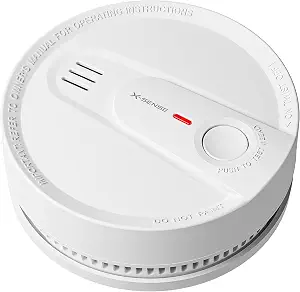 | Best for Simple Installation | Brand: X-Sense | Model: SD2L0AX | Quantity: 1 smoke alarm | VIEW ON AMAZON | See Our Full Breakdown |
| X-Sense SC01 Smoke and Carbon Monoxide Detector, 5-Pack |  | Best for Smoke and CO Coverage | Brand: X-Sense | Model: SC01 | Pack count: 5 | VIEW ON AMAZON | See Our Full Breakdown |
| X-Sense SD2J0AX Smoke Detector with 10-Year Battery |  | Best for Standalone Simplicity | Brand: X-Sense | Model: SD2J0AX | Type: Photoelectric smoke alarm | VIEW ON AMAZON | See Our Full Breakdown |
| First Alert SMI100-AC Hardwire Interconnect Smoke Alarm with Battery Backup, 12-Pack |  | Best for Whole-Home Hardwired Coverage | Model: SMI100-AC | Power: Hardwired with battery backup | Interconnect: Compatible alarms sound when one alarm activates | VIEW ON AMAZON | See Our Full Breakdown |
| First Alert SMICO100 Battery-Operated Smoke and Carbon Monoxide Alarm |  | Best for Smoke and CO Coverage | Brand: First Alert | Model: SMICO100 | Power source: Battery-operated | VIEW ON AMAZON | See Our Full Breakdown |
| First Alert Battery Smoke Alarm |  | Best for Easy Battery Access | Brand: First Alert | Product type: Battery smoke alarm | Power source: Battery-operated | VIEW ON AMAZON | See Our Full Breakdown |
| X-Sense SD2J0AX Photoelectric Smoke Detectors, 10-Pack |  | Best for Whole-Home Coverage | Brand: X-Sense | Model: SD2J0AX | Pack size: 10 detectors | VIEW ON AMAZON | See Our Full Breakdown |
| Kidde 20SD10 Smoke Detector with 10-Year Battery, 3-Pack |  | Best for Low-Maintenance Replacement | Brand: Kidde | Model: 20SD10 | Pack size: 3 detectors | VIEW ON AMAZON | See Our Full Breakdown |
| First Alert Battery Smoke Alarm | 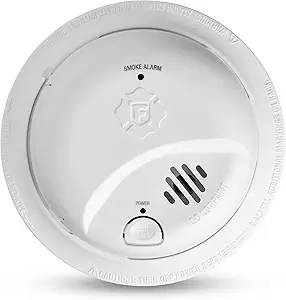 | Best for Standard Smoke-Only Coverage | Brand: First Alert | Product type: Battery smoke alarm | Power source: Battery-operated | VIEW ON AMAZON | See Our Full Breakdown |
| smoke detector | Model | Brand |
|---|---|---|
| First Alert BRK SMI100-AC Hard | — | — |
| Kidde 10SDR Compact Battery-Po | 10SDR | — |
| SITERWELL Smoke Detector | GS509A | — |
| First Alert Battery Smoke Alar | — | — |
| SITERWELL Photoelectric Smoke | GS525A | — |
| Kidde 20SD10 Smoke Detector wi | 20SD10 | — |
| X-Sense SD2L0AX Smoke Detector | SD2L0AX | X-Sense |
| X-Sense SC01 Smoke and Carbon | SC01 | X-Sense |
| X-Sense SD2J0AX Smoke Detector | SD2J0AX | X-Sense |
| First Alert SMI100-AC Hardwire | SMI100-AC | — |
| First Alert SMICO100 Battery-O | SMICO100 | First Alert |
| First Alert Battery Smoke Alar | — | First Alert |
| X-Sense SD2J0AX Photoelectric | SD2J0AX | X-Sense |
| Kidde 20SD10 Smoke Detector wi | 20SD10 | Kidde |
| First Alert Battery Smoke Alar | — | First Alert |
More Details on Our Top Picks
First Alert BRK SMI100-AC Hardwired Smoke Detector with Battery Backup, 6-Pack
The six-alarm hardwired set suits homeowners replacing several interconnected alarms at once. Its 120-volt AC connection with 9-volt battery backup keeps each alarm powered through an outage, while interconnection lets alarms sound together when one detects smoke. That makes this a more integrated choice than the battery-only Kidde 10SDR, which is easier to place without wiring but does not offer the described hardwired setup. A side-load battery compartment and open mounting design can simplify installation and upkeep, and the test/silence button handles routine checks and nuisance alerts. The tradeoff is the need for compatible hardwiring and installation work; the six-pack is also less suited to buyers who need just one alarm. Its 85 dB alarm and tamper-resistant locking pins round out a practical whole-home option.
Pros:- Six alarms support coverage across multiple rooms
- AC power with included 9-volt backup supports operation during outages
- Can interconnect with up to 18 compatible units
- Side-load battery compartment and test/silence button simplify routine maintenance
Cons:- Requires compatible hardwired connections, limiting placement flexibility
- Six units may be more than needed for a small home or a single replacement
- Backup batteries require eventual replacement
Best for: Homeowners replacing multiple compatible hardwired alarms who want battery backup and interconnected alerts
Not ideal for: Renters or buyers without existing compatible wiring, and anyone who only needs a single alarm
- Power:120 V AC with 9 V battery backup
- Backup battery:9 V battery included
- Alarm volume:85 dB
- Quantity:6 alarms
- Interconnection:Up to 18 compatible units: 12 smoke and 6 CO/heat/relay
- Controls:Single test/silence button
- Installation features:Open mounting design and side-load battery compartment
- Warranty:10-year limited
Our verdict“Choose this six-pack when you are updating several compatible hardwired locations and want alarms that can sound together during a power outage.”
Kidde 10SDR Compact Battery-Powered Smoke Detector
The compact battery-powered design makes the Kidde 10SDR a flexible pick for locations where hardwiring is unavailable or inconvenient. It runs on two included AA batteries, so installation does not depend on the wiring needed for the First Alert BRK SMI100-AC. Its Test & Hush button and sensing technology designed to reduce cooking- or steam-related alarms add useful everyday convenience, especially near kitchens. The red LED supplies a visual warning alongside the 85 dB alarm. Compared with the SITERWELL GS525A, it uses replaceable AA batteries rather than a built-in battery intended to last up to ten years; that gives owners a way to restore power with new batteries, but creates ongoing replacement work. This is a straightforward single-alarm option, though the provided information does not specify interconnection or a ten-year battery.
Pros:- No wiring required for installation
- Sensing technology is designed to reduce nuisance alarms from cooking or steam
- Audible alarm and red LED provide two alert methods
- Test & Hush button and 10-year limited alarm warranty
Cons:- Two AA batteries will need replacement over time
- Interconnection capability is not specified in the provided product information
- Does not provide the built-in ten-year battery described for the SITERWELL GS525A
Best for: Renters and homeowners who need a compact alarm for a spot without hardwired power and want a hush control
Not ideal for: Buyers seeking a built-in ten-year battery or a documented hardwired, interconnected alarm system
- Model:10SDR
- Power:Two AA batteries, included
- Alarm volume:85 dB
- Visual indicator:Red LED
- Controls:Test & Hush button
- Sensing:Designed to reduce alarms from cooking or steam
- Standards:UL 217 10th Edition and FCC
- Warranty:10-year limited warranty on the alarm
Our verdict“Pick the 10SDR for a compact, no-wiring location where replaceable batteries and a cooking-alarm hush feature suit your routine.”
SITERWELL Smoke Detector, 10 Year Product Life Fire Alarm
The GS509A combines photoelectric sensing with a battery that can be replaced, making it a fit for buyers focused on slow-smoldering smoke who do not want a sealed battery unit. The product data says the alarm has a 10-year product life with continuous battery replacement; that describes the detector’s stated service life, not a ten-year battery. Unlike the SITERWELL GS525A, whose built-in battery is designed to last up to ten years but cannot be replaced, this model needs periodic battery changes. Its mounting bracket supports wall or ceiling placement, and the Test/Mute button allows a test or temporary silence. The tradeoffs are the described weekly testing routine and ongoing 9-volt battery upkeep. The listing also states an alarm louder than 85 dB, but does not provide a safety listing in the supplied details.
Pros:- Photoelectric sensor is described as more sensitive to slow-smoldering fires
- Replaceable 9-volt battery supports continued use during the stated product life
- Test/Mute button provides a way to check or silence the alarm
- Mounting bracket supports wall or ceiling installation
Cons:- Requires battery replacement and weekly testing
- The stated ten-year life is the product life, not battery life
- Provided product details do not identify a safety listing
Best for: Homeowners who prefer photoelectric smoke sensing and want to replace the battery rather than discard a sealed-battery alarm
Not ideal for: People seeking a maintenance-light sealed battery detector or buyers who require a specified safety listing in the product details
- Model:GS509A
- Sensor type:Photoelectric
- Product life:10 years with continuous battery replacement, as stated by the product description
- Battery:9 V battery; described as 1-year battery
- Alarm volume:More than 85 dB
- Controls:Test/Mute button
- Mounting:Wall or ceiling with included mounting bracket
- Maintenance:Weekly testing required, according to the product description
Our verdict“Choose the GS509A if you want photoelectric sensing and a replaceable battery, and are willing to test and maintain it regularly.”
First Alert Battery Smoke Alarm
First Alert’s Precision Detection sensing is designed to reduce nuisance alarms from cooking while still providing early warning of a home fire. That focus gives this battery-powered model a different role from the hardwired First Alert BRK SMI100-AC, which is better suited to replacing multiple wired alarms and linking them together. Here, battery operation and front access make installation and battery changes more accessible, particularly in an existing home without compatible wiring. The end-of-life warning helps signal when the alarm itself needs replacement, while the test/silence button supports regular checks and temporary silencing. The available description does not state the battery type, alarm volume, safety listing, or whether units interconnect, so buyers who need those specific details should compare carefully. It also requires battery maintenance, unlike the SITERWELL GS525A’s built-in battery designed for up to ten years.
Pros:- Precision Detection is designed to reduce nuisance alarms from cooking
- Battery operation allows installation without hardwired power
- Front access makes battery replacement easier
- End-of-life warning and test/silence button support upkeep
Cons:- Battery type and expected battery life are not specified in the provided details
- Interconnection capability and alarm volume are not specified
- Requires battery maintenance, unlike the built-in-battery SITERWELL GS525A
Best for: Homeowners seeking a battery-operated alarm for a kitchen-adjacent area where nuisance cooking alarms are a concern
Not ideal for: Buyers who need documented interconnection, a specified battery type, or a built-in battery designed for long-term use
- Power:Battery operated; battery type not specified
- Sensing:Precision Detection, designed to reduce cooking nuisance alarms
- Controls:Test/silence button
- Battery access:Front access compartment
- Warning:End-of-life warning
- Installation:Battery powered for easy installation
Our verdict“This First Alert is a sensible fit for a battery-powered location near cooking, provided its unspecified battery and connection details meet your needs.”
SITERWELL Photoelectric Smoke Detector with 10-Year Battery
The GS525A is aimed at buyers who want to limit battery changes: its built-in 3 V lithium battery is designed to last up to ten years, then cannot be replaced. That sealed design contrasts with the replaceable-battery SITERWELL GS509A, which can remain in service through battery changes but calls for more hands-on upkeep. The GS525A pairs its battery with a photoelectric sensor, a test/mute button, and low-battery and fault warnings. Those alerts help flag maintenance needs, while the included screw and magnetic mounting options give buyers flexibility in how they attach it. It is UL 217 listed, according to the product details. The main tradeoff is that the whole detector must be replaced when its battery is depleted or the unit reaches end of life; it also needs activation before installation and weekly testing.
Pros:- Built-in lithium battery is designed to last up to ten years
- Photoelectric sensing
- UL 217 listed according to the product details
- Includes screw and magnetic mounting options plus low-battery and fault warnings
Cons:- Battery is non-replaceable, so the alarm must be replaced when depleted
- Requires activation before installation and weekly testing
- Single alarm may not suit buyers covering multiple locations
Best for: Homeowners who want a listed photoelectric alarm with a built-in battery and flexible mounting options
Not ideal for: Buyers who want to replace batteries individually or avoid replacing the complete alarm when its sealed battery is depleted
- Model:GS525A
- Sensor type:Photoelectric
- Battery:Built-in, non-replaceable 3 V lithium
- Battery life:Designed to last up to 10 years
- Safety listing:UL 217
- Features:Test/mute button, low-battery and fault warnings
- Mounting:Wall or ceiling; screws and magnetic kit included
- Enclosure and quantity:Polycarbonate; 1 alarm
Our verdict“Choose the GS525A for a single photoelectric location where a built-in battery and flexible mounting matter more than replaceable batteries.”
Kidde 20SD10 Smoke Detector with 10-Year Battery
The Kidde 20SD10 is a straightforward choice for a kitchen-adjacent hallway or another spot where cooking steam can trigger nuisance alarms. Its sensing technology is designed to reduce those interruptions while still detecting smoke, and the 85 dB alarm and red LED provide audible and visual alerts. Compared with the X-Sense SD2L0AX, it offers a stated alarm volume and a 10-year limited warranty; the X-Sense instead specifies a self-test feature and photoelectric sensor. The Kidde’s built-in 10-year battery avoids routine battery changes, but the supplied details do not describe it as replaceable. That makes this a low-maintenance pick for buyers comfortable replacing the whole alarm when its battery life ends.
Pros:- Built-in battery is designed to last 10 years
- 85 dB alarm is paired with a red LED warning light
- Sensing technology is designed to limit cooking- and steam-related false alarms
- Tested to UL 217 10th Edition and FCC standards
Cons:- Battery is built in and is not described as replaceable
- Pack includes one detector, so broader coverage requires additional units
Best for: Homeowners who want a low-maintenance alarm near cooking areas and value a stated alarm volume and warranty.
Not ideal for: Buyers who want to replace batteries individually or need app alerts and interconnected alarms.
- Model:20SD10
- Battery life:10 years
- Alarm volume:85 dB
- Visual indicator:Red LED
- Standards:UL 217 10th Edition and FCC
- Warranty:10-year limited warranty
- Pack size:1
Our verdict“Choose the Kidde 20SD10 for a single low-maintenance location where cooking-related nuisance alarms are a concern.”
X-Sense SD2L0AX Smoke Detector with 10-Year Battery, 1-Pack
For buyers replacing an alarm without adding wiring, the X-Sense SD2L0AX keeps setup simple: it mounts with included screws and uses a tamper-resistant battery rated for up to 10 years. Its photoelectric sensor is designed to reduce nuisance alarms from cooking fumes and steam, a useful focus for rooms where those interruptions are common. Compared with the Kidde 20SD10, this model spells out its built-in self-test and test/silence button, giving owners clear ways to check and quiet the alarm. The tradeoff is a sealed, nonreplaceable battery and no stated Wi-Fi or wireless interconnection. Its ETL listing and testing to meet UL 217 provide safety-standard context, but this is a standalone unit rather than part of a connected system.
Pros:- Installs without wiring and includes mounting screws
- Photoelectric sensor is designed to reduce nuisance alarms from cooking fumes and steam
- Self-test and test/silence button support routine checks and alarm management
- Battery is rated for up to 10 years
Cons:- Tamper-resistant built-in battery is not described as replaceable
- No Wi-Fi or wireless interconnection is specified
- Single-alarm pack offers no multiroom coverage by itself
Best for: Renters or homeowners replacing a single alarm who want screw-mounted, no-wiring installation and a built-in self-test.
Not ideal for: Buyers who need replaceable batteries, app alerts, or alarms that sound together across multiple rooms.
- Brand:X-Sense
- Model:SD2L0AX
- Quantity:1 smoke alarm
- Battery life:Up to 10 years
- Sensor:Photoelectric
- Safety listing:ETL listed; tested to meet UL 217
- Installation:No wiring; mounting screws included
- Features:Self-test, test/silence button, fire-resistant housing
Our verdict“Pick the SD2L0AX when easy, wire-free installation and simple self-testing matter more than connected alerts.”
X-Sense SC01 Smoke and Carbon Monoxide Detector, 5-Pack
The X-Sense SC01 earns a distinct place by monitoring for both smoke and carbon monoxide in each unit, making this five-pack useful for buyers covering several rooms with one standalone device type. Photoelectric and electrochemical sensors serve the two hazards, while the LCD displays show CO and battery status. Compared with the single-purpose X-Sense SD2J0AX, the SC01 adds CO detection and a visible status readout; the SD2J0AX is the simpler choice when smoke detection alone is the goal. The sealed 10-year battery avoids wiring, but the detectors do not support Wi-Fi or wireless interconnection. That means a sounding unit will not alert the rest of the home, a meaningful limitation for buyers prioritizing whole-house notification.
Pros:- Each detector monitors for smoke and carbon monoxide
- Five units support coverage across multiple locations
- LCD displays provide CO and battery-status information
- Sealed 10-year lithium battery avoids hardwiring
Cons:- No wireless interconnection, so one alarm will not trigger the others
- No Wi-Fi support or app alerts
- Cannot be used with a base station
Best for: Households that want smoke and carbon monoxide detection across several rooms without hardwiring.
Not ideal for: Buyers who need alarms to interconnect, receive app notifications, or work with a base station.
- Brand:X-Sense
- Model:SC01
- Pack count:5
- Power source:Sealed lithium battery
- Battery life:10 years
- Alarm volume:85 dB
- Sensors:Photoelectric and electrochemical
- Certifications:UL 217 and UL 2034
- Connectivity:No interconnection or Wi-Fi
Our verdict“Choose the SC01 five-pack when you want standalone smoke and CO detection across several rooms and can do without interconnection.”
X-Sense SD2J0AX Smoke Detector with 10-Year Battery
The X-Sense SD2J0AX suits someone who wants a basic smoke alarm that can be installed without wiring and checked with one button. Its photoelectric sensor is designed to help reduce cooking-related nuisance alarms, while the sealed lithium battery is rated for up to 10 years. A one-button self-test and hush function make routine checking and silencing more direct than the Kidde 20SD10, whose listed features emphasize its 85 dB alarm and red LED instead. The SD2J0AX is also narrower in scope than the X-Sense SC01: it detects smoke only, while the SC01 adds carbon monoxide detection and LCD status displays. This model has no Wi-Fi, app alerts, or wireless interconnection, so it fits independent rooms better than a connected whole-home setup.
Pros:- Sealed battery is designed to last up to 10 years
- Photoelectric sensing helps reduce cooking-related nuisance alarms
- No-wiring installation includes screws and anchor plugs
- One-button self-test and hush function
Cons:- No Wi-Fi or app alerts
- Does not wirelessly interconnect with other alarms
- Smoke-only detection lacks the CO monitoring offered by the X-Sense SC01
Best for: Buyers replacing one standalone smoke alarm who want included mounting hardware and a simple hush and test control.
Not ideal for: Households seeking carbon monoxide monitoring, remote alerts, or alarms that communicate across rooms.
- Brand:X-Sense
- Model:SD2J0AX
- Type:Photoelectric smoke alarm
- Battery:Sealed lithium battery, up to 10 years
- Safety standard:ETL listed to meet UL 217
- Installation:Battery operated; no wiring required
- Features:One-button self-test and hush
- Connectivity:Standalone; no Wi-Fi, app alerts, or wireless interconnection
- Included accessories:User manual, 2 screws, and anchor plugs
Our verdict“Pick the SD2J0AX for a simple, standalone smoke alarm with a long-life sealed battery and one-button controls.”
First Alert SMI100-AC Hardwire Interconnect Smoke Alarm with Battery Backup, 12-Pack
For a home that already has compatible hardwired alarms, this First Alert 12-pack is the lineup’s broadest option for interconnected smoke coverage. When one compatible alarm activates, the others can sound too, helping alerts reach people in other rooms. Its battery backup keeps alarms operating during power outages, while Precision Detection is designed to reduce cooking-related nuisance alarms. Compared with the battery-powered X-Sense SC01 five-pack, the SMI100-AC prioritizes linked, hardwired coverage over adding carbon monoxide detection and LCD status displays. The pack’s Quick Connect Plug is intended to ease installation without rewiring, but this remains a hardwired system and requires compatible alarms. The supplied details do not specify battery-backup life or a warranty, so buyers should check those requirements before choosing it.
Pros:- Interconnect capability lets compatible alarms sound when one activates
- Battery backup provides operation during power outages
- Precision Detection is designed to reduce cooking-related nuisance alarms
- 12-pack supports coverage across multiple locations
Cons:- Requires compatible hardwired alarm connections
- Does not list carbon monoxide detection
- No battery-backup runtime is specified in the supplied product details
Best for: Homeowners outfitting several locations in a home with compatible hardwired alarms who want alarms to sound together during an alert.
Not ideal for: Renters or homeowners without compatible hardwired connections, and buyers who need carbon monoxide detection in the same unit.
- Model:SMI100-AC
- Power:Hardwired with battery backup
- Interconnect:Compatible alarms sound when one alarm activates
- Alarm indicator:Visually identifies the unit that initiated the alarm
- Installation:Quick Connect Plug included; no rewiring needed
- Pack size:12
Our verdict“Choose this First Alert pack for multiroom smoke coverage when your home has compatible hardwired connections.”
First Alert SMICO100 Battery-Operated Smoke and Carbon Monoxide Alarm
The SMICO100 combines smoke and carbon monoxide detection in one battery-operated alarm, making it a practical choice when you want both hazards covered at a single location. Its Precision Detection technology is designed to limit cooking-related nuisance alarms while providing early fire warning. Compared with the First Alert Battery Smoke Alarm, this model adds CO detection, though the single-hazard alarm may suit buyers who already have separate CO coverage. A test/silence button and end-of-life warning make routine checks and replacement easier to manage. The tradeoff is battery upkeep: unlike the sealed-battery X-Sense SD2J0AX 10-pack, it requires ongoing battery maintenance. This is a focused dual-purpose option, not a connected alarm system; the supplied details do not list app alerts or interconnection.
Pros:- Detects both smoke and carbon monoxide in one device
- Precision Detection is designed to reduce cooking-related nuisance alarms
- Test/silence button supports straightforward checks
- End-of-life warning helps signal when the alarm needs replacement
Cons:- Requires battery maintenance
- Only one unit is included
- No app alerts or interconnection are specified
Best for: Households that want smoke and carbon monoxide detection together in one battery-operated alarm
Not ideal for: Buyers seeking sealed long-life batteries, app alerts, or interconnected alarms
- Brand:First Alert
- Model:SMICO100
- Power source:Battery-operated
- Detection:Smoke and carbon monoxide
- Sensing technology:Precision Detection
- Pack size:1 alarm
- Manufacturer:Resideo
Our verdict“Choose the SMICO100 when you want smoke and CO detection in one alarm and are comfortable maintaining its batteries.”
First Alert Battery Smoke Alarm
This First Alert smoke alarm is a straightforward pick for buyers who want replaceable batteries and front access for routine maintenance. That front-facing compartment can make battery changes less awkward than designs that require taking the unit down, while the test/silence button and end-of-life warning help with regular upkeep. Its Precision Detection technology is designed to reduce nuisance alarms from cooking and provide early fire warning. Compared with the First Alert SMICO100, this model focuses on smoke detection rather than adding carbon monoxide coverage. It also differs from the Kidde 20SD10 3-pack, which has a built-in 10-year battery and a stated alarm volume. The tradeoff here is continued battery replacement, and the supplied product data does not identify a model number, sensor type, or pack quantity.
Pros:- Front access battery compartment simplifies battery changes
- Precision Detection is designed to reduce cooking nuisance alarms
- Test/silence button supports routine checks
- End-of-life warning signals when replacement is due
Cons:- Requires battery replacement over its service life
- Does not include carbon monoxide detection
- Product details do not specify model number, sensor type, or pack quantity
Best for: Homeowners who want a smoke-only alarm with accessible battery replacement and simple test and hush controls
Not ideal for: Buyers who prefer a built-in long-life battery or need carbon monoxide detection in the same device
- Brand:First Alert
- Product type:Battery smoke alarm
- Power source:Battery-operated
- Sensing technology:Precision Detection
- Battery access:Front access compartment
- Controls:Test/silence button
- Maintenance warning:End-of-life warning
Our verdict“Pick this First Alert when accessible battery changes matter more to you than a sealed long-life battery or combined CO detection.”
X-Sense SD2J0AX Photoelectric Smoke Detectors, 10-Pack
The 10-pack and up-to-10-year sealed batteries make the X-Sense SD2J0AX a fit for buyers equipping many rooms at once and aiming to limit battery changes. Its photoelectric sensors are designed to reduce nuisance alarms from cooking fumes and steam, and no-wire installation gives more placement flexibility than the hardwired First Alert BRK SMI100-AC. Each unit can be tested or silenced with a button. The tradeoff is that these detectors operate independently: they do not interconnect or send app alerts, so an alarm in one room will not notify other units through a shared system. The sealed battery is not described as replaceable, which makes the long battery life convenient but leaves less flexibility if it runs down before the detector reaches end of life. This pack favors broad, standalone coverage over connected response.
Pros:- Ten detectors cover multiple rooms in one purchase
- Batteries are rated for up to 10 years
- Photoelectric sensing is designed to reduce cooking and steam nuisance alarms
- ETL listed to UL 217 and installs without wiring
Cons:- Units do not interconnect or provide app alerts
- Sealed battery is not described as replaceable
- Standalone operation means an alarm does not trigger other detectors
Best for: Homeowners fitting multiple rooms with standalone detectors and seeking long battery life without wiring
Not ideal for: Buyers who need interconnected alarms, app notifications, or replaceable batteries
- Brand:X-Sense
- Model:SD2J0AX
- Pack size:10 detectors
- Power source:Battery powered
- Battery life:Up to 10 years
- Sensor type:Photoelectric
- Safety listing:ETL listed to UL 217
- Connectivity:Standalone; no Wi-Fi or wireless interconnection
- Dimensions:4.8 x 1.8 x 4.8 in (D x W x H)
Our verdict“Choose this X-Sense pack for broad no-wire coverage with long-life batteries if standalone alarms meet your needs.”
Kidde 20SD10 Smoke Detector with 10-Year Battery, 3-Pack
The Kidde 20SD10 suits buyers replacing several alarms who want built-in batteries designed for 10 years and less routine battery handling. Its three-pack covers more rooms than the single First Alert SMICO100, while the stated 85-decibel alarm and red LED provide audible and visual warning cues. Advanced sensing is designed to reduce false alarms from cooking or steam. Compared with the X-Sense SD2J0AX 10-pack, Kidde supplies fewer units, but its product details specify a 10-year limited warranty and testing to UL 217 10th Edition and FCC standards. The built-in battery is not described as replaceable, so the low-maintenance setup also limits battery replacement flexibility. Choose it for a modest multi-room refresh; buyers seeking CO detection or app-connected alerts should look elsewhere.
Pros:- Three detectors provide coverage for several rooms
- Built-in batteries are designed to operate for 10 years
- 85-decibel alarm and red LED provide audible and visual warnings
- Tested to UL 217 10th Edition and FCC standards
Cons:- Built-in battery is not described as replaceable
- Does not provide carbon monoxide detection
- Pack contains fewer detectors than the X-Sense SD2J0AX 10-pack
Best for: Homeowners replacing a few smoke alarms who want built-in long-life batteries and clear sound and light alerts
Not ideal for: Buyers who need carbon monoxide coverage, app alerts, or a large pack for many rooms
- Brand:Kidde
- Model:20SD10
- Pack size:3 detectors
- Battery life:10 years
- Alarm volume:85 decibels
- Visual warning:Red LED
- Standards:UL 217 10th Edition and FCC
- Warranty:10-year limited warranty
Our verdict“Pick the Kidde 20SD10 for a three-room smoke alarm refresh with long-life built-in batteries and sound-and-light alerts.”
First Alert Battery Smoke Alarm
This First Alert is a simple smoke-only option with Precision Detection designed to reduce cooking nuisance alarms and provide early fire warning. Its front access battery compartment makes routine changes more convenient, while the test/silence button and end-of-life warning support basic maintenance. Like the other First Alert Battery Smoke Alarm in this batch, it does not add the carbon monoxide detection found in the SMICO100. Compared with the Kidde 20SD10, this model keeps battery changes accessible instead of using a built-in 10-year battery, but the supplied details do not state an alarm volume, sensor type, or warranty. Those missing specifics make it harder to compare on alert output or sensing method. It makes the most sense for buyers who want familiar, replaceable-battery smoke coverage and do not need extra connectivity or CO sensing.
Pros:- Precision Detection is designed to reduce cooking nuisance alarms
- Front access compartment makes battery replacement easier
- Test/silence button supports routine checks
- End-of-life warning helps flag replacement time
Cons:- Requires battery replacement
- Does not detect carbon monoxide
- Product details do not specify sensor type, alarm volume, or warranty
Best for: Households seeking a basic smoke-only alarm with an accessible battery compartment and maintenance alerts
Not ideal for: Buyers who want combined carbon monoxide detection, a specified long-life battery, or detailed sensor specifications
- Brand:First Alert
- Product type:Battery smoke alarm
- Power source:Battery-operated
- Sensing technology:Precision Detection
- Battery access:Front access compartment
- Controls:Test/silence button
- Maintenance warning:End-of-life warning
Our verdict“Choose this First Alert for straightforward smoke-only coverage with accessible battery changes and basic maintenance cues.”

How We Picked
I ranked these alarms by how well their stated design fits common household needs: dependable power arrangements, smoke-only versus combination coverage, sensor type, sealed-battery lifespan, installation flexibility, and the practical value of buying a single unit or multipack. I gave the strongest positions to products with a clear use case and a useful balance of coverage and upkeep, while accounting for wiring requirements and the need to replace sealed-battery units as a whole.
The lineup includes repeated First Alert Battery Smoke Alarm listings and several closely related Kidde and X-Sense models, so I treated pack size and model differences as buying considerations rather than assuming every listing is a distinct design. A hardwired alarm ranks well for a compatible existing system, but not for a home that needs a quick standalone replacement. Combination alarms offer another type of coverage, while adding a CO sensor does not make a smoke alarm suitable for every room or replace following local placement rules.
Factors to Consider When Choosing Smoke Detectors
Before choosing from this roundup, map where alarms are needed and check what your home already supports. A good match depends on wiring, coverage, maintenance preferences, and local fire-safety guidance; one product feature rarely answers all four.
Match the alarm to existing wiring
Start by checking whether the alarm you are replacing is hardwired, battery-powered, or part of an interconnected system. A hardwired First Alert model can be a direct fit only when its wiring and connector are compatible with the existing installation. Buying a multipack before checking compatibility can leave you with alarms that need an adapter or professional installation. For battery-only locations, a standalone alarm offers more placement flexibility. If you are unsure what system is installed, check the existing model number and manufacturer guidance before purchasing. Local building rules may also affect which power and interconnection types are acceptable.
Choose coverage by hazard and room
Smoke alarms and carbon monoxide alarms detect different hazards, so decide whether you need one or both at each location. Combination models such as the X-Sense SC01 or First Alert SMICO100 can reduce the number of separate devices, but they do not remove the need to follow placement instructions for each hazard. Think through sleeping areas, levels of the home, attached garages, and fuel-burning appliances, then compare that plan with local fire-safety guidance. A smoke-only alarm may be the cleaner choice where CO coverage is already handled. Avoid assuming that a combination label means one unit belongs everywhere.
Understand sealed-battery replacement
A sealed 10-year battery can remove the recurring task of changing batteries, which may suit busy households or hard-to-reach installations. The tradeoff is that a depleted battery or an expired alarm generally means replacing the entire unit rather than just its battery. Check the alarm’s marked manufacture or replacement date and the manufacturer’s service-life instructions. Do not confuse the battery’s stated duration with a guarantee that the detector itself can remain installed indefinitely. If you prefer replaceable batteries, weigh the recurring maintenance against the flexibility of replacing only the battery.
Compare sensor types without overreading labels
Photoelectric models are one sensor option represented in this group, including SITERWELL and X-Sense picks. Sensor labels describe how an alarm detects smoke; they do not by themselves establish that a unit is right for every room or hazard. Check the product instructions and local guidance for recommended alarm type and placement. Where a home has older alarms, make sure a replacement meets current requirements rather than choosing by sensor terminology alone. Buyers comparing sensor types should also consider whether the model fits the existing mounting setup and alarm system.
Plan the number of alarms before buying a pack
Multipacks can make it easier to outfit several rooms at once, but only if the units match the needs of those locations. Count the alarms required under local guidance and note which positions need hardwiring, interconnection, or combination smoke and CO coverage. A 10- or 12-pack of one type may be a poor fit if some locations need a different alarm configuration. Single-unit listings are useful for replacing one failed or expired alarm without creating spare inventory. Compare the pack’s contents with your room-by-room plan before deciding.
Check interconnection and household alerts
Interconnected alarms can alert occupants across multiple rooms when one detector senses smoke, but compatibility depends on the alarm system. Hardwired interconnect models are not automatically compatible with every brand or older installation. Confirm the model’s approved connections and whether alarms communicate through wiring or another supported method. For households with sleeping occupants, hearing limitations, or a large floor plan, consider how alerts will reach people throughout the home. A standalone alarm may be easier to install, while a compatible interconnected system can provide broader notification.
Frequently Asked Questions
Can I replace my current hardwired alarm with one of these battery models?
Possibly, but first check local requirements and whether the existing alarm is part of a hardwired interconnect system. A battery unit may not preserve the shared alert behavior or satisfy rules that apply to the installation. Identify the existing model and consult its replacement guidance before removing it. If you are unsure about wiring or system compatibility, ask a qualified installer to check the setup. Choose a replacement that preserves the required coverage and connections.
Is a 10-year sealed-battery alarm the right choice if I want less maintenance?
It can be a good fit if you want to avoid routine battery changes and the alarm’s installation location suits the model. The tradeoff is that you replace the whole alarm when its service life ends or the sealed battery fails. Check the product’s stated life and replacement instructions, and keep track of its end date. A sealed battery does not remove the need to test alarms as directed by the manufacturer. If you prefer to replace batteries independently, a model with a replaceable battery may suit you better.
Should I choose a smoke-only alarm or a smoke and carbon monoxide combination unit?
Choose based on which hazards are already covered and where each alarm needs to be placed. Combination units such as the X-Sense SC01 and First Alert SMICO100 provide smoke and CO detection in one device, which can simplify a planned installation. They may be unnecessary where a separate CO alarm already provides suitable coverage. Check both hazards’ placement instructions and local requirements before replacing separate devices with one combination alarm. A combination label alone does not determine the correct location.
Are multipacks a better fit than buying one alarm at a time?
Multipacks make sense when several locations need the same type of alarm and the pack matches your home’s wiring and coverage plan. They can be a poor match if some rooms require hardwired units, combination detection, or different system compatibility. Make a list of alarm locations and types before choosing pack size. A single unit is often simpler for replacing one expired alarm or filling one coverage gap. Avoid installing spare alarms just to use every unit in a pack.
What should I check before choosing a photoelectric smoke detector?
Check the product instructions, local fire-safety guidance, and the requirements for the room where you plan to install it. Photoelectric sensing is a design detail, not a substitute for correct placement or coverage. Confirm whether the model is smoke-only, battery-powered, and compatible with the mounting location or alarm system. Compare those practical details with the Kidde and First Alert options if you are also weighing sealed batteries or hardwiring. For an existing system, prioritize a compliant replacement with the right connections.
Conclusion
For the best overall fit in a compatible hardwired home, I would choose the First Alert BRK SMI100-AC; the 6-pack offers multiroom coverage, while the 12-pack version suits a larger replacement plan. The Kidde 20SD10 is my value pick for buyers who want a 10-year sealed battery, and its 3-pack works when several matching locations need alarms. Beginners who want a straightforward battery-powered option can start with the compact Kidde 10SDR or a single First Alert Battery Smoke Alarm, after checking placement and battery type. For premium-style combined coverage, I would look at the X-Sense SC01 or First Alert SMICO100, depending on pack needs and installation fit. Buyers specifically seeking photoelectric sensing should compare the SITERWELL and X-Sense SD2J0AX listings; the right choice comes down to required coverage, pack size, and system compatibility.
Halloween Picks
halloween
As an affiliate, we earn on qualifying purchases.