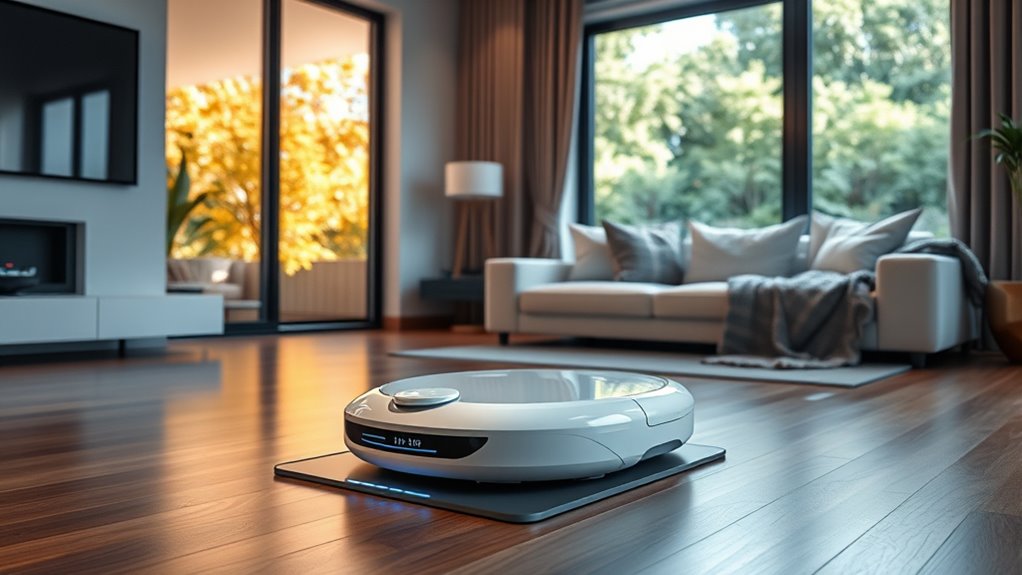

For shoppers comparing self-emptying robot vacuum deals, my best overall pick is the iRobot Roomba 105 Combo for buyers who want a familiar vacuum-and-mop setup, while the Shark PowerDetect NeverTouch Pro stands out for its self-refilling and self-emptying system. The MONSGA 9200Pa is another strong option for shoppers prioritizing high listed suction and smart mapping. The main tradeoffs are how much dock automation you need, whether mopping matters, and how much maintenance you are willing to handle between runs. A self-empty base cuts down on bin emptying, but it does not make every robot hands-off or suit every floor plan. Read on for my full comparison and guidance on choosing the right model for your home.

Get your wardrobe favorites delivered free with Prime
- Fast, free delivery on millions of items
- Prime Video, Amazon Music and more included
- Member-only deals all year
Complete the kit


Key Takeaways
- The Roomba 105 Combo is my best overall pick because it brings vacuuming, mopping, and an AutoEmpty dock together; shoppers who want more dock automation can compare it with the Shark PowerDetect NeverTouch Pro.
- The Shark PowerDetect NeverTouch Pro has the broadest listed dock automation among these picks, with self-emptying and self-refilling, but its Renewed condition may not suit buyers who prefer a new unit.
- High suction claims vary across the lineup: the pet-hair model lists 11,500 Pa, the MONSGA 9200Pa lists 9,200 Pa, and the 8000Pa model lists 8,000 Pa, but suction figures alone do not predict whole-home cleaning results.
- Several models pair LiDAR navigation with mapping, including the Tikom L8000 Plus and both named MONSGA options; this makes them easier to compare for room-based cleaning than models whose listings give less navigation detail.
- Self-emptying does not mean maintenance-free: buyers still need to check dock capacity, replace bags or filters where applicable, clean brushes, and confirm what the mop system requires.
| iRobot Roomba 105 Combo Robot Vacuum and Mop with AutoEmpty Dock |  | Best for Carpet-Safe Mopping | Navigation: ClearView LiDAR | Debris storage: Up to 75 days | Cleaning modes: Vacuum, mop, or vacuum and mop | VIEW ON AMAZON | See Our Full Breakdown |
| BOTLUXE T30+ Robot Vacuum and Mop with Self-Emptying Station |  | Best for Long-Run Cleaning | Model: T30+E | Suction power: 12,000 Pa | Dust bag capacity: 3.5 L | VIEW ON AMAZON | See Our Full Breakdown |
| Shark PowerDetect NeverTouch Pro Robot Vacuum and Mop Combo, Self-Emptying and Self-Refilling, UR2850ZE (Renewed) |  | Best for Low-Handling Mop Care | Model: UR2850ZE | Condition: Renewed | Navigation: 3D sensor and 360° LiDAR | VIEW ON AMAZON | See Our Full Breakdown |
| Tikom L8000 Plus Robot Vacuum and Mop with Self-Emptying Base |  | Best for Multi-Floor Mapping | Suction power: Up to 6,000 Pa | Dustbag capacity: 3 liters | Navigation: 360° LiDAR | VIEW ON AMAZON | See Our Full Breakdown |
| Robot Vacuum and Mop with Self-Emptying Station and LiDAR Navigation |  | Best for Longer Dust-Bag Intervals | Suction power: Up to 8,000 Pa | Navigation: 360° LiDAR | Self-emptying interval: Up to 90 days | VIEW ON AMAZON | See Our Full Breakdown |
| VONKO S6Pro Robot Vacuum and Mop with Self-Emptying Station |  | Best for Multi-Floor Homes | Suction power: Up to 8,000Pa | Navigation: LiDAR 2.0 | Cleaning functions: Vacuuming and mopping | VIEW ON AMAZON | See Our Full Breakdown |
| Robot Vacuum for Pet Hair with Self-Emptying, LiDAR Navigation, and 11,500 Pa Suction |  | Best for High-Suction Pet-Hair Pickup | Product type: Robot vacuum | Designed for: Pet hair | Dust disposal: Self-emptying | VIEW ON AMAZON | See Our Full Breakdown |
| MONSGA Robot Vacuum and Mop with Self-Emptying Station |  | Best for Less Frequent Emptying | Maximum suction: 10,000Pa in title and description; product details also state 8,000Pa | Water tank capacity: 460 ml | Dust bag capacity: 4 L | VIEW ON AMAZON | See Our Full Breakdown |
| Shark Navigator Robot Vacuum with Self-Empty Base, Dark Grey, RV2120AE |  | Best Bagless Option | Model number: RV2120AE | Navigation: LiDAR SmartPath Navigation | Battery life: 120 minutes | VIEW ON AMAZON | See Our Full Breakdown |
| MONSGA 9200Pa Robot Vacuum Cleaner with Self-Emptying Station, LiDAR Navigation, Smart Mapping, App and Voice Control for Pet Hair, Hard Floors and Carpets |  | Best for Low-Clearance Furniture | Suction claim: 9,200Pa in product title | Navigation claim: LiDAR navigation and smart mapping in product title | Battery life: Up to 180 minutes | VIEW ON AMAZON | See Our Full Breakdown |
| Bagotte BL20 Pro Robot Vacuum and Mop with 6000Pa Suction and Self-Emptying Station |  | Best for Longer Self-Emptying Intervals | Model: BL20 Pro | Maximum suction: 6000Pa | Navigation: 360° LiDAR mapping | VIEW ON AMAZON | See Our Full Breakdown |
| Azomabox Robot Vacuum and Mop, 8000Pa, Up to 70-Day Self-Emptying Station |  | Best for Pet Hair and Carpet Suction | Maximum suction: 8000Pa | Navigation: LiDAR 2.0 | Saved maps: Up to 5 | VIEW ON AMAZON | See Our Full Breakdown |
| selfemptying robot vacuum deal | Navigation | Battery life |
|---|---|---|
| iRobot Roomba 105 Combo Robot | ClearView LiDAR | — |
| BOTLUXE T30+ Robot Vacuum and | LiDAR with laser obstacle avoidance | — |
| Shark PowerDetect NeverTouch P | 3D sensor and 360° LiDAR | 120 minutes |
| Tikom L8000 Plus Robot Vacuum | 360° LiDAR | Up to 150 minutes in gentle suction mode |
| Robot Vacuum and Mop with Self | 360° LiDAR | 120 minutes |
| VONKO S6Pro Robot Vacuum and M | LiDAR 2.0 | — |
| Robot Vacuum for Pet Hair with | LiDAR | — |
| MONSGA Robot Vacuum and Mop wi | — | — |
| Shark Navigator Robot Vacuum w | LiDAR SmartPath Navigation | 120 minutes |
| MONSGA 9200Pa Robot Vacuum Cle | — | Up to 180 minutes |
| Bagotte BL20 Pro Robot Vacuum | 360° LiDAR mapping | 160 minutes |
| Azomabox Robot Vacuum and Mop | LiDAR 2.0 | 180 minutes |
More Details on Our Top Picks
iRobot Roomba 105 Combo Robot Vacuum and Mop with AutoEmpty Dock
I’d put the Roomba 105 Combo on the shortlist for homes that want a self-emptying vacuum with practical, carpet-aware mopping. Its ClearView LiDAR supports room targeting and keep-out zones, while carpet detection helps prevent the mop from wetting rugs. That makes its combined cleaning setup easier to manage than the Tikom L8000 Plus, whose mop holder needs to be removed or carpets restricted during mopping. The dock holds up to 75 days of debris, although actual emptying frequency depends on use. A tradeoff is its 2.4 GHz-only Wi-Fi, and the mop solution must follow iRobot’s specifications. I’d choose this for straightforward, scheduled floor care rather than advanced mop-pad washing; the Shark PowerDetect handles more of that dock maintenance automatically.
Pros:- AutoEmpty dock stores up to 75 days of debris
- Offers vacuum-only, mop-only, and combined cleaning modes
- LiDAR mapping supports room targeting and keep-out zones
- Carpet detection helps keep rugs dry during mopping
Cons:- Wi-Fi support is limited to 2.4 GHz
- Compatible cleaning solutions are subject to iRobot specifications
- Does not list automatic mop-pad washing or drying
Best for: Households with a mix of rugs and hard floors that want mapped cleaning and carpet-aware mopping.
Not ideal for: Homes using only 5 GHz Wi-Fi or buyers who want a dock that washes and dries the mop pad.
- Navigation:ClearView LiDAR
- Debris storage:Up to 75 days
- Cleaning modes:Vacuum, mop, or vacuum and mop
- Carpet handling:Detects and avoids carpets while mopping
- Suction:70X more power-lifting suction compared with Roomba 600 series
- Mop pad:Washable, reusable microfiber
- Wi-Fi:2.4 GHz
- Controls:App, voice assistant, or robot buttons
Our verdict“Choose the Roomba 105 Combo if carpet-safe mopping and mapped cleaning matter more than automatic mop-pad care.”
BOTLUXE T30+ Robot Vacuum and Mop with Self-Emptying Station
The BOTLUXE T30+ is the endurance-focused pick here: its listing cites up to 12,000 Pa suction, a 3.5 L dust bag, multi-floor mapping, and a long maximum runtime. That combination may suit larger homes better than the Shark PowerDetect NeverTouch Pro, whose listed battery life is 120 minutes, though Shark adds automatic mop washing and drying. There is a meaningful caveat: BOTLUXE’s description says up to 240 minutes, while its specifications list 150 minutes, so I would not plan a whole-home cleaning schedule around the higher figure. Its laser obstacle avoidance, carpet detection, and tangle-resistant brush add useful automation, but this model is restricted to 2.4 GHz Wi-Fi and 110–120 V. It favors vacuuming reach over hands-off mop maintenance.
Pros:- States suction power of up to 12,000 Pa
- 3.5 L dust bag is rated for up to 75 days
- Supports multi-floor mapping and laser obstacle avoidance
- Tangle-resistant brush and carpet detection aid routine cleaning
Cons:- Runtime figures conflict: the description lists up to 240 minutes and specifications list 150 minutes
- Wi-Fi is limited to 2.4 GHz
- Voltage support is listed as 110–120 V
Best for: Owners of larger, multi-floor homes who prioritize strong stated suction, mapping, and fewer dust-bag changes.
Not ideal for: Buyers who need reliable published runtime expectations, 5 GHz Wi-Fi, or automatic mop-pad washing and drying.
- Model:T30+E
- Suction power:12,000 Pa
- Dust bag capacity:3.5 L
- Self-emptying interval:Up to 75 days
- Navigation:LiDAR with laser obstacle avoidance
- Maximum runtime:Up to 240 minutes in description; 150 minutes in specifications
- Mapping:Multi-floor
- Wi-Fi:2.4 GHz only
Our verdict“Pick the BOTLUXE T30+ for mapping and strong stated suction across a larger home, but treat its runtime claim cautiously.”
Shark PowerDetect NeverTouch Pro Robot Vacuum and Mop Combo, Self-Emptying and Self-Refilling, UR2850ZE (Renewed)
The Shark PowerDetect NeverTouch Pro earns its place by automating more mop upkeep than the other picks in this group: its base empties debris, refills water, and washes and dries the mop pad. That is a stronger fit for frequent mopping than the Roomba 105 Combo, which offers carpet-aware mopping but does not list automatic pad cleaning. The Shark also uses 3D sensing and 360° LiDAR to map routes and identify floor conditions, dirt, stains, and obstacles. Its main compromises are its renewed condition and a listed 120-minute battery life, which may be limiting in larger homes. Water refilling is rated for up to 30 days and debris storage up to 60 days, so it reduces chores rather than removing them. Advanced controls also depend on the mobile app.
Pros:- Automatically empties debris and refills the water tank
- Base washes and dries the mop pad
- Sensors detect dirt, stains, edges, floor types, and obstacles
- App supports schedules, maps, no-go zones, and targeted cleaning
Cons:- This listing is for a renewed unit
- Listed battery life is 120 minutes
- Mapping and advanced controls require a compatible mobile app
Best for: Busy households with hard floors that mop often and want the dock to handle pad washing, drying, and water refills.
Not ideal for: Buyers who only want a new unit, prefer app-free mapping controls, or need longer listed battery life for a large home.
- Model:UR2850ZE
- Condition:Renewed
- Navigation:3D sensor and 360° LiDAR
- Battery life:120 minutes
- Debris capacity:Up to 60 days
- Water refill capacity:Up to 30 days
- Water tank capacity:0.31 liters
- Included mop pads:2
Our verdict“Choose the Shark if reducing mop maintenance is your priority and a renewed model with a 120-minute listed runtime suits your home.”
Tikom L8000 Plus Robot Vacuum and Mop with Self-Emptying Base
I’d favor the Tikom L8000 Plus for homes where saving separate maps for different floors is more useful than chasing the strongest listed suction. It stores up to five floor maps, supports no-go zones, and can recharge and resume, giving it a more adaptable mapping setup than the Roomba 105 Combo. Its 3 L dust bag and up to 6,000 Pa suction make it a balanced vacuum-and-mop option, though the BOTLUXE T30+ lists stronger suction and a larger dust bag. The Tikom’s 150-minute runtime applies to gentle suction mode, so intensive cleaning may reduce coverage. Mopping also calls for some setup: remove the mop holder or use a carpet-restricted zone. Unlike the Roomba, it lists both 2.4 GHz and 5 GHz Wi-Fi support.
Pros:- Saves maps for up to five floors
- Self-emptying base has a 3 L dust bag
- Can recharge and resume cleaning
- Lists support for both 2.4 GHz and 5 GHz Wi-Fi
Cons:- Mop holder should be removed or carpets restricted during mopping
- Up to 150 minutes of runtime is specified for gentle suction mode
- Listed suction is lower than the BOTLUXE T30+
Best for: Multi-story households that want saved floor maps, recharge-and-resume cleaning, and app or voice scheduling.
Not ideal for: Buyers seeking high suction above 6,000 Pa or a robot that can mop without manual carpet precautions.
- Suction power:Up to 6,000 Pa
- Dustbag capacity:3 liters
- Navigation:360° LiDAR
- Saved floor maps:Up to 5
- Cleaning modes:Vacuuming and mopping
- Battery life:Up to 150 minutes in gentle suction mode
- Connectivity:2.4 GHz and 5 GHz Wi-Fi
- Filter:HEPA
Our verdict“Choose the Tikom L8000 Plus if multi-floor maps and recharge-and-resume matter more than maximum suction or hands-free carpet handling.”
Robot Vacuum and Mop with Self-Emptying Station and LiDAR Navigation
This LiDAR robot vacuum and mop is the pick for buyers drawn to a longer stated interval between dust-bag changes: the station is rated for up to 90 days, compared with up to 75 days for the Roomba 105 Combo and BOTLUXE T30+. It also lists up to 8,000 Pa suction, app-based room selection, scheduling, and no-go zones, making it a capable all-in-one option on paper. Still, the 90-day figure depends on cleaning conditions and bag capacity, which the supplied details do not specify. The robot’s own 250 ml dustbin is relatively small, so dust handling between dock visits may not feel as low-maintenance as the headline interval suggests. Its 120-minute battery life is also shorter than BOTLUXE’s higher runtime claim, which itself has conflicting figures.
Pros:- Station is rated for up to 90 days between dust-bag changes
- Lists suction power up to 8,000 Pa
- 360° LiDAR supports mapping and planned cleaning routes
- App offers scheduling, room selection, and no-go zones
Cons:- The 250 ml robot dustbin may need attention between dock emptying cycles
- The 90-day interval depends on bag capacity and cleaning conditions
- Listed battery life is 120 minutes
Best for: Buyers who want mapped vacuum-and-mop cleaning and a long stated interval between self-empty station bag changes.
Not ideal for: Homes with heavy debris loads or shoppers who need a clearly specified dock bag capacity and dependable long-run coverage.
- Suction power:Up to 8,000 Pa
- Navigation:360° LiDAR
- Self-emptying interval:Up to 90 days
- Battery life:120 minutes
- Cleaning functions:Vacuuming, sweeping, mopping, and self-emptying
- Dustbin capacity:250 ml
- Cleaning path width:9.02 inches
- Warranty:2 years
Our verdict“Choose this model if a long stated dust-bag interval and mapped cleaning appeal, but check the unspecified bag capacity against your household’s debris load.”
VONKO S6Pro Robot Vacuum and Mop with Self-Emptying Station
The VONKO S6Pro is a strong fit for homes where the robot needs to remember more than one level: its LiDAR mapping stores up to five floor plans, while the 2.5-liter station is advertised to hold debris for up to 60 days. Its stated 8,000Pa suction and up-to-180-minute runtime make it a capable vacuuming option for mixed hard floors and carpets. Compared with the MONSGA self-emptying model with a 4 L dust bag, VONKO offers less stated station capacity but gives a clear multi-floor map limit and a specified hard-floor mopping function. The tradeoff is that mopping is not intended for carpet, and the advertised hands-free interval will depend on household debris levels. I’d choose it for mapped, multi-level routines, not for buyers seeking the largest dust bag.
Pros:- Stores up to five floor plans for multi-level cleaning routines
- Up to 8,000Pa suction for everyday debris and pet hair
- 2.5-liter self-emptying station advertised for up to 60 days
- App and Alexa control with no-go zones and room customization
Cons:- Mopping is specified for hard floors only
- Station capacity is smaller than the MONSGA model’s stated 4 L dust bag
- The 60-day hands-free period is an advertised maximum, not a guaranteed interval
Best for: Households with several mapped floors that want app or Alexa scheduling and vacuuming plus hard-floor mopping.
Not ideal for: Homes that need carpet mopping or shoppers who prioritize a larger stated dust-bag capacity over multi-floor mapping.
- Suction power:Up to 8,000Pa
- Navigation:LiDAR 2.0
- Cleaning functions:Vacuuming and mopping
- Runtime:Up to 180 minutes
- Self-emptying station capacity:2.5 liters
- Advertised hands-free cleaning:Up to 60 days
- Map capacity:Up to 5 floors
- Controls:App and voice; Alexa compatible
Our verdict“Choose the VONKO S6Pro if multi-floor mapping matters more to you than a larger station or carpet-capable mopping.”
This pet-focused robot stands out in this group for its stated 11,500Pa suction, the highest figure among these five listings. That makes it the clearest pick for buyers prioritizing strong pickup of pet hair and debris, while LiDAR navigation gives it a mapped approach rather than relying only on random movement. Compared with the Shark Navigator, which specifies object avoidance and an anti-hair-wrap brushroll, this listing provides fewer details about how it handles hair on the brush or obstacles. It also gives no runtime, dust-bag capacity, floor-plan limit, or controls, so I can’t judge how much upkeep the self-emptying setup removes. I’d shortlist it for suction priority, but choose a more fully specified model if features and operating limits matter to your decision.
Pros:- Highest stated suction in this five-product batch at 11,500Pa
- Designed specifically for pet-hair cleaning
- Self-emptying dust disposal reduces routine bin emptying
- LiDAR navigation supports mapped cleaning
Cons:- No runtime or battery specifications are provided
- Station capacity and advertised emptying interval are not stated
- No brush design, app controls, or obstacle-avoidance details are supplied
Best for: Pet owners who put stated suction strength and self-emptying ahead of detailed app, brush, or capacity specifications.
Not ideal for: Buyers who need confirmed runtime, mapping capacity, object avoidance, or station capacity before choosing.
- Product type:Robot vacuum
- Designed for:Pet hair
- Dust disposal:Self-emptying
- Navigation:LiDAR
- Suction power:11,500Pa
- Cleaning functions:Vacuuming
Our verdict“Pick this model if pet-hair suction is your main priority and you are comfortable with sparse product specifications.”
MONSGA Robot Vacuum and Mop with Self-Emptying Station
The MONSGA pairs vacuuming and mopping with a 4 L dust bag advertised for up to 90 days, making it the strongest fit here for buyers trying to cut down on dock maintenance. Its LiDAR system stores up to five floor plans, and recharge-and-resume helps it finish larger jobs after a charging pause. Against the VONKO S6Pro, MONSGA claims a longer self-emptying interval and a larger bag, though VONKO lists a longer maximum runtime and clearer 8,000Pa suction figure. MONSGA’s suction specification is inconsistent: the title and description say 10,000Pa, while product details state 8,000Pa. The 2.4 GHz Wi-Fi limitation may also rule it out for some network setups. I’d favor it for capacity and extended cleaning routines, while treating its suction claim cautiously.
Pros:- 4 L dust bag advertised for up to 90 days of self-emptying
- Stores up to five LiDAR floor plans
- Vacuuming and mopping with a 460 ml water tank
- Recharge-and-resume and a stated 2-year warranty
Cons:- Suction is listed as both 8,000Pa and 10,000Pa
- Wi-Fi support is limited to 2.4 GHz
- Maximum runtime is 160 minutes, shorter than the VONKO S6Pro’s stated 180 minutes
Best for: Busy households wanting vacuuming, mopping, multi-floor maps, and a large dust bag to reduce station maintenance.
Not ideal for: Buyers who require an unambiguous suction rating or whose home network does not support 2.4 GHz Wi-Fi.
- Maximum suction:10,000Pa in title and description; product details also state 8,000Pa
- Water tank capacity:460 ml
- Dust bag capacity:4 L
- Advertised self-emptying duration:Up to 90 days
- Runtime:Up to 160 minutes
- Mapping:LiDAR; stores up to 5 floor plans
- Connectivity:2.4 GHz Wi-Fi
- Warranty:2 years
Our verdict“Choose this MONSGA if a large dust bag and mopping matter more than a consistent suction specification.”
Shark Navigator Robot Vacuum with Self-Empty Base, Dark Grey, RV2120AE
The Shark Navigator is the lineup’s clearest choice for buyers who want self-emptying without disposable dock bags. Its base is bagless and is stated to hold up to 60 days of debris, while LiDAR SmartPath cleans in orderly rows and object detection helps it avoid obstacles. That gives it a more specified obstacle-handling setup than the pet-focused 11,500Pa robot, whose listing does not describe avoidance features. Shark also names an anti-hair-wrap brushroll, a useful distinction for homes with shedding pets. The tradeoff is that its listed battery life is 120 minutes, shorter than the VONKO S6Pro and MONSGA options, and no suction figure is provided here. I’d pick Shark for bagless upkeep and clearer navigation details, not for buyers comparing models by stated suction strength.
Pros:- Bagless self-empty base advertised to hold up to 60 days of debris
- LiDAR SmartPath navigation cleans in row-by-row patterns
- Object detection and avoidance are specified
- Self-cleaning brushroll is designed to reduce hair wrap
Cons:- Listed battery life is 120 minutes, shorter than the VONKO S6Pro and MONSGA models
- No suction-power figure is provided
- Listed robot dust capacity is 0.22 quarts
Best for: Households that want a bagless self-empty base, row-by-row mapping, and obstacle detection for mixed flooring.
Not ideal for: Buyers who need a stated suction rating or longer listed runtime for large cleaning areas.
- Model number:RV2120AE
- Navigation:LiDAR SmartPath Navigation
- Battery life:120 minutes
- Dust disposal:Bagless self-empty base
- Advertised base capacity interval:Up to 60 days of debris
- Robot dust capacity:0.22 quarts
- Surface recommendation:Carpets and hard floors
- Special features:Self-cleaning brushroll, object detection and avoidance, app control
Our verdict“Choose the Shark Navigator if avoiding dock bags and getting specified obstacle detection matter more than suction figures or longer runtime.”
MONSGA 9200Pa Robot Vacuum Cleaner with Self-Emptying Station, LiDAR Navigation, Smart Mapping, App and Voice Control for Pet Hair, Hard Floors and Carpets
This MONSGA’s standout claim is its slim, low-profile body, designed to reach beneath beds, sofas, and other furniture where taller robots may miss dust. The listing also states up to 180 minutes of battery life and a 0.6 L capacity, with app, remote, touch, and voice control. Compared with the Shark Navigator, it offers a longer stated runtime and a low-profile design, while Shark provides more concrete navigation details, named object avoidance, and a bagless base capacity. Although the product title claims a self-emptying station and 9,200Pa suction, the supplied specifications do not give station capacity or clarify those claims; the description even mentions a removable dustbin that is emptied manually. I’d treat it as a low-clearance candidate, not a fully documented hands-free choice.
Pros:- Low-profile design is intended to reach beneath sofas, beds, and furniture
- Listed battery life is up to 180 minutes
- 0.6 L stated capacity
- App, remote, touch, and voice control methods are listed
Cons:- Supplied specs do not state self-emptying station capacity or an emptying interval
- The 9,200Pa suction claim appears in the title but is not supported by the supplied specs
- Description references manual dustbin emptying, leaving the self-emptying setup unclear
Best for: People with low furniture who want a robot advertised as slim and value flexible app, remote, touch, and voice controls.
Not ideal for: Buyers who require verified self-emptying capacity, detailed LiDAR mapping specifications, or a clearly documented suction rating.
- Suction claim:9,200Pa in product title
- Navigation claim:LiDAR navigation and smart mapping in product title
- Battery life:Up to 180 minutes
- Capacity:0.6 liters
- Cleaning path width:11 inches
- Controls:App, remote, touch, and voice
- Compatible assistants:Amazon Alexa and Google Assistant
- Filter type:Sponge
Our verdict“Consider this MONSGA for its low-profile design, but skip it if confirmed self-emptying performance is your main buying requirement.”
Bagotte BL20 Pro Robot Vacuum and Mop with 6000Pa Suction and Self-Emptying Station
The BL20 Pro’s main advantage in this roundup is its 3-liter self-emptying station, specified for up to 90 days of reduced maintenance. That gives it a longer stated interval between emptying than the Azomabox’s 2.6-liter base, which is listed for up to 70 days. Its 360° LiDAR mapping can map rooms for planned cleaning, while app controls allow scheduling and no-go zones—useful for keeping the robot away from cables or delicate areas.
Its 6000Pa suction is lower than the Azomabox’s 8000Pa, so buyers prioritizing stronger stated suction for pet hair or carpet may prefer that model. The Bagotte does offer a stated 160-minute runtime and hard-floor mopping, but the product details don’t explain mop-pad upkeep or water refills. I’d choose it for less frequent dustbin maintenance, not for the strongest suction or a fully specified mopping routine.
Pros:- 3-liter station is specified for up to 90 days of reduced emptying.
- 360° LiDAR mapping supports planned room navigation.
- 6000Pa maximum suction is intended for dirt, dust, and pet hair.
- App and voice controls include scheduling and no-go zones.
Cons:- Its stated 6000Pa suction is below the Azomabox model’s 8000Pa.
- Wi-Fi control supports 2.4GHz networks only.
- Mop refilling and pad-cleaning intervals are not specified.
Best for: Households that want a large-capacity self-emptying station, scheduled LiDAR cleaning, and occasional mopping across mixed flooring.
Not ideal for: Homes with substantial carpet or pet-hair buildup where higher stated suction is the priority, or buyers who need clear guidance on mop water and pad maintenance.
- Model:BL20 Pro
- Maximum suction:6000Pa
- Navigation:360° LiDAR mapping
- Self-empty station capacity:3 liters
- Stated hands-free interval:Up to 90 days
- Battery life:160 minutes
- Filter:HEPA
- Wi-Fi compatibility:2.4GHz only
- Warranty:2 years; lifetime technical support
Our verdict“Choose the BL20 Pro if the larger station and longer stated emptying interval matter more to you than maximum suction or detailed mop-care guidance.”
Azomabox Robot Vacuum and Mop, 8000Pa, Up to 70-Day Self-Emptying Station
The Azomabox stands out for pairing a stated 8000Pa suction with a floating V-shaped anti-tangle brush, a useful combination for homes dealing with pet hair on rugs and hard floors. Compared with the Bagotte BL20 Pro, it lists higher suction and a longer 180-minute runtime, but its 2.6-liter self-empty station has a shorter stated maintenance interval: up to 70 days versus the Bagotte’s 90.
Its LiDAR system supports up to five maps, room selection, virtual walls, and no-go zones, giving it more clearly specified mapping flexibility for multi-level homes. The electronically controlled mop offers three water-flow settings, though it is intended for sealed hard floors, not carpet. The tradeoff is a smaller station and an advertised hands-free interval that still depends on household use. I’d pick this over the Bagotte when suction, hair handling, and map customization matter more than minimizing station emptying.
Pros:- 8000Pa stated suction and an anti-tangle brush are aimed at pet hair and carpet debris.
- LiDAR mapping supports up to five saved maps, room cleaning, and no-go zones.
- 180-minute stated runtime gives it more listed cleaning time than the Bagotte BL20 Pro.
- Three water-flow settings allow adjustment for sealed hard floors.
Cons:- The 2.6-liter station is smaller than the Bagotte BL20 Pro’s 3-liter base.
- Its stated self-emptying interval is up to 70 days, shorter than the Bagotte’s 90 days.
- The mop is not suitable for carpets, and automated mop-pad care is not specified.
Best for: Pet-owning households with carpets or area rugs, especially those that want room-by-room control or saved maps for multiple floors.
Not ideal for: Buyers who prioritize the longest stated interval between station emptying, or who expect the mop to clean carpets or handle its own pad care.
- Maximum suction:8000Pa
- Navigation:LiDAR 2.0
- Saved maps:Up to 5
- Self-empty station capacity:2.6 liters
- Stated hands-free interval:Up to 70 days
- Battery life:180 minutes
- Mop water tank:270ml, with 3 water-flow levels
- Cleaning path width:12.2 inches
- Noise level:62 dB
Our verdict“Choose the Azomabox if pet hair, carpet suction, and multi-map controls outrank the Bagotte’s larger station and longer stated emptying interval.”

How We Picked
I compared the 12 listed models by the details that shape everyday ownership: whether the robot only vacuums or also mops, how the dock handles debris and other routine tasks, what navigation or mapping features are specified, and which models call out suction or pet-hair use. I also considered practical fit: a high-suction claim may matter to a pet owner, while a buyer in a smaller home may care more about dock size and straightforward controls.
The ranking favors clearer, more useful combinations of features over headline specifications alone. The Roomba 105 Combo leads as a balanced vacuum-and-mop option with an AutoEmpty dock; the Shark PowerDetect offers more dock automation but loses some appeal for buyers avoiding renewed products. Models with named LiDAR, mapping, or explicit suction figures rank well for shoppers with specific needs, while listings with fewer concrete details are harder to recommend over better-specified alternatives. Because the supplied product information does not establish comparative test results, I do not treat suction numbers or advertised dock duration as proof of superior real-world cleaning.
Factors to Consider When Choosing Selfemptying Robot Vacuum Deals
Choosing among self-emptying robot vacuum deals is less about finding the biggest feature list and more about matching the robot and dock to your home. I would start with your floors, layout, and tolerance for regular upkeep, then compare automation and navigation. These checks can prevent paying for features that do little for your routine.
Decide What You Expect the Dock to Handle
A self-empty dock usually reduces how often you empty the robot’s onboard bin, but dock capabilities vary. Some options in this roundup advertise self-emptying alone, while the Shark PowerDetect NeverTouch Pro also lists self-refilling. Those added functions may reduce hands-on tasks, but they do not eliminate cleaning the robot or servicing the dock. Check whether the listing specifies disposable bags, washable parts, or water-tank care before choosing. A common mistake is treating “self-emptying” as a promise of weeks without any attention. Pay more for extra dock automation only if those tasks are a real inconvenience in your household.
Match Navigation to Your Floor Plan
Navigation matters more when a robot must cover several rooms, work around furniture, or clean on a schedule. LiDAR and smart mapping are named features on options such as the Tikom L8000 Plus and MONSGA 9200Pa, giving shoppers clearer signals about room-aware operation. A compact or open space may not benefit as much from advanced mapping as a home with multiple rooms and obstacles. Check whether the app supports room selection, no-go areas, and map editing rather than assuming every mapping feature is included. Also consider thresholds, dark flooring, cords, and low furniture, since these can affect routing regardless of the navigation label. Avoid paying extra for mapping if you are unlikely to use room-by-room controls.
Treat Suction Numbers as One Clue, Not a Verdict
Listed suction can help distinguish models on paper, especially when comparing options that specify 6,000, 8,000, 9,200, or 11,500 Pa. It does not tell you how well a robot handles hair tangles, carpet edges, debris pickup, or a full cleaning cycle. For pet homes, brush design and how easily hair can be removed may matter as much as the stated suction figure. For mostly hard floors, navigation and debris pickup may matter more than choosing the highest number. Check the product details for brush maintenance and supported floor types. I would use suction claims to narrow a shortlist, not to rank cleaning performance by themselves.
Choose Mopping Only If You Will Maintain It
A combo robot can help with routine hard-floor upkeep, but mopping introduces extra work and limitations. Buyers should check whether the mop pad is disposable or washable, whether the robot lifts or avoids the mop on carpet, and how water is added and removed. A combined vacuum-and-mop model may be convenient for light maintenance, while a dedicated vacuum can be simpler for homes dominated by carpet. Do not assume a mop function replaces manual cleaning for dried spills or stubborn marks. The right choice depends on whether you will keep pads clean and the water system ready. If not, a vacuum-focused model may serve you better.
Check Dock Fit and Ongoing Supplies
The dock needs a permanent spot with enough clearance for the robot to return and enough room for you to reach its bin, bag, or water components. Measure the intended area before buying, particularly if the dock sits in a narrow hallway or under a counter. A larger station can support more automation but may be awkward in a small apartment. Find out whether replacement bags, filters, mop pads, or brushes are required and how often the listing suggests servicing them. Consider the ongoing cost and availability of those supplies, not just the robot’s advertised features. A less elaborate base can be the better fit when storage space is limited.
Compare New, Renewed, and Less-Specified Listings Carefully
Condition and product detail affect how confidently you can compare options. The Shark PowerDetect listing is marked Renewed, so buyers should check the seller’s stated condition, included parts, and return terms before choosing it over a new model. Some generic product names in this roundup provide fewer identifiable details than named models such as the Roomba 105 Combo or Bagotte BL20 Pro. Before buying, confirm the exact model number, dock contents, app compatibility, and warranty information on the current listing. Do not infer a feature from a product title if the specifications do not confirm it. Clear documentation can be more valuable than an impressive but vague feature list.
Frequently Asked Questions
Is a self-emptying robot worth choosing if I still have to maintain the dock?
It can be worthwhile if your main frustration is repeatedly emptying a small onboard dustbin. The dock shifts that task to less frequent bag or bin servicing, but brushes, filters, sensors, and mop parts still need attention. If you want fewer chores overall, compare the dock’s listed functions rather than relying on the self-empty label alone. The Shark PowerDetect NeverTouch Pro adds self-refilling to self-emptying, while many other options in this roundup specify self-emptying without the same extra dock functions. Your routine and tolerance for upkeep should decide whether the added station is useful.
Should I choose the model with the highest listed suction for pet hair?
Not on suction alone. The pet-hair model lists 11,500 Pa, but the product details you should also check include brush design, hair-tangle maintenance, navigation, and whether the robot is suited to your carpets. A higher number does not establish how well a unit handles fur in every home. The MONSGA 9200Pa and other models may still fit better if their mapping or dock setup better matches your space. Compare the complete cleaning and maintenance setup, and treat the suction figure as one data point.
Is the renewed Shark PowerDetect a better choice than a new combo model?
It may suit a buyer who values its listed self-emptying and self-refilling dock features more than new-product condition. A shopper who prefers a new unit, or wants a straightforward vacuum-and-mop choice, may be more comfortable with the Roomba 105 Combo. Before selecting the renewed Shark, read the listing for the exact condition, included accessories, warranty, and return terms. Those details can change the practical value of a renewed product. I would compare the dock functions against that added condition uncertainty rather than treating either option as an automatic winner.
Do I need LiDAR mapping in a small apartment?
Not necessarily. In a small, open layout, simpler navigation may be enough if the robot can cover the accessible floor without frequent intervention. LiDAR and mapping are more useful when you want room-specific cleaning, saved maps, or better control over a multi-room route. Before choosing a mapped model, check which controls its app actually provides; a navigation label does not guarantee every mapping function. Also consider whether your furniture, cords, and thresholds create obstacles that mapping cannot solve on its own. The value comes from using the controls, not simply having them.
What should I verify before buying a vacuum-and-mop robot?
Confirm how the mop attaches, whether pads are washable, how water is added, and whether the robot can avoid carpet while mopping. These details affect both daily effort and whether the combo design fits your floor plan. Check whether the dock handles any mop-related task or only empties dust, since those are separate functions. A mop is best viewed as a tool for routine hard-floor upkeep, not a replacement for scrubbing dried or sticky messes. If your home is mostly carpet or you do not want to clean mop pads, a vacuum-focused pick may be the more practical choice.
Conclusion
My best overall choice is the iRobot Roomba 105 Combo for shoppers who want vacuuming, mopping, and an AutoEmpty dock in one named model. For best value, I would compare the Tikom L8000 Plus and Bagotte BL20 Pro against the current listing details, focusing on whether their mapped cleaning and dock features match your needs rather than choosing by headline claims. The Shark PowerDetect NeverTouch Pro is my best premium-style pick for dock automation, especially for buyers interested in self-refilling, though its renewed condition deserves a close check. For beginners, the Roomba is the clearest starting point in this lineup; for pet homes, compare the model listing 11,500 Pa with the MONSGA 9200Pa and inspect brush and maintenance details. If you want specific high-suction claims, the 11,500 Pa pet-hair model leads on the stated figure, while buyers with limited floor space should prioritize dock dimensions and verified features over extra automation. Choose the model whose dock, navigation, and upkeep fit your routine—not simply the one with the longest feature list.
Halloween Picks

11.2-Foot Halloween Inflatable Pumpkin with LED Lights

12.5-Foot Lighted Halloween Inflatable Archway

Pumpkin Halloween Fog Machine with 12-Color LEDs, Bluetooth Speaker, and Remote
As an affiliate, we earn on qualifying purchases.