For most new photographers, I’d start with the Canon EOS R100: its interchangeable-lens design offers a clear path to learning photography, while the Canon EOS Rebel T7 gives beginners a traditional DSLR experience and a wider choice of compatible lenses. If you mainly want a small camera for casual outings, the Kodak PIXPRO FZ55 keeps operation simple with an optical zoom lens. The main tradeoff is between learning room and convenience: interchangeable-lens cameras are more flexible, while compact point-and-shoots and flip-screen models ask less of a first-time owner. Some listings also emphasize very high megapixel counts or digital zoom, which do not by themselves guarantee better photos. Read on for how I’d match each camera to a beginner’s needs.

Get your wardrobe favorites delivered free with Prime
- Fast, free delivery on millions of items
- Prime Video, Amazon Music and more included
- Member-only deals all year
Key Takeaways
- The Canon EOS R100 is the strongest learning platform in this group because its mirrorless system supports interchangeable lenses; its kit lens has a relatively modest maximum aperture, so low-light and background-blur goals may call for another lens later.
- The Rebel T7 kits offer a more traditional DSLR route, and the double-zoom bundle adds reach, but the renewed version should appeal mainly to buyers comfortable checking condition and included accessories.
- The Kodak PIXPRO FZ55 and FZ45 favor simplicity over growth: their optical zoom is more useful than digital zoom for framing distant subjects, but fixed-lens designs limit future expansion.
- Flip screens and bundled accessories serve a specific purpose: they help with selfies, vlogging, and getting started without extra purchases, but they do not replace a capable lens or strong shooting controls.
- Headline megapixel and 6K or 8K claims need context; for a beginner, autofocus behavior, lens flexibility, handling, and a clear return path matter more than resolution figures alone.
| Canon EOS Rebel T7 DSLR Camera with EF-S 18-55mm f/3.5-5.6 IS II Lens |  | Best for Learning Photography | Sensor: 24.1-megapixel APS-C CMOS | ISO range: 100–6400; expandable to 12800 | Autofocus: 9-point AF with AI Servo AF | VIEW ON AMAZON | See Our Full Breakdown |
| 96MP 8K Digital Camera with Wi-Fi, Autofocus, 20x Digital Zoom, and 180° Flip Screen |  | Best for Selfie-Style Vlogging | Photo resolution: 96 MP | Video resolution: 8K | Sensor: 1/2.3-inch CMOS | VIEW ON AMAZON | See Our Full Breakdown |
| 4K Digital Camera with 56MP Autofocus, 16x Zoom, 180° Flip Screen, Lens Hood, and 32GB Card |  | Best Starter Bundle | Photo resolution: 56 MP | Video: 4K UHD 2160p at 30 FPS | Sensor: 1/4-inch CMOS | VIEW ON AMAZON | See Our Full Breakdown |
| Canon EOS Rebel T7 DSLR Camera with 18-55mm Lens (Renewed) |  | Best Renewed DSLR Pick | Condition: Renewed | Sensor: 24.1 MP APS-C CMOS | Included lens: 18-55mm | VIEW ON AMAZON | See Our Full Breakdown |
| Canon EOS R100 Mirrorless Camera with RF-S18-45mm f/4.5-6.3 IS STM Lens Kit |  | Best Mirrorless Starter | Sensor: 24.1 MP APS-C CMOS | Mount: Canon RF | Included lens: RF-S 18-45mm f/4.5-6.3 IS STM | VIEW ON AMAZON | See Our Full Breakdown |
| 8K Digital Camera with 88MP Sensor, Dual Lenses, Wi-Fi, 16x Digital Zoom, Touchscreen, Two Batteries and Charging Stand |  | Best for Selfie-Friendly Feature Variety | Video resolution: 8K UHD 4320p | Photo sensor resolution: 88 MP | Sensor type: CMOS | VIEW ON AMAZON | See Our Full Breakdown |
| Zostuic 4K Digital Camera for Beginners and Teens with 180° Flip Screen, 32GB Card, and Two Batteries |  | Best Starter Vlogging Kit | Video resolution: 4K (2160p) | Photo resolution: 48 MP | Sensor: 8 MP CMOS, 1/3-inch | VIEW ON AMAZON | See Our Full Breakdown |
| R7 Vlogging Camera with Dual-View Recording, Wi-Fi, and 8K Video |  | Best for Dual-View Vlogging | Video resolution: Up to 8K at 8 fps | Photo resolution: 75 MP | Sensor: CMOS, 1/3-inch | VIEW ON AMAZON | See Our Full Breakdown |
| 8K Digital Camera with 88MP Autofocus, Wi-Fi, and 18x Digital Zoom |  | Best Compact Feature Bundle | Photo resolution: 88 MP | Video resolution: 8K (7680 × 4320) | Sensor: CMOS, 1/2.5-inch | VIEW ON AMAZON | See Our Full Breakdown |
| Canon EOS Rebel T7 DSLR Camera Double Zoom Lens Kit |  | Best for Learning Photography | Camera type: DSLR | Sensor: 24.1 MP APS-C CMOS | Included lenses: EF-S 18–55mm and EF 75–300mm | VIEW ON AMAZON | See Our Full Breakdown |
| 4K Compact Digital Camera with 56MP Autofocus, 180° Flip Screen, 16× Digital Zoom, and 32GB Card |  | Best Budget-Style Pick for Selfie Vlogging | Photo resolution: 56 MP | Video resolution: 4K (2160p) | Sensor: 1/4-inch CMOS | VIEW ON AMAZON | See Our Full Breakdown |
| Kodak PIXPRO FZ55 Compact Digital Camera, 16MP, 5x Optical Zoom | 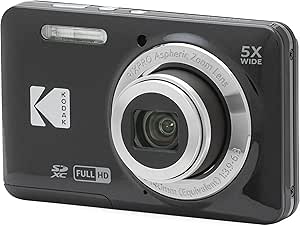 | Best for Simple Optical Zoom | Sensor: 16MP CMOS, 1/2.3-inch | Optical zoom: 5× | Lens: 28mm wide angle | VIEW ON AMAZON | See Our Full Breakdown |
| 64MP 6K Digital Vlogging Camera with Wi-Fi |  | Best Accessory Bundle for Vlogging | Sensor: 13MP CMOS | Photo resolution: 64MP interpolated | Video resolution: 6K at 30 fps, interpolated | VIEW ON AMAZON | See Our Full Breakdown |
| Kodak PIXPRO FZ45 16MP Digital Point-and-Shoot Camera, Black |  | Best for AA-Battery Convenience | Sensor: 16MP CMOS, 1/2.3-inch | Optical zoom: 4× | Lens: 27mm wide angle | VIEW ON AMAZON | See Our Full Breakdown |
| 64MP 4K Digital Camera with Wi-Fi, 180° Flip Screen, Autofocus, and 16× Digital Zoom |  | Best for Phone-Friendly Self-Recording | Sensor: 1/3.2-inch CMOS | Photo resolution: 64 MP | Video resolution: 4K UHD (2160p) at 30 fps | VIEW ON AMAZON | See Our Full Breakdown |
| cameras for beginner | Sensor | Connectivity | Video resolution | Photo resolution |
|---|---|---|---|---|
| Canon EOS Rebel T7 DSLR Camera | 24.1-megapixel APS-C CMOS | Built-in Wi-Fi and NFC | — | — |
| 96MP 8K Digital Camera with Wi | 1/2.3-inch CMOS | Wi-Fi | 8K | 96 MP |
| 4K Digital Camera with 56MP Au | 1/4-inch CMOS | — | — | 56 MP |
| Canon EOS Rebel T7 DSLR Camera | 24.1 MP APS-C CMOS | Wi-Fi, NFC, USB 2.0, HDMI | — | — |
| Canon EOS R100 Mirrorless Came | 24.1 MP APS-C CMOS | Bluetooth, Wi-Fi, USB, HDMI | — | — |
| 8K Digital Camera with 88MP Se | — | Wi-Fi | 8K UHD 4320p | — |
| Zostuic 4K Digital Camera for | 8 MP CMOS, 1/3-inch | USB | 4K (2160p) | 48 MP |
| R7 Vlogging Camera with Dual-V | CMOS, 1/3-inch | Wi-Fi and USB | Up to 8K at 8 fps | 75 MP |
| 8K Digital Camera with 88MP Au | CMOS, 1/2.5-inch | — | 8K (7680 × 4320) | 88 MP |
| Canon EOS Rebel T7 DSLR Camera | 24.1 MP APS-C CMOS | Wi-Fi, NFC, USB, and HDMI | Full HD 1080p | — |
| 4K Compact Digital Camera with | 1/4-inch CMOS | USB-C | 4K (2160p) | 56 MP |
| Kodak PIXPRO FZ55 Compact Digi | 16MP CMOS, 1/2.3-inch | — | 1080p Full HD | — |
| 64MP 6K Digital Vlogging Camer | 13MP CMOS | Wi-Fi and HDMI output | 6K at 30 fps, interpolated | 64MP interpolated |
| Kodak PIXPRO FZ45 16MP Digital | 16MP CMOS, 1/2.3-inch | — | 1080p | — |
| 64MP 4K Digital Camera with Wi | 1/3.2-inch CMOS | Wi-Fi with app-based transfers and remote control | 4K UHD (2160p) at 30 fps | 64 MP |
More Details on Our Top Picks
Canon EOS Rebel T7 DSLR Camera with EF-S 18-55mm f/3.5-5.6 IS II Lens
I’d choose the Rebel T7 for a beginner who wants a traditional camera experience and room to learn beyond automatic mode. Its 24.1-megapixel APS-C sensor and included 18-55mm lens give new photographers a practical starting point, while compatibility with Canon EF and EF-S lenses leaves a path to expand later. Compared with the Canon EOS R100, this DSLR uses an optical viewfinder rather than a mirrorless electronic display; that can feel direct and familiar, but the R100 offers more advanced subject-detection autofocus. The T7’s 9-point autofocus is a notable limitation for moving subjects, and the viewfinder shows about 95% of the frame, so the captured image may include a little more than the preview. Wi-Fi and NFC help with sharing, though this remains a stills-first, Full HD-era choice.
Pros:- 24.1-megapixel APS-C sensor gives beginners room to crop and make detailed prints.
- Included 18-55mm lens covers common everyday scenes without requiring another purchase.
- Optical viewfinder provides a direct, battery-independent viewing experience.
- Wi-Fi and NFC support wireless sharing, and Canon lists webcam software compatibility.
Cons:- 9-point autofocus offers less coverage and tracking flexibility than the EOS R100’s subject-detection system.
- Optical viewfinder shows approximately 95% of the final frame.
- Bulkier DSLR design is less convenient to carry than a compact mirrorless camera.
Best for: New photographers who want an affordable-feeling learning platform with an optical viewfinder, an included everyday zoom lens, and access to Canon EF and EF-S lenses.
Not ideal for: Beginners prioritizing fast subject tracking, advanced video features, or a compact mirrorless body; the 9-point autofocus system and DSLR size are less suited to those needs.
- Sensor:24.1-megapixel APS-C CMOS
- ISO range:100–6400; expandable to 12800
- Autofocus:9-point AF with AI Servo AF
- Viewfinder:Optical, approximately 95% coverage
- Included lens:EF-S 18-55mm f/3.5-5.6 IS II
- Connectivity:Built-in Wi-Fi and NFC
- Lens compatibility:Canon EF and EF-S lenses; excludes EF-M
Our verdict“Choose the Rebel T7 if learning with an optical viewfinder and interchangeable EF or EF-S lenses matters more than compact size or modern autofocus.”
96MP 8K Digital Camera with Wi-Fi, Autofocus, 20x Digital Zoom, and 180° Flip Screen
This compact model is aimed at beginners who want a front-facing workflow for selfies and casual vlogging, rather than a system camera they’ll grow into. Its 3.5-inch screen flips 180 degrees, and Wi-Fi plus webcam functionality make it easy to frame oneself or connect to a computer. The listed 96MP photos and 8K video sound ambitious, but the 1/2.3-inch sensor and JPEG-only photo listing matter more to practical image quality than headline resolution alone. Unlike the Canon EOS R100, it offers no interchangeable-lens system or specified advanced subject detection; in return, it includes two batteries and built-in creative modes in a compact package. The 20x zoom is digital, so enlarging the image can reduce detail, and the stated ISO range of 100–6 appears incomplete, leaving exposure capability unclear.
Pros:- 3.5-inch 180-degree flip screen makes self-framing easier than on the Canon Rebel T7.
- Wi-Fi transfer and webcam functionality support casual sharing and computer-based video calls.
- Two included batteries reduce interruptions during longer outings.
- Built-in flash and creative modes offer simple tools without extra accessories.
Cons:- 20x zoom is digital, which can soften detail when framing distant subjects.
- The listed ISO range, 100–6, appears incomplete and makes exposure limits difficult to judge.
- Small 1/2.3-inch sensor and JPEG-only photo format offer less flexibility than the APS-C Canon EOS R100.
Best for: First-time vloggers and selfie shooters who want a large flip screen, webcam use, and a simple all-in-one camera with spare battery included.
Not ideal for: Beginners seeking dependable low-light performance, optical zoom, a clear exposure specification, or a camera system with interchangeable lenses.
- Photo resolution:96 MP
- Video resolution:8K
- Sensor:1/2.3-inch CMOS
- Display:3.5-inch LCD, flips 180°
- Zoom:20x digital
- Image stabilization:Digital
- Connectivity:Wi-Fi
- Included batteries:2
Our verdict“Pick this camera for casual, screen-led vlogging and selfies, but choose the EOS R100 or Rebel T7 for a more expandable photography setup.”
4K Digital Camera with 56MP Autofocus, 16x Zoom, 180° Flip Screen, Lens Hood, and 32GB Card
I’d place this option on the list for beginners who want a ready-to-start kit for casual video and stills, including a 32GB card and lens hood. Its 3-inch flip screen helps with selfies and vlogging, while 4K at 30 FPS gives it a clearer video ceiling than the renewed Rebel T7’s Full HD recording. That doesn’t make it the stronger photography camera: its 1/4-inch sensor is much smaller than the APS-C sensors in the Canon EOS R100 and Rebel T7, and its 16x zoom is digital rather than optical. The included webcam function and three years of product support add convenience for a first-time user, but there’s only one battery, no flash, and no water resistance. I’d treat the 56MP figure as a listed output resolution, not a guarantee of detail comparable to the Canon models.
Pros:- Records 4K UHD video at 30 FPS, unlike the renewed Rebel T7’s listed Full HD video.
- 180-degree flip screen supports self-recording and easier front-facing composition.
- Includes a 32GB card, lens hood, and USB cable to get started with fewer separate accessories.
- Three years of product support is a useful addition for a first-time camera owner.
Cons:- The 1/4-inch sensor is substantially smaller than the APS-C sensors in the Canon EOS R100 and Rebel T7.
- 16x zoom is digital, not optical, so distant subjects may lose detail as magnification increases.
- Only one battery is included, and the camera has no flash or water resistance.
Best for: New vloggers or casual photographers who want a flip screen, 4K recording, a memory card, and basic accessories in one package.
Not ideal for: Beginners who need stronger low-light image quality, optical zoom, a built-in flash, weather protection, or an established interchangeable-lens system.
- Photo resolution:56 MP
- Video:4K UHD 2160p at 30 FPS
- Sensor:1/4-inch CMOS
- Display:3-inch screen, flips 180°
- Zoom:16x digital
- Image stabilization:Digital
- Included accessories:32GB card, lens hood, USB cable
- Weight:0.6 kg
Our verdict“Choose this bundle for beginner-friendly 4K video and included accessories, not for the image flexibility or upgrade path of an APS-C camera.”
Canon EOS Rebel T7 DSLR Camera with 18-55mm Lens (Renewed)
The renewed Rebel T7 offers the same basic beginner proposition as the new Canon EOS Rebel T7: an APS-C sensor, optical viewfinder, and bundled 18-55mm lens for learning still photography. Its Scene Intelligent Auto mode can help new owners get started before they’re ready to adjust settings themselves, and Wi-Fi/NFC simplify sharing. Compared with the Canon EOS R100, this DSLR has a more limited 9-point autofocus system and only 1080p video, while the R100 adds 4K and modern subject detection. The main distinction from the other T7 in this roundup is its renewed condition and stated 90-day warranty. That may suit a buyer comfortable with renewed gear, but the shorter coverage and lack of a stated IS II lens designation make the exact package less reassuring than the new T7 listing.
Pros:- 24.1-megapixel APS-C sensor provides a capable foundation for learning still photography.
- Included 18-55mm lens covers common everyday compositions.
- Scene Intelligent Auto mode offers a simple starting point for first-time owners.
- Wi-Fi and NFC support photo sharing without relying only on a cable.
Cons:- Renewed condition comes with a stated 90-day warranty, shorter than many buyers may want for a camera.
- 9-point autofocus is less capable for tracking action than the EOS R100’s subject-detection autofocus.
- Video tops out at 1080p, while the EOS R100 records 4K.
Best for: Beginners who want an optical-viewfinder DSLR with an included standard zoom and are comfortable buying renewed equipment with a 90-day warranty.
Not ideal for: Buyers who want longer warranty coverage, 4K video, faster subject tracking, or the added certainty of a new camera package.
- Condition:Renewed
- Sensor:24.1 MP APS-C CMOS
- Included lens:18-55mm
- Autofocus:9-point AF with AI Servo AF
- Video:1080p
- Display:3-inch LCD, 920,000 dots
- Connectivity:Wi-Fi, NFC, USB 2.0, HDMI
- Warranty:90 days
Our verdict“Choose this renewed T7 if you specifically want an optical-viewfinder DSLR and accept shorter coverage in exchange for a familiar beginner setup.”
Canon EOS R100 Mirrorless Camera with RF-S18-45mm f/4.5-6.3 IS STM Lens Kit
For a beginner who wants a modern camera with a clear upgrade path, the EOS R100 is my strongest mirrorless pick here. Its 24.1MP APS-C sensor pairs with Dual Pixel CMOS AF and eye, animal, and vehicle detection, features that can help keep a moving subject in focus with less manual adjustment than the Rebel T7’s 9-point system. The included RF-S 18-45mm lens keeps the kit compact, while the RF mount gives buyers a current lens system to build around. It also records 4K, unlike either Rebel T7 listing. The tradeoffs are a lack of in-body stabilization and a modest 6.5 fps continuous-shooting rate, so it’s not the best fit for fast sports or handheld video. The listed weight is 2.5 g, an unusual figure worth verifying before purchase.
Pros:- 24.1MP APS-C sensor offers a larger imaging format than the small-sensor compact cameras in this roundup.
- Dual Pixel CMOS AF with eye and subject detection can simplify focusing on people, animals, and vehicles.
- 4K recording gives it a higher-resolution video option than either Rebel T7 listing.
- RF-S 18-45mm kit lens and compact mirrorless design suit everyday carrying.
Cons:- No in-body image stabilization, so handheld video and low-light shooting depend more on lens stabilization and technique.
- 6.5 fps continuous shooting is modest for fast action compared with cameras built for sports.
- The listed weight of 2.5 g appears unusual and should be checked against the seller’s current specifications.
Best for: Beginners who want a compact APS-C mirrorless kit, guided autofocus for people or animals, and a current lens mount to grow into.
Not ideal for: Action-focused beginners who need faster burst shooting, handheld video makers who want in-body stabilization, or buyers seeking extensive external connections.
- Sensor:24.1 MP APS-C CMOS
- Mount:Canon RF
- Included lens:RF-S 18-45mm f/4.5-6.3 IS STM
- Video:4K (2160p)
- Autofocus:Dual Pixel CMOS AF with eye, face, animal, and vehicle detection
- Continuous shooting:6.5 fps
- Image stabilization:None in body
- Connectivity:Bluetooth, Wi-Fi, USB, HDMI
Our verdict“Pick the EOS R100 for a beginner-friendly mirrorless system with modern subject autofocus and 4K, provided you can work around its stabilization and action-shooting limits.”
8K Digital Camera with 88MP Sensor, Dual Lenses, Wi-Fi, 16x Digital Zoom, Touchscreen, Two Batteries and Charging Stand
The front and rear lenses give this camera a beginner-friendly edge for self-recording and vlogging: you can frame yourself on the 3.2-inch touchscreen, then turn to capture the scene. It also bundles two batteries, a charging stand, and a memory card, so a new owner has useful basics on hand. Compared with the Canon EOS Rebel T7 Double Zoom Lens Kit, it is more compact and geared toward video features, while the Canon offers interchangeable lenses and a larger APS-C sensor for learning traditional photography. The headline 8K and 88MP figures do not change the key tradeoff: this camera relies on digital zoom and digital stabilization, not optical reach or lens-based correction. I’d choose it for casual creator-style use, not for dependable action or distant subjects.
Pros:- Front and rear lenses make selfie framing and vlogging more straightforward.
- 3.2-inch touchscreen provides a large surface for composing shots.
- Two batteries, a charging stand, and a 32GB SD card are included.
- Wi-Fi and time-lapse and slow-motion modes add useful creator features.
Cons:- 16x digital zoom can reduce detail when framing distant subjects.
- Digital stabilization is less suited to smoothing walking footage than optical stabilization.
- The large resolution claims alone do not provide the larger-sensor advantages of the Canon EOS Rebel T7.
Best for: New vloggers and families who want front-facing recording, a touchscreen, and included batteries and storage.
Not ideal for: Beginners prioritizing optical zoom, steadier handheld footage, or a camera system they can grow with through interchangeable lenses.
- Video resolution:8K UHD 4320p
- Photo sensor resolution:88 MP
- Sensor type:CMOS
- Screen:3.2-inch touchscreen
- Zoom:16x digital
- Image stabilization:Digital, 6-axis
- Connectivity:Wi-Fi
- Included accessories:Two batteries, charging stand, 32GB SD card, and lens hood
Our verdict“Choose it for casual vlogging and selfie-friendly framing, but pick the Canon EOS Rebel T7 kit if photography growth and lens options matter more.”
Zostuic 4K Digital Camera for Beginners and Teens with 180° Flip Screen, 32GB Card, and Two Batteries
The Zostuic keeps its appeal practical: a 180-degree flip screen, built-in flash, two batteries, and a 32GB card make it approachable for a teen or first-time vlogger who wants to start recording without shopping for basics. Its 4K video and webcam support offer more video flexibility than the Canon EOS Rebel T7 Double Zoom Lens Kit, which records only Full HD, while the Canon is the stronger choice for learning still photography with a larger sensor and interchangeable lenses. Here, the 16x zoom is digital, and the listed 8MP CMOS sensor is modest beside the advertised 48MP photo resolution. There is no wireless connectivity, so moving clips requires a wired route. I’d treat it as an entry-level creator camera rather than a long-term photography system; conflicting screen-size listings also make its exact display dimensions unclear.
Pros:- 180-degree flip screen helps users frame selfies and vlogs.
- Two batteries, a charger stand, and a 32GB card are included.
- Webcam, time-lapse, and slow-motion modes support casual video projects.
- Built-in flash and autofocus add convenience for everyday snapshots.
Cons:- USB connectivity means no built-in wireless transfer to a phone.
- The sensor is listed as 8MP CMOS despite the 48MP photo-resolution claim.
- Product information gives conflicting screen-size details, and the camera is not water resistant.
Best for: Teens and first-time vloggers who want a flip screen, webcam use, and a ready-to-go bundle of batteries and storage.
Not ideal for: Beginners who need wireless file sharing, reliable published screen specifications, or a camera for learning interchangeable-lens photography.
- Video resolution:4K (2160p)
- Photo resolution:48 MP
- Sensor:8 MP CMOS, 1/3-inch
- Screen:2.8-inch LCD, 180° flip (screen-size listings conflict)
- Zoom:16x
- Batteries:Two 800mAh batteries
- Connectivity:USB
- Included storage:32GB card
Our verdict“Pick the Zostuic for a simple, bundled vlogging starter, but choose the Canon EOS Rebel T7 kit for a more capable photography-learning path.”
R7 Vlogging Camera with Dual-View Recording, Wi-Fi, and 8K Video
The R7’s defining feature is dual-view recording: it captures the scene and the creator’s reaction together, a useful format for tutorials, reactions, and informal travel clips. That makes it more specialized than the Zostuic 4K Digital Camera, whose flip screen helps with self-framing but does not offer the same simultaneous views. Wi-Fi and a 2000mAh battery round out a simple creator-oriented setup. I would not choose it for 8K quality as a beginner, though: its 8K mode runs at just 8 frames per second, far below a normal smooth-motion rate, and its 1/3-inch sensor is small. The listed 16x zoom is digital, too. It suits someone who values the dual-view effect and accepts compromises in motion and image flexibility, rather than someone seeking an all-purpose first camera.
Pros:- Dual-view recording captures the creator and scene at the same time.
- Wi-Fi supports transferring files to a phone.
- 2000mAh battery capacity is specified.
- Compact, creator-focused design keeps operation centered on video.
Cons:- 8K recording is limited to 8 fps, making that mode unsuitable for ordinary smooth-motion footage.
- The 1/3-inch sensor is small compared with the APS-C sensor in the Canon EOS Rebel T7.
- 16x digital zoom does not provide optical reach.
Best for: Beginner creators making reaction videos, tutorials, or clips that need the creator and subject visible at once.
Not ideal for: New photographers seeking a general-purpose camera, smooth 8K motion, or optical zoom for distant subjects.
- Video resolution:Up to 8K at 8 fps
- Photo resolution:75 MP
- Sensor:CMOS, 1/3-inch
- Battery capacity:2000 mAh
- Connectivity:Wi-Fi and USB
- File format:MP4
- Special feature:Dual-view recording
- Digital zoom:16×
Our verdict“Choose the R7 for dual-view reaction and tutorial videos, not as a general beginner camera or for usable 8K motion.”
8K Digital Camera with 88MP Autofocus, Wi-Fi, and 18x Digital Zoom
This compact model combines autofocus, electronic anti-shake, Wi-Fi transfer, webcam mode, and two batteries in a straightforward package. Its 3-inch LCD and 9-point autofocus give beginners familiar tools for framing and focusing, while the 5-fps burst rate is useful for short sequences. Compared with the R7 Vlogging Camera, it is less specialized: it does not record the creator and scene together, but its stated burst rate is more practical for stills than the R7’s 8-fps 8K video mode. The tradeoffs are common to this class: 18x zoom is digital rather than optical, and electronic stabilization cannot add true lens reach. Its 1/2.5-inch sensor is still small beside the APS-C sensor in the Canon EOS Rebel T7. I’d pick it for casual snapshots and phone sharing, not demanding low-light or action photography.
Pros:- Wi-Fi transfer and webcam mode cover common sharing and video-call needs.
- Autofocus and electronic anti-shake simplify casual shooting.
- Two rechargeable batteries are included.
- 5-fps continuous shooting can capture short action sequences.
Cons:- 18x digital zoom can compromise image detail when zoomed in.
- The 1/2.5-inch sensor is much smaller than the Canon EOS Rebel T7’s APS-C sensor.
- It is not water resistant.
Best for: Beginners who want a compact camera with autofocus, Wi-Fi transfers, webcam use, and two batteries for casual everyday shooting.
Not ideal for: Learners who want a larger sensor, optical zoom, weather protection, or a camera system with interchangeable lenses.
- Photo resolution:88 MP
- Video resolution:8K (7680 × 4320)
- Sensor:CMOS, 1/2.5-inch
- Screen:3-inch LCD
- Zoom:18× digital
- Autofocus:9 points
- Continuous shooting:5 frames per second
- Batteries:Two included
Our verdict“Choose this model for a compact, connected snapshot camera, but step up to the Canon EOS Rebel T7 if sensor size and photography skills matter more.”
Canon EOS Rebel T7 DSLR Camera Double Zoom Lens Kit
The Rebel T7 is the clearest choice here for a beginner who wants to learn photography rather than collect headline video specifications. Its 24.1MP APS-C sensor, optical viewfinder, and automatic and manual modes provide a more instructive foundation than the compact 8K models, including the 88MP Digital Camera with Autofocus, whose smaller sensor and digital zoom limit its appeal for photography growth. This kit’s two lenses cover everyday scenes and bring distant subjects closer optically, giving a newcomer room to experiment without buying another lens immediately. The compromises are real: video tops out at Full HD 1080p, burst shooting is only 3 fps, and the 3-pound kit is less convenient to carry than the compact options. I’d pick it for stills and hands-on learning, not for fast action or creator-first video.
Pros:- 24.1MP APS-C sensor offers a larger imaging format than the compact cameras in this batch.
- Two included lenses provide broad optical focal-length coverage.
- Automatic and manual modes support a gradual move into hands-on photography.
- Wi-Fi and NFC offer built-in connectivity options.
Cons:- Video is limited to Full HD 1080p, below the 4K and 8K claims of the compact models.
- 3-fps continuous shooting is restrictive for fast-moving subjects.
- At 3 pounds, the camera and kit are less portable than compact beginner options.
Best for: New photographers who want an optical viewfinder, manual controls, and two lenses for learning portrait, everyday, and distant-subject photography.
Not ideal for: Vloggers prioritizing 4K or 8K video, travelers seeking a lightweight camera, or action shooters who need a faster burst rate.
- Camera type:DSLR
- Sensor:24.1 MP APS-C CMOS
- Included lenses:EF-S 18–55mm and EF 75–300mm
- Autofocus:9-point AF with AI Servo AF
- Video resolution:Full HD 1080p
- Viewfinder:Optical, approximately 95% coverage
- Connectivity:Wi-Fi, NFC, USB, and HDMI
- Weight:3 pounds
Our verdict“Choose the Rebel T7 kit if you want to learn still photography with a larger sensor and two optical lenses, and skip it if compact 4K video is your priority.”
4K Compact Digital Camera with 56MP Autofocus, 180° Flip Screen, 16× Digital Zoom, and 32GB Card
The 180° flip screen makes this a straightforward choice for beginners who want to frame themselves without guessing, while its pocket-sized build suits travel and casual outings. It also comes with a 32GB card and built-in fill light, so a new owner has a few useful basics in the box. Compared with the Kodak PIXPRO FZ55, this model offers 4K video and a selfie-friendly screen, but the Kodak’s 5× optical zoom is more useful for bringing distant subjects closer without relying on digital enlargement. The advertised 56MP resolution and 16× digital zoom should not be mistaken for a larger sensor or optical reach: this camera has a small 1/4-inch CMOS sensor. Its electronic anti-shake can help with minor movement, but the lack of a camera flash limits low-light flexibility.
Pros:- 180° screen makes self-framing and vlogging easier
- Lightweight, pocket-sized design suits everyday carry
- Autofocus and simple creative modes reduce setup demands
- Includes a 32GB card and built-in fill light
Cons:- 16× zoom is digital, so it does not provide the reach of optical zoom
- Small 1/4-inch sensor limits its appeal for challenging light
- No camera flash is listed
Best for: First-time vloggers and travelers who want a light camera with a flip screen, basic autofocus, and included storage.
Not ideal for: Beginners who often photograph distant subjects or shoot indoors in dim light and need optical zoom or a camera flash.
- Photo resolution:56 MP
- Video resolution:4K (2160p)
- Sensor:1/4-inch CMOS
- Screen:3-inch IPS display with 180° flip
- Zoom:16× digital
- Image stabilization:Electronic anti-shake
- Connectivity:USB-C
- Included storage:32GB card
Our verdict“Choose this for casual travel and selfie videos if a flip screen matters more than optical zoom or low-light flexibility.”
Kodak PIXPRO FZ55 Compact Digital Camera, 16MP, 5x Optical Zoom
The Kodak PIXPRO FZ55 keeps the beginner experience uncomplicated: its 16MP sensor, fixed LCD, and point-and-shoot design avoid the extra modes and high-resolution claims found on models such as the 64MP 4K Digital Camera with Wi-Fi. Its strongest practical advantage is a 5× optical zoom, which changes focal length rather than enlarging a crop, making it more useful for framing a subject across a room or along a sightseeing route. The 28mm wide-angle lens also gives beginners room for group shots and everyday scenes. The tradeoff is a modest 2.7-inch fixed screen and 1080p video, with no flip display for self-recording. Compared with the AA-powered Kodak PIXPRO FZ45, the FZ55 offers a little more optical reach and a rechargeable battery, but the FZ45 may be easier to keep running when spare AA batteries are on hand.
Pros:- 5× optical zoom offers genuine framing flexibility
- 28mm wide-angle lens suits groups and everyday scenes
- Compact 3.7-ounce design is easy to carry
- Rechargeable lithium-ion battery and support for cards up to 512GB
Cons:- Fixed 2.7-inch screen is small and cannot face forward
- Video tops out at 1080p
- No wireless connectivity is listed
Best for: Beginners who want a compact point-and-shoot for family outings and travel, with optical zoom and a rechargeable battery.
Not ideal for: Vloggers who need a flip screen, or buyers who want 4K recording, touch controls, or wireless transfer features.
- Sensor:16MP CMOS, 1/2.3-inch
- Optical zoom:5×
- Lens:28mm wide angle
- Video resolution:1080p Full HD
- Screen:2.7-inch fixed LCD
- Battery:Rechargeable lithium-ion
- Supported memory cards:SD, SDHC, and SDXC up to 512GB
- Weight:3.7 ounces
Our verdict“Pick the FZ55 if you want beginner-friendly simplicity and optical zoom rather than a flip screen or advanced video features.”
64MP 6K Digital Vlogging Camera with Wi-Fi
This vlogging kit is aimed at beginners who want several recording tools included rather than a camera that grows into a more advanced photography system. The external microphone, LED fill light, two batteries, and 64GB card give new creators a ready set of accessories, while the touchscreen and Wi-Fi support casual recording and file sharing. Compared with the 64MP 4K Digital Camera with Wi-Fi, this model adds a microphone and claims 6K recording, but its 64MP photos and 6K video are interpolated; the listed sensor is 13MP CMOS. That distinction matters more than the headline numbers when choosing based on image detail. Its 16× zoom is digital, so the Kodak PIXPRO FZ55 is a better fit for beginners who value genuine optical reach. This kit makes most sense for self-shot video, not distant subjects or photography-first learning.
Pros:- Includes an external microphone and LED fill light
- Two batteries and a 64GB card provide useful starter accessories
- Wi-Fi supports transfers to a smartphone
- Touchscreen and creative modes suit casual vlogging
Cons:- 64MP photos and 6K video are interpolated from a 13MP sensor
- 16× digital zoom does not provide optical reach
- Accessory-heavy kit may be less useful to buyers focused on still photography
Best for: New vloggers who want an included microphone, fill light, spare battery, and card for casual video projects.
Not ideal for: Photography beginners who prioritize optical zoom, dependable resolution claims, or learning with a larger-sensor interchangeable-lens system.
- Sensor:13MP CMOS
- Photo resolution:64MP interpolated
- Video resolution:6K at 30 fps, interpolated
- Screen:3-inch IPS touchscreen, 16:9
- Zoom:16× digital
- Connectivity:Wi-Fi and HDMI output
- Creative features:18 filters, beauty mode, time-lapse, slow motion, anti-shake
- Included accessories:Two 1500mAh batteries, 64GB TF card, external microphone, HDMI cable, USB cable, wrist strap, lens cover, lens hood, fill light, and direct view mirror
Our verdict“Choose this bundle for accessory-rich casual vlogging, but skip it if genuine optical zoom or resolution is your priority.”
Kodak PIXPRO FZ45 16MP Digital Point-and-Shoot Camera, Black
The Kodak PIXPRO FZ45 is a simple point-and-shoot for beginners who prefer a familiar, uncomplicated camera and the option to replace its power source with readily available AA batteries. Its 4× optical zoom and 27mm wide-angle lens cover everyday snapshots without the crop-based zoom found on the 4K compact models in this roundup. Against the Kodak PIXPRO FZ55, the FZ45 gives up one step of optical zoom and uses AA batteries rather than a rechargeable lithium-ion pack; in return, it can suit trips where carrying spare AA batteries is easier than arranging charging. Both Kodaks record 1080p and use a small fixed 2.7-inch screen, so neither is as self-recording-friendly as a camera with a flip display. The FZ45’s digital stabilization and lack of listed wireless connectivity keep it firmly in the basic snapshot category.
Pros:- 4× optical zoom provides real framing flexibility
- 27mm wide-angle lens works well for everyday scenes
- Uses two readily available AA batteries
- Compact 4.1-ounce body and 1080p video
Cons:- Digital image stabilization offers less reassurance for handheld movement
- Fixed 2.7-inch LCD cannot face forward
- No wireless connectivity is listed
Best for: Beginners who want a lightweight everyday camera and prefer replaceable AA batteries for travel or family use.
Not ideal for: Vloggers and phone-connected creators who need a forward-facing screen or wireless transfers, or buyers seeking stronger stabilization.
- Sensor:16MP CMOS, 1/2.3-inch
- Optical zoom:4×
- Lens:27mm wide angle
- Video resolution:1080p
- Screen:2.7-inch LCD, 230,000 dots
- Battery:Two AA alkaline batteries
- Memory card support:Class 10 SD, SDHC, and SDXC up to 512GB
- Image stabilization:Digital
Our verdict“Choose the FZ45 for basic snapshots and easy battery replacement, but favor the FZ55 for more optical zoom and a rechargeable pack.”
64MP 4K Digital Camera with Wi-Fi, 180° Flip Screen, Autofocus, and 16× Digital Zoom
For a beginner who wants to record themselves and send files to a phone, this compact camera combines a 180° flip screen with Wi-Fi and app-based remote control. Those features give it a clearer vlogging role than the Kodak PIXPRO FZ55, whose optical zoom is stronger for ordinary photography but whose fixed screen is less convenient for self-framing. This model also includes two rechargeable batteries and a 32GB card, reducing the need to gather basic accessories before starting. Its tradeoff is that 16× zoom is digital, not optical, and the listed sensor is a small 1/3.2-inch CMOS unit; the 64MP figure alone does not make it equivalent to a larger-sensor camera. It is also not water resistant, so the Kodak FZ45 is a more sensible simple pick for buyers focused on basic snapshots and AA-battery convenience.
Pros:- 180° flip screen helps with self-recording and selfies
- Wi-Fi supports phone transfers and app-based remote control
- Includes two rechargeable batteries and a 32GB card
- Records 4K UHD video at 30 fps
Cons:- 16× zoom is digital rather than optical
- Not water resistant
- Small 1/3.2-inch CMOS sensor may not suit buyers seeking more advanced image quality
Best for: Beginner vloggers and travelers who want self-framing, phone transfers, remote control, and a second battery in the kit.
Not ideal for: Buyers who need optical zoom, water resistance, or a camera suited to learning interchangeable-lens photography.
- Sensor:1/3.2-inch CMOS
- Photo resolution:64 MP
- Video resolution:4K UHD (2160p) at 30 fps
- Screen:3-inch LCD with 180° flip
- Zoom:16× digital
- Connectivity:Wi-Fi with app-based transfers and remote control
- Storage included:32GB card
- Batteries included:Two rechargeable batteries
- Water resistance:Not water resistant
Our verdict“Pick this for casual self-recording and easy phone sharing, not for optical reach, wet-weather use, or photography-system growth.”

How We Picked
I ranked these cameras for beginners by how well their design supports a first camera purchase: straightforward operation, practical image-making tools, useful lens or zoom options, and room to learn. I also weighed whether the product’s stated features serve a clear beginner need, such as an optical zoom for travel or a flip screen for self-recording, rather than treating megapixel counts or digital zoom figures as proof of image quality.
The Canon EOS R100 leads because it combines a recognizable camera system with interchangeable-lens flexibility. The Rebel T7 kits follow for buyers who prefer DSLR handling, with the double-zoom kit earning a distinct role for reach and the renewed body ranked lower because condition and kit details matter. The Kodak compacts suit people who value ease and portability over system growth. The generic 4K and 8K models appear lower because their advertised resolution, digital zoom, and bundled extras provide less assurance about long-term learning value than a clearly established lens system; I distinguish them by practical fit, not by unverified performance claims.
Factors to Consider When Choosing Cameras For Beginners
My shortlist separates into three broad paths: a camera system you can grow into, a compact camera that keeps the learning curve short, and a flip-screen model aimed at self-recording. Before choosing, match the camera to what you will actually shoot and how much control you want to learn. These broader checks can prevent a common beginner mistake: buying around an impressive-sounding spec instead of the parts that shape everyday use.
Choose a system camera only if you want room to grow
An interchangeable-lens camera can teach exposure, focal length, and focus while letting you change lenses as your interests develop. That flexibility also means extra decisions: lenses add cost, take up space, and may require learning which focal length suits a scene. A kit lens is a practical starting point for everyday photos, but it may not be ideal for dim rooms, sports, or strong background blur. Before buying, check which lenses fit the camera mount and whether the system has the types you might want later. If changing lenses sounds like a chore rather than part of the appeal, a fixed-lens compact may be a better first camera.
Separate optical zoom from digital zoom
Optical zoom changes the lens’s view of a subject, while digital zoom crops the image and enlarges the crop. That difference matters when photographing wildlife, performers, or details from far away: digital reach can make framing easier but may leave less image detail. A higher zoom number is not automatically better if the camera is difficult to hold steady or focus at the long end. Think about the distances you actually shoot and whether you can move closer. For a beginner, a modest optical zoom can be more useful than a larger digital-zoom claim.
Treat resolution claims as one part of image quality
Megapixels describe image dimensions, not how reliably a camera focuses or how well it handles dim light. A large resolution figure may help when cropping or making large prints, but it cannot compensate for missed focus, camera shake, or a lens that struggles in a dark setting. Video labels also need context: check recording limits, audio options, stabilization, and whether the camera’s screen and controls fit your recording style. Beginners often get more practical benefit from predictable autofocus and comfortable handling than from the largest number on the box. Compare the whole shooting experience, not one headline specification.
Match the screen and controls to how you shoot
A flip screen is handy for selfies, overhead framing, and recording yourself, but it is not a substitute for a viewfinder or comfortable physical controls. If you mostly photograph family, pets, or travel scenes, consider whether the camera is easy to hold and whether key settings are simple to reach. A touchscreen can make menus feel familiar, while dedicated buttons can be quicker once you learn them. Try to picture how you will frame shots in bright daylight, where a screen can be harder to see. Choose the interface that supports your habits instead of assuming that more screen movement always means better usability.
Check what comes in the box—and what is missing
Memory cards, spare batteries, chargers, and extra lenses can make a bundle more convenient, but bundled accessories vary in usefulness and quality. Confirm the exact lens, battery type, charging method, and included card rather than relying on a broad kit label. A second battery helps on long outings, while a card that is too small can interrupt video recording or a day of photos. For renewed equipment, inspect the seller’s condition description, warranty, return terms, and listed accessories before deciding. A complete, clearly described kit can be a better starting point than a longer accessory list with uncertain details.
Budget for learning, not just the camera body
Your first camera may need a memory card, a protective case, a spare battery, or a suitable lens before it is ready for regular use. With a system camera, reserve some room for a future lens rather than spending everything on the body at the outset. With a compact, that extra budget can go toward storage and a case because the lens cannot be replaced. Paying more makes sense when it buys a feature you will use often, such as lens flexibility or a useful optical zoom. It makes less sense to pay extra for resolution or accessories that do not match your shooting plans.
Frequently Asked Questions
Is the Canon EOS R100 or a Rebel T7 kit a better first camera?
I’d choose the R100 if you want a mirrorless camera system and prefer to start with a newer interchangeable-lens format. The Rebel T7 is a reasonable alternative if DSLR handling appeals to you or you want to compare its available kit configurations, including a double-zoom option. Both give you more room to learn than a fixed-lens compact, but each asks you to learn camera settings and lens choices. Check the exact lens included, since the kit can shape what you can photograph from day one. The best fit depends more on the system and handling you want than on the body label alone.
Should a beginner buy a camera that advertises 8K video?
Only if 8K recording meets a real need, such as a specific editing or cropping workflow. The label does not tell you how well autofocus tracks a subject, whether recording is limited, or how easy it is to manage large video files. Beginners making casual clips may get more use from reliable focus, clear audio options, stabilization, and a screen that makes framing straightforward. Also check storage and computer requirements before choosing a high-resolution video mode. If those details are unclear, prioritize the camera’s everyday controls and recording features over the resolution headline.
Is optical zoom worth choosing over a larger digital zoom number?
For photographing distant subjects, optical zoom is usually the more useful specification because it changes the lens view rather than relying only on a crop. Digital zoom can still help you compose a shot, but it cannot add image detail that the camera did not capture. Compare the actual optical range and think about whether you will shoot travel scenes, school events, or nearby subjects. A camera with a smaller digital-zoom claim may still make more satisfying distant shots if its optical zoom better matches your needs. Also consider whether you can move closer or crop later.
Are renewed or bundle cameras a sensible choice for a first-time buyer?
They can be, provided the listing clearly states the camera’s condition, included lens, accessories, warranty, and return terms. A bundle can get you shooting sooner, but an extra lens or accessory is useful only if it fits your plans and is compatible with the camera. With a renewed camera, condition and seller support deserve more attention than the bundle’s apparent completeness. Check whether the charger, battery, lens caps, and memory card are included rather than assuming they are. If those details are vague, a clearly specified standard kit may be easier to evaluate.
Which type of beginner camera is best for travel and everyday snapshots?
For someone who values a small, uncomplicated camera, a fixed-lens compact such as the Kodak PIXPRO FZ55 or FZ45 may be easier to carry and operate than a DSLR or mirrorless kit. The FZ55’s optical zoom makes it a more flexible choice for varied framing than relying on digital zoom alone, while the FZ45 suits buyers who want a simpler point-and-shoot approach. If you expect to learn manual controls or add lenses later, consider a system camera instead. Think about portability alongside battery life, storage, and how often you will want to photograph distant subjects. A camera left at home is less useful than one you are comfortable carrying.
Conclusion
Best overall: I’d choose the Canon EOS R100 for a beginner who wants an interchangeable-lens camera and a path to expand. Best value: The standard Canon EOS Rebel T7 kit is the straightforward DSLR pick; choose the double-zoom kit instead if added reach is a real need, and check the renewed listing carefully before choosing it. Best for beginners who prioritize simplicity: The Kodak PIXPRO FZ55 offers a compact point-and-shoot approach with optical zoom. Best premium direction: Among these options, the R100 is the most convincing choice for someone willing to invest in a camera system rather than chase the highest advertised resolution. Best for specific needs: Pick a flip-screen digital model for self-recording or selfies, and favor a compact Kodak for casual travel snapshots. My deciding rule is simple: choose the camera whose controls, lens approach, and size match the photos you plan to make—not the longest spec list.
Halloween Picks

JOYIN 5-Foot Halloween Animatronic Drinking Skeleton

11.2-Foot Halloween Inflatable Pumpkin with LED Lights

8.5 Foot Halloween Inflatable Haunted House Castle with Skeleton, Ghost & Skulls
As an affiliate, we earn on qualifying purchases.