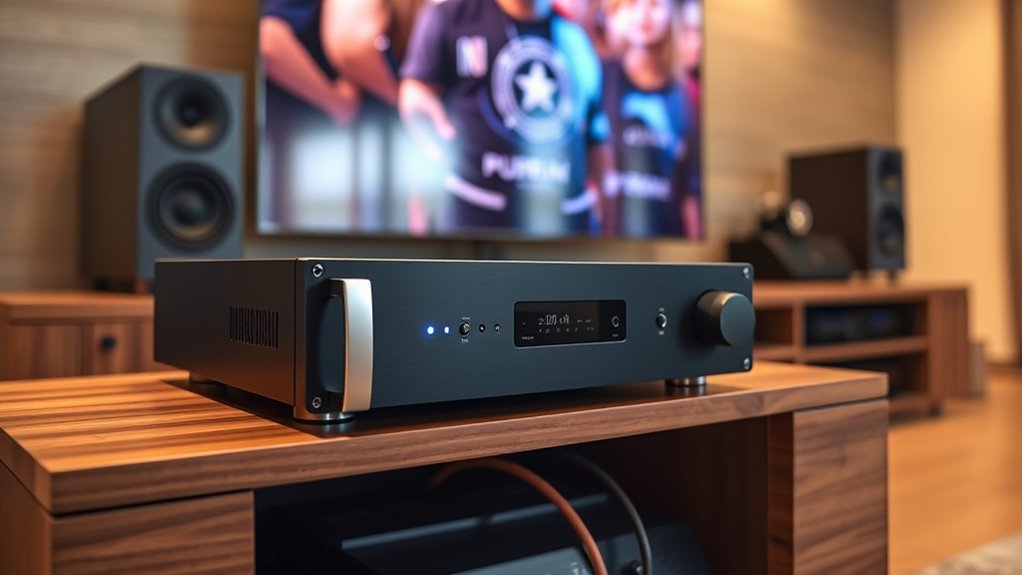

For most home theaters, I’d start with the Panamax MR4300: its combination of outlet capacity, power management, and system protection makes it the strongest all-around fit in this group. The Furman Elite-15 PF i is the more specialized choice for larger systems, while the Panamax M5400-PM stands out for buyers who want voltage regulation. The main tradeoff is between broad system control and protection, premium features for demanding installations, and compact or lower-complexity units that suit smaller setups. A power conditioner cannot fix every electrical problem, so matching its capabilities to your equipment and circuit matters. Read on for the full breakdown and guidance on choosing the right level of protection.

Get your wardrobe favorites delivered free with Prime
- Fast, free delivery on millions of items
- Prime Video, Amazon Music and more included
- Member-only deals all year
Key Takeaways
- The MR4300 is the roundup’s clearest all-around choice: it balances home-theater-oriented power management and protection without requiring the larger-system focus of the Elite-15 PF i.
- Voltage regulation sets the M5400-PM apart: it addresses a different need from basic surge protection and filtering, but buyers should confirm that regulation suits their equipment and electrical conditions.
- The Elite-15 PF i targets complex installations: its 13 outlets and linear power approach suit a system with many components better than a compact or simpler conditioner.
- Small systems do not automatically need rack-sized gear: the Furman AC-215A and Black Lion Audio PG-P offer more focused formats, while the Radial Power-2 is aimed at a different, pro-audio-oriented setup.
- Outlet count alone does not settle the choice: the LS606M’s 600W capacity and the models with extensive AV features serve distinct requirements, so buyers should match load, form factor, and protection features before ranking specs.
| Panamax MR4000 8-Outlet Home Theater Power Conditioner and Surge Protector |  | Best for Connected Home Theaters | Outlets: 8 (7 rear, 1 front) | Voltage: 120 V | Maximum current: 15 A | VIEW ON AMAZON | See Our Full Breakdown |
| Furman PST-8 Power Station 8-Outlet Surge Protector |  | Best for Straightforward Rack-Style Protection | Outlets: 8 | Maximum current: 15 A | Voltage shutdown threshold: 137 V | VIEW ON AMAZON | See Our Full Breakdown |
| Eaton Tripp Lite LS606M 600W Line Conditioner and Surge Protector |  | Best for Voltage Fluctuations on a Limited Load | Input voltage: 120 V | Maximum power: 600 W | Outlets: 6 rear NEMA 5-15R | VIEW ON AMAZON | See Our Full Breakdown |
| Furman Elite-15 PF i 13-Outlet Linear AC Power Conditioner |  | Best Premium Rack-Mount Conditioner | Outlets: 13 across three isolated banks | Input voltage: 120 V | Amperage: 15 A | VIEW ON AMAZON | See Our Full Breakdown |
| Black Lion Audio PG-P Portable Power Conditioner |  | Best Portable Pick for Audio Setups | Outlets: 6 | Voltage: 120 V | Amperage: 48 mA (as listed) | VIEW ON AMAZON | See Our Full Breakdown |
| Panamax MR4300 Power Line Conditioner and Surge Protector |  | Best for Full Home-Theater Connectivity | Outlets: 9 | Outlet configuration: 4 linear filtered, 4 high current, 1 front-panel gaming outlet | Maximum current: 15 A | VIEW ON AMAZON | See Our Full Breakdown |
| Furman AC-215A Compact Power Conditioner with Auto-Resetting Voltage Protection |  | Best Compact Pick for a TV or Projector | Amperage: 10 A | Maximum power: 1200 watts | Input voltage: 120 V AC | VIEW ON AMAZON | See Our Full Breakdown |
| Radial Engineering Power-2 Power Conditioner |  | Best Rugged Rackmount Pick | Mounting format: 1U rackmount | Outlets: 9, including 4 spaced for wall warts | Maximum current: 15 A | VIEW ON AMAZON | See Our Full Breakdown |
| Panamax M5400-PM Power Conditioner with Voltage Regulation |  | Best Premium Home-Theater Protection | Outlets: 11 | Outlet banks: 5 isolated banks | High-current outlets: 2 | VIEW ON AMAZON | See Our Full Breakdown |
| premium power conditioners for av | Outlets | Weight |
|---|---|---|
| Panamax MR4000 8-Outlet Home T | 8 (7 rear, 1 front) | — |
| Furman PST-8 Power Station 😯 | 8 | — |
| Eaton Tripp Lite LS606M 600W L | 6 rear NEMA 5-15R | — |
| Furman Elite-15 PF i 13-Outlet | 13 across three isolated banks | 15 lb |
| Black Lion Audio PG-P Portable | 6 | 3.1 lb |
| Panamax MR4300 Power Line Cond | 9 | 6.5 pounds |
| Furman AC-215A Compact Power C | — | 3.9 pounds |
| Radial Engineering Power-2 Pow | 9, including 4 spaced for wall warts | 12.4 pounds |
| Panamax M5400-PM Power Conditi | 11 | 20 pounds |
More Details on Our Top Picks
Panamax MR4000 8-Outlet Home Theater Power Conditioner and Surge Protector
The Panamax MR4000 suits a home theater where protection needs to cover more than AC power: it also safeguards coaxial and LAN/Ethernet lines, which can otherwise provide a path for surges into connected gear. Its eight outlets, automatic voltage monitoring, and Protect-or-Disconnect design make it a well-rounded choice for a receiver, display, and source components. Compared with the Furman PST-8, it adds LAN protection and specifies an eight-foot cord, while the Furman lists telephone-line protection. The MR4000’s Level 2 RFI/EMI filtration addresses line noise, but it is not the more elaborate linear-filtering and high-current option represented by the Furman Elite-15 PF i. Rack ears are sold separately, so rack installation takes an extra purchase.
Pros:- Eight outlets accommodate a standard home theater component stack.
- Protects coaxial, LAN/Ethernet, antenna, cable, and satellite signal lines.
- Automatic voltage monitoring and Protect-or-Disconnect protection can cut power in unsafe conditions.
- Level 2 RFI/EMI filtration helps limit electrical noise.
Cons:- Rack ears are sold separately.
- Eight outlets and Level 2 filtration may be limiting for a large system seeking the Elite-15 PF i’s 13 outlets and linear filtering.
Best for: Home theater owners connecting a TV, receiver, and networked or coax-fed equipment who want signal-line protection alongside AC surge protection.
Not ideal for: Buyers assembling a rack on a fixed budget or seeking advanced linear filtering and ample outlets for a large audio-video system; rack ears cost extra, and the Elite-15 PF i offers 13 outlets and linear filtering.
- Outlets:8 (7 rear, 1 front)
- Voltage:120 V
- Maximum current:15 A
- Surge protection:1,350 joules
- Peak impulse current:52,000 A
- Noise filtration:Level 2 RFI/EMI
- Signal-line protection:Coaxial, LAN/Ethernet, antenna, cable, and satellite
- Power cable length:8 ft
Our verdict“Choose the MR4000 if your home theater needs broad signal-line protection and eight outlets, but look to the Elite-15 PF i for a larger rack system.”
Furman PST-8 Power Station 8-Outlet Surge Protector
The Furman PST-8 is a practical pick for buyers who want eight filtered outlets, surge protection, and extreme voltage shutdown without moving up to the Elite-15 PF i’s larger, feature-rich setup. Its stainless-steel enclosure and eight-foot cord suit a component rack or shelf, while coaxial and telephone-line protection extends coverage beyond the power outlets. Compared with the Panamax MR4000, the PST-8 lists telephone-line protection rather than LAN/Ethernet protection; choose based on the signal cables your system actually uses. It also lacks the Elite-15 PF i’s 13 outlets, isolated banks, and linear filtering, making it a less capable fit for a crowded or high-demand system. Its North American plug limits use in regions with different outlet standards.
Pros:- Eight outlets provide room for a typical home theater component stack.
- Extreme voltage shutdown is specified at 137 volts.
- Non-sacrificial surge protection and AC noise filtration are included.
- Coaxial and telephone-line protection covers connected signal lines.
Cons:- Does not list LAN/Ethernet protection, unlike the Panamax MR4000.
- Eight outlets and standard filtration fall short of the Elite-15 PF i’s 13 outlets and linear filtering.
- North American Type B plug limits compatibility in other regions.
Best for: AV owners with a modest component stack who want eight outlets, AC noise filtration, and voltage shutdown in a stainless-steel unit.
Not ideal for: Buyers with network-connected equipment needing LAN protection, systems requiring more than eight outlets, or users outside North America who cannot use a Type B plug.
- Outlets:8
- Maximum current:15 A
- Voltage shutdown threshold:137 V
- Enclosure material:Stainless steel
- Cord length:8 ft
- Plug type:Type B, 3-pin
- Additional protection:Coaxial and telephone lines
Our verdict“Pick the PST-8 for a straightforward eight-outlet AV setup that uses coax or telephone lines, not for a network-heavy or expanding rack.”
Eaton Tripp Lite LS606M 600W Line Conditioner and Surge Protector
The Eaton Tripp Lite LS606M earns its place for systems where voltage correction matters more than a high outlet count. It can boost undervoltage by 13.4% and reduce overvoltage by 10.6%, while filtering EMI/RFI noise by up to 20 dB. That makes it a different proposition from the Panamax MR4000, which offers eight outlets and signal-line protection but does not list voltage boost and reduction figures. The tradeoff is a firm 600 W total power limit and just six rear outlets, so this is better for a modest set of sensitive components than an entire power-hungry theater. Diagnostic LEDs show operating mode, although they do not change its capacity ceiling.
Pros:- Corrects undervoltage and overvoltage rather than only filtering noise.
- EMI/RFI filtering is specified at up to 20 dB.
- Diagnostic LEDs indicate the operating mode.
- Six rear outlets provide a compact connection point for a modest system.
Cons:- 600 W total capacity can restrict use with power-hungry AV components.
- Six outlets are fewer than the eight on the Panamax MR4000 and Furman PST-8.
- Does not list coaxial or LAN signal-line protection.
Best for: Owners of a small AV or audio setup with sensitive electronics, modest total power demand, and a need to address voltage dips and rises.
Not ideal for: Buyers powering a high-draw receiver and several other components together, or anyone who needs more than six outlets; the 600 W limit is much lower than the Elite-15 PF i’s 1,800 W maximum.
- Input voltage:120 V
- Maximum power:600 W
- Outlets:6 rear NEMA 5-15R
- Surge suppression:720 joules
- Undervoltage boost:13.4%
- Overvoltage reduction:10.6%
- EMI/RFI filtering:Up to 20 dB
- Power cord:6 ft NEMA 5-15P
Our verdict“Choose the LS606M when voltage correction is the priority and your connected AV load stays comfortably within 600 W.”
Furman Elite-15 PF i 13-Outlet Linear AC Power Conditioner
For a full rack where outlet capacity and filtering take precedence over portability, the Furman Elite-15 PF i is the lineup’s premium choice. Its 13 outlets across three isolated banks give a larger system more connection room, while linear filtering and Power Factor Technology target AV setups with demanding audio and video components. The listed peak reserve current of over 45 A adds headroom for brief power demands, and SMP surge suppression and Extreme Voltage Shutdown provide protection features absent from the simpler six-outlet Eaton Tripp Lite LS606M. That added capability comes with a 15-pound, rack-mount form factor and a 120 V input, so it is not a portable or international-voltage solution. Compared with the Panamax MR4000, this is the stronger fit for a large rack, but it does not list the MR4000’s signal-line protection.
Pros:- Thirteen outlets across three isolated banks suit a larger component rack.
- Linear filtering is designed for audio and video systems.
- Power Factor Technology provides over 45 A of peak reserve current.
- SMP surge suppression and Extreme Voltage Shutdown add protection features.
Cons:- 15-pound rack-mount form is less convenient than the portable Black Lion Audio PG-P.
- Designed for 120 V systems, limiting compatibility with other supply voltages.
- Does not list coaxial or LAN signal-line protection like the Panamax MR4000.
Best for: AV enthusiasts building a substantial 120 V rack with many components who want isolated outlet banks, linear filtering, and surge and voltage protection.
Not ideal for: Buyers with a small system, limited rack space, or non-120 V power; its 15-pound rack-mount design and larger feature set may be unnecessary, and signal-line protection is not listed.
- Outlets:13 across three isolated banks
- Input voltage:120 V
- Amperage:15 A
- Maximum power:1,800 W
- Peak reserve current:Over 45 A
- Form factor:Rack-mount
- Weight:15 lb
- Warranty:3-year limited warranty
Our verdict“Choose the Elite-15 PF i for a large 120 V rack that needs 13 outlets and linear filtering, rather than a compact or signal-line-focused setup.”
Black Lion Audio PG-P Portable Power Conditioner
The Black Lion Audio PG-P is the most portable option here for professional audio gear, with six outlets, surge protection, audio filtration, and a 9-foot power cable. Its 3.1-pound stainless-steel enclosure is easier to move between indoor setups than the rack-mount Furman Elite-15 PF i, which has more than twice as many outlets but weighs 15 pounds. That portability comes with a narrower role: the PG-P is described for professional audio equipment, and its six outlets do not match the eight on the Panamax MR4000 or Furman PST-8. The listed 48-milliamp amperage figure should not be treated as evidence of high-load capacity; the product data does not specify a maximum wattage. Buyers needing individual outlet controls or broad AV signal-line protection should look elsewhere.
Pros:- Portable 3.1-pound design is easier to reposition than rack-mount conditioners.
- Six outlets provide connections for a small audio rig.
- Surge protection and audio filtration are included.
- Nine-foot power cable offers flexibility when an outlet is not close to the equipment.
Cons:- Six outlets are fewer than the eight on the Panamax MR4000 and Furman PST-8.
- Maximum wattage is not specified, limiting clarity for buyers with higher-load equipment.
- No individual outlet controls or AV signal-line protection are listed.
Best for: Musicians, recording professionals, and audio users who need a lightweight indoor power conditioner they can move between work areas.
Not ideal for: Home theater owners needing more than six outlets, LAN or coaxial protection, individual outlet controls, or documented high-load capacity.
- Outlets:6
- Voltage:120 V
- Amperage:48 mA (as listed)
- Power cable length:9 ft
- Weight:3.1 lb
- Enclosure material:Stainless steel
- Recommended use:Indoor; professional audio equipment
- Warranty:2 years
Our verdict“Pick the PG-P for a compact, movable indoor audio setup, but choose a rack-oriented AV conditioner if you need more outlets or documented system capacity.”
Panamax MR4300 Power Line Conditioner and Surge Protector
The MR4300 suits a home theater that needs more than basic outlet protection: its nine outlets split into four linear-filtered, four high-current, and one front-panel gaming outlet. Automatic voltage monitoring can shut down connected gear during unsafe conditions and reset when power returns, while coaxial, LAN, and telephone protection covers signal lines that a simple power strip leaves exposed. Compared with the compact Furman AC-215A, this Panamax gives a rack or cabinet more connections and broader AV wiring protection, but it takes up more space and is less convenient for a single display. The listed 90-day manufacturer warranty is a notable drawback beside the Radial Power-2’s two-year warranty. No individual outlet control is specified, so this is best for grouped systems rather than selective power sequencing.
Pros:- Nine outlets include separate filtered, high-current, and front-panel gaming connections.
- Automatic voltage monitoring shuts off and resets power when conditions become unsafe.
- Surge protection also covers LAN, telephone, and coaxial connections.
- Noise filtration and two USB ports add useful support for a populated AV setup.
Cons:- The listed 90-day manufacturer warranty is short compared with the Radial Power-2’s two-year warranty.
- No individual outlet control is specified.
- Its multiple outlet groups may be more than a small, single-display setup needs.
Best for: Home-theater owners connecting several AV components plus coaxial, telephone, or LAN lines who want automatic voltage monitoring.
Not ideal for: Buyers seeking a long stated manufacturer warranty, individual outlet control, or a compact conditioner for one TV or projector.
- Outlets:9
- Outlet configuration:4 linear filtered, 4 high current, 1 front-panel gaming outlet
- Maximum current:15 A
- Voltage:120 V
- USB ports:2
- Power cord:8 feet
- Weight:6.5 pounds
- Manufacturer warranty:90 days
Our verdict“Choose the MR4300 for a connected home theater that needs broad outlet and signal-line protection, but not if warranty length or outlet-level control is a priority.”
Furman AC-215A Compact Power Conditioner with Auto-Resetting Voltage Protection
The Furman AC-215A is the space-saving choice here: its small chassis can sit behind a TV or projector, where a full rack unit such as the Radial Power-2 would be awkward. Linear Filtering Technology reduces AC line noise, while auto-resetting Extreme Voltage Shutdown protects connected gear from dangerous voltage irregularities, including open-neutral events. That makes it a focused fit for a display and a small number of supporting devices, not a whole-room power hub. Its 10 A, 1200-watt limit is the main tradeoff; the Panamax MR4300 and Radial Power-2 are rated for 15 A and offer more outlets. The AC-215A also lacks the broad outlet selection and signal-line protection listed for the MR4300. Choose it for discreet mounting, not a high-demand rack.
Pros:- Compact chassis can be mounted discreetly behind a flat-screen TV or projector.
- Auto-resetting voltage shutdown helps protect equipment from dangerous voltage irregularities.
- Linear Filtering Technology reduces AC line noise for connected audio and video gear.
- Non-sacrificial surge and spike protection is specified.
Cons:- The 10 A rating and 1200-watt maximum limit suitability for high-power systems.
- Offers a more focused connection solution than 15 A options such as the Panamax MR4300 and Radial Power-2.
- Does not provide the MR4300’s stated coaxial, telephone, and LAN surge protection.
Best for: TV and projector owners who need a compact conditioner with voltage-shutdown protection and have a modest connected load.
Not ideal for: AV rack owners running multiple high-power components, or buyers who need numerous outlets and coaxial, telephone, or LAN surge protection.
- Amperage:10 A
- Maximum power:1200 watts
- Input voltage:120 V AC
- Protection:Series Multi-Stage Protection with auto-resetting Extreme Voltage Shutdown
- Filtering:Linear Filtering Technology
- Dimensions:11.25 × 10.75 × 2.75 inches
- Weight:3.9 pounds
- Enclosure material:Stainless steel
Our verdict“Pick the AC-215A for discreet protection of a TV or projector, but choose a 15 A, multi-outlet model for a larger AV system.”
Radial Engineering Power-2 Power Conditioner
The Radial Power-2 is the clearest fit for a studio or live-sound rack that needs a sturdy, straightforward 1U power hub. Its nine outlets include four spaced for wall warts, so bulky adapters are less likely to block neighboring connections; RF-interference filtering and surge protection address practical concerns in audio environments. Compared with the compact Furman AC-215A, it offers a full rackmount layout and a 15 A rating rather than a small-form-factor, 10 A solution. It is less feature-rich for a home theater than the Panamax MR4300, which specifies automatic voltage monitoring and protection for coaxial, LAN, and telephone lines. The Power-2’s 12.4-pound stainless-steel chassis adds durability but makes it heavier to install, and its Type B plug limits it to North American connections.
Pros:- Rugged 1U stainless-steel rackmount chassis suits studio and live-sound installations.
- Nine outlets include four spaced to accommodate wall-wart power supplies.
- RF-interference filtering and a US-made Metal Oxide Varistor provide filtering and surge protection.
- Front-panel USB charging and LED illumination add convenient rack access.
Cons:- At 12.4 pounds, it is heavier than compact options such as the Furman AC-215A.
- Type B plug limits compatibility to North American power connections.
- Unlike the Panamax MR4300, it does not specify automatic voltage monitoring or coaxial, LAN, and telephone surge protection.
Best for: Studio and live-sound operators who need a rugged 1U rack conditioner, room for wall-wart adapters, and 15 A capacity.
Not ideal for: Buyers who need automatic voltage monitoring, signal-line surge protection, a lightweight unit, or a plug standard beyond North American Type B.
- Mounting format:1U rackmount
- Outlets:9, including 4 spaced for wall warts
- Maximum current:15 A
- Voltage:120 V
- USB ports:1
- Plug type:Type B (North American)
- Enclosure material:Stainless steel
- Weight:12.4 pounds
- Warranty:2 years
Our verdict“Choose the Power-2 for a sturdy North American studio or live-sound rack, but look to the Panamax MR4300 for broader home-theater protection features.”
Panamax M5400-PM Power Conditioner with Voltage Regulation
The Panamax M5400-PM is the most protection-focused home-theater option in this group. Its 11 filtered outlets are arranged across five isolated banks, a layout intended to limit noise from one connected component affecting another. Automatic Voltage Monitoring disconnects equipment when incoming voltage becomes unsafe, while the listed Level 4+ filtration and voltage regulation give it a broader protection brief than the MR4300. That extra separation and capacity suit a substantial AV system, but the M5400-PM is also a 20-pound, 17-inch-wide unit that needs a suitable rack or shelf. Buyers with a smaller setup may get a more practical fit from the Furman AC-215A; those prioritizing straightforward rack connectivity over extensive home-theater features may prefer the Radial Power-2. Its size and system-oriented design make it a poor match for casual setups.
Pros:- Eleven protected and filtered outlets serve a substantial home-theater system.
- Five isolated banks help separate connected components and limit noise interaction.
- Automatic Voltage Monitoring disconnects equipment during unsafe voltage conditions.
- Voltage regulation, Level 4+ filtration, and stated lifetime product warranty support a protection-focused role.
Cons:- The 20-pound weight makes installation and relocation less convenient.
- At 17 inches wide, it requires substantial rack or shelf space.
- Its extensive features may be unnecessary for a small system that a compact option such as the Furman AC-215A can serve.
Best for: Home-theater owners with multiple components who want isolated outlet banks, automatic voltage monitoring, and extensive power filtration.
Not ideal for: Small-room setups or buyers without space for a 17-inch-wide, 20-pound unit; also less suited to anyone seeking a compact display-only conditioner.
- Outlets:11
- Outlet banks:5 isolated banks
- High-current outlets:2
- Voltage monitoring:Automatic Voltage Monitoring (AVM)
- Filtration:Level 4+ power cleaning and filtration
- Dimensions:12.75 × 17 × 3.5 inches
- Weight:20 pounds
- Warranty:Lifetime product warranty
Our verdict“Choose the M5400-PM for a spacious, component-heavy home theater that can benefit from isolated banks and voltage monitoring, not for a compact setup.”
How We Picked
I compared these nine units by the jobs buyers actually need them to do: protect connected equipment, manage electrical noise, support the system’s total load, and fit the available space and outlet layout. I also weighed usability and installation context, including whether a model is better suited to a home theater, rack, studio, or compact component setup. A high outlet count only helps when the device can support the connected equipment and the plugs fit the available space.
The ranking favors versatility for a typical AV system, then gives credit to models that excel at a specific need such as voltage regulation, high outlet capacity, portability, or a defined load limit. That puts the Panamax MR4300 ahead as the most balanced home-theater pick, while the M5400-PM and Furman Elite-15 PF i rank as more specialized premium options. Compact and focused units rank lower for broad AV use, not because they lack a purpose, but because they suit narrower system sizes or workloads. I treated feature claims as distinct capabilities rather than assuming that every conditioner provides the same kind of protection.
Factors to Consider When Choosing Premium Power Conditioners For Av
Before choosing a model, I’d map the electrical needs of the whole system rather than shop by brand or outlet count. These factors help separate basic surge protection from power management, filtering, and voltage regulation—and help prevent paying for features your setup cannot use.
Match the Unit to the Actual Electrical Problem
Start by naming the problem you want to address: a surge risk, electrical noise, limited outlets, or unstable voltage. These are not interchangeable, and a conditioner that filters noise does not automatically regulate voltage. Check the manufacturer’s specifications for the protection functions provided rather than inferring them from the product name. If lights dim or equipment shuts down during voltage swings, a basic surge-focused device may not solve the underlying issue. For persistent wiring or voltage concerns, have the circuit checked by a qualified electrician. Buying for a defined problem keeps a premium feature set from becoming an expensive mismatch.
Calculate Load Before Counting Outlets
List the equipment you plan to connect and check its power requirements, including amplifiers, powered speakers, displays, and network gear. A conditioner with many outlets can still be unsuitable if the combined load exceeds its stated capacity. Pay attention to wattage limits and any guidance about high-current components, not only the number of sockets. Leave room for future additions if you expect to expand the system, but avoid connecting devices simply because outlets remain unused. Also check plug spacing: large power adapters can block neighboring sockets. Capacity and layout together determine whether the unit works in your rack or cabinet.
Choose Voltage Regulation Only When It Fits the Need
Voltage regulation is a separate buying decision from surge protection and noise filtering. It can matter where incoming voltage varies, but it adds complexity and should not be treated as a universal upgrade for every home theater. Check the unit’s operating range and the manufacturer’s guidance for the components you plan to connect. Do not assume that a conditioner can correct a faulty circuit, replace a dedicated electrical assessment, or provide backup power during an outage. If your main concern is brief outages, compare the role of an uninterruptible power supply instead. Paying more for regulation makes sense only when it addresses a real system requirement.
Plan for Installation, Cable Runs, and Access
Think about where the conditioner will sit before choosing a form factor. Rack equipment can suit a permanent AV installation, while compact units are easier to place near an individual component or carry between setups. Measure shelf or rack depth, allow for cable bends, and check whether the power cord reaches the wall outlet without an extension. Consider how often you need to reach the switches or status indicators once the system is installed. A unit that technically fits but blocks ventilation or makes connections hard to reach can complicate routine changes. Good placement is part of the purchase, not an afterthought.
Read Protection and Warranty Terms Carefully
Protection claims have practical limits, so read the manufacturer’s documentation for the exact safeguards and connected-equipment coverage offered. Check whether the warranty has conditions about installation, approved connections, or the type of equipment covered. A protection indicator can tell you something about the unit’s state, but it does not certify that a home’s wiring is sound. Avoid treating any conditioner as a substitute for proper grounding, a correctly rated circuit, or surge protection at the service entrance where appropriate. If coverage terms matter to your purchase, review the original documentation before buying. This is a better basis for confidence than broad labels such as premium or studio grade.
Frequently Asked Questions
Do I need voltage regulation for a typical home theater?
Not necessarily. Many systems need suitable surge protection and enough outlets more than active voltage regulation. Regulation becomes more relevant when the incoming supply varies and the connected equipment’s requirements match the conditioner’s specifications. If you are seeing repeated shutdowns, flicker, or other electrical symptoms, have the circuit evaluated rather than assuming a conditioner will correct the cause. The Panamax M5400-PM is the lineup’s regulation-focused option, but its extra capability is useful only if your setup has that need.
Can I plug a power amplifier into any conditioner in this roundup?
Check the model’s load rating and manufacturer guidance before connecting an amplifier. The amplifier’s power demands and how it is used matter more than the fact that it is an AV component. The Furman Elite-15 PF i is the lineup’s more system-oriented option for a larger component setup, while the Eaton LS606M has a stated 600W capacity that calls for careful load matching. Do not exceed the device’s rating or assume that unused outlets indicate spare electrical capacity. When the amplifier’s draw is unclear, consult its documentation or the manufacturer.
Is a power conditioner also a backup power supply?
No. A power conditioner does not necessarily include a battery, so it should not be expected to keep equipment running during an outage. Surge protection, filtering, voltage regulation, and battery backup are separate functions. If you need time to save a recording, shut down a media server, or keep network gear online, look for an appropriately sized uninterruptible power supply. Check that its output and capacity suit the connected equipment, especially if you plan to attach an amplifier. Choose a conditioner for power protection and management, not as a substitute for outage backup.
Should I buy a rack unit if my AV system has only a few components?
Usually, a smaller system does not need a rack-sized conditioner unless you value its installation format or specific features. A compact unit such as the Furman AC-215A can make more sense when space and a limited set of connections are the priority. The Black Lion Audio PG-P and Radial Power-2 also serve more focused setups than a large home-theater installation. Still, compare load limits and protection functions rather than choosing on size alone. If you expect to add components soon, check that a compact pick will not become a bottleneck.
Is a higher outlet count a good reason to choose a more expensive model?
Only if your system needs the extra outlets and the unit supports the combined load. More sockets can simplify a complex rack, but they do not automatically mean better filtering, regulation, or protection. The Furman Elite-15 PF i’s 13 outlets make it a more natural fit for a larger installation, while simpler or compact models may suit a smaller setup better. Count the devices, check plug spacing, and identify which features you actually need before paying for additional capacity. If you have spare outlets now but no expansion plan, a more modest format may be the better match.
Conclusion
I’d choose the Panamax MR4300 as the best overall for a typical home theater, since it offers the strongest balance of AV-focused features and broad system fit in this lineup. For best value, the Panamax MR4000 is the straightforward choice for buyers who want a home-theater-oriented conditioner without stepping up to a larger, more specialized setup. The Furman Elite-15 PF i is best for premium, complex systems that need extensive outlet capacity and a linear AC approach; the Panamax M5400-PM is best when voltage regulation is the specific priority. For beginners with a smaller system, I’d favor a simpler, appropriately sized unit such as the Furman PST-8 rather than paying for features they may not need. Choose the Furman AC-215A or Black Lion Audio PG-P for compact setups, the Radial Power-2 for a focused pro-audio arrangement, or the Eaton LS606M when its stated load capacity fits the equipment. Match the model to the system’s load and actual electrical needs; the most elaborate unit is not automatically the right one.
Halloween Picks
halloween
As an affiliate, we earn on qualifying purchases.