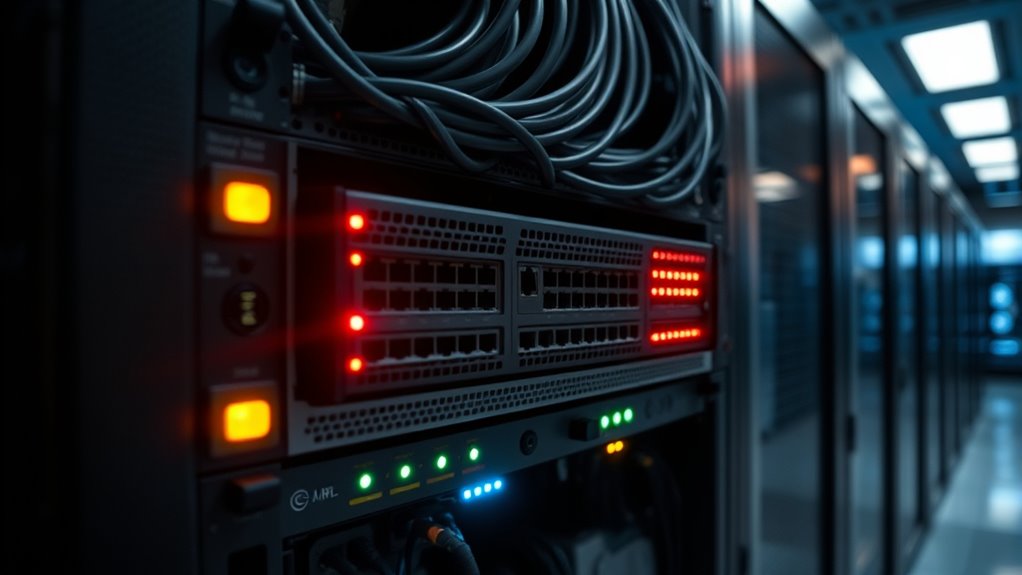
The best out-of-band management devices keep you in control when the production network or a device’s operating system is unreachable. I rank the Lantronix SLC 8000 as the best overall for its scalable serial-console capacity, while the Tripp Lite B093-004-2E4U-V stands out for integrated LTE and dual SIM support, and the Sipeed NanoKVM Lite offers a compact way to reach a single machine’s screen and keyboard. The key choice is whether you need serial access across many network devices, cellular connectivity at a remote site, or KVM access to a specific host. Port count, power and network redundancy, and deployment complexity separate these options more than their shared remote-access purpose. Read on for the full breakdown and guidance on matching a device to your infrastructure.

Get your wardrobe favorites delivered free with Prime
- Fast, free delivery on millions of items
- Prime Video, Amazon Music and more included
- Member-only deals all year
Key Takeaways
- Serial scale drives the top of this lineup: The Lantronix SLC 8000 and Opengear IM7248-2-DAC address larger fleets with up to 48 serial connections, while the 4- and 16-port options are better sized for smaller sites.
- Cellular capability is a distinct buying decision: The Tripp Lite model includes a 4G LTE gateway and dual SIM support; the Lantronix EMG 8500 and Opengear ACM7004 variants also bring cellular or resilience functions, but differ in platform and configuration.
- Console access and KVM access solve different problems: Most entries focus on serial console management for network and infrastructure gear; the Sipeed NanoKVM Lite gives visual HDMI access to a host instead.
- Wireless convenience comes with a narrower role: The two MIK-WOOBM-USB listings target wireless out-of-band access, rather than replacing a high-port-count console server for a multi-device rack.
- More ports do not automatically mean a better fit: A compact gateway or a four-port server can be easier to deploy at a branch, while 16- and 48-port systems suit sites where consolidating many console connections matters.
| Lantronix SLC 8000 Advanced Console Manager, 8–48 Serial Ports |  | Best for Large Serial Fleets | Model: SLC81161201S | Serial ports: Modular 8–48, RJ45/USB | Ethernet: Dual Gigabit Ethernet | VIEW ON AMAZON | See Our Full Breakdown |
| MIK-WOOBM-USB Wireless Out-of-Band Management USB Device |  | Best for Wireless Recovery | Wireless class: Tri-band | Compatibility: 802.11.be | Connectivity: Ethernet | VIEW ON AMAZON | See Our Full Breakdown |
| Sipeed NanoKVM Lite IP KVM with Case, 1080p 60fps HDMI, RISC-V, OLED Display |  | Best for Remote PC Recovery | Architecture: RISC-V (LicheeRV Nano) | Maximum resolution: 1080p | Video frame rate: 60 fps | VIEW ON AMAZON | See Our Full Breakdown |
| Tripp Lite 4-Port Console Server with 4G LTE Cellular Gateway, Dual Gigabit Ethernet, 4GB Flash, Dual SIM (B093-004-2E4U-V) – Black |  | Best for Cellular Failover | Console ports: 4 RS-232 | Ethernet: Dual Gigabit Ethernet, primary and failover | Cellular modem: 4G LTE with dual SIM slots | VIEW ON AMAZON | See Our Full Breakdown |
| Opengear OM1200 Operations Manager |  | Best for Compact Automation | Device type: Console server | Processor: AMD, 1.40 GHz | Standard memory: 3.91 GB DRAM | VIEW ON AMAZON | See Our Full Breakdown |
| Opengear CM8116 16-Port Serial Console Server |  | Best for Automation-Focused Teams | Device type: Console server | Serial ports: 16 | Network ports: 2 RJ45 Gigabit Ethernet | VIEW ON AMAZON | See Our Full Breakdown |
| Opengear CM7116-2-DAC 16-Port Console Server |  | Best for Audited Console Access | Serial ports: 16 | Ethernet: Dual Gigabit Ethernet | Connector: RJ45 | VIEW ON AMAZON | See Our Full Breakdown |
| MIK-WOOBM-USB Wireless Out-of-Band Management Adapter |  | Best Compact Backup Access | Model: MIK-WOOBM-USB | Interface: USB | Data link protocol: Ethernet | VIEW ON AMAZON | See Our Full Breakdown |
| Opengear IM7248-2-DAC 48-Port Console Server & Infrastructure Manager with Dual Power Cord |  | Best for High-Density Console Coverage | Model: IM7248-2-DAC | Device type: Console server and infrastructure manager | Console ports: 48 | VIEW ON AMAZON | See Our Full Breakdown |
| Opengear ACM7004-2-GLB ACM7000 Resilience Gateway |  | Best for Small Edge Sites | Serial ports: 4 | USB console ports: 4 × USB 2.0 | Ethernet: 2 Gigabit Ethernet ports | VIEW ON AMAZON | See Our Full Breakdown |
| Lantronix EMG 8500 Edge Management Gateway – Up to 8 Serial Ports (RJ45/USB), Modular I/O, 4G/LTE & Wi‑Fi |  | Best for Flexible Edge Connectivity | Brand: Lantronix | Model number: EMG851010S | Serial ports: Up to 8 (RJ45/USB) | VIEW ON AMAZON | See Our Full Breakdown |
| Opengear ACM7004-2-L ACM7000-L Resilience Gateway |  | Best Compact, Mounting-Flexible Gateway | Model: ACM7004-2-L | Ports: 4 | Connectivity: Ethernet, USB, cellular | VIEW ON AMAZON | See Our Full Breakdown |
| out of band management device | Weight | Serial ports |
|---|---|---|
| Lantronix SLC 8000 Advanced Co | 35.3 pounds | Modular 8–48, RJ45/USB |
| MIK-WOOBM-USB Wireless Out-of- | — | — |
| Sipeed NanoKVM Lite IP KVM wit | — | — |
| Tripp Lite 4-Port Console Serv | — | — |
| Opengear OM1200 Operations Man | 2.2 pounds | 4; model varies between 4 and 8 |
| Opengear CM8116 16-Port Serial | — | 16 |
| Opengear CM7116-2-DAC 16-Port | — | 16 |
| MIK-WOOBM-USB Wireless Out-of- | 2.5 oz | — |
| Opengear IM7248-2-DAC 48-Port | 9.9 lbs | — |
| Opengear ACM7004-2-GLB ACM7000 | 3 lbs | 4 |
| Lantronix EMG 8500 Edge Manage | 3 lb | Up to 8 (RJ45/USB) |
| Opengear ACM7004-2-L ACM7000-L | 2.5 lb | — |
More Details on Our Top Picks
Lantronix SLC 8000 Advanced Console Manager, 8–48 Serial Ports
I’d rank the Lantronix SLC 8000 for environments where the main out-of-band task is reaching a large number of serial consoles from one platform. Its modular 8–48-port design lets teams size the setup to their equipment rather than commit to a fixed four-port unit like the Tripp Lite B093-004-2E4U-V. Dual Gigabit Ethernet provides two network paths, while AC/DC power support gives deployment teams more power-input flexibility. The tradeoff is its physical footprint and weight: this is a substantial rack appliance, not a compact recovery device for a small branch. It also lacks the built-in LTE backup listed for the Tripp Lite, so remote access during a complete site-network failure depends on a separate path. I’d choose it for serial scale, not cellular independence.
Pros:- Modular configuration scales from 8 to 48 RJ45/USB serial ports
- Dual Gigabit Ethernet supports two network connections
- AC/DC power support offers deployment flexibility
- Purpose-built secure out-of-band serial access
Cons:- At 35.3 pounds, it is a heavy appliance with a sizable rack footprint
- No built-in cellular backup is listed, unlike the Tripp Lite B093-004-2E4U-V
- Serial console access does not provide the direct BIOS video and keyboard control of the Sipeed NanoKVM Lite
Best for: Data center teams managing many serial-console devices that need a scalable, rack-based access point.
Not ideal for: Small sites or teams that need built-in LTE access, a lightweight appliance, or direct remote KVM for individual computers.
- Model:SLC81161201S
- Serial ports:Modular 8–48, RJ45/USB
- Ethernet:Dual Gigabit Ethernet
- Power:AC/DC
- Dimensions:12 × 17.2 × 1.7 inches
- Weight:35.3 pounds
- Warranty:Manufacturer limited warranty
Our verdict“Choose the SLC 8000 when scalable serial access matters more than a compact chassis or built-in cellular failover.”
MIK-WOOBM-USB Wireless Out-of-Band Management USB Device
The MIK-WOOBM-USB takes a different route from rack console servers: it provides a wireless management path through a USB connection, aimed at reaching network equipment when its primary connection is unavailable. That makes it a lighter-touch option than the Lantronix SLC 8000, which is built to aggregate many serial consoles in a rack. The listed WPA2/WPA3 security and compatibility with Linux, macOS, and Windows broaden its potential fit, while the one-port design keeps the setup simple. The limitation is that wireless reach depends on the surrounding Wi-Fi environment; the internal antenna may also constrain placement compared with a device using external antennas. Its single USB port is a poor fit for managing several devices at once, and the supplied details do not describe the same serial-port density or cellular fallback as the Tripp Lite B093-004-2E4U-V.
Pros:- Wireless out-of-band access can provide a path when the primary network is down
- Plug-and-play USB connection supports a straightforward setup
- Lists WPA2 and WPA3 security protocols
- Operating-system compatibility includes Linux, macOS, and Windows
Cons:- Single USB port limits the number of directly connected devices
- Internal antenna may limit range compared with external-antenna options
- Performance depends on a compatible and available Wi-Fi environment
Best for: Network administrators seeking a simple wireless recovery connection for a compatible router or network device.
Not ideal for: Data center teams that need many serial console connections, wired cellular failover, or reach beyond available Wi-Fi coverage.
- Wireless class:Tri-band
- Compatibility:802.11.be
- Connectivity:Ethernet
- Security protocols:WPA3, WPA2
- Ports:1
- Data transfer rate:300 megabits per second
- Operating systems:Linux, macOS, Windows
- RAM:0.5 GB
- Warranty:1 year
Our verdict“Pick this adapter for wireless access to a compatible network device, but choose a console server for multi-device serial management or LTE failover.”
Sipeed NanoKVM Lite IP KVM with Case, 1080p 60fps HDMI, RISC-V, OLED Display
The Sipeed NanoKVM Lite is the lineup’s pick for hands-on remote control of a single computer, including access to its BIOS and operating system through a browser. Keyboard and mouse emulation plus virtual media can help with remote boot or recovery tasks that serial console servers such as the Lantronix SLC 8000 are not designed to handle. Its 1080p, 60 fps video and compact body suit a workstation, lab machine, or small server where screen-level access matters more than managing many serial devices. There are meaningful limits: the Lite version does not include ATX power control, and the product data describes it as PCBA-only, which may require DIY assembly despite the title mentioning a case. Its 100 Mbps Ethernet is also less suited to users seeking a multi-port rack console platform.
Pros:- Provides browser-based access to a computer’s BIOS and operating system
- 1080p video at 60 fps supports clear, responsive remote viewing
- Keyboard and mouse emulation with virtual media aids remote recovery
- Compact design includes an OLED status display
Cons:- ATX power control is available only on the Full version
- Lite is described as PCBA-only, which may require DIY assembly
- Designed for direct KVM access rather than the serial-port scale of the Lantronix SLC 8000
Best for: IT staff and homelab operators who need browser-based BIOS, keyboard, mouse, and virtual-media access to one computer.
Not ideal for: Teams needing multi-device serial management, remote power control on the Lite version, or an appliance that requires no DIY setup.
- Architecture:RISC-V (LicheeRV Nano)
- Maximum resolution:1080p
- Video frame rate:60 fps
- RAM:256 MB
- Processor speed:1 GHz
- Connectivity:Ethernet, HDMI, USB, Wi-Fi
- Ethernet speed:100 Mbps
- USB ports:3
- ATX power control:Full version only
Our verdict“Choose the NanoKVM Lite for remote screen-level control of one computer, provided its assembly and power-control limits fit your setup.”
Tripp Lite 4-Port Console Server with 4G LTE Cellular Gateway, Dual Gigabit Ethernet, 4GB Flash, Dual SIM (B093-004-2E4U-V) – Black
For sites where a failed primary connection must not cut off management, I’d place the Tripp Lite B093-004-2E4U-V ahead of the other picks. Its built-in 4G LTE modem and dual SIM slots provide a separate route to as many as four RS-232 devices, while dual Gigabit Ethernet supports primary and failover wired connections. That makes it more self-contained for remote recovery than the Lantronix SLC 8000, which offers far more serial ports but no LTE modem in the supplied specifications. The tradeoff is capacity: four RS-232 ports cannot match the SLC 8000’s scalable 8–48-port range. The Tripp Lite also brings security and compliance features suited to controlled environments, but its configuration may take more networking expertise than the simpler MIK-WOOBM-USB wireless adapter. Its fanless design may also constrain cooling under heavy load.
Pros:- Built-in 4G LTE modem with dual SIM slots supports cellular backup
- Dual Gigabit Ethernet provides primary and failover wired networking
- Four RS-232 console ports plus four USB console ports
- Lists FIPS-140-2, PCI DSS 3.2, SSL/SSH, and IPsec VPN security features
Cons:- Four RS-232 ports offer less serial capacity than the Lantronix SLC 8000
- Configuration can be complex for users new to out-of-band management
- Fanless design may limit cooling under heavy load
Best for: Distributed IT teams and regulated organizations that need secure remote access to a few serial devices when wired networking fails.
Not ideal for: Large data centers needing dozens of serial ports, or users who want a minimal setup without console-server configuration.
- Console ports:4 RS-232
- Ethernet:Dual Gigabit Ethernet, primary and failover
- Cellular modem:4G LTE with dual SIM slots
- Flash memory:4 GB NAND
- USB console ports:4 USB 2.0
- Digital I/O:2 DIO ports
- Mounting:19-inch rack-mountable, heavy-duty steel housing
- Compliance:TAA compliant, FIPS-140-2, PCI DSS 3.2
- Warranty:2 years
Our verdict“Choose the Tripp Lite when cellular failover and security features matter more than high serial-port density.”
Opengear OM1200 Operations Manager
The Opengear OM1200 fits buyers who want out-of-band access in a smaller rack footprint and plan to add local automation. Its 1RU half-width form factor and 2.2-pound listed weight make it easier to place in dense racks than the much heavier Lantronix SLC 8000. Python scripts and Docker container support also set it apart from the more narrowly focused Sipeed NanoKVM Lite: the OM1200 is a console-server platform with room for operational tooling, rather than a single-computer KVM. That flexibility comes with limits. The listed serial capacity is four ports, with some models offering eight, so it is not a substitute for a high-density console manager. Its 1.40 GHz processor and 25 W power draw also suggest choosing it for targeted management tasks, not demanding compute workloads. LTE is optional rather than built in.
Pros:- 1RU half-width chassis fits dense rack environments
- Python runtime and Docker support enable local automation
- Six Ethernet ports and four USB ports provide varied connections
- Optional LTE interface and built-in physical security support resilient deployments
Cons:- Serial capacity is limited to four or eight ports depending on model
- LTE connectivity is optional, unlike the Tripp Lite’s built-in cellular modem
- The 1.40 GHz processor may limit high-performance workloads
Best for: Network operations teams with dense racks that need a compact console server and want to run Python or Docker-based management tools.
Not ideal for: Organizations needing dozens of serial ports, built-in LTE as standard, or a platform intended for heavy compute workloads.
- Device type:Console server
- Processor:AMD, 1.40 GHz
- Standard memory:3.91 GB DRAM
- Form factor:Rack, 1RU half-width
- Serial ports:4; model varies between 4 and 8
- Ethernet ports:6 RJ-45
- USB ports:4
- Power consumption:25 W
- Weight:2.2 pounds
Our verdict“Pick the OM1200 for compact rack management with automation support, but choose a higher-port-count or LTE-equipped unit for larger or disconnected sites.”
Opengear CM8116 16-Port Serial Console Server
The CM8116 is the strongest fit here for teams that want to build automation into out-of-band access, not just keep a console path available. Its 16 serial ports support a substantial group of network devices, while REST API access, Docker, and Python scripting can help IT teams fold recovery and administration into existing workflows. Compared with the Opengear CM7116-2-DAC, it puts more emphasis on programmability and adds TPM 2.0 secure boot; the CM7116, by contrast, specifies local or remote audit logging and a four-year limited warranty. Dual power supplies with independent monitoring add resilience, but this is a wired console server, not a cellular fallback gateway. I would skip it if the deployment needs built-in 5G or 10Gb SFP uplinks, which are not specified for this model.
Pros:- 16 serial ports provide console access for a sizable device group.
- REST API, Docker, and Python support suit automated administration workflows.
- TPM 2.0 secure boot adds a hardware-based security measure.
- Dual power supplies with independent monitoring support resilient operation.
Cons:- No built-in 5G cellular connectivity is specified for this model.
- 10Gb SFP uplinks are not specified; those are described as available only on select models.
Best for: Data-center teams managing up to 16 serial-connected devices that want API-driven administration, scripting, and hardware-backed secure boot.
Not ideal for: Teams that need built-in cellular failover, 10Gb SFP uplinks, or a higher port count in one appliance.
- Device type:Console server
- Serial ports:16
- Network ports:2 RJ45 Gigabit Ethernet
- USB ports:2
- Memory:1.95 GB DDR4 SDRAM
- Security:TPM 2.0 secure boot
- Power input:100–240 V AC
- Form factor:Rackmountable
- Dimensions and weight:9.3 × 17.3 × 1.8 in; 8.7 lbs
Our verdict“Choose the CM8116 for a 16-device console deployment where automation and secure boot matter more than cellular or high-speed SFP connectivity.”
Opengear CM7116-2-DAC 16-Port Console Server
The CM7116-2-DAC is a practical choice when a team needs dependable console access plus a record of administrative activity. Its 16 serial ports, dual Gigabit Ethernet, and dual AC power supplies make it a solid rack-level option for remote network and server equipment. The differentiator is audit logging to local or remote storage, paired with power-management integrations—useful when teams need traceability alongside recovery access. Compared with the CM8116, this model spells out those logging capabilities and includes a limited four-year warranty, while the CM8116 offers REST API, Docker, Python, and TPM 2.0 secure boot. Environmental monitoring is available only through an optional EMD5000 module, so buyers seeking that capability should account for extra hardware. It is purpose-built for infrastructure, not general-purpose remote access.
Pros:- 16 serial ports support console access across a sizeable rack deployment.
- Dual Gigabit Ethernet and dual AC power supplies provide connection and power redundancy.
- Local or remote audit logging supports review of administrative activity.
- Power-management integrations and a limited four-year warranty are specified.
Cons:- Environmental monitoring requires the optional EMD5000 module.
- Its data-center focus makes it a poor fit for general-purpose or small-office use.
Best for: Network and server teams that need 16 serial console connections, redundant links and power, and local or remote audit records.
Not ideal for: Small offices or buyers seeking environmental monitoring included in the base setup, since the EMD5000 module is optional.
- Serial ports:16
- Ethernet:Dual Gigabit Ethernet
- Connector:RJ45
- Power supplies:Dual AC
- Local storage:4 GB
- Environmental monitoring:Optional EMD5000 module
- Warranty:Limited four-year warranty
- Connectivity:Ethernet and USB
Our verdict“Pick the CM7116-2-DAC when audit logging and redundant connections matter more than the CM8116’s scripting and secure-boot features.”
MIK-WOOBM-USB Wireless Out-of-Band Management Adapter
The MIK-WOOBM-USB takes a different, lighter approach to out-of-band access: it is a small USB-connected adapter intended to provide wireless administration when the primary network is unavailable. That makes it easier to carry or deploy for a limited recovery task than a rackmount console server such as the Opengear CM7116-2-DAC, which is designed to connect many serial devices and support redundant power. The listed 100 Mbps data rate and plug-and-play description point to convenience rather than high-density infrastructure management. The key limitation is uncertainty: the product information does not identify compatible systems or explain the wireless link in enough detail to confirm fit for a particular server or network. I would verify hardware and management-software compatibility before relying on it for outage recovery.
Pros:- USB connection is described as plug and play.
- Compact, lightweight design is easier to carry than rackmount console servers.
- Intended to provide remote administration when the primary network is unavailable.
- Listed data-link rate is 100 Mbps.
Cons:- Compatible systems and hardware requirements are not clearly specified.
- It does not provide the multi-device serial-console capacity of the Opengear CM7116-2-DAC.
- Wireless security, range, and recovery behavior are not detailed in the supplied specifications.
Best for: IT staff who need a compact, portable backup-access adapter for a compatible system and can verify device support before deployment.
Not ideal for: Data-center teams managing multiple serial consoles or buyers who need clearly documented compatibility and redundancy.
- Model:MIK-WOOBM-USB
- Interface:USB
- Data link protocol:Ethernet
- Data transfer rate:100 Mbps
- Dimensions:4.5 × 6 × 2.5 in
- Weight:2.5 oz
- Warranty:1 year
- Color:White
Our verdict“Consider this adapter for portable backup access only after confirming that its connection and wireless features work with your specific equipment.”
Opengear IM7248-2-DAC 48-Port Console Server & Infrastructure Manager with Dual Power Cord
For a rack with many devices, the IM7248-2-DAC’s defining advantage is straightforward: 48 console ports in one infrastructure manager. That capacity can reduce the number of separate console appliances needed compared with the 16-port Opengear CM8116 and CM7116-2-DAC. The listing includes dual power cords, a console cable, and rack ears, which gives a buyer several installation essentials in one package. The tradeoff is that the supplied details are much thinner than those for the CM8116: they do not specify network interfaces, security features, logging, or automation support. This unit is also described as renewed, so its condition category may not suit organizations that require new equipment under a procurement policy. I would shortlist it for port density, but confirm configuration and renewal terms before planning a deployment.
Pros:- 48 console ports provide substantially more capacity than the 16-port CM8116 and CM7116-2-DAC.
- Dual power cords are included.
- Console cable and rack ears are supplied for installation.
- Rack-oriented dimensions and 9.9-pound weight are provided.
Cons:- The product is listed as renewed, which may not fit every organization’s procurement requirements.
- Network-interface, security, and automation details are not specified in the supplied product data.
Best for: Data-center operators who need console access for up to 48 devices and are comfortable evaluating a renewed appliance.
Not ideal for: Buyers who require clearly documented security, network, or automation specifications, or procurement teams restricted to new hardware.
- Model:IM7248-2-DAC
- Device type:Console server and infrastructure manager
- Console ports:48
- Power:Dual power cords
- Dimensions:10 × 17.32 × 1.77 in
- Weight:9.9 lbs
- Condition:Renewed
- Included accessories:Console cable and rack ears
Our verdict“Choose the IM7248-2-DAC when 48-port density is the priority and renewed equipment plus limited published specifications are acceptable.”
Opengear ACM7004-2-GLB ACM7000 Resilience Gateway
The ACM7004-2-GLB is the more suitable pick when out-of-band management needs to fit an edge site rather than a full rack of console connections. It combines four serial ports and four USB console ports with two Gigabit Ethernet ports, giving a small deployment more connection types than a serial-only setup. Its LLDP device discovery can help identify connected network equipment, while automatic outage detection and recovery features target the remote-site problem of restoring equipment without a technician on hand. Compared with the 48-port IM7248-2-DAC, this gateway serves far fewer devices; its advantage is a compact, three-pound form that suits smaller installations. The supplied specifications do not list cellular connectivity, so buyers needing a separate mobile backhaul should check the exact configuration rather than assume it is included.
Pros:- Four serial ports and four USB console ports support different device-management connections.
- Automatic outage detection and equipment recovery support remote-site resilience.
- LLDP device discovery can help identify connected network devices.
- Two Gigabit Ethernet ports suit wired network connections in compact deployments.
Cons:- Four serial ports make it unsuitable for high-density deployments such as those served by the 48-port IM7248-2-DAC.
- Cellular connectivity is not specified in the supplied product data.
Best for: IT teams supporting small remote offices or edge locations that need mixed serial and USB console access with outage-recovery features.
Not ideal for: Data centers managing dozens of serial devices, or sites that require confirmed cellular failover as part of the appliance.
- Serial ports:4
- USB console ports:4 × USB 2.0
- Ethernet:2 Gigabit Ethernet ports
- Internal memory:4 GB
- Weight:3 lbs
- Device discovery:LLDP
- Management focus:Out-of-band access and outage recovery
Our verdict“Choose the ACM7004-2-GLB for a small edge site needing mixed console access and recovery features, not for a large serial-console rack.”
Lantronix EMG 8500 Edge Management Gateway – Up to 8 Serial Ports (RJ45/USB), Modular I/O, 4G/LTE & Wi‑Fi
The Lantronix EMG 8500 suits sites that need several console connections plus options for reaching equipment when the primary network is unavailable. Its support for up to eight serial ports provides more room than the four-port Opengear ACM7004-2-L, while modular I/O can accommodate changing peripheral needs. Dual-band Wi-Fi and optional 4G/LTE give teams alternate paths for remote access; encrypted communications address the security demands of managing equipment off-site. That flexibility comes with a larger footprint—about 9.45 × 11.42 × 5.91 inches—so it is less convenient for crowded cabinets than the compact ACM7004-2-L. The product data also does not specify which modular I/O modules are available or clarify whether LTE hardware is included, so buyers should verify the configuration before planning a deployment.
Pros:- Supports up to eight serial connections for managing multiple devices from one gateway.
- Modular I/O provides flexibility to adapt peripheral interfaces to site needs.
- Dual-band Wi-Fi and optional 4G/LTE provide alternatives for remote connectivity.
- Encrypted communications support secure remote device management.
Cons:- Its roughly 9.45 × 11.42 × 5.91-inch enclosure can be awkward in space-constrained installations.
- The supplied product details do not identify available I/O modules or explain the LTE configuration.
Best for: IT teams at remote branches or edge sites that need several serial console connections, expansion options, and a choice of wireless backhaul.
Not ideal for: Installers with very limited cabinet space or buyers who need a clearly specified, included cellular configuration before purchase.
- Brand:Lantronix
- Model number:EMG851010S
- Serial ports:Up to 8 (RJ45/USB)
- Wireless:Dual-band 802.11a/b/g/n/ac Wi-Fi
- Cellular option:4G/LTE
- Modular I/O:Supported
- Dimensions:9.45 × 11.42 × 5.91 in
- Weight:3 lb
Our verdict“Choose the EMG 8500 when you need more serial capacity and flexible wireless access than a compact four-port gateway offers, and have room for its larger enclosure.”
Opengear ACM7004-2-L ACM7000-L Resilience Gateway
The Opengear ACM7004-2-L is the more space-conscious choice for smaller sites that need remote management without an eight-port gateway. Its four ports and compact listed dimensions of 1.4 × 5.1 × 1.4 inches make it easier to place than the Lantronix EMG 8500, which offers up to eight serial connections but occupies substantially more space. Rack, desktop, and rail mounting also suit varied cabinets and network closets. The listed Ethernet, USB, and cellular connectivity suggest several connection options, while Opengear OS provides the management platform. However, the available description gives little detail about specific management features, and the listed 100 Mbps LAN may not fit every network requirement. I’d verify which cellular functions and port roles apply to the exact configuration before choosing it over a better-documented alternative.
Pros:- Compact listed dimensions help it fit where a larger gateway such as the Lantronix EMG 8500 may not.
- Rack, desktop, and rail mounting support a range of installation layouts.
- Ethernet and USB connectivity are listed alongside cellular connectivity.
- TAA compliance may suit organizations with applicable procurement requirements.
Cons:- Four ports provide less capacity than the Lantronix EMG 8500’s support for up to eight serial connections.
- The product description provides limited detail about its management and monitoring capabilities.
- The listed 100 Mbps LAN bandwidth may constrain deployments that require a faster Ethernet connection.
Best for: Branch-office IT staff and infrastructure installers who need a compact gateway with rack, desktop, or rail mounting options and a four-port setup.
Not ideal for: Teams managing many serial devices, or buyers who need detailed confirmation of cellular behavior, port functions, and management capabilities before deployment.
- Model:ACM7004-2-L
- Ports:4
- Connectivity:Ethernet, USB, cellular
- Form factor:Rack mount, desktop, rail-mountable
- Dimensions:1.4 × 5.1 × 1.4 in
- Weight:2.5 lb
- LAN port bandwidth:100 Mbps
- Operating system:Opengear OS
- Wireless compatibility:802.11ac, 5 GHz
Our verdict“Pick the ACM7004-2-L for a compact, mountable four-port gateway, but confirm its cellular and management details if your deployment depends on specific capabilities.”

How We Picked
I compared these devices by the job they perform during an outage: reaching serial consoles, accessing a host’s video and input, or providing a separate network path through cellular or other resilience features. Port count, connection types, cellular support, redundancy cues, and the range of deployment sizes shaped the fit assessment. I also weighed how specialized each option is: a small KVM or wireless adapter can suit a single target, while a console server is more useful when several infrastructure devices need a shared remote-access point.
The ranking favors practical coverage and flexibility for common remote-infrastructure needs, not the longest feature list. The Lantronix SLC 8000 leads as a scalable serial-console choice; the Tripp Lite model ranks highly for its integrated LTE path; and the NanoKVM Lite earns a distinct role for direct host-level KVM access. Opengear’s 16- and 48-port models serve larger console deployments, while its Operations Manager and resilience gateways suit different management architectures. The two MIK-WOOBM-USB listings are treated as closely related, specialized options, not as substitutes for a rack-scale console server. Product names and stated capabilities guide this comparison; buyers should confirm exact configuration, compatibility, and support requirements before purchasing.
Factors to Consider When Choosing Out Of Band Management Devices
Choosing an out-of-band device starts with the failure you need to recover from, not the number of features on a spec sheet. I would map each device to its access path, the equipment it must reach, and the way that path stays available during an outage.
Match the access method to the equipment
Serial console access is the usual fit for switches, routers, and other infrastructure with console ports; KVM access is for a system where you need its screen, keyboard, and mouse. These approaches are not interchangeable, even when both are described as remote management. Count the devices that need console connections and check their connector types before choosing a port count. For servers without a suitable serial console path, a KVM device may provide more useful recovery access. A common mistake is to buy for the most visible device rather than the equipment most likely to need remote recovery. I would plan for the access method required by each target, including any adapters or cabling.
Plan for the failure of the primary network
An out-of-band device only helps remotely if its management path survives the outage you are trying to handle. A separate cellular connection can provide another route when site internet or the main WAN is down, but it also brings SIM provisioning, carrier coverage, and ongoing administration into the plan. Check whether the proposed network path is genuinely independent of the equipment it will manage. Dual SIM support may add carrier choice, but it does not by itself prove automatic failover behavior or guarantee coverage. Before deployment, test reachability from the locations and networks your operators will actually use. Avoid assuming that any device labeled out-of-band automatically has independent connectivity.
Size ports for the site, with room for growth
Port count affects more than how many devices can be connected: it also shapes rack space, cabling, and how much equipment shares a management point. A four-port unit can suit a small branch or a short list of critical devices, while 16 or 48 ports may simplify access in a larger rack. Buying far beyond current needs can add setup and operational overhead without improving recovery for the devices that matter. Buying too few can leave newly installed equipment outside the recovery plan. I would count current targets, add a measured allowance for expansion, and check whether the product’s port type matches every device. The goal is useful headroom, not the largest number on the label.
Check power, path, and recovery dependencies
Remote access can fail if the management device loses power along with the equipment it is meant to recover. Review how the unit is powered, whether power sources can be separated, and what happens after a site power interruption. Think through the full path from your operator to the device: network access, authentication, service availability, and the target’s own console connection. Redundant power cords or network interfaces only help when they connect to independent sources and paths. A common planning gap is treating hardware redundancy as proof of end-to-end resilience. I would document the dependencies and test a recovery scenario before relying on the setup for unattended sites.
Account for management workflow and support
A device that fits the hardware may still be a poor match for the team’s operating model. Check how access is administered, how credentials and user permissions fit existing practices, and whether the system can be monitored by the tools your operators already use. For multiple sites, consistent configuration and a clear update process can matter more than a small difference in port capacity. Also verify software and firmware support, licensing conditions, and the vendor’s support scope for the exact model and configuration. Do not assume that similarly named versions share the same connectivity or management features. A written inventory of firmware, accessories, and support needs makes later maintenance less error-prone.
Frequently Asked Questions
Should I choose a serial console server or a KVM device?
Choose a serial console server when the targets expose console ports and you need command-line access to network or infrastructure equipment. Choose KVM when recovery depends on seeing and controlling a host’s display, keyboard, or boot process. The NanoKVM Lite represents the KVM approach in this lineup, while the Lantronix and Opengear console servers focus on serial access. Some environments need both methods because network devices and server hosts expose different recovery interfaces. Inventory target devices first, then match each one to its supported management connection.
Do I need cellular connectivity for out-of-band access?
Cellular is useful when the site’s primary internet path may fail and remote recovery still needs to work. It is less compelling when a separate, reliable management network already exists or when local staff can provide recovery access. Check local carrier coverage, SIM administration, data policies, and whether the cellular path remains independent during the failure you care about. The Tripp Lite B093-004-2E4U-V explicitly combines LTE with dual SIM support, while other devices in the lineup offer different connectivity configurations. Confirm exact failover behavior and regional compatibility rather than inferring them from the presence of LTE or two SIM slots.
How many console ports should I plan for?
Count every device that needs direct console access, including equipment that is easy to overlook such as power, security, or edge infrastructure. Then add only the spare capacity justified by likely site growth or replacement plans. A small branch may not benefit from a 16- or 48-port system, while a larger rack can become awkward to manage if its console server is undersized. Check the physical port and cable requirements as well as the port total. For uncertain growth, compare the operational cost of adding another unit later with the complexity of installing excess capacity now.
Can an out-of-band device recover a server if its operating system is down?
It can provide access that does not rely on the operating system, but the answer depends on the device’s connection to that server. A serial console may expose boot and command-line output when the server supports it, while KVM access can show and control the host’s display and input. Neither connection can fix a power failure or a disconnected management path on its own. Confirm that the server exposes the needed interface and that the out-of-band device remains powered and reachable during the failure. Test a controlled recovery procedure before depending on it for remote sites.
Are the two MIK-WOOBM-USB listings interchangeable?
The supplied product names describe both as MIK-WOOBM-USB wireless out-of-band management adapters, so they appear closely related in intended role. The listing information alone does not establish that their included accessories, hardware revisions, compatibility, or support terms are identical. I would verify the exact model identifier and supported host or management platform before choosing between them. Neither should be assumed to replace a multi-port console server when many devices require independent serial access. If the goal is a single wireless management link, confirm the complete connection path and its security requirements.
Conclusion
For a broad serial-console deployment, my best overall pick is the Lantronix SLC 8000, with its 8–48-port range fitting sites that need room to scale. For a site where cellular recovery is the priority, the Tripp Lite B093-004-2E4U-V is the standout value-oriented choice because its stated LTE and dual SIM features address that specific need; confirm operating costs and failover behavior before deployment. Buyers wanting a premium, larger-scale console-management setup should compare the Opengear IM7248-2-DAC with the SLC 8000 and select based on required ecosystem, support, and deployment fit. For beginners managing a single host, the Sipeed NanoKVM Lite has a narrower, more direct KVM role than a full console server, though compatibility still needs checking. For small wireless-management needs, compare the two MIK-WOOBM-USB listings carefully; for compact edge resilience, review the Lantronix EMG 8500 and Opengear ACM7004 variants against your connectivity needs. Choose by the failure path and devices you need to reach, not by port count alone.
Fall Picks
fall essentials
As an affiliate, we earn on qualifying purchases.