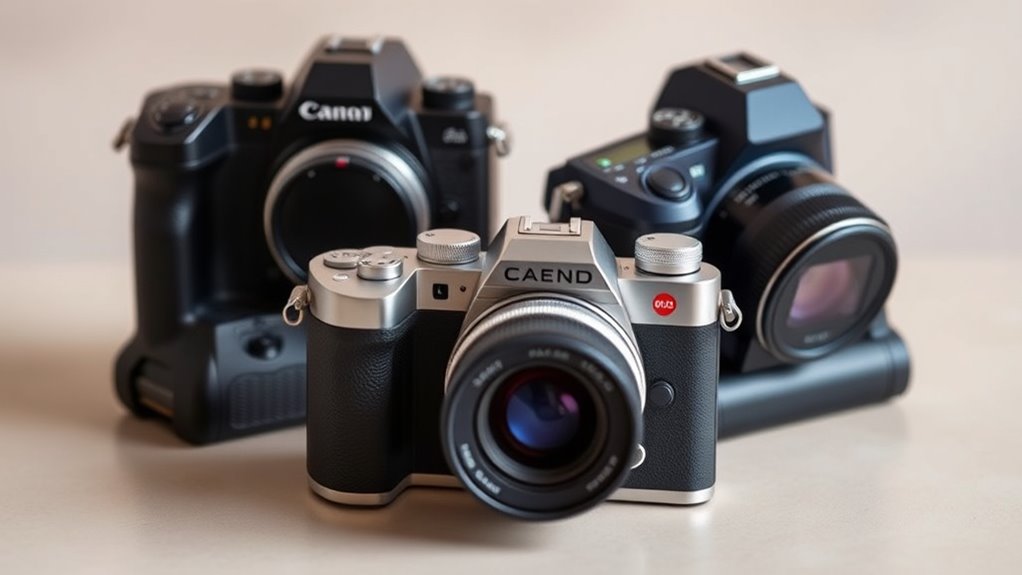

Choosing the right medium format camera in 2026 hinges on your specific needs—whether it’s ultimate resolution, professional video features, or portability. The Fujifilm GFX100 II stands out for its impressive 102MP sensor and advanced video capabilities, making it ideal for high-end photography and filmmaking. The Hasselblad X2D 100C offers a stellar balance of dynamic range and ease of use for portrait and landscape shooters, while the Fujifilm GFX100S II combines high resolution with a compact, lightweight design suited for on-the-go professionals. Each of these picks has distinct strengths and tradeoffs—cost, size, and learning curve—so understanding what matters most to you is key.

Get your wardrobe favorites delivered free with Prime
- Fast, free delivery on millions of items
- Prime Video, Amazon Music and more included
- Member-only deals all year
Key Takeaways
- High-resolution sensors (102MP and 100MP) dominate the list, emphasizing detail and print quality.
- Video features, like 4K/60p and RAW options, are a distinguishing factor for hybrid shooters.
- Portability varies significantly—from compact GFX100RF to large Hasselblad X2D 100C—impacting usability in different environments.
- Price ranges are steep, often reflecting professional-grade features and build quality.
- Lens ecosystems and accessory compatibility can influence long-term versatility and investment.
| Fujifilm GFX100 II Mirrorless Medium Format Camera Body |  | Best Overall for High-Resolution Photography and Video | Sensor: 102MP medium format (55mm diagonal) | Video Recording: 4K/60p, 8K/30p RAW | Viewfinder: 9.44M dot EVF, 120fps | VIEW ON AMAZON | See Our Full Breakdown |
| Hasselblad X2D 100C 100MP Medium Format Mirrorless Camera |  | Best for Dynamic Range and Ease of Use | Sensor Resolution: 100MP | Dynamic Range: 15 stops | Image Stabilization: 5-axis, 7-stop IBIS | VIEW ON AMAZON | See Our Full Breakdown |
| Hasselblad 907X & CFV 100C Medium Format Mirrorless Camera |  | Best for Professional Studio and Studio-Ready Shooters | Digital Back: CFV 100C | Camera Body: 907X | Battery: High Capacity Li-ion rechargeable | VIEW ON AMAZON | See Our Full Breakdown |
| Fujifilm GFX100S II Body Mirrorless Medium Format Camera |  | Best Compact High-Res for Enthusiasts and Professionals | Sensor: 102MP CMOS II | Processor: X-Processor 5 | Weight: 883g (1.95 lbs) | VIEW ON AMAZON | See Our Full Breakdown |
| Fujifilm GFX100RF Medium Format Camera – Silver |  | Best Compact Fixed Lens Medium Format | Sensor resolution: 102 megapixels | Lens: Fixed 35mm | Design: Rangefinder style | VIEW ON AMAZON | See Our Full Breakdown |
More Details on Our Top Picks
Fujifilm GFX100 II Mirrorless Medium Format Camera Body
The Fujifilm GFX100 II stands out for its staggering 102MP medium format sensor, delivering exceptional detail for large prints and intricate editing. Its advanced processing enables 4K/60p recording, making it a versatile tool for photographers and filmmakers alike. The camera’s autofocus improvements, including object priority AF, combined with in-body stabilization up to 8 stops, ensure sharp images and smooth footage even in challenging conditions. Compared with the GFX100S II, the II version offers enhanced video and autofocus features but at a higher price and weight, which might deter casual users. Its complex feature set is best suited for professionals who need ultimate quality and workflow integration, despite the steep learning curve and significant investment.
Pros:- High-resolution 102MP sensor for stunning detail
- Advanced 8K RAW and 4K/60p video recording
- Enhanced autofocus with object priority
- In-body stabilization up to 8 stops
Cons:- High cost may limit accessibility
- Large and heavy, less portable
- Complex feature set requiring technical proficiency
Best for: Professional photographers and filmmakers seeking top-tier image quality and advanced video features.
Not ideal for: Casual users or those prioritizing portability and simplicity.
- Sensor:102MP medium format (55mm diagonal)
- Video Recording:4K/60p, 8K/30p RAW
- Viewfinder:9.44M dot EVF, 120fps
- Stabilization:Up to 8 stops IBIS
- Frame Rate:8fps mechanical shutter, 5.3fps live view
- Connectivity:Wi-Fi, Ethernet, Frame.io
Our verdict“This camera is a powerhouse for professionals demanding the highest image and video quality, with tradeoffs in size and complexity.”
Hasselblad X2D 100C 100MP Medium Format Mirrorless Camera
The Hasselblad X2D 100C offers a notable 100MP sensor paired with up to 15 stops of dynamic range, making it ideal for capturing lifelike images with rich tonal transitions. Its 5-axis IBIS with 7 stops stabilization enhances handheld shooting, and the responsive touch interface simplifies operation. Compared to the GFX100 II, the X2D focuses more on dynamic range and color fidelity, appealing to landscape and portrait photographers who prioritize realism and subtle details. However, its high price and limited lens ecosystem, primarily centered around Hasselblad XCD lenses, might restrict flexibility. It’s best suited for users who value image quality and ease of use over expandability.
Pros:- Exceptional 100MP sensor with wide dynamic range
- Effective 5-axis IBIS with 7 stops stabilization
- User-friendly touch interface
- Lifelike color reproduction
Cons:- High price point
- Large and heavy, less portable
- Limited lens options compared to smaller systems
Best for: Landscape and portrait photographers who prioritize color accuracy and dynamic range.
Not ideal for: Casual shooters or those needing a broad lens ecosystem.
- Sensor Resolution:100MP
- Dynamic Range:15 stops
- Image Stabilization:5-axis, 7-stop IBIS
- Display:Touch with swipe, scroll
- Lens Compatibility:Hasselblad XCD lenses and adapters
Our verdict“A superb choice for professionals seeking the best dynamic range and color fidelity, with some tradeoffs in size and ecosystem breadth.”
Hasselblad 907X & CFV 100C Medium Format Mirrorless Camera
The Hasselblad 907X with CFV 100C back combines a classic style with professional-grade imaging. The kit provides a versatile digital back with high-quality medium format images, perfect for studio work and commercial projects. Its comprehensive accessory set and modular design allow for tailored setups, but the complexity of assembly and operation can be intimidating for less experienced users. Compared with the X2D 100C, this setup offers more customization but at a higher price and with a steeper learning curve. It’s ideal for professionals needing a flexible, high-end system that can adapt to various shooting scenarios, yet it may be overkill for casual or outdoor photographers.
Pros:- High-quality medium format imaging
- Modular system with extensive accessory options
- Suitable for demanding professional workflows
Cons:- Pricey and complex setup
- Requires technical knowledge for optimal use
- Less portable due to size and weight
Best for: Studio professionals and commercial photographers needing maximum flexibility.
Not ideal for: Casual users or those seeking a portable, all-in-one camera.
- Digital Back:CFV 100C
- Camera Body:907X
- Battery:High Capacity Li-ion rechargeable
- Accessories:Hot shoe adaptor, focusing screen, USB-C cable, shoulder strap
Our verdict“A highly flexible, professional system suited for studio and commercial work willing to handle its setup complexity.”
Fujifilm GFX100S II Body Mirrorless Medium Format Camera
The Fujifilm GFX100S II offers a compelling combination of high resolution, advanced autofocus, and a portable design. Its 102MP CMOS II sensor captures incredible detail, while AI-assisted autofocus with face and eye detection simplifies shooting. The camera’s in-body stabilization up to 8 stops ensures sharp results, and its ergonomic, lightweight body makes it suitable for handheld use in various environments. Compared with the larger GFX100 II, this model sacrifices some video and lens options but gains in portability and ease of handling. It’s an excellent choice for professionals who want high resolution without carrying a bulky rig.
Pros:- 102MP CMOS II sensor for maximum detail
- AI-assisted autofocus with face/eye detection
- In-body stabilization up to 8 stops
- Lightweight and ergonomic design
Cons:- Premium price can be a barrier
- Large file sizes demand robust storage and processing
- Limited lens options compared to larger systems
Best for: Enthusiasts and professionals looking for a portable, high-resolution medium format camera.
Not ideal for: Those requiring extensive video features or a broader lens ecosystem.
- Sensor:102MP CMOS II
- Processor:X-Processor 5
- Weight:883g (1.95 lbs)
- Viewfinder:5.76 million dot high-res EVF
- Autofocus:Face/Eye and Subject Detection, AI
- Image Stabilization:Up to 8 stops IBIS
- Video Recording:4K/30p, 10-bit, ProRes, Blackmagic RAW
Our verdict“This model balances high resolution with portability, making it a versatile choice for demanding shooters on the move.”
Fujifilm GFX100RF Medium Format Camera – Silver
The Fujifilm GFX100RF emphasizes portability with a compact, rangefinder-style design and a fixed 35mm lens. It delivers the same 102MP resolution as larger models, with film simulation modes for creative flexibility. Its fixed lens limits versatility but grants a smaller, easier-to-carry package, making it suitable for street, travel, and documentary work. Compared to interchangeable-lens systems, it sacrifices zoom and adaptability but gains convenience and quick handling. This camera is ideal for users who want large-format image quality in a highly portable form factor—though the fixed lens may not suit every genre.
Pros:- 102MP sensor for detailed images
- Compact, rangefinder style design
- Multiple film simulation modes
- Lightweight and portable
Cons:- Fixed lens limits flexibility
- No zoom functionality
- High cost for a specialized compact camera
Best for: Travel, street, and documentary photographers seeking high-res images in a compact body.
Not ideal for: Photographers needing zoom or lens versatility for varied shooting conditions.
- Sensor resolution:102 megapixels
- Lens:Fixed 35mm
- Design:Rangefinder style
- Features:Aspect ratio dial, Film Simulation modes
Our verdict“This camera offers large-format quality wrapped in a portable, fixed-lens design, perfect for travel and candid shooting with some creative limitations.”
How We Picked
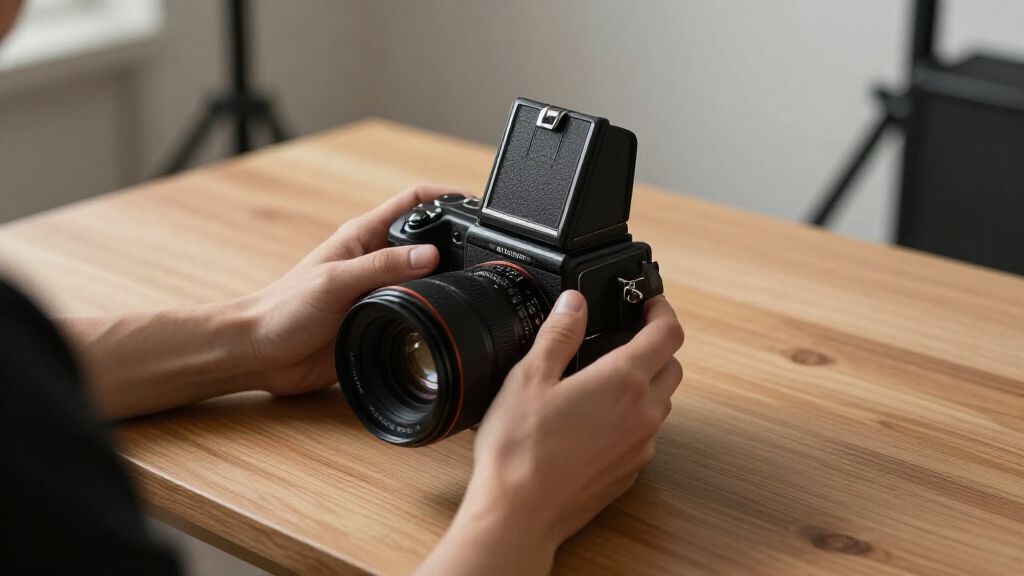
To select these medium format cameras, I prioritized models that balance image quality, usability, and value for different types of users. I examined resolution, sensor technology, autofocus, stabilization, and video capabilities, as well as ergonomics and ecosystem support. I also considered real-world tradeoffs, such as weight, complexity, and cost, to recommend options suitable for both professional photographers and dedicated enthusiasts. This approach aims to highlight the most relevant choices for various workflows and budgets, ensuring each model offers a clear advantage for its target user.
Factors to Consider When Choosing Medium Format Cameras
Selecting a medium format camera depends on your specific photography needs, workflow, and budget. Key considerations include resolution, size and weight, video capabilities, lens ecosystem, and overall system compatibility. Medium format cameras excel in producing highly detailed images, but they come with higher costs and often larger sizes. Understanding your primary use—whether studio, landscape, travel, or hybrid—will guide you toward the best choice. Here, I break down the main factors to consider when evaluating these models.Resolution and Image Quality
High resolution is a hallmark of medium format, with most models offering 100MP or more. This ensures incredible detail for large prints and extensive cropping. However, higher resolution also means larger file sizes and greater processing demands. Decide if your work demands the utmost detail or if a slightly lower resolution with better portability might be more practical.
Size, Weight, and Portability
While medium format cameras generally tend to be large and heavy, some models like the GFX100RF prioritize portability, ideal for travel and street photography. Others, such as the Hasselblad X2D, are more substantial and better suited for studio use. Consider how often you’ll carry the camera and whether portability outweighs other features like lens selection.
Video and Hybrid Capabilities
For those blending photography with videography, features like 4K/60p recording, RAW video options, and stabilizations are vital. The GFX100 II excels here with advanced video specs, making it a prime choice for hybrid creators. If video is secondary, simpler models may suffice.
Ecosystem and Compatibility
Lens options and accessory support can influence your long-term investment. Hasselblad’s XCD lenses are excellent but limited compared to Fujifilm’s broader lineup. Compatibility with adapters and other gear also plays a role, especially if you already own certain lenses or accessories.
Frequently Asked Questions
What is the main advantage of medium format cameras over full-frame or crop-sensor models?
Medium format cameras typically provide larger sensors, resulting in superior resolution, dynamic range, and detail. This makes them ideal for large prints, commercial work, and situations where image quality is paramount. However, they tend to be bulkier, more expensive, and less versatile for casual or fast-paced shooting.
Are medium format cameras suitable for everyday photography?
While they can be used for everyday photography, medium format cameras are generally less convenient due to their size, weight, and cost. They excel in studio, landscape, and commercial environments where image quality takes precedence over portability.
How important is lens availability when choosing a medium format camera?
Lens ecosystems significantly impact your ability to adapt to various shooting scenarios. Larger brands like Fujifilm offer extensive lens options, providing flexibility for different genres. Limited lens selections might restrict creative options and future expandability, so it’s worth considering long-term needs.
Do medium format cameras offer good video capabilities?
Many modern medium format models include robust video features, such as 4K/60p recording, RAW video, and stabilization. Cameras like the GFX100 II are especially capable, making them suitable for hybrid shooters who need high-quality video along with stills.
Is high megapixel count always better?
Higher megapixels deliver more detailed images, but they also produce larger files that demand more storage and processing power. For most users, a balance of resolution and workflow practicality is advisable, especially if storage or editing capacity is limited.
Conclusion
For professional photographers seeking maximum image quality and advanced video, the Fujifilm GFX100 II makes the most sense, despite its size and cost. Enthusiasts and travel shooters will appreciate the GFX100S II for its blend of resolution and portability. For those in studio or commercial environments, the Hasselblad 907X system offers unmatched flexibility—though it demands technical know-how. Budget-conscious buyers or those new to medium format should consider the GFX100RF for its compact design, accepting its fixed lens limitation. Ultimately, your choice depends on prioritizing resolution, portability, or system flexibility.
Halloween Picks
halloween
As an affiliate, we earn on qualifying purchases.