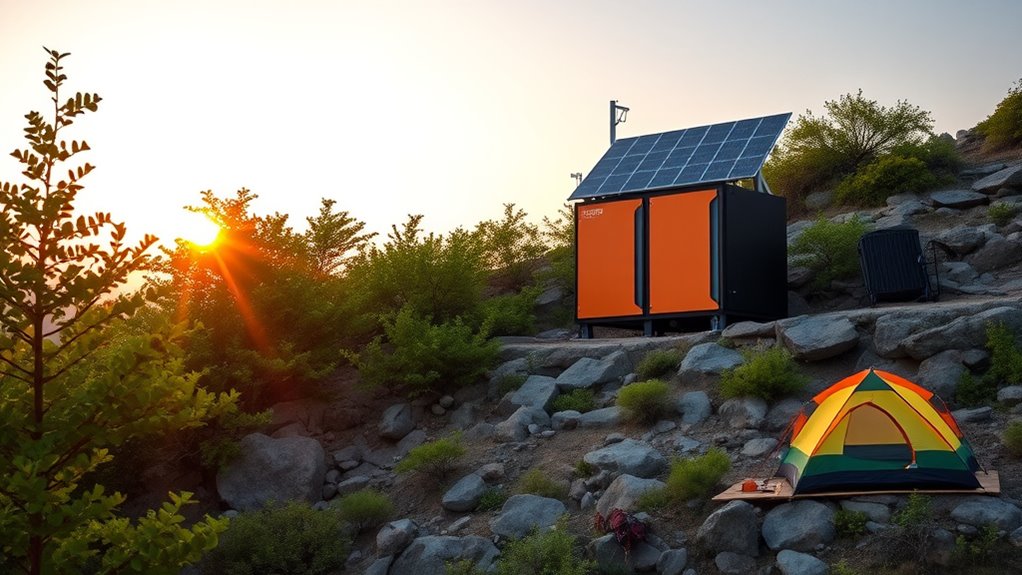

Choosing the right LFP battery power station depends on balancing capacity, output power, and weight. The DJI Power 2000 stands out as the best overall pick for its seamless integration with smart home ecosystems and robust 2048Wh capacity. For those prioritizing raw power and expandability, the PECRON E3800 offers massive 4200W output, while the BLUETTI AC180 remains the strongest contender for budget-conscious users seeking reliable LiFePO4 chemistry. The main tradeoff in this category involves weight versus capacity; larger LFP units provide longer runtime but sacrifice portability. Continue reading to see how these eight models compare on performance, charging speed, and real-world utility.

Get your wardrobe favorites delivered free with Prime
- Fast, free delivery on millions of items
- Prime Video, Amazon Music and more included
- Member-only deals all year
Complete the kit


Key Takeaways
- LFP chemistry dominates the market for longevity, with all selected models offering 2,000+ cycle lifespans compared to older NMC batteries.
- The DJI Power 2000 excels in user experience and app integration, setting a new standard for smart power management that competitors struggle to match.
- High-capacity units like the PECRON E3800 provide significant surge power for heavy tools, but their weight makes them impractical for frequent transport.
- Mid-range options like the BLUETTI AC180 hit the sweet spot for most users, offering sufficient power for standard appliances without the bulk of 2kWh+ units.
- Charging speed varies widely; models supporting AC+Solar combined charging (like the EF ECOFLOW DELTA 3 Max) refill much faster than those relying on single-input methods.
| DJI Power 2000 Portable Power Station, 2048Wh LFP Battery |  | Best for Fast-Charging, High-Output Backup | Battery capacity: 2048Wh | Battery type: LFP | Output wattage: 3000W | VIEW ON AMAZON | See Our Full Breakdown |
| BLUETTI FridgePower Portable Power Station, 2016Wh, 1800W |  | Best for Dedicated Home Fridge Backup | Battery capacity: 2016Wh | Battery type: LFP | Output power: 1800W | VIEW ON AMAZON | See Our Full Breakdown |
| BLUETTI AC180 Portable Power Station, 1152Wh LiFePO4 Battery |  | Best for Flexible Camping and Solar Charging | Battery capacity: 1152Wh | Battery type: LiFePO4 | Running output: 1800W | VIEW ON AMAZON | See Our Full Breakdown |
| PECRON E3800 Portable Power Station, 3840Wh LiFePO4 Battery, 4200W |  | Best for Expandable Whole-Home Power | Battery capacity: 3840Wh | Battery chemistry: LiFePO4 | AC output: 4200W | VIEW ON AMAZON | See Our Full Breakdown |
| DJI Power 1000 V2 Portable Power Station, 1024Wh LFP Battery |  | Best Compact Pick for Quiet, Quick-Recharge Power | Battery capacity: 1024Wh | Battery type: LFP | Listed output wattage: 1000W | VIEW ON AMAZON | See Our Full Breakdown |
| EF ECOFLOW DELTA 3 Max Portable Power Station |  | Best High-Performance Home Backup | Battery Capacity: 2048Wh | Battery Chemistry: LiFePO4 (LFP) | X-Boost Output: Up to 3400W | VIEW ON AMAZON | See Our Full Breakdown |
| BLUETTI Elite 100 Mini Portable Power Station |  | Best Compact Travel Companion | Battery Capacity: 1004.8Wh | Battery Type: LiFePO4 (LFP) | Surge Power: 1400W | VIEW ON AMAZON | See Our Full Breakdown |
| EBL Acc2400 Portable Power Station |  | Best Multi-Device Hub | Battery Capacity: 1843.2Wh | Battery Chemistry: LiFePO4 | Maximum Output: 2400W | VIEW ON AMAZON | See Our Full Breakdown |
| lfp battery power station | Battery capacity | Weight | Battery type |
|---|---|---|---|
| DJI Power 2000 Portable Power | 2048Wh | — | LFP |
| BLUETTI FridgePower Portable P | 2016Wh | 41.9 lbs | LFP |
| BLUETTI AC180 Portable Power S | 1152Wh | 37.4 lbs | LiFePO4 |
| PECRON E3800 Portable Power St | 3840Wh | 87.3 lbs | — |
| DJI Power 1000 V2 Portable Pow | 1024Wh | 15 kg | LFP |
| EF ECOFLOW DELTA 3 Max Portabl | 2048Wh | — | — |
| BLUETTI Elite 100 Mini Portabl | 1004.8Wh | 23.5 lbs | LiFePO4 (LFP) |
| EBL Acc2400 Portable Power Sta | 1843.2Wh | 54 lbs | — |
More Details on Our Top Picks
DJI Power 2000 Portable Power Station, 2048Wh LFP Battery
I’d pick the DJI Power 2000 for buyers who need a full-size LFP station that can accept a broad range of appliance loads and recharge quickly between outages or work shifts. Its 3000W output exceeds the BLUETTI FridgePower’s 1800W running output, making the DJI a better fit for higher-demand equipment; the FridgePower counters with a slimmer wall-mountable design and low standby use. Reaching 80% charge in 55 minutes can reduce downtime when grid power returns, while 10 ms UPS switching supports backup for sensitive electronics. Quiet operation is another plus for indoor use. The tradeoff is that its 2048Wh capacity is not its ceiling: reaching up to 22.5kWh requires separately purchased expansion batteries, and solar or car charging needs a compatible adapter.
Pros:- 3000W output handles more demanding loads than the 1800W BLUETTI FridgePower
- Reaches 80% charge in 55 minutes
- 10 ms UPS switch time supports quick backup for connected equipment
- Operates as quietly as 30 dB
Cons:- Expansion batteries needed to reach the stated 22.5kWh maximum are sold separately
- Solar and car charging require a separate compatible adapter
Best for: RV owners and households seeking fast-recharging 2kWh-class LFP backup with enough output for demanding appliances.
Not ideal for: Buyers who want a slim wall-mounted backup or a ready-to-use solar setup, since expansion batteries and a compatible charging adapter are separate.
- Battery capacity:2048Wh
- Battery type:LFP
- Output wattage:3000W
- Voltage:110V AC
- Recharge time:80% in 55 minutes
- Noise level:As low as 30 dB
- Expansion capacity:Up to 22.5kWh with separate expansion batteries
- UPS switch time:10 ms
- Ports:15
Our verdict“Choose the DJI Power 2000 if fast recharging and 3000W output matter more than an included expansion or charging setup.”
BLUETTI FridgePower Portable Power Station, 2016Wh, 1800W
The BLUETTI FridgePower makes the most sense as a home backup unit that can sit near an appliance rather than a general-purpose station for frequent travel. Its distinctive 75mm slim body can stand freely or mount on a wall, and 4W standby consumption limits the station’s own draw when it remains on duty. That makes it a more placement-friendly choice than the much heavier PECRON E3800, which offers far more capacity and output but weighs 87.3 pounds. FridgePower’s 2016Wh battery and 1800W output suit common household essentials, while 3600W surge power helps with brief startup demand. The tradeoff is less continuous output than the DJI Power 2000, and the 41.9-pound unit still takes effort to move. Its full 8064Wh capacity also depends on add-on batteries.
Pros:- Slim 75mm design allows freestanding or wall-mounted placement
- 4W standby consumption suits backup use where the unit stays on
- 10ms UPS transfer and app alerts support outage monitoring
- Expansion support raises capacity to 8064Wh with compatible batteries
Cons:- 41.9-pound weight makes frequent transport less convenient
- 1800W running output is lower than the DJI Power 2000’s 3000W
- Reaching maximum capacity requires separate expansion batteries
Best for: Homeowners who want a slim, stationary LFP backup for a refrigerator or other essential appliance, with app alerts and low standby draw.
Not ideal for: Campers or buyers who regularly move their power station, or users whose appliances need more than 1800W of running output.
- Battery capacity:2016Wh
- Battery type:LFP
- Output power:1800W
- Surge power:3600W
- Standby consumption:4W
- UPS transfer time:10 ms
- Expandable capacity:Up to 8064Wh
- Dimensions:13.78 × 2.95 × 22.83 in
- Weight:41.9 lbs
Our verdict“Choose FridgePower for space-conscious, mostly stationary appliance backup rather than higher-output portable power.”
BLUETTI AC180 Portable Power Station, 1152Wh LiFePO4 Battery
I’d place the BLUETTI AC180 among the more adaptable mid-capacity choices for campers who want to recharge from AC or solar without starting with a large, heavy backup unit. Its 500W solar input and included solar charging cable make off-grid replenishment more straightforward than the DJI Power 1000 V2, which requires a separate compatible adapter for solar charging. The AC180 also supplies 1800W running output and up to 2700W peak output, giving it useful headroom for short bursts from compatible equipment. Its 1152Wh battery is much smaller than the 2048Wh DJI Power 2000, so it is better suited to shorter trips or selected essentials than extended whole-home backup. At 37.4 pounds, it is still a substantial carry, and its 20 ms UPS transfer is slower than the 10 ms options in this lineup.
Pros:- 500W solar input supports off-grid recharging
- Solar, car, and AC charging cables are included
- 1800W running output with 2700W peak capability
- 11 power outlets offer multiple connection options
Cons:- 1152Wh capacity is well below the 2016Wh BLUETTI FridgePower and 2048Wh DJI Power 2000
- 37.4-pound weight is substantial for a camping carry
- 20 ms UPS transfer is slower than the 10 ms models in this roundup
Best for: Campers and emergency-preparedness buyers who want a mid-capacity LFP station with solar charging support and a broad set of outlets.
Not ideal for: Households needing long runtimes for several appliances, or buyers who prioritize the quickest UPS switching and an especially light carry.
- Battery capacity:1152Wh
- Battery type:LiFePO4
- Running output:1800W
- Peak output:2700W
- Solar input:500W
- AC input:1440W
- Power outlets:11
- UPS transfer time:20 ms
- Weight:37.4 lbs
Our verdict“Choose the AC180 if solar-ready flexibility matters more than maximum runtime or the fastest UPS response.”
PECRON E3800 Portable Power Station, 3840Wh LiFePO4 Battery, 4200W
The PECRON E3800 is the capacity-first choice here: its 3840Wh battery and 4200W AC output can support larger loads and longer use than the 2kWh DJI Power 2000 or BLUETTI FridgePower. Its expansion ceiling of 53.76kWh gives buyers a path toward a substantial backup setup, while up to 3000W solar input can support faster replenishment when paired with suitable panels. Four AC outlets plus a TT30-R outlet make it relevant to RV and home-backup use, and the stated cycle life is 3500 cycles to 80% capacity. The main compromise is practical, not subtle: at 87.3 pounds, this is a station to position and leave in place, not carry around camp. Its 8–20 ms UPS range is also less specific than the fixed 10 ms claims of the DJI models.
Pros:- 3840Wh starting capacity exceeds the other listed stations
- 4200W AC output supports larger loads than the DJI Power 2000
- Expansion support reaches up to 53.76kWh
- Supports up to 3000W solar input and app control
Cons:- 87.3-pound weight makes transport and frequent repositioning difficult
- The 8–20 ms UPS transfer time is a range rather than a fixed response figure
- The maximum expansion capacity requires additional compatible batteries
Best for: Homeowners, workshop users, and RV owners planning a high-capacity expandable backup system that can stay in one location.
Not ideal for: Campers or anyone who needs to lift and reposition a power station often; its 87.3-pound weight is a major portability limit.
- Battery capacity:3840Wh
- Battery chemistry:LiFePO4
- AC output:4200W
- Expandable capacity:Up to 53.76kWh
- Maximum solar input:3000W
- AC charging:Up to 3200W
- UPS transfer time:8–20 ms
- Battery cycle life:3500 cycles to 80% capacity
- Weight:87.3 lbs
Our verdict“Choose the PECRON E3800 for high-output, expandable backup when capacity matters more than portability.”
DJI Power 1000 V2 Portable Power Station, 1024Wh LFP Battery
The DJI Power 1000 V2 fits buyers who want a quieter, more manageable LFP station for camping or focused backup, rather than the longer runtimes of a 2kWh-class unit. At 15 kg, it is substantially lighter than the BLUETTI FridgePower and far easier to handle than the PECRON E3800. Its 1024Wh capacity is about half that of the DJI Power 2000, but it recharges to 80% in 37 minutes and runs as quietly as 26 dB—useful when a station sits near a tent or indoor workspace. The listed 2600W maximum supports short high-demand use, though the specs also list 1000W output, so buyers should check the applicable output mode before matching it to appliances. Solar and car charging require separate compatible adapters.
Pros:- 15 kg weight is easier to move than the larger BLUETTI FridgePower and PECRON E3800
- Reaches 80% charge in 37 minutes
- Quiet operation as low as 26 dB
- 10 ms UPS switching supports quick backup
Cons:- 1024Wh capacity provides less runtime than the 2016Wh FridgePower or 2048Wh DJI Power 2000
- Solar and car charging require separate compatible adapters
- Listed output figures include 1000W and 2600W maximum; buyers should verify the relevant operating mode
Best for: Campers and mobile workers who value a lighter, very quiet LFP station with rapid AC recharging for shorter power needs.
Not ideal for: Buyers needing extended appliance runtime or a plug-and-play solar setup; its 1024Wh capacity is limited and charging adapters are separate.
- Battery capacity:1024Wh
- Battery type:LFP
- Listed output wattage:1000W
- Maximum engine power:2600W
- Recharge time:0–80% in 37 minutes
- Noise level:As low as 26 dB
- UPS switch time:10 ms
- USB-C ports:2 × 140W
- Weight:15 kg
Our verdict“Choose the DJI Power 1000 V2 for quiet, fast-recharging portable power when a 1kWh capacity is enough.”
EF ECOFLOW DELTA 3 Max Portable Power Station
This unit stands out for its rapid charging capability, reaching 80% capacity in just over an hour. Compared to the EBL Acc2400, the Delta 3 Max offers a more refined ecosystem with app-based scheduling that allows for smarter energy management during peak hours. While it shares similar wattage output with the EBL, the Delta 3 Max integrates X-Boost technology to handle high-draw appliances that would otherwise trip a standard 2400W inverter. The tradeoff here is the limited number of AC outlets; you will likely need extension cords for multiple high-power devices. However, the 10ms transfer time ensures sensitive electronics stay online during blackouts, a feature critical for home office setups or medical equipment.
Pros:- Extremely fast 0–80% charging time reduces downtime significantly.
- X-Boost feature enables powering high-wattage appliances beyond the rated output.
- Ultra-fast 10ms transfer time protects sensitive electronics during power loss.
- Robust app integration allows for detailed monitoring and scheduled charging.
Cons:- Only three AC outlets limit direct multi-device connectivity.
- Solar panels are sold separately, increasing the total cost for off-grid use.
Best for: Users needing a reliable, app-managed home backup system with fast recharge times for daily cycling.
Not ideal for: Campers who need multiple simultaneous AC connections without carrying extra power strips.
- Battery Capacity:2048Wh
- Battery Chemistry:LiFePO4 (LFP)
- X-Boost Output:Up to 3400W
- Charging Speed:0–80% in ~1.13 hours
- Transfer Time:10ms
- Warranty:5 years
Our verdict“This is the ideal choice for homeowners who prioritize rapid recharge speed and smart energy management over portability.”
BLUETTI Elite 100 Mini Portable Power Station
At just 23.5 lbs, this unit is significantly lighter than the EBL Acc2400, making it far more practical for frequent travel or small RV setups. While it lacks the raw wattage of the Delta 3 Max, its 140W USB-C output is a standout feature for charging modern laptops and tablets quickly without bulky adapters. The LiFePO4 battery is rated for over 6,000 cycles, suggesting a longer lifespan than many competitors in this size class. However, the 700W maximum output means you cannot run high-power tools or large kitchen appliances. It serves best as a dedicated hub for electronics and small devices rather than a heavy-duty backup source.
Pros:- Lightweight and compact form factor ideal for travel and tight spaces.
- High-capacity USB-C port supports fast charging for modern devices.
- Exceptional battery longevity with 6000+ rated charge cycles.
- Built-in UPS functionality with quick switchover for workstations.
Cons:- 700W output cap prevents use of high-power household appliances.
- Smaller capacity may require frequent recharging during extended off-grid trips.
Best for: Digital nomads and campers who need a lightweight, high-cycle-life station for laptops and small electronics.
Not ideal for: Anyone needing to run high-wattage appliances like microwaves, heaters, or power tools.
- Battery Capacity:1004.8Wh
- Battery Type:LiFePO4 (LFP)
- Surge Power:1400W
- Weight:23.5 lbs
- Battery Cycles:6000+
- USB-C Output:140W
Our verdict“This model is the optimal pick for travelers prioritizing weight savings and long-term battery durability over high wattage.”
EBL Acc2400 Portable Power Station
This station excels in connectivity, offering ports for up to 12 devices simultaneously, including wireless charging. Unlike the Delta 3 Max, which requires extensions for multiple high-power loads, the EBL provides four AC outlets natively, simplifying setup for workshops or family camping trips. The 1843.2Wh capacity sits comfortably between the compact BLUETTI Elite 100 and the larger Delta 3 Max. The primary drawback is its substantial weight at 54 lbs, making it less portable than the other options. Additionally, the 2-year warranty is shorter than the 5-year coverage found on the Delta 3 Max, which may impact long-term value perception for serious backup users.
Pros:- Extensive port selection supports up to 12 devices at once.
- High-capacity battery paired with strong 2400W output for versatile use.
- Includes wireless charging and multiple DC/USB options for convenience.
- Fast 0.1-second emergency backup switching time.
Cons:- Heavy weight makes portability difficult for frequent transport.
- Shorter 2-year warranty compared to premium competitors in the lineup.
Best for: Users who need to power many different types of devices simultaneously without relying on power strips.
Not ideal for: Solo travelers or those with limited storage space who cannot accommodate a 54-lb unit.
- Battery Capacity:1843.2Wh
- Battery Chemistry:LiFePO4
- Maximum Output:2400W
- Weight:54 lbs
- AC Ports:4
- Battery Cycles:3,500+
- Warranty:2 years
Our verdict“This is the best choice for users who value extensive connectivity and multi-device support over portability.”

How We Picked
I evaluated these power stations based on three core pillars: energy density, output capability, and build quality. Since LFP (Lithium Iron Phosphate) is chosen for its safety and long cycle life, I focused on models that maximize these benefits through efficient Battery Management Systems (BMS) and robust casing. I compared the rated wattage against real-world surge capabilities to see which units could handle inductive loads like refrigerators or power tools without tripping their safety switches.
Ranking logic prioritized versatility and reliability over raw specs alone. A unit with massive capacity but poor portability or slow charging speeds ranks lower than a balanced option that integrates well into daily use. I also considered ecosystem compatibility, such as smart home integration or expandability, as these factors significantly impact long-term utility for serious off-grid users and emergency preppers.
| lfp battery power station | Battery type |
|---|---|
| DJI Power 2000 Portable Power | LFP |
| BLUETTI FridgePower Portable P | LFP |
| BLUETTI AC180 Portable Power S | LiFePO4 |
| PECRON E3800 Portable Power St | — |
| DJI Power 1000 V2 Portable Pow | LFP |
| EF ECOFLOW DELTA 3 Max Portabl | — |
| BLUETTI Elite 100 Mini Portabl | LiFePO4 (LFP) |
| EBL Acc2400 Portable Power Sta | — |
Factors to Consider When Choosing Lfp Battery Power Station
Selecting an LFP power station involves more than just picking the highest wattage number. You need to match the unit’s capabilities to your specific load requirements and usage patterns. Here are the critical factors to weigh before making a purchase.
Capacity vs. Weight: Finding the Balance
The relationship between capacity (Wh) and weight is the primary tradeoff in this category. LFP batteries are heavier than NMC alternatives for the same energy storage. A 2000Wh unit might weigh over 40 pounds, making it difficult to move frequently. If you need a station for camping, prioritize models under 1500Wh. For home backup or stationary off-grid use, the weight penalty of larger units like the PECRON E3800 becomes irrelevant compared to the benefit of extended runtime. Do not buy a heavy unit if you plan to hike with it.
Continuous vs. Surge Output Power
Understanding the difference between continuous and surge wattage is critical for appliance compatibility. Continuous output is the sustained power the unit can deliver, while surge output is the short-term peak power needed to start motors or compressors. Many users buy a 1000W station only to find it fails to start a 700W refrigerator due to the initial surge. Always check the surge rating, which is typically 2x the continuous rating, to ensure your heavy-duty devices will operate without interruption. Match the surge rating to your most demanding appliance.
Charging Speed and Input Options
Recharging time varies drastically between models. Some older or budget units may take 6-8 hours to fully charge via AC wall outlet. Newer models, such as the EF ECOFLOW DELTA 3 Max or DJI Power 2000, utilize advanced charging protocols to refill in under 2 hours. Additionally, look for units that support AC + Solar combined charging. This feature allows you to plug into both the wall and solar panels simultaneously, cutting recharge time significantly during emergency scenarios or off-grid setups. Fast charging reduces downtime during power outages.
Port Selection and Usability
The number and type of ports determine how versatile the station is. Standard AC outlets are common, but look for USB-C PD ports with high wattage (100W+) for fast-charging laptops. Some models offer specialized ports like XT60 for solar input or DC5521 for car accessories. A cluttered port layout or insufficient quantity can be frustrating if you need to power multiple devices at once. Count the outlets you actually need for your typical setup.
Smart Features and App Integration
Modern power stations increasingly feature Bluetooth or Wi-Fi connectivity. This allows you to monitor battery health, adjust output limits, and update firmware via a smartphone app. For users integrating the station into a smart home system, this connectivity is invaluable. Models like the DJI Power series offer seamless integration with smart switches, allowing automated backup activation during grid failures. If you prefer a simple, offline device, you can ignore this feature, but it adds significant convenience for tech-savvy users. App control transforms a simple battery into a smart energy node.
Frequently Asked Questions
Is an LFP battery power station worth the extra cost compared to NMC?
Yes, for most long-term users, the investment is justified. LFP (Lithium Iron Phosphate) batteries offer a lifespan of 2,000 to 3,000 charge cycles, whereas NMC (Nickel Manganese Cobalt) batteries typically degrade after 500-800 cycles. While NMC is lighter and cheaper upfront, LFP is safer, more thermally stable, and lasts significantly longer. If you plan to use the power station for emergency backup or regular off-grid adventures over several years, LFP provides better total value and peace of mind regarding safety.
Can I run a refrigerator on a 1000Wh power station?
It depends on the refrigerator’s starting wattage and the station’s surge rating. A standard 200-400W refrigerator might require 1000-1200W of surge power to start its compressor. Many 1000Wh continuous-output stations have a surge rating of 2000W, which is usually sufficient. However, you must also calculate runtime; a 1000Wh battery might only run a fridge for 3-5 hours depending on efficiency and ambient temperature. For reliable refrigeration backup, a 2000Wh+ unit is generally recommended to provide adequate runtime.
How do I extend the lifespan of my LFP power station?
To maximize longevity, avoid keeping the battery at 100% or 0% for extended periods. Store the unit in a cool, dry place, ideally between 50°F and 77°F (10°C-25°C). Extreme heat is the primary enemy of battery chemistry. If you are not using the station for months, discharge it to about 50% before storing it. Additionally, use the manufacturer’s recommended charger to prevent voltage irregularities that could stress the internal BMS (Battery Management System).
Can I charge my power station while using it (Pass-Through Charging)?
Most modern LFP power stations support pass-through charging, allowing you to power devices while the unit is plugged into AC or solar. However, this process generates significant heat, which can degrade the battery over time if not managed properly. The unit’s BMS will typically throttle charging speed to prioritize output stability and prevent overheating. While convenient for continuous off-grid operation, it is generally better to fully charge the station first, then run your devices, to preserve battery health and ensure maximum output efficiency.
What is the difference between LiFePO4 and LFP?
There is no difference in chemistry; they are the same thing. LiFePO4 is the chemical formula for Lithium Iron Phosphate, while LFP is the common industry abbreviation for the same battery type. You will see both terms used interchangeably in product descriptions and marketing materials. When shopping, treat any product labeled with either term as having the same safety and longevity benefits associated with iron phosphate chemistry, distinct from the more volatile NMC or Lithium-ion polymer variants.
Conclusion
Choosing the right LFP battery power station comes down to matching capacity and portability to your specific needs. For the best overall blend of smart features, capacity, and usability, the DJI Power 2000 is the clear winner. If you need raw power for heavy tools or large appliances, the PECRON E3800 is the premium choice for off-grid enthusiasts. For those on a budget who still want reliable LiFePO4 chemistry, the BLUETTI AC180 offers excellent value. Beginners looking for a lightweight, easy-to-use entry point should consider the BLUETTI Elite 100 Mini. Ultimately, prioritize cycle life and safety over weight, and choose a model that fits your primary use case, whether it is camping, emergency backup, or professional field work.
Halloween Picks

JOYIN 5-Foot Halloween Animatronic Drinking Skeleton

10-Foot Halloween Inflatable Double-Headed Dragon Archway

11.2-Foot Halloween Inflatable Pumpkin with LED Lights
As an affiliate, we earn on qualifying purchases.