
TL;DR
Spring 2027 collections from Chanel, Dolce & Gabbana, Gucci, The Row and Ralph Lauren used vintage-inspired styling to mix pieces from different eras. The shift reflects designers responding to younger shoppers’ secondhand habits and a desire for less polished, more individual outfits, though the source material does not establish that every new collection is following the trend.
Several major fashion houses used their Spring 2027 collections to mix contemporary designs with vintage references, pairing tailored pieces with antique-looking details, thrift-inspired clothes and accessories from earlier eras. The runway styling at Chanel, Dolce & Gabbana, Gucci, The Row and Ralph Lauren points to designers responding to the growing role of secondhand clothing and to interest in outfits that look more personal than polished.

Get your wardrobe favorites delivered free with Prime
- Fast, free delivery on millions of items
- Prime Video, Amazon Music and more included
- Member-only deals all year
At Chanel in Paris, creative director Matthieu Blazy drew inspiration from the way teenagers combine clothes from different decades. He told Harper’s Bazaar that his nephew’s classmates “wear a lot of vintage” and “are not dictated by a decade.” The collection paired skirt suits and tweed with eclectic jewelry, old belts and contemporary shoes. One look combined an old Chanel jacket with black trousers and new Chanel footwear.
Other shows used related contrasts. Dolce & Gabbana described a wardrobe passed among generations, styling antique lace and a pussy-bow blouse with contemporary or distressed denim. At Gucci, Demna built looks around a character he described as “the rebellious aristocrat,” mixing rugby shirts, tartan skirts, leather and oversized belts. The Row placed antique linens, lace and doilies over its familiar streamlined tailoring, while Ralph Lauren combined Western, prep, aristocratic and workwear references.
The common thread is not simply clothing made to look old. Harper’s Bazaar’s report describes the effect as mixing eras and textures to give outfits depth and irregularity, rather than relying on distressed finishes. Designers can also draw on their own archives: Chanel’s runway included Gabrielle Chanel’s original 2.55 bag, while other fashion houses have revived or reissued past designs.
Secondhand Habits Reach the Runway
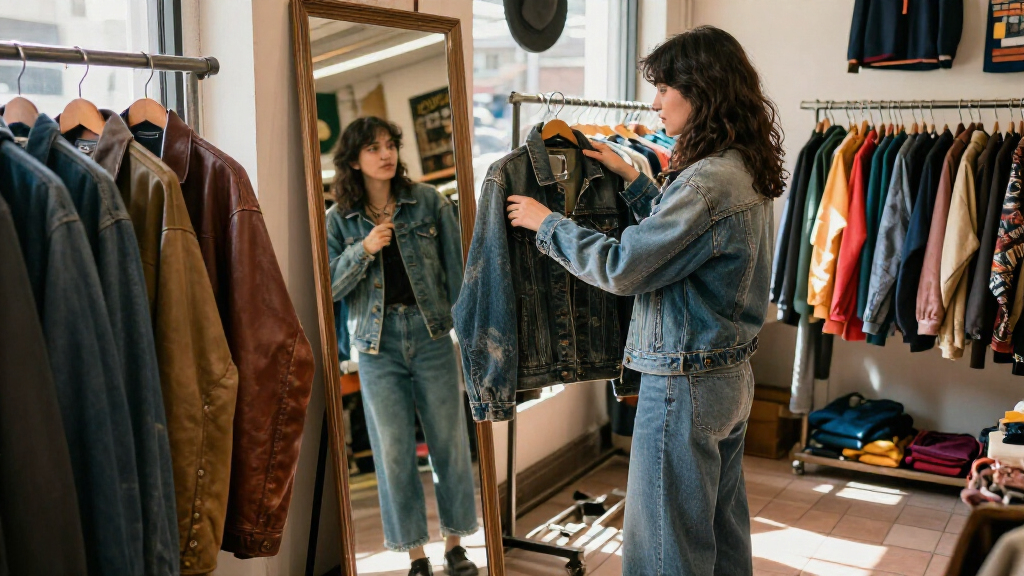
The collections matter because vintage and secondhand clothing are no longer framed only as a niche interest among fashion insiders. The report cites ThredUp’s 2026 Resale Report, which says 62 percent of Gen Z shopped secondhand in the previous year. That figure describes the surveyed group and period in the report; it does not, by itself, establish how much secondhand shopping has grown or how many shoppers buy vintage specifically.
For designers, the shift creates both an opportunity and a competitive challenge. Customers can find older pieces from a label through resale platforms, including designs from past decades, as well as buy new collections. Brands must make current work feel relevant while contending with their own archives. The runway examples suggest one response: combine recognizable house signatures with new styling, material and proportions rather than treating the past as something to erase.
For shoppers, the runway message is less about buying a specific antique item than about wearing contrasting pieces together. A new jacket can sit alongside a family hand-me-down or a secondhand accessory. The report presents this as an aesthetic and retail development, not proof that all consumers or designers have moved away from minimalism.
Popular right now

Bose QuietComfort Wireless Noise Cancelling Headphones – Twilight Blue Limited Edition

Ninja Foodi 8-Quart DualZone 6-in-1 Air Fryer, Grey (DZ201)

Dyson Airwrap i.d. Multi-Styler with Bluetooth Connectivity
As an affiliate, we earn on qualifying purchases.
From Quiet Luxury to Mixed Eras
The Harper’s Bazaar report places the collections against a recent fashion landscape associated with polished minimalism and “quiet luxury.” In its interpretation, the new styling offers a way for labels to change direction without abandoning clothes and silhouettes their customers already recognize. At The Row, for example, lace and doilies appeared alongside sleek black trousers and trench coats rather than replacing the brand’s established look.
Fashion houses have long had to engage with the work of earlier designers and the history of their own labels. The report points to recent revivals such as Chloé’s Maxime wedge and the McQueen skull scarf, as well as renewed interest in secondhand Pucci and Etro from the early 2000s. The Spring 2027 collections make that conversation visible through styling that puts old and new in the same outfit.
How Broad Is the Shift?
The runway examples show a clear styling direction at several named houses, but they do not establish that vintage-inspired dressing has replaced other trends across the fashion industry. The material also does not provide comparable sales figures showing how much of the collections’ appeal comes from secondhand shopping, archive revivals or broader interest in individual styling.
The cited 62 percent Gen Z figure is attributed to ThredUp’s 2026 report, but the supplied material does not include its survey methods or a prior-year comparison. It is therefore not possible here to calculate a growth rate or determine how often respondents bought vintage specifically. It also remains unclear whether the runway styling will translate into lasting changes in what shoppers buy.
From Runway Styling to Retail
The next indication will be how these ideas appear in retail collections and shoppers’ wardrobes after the Spring 2027 shows. Labels may continue to use archive pieces, reissues and vintage-inspired styling, while resale platforms and secondhand markets remain part of the shopping environment described in the report.
Whether the look becomes a sustained commercial direction is not yet established. For now, the confirmed development is that several designers have made cross-era styling a visible part of their Spring 2027 collections, using contrasts between old references and new pieces to distinguish their work from more uniform, polished looks.
Key Questions
What is making Spring 2027 fashion look vintage?
Designers at several major houses styled new clothes with older-looking pieces, archival references and mixed-era accessories. The effect comes from combining contrasting items, not necessarily from using garments that are genuinely old.
Which designers featured vintage-inspired styling?
The report identifies Matthieu Blazy at Chanel, Dolce & Gabbana, Demna at Gucci, The Row and Ralph Lauren as examples in their Spring 2027 collections.
Does this mean fashion is moving away from minimalism?
The report interprets the styling as a contrast with polished minimalism, but the runway examples do not prove that minimalism has ended or that the whole industry has shifted in one direction.
How does secondhand shopping relate to the trend?
The report cites ThredUp’s 2026 Resale Report, which says 62 percent of Gen Z shopped secondhand in the previous year. It connects that shopping habit with greater familiarity with clothes from different eras, while the supplied figures do not show a year-over-year increase.
Source: harpersbazaar.com