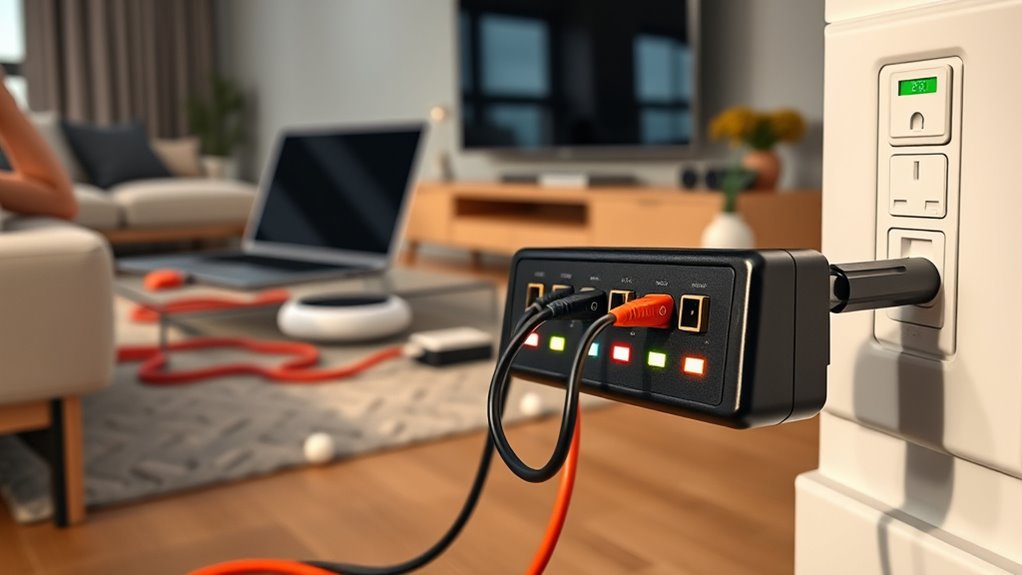

For a dependable home surge protection system, my best overall pick is the Square D HEPD80, which pairs a clear 80 kA rating with a familiar whole-home format. The SPD2ULTRA and Furniqro FHSPD108S stand out for their 108,000A claims and indoor/outdoor flexibility, while the Eaton Type BR is a more panel-specific choice. The main tradeoffs are surge capacity, compatibility with your electrical panel, installation requirements, and whether you also need targeted protection for equipment such as an HVAC system. A higher number alone does not prove a device is the right fit, and whole-home protection does not replace point-of-use protection for sensitive electronics. Read on for the full comparison and guidance on matching a device to your home.

Get your wardrobe favorites delivered free with Prime
- Fast, free delivery on millions of items
- Prime Video, Amazon Music and more included
- Member-only deals all year
Key Takeaways
- Square D HEPD80 is my best overall pick because its stated 80 kA capacity gives buyers a substantial whole-home option without making the decision depend only on the largest advertised number.
- SPD2ULTRA and Furniqro FHSPD108S share the highest listed surge-current figure at 108,000A, with indoor/outdoor installation flexibility called out for both; check enclosure details and panel fit before choosing between them.
- Eaton Type BR is the lineup’s panel-specific option, so it makes more sense for a compatible BR setup than for a buyer seeking a broadly interchangeable device.
- Intermatic AG3000 fills a different role: it targets HVAC protection rather than serving as a direct substitute for a panel-mounted whole-home surge protector.
- Type 1 and enclosure labels affect installation fit: the Gloyatin HSPD-25 and ABB ThomesurgEP identify Type 1 designs, while ABB also specifies a NEMA 3R enclosure; verify local code, panel compatibility, and installation instructions.


| home surge protection system | Voltage | Mounting | Installation | Poles |
|---|---|---|---|---|
| Furniqro FHSPD36S Whole-Home S | — | Wall mount | Indoor or outdoor | 1 |
| Gloyatin HSPD-25 Whole-Home Su | 120/240 VAC | Wall mount | Indoor or outdoor | 2 |
| Eaton Type BR Two-Pole Circuit | 240 V | Panel mount | — | 2 |
| Square D HEPD80 Whole-Home Sur | 120/240 V | — | Residential load center | — |
| SPD2ULTRA Whole Home Surge Pro | 120/240 V AC, 60 Hz | — | Breaker box/load center; indoor or outdoor | — |
| Intermatic AG3000 HVAC Surge P | 120/240 VAC | — | — | — |
| ABB ThomesurgEP Whole Home Sur | 240 V; compatible with 120/240 V and 120/208 V AC | External wall mount | — | 2 |
| Furniqro FHSPD108S Whole House | 120/240 V system; 240 V listed | — | — | — |
More Details on Our Top Picks
Furniqro FHSPD36S Whole-Home Surge Protector, 36,000 A, 120/240 V
The Furniqro FHSPD36S suits buyers seeking a compact protector for a 120/240 V home without a listed surge rating as high as the SPD2ULTRA’s 108,000 A. Its 36,000 A capacity gives a stated protection figure, while compatibility with load centers and breakers from any brand offers more flexibility than the Eaton BRNSURGE, which is limited to Type BR panels. Indoor or outdoor installation also gives it placement options, and the LED indicator provides a quick status check. The tradeoff is that Furniqro lists no warranty, and grounding problems or incorrect installation can undermine its use. I’d choose it for a straightforward, space-conscious installation, but not when warranty coverage or a higher stated capacity is the priority.
Pros:- Designed to protect devices throughout the home
- Compatible with load centers and circuit breakers from any brand
- Compact wall-mount design includes LED status indicators
- Suitable for indoor or outdoor installation
Cons:- Warranty is listed as none
- Grounding problems or misuse can cause installation issues
Best for: Homeowners with a 120/240 V system who want a compact, broadly compatible whole-home protector with an LED status indicator.
Not ideal for: Buyers who want a stated warranty or a higher surge-capacity figure, or who cannot confirm proper grounding and installation.
- Model:FHSPD36S
- Surge capacity:36,000 A
- System compatibility:120/240 V, 60 Hz
- Mounting:Wall mount
- Installation:Indoor or outdoor
- Poles:1
- Warranty:None listed
Our verdict“Choose the FHSPD36S for a compact, broadly compatible installation, but favor the SPD2ULTRA if a stated warranty and higher surge capacity matter more.”
Gloyatin HSPD-25 Whole-Home Surge Protective Device, Type 1, 120/240 VAC
The Gloyatin HSPD-25 is the lineup’s Type 1 option, making its classification the main point of difference from the panel-mounted Square D HEPD80. It is specified for 120/240 VAC, works with breakers from any brand, and has a casing rated for indoor or outdoor placement. That flexibility may suit buyers who need a Type 1 device and don’t want brand-specific breaker compatibility. The capacity listing, however, says 25/50/80 kA without identifying which figure applies to this model, so it is difficult to compare directly with the Square D’s stated 80 kA or Furniqro’s 36,000 A. Installation details are also sparse. I’d shortlist it only after confirming the applicable rating and installation requirements with the seller or a qualified electrician.
Pros:- Identified as a Type 1 surge protective device
- Compatible with circuit breakers from any brand
- Suitable for indoor or outdoor installation
- Compact design for whole-home protection
Cons:- The 25/50/80 kA listing does not clarify the capacity for this model
- Installation details are not provided
Best for: Homeowners specifically seeking a Type 1 whole-home surge protective device with broad breaker-brand compatibility and indoor/outdoor placement.
Not ideal for: Buyers who need a clearly specified surge-capacity rating or detailed installation guidance before selecting a panel protector.
- Model:HSPD-25
- Device type:Type 1 SPD
- Voltage:120/240 VAC
- Listed surge capacity:Up to 25/50/80 kA; model-specific value not clarified
- Poles:2
- Mounting:Wall mount
- Installation:Indoor or outdoor
Our verdict“Consider the HSPD-25 when Type 1 classification is your priority, but verify its exact capacity and installation requirements before choosing it over the better-specified alternatives.”
Eaton Type BR Two-Pole Circuit Breaker Surge Protective Device
The Eaton BRNSURGE makes the most sense for a home with a Type BR panel: its two-pole, 240-volt format is designed for that specific breaker family. That panel fit is its advantage over the brand-agnostic Furniqro FHSPD36S, but it is also the main limitation. Buyers with a compatible panel get a panel-mounted option from Eaton rather than having to choose a wall-mounted unit; buyers with another panel type should rule it out. The supplied details do not state a surge-capacity figure, status indicator, indoor/outdoor rating, or warranty, so it is harder to compare its protection level with the Square D HEPD80 or SPD2ULTRA. I’d treat this as a compatibility-led pick, not a capacity-led one, and confirm the exact panel fit before purchase.
Pros:- Designed specifically for Type BR circuit breaker panels
- Two-pole configuration
- 240-volt rating
- Lightweight panel-mount format
Cons:- Compatibility is limited to Type BR panels
- No surge-capacity figure is provided in the supplied product data
Best for: Homeowners with a confirmed Eaton Type BR panel who want a matching two-pole, panel-mounted surge protective device.
Not ideal for: Homeowners with panels outside the Type BR family, or buyers who need a published surge rating or stated warranty to compare options.
- Model:BRNSURGE
- Part number:BRSURGE
- Panel compatibility:Eaton Type BR
- Poles:2
- Voltage:240 V
- Mounting:Panel mount
- Weight:5.6 ounces
Our verdict“Choose the BRNSURGE only when your panel is Type BR and the exact fit is confirmed; otherwise, the broader compatibility of the Furniqro FHSPD36S is more practical.”
Square D HEPD80 Whole-Home Surge Protection Device, 120/240V, 80 kA
The Square D HEPD80 is a strong fit for buyers building a layered setup: it installs in a residential load center and is designed to work alongside plug-in surge strips, rather than replace them. Its stated 80 kA rating makes comparison more direct than the Gloyatin HSPD-25’s ambiguous 25/50/80 kA listing. An LED indicator can flag when replacement is needed, giving homeowners a visible status cue. The tradeoff is that this is an indoor load-center installation, so it is less flexible than the outdoor-rated Furniqro FHSPD36S or SPD2ULTRA. It also does not eliminate the need for plug-in protection at individual electronics. I’d favor it for a residential panel where a clearly stated capacity and status light matter more than outdoor mounting or an all-in-one approach.
Pros:- Stated maximum surge current of 80 kA
- LED indicator shows when replacement is needed
- Designed to supplement plug-in surge strips
- Made for residential 120/240 V load centers
Cons:- Requires installation in a residential load center
- Does not replace plug-in surge strips for added protection
- Recommended use is indoor
Best for: Homeowners who want a residential load-center protector with a stated 80 kA rating and plan to retain plug-in strips for individual electronics.
Not ideal for: Buyers needing outdoor installation flexibility or a single device that replaces plug-in protection near sensitive equipment.
- Voltage:120/240 V
- Maximum current:80 kA
- System:1-phase, 3-wire
- Installation:Residential load center
- Recommended use:Indoor
- Status indicator:LED
- Enclosure material:Polycarbonate and rubber
Our verdict“Pick the HEPD80 for a panel-based layer with a clear 80 kA rating and replacement indicator, provided you are keeping plug-in protection for sensitive devices.”
SPD2ULTRA Whole Home Surge Protector, 108,000A, 120/240V Indoor/Outdoor for Breaker Box/Load Center, System Spike and Surge Protection, 10-Year Warranty
The SPD2ULTRA leads this group on its stated surge figure, with 108,000 A compared with the Square D HEPD80’s 80 kA and Furniqro FHSPD36S’s 36,000 A. It also lists a 10-year warranty, an LED status indicator, and color-coded wiring, giving buyers more setup and ownership details than the Furniqro unit, which lists no warranty. The compact breaker-box format and indoor/outdoor description suit homeowners seeking a high-capacity device for a 120/240 V system. Its limitation is installation: it goes inside the main breaker panel, where working space and electrical hazards make DIY fitting a poor match for many homeowners. I’d put it ahead of lower-capacity choices when the stated rating and warranty are priorities, but only for buyers prepared to arrange qualified installation.
Pros:- Stated surge peak capacity of 108,000 A
- 10-year warranty
- Color-coded wiring and detailed instructions
- LED status indicator and indoor/outdoor use
Cons:- Installation requires work inside the main breaker panel
- The supplied data does not specify breaker-panel brand compatibility
Best for: Homeowners seeking a high stated surge capacity, indoor/outdoor placement, and a listed warranty for a 120/240 V breaker-box installation.
Not ideal for: DIY buyers uncomfortable working inside a main breaker panel, or homeowners who cannot verify compatibility with their panel and installation setup.
- Surge peak capacity:108,000 A
- Voltage:120/240 V AC, 60 Hz
- Maximum current:50 A
- Dimensions:2.2 × 3.62 × 5.11 inches
- Operating temperature:-40 °C to 50 °C
- Installation:Breaker box/load center; indoor or outdoor
- Warranty:10 years
Our verdict“Choose the SPD2ULTRA if its 108,000 A rating and 10-year warranty suit your priorities and you can arrange safe, compatible panel installation.”
Intermatic AG3000 HVAC Surge Protective Device, 120/240 VAC
The Intermatic AG3000 is a focused choice for protecting HVAC equipment, rather than a whole-home panel device. Its three protection modes cover line-to-ground, line-to-line, and line-to-neutral paths, while TPMOV technology is designed to avoid hazardous failure modes associated with standard MOVs. A Type 4X watertight, UV-resistant enclosure makes it suitable for indoor or outdoor placement, and the green LED gives a quick indication of protection status. Compared with the ABB ThomesurgEP, which is designed for external whole-home protection, this unit targets HVAC and other connected equipment. Its tradeoffs are the stated $7,500 equipment coverage limit and installation that may call for professional wiring knowledge; buyers seeking broad service-panel coverage should look at a whole-home model instead.
Pros:- Three protection modes cover multiple surge paths.
- TPMOV technology is designed to avoid hazardous failure modes associated with standard MOVs.
- Type 4X enclosure is watertight and UV-resistant for indoor or outdoor use.
- Green LED provides a visible protection-status check.
Cons:- Equipment coverage is limited to up to $7,500.
- Installation may require professional wiring knowledge.
Best for: Homeowners adding dedicated surge protection at an HVAC system, especially where the unit will be installed outdoors.
Not ideal for: Buyers seeking a single device for whole-home service-panel protection, or anyone who cannot arrange qualified electrical installation.
- Voltage:120/240 VAC
- Protection modes:L-G, L-L, L-N
- Surge technology:Thermally Protected Metal Oxide Varistor (TPMOV)
- Enclosure:Type 4X watertight and UV-resistant
- Status indicator:Green LED
- Certification:UL listed
- Equipment coverage:Up to $7,500
- Dimensions:4.3 x 2 x 4.5 inches
- Weight:11.2 ounces
Our verdict“Choose the AG3000 for dedicated HVAC surge protection and an outdoor-ready enclosure, not as a substitute for a whole-home panel SPD.”
ABB ThomesurgEP Whole Home Surge Protection Device Type 1 SPD NEMA 3R
The ABB ThomesurgEP suits buyers who want a Type 1 SPD mounted outside the load center rather than taking up breaker spaces. Its stated 36 kA per-phase capacity, 200 kA SCCR, and UL listing give the unit a defined electrical profile, while the LED offers a quick status check. It is designed for 120/240 V and 120/208 V systems and meets NEC 2023 Article 230.67 requirements, making it a stronger fit for a whole-home installation than the HVAC-focused Intermatic AG3000. The tradeoff is its external mounting: buyers need room for the enclosure and should plan on professional installation. Its 36 kA capacity is also below the Furniqro FHSPD108S’s stated 108 kA, so buyers prioritizing the highest listed surge-current figure may prefer that alternative.
Pros:- Type 1 design supports external whole-home installation without using breaker spaces.
- 36 kA per-phase capacity and 200 kA SCCR are specified.
- UL listed and described as meeting NEC 2023 Article 230.67 requirements.
- LED indicator provides visible status monitoring.
Cons:- External mounting requires additional space.
- Professional installation is recommended, making it a poor fit for novice DIYers.
- Its 36 kA capacity is lower than the Furniqro FHSPD108S’s stated 108 kA.
Best for: Homeowners and contractors seeking a UL-listed Type 1 whole-home SPD that mounts externally and fits compatible 120/240 V or 120/208 V systems.
Not ideal for: DIY novices, homes without space for external mounting, or buyers whose electrical system is outside the listed voltage configurations.
- SPD type:Type 1
- Surge capacity:36 kA per phase
- SCCR:200 kA
- Nominal discharge current:10 kA
- Voltage:240 V; compatible with 120/240 V and 120/208 V AC
- Frequency:50–60 Hz
- Mounting:External wall mount
- Poles:2
- Certifications:UL listed, ANSI certified
Our verdict“Pick the ABB ThomesurgEP when you want a listed Type 1 external whole-home SPD and have room for professional installation.”
Furniqro FHSPD108S Whole House Surge Protector – 108,000 A, 120/240 V Indoor/Outdoor
The Furniqro FHSPD108S stands out for its stated 108 kA capacity and compact enclosure for indoor or outdoor placement. Its LED indicators provide a visible status check, and the product description claims compatibility with any brand of load center or circuit breaker. That broad compatibility and higher listed capacity distinguish it from the ABB ThomesurgEP, rated at 36 kA per phase, while the Intermatic AG3000 is aimed at HVAC protection rather than whole-home coverage. A high capacity figure alone does not establish how a device will perform in every installation, so buyers should confirm suitability with an electrician. The supplied specs also list a single outlet or port and describe plug types, which may not clarify its panel connection method; professional installation is recommended.
Pros:- Stated 108 kA surge capacity exceeds the ABB ThomesurgEP’s listed 36 kA per-phase figure.
- Compact design can save installation space.
- Described as compatible with any brand of load center or circuit breaker.
- Indoor/outdoor enclosure and LED status indicators support flexible placement and monitoring.
Cons:- Installation should be performed by a qualified electrician.
- The listed single outlet or port and plug-type details do not clearly explain the panel connection method.
- Its high stated capacity may exceed what some residential buyers need.
Best for: Homeowners seeking a compact, indoor/outdoor whole-home SPD with a stated 108 kA capacity and willing to have compatibility confirmed by an electrician.
Not ideal for: Buyers who need a clearly documented panel-connection method or want a lower-capacity option for a typical residential installation.
- Surge capacity:108,000 A / 108 kA
- Voltage:120/240 V system; 240 V listed
- Installation location:Indoor or outdoor
- Load-center compatibility:Described as compatible with any brand of load center or circuit breaker
- Status indicator:LED indicators
- Outlets:1 listed
- Plug types:Type B (3-pin North American) and Type A listed
- Weight:0.46 kg
Our verdict“Consider the FHSPD108S if its stated capacity and installation details match your system after an electrician verifies compatibility.”

How We Picked
I compared these devices as parts of a home surge protection system, not as interchangeable boxes. The main criteria were the stated surge-current rating, voltage and service fit, device type, enclosure or indoor/outdoor suitability, and how clearly each product’s intended role is described. I also weighed practical selection needs: whether the device is tied to a particular breaker family, whether it is intended for the whole home or a specific appliance, and whether installation details are clear enough to check before purchase.
The ranking favors options with a clear whole-home role and useful published specifications, then separates products by fit and specialization. That puts the Square D HEPD80 first as a balanced, clearly rated whole-home choice; higher stated capacity and flexible placement make the SPD2ULTRA and Furniqro FHSPD108S compelling alternatives rather than automatic winners. Panel-specific, Type 1, and HVAC-focused devices rank for the buyers they serve, not because their narrower role makes them poor products. I do not treat amp ratings alone as a complete measure of protection, and buyers should confirm compatibility and installation requirements with a licensed electrician.
| home surge protection system | Mounting | Installation |
|---|---|---|
| Furniqro FHSPD36S Whole-Home S | Wall mount | Indoor or outdoor |
| Gloyatin HSPD-25 Whole-Home Su | Wall mount | Indoor or outdoor |
| Eaton Type BR Two-Pole Circuit | Panel mount | — |
| Square D HEPD80 Whole-Home Sur | — | Residential load center |
| SPD2ULTRA Whole Home Surge Pro | — | Breaker box/load center; indoor or outdoor |
| Intermatic AG3000 HVAC Surge P | — | — |
| ABB ThomesurgEP Whole Home Sur | External wall mount | — |
| Furniqro FHSPD108S Whole House | — | — |
Factors to Consider When Choosing Home Surge Protection System
Choosing a surge protector is as much a fit and installation decision as a capacity comparison. Before buying, check how the device connects to your electrical service, where it can be mounted, and what equipment you want protected. These broader checks can prevent a common mistake: choosing a device by its largest advertised number while overlooking whether it suits your panel or installation setting.
Match the Device to Your Panel and Service
Start with the electrical panel’s manufacturer, breaker family, voltage, and available space rather than the product’s surge rating. A breaker-connected device may require a compatible breaker or a particular panel configuration, which is why a panel-specific option such as the Eaton Type BR should not be treated as universal. Confirm whether your service is 120/240 V and check the device instructions for the permitted connection method. A mismatch can turn a promising purchase into a return or an unsafe installation. If the documentation leaves compatibility unclear, ask an electrician to identify the panel and confirm the approved device before ordering. This check matters more than a small difference in a published capacity figure.
Read Surge Ratings as One Part of the Picture
Published surge-current figures help compare products, but they do not tell the whole story about how well a device will suit a home. This lineup ranges from a stated 36,000 A for the Furniqro FHSPD36S to 108,000A for the SPD2ULTRA and FHSPD108S, with Square D listing 80 kA. Check the rating units and the manufacturer’s technical documentation rather than assuming every number is presented under identical test conditions. Also look for details on protection modes, status indicators, and what the warranty covers, since those affect ownership beyond the headline rating. Avoid paying extra based solely on the biggest number when installation fit and published specifications remain uncertain. A balanced comparison uses ratings alongside device type, enclosure, and intended application.
Understand Type 1, Type 2, and Installation Rules
Device type helps describe where a surge protective device is designed to connect, but it is not a substitute for checking the product manual and local electrical code. The Gloyatin HSPD-25 and ABB ThomesurgEP are identified as Type 1 devices, so buyers should confirm their permitted installation location and connection requirements. Do not assume that a Type 1 label makes a product suitable for every panel or that a particular installation can be done without professional help. Service equipment, grounding, conductor length, and local rules all affect a safe installation. A licensed electrician can confirm which device type is appropriate for your setup and whether any permits or code requirements apply. The practical choice is the model whose approved installation method matches your home, not simply the label that sounds most protective.
Choose an Enclosure That Fits the Mounting Location
Placement affects which device designs make sense and how well the installation holds up over time. Indoor panels often call for a device mounted within or beside the load center, while a garage, exterior service area, or other exposed location may require a suitable enclosure. The ABB ThomesurgEP specifies NEMA 3R, and the SPD2ULTRA and Furniqro FHSPD108S list indoor/outdoor use; still, confirm the exact installation limits in each manual. Do not treat an indoor/outdoor label as permission to mount a device anywhere exposed to weather. Look at available wall space, cable routing, exposure, and access for inspection. A proper enclosure and location can matter more than choosing a higher-rated device that cannot be installed appropriately.
Decide Whether Whole-Home Protection Is Enough
A panel-mounted surge protective device addresses surges entering through the electrical service, but sensitive electronics may still benefit from properly rated point-of-use protection. It is also worth separating whole-home protection from equipment-specific needs: the Intermatic AG3000 is aimed at HVAC protection, so it serves a different purpose from the general panel devices in this roundup. Buyers with a costly heating or cooling system may want to ask an electrician whether dedicated protection is appropriate alongside a whole-home unit. Do not assume that adding an HVAC device replaces panel protection, or that a whole-home device eliminates the need for a surge-protective power strip for electronics. Think about the paths surges can take into your equipment and choose layers that match those risks. This approach avoids expecting one device to cover every use case.
Weigh Maintenance, Indicators, and Warranty Terms
Surge protection is not a buy-once-and-forget-it decision: a device can reach the end of its useful protective life after absorbing surges, so check how it signals its status and what the manufacturer says about replacement. Indicator lights or alarms can make it easier to notice when protection needs attention, but only if they are visible and checked periodically. Compare warranty terms carefully, including what is covered, the claim process, and whether connected-equipment coverage has conditions. The SPD2ULTRA listing specifies a 10-year warranty, but a term alone does not explain the scope or exclusions. Keep installation and product records so you can identify the exact model and confirm service history later. A straightforward status check and clear documentation can be more useful over time than an extra feature that is hard to monitor.
Frequently Asked Questions
Can I choose a surge protector just by comparing its amp rating?
No. A rating is useful for comparing published capacity, but it does not confirm that a device fits your panel, service voltage, or installation location. The products here illustrate the difference: the FHSPD108S and SPD2ULTRA list 108,000A, while the Square D HEPD80 lists 80 kA, yet buyers still need to review device type, wiring instructions, enclosure, and compatibility. Check the manufacturer’s technical data for the exact ratings and protection details rather than relying on a headline number alone. If you cannot confirm the match from your panel label and product documentation, ask a licensed electrician before buying.
Does a whole-home surge protector protect every device in my house?
No single panel-mounted device should be treated as a guarantee against every surge or every route a surge can take. Whole-home protection is intended to reduce surges entering through the electrical service, while sensitive electronics may still benefit from suitable point-of-use protection. Equipment with distinct needs, such as an HVAC system, may call for a dedicated device like the Intermatic AG3000 in addition to a panel solution. Ask an electrician how the proposed device coordinates with grounding and any existing protection. The right plan depends on what you want protected and how those items connect to power or other services.
Should I install a Type 1 surge protector myself?
Do not decide based on the Type 1 label alone. Installation requirements depend on the device instructions, your service equipment, local electrical code, and the exact connection point. This roundup includes Type 1 models from Gloyatin and ABB, but their labels do not confirm that either is suitable for every home or safe for a do-it-yourself installation. Electrical panels can present serious shock and fire hazards, including when a breaker appears switched off. Have a licensed electrician confirm the permitted mounting location, wiring, and code requirements for your specific setup.
Is an indoor/outdoor-rated model necessary for a garage or exterior panel?
Not automatically; the right choice depends on the actual mounting location and the device’s enclosure and installation instructions. The SPD2ULTRA and Furniqro FHSPD108S list indoor/outdoor use, while the ABB ThomesurgEP specifies a NEMA 3R enclosure, giving buyers options when placement is not inside a standard indoor panel. Check exposure to rain, moisture, dust, and temperature as well as the enclosure requirements. An indoor/outdoor description does not mean every outdoor mounting arrangement is acceptable. Ask an electrician to confirm whether the enclosure and cable routing suit your site.
Can I add a surge protector if my electrical panel is full?
Possibly, but panel space and the manufacturer-approved connection method determine what is allowed. Some devices connect through a compatible breaker, while others may require a different approved arrangement; never force an incompatible breaker or modify the panel to make a device fit. The Eaton Type BR is a clear example of why breaker-family compatibility matters. A qualified electrician can inspect the panel, identify any capacity or wiring constraints, and recommend a listed solution for that setup. If there is no approved way to add the device, the electrician can discuss permitted alternatives rather than risking an improvised installation.
Conclusion
For most buyers seeking a clearly rated whole-home unit, my best overall recommendation is the Square D HEPD80. If you want a high stated surge-current figure and indoor/outdoor flexibility, compare the SPD2ULTRA with the Furniqro FHSPD108S; choose only after confirming their installation details and panel fit. My best value pick is the Furniqro FHSPD36S for buyers who prefer a simpler whole-home option and do not need the highest listed capacity, while the best premium-style capacity choice is the SPD2ULTRA based on its 108,000A specification and stated 10-year warranty. For beginners, I would start with the Square D or a device explicitly confirmed by an electrician for the existing panel rather than interpreting ratings alone. Choose the Eaton Type BR for a compatible BR panel, the Intermatic AG3000 for a targeted HVAC need, and the ABB ThomesurgEP or Gloyatin HSPD-25 when their Type 1 design and installation requirements suit the service setup. Whichever path fits, have a licensed electrician verify compatibility and installation before purchase.
Halloween Picks

3 ft. Halloween Groundbreaker Skeleton for Outdoor Decoration

27FT Giant Inflatable Pumpkin Lighted Outdoor Halloween Decor

10.5 ft Lighted Pumpkin and Ghost Halloween Inflatable Archway
As an affiliate, we earn on qualifying purchases.