For high-end under-sink water filters, my best overall pick is the Waterdrop G3P800, which pairs tankless reverse osmosis with high output for households wanting broad contaminant reduction and a streamlined setup. The Aquasana Claryum 3-Stage Max Flow is a strong alternative for buyers who want a multi-stage filter without reverse osmosis, while the CuZn UC-200 stands out for long filter life and a simpler installation style. The main tradeoffs are filtration breadth versus water waste, upfront system complexity versus easy maintenance, and high capacity versus the space available under your sink. I compare all 15 systems by their filtration approach, usability, maintenance, and fit for different homes. Read on for the full breakdown and help matching a system to your water and kitchen.

Get your wardrobe favorites delivered free with Prime
- Fast, free delivery on millions of items
- Prime Video, Amazon Music and more included
- Member-only deals all year
Key Takeaways
- Reverse osmosis dominates the high-output end: Waterdrop’s G3P800, X8-PRO, and G3P600, along with the Philips and Electrolux models, prioritize fast purified-water production, but require buyers to account for drain connections and reject water.
- High capacity does not automatically mean the broadest treatment: The CuZn UC-200 and Waterdrop UA-5Y emphasize extended filter life, while RO systems use a different filtration method and typically involve more components.
- Ultrafiltration is the simpler middle ground: Waterdrop’s TST-UF, 10UAW-UF, and TSU avoid RO’s wastewater stream, making them worth comparing when the local water report does not call for RO-level treatment.
- Premium features bring added setup and upkeep: Tankless displays, Wi-Fi, mineral stages, and dedicated faucets can improve convenience, but add installation details or components that may not matter to every household.
- The best fit depends on the water concern and cabinet layout: The Pentair Everpure H-1200, Aquasana Claryum, and iSpring RCC7-BN offer distinct cartridge or RO configurations, so buyers should match treatment claims to a water test rather than choose by feature count.
| Pentair Everpure H-1200 Dual-Cartridge Drinking Water System |  | Best for Certified PFAS Reduction | Model: EV928200 | System type: Two-stage under-sink drinking water system | Filter capacity: Up to 1,000 gallons | VIEW ON AMAZON | See Our Full Breakdown |
| ICEPURE Under-Sink Water Filter System, 22,000-Gallon Capacity |  | Best for High Flow and Long Filter Life | Model: WFS5300A | Purification method: Activated carbon | Filter capacity: 22,000 gallons | VIEW ON AMAZON | See Our Full Breakdown |
| CuZn UC-200 Under-Sink Water Filter, 5-Year Filter Life |  | Best for Low-Maintenance Mineral-Retaining Filtration | Model: UC-200 | Filtration stages: 3 | Filter life: 5 years | VIEW ON AMAZON | See Our Full Breakdown |
| Waterdrop G3P800 Tankless Reverse Osmosis Water Filter System |  | Best Premium Reverse-Osmosis Pick | Filtration: 10-stage reverse osmosis | Certifications: NSF/ANSI 42, 53, 58, and 372 | Capacity: 800 gallons per day | VIEW ON AMAZON | See Our Full Breakdown |
| Waterdrop UA-5Y 5-Year Under-Sink Water Filter System |  | Best for Simple, No-Power Installation | Filter life: Up to 5 years | Filtration method: 0.5 μm activated-carbon block | Installation: Under sink; connects to kitchen faucet | VIEW ON AMAZON | See Our Full Breakdown |
| Waterdrop TST-UF 3-Stage Under-Sink Ultra-Filtration Water Filter System | 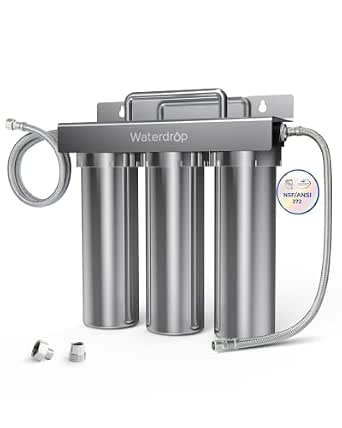 | Best High-Flow Ultrafiltration Pick | Filtration stages: 3 | Filtration accuracy: 0.01 μm | Flow rate: Up to 1.59 GPM | VIEW ON AMAZON | See Our Full Breakdown |
| Philips 400 GPD Tankless Reverse Osmosis Under-Sink Water Filter System |  | Best RO Pick for Moderate Demand | Filtration: 5-stage reverse osmosis | RO membrane: 0.0001 micron | Pure-to-drain ratio: 2.3:1 | VIEW ON AMAZON | See Our Full Breakdown |
| Waterdrop X12 Alkaline Mineral Reverse Osmosis System with Silver Faucet |  | Best Premium Smart-Faucet RO System | Filtration method: Reverse osmosis | Filtration stages: 11 | RO membrane: 0.0001 μm, 16 layers | VIEW ON AMAZON | See Our Full Breakdown |
| Waterdrop X8-PRO Dual-Flow Reverse Osmosis Water Filter, 800 GPD |  | Best Dual-Flow RO for a Busy Kitchen | Purification method: Reverse osmosis | Filtration stages: 9 | RO membrane pore size: 0.0001 μm | VIEW ON AMAZON | See Our Full Breakdown |
| iSpring RCC7-BN 5-Stage Under-Sink Reverse Osmosis Water Filter System |  | Best Non-Electric Certified RO System | Filtration stages: 5 | Purification method: Reverse osmosis, activated carbon, and carbon block | Certification: NSF/ANSI 58 | VIEW ON AMAZON | See Our Full Breakdown |
| Waterdrop 10UAW-UF Ultra Filtration Under Sink Water Filter System |  | Best for Long Filter Life | Filtration method: Ultrafiltration with activated carbon | Filtration accuracy: 0.01 μm | Maximum flow rate: 1.33 gpm | VIEW ON AMAZON | See Our Full Breakdown |
| Electrolux Wi-Fi 800 GPD Tankless Reverse Osmosis Water Filter with Alkaline Minerals |  | Best for Connected RO Monitoring | Model: EWP800A0W | Purification method: 10-stage reverse osmosis with alkaline mineral filtration | Membrane pore size: 0.0001 μm | VIEW ON AMAZON | See Our Full Breakdown |
| Waterdrop G3P600 Tankless Reverse Osmosis Water Filter System, 600 GPD |  | Best for RO Status at the Faucet | Filtration: 8-stage reverse osmosis | Capacity: 600 gallons per day | Maximum flow rate: 0.42 gpm | VIEW ON AMAZON | See Our Full Breakdown |
| Aquasana Under Sink Water Filter – Claryum 3-Stage Max Flow (AQ-6300M-BN) |  | Best for Fast, Mineral-Retaining Filtration | Purification method: Carbon block and ultrafiltration | Certification: WQA certified to NSF/ANSI 42, 53, and 401 | Listed contaminant reduction: Up to 99.99% of 78 contaminants | VIEW ON AMAZON | See Our Full Breakdown |
| Waterdrop TSU 3-Stage Ultra-Filtration Under-Sink Water Filter System | 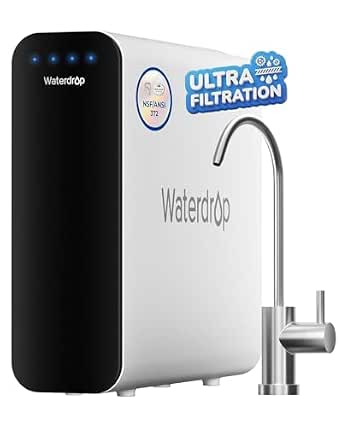 | Best Complete Ultrafiltration Kit | Filtration method: Ultrafiltration, activated carbon, and carbon block | Stages: 3 | Membrane size: 0.01 micron | VIEW ON AMAZON | See Our Full Breakdown |
| high end under sink water filter | Dimensions | Maximum flow rate |
|---|---|---|
| Pentair Everpure H-1200 Dual-C | — | — |
| ICEPURE Under-Sink Water Filte | 6.81 × 5.39 × 15.55 inches | 2.5 gpm at 60 PSI |
| CuZn UC-200 Under-Sink Water F | 5.5 × 14 × 5.5 in (D × W × H) | — |
| Waterdrop G3P800 Tankless Reve | 18.12 × 5.67 × 17.72 in | — |
| Waterdrop UA-5Y 5-Year Under-S | 3.9 × 3.6 × 16.7 in | 1.33 gpm |
| Waterdrop TST-UF 3-Stage Under | — | — |
| Philips 400 GPD Tankless Rever | 12.32 × 4.33 × 15.83 inches | — |
| Waterdrop X12 Alkaline Mineral | — | 0.4 GPM |
| Waterdrop X8-PRO Dual-Flow Rev | 18.2 × 6.25 × 16.72 inches | — |
| iSpring RCC7-BN 5-Stage Under- | 23.62 × 15.75 × 11.81 inches | 3.4 liters per minute |
| Waterdrop 10UAW-UF Ultra Filtr | 3.9 × 3.6 × 12.3 inches | 1.33 gpm |
| Electrolux Wi-Fi 800 GPD Tankl | 17.7 × 5.5 × 15.4 inches | — |
| Waterdrop G3P600 Tankless Reve | 18.12 × 5.67 × 17.72 inches | 0.42 gpm |
| Aquasana Under Sink Water Filt | — | 0.72 gpm |
| Waterdrop TSU 3-Stage Ultra-Fi | 14.81 × 4.68 × 13.97 inches | 1.05 gpm |
More Details on Our Top Picks
Pentair Everpure H-1200 Dual-Cartridge Drinking Water System
The Pentair Everpure H-1200 is the stronger fit when documented contaminant reduction matters more than installation simplicity. Its two Quick-Change cartridges are certified to NSF/ANSI 53 for cyst reduction, and the system has IAPMO R&T certification against NSF/ANSI 53 for Total PFAS reduction of up to 99.6%. That gives it a more specific filtration case than the ICEPURE WFS5300A, which focuses on chlorine taste and odor and has a much higher stated capacity. Pentair also retains naturally occurring minerals, but it does not reduce TDS like the Waterdrop G3P800 reverse-osmosis system. The tradeoff is a dedicated faucet and a defined 15-by-22-inch under-sink footprint; both cartridges are due for replacement about once a year, despite the 1,000-gallon capacity.
Pros:- IAPMO R&T certified against NSF/ANSI 53 for Total PFAS reduction
- NSF/ANSI 53 certified for cyst reduction by mechanical means
- Includes two Quick-Change cartridges, dedicated faucet, and mounting hardware
- Retains naturally occurring minerals while addressing chlorine taste and odor, lead, and microplastics
Cons:- Requires a dedicated faucet and substantial under-sink clearance
- Cartridges need replacement about once a year
- Does not offer the TDS reduction provided by the Waterdrop G3P800
Best for: Households seeking a separately certified PFAS-reduction claim and a dedicated drinking-water faucet, with room under the sink for the system.
Not ideal for: Buyers who want to keep their existing faucet, have limited cabinet clearance, or need TDS reduction through reverse osmosis.
- Model:EV928200
- System type:Two-stage under-sink drinking water system
- Filter capacity:Up to 1,000 gallons
- Flow rate:0.5 gpm
- Total PFAS reduction:Up to 99.6%
- Under-sink space:15 in wide × 22 in high × 5 in deep
- Recommended cartridge replacement:About once a year
- Warranty:12 months
Our verdict“Choose the H-1200 if certified PFAS reduction and a dedicated faucet matter more to you than compact installation or TDS removal.”
ICEPURE Under-Sink Water Filter System, 22,000-Gallon Capacity
If your priority is plentiful filtered water with fewer cartridge changes, the ICEPURE WFS5300A stands apart from the more treatment-focused Pentair H-1200 and CuZn UC-200. Its stated 22,000-gallon capacity and flow rate of up to 2.5 gpm suit busy kitchens where a slow dedicated drinking-water tap would be frustrating. The tradeoff is a narrower filtration brief: this activated-carbon system targets chlorine, taste, and odor, rather than offering the H-1200’s certified Total PFAS claim or the G3P800’s reverse-osmosis TDS reduction. It connects directly to a compatible cold-water line, so buyers should check the 1/2-inch or 3/8-inch female NPT connection before ordering. The advertised three-year filter life also depends on household use and water conditions.
Pros:- High stated capacity of 22,000 gallons
- Flow rate up to 2.5 gpm at 60 PSI
- Quick-change cartridge and plug-and-play installation design
- NSF/ANSI 42 and NSF/ANSI 372 certifications
Cons:- Filtration focus is chlorine, taste, and odor rather than reverse-osmosis-level treatment
- Works with cold water only and requires a compatible NPT connection
- Three-year stated filter life varies with water use and conditions
Best for: Busy households that want high flow, chlorine taste and odor reduction, and infrequent cartridge changes on a compatible cold-water connection.
Not ideal for: Buyers seeking broad contaminant reduction, TDS removal, hot-water filtration, or a system with a filter life independent of water conditions.
- Model:WFS5300A
- Purification method:Activated carbon
- Filter capacity:22,000 gallons
- Stated filter life:Up to 3 years
- Maximum flow rate:2.5 gpm at 60 PSI
- Certifications:NSF/ANSI 42 and NSF/ANSI 372
- Compatible connection:1/2-inch or 3/8-inch female NPT
- Water line:Cold water only
- Dimensions:6.81 × 5.39 × 15.55 inches
Our verdict“Pick ICEPURE for high flow and long stated capacity when chlorine taste and odor are your main concerns and your plumbing connection matches.”
CuZn UC-200 Under-Sink Water Filter, 5-Year Filter Life
The CuZn UC-200 makes the most sense for buyers who want a long replacement interval without moving to reverse osmosis. Its three-stage media combines micro-sediment membranes, KDF-55, and coconut-shell carbon, and the listed targets include lead, chlorine, and PFAS. Unlike the Waterdrop G3P800, it preserves beneficial minerals and does not need an electrical connection, but it also does not reduce TDS. The five-year filter life is a notable convenience relative to the Pentair H-1200’s approximate annual cartridge schedule; in exchange, the UC-200 connects inline to a kitchen or bathroom faucet rather than supplying a separate dedicated faucet. Installation requires no drilling, but buyers still need to confirm the included connection parts suit their plumbing.
Pros:- Five-year stated filter life reduces cartridge replacement frequency
- Three filtration stages use micro-sediment membranes, KDF-55, and coconut-shell carbon
- Listed reduction targets include PFAS, PFOA/PFOS, lead, and chlorine
- Connects inline without drilling and retains beneficial minerals
Cons:- Does not reduce total dissolved solids
- Requires an inline connection to a kitchen or bathroom faucet
- Its NSF/ANSI 42 certification is narrower than the Waterdrop G3P800’s listed standards
Best for: Homeowners who want mineral-retaining filtration for listed impurities, a long stated filter life, and an inline installation without drilling.
Not ideal for: Buyers who need TDS reduction, a dedicated faucet, or a system with certifications beyond those listed for this model.
- Model:UC-200
- Filtration stages:3
- Filter life:5 years
- Filter media:Micro-sediment membranes, KDF-55, and coconut-shell carbon
- Listed reduction targets:PFAS, PFOA/PFOS, lead, and chlorine
- Installation:Inline faucet connection; no drilling required
- Certification:NSF/ANSI 42; components/materials also listed as NSF/ANSI 372
- TDS reduction:No
- Dimensions:5.5 × 14 × 5.5 in (D × W × H)
Our verdict“Choose the UC-200 if you value a five-year stated filter life and mineral retention more than TDS reduction or a dedicated faucet.”
Waterdrop G3P800 Tankless Reverse Osmosis Water Filter System
For buyers who want the broadest treatment approach in this group, the Waterdrop G3P800 is the clear step up from the mineral-retaining carbon filters. Its 10-stage reverse-osmosis system is listed to reduce TDS, chlorine, lead, fluoride, and PFAS, while its 800-gallon-per-day capacity and 3:1 pure-to-drain ratio make it better suited to frequent water use than a slower, lower-capacity setup such as the Pentair H-1200. The smart faucet shows TDS levels, giving users a useful readout rather than relying on taste alone. That extra capability comes with practical costs: the unit needs a corded electrical connection and installation involves drilling two holes. Unlike the ICEPURE system, it is not a simple direct-line carbon filter; check cabinet dimensions and power access before choosing it.
Pros:- 10-stage reverse-osmosis filtration targets TDS, chlorine, lead, fluoride, and PFAS
- 800-gallon-per-day capacity with a 3:1 pure-to-drain ratio
- Smart faucet displays TDS levels and has an LED
- Listed certifications include NSF/ANSI 42, 53, 58, and 372
Cons:- Requires a corded electrical connection under the sink
- Installation requires drilling two holes
- Reverse osmosis is a different fit from the mineral-retaining ICEPURE and CuZn systems
Best for: Households that want reverse-osmosis treatment, TDS reduction, high daily capacity, and a faucet with a TDS display.
Not ideal for: Buyers who want a no-power installation, mineral-retaining filtration without RO, or a system that avoids drilling holes.
- Filtration:10-stage reverse osmosis
- Certifications:NSF/ANSI 42, 53, 58, and 372
- Capacity:800 gallons per day
- Pure-to-drain ratio:3:1
- Power source:Corded electric
- Maximum supported TDS:500 ppm
- Temperature range:41°F–100°F
- Dimensions:18.12 × 5.67 × 17.72 in
- Faucet:Smart faucet with TDS display and LED
Our verdict“Choose the G3P800 if TDS reduction and high-capacity reverse osmosis justify the added power and drilling requirements.”
Waterdrop UA-5Y 5-Year Under-Sink Water Filter System
The Waterdrop UA-5Y is a practical choice for municipal-water households that want a straightforward carbon filter and fewer replacement reminders. Its 0.5 μm activated-carbon block targets chlorine, PFOA/PFOS, particles, turbidity, rust, and sand while retaining minerals; unlike the Waterdrop G3P800, it needs no electricity and does not require a reverse-osmosis setup. That simplicity comes with a narrower scope: it is not recommended for well water, and its NSF/ANSI 372 listing covers lead-free compliance rather than the G3P800’s broader listed certification set. The stated five-year filter life is attractive, but actual performance depends on water conditions and use. At 16.7 inches tall, it also needs a cabinet-clearance check, and its 1.33 gpm maximum flow is below ICEPURE’s stated 2.5 gpm.
Pros:- 0.5 μm activated-carbon block targets chlorine, PFOA/PFOS, particles, turbidity, rust, and sand
- Stated filter life of up to five years
- Mechanical operation requires no electricity
- Five-year prorated replacement warranty
Cons:- Designed for municipal tap water and not recommended for well water
- Does not provide the TDS reduction of the Waterdrop G3P800
- Its 16.7-inch height and 1.33 gpm maximum flow may not suit every cabinet or household
Best for: Municipal-water users who want mineral-retaining carbon filtration, no electrical connection, and a long stated filter life.
Not ideal for: Well-water households, buyers seeking TDS reduction, or anyone with limited under-sink height or a need for higher flow than 1.33 gpm.
- Filter life:Up to 5 years
- Filtration method:0.5 μm activated-carbon block
- Installation:Under sink; connects to kitchen faucet
- Water source:Municipal tap water
- Maximum flow rate:1.33 gpm
- Maximum supported TDS:700 ppm
- Dimensions:3.9 × 3.6 × 16.7 in
- Certification:NSF/ANSI 372 lead-free compliance
- Warranty:5-year prorated replacement warranty
Our verdict“Pick the UA-5Y for low-complexity, no-power carbon filtration on municipal water, but choose the G3P800 if TDS reduction is a priority.”
Waterdrop TST-UF 3-Stage Under-Sink Ultra-Filtration Water Filter System
The Waterdrop TST-UF suits buyers who want an under-sink system that reduces chlorine, odors, heavy metals, and other impurities without stripping out all minerals or adding a dedicated faucet. Its 0.01 μm ultrafiltration and stated flow of up to 1.59 GPM make it a practical choice for regular kitchen use, while the stainless-steel housing and drill-free placement options add flexibility. Unlike the iSpring RCC7-BN, it does not use reverse osmosis and does not reduce TDS; that distinction matters if lowering dissolved solids is a priority. The tradeoff is narrower water compatibility: it is specified for municipal cold water, not well or hot water. I would choose it for a simpler, fast-flowing filtration setup, not for RO-level TDS reduction.
Pros:- 0.01 μm ultrafiltration targets several listed impurities, including chlorine and odors
- Flow rate up to 1.59 GPM supports quick filling
- Lead-free 304 stainless-steel housing with drill-free placement options
- Filter set includes service intervals up to 24 months for the CT filter
Cons:- Does not reduce TDS, unlike the iSpring RCC7-BN reverse-osmosis system
- Not specified for well water or hot water
- No additional faucet is included
Best for: Households on municipal cold water that want fast under-sink filtration, retained minerals, and no separate faucet installation.
Not ideal for: Well-water users, anyone needing TDS reduction, or households that want a dedicated drinking-water faucet.
- Filtration stages:3
- Filtration accuracy:0.01 μm
- Flow rate:Up to 1.59 GPM
- Capacity:8,000 gallons
- Filter life:PP: 6–8 months; UF: 12 months; CT: 12–24 months
- Housing material:Lead-free 304 stainless steel
- Water compatibility:Municipal cold water; not suitable for well water or hot water
- TDS reduction:Does not reduce TDS
Our verdict“Choose the TST-UF if you want high-flow municipal-water filtration with minerals retained, but skip it if TDS reduction is your main goal.”
Philips 400 GPD Tankless Reverse Osmosis Under-Sink Water Filter System
The Philips AUT934 brings reverse-osmosis filtration to buyers who want TDS reduction without moving up to the very high output of the Waterdrop X12. Its 400 GPD tankless design supplies water on demand, and the 2.3:1 pure-to-drain ratio offers a clear balance between RO purification and wastewater use. Philips includes a faucet, filters, and tubing, so the core setup arrives together; the system still needs an under-sink outlet and may require drilling for that faucet. Compared with the non-electric iSpring RCC7-BN, this model is more compact in its tankless format but less suitable where power access is limited. Buyers should also check plumbing compatibility, since the included drain saddle and adapter may not fit every installation.
Pros:- Five-stage RO filtration with a 0.0001-micron membrane
- Tankless system provides filtered water on demand
- 2.3:1 pure-to-drain ratio
- Faucet, filters, tubing, and power plug are included
Cons:- Requires an under-sink electrical outlet
- Faucet installation may require drilling
- Included drain saddle and feed adapter may not match all plumbing
Best for: Homeowners who want tankless RO filtration and TDS reduction, have an outlet under the sink, and do not need the X12’s much higher stated output.
Not ideal for: Renters or kitchens without an available under-sink outlet or a suitable faucet-hole location.
- Filtration:5-stage reverse osmosis
- RO membrane:0.0001 micron
- Pure-to-drain ratio:2.3:1
- Power:Corded electric
- Maximum supported TDS:1,000 ppm
- Operating pressure:14.5–58 psi
- Dimensions:12.32 × 4.33 × 15.83 inches
- Filter life cycle:2 years
Our verdict“Pick the Philips AUT934 for moderate-demand tankless RO with a complete included faucet kit, provided your sink area has power and suits the installation.”
Waterdrop X12 Alkaline Mineral Reverse Osmosis System with Silver Faucet
The Waterdrop X12 is the feature-led choice for buyers who want high stated output, RO filtration, mineral addition, and controls at the faucet. Its 1,200 GPD rating and 11-stage process are more ambitious than the 400 GPD Philips AUT934, while the included smart faucet displays TDS and filter life and supports measured dispensing. The system also adds alkaline minerals after RO; buyers should know that this can slightly raise the displayed TDS rather than indicating a failure of filtration. A 3:1 pure-to-drain ratio is a useful wastewater tradeoff, but the X12 still needs an electrical connection and under-sink space. Its listed maximum flow of 0.4 GPM is the more relevant cue for dispensing speed than the headline daily capacity.
Pros:- 11-stage RO system with a 0.0001 μm membrane
- Smart faucet displays TDS and filter life and supports measured dispensing
- Adds alkaline minerals after RO filtration
- 3:1 pure-to-drain ratio and filters rated for up to 24 months
Cons:- Requires an under-sink electrical connection
- Alkaline mineral addition may slightly increase measured TDS
- Listed maximum flow is 0.4 GPM despite the high daily-output rating
Best for: Households seeking tankless RO with mineral addition, faucet-based TDS and filter-life information, and measured dispensing.
Not ideal for: Buyers who want a non-electric or compact installation, or who prefer RO water without post-filtration mineral addition.
- Filtration method:Reverse osmosis
- Filtration stages:11
- RO membrane:0.0001 μm, 16 layers
- Maximum output:1,200 GPD
- Maximum flow rate:0.4 GPM
- Pure-to-drain ratio:3:1
- Maximum supported TDS:1,000 ppm
- Filter life:Up to 24 months
- Power:Corded electric
Our verdict“Choose the X12 if you value mineral addition and smart-faucet controls more than a simpler RO setup like the Philips AUT934.”
Waterdrop X8-PRO Dual-Flow Reverse Osmosis Water Filter, 800 GPD
The Waterdrop X8-PRO stands apart by supplying two kinds of water: RO-purified drinking water through its smart faucet and filtered water through the connected kitchen faucet. That split makes more sense for a busy kitchen than the single-purpose dispensing setup of the Waterdrop X12, particularly when you want drinking water handled separately from water for everyday sink tasks. The faucet display reports TDS and filter life, and the tankless system keeps storage-tank bulk out of the cabinet. Its 2:1 pure-water ratio is less favorable than the X12’s 3:1 figure, and the stated maximum supported feed-water TDS is lower at 500 ppm. Installation also calls for countertop drilling; connecting a refrigerator, ice maker, or dishwasher can add setup work.
Pros:- Dual-flow arrangement separates RO drinking water from filtered kitchen-faucet water
- Smart faucet displays TDS levels and filter life
- Tankless design avoids a storage tank
- Nine-stage filtration includes a 0.0001 μm RO membrane
Cons:- Installation requires drilling for the included faucet
- 2:1 pure-water ratio is less favorable than the X12’s 3:1 ratio
- Refrigerator, ice-maker, or dishwasher connections may need extra setup
Best for: Frequent cooks who want separate RO drinking water and filtered water at the kitchen faucet, plus at-a-glance filter status.
Not ideal for: Renters, households with feed water above the stated 500 ppm TDS limit, or buyers seeking easy appliance connections.
- Purification method:Reverse osmosis
- Filtration stages:9
- RO membrane pore size:0.0001 μm
- Maximum flow:800 GPD as stated in the title
- Pure-water ratio:2:1
- Maximum supported water TDS:500 ppm
- Filter life:Up to 24 months
- Power:Corded electric
- Dimensions:18.2 × 6.25 × 16.72 inches
Our verdict“Choose the X8-PRO over the single-output X12 if a separate filtered-water line for everyday kitchen use is worth the added installation work.”
iSpring RCC7-BN 5-Stage Under-Sink Reverse Osmosis Water Filter System
The iSpring RCC7-BN is the traditional, non-electric alternative in this group: a five-stage RO system with NSF/ANSI 58 certification, a brushed-nickel faucet, and stated reduction of up to 99% of more than 1,000 contaminants. That certification and its no-power design give it a different appeal from the smart, tankless Waterdrop X8-PRO, which adds faucet displays and dual-flow delivery but depends on electricity. The RCC7-BN also reports 80–90% TDS reduction and includes a transparent first-stage housing for a visible check of sediment loading. Its tradeoffs are a larger, heavier installation and a 75 GPD production rating, far below the high-output tankless options. The faucet and system need under-sink space, and the one-year warranty requires registration.
Pros:- NSF/ANSI 58 certified
- No electrical power required
- Includes lead-free brushed-nickel faucet and transparent first-stage housing
- Stated reduction of up to 99% of more than 1,000 contaminants
Cons:- 75 GPD output is lower than the Philips AUT934 and Waterdrop X8-PRO ratings
- Larger and heavier than the tankless systems in this lineup
- One-year warranty requires registration
Best for: Buyers who prioritize NSF/ANSI 58-certified RO, broad stated contaminant reduction, and operation without an electrical outlet.
Not ideal for: Households wanting high daily output, a compact tankless unit, or digital TDS and filter-life readouts.
- Filtration stages:5
- Purification method:Reverse osmosis, activated carbon, and carbon block
- Certification:NSF/ANSI 58
- Contaminant reduction:Up to 99% of over 1,000 contaminants
- TDS reduction:80–90%
- Maximum flow rate:3.4 liters per minute
- Maximum supported water TDS:750 ppm
- Power:No power needed
- Dimensions:23.62 × 15.75 × 11.81 inches
Our verdict“Choose the RCC7-BN if certification and power-free RO matter more than tankless convenience or high daily output.”
Waterdrop 10UAW-UF Ultra Filtration Under Sink Water Filter System
The Waterdrop 10UAW-UF suits buyers who want under-sink filtration without the wastewater and power needs of reverse osmosis. Its 0.01 μm ultrafiltration membrane works with activated carbon to reduce chlorine, lead, taste, odor, and particles, while the stated filter life of up to 11,000 gallons or 12 months means fewer replacement intervals than the Aquasana Claryum’s six-month, 800-gallon cycle. Push-to-connect fittings and twist-and-lock replacement also make routine setup and maintenance more approachable. The tradeoff is that this system does not provide RO-style TDS reduction, and its separate faucet is not included. It also connects to cold water only, and the coconut-shell carbon may not suit people with a coconut allergy.
Pros:- 0.01 μm ultrafiltration membrane paired with activated carbon
- Filter rated for up to 11,000 gallons or 12 months
- Push-to-connect installation and twist-and-lock filter replacement
- Includes fittings for 3/8-inch and 1/2-inch cold-water lines
Cons:- Does not reduce total dissolved solids
- Dedicated faucet is not included
- Cold-water-only connection and coconut-shell carbon may limit suitability for some households
Best for: Households wanting a low-maintenance, no-power filter for chlorine, lead, taste, and odor reduction, with a long stated filter life.
Not ideal for: Buyers seeking TDS reduction, a supplied dedicated faucet, or a system suitable for hot-water lines; people with coconut allergies should check the carbon material.
- Filtration method:Ultrafiltration with activated carbon
- Filtration accuracy:0.01 μm
- Maximum flow rate:1.33 gpm
- Filter life:Up to 1 year or 11,000 gallons
- Water supply:Cold water only
- Maximum supported TDS:700 ppm
- Dimensions:3.9 × 3.6 × 12.3 inches
- Replacement filter:WD-RF10W-UF
Our verdict“Choose the 10UAW-UF if long filter life and straightforward ultrafiltration matter more to you than TDS reduction or an included faucet.”
Electrolux Wi-Fi 800 GPD Tankless Reverse Osmosis Water Filter with Alkaline Minerals
The Electrolux is the most monitoring-focused pick here: its Wi-Fi app tracks water quality, usage, and filter life, while the smart LED faucet is included. Its 10-stage reverse osmosis setup targets listed contaminants including PFOS, PFOA, TDS, and fluoride, then adds calcium, magnesium, and potassium. That makes it a more feature-rich choice than the Waterdrop G3P600, which offers a TDS-reading faucet but no listed app monitoring or mineral-addition stage. Electrolux also lists an 800-gallon-per-day capacity and up to a 3:1 pure-water-to-drain ratio. I would treat its stated 800 gpm maximum flow rate cautiously, since that figure appears inconsistent with the capacity specification. This tankless RO system also needs under-sink installation and regular filter maintenance.
Pros:- 10-stage RO filtration with a 0.0001 μm membrane
- App tracks water quality, usage, and filter life
- Alkaline stage adds calcium, magnesium, and potassium
- Includes a smart LED faucet and uses a tankless design
Cons:- Listed 800 gpm maximum flow rate appears inconsistent with the stated capacity
- Requires under-sink installation and periodic filter replacement
- RO filtration produces drain water, with a stated ratio of up to 3:1
Best for: Tech-minded households wanting tankless RO, app-based filter and water monitoring, and an alkaline mineral stage in one system.
Not ideal for: Buyers who want simple, non-electric filtration or who need an unambiguous flow-rate specification before choosing a system.
- Model:EWP800A0W
- Purification method:10-stage reverse osmosis with alkaline mineral filtration
- Membrane pore size:0.0001 μm
- Maximum production capacity:800 gallons per day
- Pure-water-to-drain ratio:Up to 3:1
- Maximum supported TDS:1000 ppm
- Dimensions:17.7 × 5.5 × 15.4 inches
- Included faucet:Smart LED faucet
Our verdict“Pick the Electrolux if connected monitoring and added minerals are priorities, but verify the flow-rate details before buying.”
Waterdrop G3P600 Tankless Reverse Osmosis Water Filter System, 600 GPD
The Waterdrop G3P600 is a strong fit for buyers who want reverse osmosis and a clear readout at the tap. Its smart faucet shows TDS and filter life, so basic system status is visible without relying on an app. The listed 600-gallon-per-day capacity and 2:1 pure-water-to-drain ratio place it below the Electrolux’s stated 800-gallon capacity and up-to-3:1 ratio, but the G3P600 supplies clearer practical details, including a 0.42 gpm flow rate and NSF/ANSI 42, 58, and 372 certifications. Tool-free filter changes are another everyday advantage. The tradeoffs are real: it needs under-sink electricity, takes up cabinet space, and its 31-pound listed weight makes it less appealing where access or installation support is limited.
Pros:- Smart faucet displays TDS and filter life
- 600 gallons per day stated capacity
- 2:1 pure-water-to-drain ratio
- Filters can be replaced without tools
Cons:- Requires an under-sink electrical connection
- System occupies cabinet space and weighs 31 pounds
- Listed flow rate is 0.42 gpm
Best for: Households seeking RO filtration with faucet-based TDS and filter-life readings, plus tool-free filter changes.
Not ideal for: Renters or homeowners without an under-sink electrical connection, and anyone with very limited cabinet space.
- Filtration:8-stage reverse osmosis
- Capacity:600 gallons per day
- Maximum flow rate:0.42 gpm
- Pure-to-drain ratio:2:1
- Certifications:NSF/ANSI 42, 58, and 372; FCC
- Power source:Corded electric
- Maximum supported TDS:1500 ppm
- Dimensions:18.12 × 5.67 × 17.72 inches
Our verdict“Choose the G3P600 if you want RO with at-a-glance faucet readings and can accommodate its power and cabinet requirements.”
Aquasana Under Sink Water Filter – Claryum 3-Stage Max Flow (AQ-6300M-BN)
The Aquasana Claryum 3-Stage Max Flow is the standout here for buyers who want fast filtration without switching to reverse osmosis. Its 0.72 gpm flow rate is well suited to filling pots and bottles, while the listed reduction of up to 99.99% of 78 contaminants includes lead, PFAS, chloramines, pharmaceuticals, and microplastics. Unlike the Waterdrop G3P600, the Claryum is described as retaining beneficial minerals and does not require the RO approach; it also includes an all-metal faucet for a complete installation kit. The meaningful compromise is that it does not reduce TDS, so it is not the pick for buyers who want dissolved-solids removal. Cabinet fit matters too: the system needs 15.85 inches of clearance, and its 800-gallon, six-month filter cycle is shorter than the 10UAW-UF’s stated lifespan.
Pros:- WQA certified to NSF/ANSI 42, 53, and 401
- Listed reduction of up to 99.99% of 78 contaminants
- 0.72 gpm flow rate and retains beneficial minerals
- DIY installation kit includes an all-metal faucet
Cons:- Does not reduce total dissolved solids
- Filter life is up to six months or 800 gallons
- Requires 15.85 inches of under-sink clearance and filter changes involve twisting off the housing
Best for: Households wanting a high-flow, mineral-retaining filter for listed contaminants such as lead and PFAS, with a supplied dedicated faucet.
Not ideal for: Buyers seeking TDS reduction, longer intervals between filter changes, or a system for a cabinet with less than 15.85 inches of clearance.
- Purification method:Carbon block and ultrafiltration
- Certification:WQA certified to NSF/ANSI 42, 53, and 401
- Listed contaminant reduction:Up to 99.99% of 78 contaminants
- Maximum flow rate:0.72 gpm
- Filter life:Up to 6 months or 800 gallons
- Operating pressure range:20–80 psi
- Required under-sink clearance:15.85 inches
- Included faucet:All-metal faucet
Our verdict“Choose the Claryum if you want fast, mineral-retaining filtration and broad listed contaminant reduction, not TDS removal.”
Waterdrop TSU 3-Stage Ultra-Filtration Under-Sink Water Filter System
The Waterdrop TSU stands out among the non-RO options for arriving with a separate brushed-nickel faucet and a filter-life reminder panel. Its three-stage setup uses a 0.01-micron ultrafiltration membrane, activated carbon, and carbon block to reduce listed contaminants while retaining minerals. Unlike the 10UAW-UF, it includes the faucet, but its stated capacity is lower at 2,200 gallons, and installation calls for countertop drilling. The TSU also avoids electricity and a drain line, making it a simpler fit than either the Waterdrop G3P600 or Electrolux RO system. That simplicity has a limit: it does not reduce TDS, and the product data says it is not suitable for well water. Its separate stages also have different replacement intervals, so maintenance is not a single uniform cycle.
Pros:- Three-stage filtration with a 0.01-micron ultrafiltration membrane
- Includes a brushed-nickel faucet and filter-life reminder panel
- Requires no power or drain line and produces no wastewater
- Supports standard 1/2-inch and 3/8-inch cold-water connections
Cons:- Does not reduce total dissolved solids
- Countertop drilling is required to install the separate faucet
- Stage replacement intervals vary, and the product data excludes well-water use
Best for: Homeowners who want a complete, non-electric ultrafiltration kit with a dedicated faucet, filter reminder, and no drain line.
Not ideal for: Renters unable to drill for a faucet, households seeking TDS reduction, or buyers needing filtration for well water.
- Filtration method:Ultrafiltration, activated carbon, and carbon block
- Stages:3
- Membrane size:0.01 micron
- Maximum flow rate:1.05 gpm
- Capacity:2,200 gallons
- Filter lifespan:Up to 24 months; CT filter 12 months; PP filter 6 months
- Dimensions:14.81 × 4.68 × 13.97 inches
- Water connections:1/2-inch and 3/8-inch
- Certification and materials:IAPMO NSF/ANSI 372 certified; lead-free and BPA-free
Our verdict“Pick the TSU if you want a ready-to-install, no-power ultrafiltration setup and can drill for its faucet.”

How We Picked
I compared these 15 under-sink systems by filtration approach, stated capacity and output, installation demands, filter replacement needs, and the practical space each design is likely to claim. I gave weight to whether a system’s features solve a real household need: RO for buyers seeking a more intensive treatment approach, ultrafiltration for those prioritizing a simpler water path, and long-life cartridges for people who want fewer routine replacements. I also separated convenience features—such as tankless designs, dedicated faucets, mineral stages, and Wi-Fi—from core filtration performance.
The ranking favors systems with a clear use case and a reasonable balance of treatment, everyday usability, and maintenance. Higher output and added features can help a busy household, but they do not automatically make a system the right choice for every water supply or cabinet. I ranked simpler, longer-life filters for buyers who value low upkeep, while placing feature-rich RO options higher for shoppers prepared for more involved installation and ongoing component care. Product claims should be checked against current manufacturer specifications and the household’s water test before purchase.
Factors to Consider When Choosing High End Under Sink Water Filters
Before choosing among high-end under-sink filters, start with the problem you need to solve, then check whether the system fits your plumbing, routines, and willingness to maintain it. The following factors can prevent an expensive mismatch.
Match the Filtration Method to Your Water
Do not choose a filter solely because its product page lists many contaminants. First check your municipal water report or arrange a test for a private well, then compare those results with the system’s certified claims and documentation. Reverse osmosis is a different treatment approach from carbon-based filtration and ultrafiltration, so its broader process may suit some concerns while being unnecessary for others. A system that does not address the contaminant you care about is a poor fit even if it has several stages. Pay attention to the exact model and certification scope, since claims can vary between product versions. When a specific contaminant is the reason for buying, confirm that the filter’s documentation names it.
Account for RO Drain Water and Mineral Preferences
Reverse osmosis systems send some incoming water to a drain as part of their operation, while ultrafiltration systems generally avoid that RO reject-water arrangement. The amount can depend on the model and operating conditions, so look up the manufacturer’s stated efficiency rather than assuming all RO units behave alike. RO also removes dissolved minerals, which some households prefer and others dislike in drinking water. Mineral-addition stages may change taste, but they should not be treated as a substitute for verified contaminant reduction. If water use or mineral content matters to you, compare these points before paying for high output or extra stages. A non-RO filter can be a more fitting choice when your test results do not call for RO.
Measure the Cabinet and Map the Plumbing
Measure the cabinet’s usable width, height, and depth, including space needed to reach shutoff valves and replace cartridges. Tankless RO units may save room compared with systems that use a storage tank, but they still need room for the unit, tubing, and sometimes a dedicated faucet. Check whether the installation needs a drain connection, a power outlet, or a new hole in the sink or countertop. A system that fits on paper can still make routine maintenance awkward if it blocks stored items or plumbing access. Renters should confirm whether the installation can be reversed without permanent changes. Resolve fit and connection questions before ordering, not after opening the package.
Compare Filter Life, Replacement Parts, and Total Upkeep
Capacity figures describe rated use under stated conditions; they do not guarantee the same service life in every home. Sediment levels, water quality, and how much water your household draws can change replacement timing. Check the cost and availability of every required cartridge, not just the first replacement filter, and note whether different stages have separate schedules. Long-life options such as the CuZn UC-200 or Waterdrop UA-5Y may reduce replacement frequency, but buyers still need to confirm that their filtration needs match the product’s claims. RO systems can have several elements to maintain, making their upkeep different from a single-cartridge design. A clear replacement schedule is more useful than an impressive capacity number on its own.
Choose Output for Your Household, Not the Biggest Number
High GPD ratings can matter when several people use filtered water throughout the day, but they do not tell the whole story about how a system feels in daily use. Consider whether you fill bottles, cook with filtered water, or draw from the faucet in quick bursts, and check the manufacturer’s output conditions. An undersized system may frustrate a busy household, while a high-output unit can add features and installation needs that a smaller household rarely uses. Storage-tank and tankless designs deliver water differently, so compare the actual setup rather than treating output figures as directly interchangeable. Look at the faucet and tubing arrangement too, since those affect the user experience. Choose the capacity that fits your habits, with some room for peak use.
Decide Which Premium Extras Earn Their Place
Premium systems may add Wi-Fi monitoring, filter-life indicators, mineral stages, or a more polished faucet, but each extra has a different payoff. A filter-life indicator can make routine care easier; connectivity is less useful if you do not want another device to manage. A dedicated faucet can keep filtered water separate from regular tap water, though it may require countertop work. Mineral stages may appeal to people who prefer a different taste after RO treatment, but they add another component to check and replace. Compare each feature with a specific household preference instead of treating a longer feature list as better filtration. The best upgrade is the one you will use and maintain.
Frequently Asked Questions
Should I choose reverse osmosis or ultrafiltration for my kitchen?
Start with a water report or test and identify the contaminants you want to reduce, then check each model’s documented claims. Reverse osmosis and ultrafiltration use different processes, and they are not interchangeable choices based only on the number of stages. RO can be a fit for households seeking treatment of dissolved substances, but it brings a drain connection and reject water. Ultrafiltration avoids that RO arrangement and may suit people who want a simpler setup when their water concerns match its claims. If the test results are unclear, ask a qualified water-treatment professional to help interpret them before selecting a system.
Do I need an RO system with an 800 GPD rating?
Not necessarily; a high output rating is most relevant when multiple people regularly draw filtered water or use it for cooking and refilling containers. Smaller households may not notice much benefit from choosing an 800 GPD model over a lower-output option. Compare manufacturer test conditions and the system’s full installation requirements rather than treating GPD as a guarantee of faucet flow in every home. Also check whether the unit needs power, a drain line, or a specific faucet arrangement. If your household has modest demand, a simpler system may be easier to live with.
Are five-year or 22,000-gallon filter-life claims enough to compare systems?
They are useful starting points, but they are not a complete measure of service life. Capacity and time claims rely on stated conditions, and actual replacement needs can depend on incoming water quality and household use. Check what the manufacturer says about replacement timing, required cartridges, and any maintenance beyond the main filter. Compare the full set of replacement parts rather than looking only at the longest advertised interval. A long-life filter is worthwhile only if its treatment claims fit your water and its upkeep remains practical.
Can I install a high-end under-sink filter without a plumber?
Some buyers can install a system themselves if they are comfortable with basic plumbing and the connections suit their sink. RO models may involve more steps, including a drain connection, and some systems need power or a separate faucet. Check the manual for the exact model and inspect your cabinet, shutoff valve, and available outlet before starting. If the installation calls for drilling or your plumbing is unfamiliar, a plumber can reduce the chance of leaks or cabinet damage. Renters should also confirm that the changes are allowed and reversible.
When is a mineral or alkaline stage worth choosing?
A mineral stage may be appealing if you prefer the taste of water after reverse osmosis treatment, but it is an added feature rather than a reason by itself to buy an RO system. Check what the manufacturer says the stage adds and whether it requires a separate replacement part. If taste is not a priority, a standard RO configuration may be simpler to maintain. Do not treat “alkaline” labeling as proof that a system addresses a particular contaminant or health concern. Match the choice to your water test, taste preferences, and willingness to maintain another stage.
Conclusion
For most households seeking a capable, high-output RO option, I would start with the Waterdrop G3P800 as best overall; buyers who want a non-RO alternative should compare the Aquasana Claryum 3-Stage Max Flow. For best value in long filter life, the CuZn UC-200 is a compelling option when its filtration claims suit the water supply. The Waterdrop G3P800 or Philips 400 GPD may suit buyers who want a tankless RO format, while the Waterdrop TST-UF offers a less complex route for shoppers whose needs align with ultrafiltration. For specific needs, consider the iSpring RCC7-BN if you prefer a conventional five-stage RO arrangement, or the Waterdrop X12 and Electrolux model if mineral addition and connected features matter to you. My final recommendation is to match the model’s documented treatment claims to a water test, then confirm cabinet fit, installation needs, and replacement schedules before choosing.
Halloween Picks

3 ft. Halloween Groundbreaker Skeleton for Outdoor Decoration

11.2-Foot Halloween Inflatable Pumpkin with LED Lights

MGparty 14.5FT Halloween Inflatable Walk-in Pumpkin House with LED Lights
As an affiliate, we earn on qualifying purchases.