Choosing the right high end 8k tvs requires balancing raw resolution with practical viewing distance and content availability. My top overall pick is the Samsung QN900F Neo QLED, which offers superior brightness and minimal bezel design for an immersive experience. For those prioritizing color accuracy and gaming features, the Sony BRAVIA XR Z9K stands out with its cognitive intelligence processing. The main tradeoff in this segment is cost versus perceptible benefit; many viewers struggle to distinguish 8K from 4K on screens under 75 inches. Read on for a detailed breakdown of how these models compare in upscaling quality, design, and long-term value.

Get your wardrobe favorites delivered free with Prime
- Fast, free delivery on millions of items
- Prime Video, Amazon Music and more included
- Member-only deals all year
Key Takeaways
- Upscaling is the primary benefit: Since native 8K content remains scarce, the best models win based on how well their processors convert 4K and HD sources.
- Screen size dictates value: 8K resolution offers diminishing returns on screens smaller than 65 inches, making 75-inch and larger models the preferred choice for most buyers.
- Design impacts immersion: The Samsung QN900 series features an almost invisible bezel, creating a ‘wall of glass’ effect that Sony‘s thicker frames do not match.
- Processing philosophy differs: Sony focuses on color accuracy and motion handling for cinematic realism, while Samsung prioritizes brightness and punch for HDR impact.
- Future-proofing requires HDMI 2.1: All selected models support 4K@120Hz or higher, but only newer generations offer the full bandwidth needed for uncompressed 8K gaming signals.
| Samsung 75-Inch Class Neo QLED 8K QN900B Smart TV (2022) |  | Best for Built-In Sound | Screen size: 74.5 inches (75-inch class) | Resolution: 8K | Display: QLED with Mini LED backlight | VIEW ON AMAZON | See Our Full Breakdown |
| Samsung 85-Inch QN800D Series 8K QLED Mini LED Smart TV (2024) |  | Best for a Big-Screen 8K Setup | Screen size: 85 inches | Resolution: 8K | Display: QLED with Mini LED backlighting | VIEW ON AMAZON | See Our Full Breakdown |
| Samsung 75-Inch Neo QLED QN990F 8K Smart TV (2025) |  | Best Premium Design | Screen size: 75 inches | Resolution: 8K | Display: QLED with Mini LED | VIEW ON AMAZON | See Our Full Breakdown |
| Sony 75-Inch BRAVIA XR Z9K 8K Mini LED Google TV |  | Best for PlayStation and Dolby Vision | Screen size: 75 inches | Resolution: 8K | Display: Mini LED | VIEW ON AMAZON | See Our Full Breakdown |
| Samsung 75-Inch QN990F Neo QLED 8K TV with Amber Protection Plan (2025) |  | Best Protection-Bundle Pick | Screen size: 75 inches | Resolution: 8K | Display: Neo QLED | VIEW ON AMAZON | See Our Full Breakdown |
| Samsung 65-Inch Neo QLED 8K QN900F Smart TV (2025) |  | Best for Bright Rooms | Display Technology: Neo QLED (Mini LED) | Resolution: 8K (7680 x 4320) | Screen Size: 65 inches | VIEW ON AMAZON | See Our Full Breakdown |
| Samsung 75-Inch QN900C Neo QLED 8K TV (2023) with 1-Year Extended Warranty | 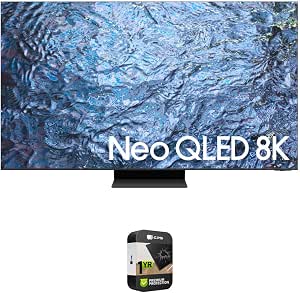 | Best Value for Large Screens | Display Technology: Neo QLED with Mini-LED | Resolution: 8K | Screen Size: 75 inches | VIEW ON AMAZON | See Our Full Breakdown |
| Samsung 65-Inch Neo QLED 8K QN900D Smart TV (2024) |  | Best Overall Performance | Display Technology: Neo QLED with Mini LED | Resolution: 8K | Screen Size: 65 inches | VIEW ON AMAZON | See Our Full Breakdown |
| high end 8k tv | Screen size | Resolution | Refresh rate | HDR format |
|---|---|---|---|---|
| Samsung 75-Inch Class Neo QLED | 74.5 inches (75-inch class) | 8K | 120 Hz | HDR10 |
| Samsung 85-Inch QN800D Series | 85 inches | 8K | 120 Hz | Neo Quantum HDR 8K+ |
| Samsung 75-Inch Neo QLED QN990 | 75 inches | 8K | 120 Hz | HDR10+ |
| Sony 75-Inch BRAVIA XR Z9K 8K | 75 inches | 8K | 120 Hz | Dolby Vision |
| Samsung 75-Inch QN990F Neo QLE | 75 inches | 8K | 120 Hz | — |
| Samsung 65-Inch Neo QLED 8K QN | 65 inches | 8K (7680 x 4320) | 120 Hz (up to 165 Hz for PC) | HDR10+ |
| Samsung 75-Inch QN900C Neo QLE | 75 inches | 8K | 120 Hz | Neo Quantum HDR 8K Pro, HDR10+ |
| Samsung 65-Inch Neo QLED 8K QN | 65 inches | 8K | — | — |
More Details on Our Top Picks
Samsung 75-Inch Class Neo QLED 8K QN900B Smart TV (2022)
The QN900B is a strong fit for buyers who want a large 8K screen without making a separate sound system part of the plan. Its Mini LED backlight and Quantum Matrix Technology Pro support detailed contrast, while AI upscaling helps lower-resolution programming make better use of the 8K panel. Object Tracking Sound Pro and Dolby Atmos give its built-in audio a more immersive focus than a basic TV speaker setup. Compared with the newer Samsung QN990F, this 2022 model lacks the newer processor, matte screen, and Wireless One Connect convenience. Its advantage is a straightforward package with four HDMI ports and three USB ports. Buyers should also note that the supplied HDR format is HDR10, not Dolby Vision, and the large, heavy set calls for a sturdy installation.
Pros:- Mini LED backlight with Quantum Matrix Technology Pro
- AI upscaling helps adapt lower-resolution sources to the 8K screen
- Built-in Dolby Atmos and Object Tracking Sound Pro
- Four HDMI ports, three USB ports, and multiple voice assistants
Cons:- 2022 model lacks the QN990F’s newer NQ8 AI Gen3 processor and matte screen
- HDR format listing specifies HDR10 rather than Dolby Vision
- At 92.2 pounds, installation requires careful handling and support
Best for: Viewers choosing a 75-inch 8K set who want capable built-in spatial audio and several wired connections without adding a separate soundbar.
Not ideal for: Buyers seeking a current-generation Samsung design, a glare-reducing matte finish, or Dolby Vision support should compare newer or Sony options instead.
- Screen size:74.5 inches (75-inch class)
- Resolution:8K
- Display:QLED with Mini LED backlight
- Refresh rate:120 Hz
- HDR format:HDR10
- Audio:Dolby Atmos and Object Tracking Sound Pro
- Connections:4 HDMI, 3 USB, Ethernet, Wi-Fi, Bluetooth 5.2
- Operating system:Samsung Tizen
- Weight:92.2 pounds
Our verdict“Choose the QN900B if built-in immersive audio and flexible wired connections matter more than the newer screen and connectivity features of the QN990F.”
Samsung 85-Inch QN800D Series 8K QLED Mini LED Smart TV (2024)
For viewers who want 8K at a truly expansive scale, the QN800D’s 85-inch screen is its clearest distinction in this group. Mini LED backlighting and AI upscaling are intended to preserve detail and contrast across a broad viewing area, while the listed 2,000-nit maximum brightness supports punchy presentation in brighter rooms. Its Motion Xcelerator 165Hz label needs context: the listing says that rate applies to compatible 4K PC content, while the panel’s stated refresh rate is 120Hz. That makes it a less direct choice for console players than the Sony BRAVIA XR Z9K, which lists HDMI 2.1 features including 4K/120, VRR, and ALLM. The Samsung counters with a much larger screen and Object Tracking Sound+. Its size and 127.2-pound weight make room planning and installation serious parts of the purchase.
Pros:- 85-inch 8K display creates a larger viewing area than the 75-inch models here
- Mini LED backlighting with Quantum Matrix Pro
- Listed maximum brightness of 2,000 nits
- Dolby Atmos and Object Tracking Sound+ with 5.1.2- or 7.1.2-channel audio
Cons:- 165Hz motion support is limited to compatible 4K PC content; stated refresh rate is 120Hz
- 127.2-pound weight and large footprint complicate placement and installation
- Some smart services and streaming apps require a Samsung Account
Best for: Households building a large, bright-room viewing setup and willing to plan around an 85-inch, 127.2-pound television.
Not ideal for: Buyers with limited wall or stand space, or console gamers who want clearly listed HDMI 2.1 features such as 4K/120, VRR, and ALLM.
- Screen size:85 inches
- Resolution:8K
- Display:QLED with Mini LED backlighting
- Refresh rate:120 Hz
- Motion enhancement:Motion Xcelerator 165Hz; compatible 4K PC content
- Maximum brightness:2,000 nits
- HDR format:Neo Quantum HDR 8K+
- Audio:Dolby Atmos, Object Tracking Sound+, 5.1.2 or 7.1.2 channels
- Weight:127.2 pounds
Our verdict“Pick the QN800D when screen size and listed brightness outweigh the easier placement and more explicitly specified console features of the 75-inch Sony Z9K.”
Samsung 75-Inch Neo QLED QN990F 8K Smart TV (2025)
The QN990F is the most design-focused Samsung in this selection: its matte, glare-reducing screen is aimed at rooms where reflections distract from viewing, and Wireless One Connect helps reduce the visible cable run. The NQ8 AI Gen3 processor and Quantum Matrix Mini LEDs support its 8K upscaling and backlight control, while 6.2.4-channel, 90-watt audio gives the built-in sound system more specification depth than the QN900B’s listed audio. It also lists PC gaming motion support up to 4K at 240Hz, but that depends on compatible games and a PC; its stated panel refresh rate remains 120Hz. Compared with the Sony BRAVIA XR Z9K, Samsung offers the matte finish and wireless hub, while Sony lists Dolby Vision and specific HDMI 2.1 gaming features. Wireless connections can also be obstructed by walls or metal enclosures.
Pros:- Matte screen is designed to reduce distracting reflections
- Wireless One Connect hub can reduce visible cable clutter
- NQ8 AI Gen3 processor and Quantum Matrix Mini LEDs
- 6.2.4-channel Dolby Atmos speaker system rated at 90 watts
Cons:- Wireless One Connect performance can be affected by walls, metal enclosures, and other obstructions
- 4K at 240Hz requires compatible PC hardware and games
- Stated panel refresh rate is 120Hz, despite the higher PC gaming motion support
Best for: Buyers furnishing a bright or reflection-prone 75-inch viewing room who value a matte screen, reduced cable clutter, and a premium built-in speaker configuration.
Not ideal for: Viewers who need the simplest wired connection path, specifically want Dolby Vision, or do not have compatible PC gaming equipment for the high-refresh feature.
- Screen size:75 inches
- Resolution:8K
- Display:QLED with Mini LED
- Refresh rate:120 Hz
- Processor:NQ8 AI Gen3
- Screen finish:Matte
- HDR format:HDR10+
- Audio:6.2.4 channels, Dolby Atmos, 90 watts
- Connectivity feature:Wireless One Connect
Our verdict“Choose the QN990F over the older QN900B if a matte screen and cleaner cable layout matter more than a conventional wired setup or Sony’s listed Dolby Vision support.”
Sony 75-Inch BRAVIA XR Z9K 8K Mini LED Google TV
The BRAVIA XR Z9K earns its place for buyers who want an 8K Mini LED television with a clearly specified set of gaming and HDR features. Sony lists HDMI 2.1, 4K/120, VRR, and ALLM, making its gaming support easier to evaluate than the QN800D’s 165Hz claim, which is limited to compatible 4K PC content. The Z9K also supports Dolby Vision, unlike the Samsung models here whose supplied HDR specifications list HDR10 or HDR10+. Google TV provides a different smart-TV platform from Samsung’s Tizen, and the included BRAVIA CAM adds a distinctive accessory. Sony’s 2.1-channel audio specification is less ambitious on paper than the QN990F’s 6.2.4-channel system, and the listing does not provide a numeric contrast ratio or software update end date. This is a feature-led alternative, not the largest-screen pick: the Samsung QN800D is 85 inches.
Pros:- Mini LED display with Sony XR Backlight Master Drive
- HDMI 2.1 features include 4K/120, VRR, and ALLM
- Dolby Vision and Dolby Atmos support
- Google TV, included BRAVIA CAM, and premium backlit remote
Cons:- Listed audio is 2.1-channel, less elaborate than the QN990F’s 6.2.4-channel system
- Product data provides no numeric contrast ratio
- Product data does not specify a software update support end date
Best for: PlayStation 5 owners and movie viewers who want listed 4K/120 gaming features, Google TV, and Dolby Vision in a 75-inch 8K Mini LED set.
Not ideal for: Buyers prioritizing a screen larger than 75 inches or a more elaborate built-in speaker configuration than the listed 2.1-channel system.
- Screen size:75 inches
- Resolution:8K
- Display:Mini LED
- Refresh rate:120 Hz
- HDR format:Dolby Vision
- Gaming connectivity:HDMI 2.1, 4K/120, VRR, ALLM
- Operating system:Google TV, Android
- Audio:2.1 channels, Dolby Atmos
- Included accessory:BRAVIA CAM and premium backlit remote
Our verdict“Choose the Z9K if Dolby Vision and clearly listed PlayStation-friendly gaming features matter more than the QN990F’s matte screen and more extensive built-in audio.”
Samsung 75-Inch QN990F Neo QLED 8K TV with Amber Protection Plan (2025)
This QN990F bundle suits buyers who have already settled on Samsung’s 2025 flagship design and want the Amber protection plan included with the television. The core set brings 8K AI upscaling, an NQ8 AI Gen3 processor, Glare Free viewing, and Wireless One Connect, so it shares the QN990F model’s key screen and cable-management advantages over the older QN900B. The listing specifies five HDMI ports and four USB ports, more than the QN900B’s four HDMI and three USB connections. Unlike the standalone QN990F listing, this bundle includes a screen-cleaning kit, though the kit is a small accessory rather than a reason to choose the TV. The product data does not explain the plan’s duration or coverage terms, so buyers should verify those details before treating it as extra protection. Its 75-inch size and 89.1-pound weight also call for suitable space and support.
Pros:- NQ8 AI Gen3 processor and 8K AI upscaling
- Glare Free screen and Wireless One Connect
- Five HDMI ports and four USB ports
- Amber protection plan and screen-cleaning kit included
Cons:- Product data does not specify the protection plan’s duration or coverage terms
- 75-inch size and 89.1-pound weight require planning for placement and installation
- The 200 ml cleaner is a limited accessory rather than a meaningful display feature
Best for: Buyers who want the 2025 Samsung QN990F feature set, need several HDMI and USB connections, and specifically prefer a bundle that includes a protection plan.
Not ideal for: Shoppers who do not need an added protection plan, want a smaller television, or need plan coverage details established before choosing a bundle.
- Screen size:75 inches
- Resolution:8K
- Display:Neo QLED
- Refresh rate:120 Hz
- Processor:NQ8 AI Gen3
- Connections:5 HDMI, 4 USB
- Wireless connectivity:Wi-Fi, Bluetooth
- Dimensions:11.2 x 65.2 x 40.1 inches (D x W x H)
- Included accessories:Amber protection plan and HDTV screen cleaner kit
Our verdict“Pick this bundle over the standalone QN990F if the included protection plan and extra listed ports fit your setup, after confirming the plan’s coverage terms.”
Samsung 65-Inch Neo QLED 8K QN900F Smart TV (2025)
This model stands out primarily for its matte screen finish, a feature that distinguishes it from the glossy panels common in this segment. While the Samsung 75-Inch QN990F offers superior brightness in darkened environments, the QN900F excels where ambient light is unavoidable, such as living rooms with large windows. The NQ8 AI Gen2 processor handles upscaling competently, though it lacks the raw power of the newer Gen3 found in the QN900D. Gamers will appreciate the 4K at 165Hz support, which exceeds the standard 120Hz limit on most competitors, provided you have high-end PC hardware. However, this advantage is niche; console gamers won’t see a benefit. The audio system is robust for a TV, but audiophiles might find the 4.2.2-channel setup less immersive than the 6.2.4 configurations in larger sets. It is a practical choice for visibility over pure peak luminance.
Pros:- Matte screen significantly reduces reflections from windows and lamps
- Supports up to 4K at 165Hz for compatible PC gaming
- AI upscaling improves lower-resolution content clarity
- Built-in Dolby Atmos provides solid spatial audio
Cons:- 165Hz mode requires specific PC hardware and game settings
- Full Art Store access requires a paid subscription
Best for: Gamers with high-end PCs who play in well-lit rooms and need reduced glare without sacrificing refresh rates.
Not ideal for: Home theater enthusiasts who prioritize deep blacks and contrast in dark rooms over anti-reflection capabilities.
- Display Technology:Neo QLED (Mini LED)
- Resolution:8K (7680 x 4320)
- Screen Size:65 inches
- Refresh Rate:120 Hz (up to 165 Hz for PC)
- Processor:NQ8 AI Gen2
- Audio System:4.2.2-channel, 70 W, Dolby Atmos
- HDR Format:HDR10+
- Screen Finish:Matte
Our verdict“Choose this if you battle glare daily and want high refresh rates for PC gaming.”
Samsung 75-Inch QN900C Neo QLED 8K TV (2023) with 1-Year Extended Warranty
This 75-inch giant offers the largest screen real estate in this specific batch, making it a compelling option for those who prioritize size over the latest processing tech. Compared to the Samsung 85-Inch QN800D, the QN900C uses a more premium Mini-LED backlighting system with Neo Quantum HDR 8K Pro, delivering better local dimming precision despite being a generation older. The 120Hz refresh rate is standard here, lacking the 165Hz PC support of the 2025 QN900F, but it remains sufficient for console gaming. The inclusion of a 1-year extended warranty adds tangible value, offsetting the fact that this is a 2023 model. However, the design feels bulkier than the ultra-slim QN900D, and the audio, while powerful with 6.2.4 channels, lacks the Object Tracking Sound Pro found in newer iterations. It serves those who want a massive 8K presence without paying for the absolute newest chip.
Pros:- Massive 75-inch screen size for immersive viewing
- Includes a 1-year extended warranty for peace of mind
- Mini-LED backlighting offers strong contrast and brightness
- 6.2.4-channel audio system delivers robust sound
Cons:- Older NQ8 AI Gen1 processor is less efficient than 2024/2025 models
- Lacks the ultra-slim Infinity Air design of newer models
Best for: Buyers who want the largest possible 8K screen in this lineup and value extended warranty coverage.
Not ideal for: Tech enthusiasts who require the latest AI processor generation or slim-bezel aesthetics.
- Display Technology:Neo QLED with Mini-LED
- Resolution:8K
- Screen Size:75 inches
- Refresh Rate:120 Hz
- HDR Format:Neo Quantum HDR 8K Pro, HDR10+
- Audio System:6.2.4-channel with Dolby Atmos
- Warranty:1-Year Extended Warranty
- Model Year:2023
Our verdict“A solid choice for size-focused buyers who want premium Mini-LED tech at a potentially lower entry point.”
Samsung 65-Inch Neo QLED 8K QN900D Smart TV (2024)
The QN900D represents the sweet spot between cutting-edge technology and refined design. It features the NQ8 AI Gen3 processor, which offers more nuanced upscaling than the Gen2 in the QN900F, particularly with lower-resolution streaming content. The Infinity Air design is arguably the most striking aesthetic in this roundup, appearing almost frameless when mounted. Audio performance is superior here, with Object Tracking Sound Pro that moves sound with on-screen action, creating a more immersive experience than the static audio of the older QN900C. While it shares the 65-inch size with the QN900F, the QN900D prioritizes contrast and color depth over the matte finish, meaning it performs better in controlled lighting but suffers from reflections in bright rooms. The 240 Hz motion enhancement is impressive but limited to 4K sources, a tradeoff that matters only for specific PC setups. It is the most balanced high-end option for serious home theater fans.
Pros:- NQ8 AI Gen3 processor provides superior upscaling and color accuracy
- Object Tracking Sound Pro creates dynamic, immersive audio
- Slim Infinity Air design integrates seamlessly into modern decor
- Strong contrast from Mini LED local dimming
Cons:- Glossy screen reflects light heavily in bright environments
- 240 Hz motion enhancement is restricted to 4K content
Best for: Home theater enthusiasts who want the best audio-visual balance and premium design in a 65-inch format.
Not ideal for: Users in very bright rooms who need a matte screen, or those who need native 165Hz support for PC gaming.
- Display Technology:Neo QLED with Mini LED
- Resolution:8K
- Screen Size:65 inches
- Processor:NQ8 AI Gen3
- Audio System:6.2.4-channel, 90 W, Dolby Atmos, OTS Pro
- Motion Enhancement:Motion Xcelerator 240 Hz
- Design:Infinity Air
- HDR Formats:HDR10, HDR10+, HLG
Our verdict“The definitive choice for 65-inch 8K performance if you can control room lighting.”

How We Picked
I evaluated these televisions based on processor efficiency, panel technology, and design integration. The core criterion was how effectively each model handles upscaling, as this determines the daily viewing experience for the vast majority of users. I also weighed peak brightness levels and local dimming zones, which directly affect HDR performance and contrast ratios. Models with outdated processing engines or limited connectivity standards were excluded, ensuring the list reflects current technological standards.
The ranking logic prioritizes visual immersion and longevity. Products with thinner bezels and better anti-glare coatings ranked higher because they reduce distractions during daytime viewing. I also considered smart TV ecosystem longevity, favoring models with guaranteed software updates over those with shorter support windows. This approach ensures recommendations remain relevant for years, not just at the point of purchase.
| high end 8k tv | Display | HDR format | Processor |
|---|---|---|---|
| Samsung 75-Inch Class Neo QLED | QLED with Mini LED backlight | HDR10 | — |
| Samsung 85-Inch QN800D Series | QLED with Mini LED backlighting | Neo Quantum HDR 8K+ | — |
| Samsung 75-Inch Neo QLED QN990 | QLED with Mini LED | HDR10+ | NQ8 AI Gen3 |
| Sony 75-Inch BRAVIA XR Z9K 8K | Mini LED | Dolby Vision | — |
| Samsung 75-Inch QN990F Neo QLE | Neo QLED | — | NQ8 AI Gen3 |
| Samsung 65-Inch Neo QLED 8K QN | — | HDR10+ | NQ8 AI Gen2 |
| Samsung 75-Inch QN900C Neo QLE | — | Neo Quantum HDR 8K Pro, HDR10+ | — |
| Samsung 65-Inch Neo QLED 8K QN | — | — | NQ8 AI Gen3 |
Factors to Consider When Choosing High End 8k Tvs
Selecting a premium television involves more than just picking the highest resolution number. These factors help you navigate the complex tradeoffs between price, size, and actual visual performance.
The Upscaling Reality
Native 8K content is virtually nonexistent for average consumers. Therefore, the AI upscaling engine is the most critical component in any high-end 8K set. A superior processor analyzes low-resolution pixels and reconstructs detail, reducing noise and jagged edges. When comparing models, look for those that demonstrate consistent enhancement across various content types, not just test patterns. Poor upscaling can make HD content look softer than on a high-quality 4K set, negating the resolution advantage.
Viewing Distance and Screen Size
The human eye cannot resolve 8K pixels on smaller screens unless you sit extremely close to the display. For most living rooms, 75 inches and above is where 8K becomes visually distinct from 4K. Buying an 8K set smaller than 65 inches often results in paying for resolution you cannot see. Measure your viewing distance before purchasing; if you sit less than 8 feet away, a larger 8K screen may be beneficial. Otherwise, the budget might be better spent on a larger 4K OLED or Mini LED panel.
Panel Technology and Brightness
High-end 8K TVs predominantly use Mini LED or Neo QLED technologies rather than OLED, due to the power requirements of driving 33 million pixels. These panels offer higher peak brightness, which is essential for HDR content and bright room environments. However, they may exhibit slight blooming around bright objects on dark backgrounds compared to OLED. Consider your room’s lighting conditions; if you watch in a bright space, the superior brightness of these LED-based 8K sets is a significant advantage over OLED alternatives.
Design and Installation Constraints
Premium 8K sets are heavy and often require specialized mounting solutions. The Samsung QN900 series, for instance, features a nearly borderless design that looks stunning but requires careful wall mounting to avoid stress points. Check the VESA mount pattern and weight specifications before ordering. Additionally, consider the stand footprint; some models have wide bases that may not fit on standard media consoles. A flush-mount installation often enhances the ‘wall of glass’ aesthetic intended by these high-end designs.
Gaming and Connectivity Standards
For gamers, HDMI 2.1 bandwidth is non-negotiable. Ensure the TV supports 4K at 120Hz with Variable Refresh Rate (VRR) and Auto Low Latency Mode (ALLM). While 8K gaming is currently limited, the infrastructure for 4K high-frame-rate gaming must be robust. Look for models with multiple HDMI 2.1 ports, as some TVs restrict high-bandwidth features to specific inputs only. This detail prevents frustration when connecting multiple consoles or PCs.
Frequently Asked Questions
Is it worth buying an 8K TV if I mostly stream Netflix and watch cable?
For most viewers, the answer is no, unless you buy a screen size of 75 inches or larger. Streaming services and cable broadcasts primarily deliver 1080p or 4K signals. The benefit of an 8K TV in this scenario comes entirely from its upscaling processor. High-end models like the Samsung QN900F and Sony Z9K use AI to sharpen and clean up these lower-resolution images, making them look cleaner than on a standard 4K TV. If you sit far away or have a smaller screen, a premium 4K OLED will likely offer better contrast and color for a lower price.
How does the Sony BRAVIA XR Z9K compare to Samsung’s QN900 series for movie watching?
Sony’s XR Cognitive Processor is widely regarded as superior for cinematic realism, focusing on accurate color reproduction and natural motion handling. It prioritizes faithfulness to the director’s intent, which is ideal for movie enthusiasts. In contrast, the Samsung QN900 series emphasizes peak brightness and vibrancy, making it better suited for bright rooms and HDR impact. If you watch movies in a dark room, Sony’s precision is preferable. If you watch in a sunlit living room, Samsung’s brightness advantage becomes more relevant.
Do I need a dedicated 8K HDMI cable for these TVs?
Yes, if you intend to transmit uncompressed 8K signals from a source device. Standard HDMI cables lack the bandwidth for 8K@60Hz content. You need an Ultra High Speed HDMI cable certified for 48Gbps. However, since most current content is 4K or lower, standard high-speed cables suffice for daily use. The TV’s internal upscaling handles the resolution increase. Only consider upgrading your cables if you plan to use future-proof gaming consoles or professional video equipment that outputs native 8K.
Why are 8K TVs so expensive compared to large 4K OLEDs?
The cost reflects the complexity of panel manufacturing and the processing power required to handle 33 million pixels. 8K panels yield fewer usable units during production, driving up component costs. Additionally, the processors needed for real-time upscaling and local dimming control are more advanced and expensive. While a large 4K OLED might offer better contrast, it cannot match the sheer pixel density and brightness potential of high-end 8K Mini LED sets. You are paying for technical headroom and future compatibility, not just current performance.
Which model is best for a bright living room with lots of windows?
The Samsung QN900F or QN800D series are the strongest contenders for bright environments. These models feature advanced anti-glare coatings and extremely high peak brightness levels that punch through ambient light. The Mini LED backlighting provides sufficient local dimming to maintain contrast even when the room is illuminated. Sony’s Z9K is also bright, but Samsung’s Neo QLED technology tends to offer higher luminance ceilings, making it a safer bet for rooms where controlling light is difficult.
Conclusion
Choosing among these high end 8k tvs depends on your specific viewing environment and priorities. For the best overall performance and design integration, the Samsung QN900F is the standout choice, offering unmatched brightness and a bezel-less aesthetic. If you prioritize cinematic accuracy and dark-room viewing, the Sony BRAVIA XR Z9K is the superior pick for movie buffs. For those seeking a compact 8K option without sacrificing premium features, the Samsung QN900D 65-inch model provides excellent upscaling in a smaller footprint. Buyers looking for value within the 8K segment should consider the QN800D series, which retains core upscaling benefits at a lower price point than the flagship QN900 line. Ultimately, ensure your screen size matches your viewing distance to make the 8K investment worthwhile.
Halloween Picks
halloween
As an affiliate, we earn on qualifying purchases.