
Finding the right family board game involves balancing fun, complexity, and suitability for all ages. The Game of Life stands out as the best overall for its engaging storytelling and replay value, making it perfect for a wide age range. For quick, casual fun, Sorry! offers simplicity and quick setup, while Monopoly remains a classic choice for strategic players who enjoy longer sessions. Each game has its own strengths and tradeoffs—some excel in quick play, others in depth or thematic appeal. Continue reading for a detailed breakdown of the best family board games in 2026, tailored to different needs and preferences.

Get your wardrobe favorites delivered free with Prime
- Fast, free delivery on millions of items
- Prime Video, Amazon Music and more included
- Member-only deals all year
Key Takeaways
- The top picks balance ease of learning with engaging gameplay, ensuring family fun without lengthy rule explanations.
- Classic games like Monopoly and Sorry! remain favorites but differ in complexity and session length, impacting suitability for different ages.
- The best games for younger kids prioritize simple rules and quick setup, while options for older players often include strategic depth.
- Many top-rated games incorporate themes that appeal across generations, increasing replay value and family bonding.
- Price range varies widely; investing in a higher-quality game often means better durability and more engaging mechanics for the long run.
| The Game of Life Board Game, Family Game for Kids Ages 8 and Up |  | Best Overall Family Game for Engaging Life Simulations | Ages: 8 and up | Number of players: 2 to 4 | Pegs colors: 6 | VIEW ON AMAZON | See Our Full Breakdown |
| Monopoly Family Board Game for 2-6 Players, Ages 8 and Up |  | Best Classic Monopoly Experience for Family and Group Play | Number of Players: 2 to 6 | Ages: 8 and up | Tokens Included: 8 (Top Hat, Rubber Ducky, Scotty, Hazel, Race Car, Penguin, Battleship, Thimble) | VIEW ON AMAZON | See Our Full Breakdown |
| Sorry! Board Game for Kids Ages 6 and Up |  | Best Simple, Family-Friendly Race and Strategy Game | Number of Players: 2-4 | Ages: 6 and up | Includes: 4 pawns per player | VIEW ON AMAZON | See Our Full Breakdown |
| Hasbro Gaming Guess Who? Plus Board Game with People & Pet Cards |  | Best Quick and Portable Guessing Game for Kids | Number of Players: 2 | Ages: 6+ | Includes: People and Pet face cards | VIEW ON AMAZON | See Our Full Breakdown |
| Hasbro Gaming Trivial Pursuit Family Edition Board Game | 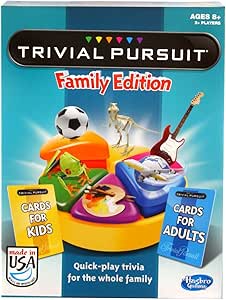 | Best Trivia Challenge for All Ages and Family Nights | Number of Questions: 1200 | Categories: 6 | Player Count: 2+ | VIEW ON AMAZON | See Our Full Breakdown |
| Hasbro Gaming Trouble Board Game for Kids Ages 5 and Up |  | Best for Young Children New to Family Games | Ages: 5 and up | Players: 2-4 | Features: Pop-o-Matic bubble, Power Up Spaces | VIEW ON AMAZON | See Our Full Breakdown |
| USAOPOLY The Original TAPPLE Family Board Game |  | Best for Fast-Paced Word Play with a Wide Age Range | Number of Players: 2-8 | Ages: 8 and up | Play Time: 15-20 minutes | VIEW ON AMAZON | See Our Full Breakdown |
| Hasbro Gaming Yahtzee Game |  | Best for Classic Dice Strategy with Cross-Generational Appeal | Age Range: 8+ | Included Components: Shaker, 5 dice, scorecards | Unit Count: 1 | VIEW ON AMAZON | See Our Full Breakdown |
| Mattel Games UNO Card Game for Kids, Adults & Families |  | Best for Large Groups and House Rules Flexibility | Number of Players: 2-10 | Ages: 7+ | Includes: Wild and action cards, blank wild cards | VIEW ON AMAZON | See Our Full Breakdown |
| Hasbro Gaming Candy Land Kingdom of Sweet Adventures Board Game for Kids |  | Best for Young Children Just Starting to Play | Ages: 3 and up | Players: Not specified | Theme: Candy Land | VIEW ON AMAZON | See Our Full Breakdown |
| family board game | Ages | Number of players | Includes |
|---|---|---|---|
| The Game of Life Board Game | 8 and up | 2 to 4 | — |
| Monopoly Family Board Game for | 8 and up | 2 to 6 | — |
| Sorry! Board Game for Kids Age | 6 and up | 2-4 | 4 pawns per player |
| Hasbro Gaming Guess Who? Plus | 6+ | 2 | People and Pet face cards |
| Hasbro Gaming Trivial Pursuit | 8+ | — | — |
| Hasbro Gaming Trouble Board Ga | 5 and up | — | — |
| USAOPOLY The Original TAPPLE F | 8 and up | 2-8 | Tapple wheel, timer, 36 cards |
| Hasbro Gaming Yahtzee Game | — | — | — |
| Mattel Games UNO Card Game for | 7+ | 2-10 | Wild and action cards, blank wild cards |
| Hasbro Gaming Candy Land Kingd | 3 and up | — | Game board, colored cards, game pieces |
More Details on Our Top Picks
The Game of Life Board Game, Family Game for Kids Ages 8 and Up
This version of The Game of Life stands out for its realistic decision-making scenarios, making it a compelling choice for families wanting a game that mirrors real-life choices. Unlike Sorry!, which is more about quick reactions and simple fun, this game encourages longer play sessions with strategic planning and financial management. While it offers engaging gameplay for kids aged 8 and up, it can feel repetitive over multiple rounds and sometimes drags, especially with fewer players. Its colorful pegs add a personalized touch that enhances the family experience. However, the game’s length and complexity might be a drawback for families seeking quick, casual fun. Ideal for families who enjoy longer, thematic games that simulate real-life decisions, even if it requires patience.
Pros:- Engages players with realistic life decisions and strategic planning
- Suitable for family play with kids aged 8 and up
- Includes colorful pegs for personalization
Cons:- May take a lengthy time to complete, which could tire younger players
- Repetitive gameplay after multiple rounds
- Requires at least two players for full experience
Best for: Families seeking an immersive, life-themed game that encourages strategic thinking and long play sessions.
Not ideal for: Families with younger children under 8 or groups preferring quick, casual game nights with less setup and fewer turns.
- Ages:8 and up
- Number of players:2 to 4
- Pegs colors:6
Our verdict“This game is best for families who want a longer, thematic experience that mirrors real-life choices, accepting the tradeoff of extended playtime.”
Monopoly Family Board Game for 2-6 Players, Ages 8 and Up
Compared with The Game of Life, Monopoly offers a more competitive, property-focused gameplay that appeals to families who enjoy strategic money management. Its wide player range (2-6) makes it versatile for larger family groups or game nights. The inclusion of various tokens like the Top Hat and Race Car adds a fun, personalized element. However, Monopoly’s longer game duration can be a downside, especially when compared to the quicker-paced Guess Who?. Repetition and extended playtime might test patience, but its classic appeal remains unmatched for those who enjoy economic strategy. Ideal for families and groups willing to invest time in a traditional, strategic game with lots of trading and building.
Pros:- Provides a classic Monopoly experience suitable for multiple players
- Includes a variety of tokens for personalization
- Encourages strategic thinking and financial management
Cons:- Long game duration, which may be tiring for younger children
- Repetitive gameplay can wear thin after multiple sessions
Best for: Families or groups who enjoy strategic property trading and have time for longer game sessions.
Not ideal for: Families seeking quick, light-hearted games or players who dislike extended gameplay that can stretch over an hour or more.
- Number of Players:2 to 6
- Ages:8 and up
- Tokens Included:8 (Top Hat, Rubber Ducky, Scotty, Hazel, Race Car, Penguin, Battleship, Thimble)
Our verdict“Best suited for families willing to spend time on a classic, strategic game, understanding it may stretch longer than more casual options.”
Sorry! Board Game for Kids Ages 6 and Up
Compared to The Game of Life and Monopoly, Sorry! offers a quicker, more straightforward experience focused on racing pawns to the home space. Its simple rules make it accessible for children as young as 6, and the game fosters basic strategic thinking and family interaction. The inclusion of four pawns per player enhances engagement, but its simplicity can become repetitive for older children or adults seeking more complex gameplay. While it’s ideal for family nights with younger kids, it might not satisfy those looking for depth or longer play sessions. This pick works best for families with younger children or those preferring quick, light-hearted fun over extended, strategic games.
Pros:- Simple rules suitable for young children
- Encourages strategic thinking and family interaction
- Great for quick, fun family game nights
Cons:- May become repetitive over multiple plays
- Lacks complexity for older players or serious gamers
Best for: Families with children aged 6-8 who want quick, engaging gameplay that involves movement and simple strategy.
Not ideal for: Families with older children or adults seeking more complex or longer-lasting game experiences.
- Number of Players:2-4
- Ages:6 and up
- Includes:4 pawns per player
Our verdict“Ideal for families with young children looking for quick, simple, and engaging game sessions.”
Hasbro Gaming Guess Who? Plus Board Game with People & Pet Cards
In comparison to Sorry! or The Game of Life, Guess Who? Plus narrows the focus to pure deduction, making it ideal for quick sessions and travel. Its inclusion of both people and pet characters adds variety that keeps the game fresh for frequent players, though its 2-player limit makes it less versatile for larger families. The simple setup and quick gameplay make it perfect for on-the-go fun, but the focus on guessing limits its strategic depth, which might bore older kids or those seeking more challenging games. Best for families or kids who want a fast, portable game with a guessing twist, but less suited to large groups or longer play.
Pros:- Includes both people and pet characters for added variety
- Simple, quick gameplay perfect for travel
- Easy to set up and fold away
Cons:- Limited to two players, restricting group play
- Repetitive for frequent players seeking variety
- Limited strategic complexity
Best for: Families or children who prefer quick, portable games with simple deduction and guessing mechanics.
Not ideal for: Larger families or groups seeking more complex or longer-lasting games, as it’s limited to two players.
- Number of Players:2
- Ages:6+
- Includes:People and Pet face cards
Our verdict“Best suited for quick, portable guessing fun for small families or travel, with limited appeal for larger groups or strategic players.”
Hasbro Gaming Trivial Pursuit Family Edition Board Game
Compared with The Game of Life or Monopoly, Trivial Pursuit Family Edition emphasizes knowledge over strategy, offering a quick and engaging trivia challenge suitable for broad age ranges. Its 1200 questions across six categories provide variety, but after multiple plays, players might find the game becoming repetitive. The quick-play mechanics make it accessible for family nights, yet it doesn’t offer much depth beyond trivia questions, which could limit long-term interest for players seeking more interactive gameplay. This game is perfect for families who enjoy testing their knowledge but less so for those wanting strategic or thematic experiences. Ideal for trivia lovers and casual family nights, accepting that the game may lose novelty over time.
Pros:- Includes a large variety of questions to keep gameplay fresh
- Quick-play format for faster game nights
- Suitable for a wide age range, from kids to adults
Cons:- Repetitive after multiple sessions
- Limited gameplay mechanics beyond trivia
- Requires multiple players for best experience
Best for: Families who enjoy knowledge-based games and want a quick, engaging activity suitable for all ages.
Not ideal for: Groups seeking strategic, thematic, or longer-lasting game experiences that go beyond trivia questions.
- Number of Questions:1200
- Categories:6
- Player Count:2+
- Ages:8+
Our verdict“Best for trivia enthusiasts and families who want a quick, knowledge-based game, while understanding it may lose appeal over repeated plays.”
Hasbro Gaming Trouble Board Game for Kids Ages 5 and Up
This version of Trouble stands out for its simplicity and quick setup, making it ideal for introducing younger kids to family game nights. Compared with Candy Land, it offers more interactive gameplay with the iconic Pop-o-Matic bubble, which keeps kids engaged. However, its limited to 2-4 players and can become repetitive, especially if played frequently. The game’s straightforward rules help children learn turn-taking and basic strategy, but it might not hold the attention of older or more experienced players. Overall, this pick makes the most sense for families with children aged 5 to 7 who want a quick, easy game to start with.
Pros:- Easy to learn and set up, perfect for young children
- Classic Pop-o-Matic bubble adds fun and tactile excitement
- Suitable for quick family game sessions
Cons:- Limited to small groups of 2-4 players, restricting larger family play
- Repetitive gameplay may reduce replay value over time
Best for: Families with children ages 5-7 who are new to board games and need quick, simple entertainment
Not ideal for: Larger families or groups seeking more strategic or longer gameplay experiences
- Ages:5 and up
- Players:2-4
- Features:Pop-o-Matic bubble, Power Up Spaces
Our verdict“This game works best for younger children needing a simple, quick game to introduce them to family play.”
USAOPOLY The Original TAPPLE Family Board Game
Compared with classic dice games like Yahtzee, TAPPLE offers a lively, rapid-fire challenge that tests quick thinking and vocabulary skills. It’s portable and easy to store, making it ideal for on-the-go family gatherings. While the game’s speed and focus on words keep players engaged, it can also be frustrating for younger children or those who prefer more relaxed gameplay, since the timer adds pressure. TAPPLE suits families with kids aged 8 and up who enjoy quick, competitive word challenges, but it’s less suited for younger children or those who prefer calm, strategy-based games. This makes it a versatile choice for mixed-age groups that thrive on fast-paced fun.
Pros:- Fast-paced and engaging, keeping players on their toes
- Portable design for easy transport and storage
- Suitable for a wide age range, including older kids and adults
Cons:- Requires quick thinking, which can frustrate younger or less confident players
- Limited to 8 players maximum, restricting larger group play
Best for: Families with children 8 and older who love quick, competitive word games
Not ideal for: Younger kids or families seeking more relaxed, strategy-oriented gameplay
- Number of Players:2-8
- Ages:8 and up
- Play Time:15-20 minutes
- Includes:Tapple wheel, timer, 36 cards
Our verdict“Ideal for families who want a quick, energetic word game that challenges players’ vocabulary under time pressure.”
Hasbro Gaming Yahtzee Game
Compared to more active or fast-paced options like TAPPLE, Yahtzee offers a quieter, luck-based challenge that appeals across age groups. The inclusion of a shaker and scorecards makes gameplay straightforward, but reliance on chance means it may not satisfy players who prefer strategic depth. It’s especially well-suited for family nights where players of different ages can compete on equal footing, yet it might lack the engagement for those seeking longer, more involved games. This pick makes the most sense for families seeking a traditional game that emphasizes luck and probability, suitable for players aged 8 and older.
Pros:- Suitable for kids, teens, and adults, fostering cross-generational fun
- Includes shaker, dice, and scorecards for quick setup
- Easy to learn and play, ideal for casual game nights
Cons:- Heavily reliant on luck, which can frustrate strategic players
- Limited to 2 or more players, not solo-friendly
Best for: Families looking for a classic, luck-driven dice game that’s easy to set up and play
Not ideal for: Players who favor strategic or skill-based games over chance and luck
- Age Range:8+
- Included Components:Shaker, 5 dice, scorecards
- Unit Count:1
- Model Year:2013
- Sub Brand:Hasbro Gaming
- Item Type:Yahtzee Classic
Our verdict“This game is perfect for families seeking a traditional dice game with simple rules and broad appeal.”
Mattel Games UNO Card Game for Kids, Adults & Families
Compared with traditional board games like Candy Land, UNO adds a layer of strategy with action and wild cards, while also offering house rule customization. Its ability to accommodate up to 10 players makes it an excellent choice for larger families or parties, but the game length can vary significantly depending on how players use wild cards and house rules. It’s accessible for children aged 7 and up and designed with color-blind friendly symbols, making it inclusive. However, the reliance on card matching and house rules may cause confusion for new players, and the game can drag if players are not engaged. Overall, UNO makes the most sense for families seeking a quick, flexible game with social and strategic elements.
Pros:- Supports up to 10 players, ideal for big gatherings
- Color-blind accessible with graphic symbols for inclusivity
- Includes customizable wild cards for house rules
Cons:- Game length can vary widely, potentially making sessions long
- Some players may find house rules confusing or overcomplicated
Best for: Families with large groups or parties who want a versatile, fast-paced card game
Not ideal for: Families seeking longer, more involved board games with more complex rules
- Number of Players:2-10
- Ages:7+
- Includes:Wild and action cards, blank wild cards
- Color blind accessible:Yes
Our verdict“This game works best for large families or groups looking for a quick, social card game with flexible rules.”
Hasbro Gaming Candy Land Kingdom of Sweet Adventures Board Game for Kids
Compared with Trouble, Candy Land is even simpler, with no reading required and vibrant, inviting illustrations that captivate young children. Its straightforward race-to-the-castle format makes it ideal for kids as young as 3, but its limited complexity means it won’t challenge older children or those seeking strategic depth. While Candy Land’s bright visuals and easy rules make it perfect for preschoolers and early readers, it offers little in terms of strategic learning for older kids. This pick makes the most sense for families with very young children who need a colorful, easy-to-understand game to introduce them to board gaming traditions.
Pros:- Suitable for very young children, no reading required
- Bright, colorful illustrations engage early learners
- Simple rules make it easy for kids to learn and enjoy
Cons:- Limited complexity, may bore older kids
- Details about the number of players are not specified, which could impact setup
Best for: Parents with children aged 3-5 who want an engaging, no-reading-required game
Not ideal for: Older children or families seeking more challenging or strategic gameplay
- Ages:3 and up
- Players:Not specified
- Theme:Candy Land
- Includes:Game board, colored cards, game pieces
Our verdict“This game is perfect for families with preschoolers looking for a colorful, easy-to-learn game that encourages early play skills.”

How We Picked
To determine the best family board games, I evaluated each option based on performance, ease of use, build quality, and replayability. I considered how accessible the rules are for various ages and whether the game encourages family interaction. Durability and value for money also played key roles, especially for games that will see frequent use. By comparing these factors across a broad selection, I identified which games offer the best overall experience for different family types, ranking them to help readers find the perfect fit for their needs.Factors to Consider When Choosing Family Board Games
Choosing the right family board game involves understanding what your family values most—whether that’s quick fun, strategic depth, or educational content. It’s important to consider the age range, complexity, and session length to ensure everyone stays engaged. Additionally, durability and ease of setup affect long-term enjoyment, especially for families prone to frequent game nights. Being aware of common pitfalls, like buying games with overly complicated rules or unsuitable themes, can help you make smarter decisions. Here are key factors to keep in mind when selecting the best family board game for your household.Age Range and Complexity
Matching a game’s complexity to your family’s ages ensures everyone can participate and enjoy. Simpler games like Sorry! or Candy Land are perfect for younger children, while older kids and adults might appreciate more strategic options like Monopoly or The Game of Life. Avoid games that are too advanced for your youngest players, as this can lead to frustration, but also be cautious of overly simple games for older family members seeking a challenge. Finding that balance enhances family bonding and keeps game nights enjoyable for everyone.
Session Length and Replayability
Consider how long you want each game to last. Quick-to-play options like Trouble or Guess Who? suit busy weeknights, whereas Monopoly and The Game of Life may take longer but offer more replay value. Games with variable strategies or themes tend to be more engaging over multiple sessions. Thinking about how often your family plays can help determine whether investing in a more complex game is worthwhile. Remember, a game that’s too lengthy for casual play may sit unused, so choose wisely based on your typical game night duration.
Durability and Storage
Family board games see a lot of use, so durability matters. Look for well-made pieces and sturdy boards, especially if you have younger children prone to rough handling. Storage size is also worth considering—compact games are easier to keep organized, but may sacrifice some component quality. Investing in durable, high-quality games can pay off by lasting for years and withstanding frequent play. Conversely, cheaper, flimsy options might need replacement sooner, which could end up costing more over time.
Theme and Educational Value
The theme of a game can greatly influence its appeal, especially for kids who enjoy stories and characters. Educational games like Trivial Pursuit add learning opportunities, while fun themes like Candy Land or The Game of Life foster imagination. Be mindful of themes that might not resonate with your family’s interests or values. Choosing a game that sparks curiosity or fits your family’s hobbies can turn game nights into more meaningful bonding experiences.
Price and Value
Price varies widely among family board games, from budget-friendly options to premium sets. While a higher price often correlates with better materials and more features, it’s important to consider whether the game’s mechanics and theme will genuinely be enjoyed by your family. Sometimes, a less expensive game provides more fun for your specific needs, especially if it’s only played occasionally. Think about the long-term value—durability, replayability, and how well it suits your family’s interests—before making a purchase.
Frequently Asked Questions
What is the best family board game for young children?
For young children, games like Candy Land or Sorry! are excellent choices because of their simple rules, bright themes, and quick setup. These games introduce basic concepts like taking turns and counting, making them perfect for early learners. They also tend to have shorter playtimes, which suits shorter attention spans. Keep in mind that choosing age-appropriate games helps maintain interest and prevents frustration, encouraging a positive gaming experience for the youngest players.
Are strategic games worth it for a family with mixed ages?
Strategic games like Monopoly or The Game of Life can be very rewarding for families with older children or adults, but they may be less suitable for younger kids. To accommodate everyone, consider games that have adjustable difficulty levels or shorter versions. It’s often best to introduce these more complex options gradually, or to set aside special game nights for advanced gameplay. Balancing simpler and more strategic games can keep everyone engaged without overwhelming the youngest players.
How do I choose a game that my whole family will enjoy?
Picking a game that appeals across different ages and interests involves considering themes, gameplay length, and complexity. Look for options with broad themes that resonate with your family’s hobbies or stories, and test out a few to see what sparks the most excitement. Games with multiple ways to win or variable strategies tend to be more engaging over time. Involving the whole family in the selection process can also help ensure everyone feels invested and excited to play.
Should I prioritize quality or price when buying a family board game?
While budget-friendly options can be tempting, investing in a well-made game often results in better durability and more engaging gameplay. Higher-quality components reduce the chance of parts breaking or getting lost, which is especially important for frequent use. However, it’s also wise to match the game’s quality to your family’s usage patterns—if you only play occasionally, a less expensive, simpler game might suffice. Ultimately, balancing price and quality based on your family’s needs ensures the best long-term value.
What should I avoid when buying a family board game?
Avoid games with overly complicated rules that can frustrate or alienate younger players. Similarly, steer clear of games with themes that might not be suitable for your family’s values or that could be confusing for your children. It’s also wise to watch out for games with small, easily lost pieces or flimsy components that won’t stand up to regular play. Choosing age-appropriate, durable, and straightforward games helps ensure a positive and lasting family gaming experience.
Conclusion
For families seeking a versatile, engaging experience, The Game of Life offers the best overall mix of fun and replayability. If you’re looking for the best value, Sorry! delivers quick, simple entertainment at an affordable price. For those who prioritize a premium experience and durability, investing in a classic like Monopoly makes sense. Beginners or families new to board games should start with simpler options like Candy Land or Trouble, while more experienced players might enjoy strategic choices like The Game of Life or Trivial Pursuit. Tailor your pick to your family’s size, ages, and interests to make game nights enjoyable for everyone.
Fall Picks
fall essentials
As an affiliate, we earn on qualifying purchases.