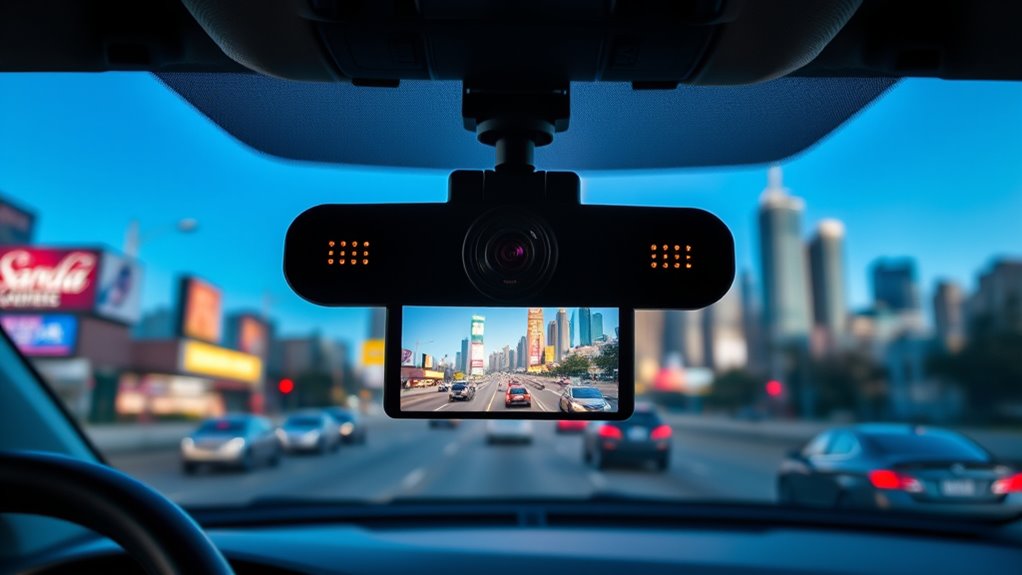

The best dash cam for most drivers in 2026 is the VIOFO A229 Pro, which pairs 4K HDR recording with dual STARVIS 2 sensors front and rear for footage that holds up in low light and disputed accidents. Drivers who want maximum coverage should look at the Vantrue N4S, a three-channel setup that records the cabin as well as the road, while the Garmin Dash Cam Mini 3 is the pick for anyone who wants an ultracompact, set-and-forget option. The main tradeoff in this category is coverage versus clarity: multi-channel cams with four 1080p lenses rarely match the image quality of a single well-engineered 4K unit, and parking monitoring, Wi-Fi speed, and memory support vary widely. Read on for the full breakdown of all 15 models.

Get your wardrobe favorites delivered free with Prime
- Fast, free delivery on millions of items
- Prime Video, Amazon Music and more included
- Member-only deals all year
Complete the kit


Key Takeaways
- Single or dual-channel models with STARVIS 2 sensors (VIOFO A229 Pro, REDTIGER F7NP) delivered noticeably better low-light footage than 4-channel 360° systems that split their budget across more lenses.
- 360° multi-channel models like the 4-Channel 360° Dash Cam and ICESKY S03 make sense only for rideshare and commercial drivers — private-car owners pay a premium for angles they will rarely review.
- Included memory cards (32GB–128GB across this lineup) are starter conveniences, not long-term solutions; only models supporting 256GB or larger cards avoid constant clip-churn from loop recording.
- Touchscreen models such as the REDTIGER F7N TOUCH trade physical buttons for a sleeker windshield footprint, which works well until winter gloves or glare enter the picture.
- Compact one-lens options like the Garmin Mini 3 and VIOFO A119 V3 sacrifice rear coverage entirely but win on discretion, reliability, and not blocking sightlines.
| 4-Channel 360° Dash Cam with 4K Front and Three 1080P Cameras |  | Best Full 360° Coverage | Channels: 4 (front, rear, left, right) | Front resolution: 4K (2160p) | Other cameras: 1080P | VIEW ON AMAZON | See Our Full Breakdown |
| ICESKY S03 4K 4-Channel Dash Cam with GPS and Wi-Fi 6 |  | Best Storage and Connectivity | Channels: 4 | Video resolution: 4K front; 1080p rear, interior, and side | Display: 3 inches | VIEW ON AMAZON | See Our Full Breakdown |
| REDTIGER F17 4K 3-Channel Dash Cam with STARVIS 2 Sensor, 64GB Card, 5.8GHz WiFi |  | Best for Rideshare and Cabin Monitoring | Channels: 3 (front, interior, rear) | Front resolution: 4K (2160P) | Front sensor: STARVIS 2 IMX675 | VIEW ON AMAZON | See Our Full Breakdown |
| REDTIGER F7NP 4K Front and Rear Dash Cam with STARVIS 2 Sensor |  | Best Value Dual-Channel | Channels: 2 (front and rear) | Front resolution: 4K (2160p), 170° view | Rear resolution: 1080p, 140° view | VIEW ON AMAZON | See Our Full Breakdown |
| REDTIGER F7N TOUCH 4K Front and 1080P Rear Dash Cam |  | Best Touchscreen and Voice Control | Channels: 2 (front and rear) | Front resolution: 4K UHD, 170° view | Rear resolution: 1080P FHD, 140° view | VIEW ON AMAZON | See Our Full Breakdown |
| VIOFO A229 Pro 4K HDR Dual Dash Cam with Front and Rear STARVIS 2 Sensors |  | Best Image Quality, Enthusiast Pick | Front Camera Resolution: 4K 2160P | Rear Camera Resolution: 2K 1440P | Sensors: STARVIS 2 IMX678 (front), IMX675 (rear) | VIEW ON AMAZON | See Our Full Breakdown |
| Four-Channel 1080p Dash Cam with 128GB Card |  | Best All-Around Coverage | Camera Channels: 4 (front, rear, left, right) | Resolution: Full HD 1080p per camera | Included Storage: 128GB card | VIEW ON AMAZON | See Our Full Breakdown |
| Garmin Dash Cam Mini 3, Ultracompact 1080p Dash Camera |  | Best Discreet Minimalist Pick | Resolution: 1080p HD | Field of View: 140 degrees | Lens: Garmin Clarity polarizer with HDR optics | VIEW ON AMAZON | See Our Full Breakdown |
| Galphi 4K Front Dash Cam with 5GHz Wi-Fi and 32GB Card |  | Best Budget 4K Value | Resolution: 4K UHD (2160P) | Field of View: 160 degrees | Aperture: F/1.6 | VIEW ON AMAZON | See Our Full Breakdown |
| 4K Three-Channel Dash Camera with Front, Interior, and Rear Cameras |  | Best for Rideshare and Taxi Drivers | Camera Channels: 3 (front, interior, rear) | Front Camera Resolution: 4K, 170° field of view | Interior Camera Resolution: 1080p, 150° field of view | VIEW ON AMAZON | See Our Full Breakdown |
| 4 Channel 360° Dash Cam Front and Rear, 4K+1080P x3 | | Best Full-Coverage Pick | Camera Resolution: 4K front, 1080P x3 side/rear | Number of Channels: 4 | WiFi: Dual-band 5GHz | VIEW ON AMAZON | See Our Full Breakdown |
| ROVE R2-4K Dual Dash Cam with Front and Rear Cameras |  | Best Storage and Connectivity | Front Resolution: 2.5K upscaled to 4K | Rear Resolution: 1080p Full HD | Image Sensor: Sony STARVIS 2 IMX675, 5MP | VIEW ON AMAZON | See Our Full Breakdown |
| 4K Dash Cam Front and Rear, Full HD 3 Channel Dashcam with 128GB Memory |  | Best for Cabin Monitoring | Resolution: 4K front, 1080p rear and cabin | Channels: 3 (front, rear, cabin) | Field of View: 170° front, 165° rear/cabin | VIEW ON AMAZON | See Our Full Breakdown |
| VIOFO A119 V3 Dash Cam, 2K Front Recording | 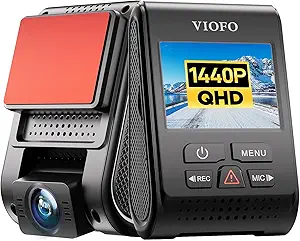 | Best Single-Channel Minimalist | Resolution: 1440P QHD+ (2560×1660) | Sensor: SMP IMX335 STARVIS | Lens: 7-element glass | VIEW ON AMAZON | See Our Full Breakdown |
| Vantrue N4S 3-Channel Dash Cam, Triple STARVIS 2 Night Vision |  | Best Premium for Rideshare | Video Resolution: 1944P front, 1440P interior and rear | Channels: 3 (front, interior, rear) | Night Vision: STARVIS 2, HDR, PlatePix | VIEW ON AMAZON | See Our Full Breakdown |
More Details on Our Top Picks
4-Channel 360° Dash Cam with 4K Front and Three 1080P Cameras
This option stands out for true four-camera coverage: front, rear, and both sides all record simultaneously, which no dual-channel model like the REDTIGER F7NP can match. If you drive in dense urban traffic where side-swipes at intersections are a real risk, those extra lenses change what you can actually prove after an incident. Compared with the ICESKY S03, you get the same 4K front resolution but a smaller included card (64GB versus 128GB), though 256GB is supported. Night vision leans on eight infrared LEDs plus WDR, which helps the side cameras but won’t match the REDTIGER F17’s STARVIS 2 sensor for low-light front footage.
The main tradeoff: parking mode requires a separately purchased hardwire kit, so budget for that if 24-hour monitoring matters to you.
Pros:- Four cameras cover front, rear, and both sides of the vehicle
- GPS, 5GHz Wi-Fi app control, and a 64GB card included
- G-sensor automatically locks collision footage
- Infrared LEDs and WDR improve night recording
Cons:- Parking mode requires a separately purchased hardwire kit
- Only 64GB included, despite 256GB support — heavy 4K users will fill it fast
- Cabling four cameras takes more installation effort than dual-channel rivals
Best for: Urban commuters and rideshare drivers who need side-impact evidence from every angle
Not ideal for: Buyers wanting a complete out-of-box parking surveillance setup — the hardwire kit costs extra
- Channels:4 (front, rear, left, right)
- Front resolution:4K (2160p)
- Other cameras:1080P
- Field of view:360 degrees
- Connectivity:5GHz Wi-Fi
- Storage:64GB included; up to 256GB supported
- Night vision:8 IR LEDs and WDR
- Parking mode:24-hour; hardwire kit sold separately
Our verdict“Pick this if you need indisputable 360° evidence in traffic-heavy environments and don’t mind adding a hardwire kit later.”
ICESKY S03 4K 4-Channel Dash Cam with GPS and Wi-Fi 6
Where this model earns its place is sheer capacity and transfer speed. A 128GB microSD card in the box and support up to 512GB means weeks of footage before you need to offload anything — a real advantage over the four-channel competitor at 64GB/256GB. Wi-Fi 6 at 5.8GHz with downloads up to 20 MB/s makes pulling 4K clips to your phone noticeably less painful than on older Wi-Fi 5 units like the REDTIGER F7NP. Like that rival, it pairs a 4K front camera with 1080p secondary lenses, but here you get four channels rather than two, including an interior view the F7NP lacks.
The compromises are familiar for this category: parking mode needs a separately bought hardwire kit, and the infrared night vision only benefits the side cameras, so rear and cabin footage stays average after dark.
Pros:- 128GB card included, expandable to 512GB
- Wi-Fi 6 delivers fast 20 MB/s app downloads
- Four-channel 360° coverage with interior view
- Built-in GPS with impact-locked footage
Cons:- Hardwire kit for 24-hour parking mode sold separately
- IR night vision applies only to side cameras
- Four-channel installation involves more wiring than simpler dual setups
Best for: Drivers who record constantly and want maximum onboard storage plus fast wireless file transfers
Not ideal for: Anyone expecting strong night performance from all four cameras — only the sides get IR help
- Channels:4
- Video resolution:4K front; 1080p rear, interior, and side
- Display:3 inches
- Wi-Fi:5.8 GHz Wi-Fi 6, up to 20 MB/s
- GPS:Built-in
- Storage:128GB included; up to 512GB supported
- Parking mode:24-hour; hardwire kit not included
Our verdict“The pick for high-mileage drivers who value storage headroom and quick clip downloads over all-around night performance.”
REDTIGER F17 4K 3-Channel Dash Cam with STARVIS 2 Sensor, 64GB Card, 5.8GHz WiFi
This model makes the most sense for anyone whose interior camera genuinely matters — Uber and Lyft drivers, taxis, or parents transporting other people’s kids. The STARVIS 2 IMX675 front sensor is the standout here: it’s the same class of low-light hardware praised in the VIOFO lineup, and it produces noticeably cleaner night footage than the infrared-only approach on the ICESKY S03. You also get smart recording flexibility — time-lapse and collision-detection parking modes once hardwired, plus a super capacitor that survives extreme heat and cold better than battery-based designs.
The honest tradeoff is resolution juggling: running all three channels simultaneously forces the front camera down from full 4K, and true 4K means disabling the interior lens. If you never need cabin footage, the REDTIGER F7NP delivers simpler two-channel recording.
Pros:- STARVIS 2 sensor delivers excellent low-light front footage
- Three-channel coverage of front, cabin, and rear
- Super capacitor handles extreme temperatures reliably
- Dual-band Wi-Fi, GPS, and an 18-month warranty
Cons:- Three-channel recording reduces front camera resolution
- Full 4K front requires disabling the interior camera
- Parking modes require a separately purchased hardwire kit
Best for: Rideshare and taxi drivers who need cabin footage alongside strong front and rear coverage
Not ideal for: Private motorists who don’t need an interior camera — they’d sacrifice front resolution for nothing
- Channels:3 (front, interior, rear)
- Front resolution:4K (2160P)
- Front sensor:STARVIS 2 IMX675
- Viewing angles:150° front, 160° cabin, 155° rear
- Wi-Fi:5GHz and 2.4GHz dual-band
- Power source:Super capacitor
- Parking modes:Time lapse and collision detection (hardwire kit required)
Our verdict“The strongest choice for drivers who must document what happens inside the car as well as outside it.”
REDTIGER F7NP 4K Front and Rear Dash Cam with STARVIS 2 Sensor
Compared with the bells and whistles elsewhere in this lineup, this option wins on focus and simplicity: a 4K front camera and 1080p rear camera, a 128GB card in the box, GPS, and fast 5.8GHz Wi-Fi — and nothing you have to configure around. The STARVIS 2 sensor with WDR and HDR produces the same class of low-light footage as the pricier REDTIGER F17, minus that model’s interior camera and resolution tradeoffs. Because it never splits power across three or four lenses, front footage stays sharp at maximum resolution at all times, which the F17 can’t claim. A 170° front view is also the widest in this batch.
Two caveats deserve attention: parking mode requires a hardwire kit you must source separately, and the listed maximum frame rate is a peculiar 1 FPS — worth verifying for your use case before relying on smooth playback.
Pros:- Full 4K front recording with no multi-channel resolution penalty
- STARVIS 2, WDR, and HDR for strong low-light footage
- 128GB card included, expandable to 512GB
- Built-in GPS and 5.8GHz Wi-Fi app control
Cons:- Parking monitoring requires a separately obtained hardwire kit
- Listed maximum frame rate of 1 FPS is a real limitation
Best for: Everyday drivers who want dependable front and rear coverage without paying for channels they won’t use
Not ideal for: Anyone who needs side or interior evidence — a 3- or 4-channel model like the F17 covers more angles
- Channels:2 (front and rear)
- Front resolution:4K (2160p), 170° view
- Rear resolution:1080p, 140° view
- Sensor:STARVIS 2 CMOS
- Display:3.16-inch LCD
- Connectivity:5.8GHz Wi-Fi
- Storage:128GB included; up to 512GB supported
Our verdict“The smart middle path for drivers who prioritize front image quality and simplicity over total coverage.”
REDTIGER F7N TOUCH 4K Front and 1080P Rear Dash Cam
What separates this model from its sibling, the REDTIGER F7NP, is the interface: a touchscreen plus voice control means you can change settings or lock a clip without fumbling with tiny buttons while driving. For anyone who adjusts their dash cam regularly, that usability jump is worth the step up. The recording hardware mirrors the F7NP’s strengths — 4K front, 1080p rear, a 170° front view, GPS, 5.8GHz Wi-Fi at up to 20 MB/s, and a 128GB card included. Compared with the ICESKY S03, you lose two channels but gain a far simpler install and a friendlier control scheme.
WDR and HDR night vision handle varied lighting reasonably well, though without the STARVIS 2 sensor found on the F7NP and F17, expect slightly softer after-dark footage. As with nearly everything here, parking mode needs a separate hardwire kit.
Pros:- Touchscreen and voice control make operation easy while driving
- 4K front and 1080p rear with wide 170°/140° views
- GPS plus fast 5.8GHz Wi-Fi for route tracking and sharing
- 128GB card and G-sensor event locking included
Cons:- Parking monitoring requires a separate hardwire kit
- Lacks the STARVIS 2 low-light sensor of its F7NP sibling
Best for: Drivers who interact with their dash cam often and want the easiest on-device controls available
Not ideal for: Set-and-forget buyers — the F7NP offers comparable recording for less complexity and cost
- Channels:2 (front and rear)
- Front resolution:4K UHD, 170° view
- Rear resolution:1080P FHD, 140° view
- Controls:Touchscreen and voice control
- Wi-Fi:5.8GHz, up to 20MB/s
- Storage:128GB card included
- Parking monitoring:G-sensor and time-lapse; hardwire kit required
Our verdict“Choose this over the F7NP when touchscreen convenience and hands-free voice commands matter more than the very best night sensor.”
VIOFO A229 Pro 4K HDR Dual Dash Cam with Front and Rear STARVIS 2 Sensors
This model stands out as the image-quality benchmark of this roundup. Dual STARVIS 2 sensors paired with true 4K front recording deliver license-plate detail that budget 4K cams like the Galphi simply can’t match, especially at night where its Night Vision 2.0 HDR keeps exposure balanced against headlights. The supercapacitor power source also means it survives summer heat and winter cold that would kill a battery-based unit.
The tradeoff is cost and completeness: the SD card, and the HK4 hardwire kit needed for its three parking modes, are all sold separately, so the true price of a finished install is higher than the box suggests. Compared with the Garmin Dash Cam Mini 3, you get far more capability but far less simplicity — this pick makes the most sense for drivers willing to invest in a proper setup.
Pros:- 4K front and 2K rear recording with flagship STARVIS 2 sensors for excellent day and night detail
- Three buffered parking modes provide genuine 24/7 vehicle protection
- Supercapacitor design handles extreme temperatures reliably
- Voice control and fast 5GHz Wi-Fi make daily operation and clip downloads convenient
Cons:- SD card and the hardwire kit required for parking modes are sold separately
- Standard 6-meter rear cable may be too short for trucks and larger vehicles
Best for: Enthusiasts and rideshare or delivery drivers who need forensic-grade front and rear footage day and night
Not ideal for: Buyers wanting a complete out-of-box kit — the card and hardwire kit are separate purchases requiring extra installation effort
- Front Camera Resolution:4K 2160P
- Rear Camera Resolution:2K 1440P
- Sensors:STARVIS 2 IMX678 (front), IMX675 (rear)
- Parking Modes:Auto Event Detection, Low Bitrate, Time Lapse
- Connectivity:5GHz Wi-Fi with app control; 12 voice commands
- Power Source:Built-in supercapacitor
- Operating Temperature:5°F to 149°F
- Memory Support:Up to 512GB microSD (not included)
- Accessories Included:CPL anti-glare filter
Our verdict“The choice for drivers who treat dash cam footage as evidence and want the sharpest dual-channel video available, provided they’re prepared to buy the accessories separately.”
Four-Channel 1080p Dash Cam with 128GB Card
If your priority is seeing every side of your vehicle, this four-camera system covers front, rear, left, and right — something no dual-channel model like the VIOFO A229 Pro can do, and it does so at 1080p across all four channels. For anyone who has been clipped in a parking lot or sideswiped on a merge, that lateral coverage is the whole point, and the included 128GB card means it’s recording the moment it’s installed.
The compromise is resolution: per-camera detail trails the 4K front units in this lineup, so distant plate capture is weaker. The infrared night vision and WDR help in mixed lighting, but parking mode and GPS both require separately sold add-ons. Compared with the REDTIGER F17, you trade headline resolution for a more complete field of view — a reasonable swap for urban and family drivers.
Pros:- Four-camera coverage captures front, rear, and both sides of the vehicle
- 128GB memory card included, so it works out of the box
- Night vision and WDR handle varied lighting conditions
- Loop recording and incident locking preserve important footage
Cons:- Parking mode requires a separately sold hardwire kit
- GPS tracking requires a separately sold logger
Best for: Urban drivers and parents of teen drivers who want full perimeter coverage for parking-lot and intersection disputes
Not ideal for: Drivers focused on long-range license plate capture, since 1080p per channel lacks the detail of 4K front units
- Camera Channels:4 (front, rear, left, right)
- Resolution:Full HD 1080p per camera
- Included Storage:128GB card
- Connectivity:5GHz Wi-Fi; iOS and Android app
- Recording Features:Loop recording, incident lock, time-lapse
- Night Visibility:Infrared lights and WDR
- Parking Mode:Requires optional ACC hardwire kit
- GPS:Optional logger sold separately
Our verdict“The pick for buyers who value complete coverage over maximum resolution and want everything needed to start recording included.”
Garmin Dash Cam Mini 3, Ultracompact 1080p Dash Camera
This option wins on invisibility. Roughly key-fob sized, it hides behind the rearview mirror where bulkier units like the three-channel 4K camera in this lineup simply can’t. The Garmin Clarity polarizer lens actively cuts windshield glare, which cheap cams only pretend to address, and its 140-degree field of view covers a full lane-plus without fisheye distortion.
The compromises are real, though. It’s 1080p single-channel only — no rear camera, no interior view, and less detail than the Galphi’s 4K front recording. Worse, the Garmin Vault cloud storage and remote viewing sit behind a paid subscription, so the most modern features cost extra. And its always-listening voice control is legally restricted in some jurisdictions. This model is better suited to drivers who want set-and-forget simplicity and a clean windshield above all else.
Pros:- Ultracompact body mounts discreetly behind the mirror
- Polarizer lens with HDR optics reduces windshield glare
- Automatic incident detection saves footage without user input
- Voice control available in six languages
Cons:- Remote viewing and Vault cloud storage require a paid subscription
- Single 1080p channel offers no rear or interior coverage
- Voice-control functionality is regulated or prohibited in some jurisdictions
Best for: Drivers who want an invisible, zero-maintenance camera that blends into the windshield and auto-saves incidents
Not ideal for: Anyone needing rear or interior coverage, or who dislikes subscription-dependent features and voice-control legal gray areas
- Resolution:1080p HD
- Field of View:140 degrees
- Lens:Garmin Clarity polarizer with HDR optics
- Voice Control:English, German, French, Spanish, Italian, Swedish
- Connectivity:Wi-Fi
- Incident Recording:Automatic save on detected incidents
- Cloud Storage:Garmin Vault (paid subscription required)
Our verdict“The right choice for minimalists who value discretion and effortless operation over multi-angle coverage and resolution.”
Galphi 4K Front Dash Cam with 5GHz Wi-Fi and 32GB Card
This is the most affordable path to genuine 4K recording in this batch. Its F/1.6 aperture and 160-degree view produce sharper, wider front footage than the Garmin Mini 3’s 1080p, and the included 32GB card plus 5GHz Wi-Fi mean fast clip downloads to your phone without buying anything extra. The screen-free design keeps it small and unobtrusive, similar in spirit to Garmin’s minimalist approach.
The tradeoffs: with no display, every setting change routes through the app, which gets tedious. It’s also front-only, so unlike the four-channel 1080p unit or the VIOFO A229 Pro, there’s no protection against rear-end disputes — often the most common claim scenario. Parking mode needs a separately purchased Type-C hardwire kit. Compared with the REDTIGER F7NP, you give up the rear channel but keep 4K detail at a lower total cost.
Pros:- True 4K UHD recording with a wide 160-degree viewing angle
- 32GB memory card included for immediate use
- 5GHz Wi-Fi enables quick app access and video downloads
- Fast F/1.6 lens supports credible night vision
Cons:- No built-in screen — all configuration requires the app
- Parking mode requires a separately purchased hardwire kit
- Front-only coverage leaves rear incidents unrecorded
Best for: Budget-conscious drivers who want front-facing 4K detail and app convenience without buying accessories separately
Not ideal for: Drivers worried about rear-end collisions or hit-and-runs from behind — there’s no second camera and no way to add one
- Resolution:4K UHD (2160P)
- Field of View:160 degrees
- Aperture:F/1.6
- Wi-Fi:5GHz
- Included Memory Card:32GB
- Maximum Memory Card:256GB
- Display:None
- Recording Features:Loop recording, G-sensor collision lock
Our verdict“A smart value pick for drivers satisfied with sharp single-direction coverage and willing to manage everything through a phone app.”
4K Three-Channel Dash Camera with Front, Interior, and Rear Cameras
For anyone who drives strangers for a living, the interior camera is the differentiator. This three-channel unit records 4K out front and 1080p on both the cabin and rear, with a 150-degree interior view wide enough to capture both front seats and the back bench — coverage the VIOFO A229 Pro and Galphi can’t offer, since neither watches your passengers. The G-sensor locks collision footage against loop overwrite, and Wi-Fi app access makes pulling an incident clip to your phone quick.
The weak spot is storage: a 64GB maximum card limit is tight when three channels are writing simultaneously, forcing more frequent overwrites than higher-capacity rivals like the Vantrue N4S. Parking mode also needs a separately sold hardwire kit. Compared with the four-channel 1080p model, you trade side coverage for a sharper 4K front image — the better deal for highway rideshare work.
Pros:- Simultaneous front 4K, interior 1080p, and rear 1080p recording
- Wide 150-degree interior view captures the full cabin
- 32GB memory card included in the box
- G-sensor and Wi-Fi app simplify footage protection and retrieval
Cons:- Maximum supported memory card is only 64GB, limiting footage retention
- Parking mode requires a separately sold hardwiring kit
Best for: Rideshare, taxi, and delivery drivers who need documented evidence of passenger behavior inside the cabin
Not ideal for: Drivers who want long retention of parked footage — the 64GB card ceiling fills fast with three simultaneous streams
- Camera Channels:3 (front, interior, rear)
- Front Camera Resolution:4K, 170° field of view
- Interior Camera Resolution:1080p, 150° field of view
- Rear Camera Resolution:1080p, 160° field of view
- Display:2 inches
- Included Memory Card:32GB
- Maximum Memory Card:64GB
- Connectivity:Wi-Fi with app
Our verdict“The clear pick for professional drivers whose liability lives inside the car as much as outside it, provided they accept the small storage ceiling.”
4 Channel 360° Dash Cam Front and Rear, 4K+1080P x3
This model stands out for anyone whose priority is eliminating blind spots entirely — a 4K front lens plus three 1080P cameras capture front, rear, and both sides, which is coverage that dual-channel options like the ROVE R2-4K simply can’t match. The 8 IR LEDs and F1.6 aperture give it an edge for night recording, and the included 64GB card plus dual-band 5GHz WiFi means it works out of the box. The tradeoff: four channels at this resolution means the side footage is only 1080P, so plate detail on side impacts won’t match the front. The 24-hour parking mode also needs a separate hardwire kit, and routing four cameras around a vehicle takes real effort compared to a two-channel setup.
Pros:- 4K front plus three 1080P lenses cover all four sides of the vehicle
- 8 IR LEDs and F1.6 aperture deliver strong low-light footage
- Dual-band 5GHz WiFi and built-in GPS for easy footage management
- 64GB SD card included so it records immediately
Cons:- Parking mode requires a separately purchased hardwire kit
- Side cameras limited to 1080P, reducing plate-level detail on impacts
- Four-channel installation is complex for non-DIYers
Best for: Drivers in dense urban traffic or those worried about side-impact and hit-and-run incidents who want every angle recorded
Not ideal for: Anyone wanting a quick, discreet install — four lenses and cable routing take considerably more effort than a front-only unit like the Garmin Dash Cam Mini 3
- Camera Resolution:4K front, 1080P x3 side/rear
- Number of Channels:4
- WiFi:Dual-band 5GHz
- Night Vision:Yes, 8 IR LEDs
- Memory Card Included:64GB
- Parking Mode:Yes, 24H (hardwire kit required)
- Aperture:F1.6
- Screen Size:3 inches
Our verdict“Buy this if total 360° coverage matters more to you than installation simplicity or maximum resolution on every channel.”
ROVE R2-4K Dual Dash Cam with Front and Rear Cameras
Where most kits in this range include 32GB or 64GB cards, the ROVE R2-4K ships with a 128GB microSD card and accepts up to 1TB, so storage anxiety basically disappears. The Sony STARVIS 2 IMX675 sensor and F1.5 front aperture produce genuinely good low-light results — sharper than the 4-Channel 360° model‘s 1080P side lenses in dim conditions. Be aware the headline 4K is upscaled from native 2.5K, so fine detail won’t match true 4K units like the REDTIGER F7NP. What you get instead is a polished package: dual-band WiFi at up to 20 MB/s downloads, built-in GPS logging speed and route, and three distinct parking modes. Parking functionality still needs a hardwire kit sold separately, which is the main hidden cost.
Pros:- 128GB card included with support up to 1TB
- Sony STARVIS 2 sensor and F1.5 aperture for strong night performance
- Dual-band WiFi with fast 20 MB/s download speeds
- Three parking mode options including time-lapse and collision detection
Cons:- Front 4K is upscaled from 2.5K, not native resolution
- Parking mode requires a separate hardwire kit
- Rear camera limited to 1080p
Best for: Tech-savvy drivers who want generous included storage, fast WiFi footage transfers, and reliable front/rear coverage without a steep learning curve
Not ideal for: Buyers expecting native 4K detail — the upscaled resolution won’t capture distant plates as crisply as true 4K competitors
- Front Resolution:2.5K upscaled to 4K
- Rear Resolution:1080p Full HD
- Image Sensor:Sony STARVIS 2 IMX675, 5MP
- Aperture:F1.5 front, F1.8 rear
- Included Storage:128GB microSD (up to 1TB)
- Field of View:150° front, 140° rear
- GPS:Built-in; route, location, speed
- Wi-Fi:Dual-band 2.4GHz / 5.8GHz, 20 MB/s
Our verdict“This pick makes the most sense for drivers who value bundled storage and slick app connectivity over absolute resolution.”
4K Dash Cam Front and Rear, Full HD 3 Channel Dashcam with 128GB Memory
Compared with dual-camera options like the ROVE R2-4K, this triple-channel setup adds a cabin-facing camera, which changes who it’s for: it’s evidence inside the car, not just outside. The 4K front resolution is native rather than upscaled, and the 170° front / 165° rear-and-cabin angles are wider than most rivals here. GPS, night vision, and dual-band WiFi round out a complete feature set, with a 128GB card in the box. The compromises are real, though — a larger body that’s less discreet behind the mirror, a more involved setup running cables to rear and interior lenses, and the familiar requirement of a separate hardwire kit for parking mode. For rideshare or family use, the interior view justifies those hassles; for solo commuters it doesn’t.
Pros:- Native 4K front recording plus rear and cabin channels
- Extra-wide 170° front and 165° rear/cabin viewing angles
- 128GB memory card included
- Built-in GPS, night vision, and dual-band WiFi
Cons:- Larger unit is harder to hide behind the rearview mirror
- Three-channel setup is complex for first-time installers
- Parking mode requires separately sold hardwire kit
Best for: Rideshare drivers and parents who need documented footage of what happens inside the vehicle, not just on the road
Not ideal for: Drivers who only need front and rear coverage — the cabin camera adds cost, bulk, and wiring for footage they’ll never review
- Resolution:4K front, 1080p rear and cabin
- Channels:3 (front, rear, cabin)
- Field of View:170° front, 165° rear/cabin
- Memory:128GB included
- WiFi:5.8GHz and 2.4GHz dual-band
- GPS:Built-in
- Screen:3.16 inches
Our verdict“Choose this over two-channel models the moment interior footage matters — for anyone else, it’s more camera than needed.”
VIOFO A119 V3 Dash Cam, 2K Front Recording
In a lineup crowded with three- and four-channel systems, the A119 V3 makes the opposite bet: one excellent front camera done right. The 1440P QHD+ resolution through a 7-element glass lens and STARVIS sensor produces some of the cleanest, least distorted footage here — the 140° field of view is deliberately narrower than the 170° models to keep edges sharp and plates legible. It’s also far simpler to install than the Vantrue N4S or the 4-Channel 360° unit since there’s no rear cable run. The tradeoffs are structural: no rear or cabin coverage at all, HDR mode caps you at 30fps, storage tops out at 256GB, and parking mode needs a hardwire cable. This model is better suited to drivers who’d rather have flawless front footage than mediocre coverage of everything.
Pros:- Crisp 1440P QHD+ footage through a 7-element glass lens with minimal edge distortion
- HDR night recording and built-in GPS for speed and route data
- Multiple parking modes including time-lapse and low bitrate
- Simple single-lens installation with no rear cable routing
Cons:- Front-only coverage — no rear or interior recording
- HDR mode limits recording to 30fps
- MicroSD support caps at 256GB, well below 1TB rivals
Best for: Detail-focused drivers who want sharp, distortion-free front footage and a clean, low-profile install without rear-camera wiring
Not ideal for: Anyone needing rear or cabin evidence — a single channel can’t capture a rear-end collision or in-car incidents
- Resolution:1440P QHD+ (2560×1660)
- Sensor:SMP IMX335 STARVIS
- Lens:7-element glass
- Field of View:140°
- GPS:Built-in module
- Parking Modes:Auto Event, Time Lapse, Low Bitrate
- Storage:Up to 256GB microSD (U3 A2 V30 recommended)
Our verdict“The strongest choice for quality-over-quantity buyers who only need front coverage and want it to look pristine.”
Vantrue N4S 3-Channel Dash Cam, Triple STARVIS 2 Night Vision
This is the most capable all-rounder for professional drivers. Unlike the 4K 3-Channel model, the N4S keeps resolution high on every channel — 1944P front and 1440P on both interior and rear — so cabin footage stays usable as evidence, not just as context. The PlatePix license-plate clarity tech and STARVIS 2 sensors give it arguably the best night performance in this lineup, and the magnetic GPS mount plus 360° rotating rear camera make repositioning genuinely tool-free. The supercapacitor power design also handles extreme temperatures better than battery-based rivals. The drawbacks: no memory card in the box despite 1TB support, the rear camera run can still be fiddly, and some features depend on firmware updates to work as advertised. It’s the pick when footage quality across all three channels can’t be compromised.
Pros:- High resolution on all three channels: 1944P front, 1440P interior and rear
- Class-leading night vision with PlatePix license-plate clarity
- Magnetic GPS mount and 360° rotating rear camera for tool-free setup
- Supercapacitor power rated for -4°F to 140°F operation
Cons:- No microSD card included despite supporting up to 1TB
- Rear camera installation can be complex for some vehicles
- Some features need firmware updates to perform reliably
Best for: Full-time rideshare and taxi drivers who need court-ready front, cabin, and rear footage day and night
Not ideal for: Budget-conscious casual drivers — you’ll also need to buy a large microSD card and possibly a hardwire kit, pushing total cost well past plug-and-play rivals
- Video Resolution:1944P front, 1440P interior and rear
- Channels:3 (front, interior, rear)
- Night Vision:STARVIS 2, HDR, PlatePix
- Field of View:158° front, 165° interior, 160° rear
- Storage:Up to 1TB microSD (not included)
- GPS:Quad-mode GPS + BeiDou
- Power:Supercapacitor
- Temperature Range:-4°F to 140°F
Our verdict“If you drive for a living and cabin footage quality is non-negotiable, this is the one to buy — casual commuters can spend less.”

How We Picked
My ranking logic centers on one question: what will the footage actually show when it matters? I weighted image quality — sensor grade, resolution per channel, HDR, and night performance — above everything else, because a dash cam that captures unreadable license plates at dusk has failed at its only job. From there, I evaluated channel coverage versus channel quality: three or four cameras sound impressive in a listing, but if the interior and rear lenses drop to grainy 1080p, that coverage has real limits. Usability factors came next: Wi-Fi band (5.8GHz transfers footage far faster than 2.4GHz), app stability, touchscreen versus button controls, and how cleanly each unit mounts without blocking the driver’s view.
Finally, I scored long-term cost of ownership — maximum memory card support, whether a card is bundled, parking mode behavior, and capacitor versus battery design, which affects heat tolerance in hot climates. Products are ordered so the top of the list handles the widest range of real accident scenarios, while lower-ranked picks serve narrower niches: extreme coverage for rideshare drivers, ultracompact discretion for minimalists, and budget front-only recording for older vehicles.
Factors to Consider When Choosing Dash Cams
Before locking in a pick from the list above, it helps to understand the category-wide decisions that shape what you actually get — because the biggest dash cam mistakes happen at the buying stage, not the recording stage.Resolution Per Channel, Not On The Box
The single most misleading spec in dash cam marketing is headline resolution. A camera advertised as 4K with three 1080p satellites delivers 4K detail only on one lens, and rear-end collisions — the most common claim scenario — get captured by the weakest sensor in the system. Check the per-channel resolution before anything else, and remember that a genuinely sharp 2K rear camera beats a muddy 1080p one when you need to read a plate. Sensor grade matters as much as pixel count: STARVIS 2 and similar sensors pull usable detail from poorly lit streets where cheap sensors produce noise. If your budget forces a choice, put resolution into the front lens first and the channel count second.
How Many Channels Do You Actually Need?
Front-only coverage is fine for drivers who mostly worry about proving they were not at fault in a head-on or side dispute. Front-and-rear is the sweet spot for most private drivers, since rear impacts and hit-and-runs while parked are extremely common. Interior cameras earn their keep mainly for rideshare, taxi, and commercial drivers who need to document passenger behavior — for a family car, that lens mostly records an empty back seat. Full 360° systems sound like total protection, but they demand more mounting work, more wiring, and more storage, and their individual lenses are usually the weakest in any lineup. Match the channel count to your actual risk profile rather than the biggest number you can afford.
Night Vision And Parking Mode Are Where Cheap Cams Fail
Most accidents and vandalism happen in exactly the conditions where budget cameras fall apart: dark parking lots, dusk, and heavy rain. Night performance is determined by the sensor and aperture, not by ‘night vision’ marketing labels, which often just mean a basic HDR mode. Parking mode is the other quiet differentiator — the good implementations use motion and impact detection to wake the camera and buffer a few seconds before the event, while cheap versions either record continuously (killing your car battery) or miss the moment entirely. If parked-car protection is a priority, confirm the model supports a proper parking mode and budget for a hardwire kit, since a cigarette-lighter socket usually cuts power with the ignition.
Storage, Loop Recording, And The Card Trap
Every dash cam overwrites its oldest files eventually, but how quickly depends on resolution, channel count, and card capacity — and this is where bundled cards become a trap. A 32GB card in a 4K camera fills in a matter of hours, meaning an incident from earlier in the week may already be gone. Look for support of at least 256GB, and treat 512GB or 1TB support (as on the Vantrue N4S) as genuine future-proofing. Buy a high-endurance microSD card, not a standard one, because constant writing wears consumer cards out fast — a failed card is the most common way people discover their dash cam never recorded anything. Get in the habit of locking important clips to the app or cloud as soon as an incident happens.
Connectivity, Apps, And Mounting Practicality
Retrieving footage should not be harder than the accident was. 5GHz or 5.8GHz Wi-Fi transfers clips to your phone several times faster than the older 2.4GHz band still found on budget models — a real difference when you are standing in a parking lot pulling a 4K file for an officer. App quality varies enormously and rarely improves after purchase, so it belongs in your decision, not as an afterthought. On the physical side, factor in windshield placement: large multi-camera units with screens can obstruct sightlines or attract smash-and-grab theft, which is why discreet models like the Garmin Mini 3 exist. If you live somewhere with harsh summers, a capacitor-based model tolerates heat better than an internal battery, which can swell and fail over time.
Frequently Asked Questions
Is a 4-channel 360° dash cam better than a 4K front-and-rear setup?
Not for most drivers. A 360° system spreads its hardware budget across four lenses, so each individual camera tends to be weaker than the two sensors in a premium dual-channel unit like the VIOFO A229 Pro. What you gain is coverage of sides and blind spots — useful for rideshare drivers, delivery vehicles, and anyone documenting passenger behavior. What you lose is per-lens detail, meaning the one angle that matters in a dispute may be the grainy one. Unless you have a specific reason to need interior or side coverage, a high-quality front-and-rear pair will produce more usable evidence footage.
Do I need GPS in a dash cam?
GPS embeds speed and location data into your footage, which can be decisive in disputed liability claims and speeding allegations — but it can also work against you if the footage shows you were over the limit. For most buyers it is worth having because insurers and courts treat timestamped, geotagged footage as far more credible than a plain video. If privacy is a concern, every GPS-equipped model in this lineup lets you disable the overlay. Skip GPS only if you are buying purely for parked-car vandalism capture, where speed data is irrelevant and the feature just adds cost.
Will a dash cam drain my car battery with parking mode?
Running off the cigarette lighter, no — power cuts with the ignition, which also means parking mode does not work at all. To monitor your car while parked, you need a hardwire kit connected to a fused circuit, and this is where battery drain becomes a legitimate concern. Good cameras include a voltage cutoff that shuts down before the battery drops too low, but you should verify that protection exists rather than assume it. In cold climates or with older batteries, even a low-draw parked camera can be the straw that prevents a cold start, so drivers who park for days at a time may want a model with a motion-detection parking mode that sleeps between events rather than recording continuously.
Can I move one dash cam between multiple cars?
Yes, but it erodes most of the benefit. Models with quick-release mounts like the Garmin Mini 3 and the VIOFO A119 V3 transfer easily, and single-lens units without rear wiring are the practical choice for this. The catch is that multi-channel systems — anything with a rear camera — require routing a cable along your headliner and through the trunk seal, which most people will not want to repeat weekly. A shared camera also means whichever car it is not in is unprotected, often the day it matters. If you genuinely need coverage in two vehicles, two modest single-channel cams usually beat one premium multi-channel unit that lives in the wrong car half the time.
Is 2K enough, or should I only buy 4K?
4K matters most for license plate capture at distance and at night, where extra pixels compensate for motion blur and noise — if the sensor behind them is good. A sharp 2K camera with a STARVIS-class sensor, like the VIOFO A119 V3, often outperforms a budget 4K camera with a cheap sensor, so resolution alone is a poor ranking criterion. The rear channel is where 4K matters least, since most rear footage involves close-range impacts where 1080p or 1440p is plenty. Prioritize 4K on the front lens, accept 2K elsewhere, and spend the difference on sensor quality rather than pixel count.
Conclusion
For most drivers, the VIOFO A229 Pro is the best overall choice: dual STARVIS 2 sensors and 4K HDR mean the footage is sharp in exactly the conditions where cheap cameras fail. The REDTIGER F7NP takes the value slot with a similar 4K front-and-rears formula at a friendlier price, while drivers who want a premium step up in coverage should choose the Vantrue N4S, whose three-channel recording and 1TB card support make it the strongest pick for rideshare and commercial use. Beginners and anyone who hates fiddling with apps and wiring will be happiest with the Garmin Dash Cam Mini 3 — it does one job, discreetly, with almost no setup. Specific needs round out the list: the 4-Channel 360° models suit drivers documenting passenger behavior from every angle, the VIOFO A119 V3 is the front-only purist’s choice for clarity and simplicity, and the bundled-card budget models earn their place for older cars or second vehicles where full coverage is a nice-to-have rather than a requirement. Match the channel count to your real risks, put your money into the front sensor, and any pick on this list will do its job when it counts.