Choosing the right camera gimbal for mirrorless cameras depends heavily on payload capacity, balance ease, and control interface. The DJI RS 4 stands out as the best overall choice for its intuitive touchscreen and robust stabilization algorithm. For those prioritizing compactness without sacrificing power, the DJI RS 4 Mini offers a compelling alternative, while the Zhiyun Weebill 3E remains a strong contender for creators who value built-in lighting and vertical shooting capabilities. The main tradeoff in this category often lies between raw payload capacity and portability; heavier gimbals handle larger sensor cameras better but tire arms faster. Continue reading to see how these eleven models stack up against each other for your specific mirrorless setup.

Get your wardrobe favorites delivered free with Prime
- Fast, free delivery on millions of items
- Prime Video, Amazon Music and more included
- Member-only deals all year
Key Takeaways
- The DJI RS 4 and RS 4 Mini dominate the upper tier due to their updated native vertical shooting and improved battery life, making them superior to older models like the RSC 2 for modern mirrorless bodies.
- FeiyuTech gimbals, particularly the SCORP 2 and SCORP Mini 2, offer unique AI tracking integration that DJI lacks natively, serving creators who need subject lock-on without external sensors.
- Payload headroom is the critical differentiator; the Zhiyun Weebill 3E handles heavier full-frame setups better than the DJI RS 3 Mini, but at the cost of increased weight and complexity.
- Combo kits (like the DJI RS 3 Combo) provide better long-term value for beginners by including essential accessories like handles and cases, whereas bare bones units require separate purchases that add up quickly.
- Interface simplicity varies widely; DJI’s touchscreen menus are generally faster to navigate for on-the-go adjustments compared to the button-heavy interfaces of some legacy Zhiyun and FeiyuTech models.
| DJI RS 4 Camera Gimbal Stabilizer |  | Best Overall for Heavier Mirrorless Rigs | Brand: DJI | Model: P14C | Payload capacity: 3 kg (6.6 lbs) | VIEW ON AMAZON | See Our Full Breakdown |
| FeiyuTech SCORP 2 Gimbal Stabilizer for DSLR and Mirrorless Cameras |  | Best for Hands-Free Subject Tracking | Axes: 3 | Payload capacity: 2.5 kg | Touchscreen: 1.3 inches | VIEW ON AMAZON | See Our Full Breakdown |
| DJI RS 3 3-Axis Gimbal for DSLR and Mirrorless Cameras |  | Best for Fast Setup and Controls | Axes: 3 | Payload capacity: 3 kg (6.6 lbs) | Weight: 1.3 kg | VIEW ON AMAZON | See Our Full Breakdown |
| ZHIYUN Weebill 3E 3-Axis Camera Gimbal Stabilizer |  | Best for Long Shooting Days | Brand: ZHIYUN | Model: Weebill 3E | Stabilization: 3-axis | VIEW ON AMAZON | See Our Full Breakdown |
| DJI RS 3 Mini Camera Gimbal Stabilizer |  | Best Compact Travel Pick | Model: RS 3 Mini | Weight: 795 g in portrait mode; 850 g with horizontal arm | Tested payload: Up to 2 kg (4.4 lbs) | VIEW ON AMAZON | See Our Full Breakdown |
| DJI RS 4 Mini Camera Gimbal Stabilizer |  | Best for Fast Setup | Brand: DJI | Model: RS 4 Mini (P24M) | Maximum payload: 2 kg (4.4 lb) | VIEW ON AMAZON | See Our Full Breakdown |
| FeiyuTech SCORP Mini 2 Kit 3-Axis Camera Gimbal Stabilizer with AI Tracking, Fill Light, Touchscreen, and Accessories |  | Best All-in-One Creator Kit | Stabilization: 3-axis | Maximum payload: 1,200 g | Item weight: 852 g | VIEW ON AMAZON | See Our Full Breakdown |
| ZHIYUN WEEBILL 3E Mirrorless Gimbal Stabilizer |  | Best for Lightweight 3 kg Setups | Payload capacity: 3 kg (6.6 lb) | Compatibility: Canon, Sony, Panasonic, and Nikon cameras | Control: Bluetooth shutter | VIEW ON AMAZON | See Our Full Breakdown |
| DJI RS 4 Mini Combo Gimbal Stabilizer |  | Best Compact Tracking Bundle | Brand: DJI | Model: RS 4 Mini | Payload capacity: 2 kg (4.4 lb) | VIEW ON AMAZON | See Our Full Breakdown |
| DJI RS 3 Combo 3-Axis Gimbal Stabilizer for DSLR and Mirrorless Cameras |  | Best for Heavier Mirrorless Rigs | Payload: 3 kg (6.6 lb) | Gimbal weight: 1.3 kg | Display: 1.8-inch OLED touchscreen | VIEW ON AMAZON | See Our Full Breakdown |
| DJI RSC 2 3-Axis Gimbal Stabilizer |  | Best for Travel Videographers | Weight: 2.6 lbs | Payload Capacity: 6.6 lbs | Battery Life: 14 hours | VIEW ON AMAZON | See Our Full Breakdown |
| camera gimbals mirrorless | Payload capacity | Stabilization |
|---|---|---|
| DJI RS 4 Camera Gimbal Stabili | 3 kg (6.6 lbs) | — |
| FeiyuTech SCORP 2 Gimbal Stabi | 2.5 kg | — |
| DJI RS 3 3-Axis Gimbal for DSL | 3 kg (6.6 lbs) | Advanced stabilization algorithm |
| ZHIYUN Weebill 3E 3-Axis Camer | — | 3-axis |
| DJI RS 3 Mini Camera Gimbal St | — | — |
| DJI RS 4 Mini Camera Gimbal St | — | — |
| FeiyuTech SCORP Mini 2 Kit 3-A | — | 3-axis |
| ZHIYUN WEEBILL 3E Mirrorless G | 3 kg (6.6 lb) | 3-axis |
| DJI RS 4 Mini Combo Gimbal Sta | 2 kg (4.4 lb) | — |
| DJI RS 3 Combo 3-Axis Gimbal S | — | 3rd-generation stabilization algorithm |
| DJI RSC 2 3-Axis Gimbal Stabil | 6.6 lbs | 3-Axis |
More Details on Our Top Picks
DJI RS 4 Camera Gimbal Stabilizer
I’d put the DJI RS 4 first for mirrorless shooters who want room to build out a camera rig without giving up native vertical shooting. Its 3 kg payload matches the RS 3, while the RS 4 adds vertical orientation support without an extra accessory and Teflon-coated arms intended to make balancing smoother. That combination suits frequent changes between lenses and shooting formats, though switching orientation still calls for rebalancing. Compared with the DJI RS 3 Mini, the RS 4 is the better fit for heavier camera-and-lens combinations, but it is less appealing for travel-focused creators who value low weight above payload. The included battery grip, plate, and setup accessories help get a basic rig ready; some additional accessories are sold separately. Android users should also note that the Ronin app must be downloaded outside Google Play.
Pros:- 3 kg payload accommodates many mirrorless camera and lens combinations.
- Native vertical shooting avoids the need for an additional orientation accessory.
- Teflon-coated axis arms are designed to make balancing smoother.
- Includes a BG21 battery grip, quick-release plate, and extended grip/tripod.
Cons:- Changing between horizontal and vertical shooting requires rebalancing.
- The Ronin app must be downloaded from DJI’s website because it is unavailable on Google Play.
- Some extended-grip and other accessories are sold separately.
Best for: Mirrorless filmmakers using heavier camera-and-lens combinations who regularly shoot both horizontal and vertical footage.
Not ideal for: Travel creators with a light camera kit who prioritize a compact, lower-weight gimbal, or Android users who want to install the Ronin app through Google Play.
- Brand:DJI
- Model:P14C
- Payload capacity:3 kg (6.6 lbs)
- Included battery grip:BG21
- Vertical shooting:Native vertical shooting
- Axis arms:Teflon-coated
- Included accessories:Quick-release plate, extended grip/tripod, lens-fastening support, camera control cable, USB-C charging cable, screw kit
Our verdict“Choose the RS 4 if your mirrorless rig needs a 3 kg payload and native vertical shooting, and skip it if compact travel weight matters more.”
FeiyuTech SCORP 2 Gimbal Stabilizer for DSLR and Mirrorless Cameras
The FeiyuTech SCORP 2 stands apart in this group by building an AI tracking sensor into the gimbal, letting solo creators use gestures to follow a subject without operating a separate tracking accessory. Its 1.3-inch touchscreen and multifunction knob also provide direct control, while Bluetooth and cable options give compatible cameras more than one way to connect. The DJI RS 4 carries a higher 3 kg payload, so it is the safer choice for a heavier mirrorless setup; the SCORP 2’s 2.5 kg limit favors more modest camera-and-lens combinations. Its L-shaped quick-release plate makes vertical shooting convenient, but new users may need time to learn its gestures and settings. I’d choose this model for solo framing flexibility, not for the simplest possible setup or a large professional lens.
Pros:- Integrated AI tracking supports hands-free subject following through gestures.
- L-shaped quick-release plate supports quick vertical shooting.
- 1.3-inch touchscreen and multifunction knob provide on-gimbal controls.
- Bluetooth and cable control offer two connection methods.
Cons:- The 2.5 kg payload may not support larger professional lenses and camera combinations.
- Gesture controls and settings can take time for new users to learn.
Best for: Solo mirrorless creators who need gesture-controlled subject following and want quick vertical setup with a compatible camera weighing within the payload limit.
Not ideal for: Filmmakers using heavier professional lenses or buyers who prefer straightforward controls without learning gesture commands and settings.
- Axes:3
- Payload capacity:2.5 kg
- Touchscreen:1.3 inches
- AI tracking:Integrated sensor
- Control options:Bluetooth, cable
- Vertical shooting:L-shaped quick-release plate
- Compatible brands:Sony, Canon, Panasonic, Nikon
Our verdict“Choose the SCORP 2 for built-in gesture tracking on a moderate-weight mirrorless rig; choose the DJI RS 4 instead if your kit needs more payload capacity.”
DJI RS 3 3-Axis Gimbal for DSLR and Mirrorless Cameras
The DJI RS 3 is a strong match for mirrorless shooters who value quick setup and direct control more than the latest vertical-shooting convenience. Its automated axis locks help speed up setup and make the gimbal easier to secure for storage, while the 1.8-inch OLED touchscreen gives you a clear way to adjust settings on the rig. Like the DJI RS 4, it supports up to 3 kg, so payload alone does not separate these two; the RS 4 is the more compelling choice if native vertical shooting is a priority. At 1.3 kg, the RS 3 also asks more of your arm than the 1.05 kg Weebill 3E, especially during long handheld sessions. Its camera compatibility is model-dependent, so check your setup before choosing it.
Pros:- 3 kg payload supports many DSLR and mirrorless camera setups.
- Automated axis locks speed setup and storage.
- 1.8-inch OLED touchscreen provides on-gimbal status and adjustments.
- Bluetooth shutter control adds wireless capture convenience.
Cons:- At 1.3 kg, it is heavier than the ZHIYUN Weebill 3E.
- Compatibility is limited to certain camera models, so individual setup checks are needed.
- Its feature set may be more than casual users need.
Best for: Mirrorless operators who want automated axis locks, an on-gimbal OLED screen, and capacity for a camera rig up to 3 kg.
Not ideal for: Casual shooters seeking a lighter handheld option, or creators who need native vertical shooting as a defining feature.
- Axes:3
- Payload capacity:3 kg (6.6 lbs)
- Weight:1.3 kg
- Display:1.8-inch OLED touchscreen
- Axis locks:Automated
- Shutter control:Bluetooth
- Stabilization:Advanced stabilization algorithm
Our verdict“Choose the RS 3 if fast axis locking and touchscreen control matter more than lighter handling or the RS 4’s native vertical shooting.”
ZHIYUN Weebill 3E 3-Axis Camera Gimbal Stabilizer
For mirrorless operators who need to keep a gimbal running through a long shoot, I’d shortlist the ZHIYUN Weebill 3E. It pairs a 3 kg payload with a 1.05 kg body and a stated maximum battery life of up to 16 hours, a useful blend when a capable rig needs to stay manageable in hand. It also supports native vertical shooting and Bluetooth shutter control. Compared with the DJI RS 3, the Weebill 3E is lighter and lists longer battery life, while both support up to 3 kg. The tradeoff is camera-control convenience: its included cable is for Panasonic, and users of Canon, Sony, or other brands may need to buy a separate cable. The sling grip and wrist rest are also separate, so factor in that missing support if your shoots run long.
Pros:- 1.05 kg weight is relatively light for a gimbal with a 3 kg payload.
- Maximum stated battery life is up to 16 hours.
- Native vertical shooting is supported.
- Bluetooth shutter control supports recording and photo capture.
Cons:- The included camera control cable is for Panasonic; other brands may require a separately purchased cable.
- Sling grip and wrist rest are sold separately.
Best for: Mirrorless shooters planning long sessions who want a lightweight gimbal with 3 kg payload capacity and native vertical shooting.
Not ideal for: Buyers who need included wired control for a non-Panasonic camera or expect a sling grip and wrist rest in the box.
- Brand:ZHIYUN
- Model:Weebill 3E
- Stabilization:3-axis
- Maximum payload:3 kg (6.6 lbs)
- Weight:1.05 kg
- Maximum battery life:Up to 16 hours
- Charging:14 W PD fast charging; approximately 2 hours 46 minutes
- Included control cable:Panasonic LN-UCUC-A02
- Dimensions:12 × 8 × 3 in
Our verdict“Choose the Weebill 3E for a lighter 3 kg-capacity setup and long stated battery life, especially if its control-cable support matches your camera.”
DJI RS 3 Mini Camera Gimbal Stabilizer
The DJI RS 3 Mini is the travel-focused option here: it weighs 795 g in portrait mode and supports compatible mirrorless camera-and-lens combinations up to 2 kg. That lower payload is the clear tradeoff for easier carrying compared with the DJI RS 4, which supports 3 kg and suits more built-out rigs. For lightweight kits, the RS 3 Mini still brings useful filming controls, including native vertical shooting, a 1.4-inch color touchscreen, Bluetooth shutter control, and third-generation stabilization. It makes more sense for creators packing light than for anyone mounting a large lens or accessories that push the rig beyond its tested limit. Activation and full functionality require DJI’s Ronin app; the supplied information says the app is unavailable on Google Play, a practical hurdle for some Android users.
Pros:- Compact, lightweight design weighs 795 g in portrait mode.
- Supports compatible camera and lens combinations up to 2 kg.
- Native vertical shooting is built in.
- Includes a touchscreen and Bluetooth shutter control.
Cons:- The 2 kg tested payload is lower than the 3 kg capacity of the DJI RS 4 and DJI RS 3.
- Activation and full functionality require the DJI Ronin app.
- The Ronin app is unavailable on Google Play, according to the product information.
Best for: Travel and social-video creators with compatible mirrorless kits under 2 kg who want a compact gimbal with native vertical shooting.
Not ideal for: Mirrorless operators with heavy lenses or rig accessories, or Android users who need to install the Ronin app through Google Play.
- Model:RS 3 Mini
- Weight:795 g in portrait mode; 850 g with horizontal arm
- Tested payload:Up to 2 kg (4.4 lbs)
- Payload range:0.4–2 kg (0.8–4.4 lbs)
- Screen:1.4-inch full-color touchscreen
- Shooting orientation:Native vertical shooting
- Controls:Bluetooth shutter control
- Mounting screw:1/4”-20
- Included accessories:Quick-release plate, tripod, USB-C charging cable, multi-camera control cable, 1/4”-20 screw
Our verdict“Choose the RS 3 Mini for a light mirrorless travel kit under 2 kg, but pick the RS 4 if your camera setup needs more payload headroom.”
DJI RS 4 Mini Camera Gimbal Stabilizer
Automated axis locks make the RS 4 Mini a strong choice for mirrorless shooters who want to pack up and reset quickly between takes. Its 2 kg payload suits many compact camera-and-lens setups, while Teflon-enhanced balancing helps make adjustments smoother. Native vertical shooting and responsive follow mode also suit creators moving between conventional footage and social video. Compared with the DJI RS 3 Combo, this model is lighter-duty, so it is a better fit for a compact kit than a heavier camera build. It can also handle smartphones, adding flexibility for lighter shoots. The tradeoff is that the tracking module and briefcase handle are not included in this version, and Android users must get the Ronin app from DJI rather than Google Play.
Pros:- Automated axis locks speed up setup and packing
- Supports mirrorless cameras, vlog cameras, and smartphones up to 2 kg
- Native vertical shooting and responsive follow mode suit social and moving shots
- Teflon-enhanced balancing helps make camera adjustments smoother
Cons:- The 2 kg payload rules out some heavier camera-and-lens setups
- Tracking module and briefcase handle are available only with the Combo option
- The DJI Ronin app is not available on Google Play
Best for: Mirrorless creators with compact camera kits who value quick setup, vertical shooting, and the option to stabilize a smartphone.
Not ideal for: Filmmakers using heavier camera-and-lens combinations or buyers who want the tracking module and briefcase handle included in the box.
- Brand:DJI
- Model:RS 4 Mini (P24M)
- Maximum payload:2 kg (4.4 lb)
- Compatible devices:Mirrorless cameras, vlog cameras, and smartphones
- Balancing feature:Teflon-enhanced balancing
- Shooting features:Automated axis locks, intelligent tracking, and vertical shooting
- Included items:Gimbal, tripod, quick-release plate, camera control cable, USB-C charging cable, and screw kit
- Warranty:2 years
Our verdict“Choose the RS 4 Mini for fast setup and versatile vertical shooting with a compact mirrorless kit, but look to the RS 3 Combo for more payload headroom.”
FeiyuTech SCORP Mini 2 Kit 3-Axis Camera Gimbal Stabilizer with AI Tracking, Fill Light, Touchscreen, and Accessories
The SCORP Mini 2 Kit is the most accessory-rich pick here for creators who switch among a mirrorless camera, phone, and action camera. Its built-in AI tracking works without an app, which offers a simpler route to face and object tracking than the app-dependent workflow associated with some alternatives, including the DJI RS 4 Mini. The 1.3-inch touchscreen, wireless fill light, extension rod, and carrying case also make this a ready-to-shoot package for solo video work. At 852 g, it is relatively light to carry, but its 1.2 kg payload leaves less room for larger mirrorless camera-and-lens combinations than the ZHIYUN WEEBILL 3E. Battery life is not specified in the supplied details, so I would not choose it for a long shoot without checking that separately.
Pros:- Built-in AI tracking follows faces and objects without an app
- Supports compatible mirrorless cameras, smartphones, and action cameras
- Light 852 g body is easier to carry between locations
- Kit includes a wireless fill light, extension rod, case, and mounting accessories
Cons:- The 1.2 kg payload limits heavier mirrorless camera setups
- Battery life is not specified in the supplied product details
- The multiple-device compatibility depends on each camera staying within the payload limit
Best for: Solo creators who use multiple camera types and want built-in tracking, a touchscreen, and useful accessories in one kit.
Not ideal for: Mirrorless shooters with heavier camera-and-lens setups, or buyers who need confirmed battery-life information before a long shoot.
- Stabilization:3-axis
- Maximum payload:1,200 g
- Item weight:852 g
- Screen:1.3-inch touchscreen
- Compatible devices:Compatible cameras and cellphones
- Tracking:Built-in AI tracking without an app
- Included accessories:Carrying case, wireless fill light, extension rod, tripod, smartphone clamp, GoPro adapter, cable, and fixed plate
- Folded size:11.8 x 5.9 x 21.4 cm
Our verdict“Pick the SCORP Mini 2 Kit if app-free tracking and a broad accessory bundle matter more than supporting a heavier mirrorless setup.”
ZHIYUN WEEBILL 3E Mirrorless Gimbal Stabilizer
For a portable gimbal that still accepts a 3 kg camera load, the WEEBILL 3E sits between compact options such as the DJI RS 4 Mini and the more accessory-packed SCORP Mini 2 Kit. Its native vertical shooting lets creators change orientation without treating portrait footage as an afterthought, while Sling Mode 2.0 offers another way to hold and operate the rig for changing angles. Bluetooth shutter control can simplify starting and stopping compatible cameras without reaching for the body. The listed compatibility covers Canon, Sony, Panasonic, and Nikon systems. Compared with the DJI RS 3 Combo, the WEEBILL 3E is presented as a compact, lightweight option, but the product details do not specify its weight or included accessories. Its payload can also be restrictive for heavier cinema-style builds, and new gimbal users may face a steeper setup process.
Pros:- Supports camera setups up to 3 kg
- Native vertical shooting makes orientation changes straightforward
- Bluetooth shutter control offers convenient camera operation
- Sling Mode 2.0 provides an alternative shooting position
Cons:- The 3 kg payload excludes heavier camera builds
- Setup may be challenging for first-time gimbal users
- Additional accessories may be needed for extended use
Best for: On-the-go filmmakers with a mirrorless setup under 3 kg who want native vertical shooting and a compact stabilizer.
Not ideal for: Beginners seeking the simplest setup, or operators using heavier camera rigs or needing a clearly listed accessory bundle.
- Payload capacity:3 kg (6.6 lb)
- Compatibility:Canon, Sony, Panasonic, and Nikon cameras
- Control:Bluetooth shutter
- Vertical shooting:Native
- Shooting mode:Sling Mode 2.0
- Stabilization:3-axis
Our verdict“Choose the WEEBILL 3E for a portable 3 kg mirrorless setup with native vertical shooting, but favor a simpler option if you are new to gimbals.”
DJI RS 4 Mini Combo Gimbal Stabilizer
This Combo takes the compact RS 4 Mini platform and includes the RS Intelligent Tracking Module and briefcase handle, making it the clearest choice here for solo operators who want those tools in the box. The tracking module helps keep a subject framed during follow-filming, while the handle supports lower-angle work without requiring the same grip position as a standard setup. Like the standard RS 4 Mini, it supports mirrorless cameras, vlog cameras, and smartphones up to 2 kg, plus native horizontal and vertical shooting. Compared with the DJI RS 3 Combo, it gives up payload capacity but is aimed at smaller, lighter rigs. The tradeoff is that heavier camera builds are out, and Android users need to download the Ronin app from DJI’s website rather than Google Play.
Pros:- Includes the RS Intelligent Tracking Module
- Briefcase handle supports follow-filming and low-angle shots
- Automated axis locks help speed up setup
- Supports mirrorless cameras, vlog cameras, and smartphones in horizontal or vertical orientation
Cons:- The 2 kg payload is lower than the DJI RS 3 Combo’s 3 kg capacity
- Android users must download the Ronin app from DJI’s website
- Its compact payload ceiling limits heavier camera-and-lens combinations
Best for: Solo mirrorless creators with compact rigs who want included subject tracking and a briefcase handle for follow-filming and low-angle shots.
Not ideal for: Operators with camera setups over 2 kg or Android users who require apps to be available through Google Play.
- Brand:DJI
- Model:RS 4 Mini
- Payload capacity:2 kg (4.4 lb)
- Compatibility:Mirrorless cameras, vlog cameras, and smartphones
- Shooting orientation:Horizontal and vertical
- Included tracking accessory:RS Intelligent Tracking Module
- Included handle:Briefcase handle
- Other included items:Tripod, cables, quick-release plate, and screw kit
Our verdict“Pick this Combo over the standard RS 4 Mini if you want tracking and a briefcase handle included, but choose the RS 3 Combo for heavier rigs.”
DJI RS 3 Combo 3-Axis Gimbal Stabilizer for DSLR and Mirrorless Cameras
The RS 3 Combo earns its place for camera operators who need more payload headroom than the 2 kg DJI RS 4 Mini or the 1.2 kg SCORP Mini 2 Kit can offer. Its 3 kg capacity accommodates a broader range of DSLR and mirrorless camera setups, and the 1.8-inch OLED touchscreen gives direct access to gimbal controls. Automated axis locks help speed up setup, while Bluetooth shutter control can reduce the need to touch the camera during operation. Its listed compatibility spans Canon, Sony, Panasonic, Nikon, and Fujifilm. The tradeoff is a 1.3 kg gimbal body, which makes it less suited to buyers prioritizing the lightest carry option. Buyers should also account for initial Bluetooth pairing, and the supplied details do not state battery life.
Pros:- 3 kg payload supports more camera setups than the RS 4 Mini
- 1.8-inch OLED touchscreen provides direct control
- Automated axis locks speed up setup
- Bluetooth shutter control and broad camera-brand compatibility
Cons:- The 1.3 kg gimbal weight adds to a camera kit’s carry load
- Bluetooth shutter control requires initial pairing
- Battery life is not specified in the supplied product details
Best for: Filmmakers using DSLR or mirrorless camera kits up to 3 kg who want a touchscreen and a wider payload margin than compact gimbals provide.
Not ideal for: Travel creators prioritizing the lightest possible rig, or buyers who need stated battery-life figures before committing to a shoot setup.
- Payload:3 kg (6.6 lb)
- Gimbal weight:1.3 kg
- Display:1.8-inch OLED touchscreen
- Compatible cameras:Canon, Sony, Panasonic, Nikon, and Fujifilm
- Axis locks:Automated
- Shutter control:Bluetooth shutter button
- Stabilization:3rd-generation stabilization algorithm
Our verdict“Choose the RS 3 Combo if your camera setup needs up to 3 kg of payload and you value touchscreen controls over the lighter carry of the RS 4 Mini.”
DJI RSC 2 3-Axis Gimbal Stabilizer
This gimbal stands out for its compact, foldable design, making it the most portable option in this lineup. Compared to the bulkier DJI RS 4, the RSC 2 collapses into a shape that fits easily into a carry-on bag, a major advantage for travel creators. The 14-hour battery life reduces the need for frequent charging stops during long shoots. However, the 2.6 lbs weight can cause fatigue during extended handheld sessions, and balancing larger mirrorless bodies requires more patience than with newer models like the DJI RS 3 Mini. It lacks the advanced automation features found in the latest releases, offering a more manual, tactile control experience. While it doesn’t match the payload capacity of professional rigs, it delivers reliable stabilization for standard mirrorless setups. This model is best for those who prioritize portability over raw power, accepting a slightly steeper learning curve for the benefit of a lightweight, travel-friendly kit.Pros:- Highly portable with a foldable arm design
- Extended 14-hour battery life supports full-day shoots
- Titan Stabilization Algorithm provides smooth, professional footage
Cons:- Requires manual balancing which can be time-consuming
- Heavier than mini gimbals, leading to arm fatigue during long takes
Best for: Travel vloggers and solo creators who need a lightweight, packable stabilizer for mirrorless cameras.
Not ideal for: Users with heavy cinema lenses or those who require automated balancing features found in newer DJI models.
- Weight:2.6 lbs
- Payload Capacity:6.6 lbs
- Battery Life:14 hours
- Display:1-inch OLED Screen
- Design:Foldable
- Shooting Modes:Vertical Shooting Supported
- Stabilization:3-Axis
- Charging:Fast Charging
Our verdict“Choose the DJI RSC 2 if your priority is a compact, travel-ready stabilizer that balances portability with reliable performance.”
How We Picked
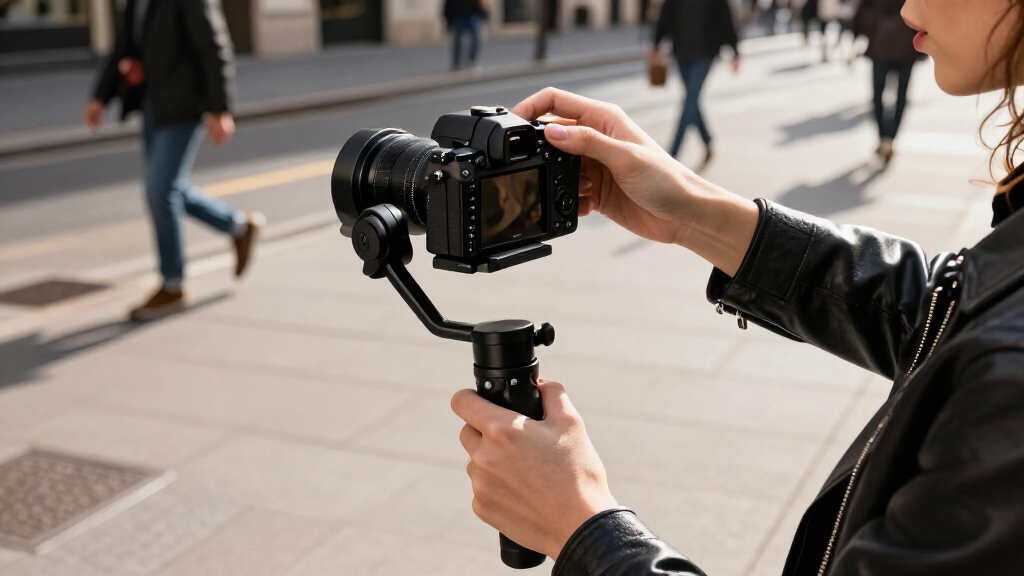
I evaluated these eleven gimbals based on their specific compatibility with current mirrorless camera bodies, focusing on payload headroom, motor torque, and stabilization smoothness. Since mirrorless cameras vary significantly in weight and lens size, I prioritized models that offer adjustable axes and quick-release plates compatible with popular brands like Sony, Canon, and Nikon. I also assessed the user interface, looking for intuitive touchscreens and app connectivity that reduce setup time on location.
Ranking was determined by balancing performance against practicality. For instance, while a high-payload gimbal is powerful, it becomes a liability if it is too heavy for handheld use. I favored models that strike a balance between stabilization quality and ergonomics, ensuring they are suitable for both static shots and dynamic movement. Additional points were awarded for features like native vertical shooting, battery life, and accessory ecosystem availability.
Factors to Consider When Choosing Camera Gimbals Mirrorless
Selecting a gimbal is not just about picking the most expensive option; it is about matching the stabilizer’s capabilities to your specific camera body and shooting style. Here are the key factors to weigh before making your decision.Payload Capacity and Camera Weight
Every gimbal has a maximum payload rating, but this number is often misleading if taken at face value. Manufacturers test with lightweight prime lenses, so a 2.5 kg payload rating might not account for a heavy zoom lens or a large cage. You should calculate your total rig weight, including the camera body, lens, batteries, and any accessories, and then choose a gimbal that exceeds this total by at least 20-30%. This headroom ensures the motors are not strained, which preserves battery life and maintains stabilization quality during fast movements.
Balance Time and Axis Adjustment
Time spent balancing a gimbal is time not spent shooting. Look for models with tool-less axis locks and wide adjustment ranges, which allow you to fine-tune the center of gravity quickly. The DJI RS 4 series, for example, features a redesigned roll axis that simplifies balancing for heavier lenses. If you switch between different camera bodies or lens combinations frequently, a gimbal with intuitive mechanical adjustment points will save you hours over the course of a year.
Control Interface and User Experience
The ease of changing modes, adjusting speed, and accessing settings matters more than you might think. A large, responsive touchscreen allows for quick adjustments without pulling out a phone. Models like the FeiyuTech SCORP 2 integrate AI tracking directly into the interface, which can be a game-changer for solo creators. Conversely, gimbals that rely solely on physical buttons and small OLED screens can be frustrating to operate in bright sunlight or while wearing gloves.
Battery Life and Power Delivery
Real-world battery life is often lower than advertised, especially when using the touchscreen or connecting external accessories. Check if the gimbal supports PD charging and if it can power your camera or monitor via USB-C. The DJI RS 4 Mini and similar compact models often have shorter runtimes, which may require carrying spare batteries for long shoots. Consider whether you prefer a quick-swap battery system or a standard USB-C charging workflow, as this impacts your field workflow significantly.
Native Vertical Shooting and Orientation
With the rise of social media, native vertical shooting has become a standard expectation. Some gimbals, like the older DJI RSC 2, require you to physically rotate the gimbal or use a separate accessory for vertical video, which disrupts the workflow. Newer models like the DJI RS 4 and Zhiyun Weebill 3E allow you to switch to vertical orientation instantly via a button press. This feature is not just about convenience; it affects the mechanical balance and motor load, so dedicated vertical axes are superior to makeshift solutions.
Frequently Asked Questions
Do I really need a gimbal if my mirrorless camera has IBIS?
In-body image stabilization (IBIS) is excellent for reducing high-frequency shake, such as walking or minor hand tremors, but it cannot correct for low-frequency movements like panning errors, tilts, or walking jerks. A gimbal provides mechanical stabilization that smooths out these broader movements, creating the cinematic ‘floating’ look that IBIS alone cannot achieve. If you shoot handheld video while walking or running, a gimbal is still necessary. However, if you primarily shoot static shots or slow pans from a tripod, IBIS might be sufficient, and you could skip the gimbal to save weight and cost.
Can I use a DSLR gimbal for a mirrorless camera?
Generally, yes, because the mounting standards are similar, and many DSLR gimbals have higher payload capacities that easily handle smaller mirrorless bodies. However, you need to check the quick-release plate compatibility and the physical dimensions of the gimbal arm. Some older DSLR gimbals have larger motors and heavier bodies that may be overkill for a small mirrorless setup, making them awkward to handle for extended periods. If you are moving from a DSLR to a lighter mirrorless system, you might find a dedicated lightweight mirrorless gimbal more ergonomic and easier to balance.
Is the AI tracking feature on gimbals like the FeiyuTech SCORP reliable?
AI tracking on gimbals is useful for solo creators who need to keep a subject centered without a dedicated operator, but it is not foolproof. It works best with high contrast subjects against simple backgrounds and can struggle in low light or with cluttered scenes. You should view it as a helper tool rather than a replacement for manual framing. For professional client work or complex scenes, manual control is still far more reliable, so do not base your entire purchasing decision solely on the AI tracking feature unless you are primarily shooting solo content.
How much does the weight of the gimbal matter for handheld shooting?
Weight is a critical factor because fatigue sets in quickly when holding a gimbal with a camera attached. A setup weighing 3 kg might feel manageable for five minutes but becomes painful after twenty. Lighter gimbals like the DJI RS 4 Mini allow for longer shooting sessions and more dynamic movements without tiring your arms. If you plan to shoot for extended periods or perform complex camera moves, prioritize a lighter setup even if it means sacrificing some payload headroom. Always test the total weight of your rig before committing to a gimbal.
Should I buy a combo kit or just the gimbal body?
Combo kits usually offer better value and convenience because they include essential accessories like the handle, charging hub, carrying case, and sometimes a follow focus motor. Buying these items separately often costs more and takes up more time. For beginners, a combo kit ensures you have everything needed to start shooting immediately. However, if you already own compatible accessories or prefer custom setups, the bare gimbal body might be cheaper. Check the contents of each kit carefully, as some ‘combos’ may exclude items you need, such as the vertical shooting accessory.
Conclusion
To summarize the best options for different needs: The DJI RS 4 is the best overall choice for its balance of power, ease of use, and modern features. If you need a premium, all-in-one solution for heavy full-frame rigs, the DJI RS 3 Combo remains a strong contender, though the RS 4 series is generally more refined. For beginners or those on a budget, the Zhiyun Weebill 3E offers excellent value with its integrated lighting and compact form factor. If portability is your top priority, the DJI RS 4 Mini is the standout pick for smaller mirrorless bodies. Finally, for creators who rely on automated subject tracking, the FeiyuTech SCORP 2 provides unique AI capabilities that competitors lack. Choose the model that best matches your camera weight and shooting frequency to get the most out of your investment.
Fall Picks
fall essentials
As an affiliate, we earn on qualifying purchases.