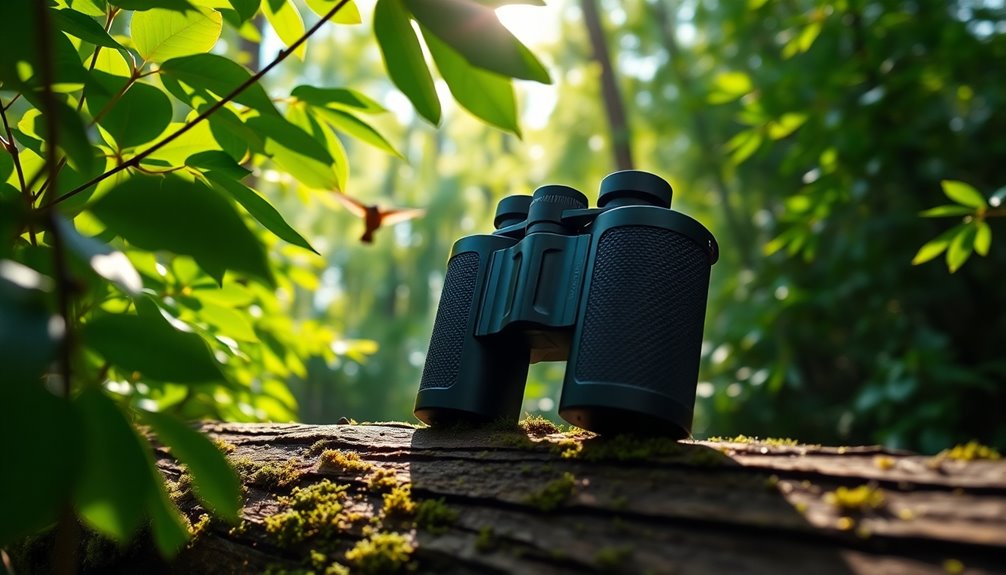

For most birders, the Celestron Nature DX 8×42 is my best overall pick: its 8x magnification is easier to hold steady while tracking birds, and its 42mm objectives suit varied daylight conditions. The Athlon Optics Midas UHD 8×42 is a standout for buyers who want a more premium 8×42 option, while the Vortex Triumph HD 10×42 offers greater magnification for more distant subjects. Choosing binoculars for bird watching means balancing reach against a wider, steadier view, along with size, weather protection, and ease of focusing. Very high magnification can look appealing on paper but may be harder to use without support. Continue reading for the full breakdown and advice on matching a pair to your birding habits.

Get your wardrobe favorites delivered free with Prime
- Fast, free delivery on millions of items
- Prime Video, Amazon Music and more included
- Member-only deals all year
Key Takeaways
- 8×42 models lead the birding-friendly choices: the Celestron Nature DX and Athlon Midas UHD pair manageable magnification with larger objectives, a practical combination for following active birds.
- The top picks serve different priorities: I rank the Celestron as the balanced choice, the Athlon as the premium option, and the Vortex Triumph HD as the pick for birders who prefer 10x reach.
- High magnification brings a steadiness tradeoff: several 18x, 20x, and 200x-labeled options promise greater reach, but high power can make locating and tracking birds harder when hand-held.
- Compact pairs favor portability over viewing comfort: the 8×21 and 10×25 models are easier to carry, while their smaller objectives are less suited to dim conditions than 42mm binoculars.
- Phone adapters are an extra, not a birding essential: models such as the Adasion 12×42 and Aurosports 15×42 add a way to capture images, but the binoculars’ steadiness, view, and focus matter more for identifying birds.
| 20×50 Waterproof Binoculars for Adults |  | Best for Distant, Stationary Viewing | Magnification: 20x | Objective lens diameter: 50 mm | Field of view: 168 yards at 1,000 yards | VIEW ON AMAZON | See Our Full Breakdown |
| Vortex Triumph HD 10×42 Binoculars |  | Best All-Around Birding Pick | Magnification: 10x | Objective lens diameter: 42 mm | Prism type: Roof prism | VIEW ON AMAZON | See Our Full Breakdown |
| Deesoo 20×52 Binoculars for Adults |  | Best High-Power Tripod Option | Magnification: 20x | Objective lens diameter: 52 mm | Field of view: 168 ft at 1,000 yards | VIEW ON AMAZON | See Our Full Breakdown |
| 18×56 UHD Waterproof Binoculars with Phone Adapter |  | Best for Long-Range Viewing and Phone Capture | Magnification: 18x | Objective lens diameter: 56 mm | Field of view: 340 ft | VIEW ON AMAZON | See Our Full Breakdown |
| Occer 12×25 Compact Binoculars for Adults and Kids |  | Best Compact Carry | Magnification: 12x | Objective lens diameter: 25 mm | Field of view: 273 ft at 1,000 yards | VIEW ON AMAZON | See Our Full Breakdown |
| Aurosports 10×25 Compact Binoculars |  | Best Lightweight Travel Pick | Magnification: 10x | Objective lens diameter: 25 mm | Prism: Porro, BAK4 | VIEW ON AMAZON | See Our Full Breakdown |
| WOZEL 20×70 Binoculars for Adults |  | Best for Stationary Long-Range Viewing | Magnification: 20x | Objective lens diameter: 70 mm | Prism: Roof, BAK4 | VIEW ON AMAZON | See Our Full Breakdown |
| Sfeoot 20×50 Binoculars for Adults |  | Best High-Magnification Weather-Ready Pick | Magnification: 20x | Objective lens diameter: 50 mm | Prism: BAK-4 Porro | VIEW ON AMAZON | See Our Full Breakdown |
| Compact 8×21 Waterproof Binoculars for Adults and Kids |  | Best for Young or First-Time Birders | Magnification: 8x maximum; another listing detail says 12x | Objective lens diameter: 21 mm | Prism: Roof | VIEW ON AMAZON | See Our Full Breakdown |
| Adasion 12×42 Binoculars with Phone Adapter and Tripod |  | Best Overall for Versatile Field Birding | Magnification: 12x | Objective lens diameter: 42 mm | Prism: Roof, BAK4 | VIEW ON AMAZON | See Our Full Breakdown |
| FLYANT 200×25 Compact Binoculars |  | Best for Lightweight Carry | Magnification: 200x | Objective lens diameter: 25 mm | Prism type: Porro prism | VIEW ON AMAZON | See Our Full Breakdown |
| Aurosports 15×42 Bird Watching Binoculars with Phone Adapter |  | Best for Long-Range Phone Photos | Magnification: 15x | Objective lens diameter: 42 mm | Prism type: BAK-4 | VIEW ON AMAZON | See Our Full Breakdown |
| Celestron Nature DX 8×42 Waterproof Binoculars |  | Best for All-Round Birding | Magnification: 8x | Objective lens diameter: 42 mm | Field of view: 7.4 degrees | VIEW ON AMAZON | See Our Full Breakdown |
| Hontry 10×25 Compact Binoculars for Adults and Kids |  | Best Compact Pick for Families | Magnification: 10x | Objective lens diameter: 25 mm | Prism type: Porro prism, BaK-4 | VIEW ON AMAZON | See Our Full Breakdown |
| Athlon Optics Midas UHD 8×42 Waterproof Binoculars |  | Best Premium Image Detail | Magnification: 8x | Objective lens diameter: 42 mm | Eye relief: 17.2 mm | VIEW ON AMAZON | See Our Full Breakdown |
| binoculars for bird watching | Magnification | Objective lens diameter | Water resistance | Field of view |
|---|---|---|---|---|
| 20×50 Waterproof Binoculars fo | 20x | 50 mm | Waterproof; do not immerse | 168 yards at 1,000 yards |
| Vortex Triumph HD 10×42 Binocu | 10x | 42 mm | Waterproof | 0.67 degrees |
| Deesoo 20×52 Binoculars for Ad | 20x | 52 mm | Not water resistant | 168 ft at 1,000 yards |
| 18×56 UHD Waterproof Binocular | 18x | 56 mm | Waterproof and fogproof | 340 ft |
| Occer 12×25 Compact Binoculars | 12x | 25 mm | Waterproof | 273 ft at 1,000 yards |
| Aurosports 10×25 Compact Binoc | 10x | 25 mm | Water resistant | 362 ft |
| WOZEL 20×70 Binoculars for Adu | 20x | 70 mm | Not water resistant | 175 degrees |
| Sfeoot 20×50 Binoculars for Ad | 20x | 50 mm | Waterproof; avoid immersion | — |
| Compact 8×21 Waterproof Binocu | 8x maximum; another listing detail says 12x | 21 mm | Resists rain splashes; not submersible | — |
| Adasion 12×42 Binoculars with | 12x | 42 mm | IPX7 waterproof; fog-proof | 367 yards per 1,000 yards |
| FLYANT 200×25 Compact Binocula | 200x | 25 mm | Waterproof | 5.2 degrees |
| Aurosports 15×42 Bird Watching | 15x | 42 mm | — | — |
| Celestron Nature DX 8×42 Water | 8x | 42 mm | Waterproof; nitrogen-purged | 7.4 degrees |
| Hontry 10×25 Compact Binocular | 10x | 25 mm | Waterproof | 362 ft |
| Athlon Optics Midas UHD 8×42 W | 8x | 42 mm | Waterproof; argon-purged | 8.1 degrees; 426 ft at 1,000 yards |
More Details on Our Top Picks
20×50 Waterproof Binoculars for Adults
20x magnification makes this pair suited to watching birds across open fields or wetlands, where getting closer is not an option. Its 50 mm objectives and coated BAK4 Porro prisms support light gathering, but the 2.5 mm exit pupil limits how bright the view can feel compared with lower-power options such as the Vortex Triumph HD 10×42. The listed 168-yard field of view at 1,000 yards is also relatively narrow, so finding a moving bird and following it can take more effort. High magnification tends to amplify hand movement; a tripod mount is useful for steadier observation, especially during longer sessions. The rubber-coated body adds grip, and water resistance helps for ordinary outdoor use, though it should not be immersed. I’d choose these for distant, mostly stationary subjects, not fast-moving birds or casual handheld scanning.
Pros:- 20x magnification brings distant subjects closer
- 50 mm objectives and multilayer-coated BAK4 Porro optics support light gathering
- Tripod mount can help steady the high-power view
- Rubber-coated body provides a textured grip and everyday water resistance
Cons:- High magnification makes handheld viewing more susceptible to shake
- 2.5 mm exit pupil can produce a dimmer view than the Vortex Triumph HD 10×42
- Narrow 168-yard field of view makes tracking birds harder; body should not be immersed
Best for: Birders watching distant, relatively stationary birds from a hide, overlook, or other spot where they can use a tripod.
Not ideal for: Birders who follow small, fast-moving birds by hand or need a wide view for locating subjects quickly.
- Magnification:20x
- Objective lens diameter:50 mm
- Field of view:168 yards at 1,000 yards
- Prism type:BAK4 Porro
- Exit pupil:2.5 mm
- Eye relief:26 mm
- Focus type:Manual center focus
- Weight:0.89 kg
- Water resistance:Waterproof; do not immerse
Our verdict“Choose these for distant birds viewed from a steady position, but pick the Vortex Triumph HD 10×42 for easier handheld tracking.”
Vortex Triumph HD 10×42 Binoculars
The 10×42 format is a practical balance for birding: 10x magnification brings birds closer without making hand movement as pronounced as it can be with the 18×56 or 20x models here, while 42 mm objectives suit varied daylight conditions. Fully multi-coated HD optics are aimed at clear, color-accurate views, useful when distinguishing plumage. Compared with the Occer 12×25, this full-size pair gives up pocketable portability for larger objectives and a more substantial carry. At 2.3 lb, that extra size and weight may wear on longer walks, and the stated design is for light-duty glassing rather than specialist long-range work. Waterproof, fogproof, and shockproof construction adds reassurance outdoors; adjustable eyecups and a supplied harness help with fit and carrying. I rank it highest for general birding because it avoids the main compromises of both tiny compacts and high-power models.
Pros:- 10×42 configuration balances reach and handheld stability
- Fully multi-coated HD optics support clear, color-accurate views
- Waterproof, fogproof, and shockproof construction suits outdoor use
- Adjustable eyecups, diopter, and included GlassPak harness support fit and carrying
Cons:- At 2.3 lb, it is heavier to carry than the Occer 12×25
- Designed for light-duty glassing rather than specialized long-range viewing
Best for: Birders who want one dependable full-size pair for trails, parks, and everyday wildlife watching.
Not ideal for: Hikers prioritizing minimum pack weight or birders who need very high magnification for distant, stationary subjects.
- Magnification:10x
- Objective lens diameter:42 mm
- Prism type:Roof prism
- Eye relief:17 mm
- Exit pupil:4.2 mm
- Field of view:0.67 degrees
- Weight:2.3 lb
- Water resistance:Waterproof
- Included accessories:Neck strap and adjustable GlassPak harness
Our verdict“Pick the Vortex for a sturdy, versatile birding pair; choose the Occer if compact carry matters more than full-size optics.”
Deesoo 20×52 Binoculars for Adults
20x magnification and 52 mm objectives favor distant observation over quick scanning, making this a specialized choice for watching birds across open terrain. Fully multi-coated BAK-4 optics and a 5 mm exit pupil are more generous on paper than the 2.5 mm exit pupil of the 20×50 Waterproof Binoculars for Adults. That comparison does not erase the central limitation: high power can make handheld views unsteady, so the tripod-compatible design matters for extended sessions, and the tripod is not included. Its 168-foot field of view at 1,000 yards gives little room for tracking a bird in flight. Unlike the waterproof 18×56 UHD, this Deesoo model is not water resistant, so damp weather calls for caution. I’d favor it when magnification and a stable viewing position matter more than weather protection or spontaneous birding.
Pros:- 20x magnification supports long-distance observation
- 52 mm objectives and fully multi-coated BAK-4 optics
- 5 mm exit pupil is larger than the 20×50 model’s listed 2.5 mm exit pupil
- Tripod-compatible for steadier extended viewing
Cons:- Not water resistant, so it is poorly suited to wet birding conditions
- High magnification and narrow field of view complicate handheld tracking
- Tripod is not included
Best for: Birders who observe distant birds from a fixed, dry location and already own a compatible tripod.
Not ideal for: Birders who watch in rain, need a grab-and-go handheld pair, or frequently track birds in flight.
- Magnification:20x
- Objective lens diameter:52 mm
- Field of view:168 ft at 1,000 yards
- Prism type:BAK-4 roof prism
- Lens coating:Fully multi-coated
- Eye relief:26 mm
- Exit pupil:5 mm
- Weight:2.18 lb
- Water resistance:Not water resistant
Our verdict“Choose the Deesoo for tripod-based viewing from a dry location, not for all-weather walks or following birds in flight.”
18×56 UHD Waterproof Binoculars with Phone Adapter
This pair combines 18x magnification with 56 mm objectives, targeting distant birding and lower-light periods where a larger objective can be useful. Its waterproof and fogproof construction gives it an advantage over the non-water-resistant Deesoo 20×52 for birders who cannot rely on dry weather. The tradeoff is that 18x still magnifies hand shake and makes it harder to acquire or follow birds than the Vortex Triumph HD 10×42. It is tripod adaptable, which helps during prolonged observation. A supplied smartphone adapter offers a way to record a view, though phone photos through binoculars can take patience to align. The listed 5 mm eye relief may not suit many eyeglass wearers, despite adjustable eyecups, so I would check fit carefully before choosing it for glasses-on birding.
Pros:- 18x magnification and 56 mm objectives suit distant viewing
- Waterproof and fogproof construction is better suited to wet conditions than the Deesoo 20×52
- Tripod adaptable for steadier observation
- Includes a smartphone adapter for photo and video capture
Cons:- High magnification can make handheld views shaky and bird tracking difficult
- Listed 5 mm eye relief may be restrictive for eyeglass wearers
- Phone photography through binoculars can require careful alignment
Best for: Birders watching distant subjects in variable weather who also want to try capturing views through a smartphone.
Not ideal for: Eyeglass wearers who need generous eye relief, or birders who mainly follow fast-moving birds without a tripod.
- Magnification:18x
- Objective lens diameter:56 mm
- Field of view:340 ft
- Prism type:Dielectric-coated BAK4 roof prism
- Lens coating:Fully multi-coated
- Eye relief:5 mm
- Exit pupil:5 mm
- Water resistance:Waterproof and fogproof
- Mount and compatibility:Handheld or tripod adaptable; smartphone compatible
Our verdict“Choose this model for distant, tripod-assisted birding and phone capture, but favor the Vortex for easier handheld tracking or the Deesoo for a dry, high-power setup.”
Occer 12×25 Compact Binoculars for Adults and Kids
The compact 12×25 format makes the Occer easier to stash for a hike or travel day than the full-size Vortex Triumph HD 10×42, and its 0.39 kg weight suits buyers who do not want a larger pair around their neck. At 12x, it offers more reach than many small binoculars, but the 25 mm objectives and 2.5 mm exit pupil leave less light-gathering margin than the Vortex’s 42 mm objectives. The 273-foot field of view at 1,000 yards is relatively generous beside the high-power models here, helping with locating and following birds. Adjustable eyecups, 20 mm eye relief, and fully multi-coated BAK-4 optics add flexibility for glasses wearers and casual outdoor use. It is waterproof, but not intended for complete darkness. I’d pick it for portability first, not as a substitute for a larger pair in dim conditions.
Pros:- Compact body is easier to pack than the full-size Vortex Triumph HD 10×42
- 273 ft field of view at 1,000 yards helps locate and follow birds
- Fully multi-coated BAK-4 optics and adjustable eyecups
- 20 mm eye relief and diopter adjustment support fit flexibility
Cons:- 25 mm objectives and 2.5 mm exit pupil offer less light-gathering potential than the Vortex 10×42
- Not intended for viewing in complete darkness
- 12x magnification can be less steady handheld than lower-power binoculars
Best for: Travelers, casual hikers, and families who want a lightweight pair for daytime birding and outdoor outings.
Not ideal for: Birders who spend long sessions in dim light or want a larger objective lens for more demanding viewing conditions.
- Magnification:12x
- Objective lens diameter:25 mm
- Field of view:273 ft at 1,000 yards
- Prism type:BAK-4
- Coating:Fully multi-coated
- Eye relief:20 mm
- Exit pupil:2.5 mm
- Weight:0.39 kg
- Water resistance:Waterproof
Our verdict“Choose the Occer for lightweight daytime birding and travel, but pick a full-size model such as the Vortex for more demanding light conditions.”
Aurosports 10×25 Compact Binoculars
The Aurosports 10×25 is the easiest fit here for birders who want binoculars they can keep in a small bag or carry on a walk without much weight. At 8.8 ounces, it is far easier to bring along than the much larger WOZEL 20×70, though its 10x magnification gives less reach for distant birds. The 25 mm objectives and 2.5 mm exit pupil are a tradeoff: they keep the body compact but gather less light than the Adasion 12×42, so this is better suited to daytime outings than dim woodland or dawn viewing. Fully multi-coated optics, BAK4 prisms, and a center-focus wheel provide a useful birding setup, while the water-resistant—not waterproof construction calls for care in wet weather. I’d choose it for portability, not maximum detail at long range.
Pros:- Very light 8.8-ounce body is easy to carry on long walks
- 10x magnification offers more reach than many compact binoculars
- BAK4 prisms and fully multi-coated optics support clear daytime viewing
- Twist-up eyecups and adjustable eye width accommodate different users
Cons:- Small 25 mm objectives and 2.5 mm exit pupil limit low-light performance
- Water resistance is not specified as waterproof protection
- 10x magnification can make handheld views less steady than lower-power binoculars
Best for: Daytime birders and travelers who prioritize a very light, compact pair for casual walks and quick sightings.
Not ideal for: Birders who often watch at dawn, in deep shade, or in heavy rain, or who need a stable view of distant birds.
- Magnification:10x
- Objective lens diameter:25 mm
- Prism:Porro, BAK4
- Lens coating:Fully multi-coated
- Field of view:362 ft
- Eye relief:14.8 mm
- Weight:8.8 oz
- Water resistance:Water resistant
Our verdict“Choose the Aurosports if low weight and pocketable size matter more than bright views in shade or long-range stability.”
WOZEL 20×70 Binoculars for Adults
The WOZEL 20×70 is the long-range specialist in this group: its 20x magnification can bring distant birds closer, and the 70 mm objectives collect more light than the compact Aurosports 10×25. That reach comes with a substantial handling cost. At about 2.8 pounds, this pair is better suited to a hide, backyard, or other stationary viewing spot than a long birding walk; the high magnification can also make handheld movement more noticeable, so a tripod is worth planning for. Its manual focus and BAK4, fully multi-coated optics support the intended distant-viewing use, but the reported field of view is narrow compared with the Adasion 12×42’s broad stated coverage. I’d skip it for roaming in changeable weather: it is not water resistant.
Pros:- 20x magnification is suited to observing distant birds
- 70 mm objective lenses gather more light than compact models
- BAK4 prisms and fully multi-coated, anti-reflective optics
- Rubber-coated grip helps keep the heavier body secure
Cons:- About 2.8 pounds is cumbersome for extended walks
- High magnification can make handheld viewing unsteady
- Not water resistant, limiting use in rain or damp conditions
Best for: Birders who watch distant subjects from a fixed position and are comfortable carrying heavier binoculars or using support.
Not ideal for: Hikers and field birders who need a light, weather-ready pair for scanning nearby birds while moving.
- Magnification:20x
- Objective lens diameter:70 mm
- Prism:Roof, BAK4
- Optics coating:Fully multi-coated, anti-reflective
- Exit pupil:3.5 mm
- Field of view:175 degrees
- Weight:1.19 kg (about 2.8 lbs)
- Water resistance:Not water resistant
Our verdict“Pick the WOZEL for distant birds from a stable viewing spot, but choose the Adasion 12×42 for more practical mobile birding.”
Sfeoot 20×50 Binoculars for Adults
The Sfeoot 20×50 offers a middle ground between the exceptionally large WOZEL 20×70 and compact options such as the Aurosports 10×25: it keeps the 20x magnification but uses smaller 50 mm objectives. That makes it less bulky than the WOZEL on paper, while its waterproof and fog-resistant construction is a clear advantage for outdoor birding. The tradeoff is that 20x power can be demanding when following a moving bird by hand, and its 2.5 mm exit pupil does not promise especially bright views in low light. Center focus and diopter adjustment help tailor the view, and the included bag and strap make carrying simpler. I’d favor it over the non-water-resistant WOZEL when weather protection matters, but not for quick scanning or dawn birding.
Pros:- 20x magnification offers strong reach for distant subjects
- Waterproof and fog-resistant design suits outdoor use better than the WOZEL 20×70
- BAK-4 Porro prisms and fully multi-coated optics
- Center focus, diopter adjustment, and supplied carrying accessories
Cons:- High magnification makes it harder to keep moving birds centered by hand
- 2.5 mm exit pupil is a limitation in dim conditions
- Waterproofing does not mean it can be immersed
Best for: Birders seeking high magnification with weather protection for observing distant birds in fair or unsettled conditions.
Not ideal for: People who mainly follow fast-moving birds, need a bright dawn-and-dusk view, or want compact binoculars for all-day carrying.
- Magnification:20x
- Objective lens diameter:50 mm
- Prism:BAK-4 Porro
- Exit pupil:2.5 mm
- Focus:Center focus, manual
- Diopter adjustment:±4 diopters
- Water resistance:Waterproof; avoid immersion
- Included accessories:Cleaning cloth, user manual, carrying bag, neck strap
Our verdict“Choose the Sfeoot if you want 20x reach with weather protection, but pick the Adasion 12×42 for easier handheld tracking and a brighter exit pupil.”
Compact 8×21 Waterproof Binoculars for Adults and Kids
For a child, a new birder, or anyone who wants a simple pair for occasional sightings, these 8×21 compact binoculars put ease of carrying ahead of reach and low-light performance. Their 8x magnification is less demanding to hold steady than the 10x Aurosports 10×25, which can help when a beginner is trying to keep a bird in view. The small 21 mm objectives, however, gather less light than the Adasion 12×42’s 42 mm lenses, so these are best for bright daytime use rather than shaded trails or dawn. The rubber-armored aluminum body is described as resistant to rain splashes, not submersion. There is also a specification conflict: the product is listed as 8x maximum, while another detail mentions 12x. I’d buy only if that ambiguity is acceptable.
Pros:- 8x magnification is easier to steady than the 10x Aurosports for many beginners
- Lightweight 5.3-ounce body is easy for children to carry
- Rubber-armored body resists impacts and rain splashes
- Center focus, diopter adjustment, and carrying accessories are included
Cons:- 21 mm objectives are poorly suited to dim woodland or dawn viewing
- The listed 8x maximum conflicts with another 12x specification
- Water resistance does not cover full submersion
Best for: Families and beginners who want a very light pair for daytime birding, travel, and learning basic focus adjustments.
Not ideal for: Experienced birders who need dependable specifications, strong low-light viewing, or binoculars for wet conditions beyond rain splashes.
- Magnification:8x maximum; another listing detail says 12x
- Objective lens diameter:21 mm
- Prism:Roof
- Coating:FMC multilayer coating
- Exit pupil:2.6 mm
- Diopter adjustment:±5 diopters
- Weight:5.3 oz
- Water resistance:Resists rain splashes; not submersible
Our verdict“This is a sensible starter pair for bright-day outings if you value low weight and can accept the conflicting magnification information.”
Adasion 12×42 Binoculars with Phone Adapter and Tripod
The Adasion 12×42 is the most balanced choice here for birders who want useful reach without stepping up to the harder-to-hold 20x Sfeoot or the heavy WOZEL 20×70. Its 42 mm objectives and 4 mm exit pupil give it a stronger case for shaded conditions than the 25 mm Aurosports, while 12x magnification can help with birds across open fields. The cost of that extra reach is a narrower, less forgiving handheld view than a lower-power pair may provide, so it is not my first choice for quickly tracking birds flitting through close foliage. IPX7 waterproofing and fog-proof construction make it better prepared for wet outings than the water-resistant Aurosports. A phone adapter and tripod add digiscoping options, though the supplied tripod is described as only 2.2 inches, which may limit stability.
Pros:- 42 mm objectives and 4 mm exit pupil support brighter viewing than compact 21–25 mm models
- IPX7 waterproof and fog-proof design is suited to wet outdoor outings
- 12x magnification offers more reach than the Aurosports 10×25
- Phone adapter, tripod mount, and twist-up eyecups add flexibility
Cons:- 12x magnification can make handheld tracking less steady than lower-power binoculars
- At 1.2 pounds, it is heavier than compact options
- The supplied tripod is described as only 2.2 inches, limiting its likely stability
Best for: Field birders who want a weather-sealed, mid-size option for open habitats, varied conditions, and occasional phone photography.
Not ideal for: Birders who prioritize the widest, easiest handheld view for close, fast-moving birds or expect the included small tripod to provide robust support.
- Magnification:12x
- Objective lens diameter:42 mm
- Prism:Roof, BAK4
- Lens coating:Fully multi-coated
- Field of view:367 yards per 1,000 yards
- Exit pupil:4 mm
- Eye relief:13.6–19.6 mm
- Water resistance:IPX7 waterproof; fog-proof
- Weight:1.2 lbs
Our verdict“Choose the Adasion for a versatile, weather-ready birding pair with useful reach and phone-photo accessories, but not if easy close-range tracking is your priority.”
FLYANT 200×25 Compact Binoculars
At just 6.4 ounces, the FLYANT is the easiest option here to keep in a day bag for casual birding walks, and its waterproof body gives it an advantage over the Aurosports 15×42, which has no water-resistance rating specified. BAK4 prisms and fully multi-coated optics are useful features, but the listed 200x magnification is a major concern: that level of power is exceptionally hard to hold steady in a pocket-sized binocular and may not deliver usable detail for handheld bird watching. The stated 5.2-degree field of view is also narrower than the Celestron Nature DX 8×42’s 7.4 degrees, making it harder to follow birds in motion. I’d treat this as a lightweight casual option, not a dependable tool for identifying distant or fast-moving birds.
Pros:- Very light at 6.4 ounces for easy day-pack carry
- Waterproof design suits changeable outdoor conditions
- BAK4 prisms and fully multi-coated optics
- Includes a strap, storage bag, and cleaning cloth
Cons:- Listed 200x magnification is likely difficult to hold steady by hand
- 5.2-degree field of view is narrower than the Celestron Nature DX 8×42
- 25 mm objectives gather less light than the 42 mm models for dim conditions
Best for: Travelers and families who prioritize a very light, waterproof pair for occasional wildlife viewing and are comfortable with the magnification specification’s limitations.
Not ideal for: Birders who need stable, repeatable magnification to identify distant birds or track quick movement; the unusually high listed power is poorly matched to this compact form.
- Magnification:200x
- Objective lens diameter:25 mm
- Prism type:Porro prism
- Optics:BAK4 prisms; fully multi-coated lenses
- Field of view:5.2 degrees
- Eye relief:19.6
- Weight:6.4 ounces
- Water resistance:Waterproof
Our verdict“Choose the FLYANT for lightweight, casual outings, but skip it if steady magnification and dependable bird identification matter most.”
Aurosports 15×42 Bird Watching Binoculars with Phone Adapter
The Aurosports pairs 15x magnification with 42 mm objectives, giving distant birds more apparent size than the Celestron Nature DX 8×42. That reach comes with a handheld tradeoff: at 15x, small hand movements are magnified, so tracking a moving bird can be harder than with the Celestron’s steadier 8x view. The included smartphone adapter gives this model a distinct role for birders who want to try recording what they see, while fully multi-coated optics and BAK-4 prisms support light transmission. Twist-up eyecups also make eye placement more adaptable for glasses wearers. I’d rank it below the Celestron for general-purpose birding because no waterproof rating is specified and the higher magnification narrows its easy-to-use appeal.
Pros:- 15x magnification brings distant birds closer than the Celestron Nature DX 8×42
- 42 mm objectives with fully multi-coated optics and BAK-4 prisms
- Twist-up eyecups accommodate glasses wearers
- Smartphone adapter and carrying accessories are included
Cons:- 15x power makes handheld tracking more difficult than with an 8x binocular
- No waterproof rating is specified
- At 1.32 pounds, it is heavier to carry than compact 25 mm options
Best for: Birders who watch from open overlooks, want extra reach over an 8x binocular, and value an included phone adapter for documenting sightings.
Not ideal for: People who regularly follow fast-moving birds handheld or bird in wet weather; high magnification is harder to steady, and no water-resistance rating is specified.
- Magnification:15x
- Objective lens diameter:42 mm
- Prism type:BAK-4
- Lens coating:Fully multi-coated
- Focus type:Center focus
- Weight:1.32 lbs
- Eyecups:Twist-up
- Included accessories:Smartphone adapter, neck strap, carrying case, eyepiece cover, objective lens caps
Our verdict“Pick the Aurosports if reach and phone capture matter more than easy handheld tracking or confirmed weather protection.”
Celestron Nature DX 8×42 Waterproof Binoculars
The Nature DX is the most balanced birding choice in this group: 8x magnification is easier to steady and aim than the Aurosports 15×42, while its 42 mm objectives and 7.4-degree field of view suit changing light and moving birds. A 6.5-foot close focus also helps with nearby subjects such as birds at feeders or in brush. Its waterproof, nitrogen-purged body is better prepared for damp field conditions than the Hontry 10×25, which is more compact but has smaller objectives. The tradeoff is convenience: this model’s listed individual focus is less handy when switching quickly between near and far birds, and a tripod adapter is not included despite its tripod-adaptable design. I’d put it ahead of the higher-power choices for general outdoor bird watching.
Pros:- 8x magnification and a 7.4-degree field of view help with tracking moving birds
- 42 mm objectives, fully multi-coated lenses, and phase-coated prisms
- Waterproof and nitrogen-purged for outdoor use
- Close focus of 6.5 feet and tripod adaptability
Cons:- Listed individual focus is less convenient for quick distance changes
- Tripod adapter is not included
- Bulkier to carry than compact 25 mm binoculars such as the Hontry 10×25
Best for: Birders who want one weather-ready binocular for trails, feeders, and moving wildlife, especially those who value a wide view over extra magnification.
Not ideal for: Travelers seeking the smallest, lightest kit or birders who need rapid focus changes between subjects at different distances.
- Magnification:8x
- Objective lens diameter:42 mm
- Field of view:7.4 degrees
- Close focus:6.5 ft
- Eye relief:17.5 mm
- Prism type:Roof prism, BaK-4
- Coatings:Fully multi-coated lenses; phase-coated prisms
- Water resistance:Waterproof; nitrogen-purged
- Mount:Tripod-adaptable
Our verdict“Choose the Nature DX for versatile, weather-ready birding with an easy-to-follow wide view rather than maximum reach or minimum size.”
Hontry 10×25 Compact Binoculars for Adults and Kids
The Hontry offers a practical step up in magnification from the FLYANT 200×25 without abandoning a compact, travel-friendly format. Its 10x power is a more plausible handheld choice for casual bird watching, and the adjustable interpupillary distance helps it fit a range of adults and children. That family flexibility matters more here than the extra reach of the Aurosports 15×42, which is heavier and harder to steady. The cost of the Hontry’s small 25 mm objectives is limited light gathering, so it is less suited to shaded woods or early and late birding than the Celestron Nature DX 8×42. Its 10 mm eye relief may also feel restrictive for some glasses wearers. I’d choose it for portability and shared use, not as a main low-light field binocular.
Pros:- Compact format with 10x magnification for casual bird identification
- Adjustable 60–75 mm interpupillary distance accommodates different users
- Fully multi-coated optics and BaK-4 prisms
- Waterproof body and included strap and carrying bag
Cons:- 25 mm objectives are less suited to low-light viewing than the Celestron Nature DX 8×42’s 42 mm lenses
- 10 mm eye relief may be uncomfortable for some glasses wearers
- 10x magnification is less steady for moving subjects than an 8x model
Best for: Families who want a compact binocular that adults and children can share on daytime outings, travel, and casual birding.
Not ideal for: Birders who often watch at dawn, dusk, or in dense shade, or glasses wearers who need generous eye relief.
- Magnification:10x
- Objective lens diameter:25 mm
- Prism type:Porro prism, BaK-4
- Interpupillary distance:60–75 mm
- Eye relief:10 mm
- Field of view:362 ft
- Weight:0.6 lbs
- Water resistance:Waterproof
- Focus type:Center focus
Our verdict“The Hontry suits families and travelers who want compact daytime birding optics, but low-light specialists should choose a 42 mm model instead.”
Athlon Optics Midas UHD 8×42 Waterproof Binoculars
The Midas UHD is the premium-leaning choice for birders who care about color fidelity and image clarity. Its ED glass helps reduce color fringing, while fully multi-coated optics and phase-corrected BAK-4 prisms support bright, well-defined views. Compared with the Celestron Nature DX 8×42, it offers a wider stated field of view—8.1 degrees versus 7.4—which can make scanning habitat and keeping a bird in view easier. Both use 8x magnification and 42 mm objectives, but the Athlon adds argon purging for waterproofing and thermal stability. Its 25-ounce weight is the main compromise for long walks, and it is heavier than the compact Hontry. I’d choose it when image quality and a broad view outweigh minimizing carry weight.
Pros:- ED glass helps reduce color fringing around high-contrast subjects
- 8.1-degree field of view is wider than the Celestron Nature DX 8×42
- Fully multi-coated optics and phase-corrected BAK-4 prisms
- Waterproof, argon-purged construction and 17.2 mm eye relief
Cons:- 25-ounce weight may feel heavy during extended carry
- Larger and less portable than the Hontry 10×25
- Manual focus requires deliberate adjustment when changing viewing distances
Best for: Dedicated birders and eyeglass wearers seeking a wide, detailed 8×42 view for extended observation in varied weather.
Not ideal for: Hikers who prioritize the lightest possible kit or buyers who mainly need a basic, compact binocular for occasional outings.
- Magnification:8x
- Objective lens diameter:42 mm
- Eye relief:17.2 mm
- Field of view:8.1 degrees; 426 ft at 1,000 yards
- Close focus:2 m (6.5 ft)
- Weight:25 oz
- Prism type:Roof prism, BAK-4 glass
- Optics:ED glass; fully multi-coated
- Water resistance:Waterproof; argon-purged
Our verdict“Choose the Midas UHD for a wide, color-faithful 8×42 view and weather protection, provided its weight suits your birding kit.”

How We Picked
I ranked these binoculars around the jobs birders actually need them to do: find a bird quickly, hold it in view, focus as it moves, and show enough detail for identification. I gave greater weight to practical magnification, objective size, weather protection, handling, and the likely ease of using the binoculars without a tripod. For bird watching, a stable, usable view can be more valuable than a high magnification figure that is difficult to keep steady.
The ranking favors versatile configurations such as 8×42 and 10×42, then accounts for each model’s distinct strengths and limits. Compact models place higher for portability needs, not for all-around birding, while high-power options lose ground when their reach comes with greater shake or a narrower field of view. I also treated included phone adapters as a convenience rather than a substitute for optical performance. Product names and listed specifications inform these comparisons; I do not present them as personal testing results.
Factors to Consider When Choosing Binoculars For Bird Watching
Specs make more sense when tied to where and how you watch birds. I would start with your usual habitat and carrying habits, then weigh magnification, objective size, comfort, and weather protection against one another. These choices can prevent a common mismatch: buying extra reach that makes everyday viewing less steady.
Choose Magnification for the Birds You Can Track
Magnification is the first number in a binocular specification, such as 8x or 10x. Higher power enlarges distant birds, but it also magnifies hand movement and can make it harder to locate a bird quickly. For woodland trails and active birds, 8x is often a forgiving starting point because it tends to offer a steadier, easier-to-follow view. Open marshes or shorelines may reward 10x when birds sit farther away and you can hold the binoculars securely. A frequent mistake is choosing 18x or 20x for the promise of reach without accounting for shake or the need for support. If you cannot track a moving bird comfortably, extra magnification will not help much with identification.
Match Objective Size to Light and Carrying Comfort
The second number describes the objective lens diameter in millimeters, so 8×42 has 42mm objectives. Larger objectives can gather more light, which may help around dawn, dusk, or beneath a dense canopy, but they usually add bulk. Smaller formats such as 8×21 or 10×25 make sense when a light bag or pocketable setup matters more than viewing in dim conditions. Do not assume a compact pair will feel equally comfortable during a long watch; small lenses can also make eye placement more exacting. For general daytime birding, a 42mm model is a useful middle ground if you are willing to carry the extra size. Think about how long you will hold the binoculars up, not just how far they fit in your pack.
Check Field of View and Close-Focus Needs
A wide field of view makes it easier to find birds in branches, scan flocks, and keep a moving subject in sight. Close focus matters when you watch butterflies, nearby feeder visitors, or birds that approach a trail. These specifications are easy to overlook when attention goes straight to magnification, yet they shape the actual viewing experience. Compare field-of-view figures only when they use the same measurement basis, such as feet at a set distance or degrees. A narrow view can feel restrictive even when the image is highly magnified. If possible, give more weight to quick target acquisition than to a small increase in apparent size.
Prioritize Handling, Eye Relief, and Focus Control
Comfort affects whether you can keep binoculars on a bird long enough to identify it. Check whether the eyecups and eye relief work with your glasses, and whether the body is comfortable for your hands. A focus wheel should be reachable and easy to adjust without losing the subject; quick focus changes matter when a bird shifts from a nearby branch to a distant perch. Heavier binoculars may feel stable at first but become tiring during extended walks or prolonged glassing. If you share binoculars with a child or another adult, adjustable fit and simple controls deserve extra attention. A good paper specification cannot compensate for a pair that is awkward to hold or focus.
Treat Waterproofing and Durability as Use-Case Decisions
Weather protection matters if you bird in rain, near water, or in damp early-morning conditions. A waterproof label is useful, but check the maker’s stated protection and care guidance rather than assuming every model handles the same exposure. Rubber armor can improve grip and help protect the body from knocks, though it does not make binoculars indestructible. Keep lenses clean with suitable tools; wiping grit across glass can scratch coatings. If your outings are mostly fair-weather walks, lighter weight may matter more than rugged construction. For frequent outdoor use, protection and a secure grip can be worth carrying a little more bulk.
Spend on the View Before Accessories
Phone adapters and tripods can be useful for recording a sighting or steadying high-magnification binoculars, but they add setup steps and do not improve the view by themselves. A phone camera may struggle to align with the eyepiece, especially while a bird is moving. Before paying extra for accessories, decide whether your main goal is observing, documenting, or both. A stable hand-held image and easy focus are usually more useful for identification than an elaborate attachment kit. Tripod support makes more sense for long sessions with powerful binoculars than for quick walks. Choose accessories around a real habit, not simply because they are included.
Frequently Asked Questions
Are 8×42 binoculars better for bird watching than 10×42?
Neither configuration is best for every birder. An 8×42 pair is generally easier to hold steady and offers a wider view that can help when locating birds in cover. A 10×42 pair enlarges distant subjects more, which can be useful in open habitats, though the narrower view and increased shake may take more practice. If most of your birding is in woods or involves fast-moving birds, I would start with 8×42. If you often watch across water or fields and can keep the view steady, 10×42 may suit you better.
Will 20x binoculars help me identify distant birds more clearly?
They can make distant subjects appear larger, but that does not automatically make identification easier. High magnification also amplifies hand movement, narrows the view, and can slow down the process of finding a bird. Many birders benefit more from a steady 8x or 10x image than from a shaky, highly enlarged one. A tripod can help with high-power binoculars, but it reduces spontaneity when birds move or appear briefly. Choose 20x only if distant viewing is a regular need and you are prepared to support the binoculars.
Can compact 8×21 or 10×25 binoculars work as my only birding pair?
They can work if portability is your main priority and you mostly bird in good daylight. Their smaller objectives typically make them less comfortable in dim conditions than larger 42mm models, and compact bodies may be harder to hold steadily for extended viewing. That tradeoff matters at dawn, dusk, or under thick foliage. For occasional walks, travel, or a child’s first pair, a compact model can be a sensible choice. If you plan long outings or want one pair for varied light, a full-size model is usually the more adaptable option.
Do I need a phone adapter to record birds through binoculars?
No; a phone adapter is optional and is mainly for people who want to try taking photos or video through the eyepiece. Aligning a phone camera can take patience, and a moving bird may leave the frame before the setup is ready. The adapter does not replace a comfortable grip, clear focus, or a stable view. For identification, binoculars without an adapter can be quicker to use in the field. If documenting sightings is part of your routine, treat the adapter as a convenience and check that it fits your phone securely.
What should glasses wearers check before choosing birding binoculars?
Look at eye relief, which describes how far your eyes can sit from the eyepieces while still seeing the full image. Glasses can keep your eyes farther back, so insufficient eye relief may cut off the edges of the view. Adjustable eyecups help, but the fit can vary depending on your frames and how you wear them. If you can inspect a pair in person, try it with your usual glasses and check that the full field remains visible. Also confirm that the focus and diopter controls are easy to adjust without removing your glasses.
Conclusion
For the broadest range of birding, I recommend the Celestron Nature DX 8×42 as the best overall choice in this lineup. The Vortex Triumph HD 10×42 is a strong fit for birders who value added reach, while the Athlon Optics Midas UHD 8×42 is my premium pick among the listed 8×42 options. Beginners who want a straightforward, steady format can start with the Celestron; buyers choosing mainly for portability should compare the Occer 12×25, Aurosports 10×25, and Hontry 10×25, accepting their smaller objectives. For a specific need such as distant viewing, the higher-power models may appeal, but I would favor a tripod-supported setup rather than expecting a very high-power pair to be easy to hand-hold. Match the binoculars to your habitat and how long you carry them, then choose the option whose tradeoffs you can live with.
Halloween Picks

Vexalify 11-Inch Halloween Pumpkin Fog Machine with 12-Color Lights

MGparty 14.5 ft Halloween Inflatable Walk-In Pumpkin House with LED Lights

Halloween Inflatable Haunted House Maze – 20×20 ft with Removable Roof and Blower
As an affiliate, we earn on qualifying purchases.