For beginner drones with 4K cameras, I’d start with the DJI Mini 4K for its stabilized footage and straightforward flying experience. The Potensic ATOM SE is a strong alternative for shoppers who want a compact GPS drone, while the DJI Neo suits casual, close-range flights and quick social clips. The main tradeoff is between a more stable camera and beginner-friendly controls versus extra batteries, a screen controller, or a lower-cost feature set. A 4K label alone does not tell you how steady the video will look or how easy the drone is to control. Read on for the full comparison and advice on choosing the right fit.

Get your wardrobe favorites delivered free with Prime
- Fast, free delivery on millions of items
- Prime Video, Amazon Music and more included
- Member-only deals all year
Key Takeaways
- Camera stabilization separates the leading picks: The DJI Mini 4K’s 3-axis gimbal gives it a different video advantage from models that rely on electronic stabilization or list 4K resolution without the same gimbal setup.
- Beginner-friendly means more than GPS: GPS features can help with position holding and return functions, but clear controls and a manageable learning curve still matter when choosing among the Holy Stone, Potensic, and other GPS models.
- Bundles trade convenience for portability: Models supplied with multiple batteries or a controller display can reduce setup friction, but they may be bulkier than the DJI Mini 4K or DJI Neo.
- Similar product names deserve a close check: The NAFYRE N11 PRO and NAFYRE N11 Pro listings, as well as several screen-controller drones, overlap in their advertised features; buyers should verify the exact model and included accessories.
- Camera resolution is not a complete video-quality measure: Gimbal design, electronic stabilization, flight steadiness, and how footage is stored affect the result as much as a 4K claim.
| Bwine F7GIM Drone with 4K Camera and 3-Axis Gimbal |  | Best for Stabilized Video | Camera: 18MP; 6K photos and 4K video at 30fps | Stabilization: 3-axis brushless gimbal | Total flight time: 70 minutes; 35 minutes per battery | VIEW ON AMAZON | See Our Full Breakdown |
| Holy Stone HS175D GPS Drone with 4K Camera |  | Best Beginner-Friendly Lightweight Pick | Camera: 4K video and photos | Video output: 3840 × 2160 | Lens field of view: 110° | VIEW ON AMAZON | See Our Full Breakdown |
| Ruko F11PRO 2 Drone with 6K Camera | 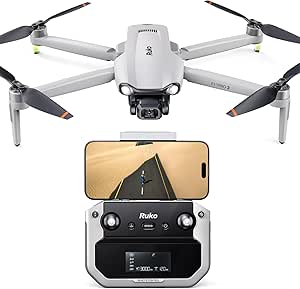 | Best for Long-Range Practice | Camera: 4K video at 30fps; 19MP, 6K still photos | Gimbal: 3-axis mechanical | Total flight time: Up to 70 minutes with two batteries | VIEW ON AMAZON | See Our Full Breakdown |
| Potensic ATOM SE GPS Drone with 4K EIS Camera | 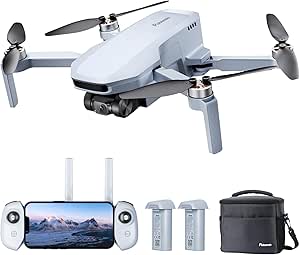 | Best Sub-249g Flight-Time Pick | Weight: Under 249 g (8.8 oz) | Camera: 4K at 30fps; 12MP photos | Stabilization: ShakeVanish electronic image stabilization | VIEW ON AMAZON | See Our Full Breakdown |
| GPS Foldable Drone with 4K Camera, EIS, 4.5-Inch Controller Display, and Three Batteries |  | Best Built-In Screen and Battery Bundle | Camera wording: 4K camera; listed video capture resolution is 2K | Effective still resolution: 8.3 MP | Video output resolution: 3.7 MP | VIEW ON AMAZON | See Our Full Breakdown |
| DJI Mini 4K Camera Drone Combo with 2 Batteries |  | Best Overall for Beginner 4K Video | Weight: Under 249 g | Camera: 4K UHD | Stabilization: 3-axis gimbal | VIEW ON AMAZON | See Our Full Breakdown |
| NAFYRE N11 PRO 4K GPS Drone with Camera |  | Best for Extended Practice Time | Weight: 180 g | Photo resolution: 4096 × 3072 | Effective still resolution: 8.3 MP | VIEW ON AMAZON | See Our Full Breakdown |
| REDRIE HK33 4K GPS Camera Drone with 3 Batteries |  | Best Multi-Battery 4K Value | Camera resolution: 4K video | Effective still resolution: 8 MP | Gimbal: 2-axis | VIEW ON AMAZON | See Our Full Breakdown |
| BLINORY HK55 GPS Drone with 4K Camera |  | Best Compact GPS Feature Set | Camera resolution: 4K | Camera angle adjustment: 90° electrically adjustable | Transmission: 5 GHz FPV | VIEW ON AMAZON | See Our Full Breakdown |
| 4K GPS Drone with 4.5-inch Screen Controller, Brushless Motors, Foldable Quadcopter |  | Best for Phone-Free Live Viewing | Video capture resolution: 4K | Effective still resolution: 8.3 MP | Controller display: Built-in 4.5-inch screen | VIEW ON AMAZON | See Our Full Breakdown |
| Foldable GPS Drone with 4K Camera and Screen Controller |  | Best for Phone-Free Flying | Camera: 4K UHD, 90° adjustable lens | Controller: 4.5-inch built-in screen | Motor: Brushless | VIEW ON AMAZON | See Our Full Breakdown |
| PLEGBLE 4K Camera Drone with Brushless Motor |  | Best for Beginner-Friendly Controls | Camera: 4K, 120° wide-angle view, 90° adjustable lens | Flight time: About 30 minutes | Batteries: Two lithium-ion batteries | VIEW ON AMAZON | See Our Full Breakdown |
| DJI Neo Mini Drone with 4K UHD Camera |  | Best Compact Pick | Weight: 135 g | Video: 4K UHD, stabilized | Still photos: 12 MP | VIEW ON AMAZON | See Our Full Breakdown |
| NAFYRE N11 Pro 4K UHD GPS Drone with Camera |  | Best for Longer Outings | Camera: 4K; 12.4 MP still photos | Weight: 0.55 lb | Batteries: Three | VIEW ON AMAZON | See Our Full Breakdown |
| Holy Stone HS360S GPS Drone with 4K UHD Camera |  | Best for GPS Flight Practice | Camera: 4K UHD, 3840 × 2160P photos and video | Camera sensor: 1/3-inch CMOS GalaxyCore | Camera angle: 85° wide-angle, adjustable within 90° | VIEW ON AMAZON | See Our Full Breakdown |
| beginner drones 4k camera | Weight | Camera |
|---|---|---|
| Bwine F7GIM Drone with 4K Came | 357 g | 18MP; 6K photos and 4K video at 30fps |
| Holy Stone HS175D GPS Drone wi | — | 4K video and photos |
| Ruko F11PRO 2 Drone with 6K Ca | — | 4K video at 30fps; 19MP, 6K still photos |
| Potensic ATOM SE GPS Drone wit | Under 249 g (8.8 oz) | 4K at 30fps; 12MP photos |
| GPS Foldable Drone with 4K Cam | — | — |
| DJI Mini 4K Camera Drone Combo | Under 249 g | 4K UHD |
| NAFYRE N11 PRO 4K GPS Drone wi | 180 g | — |
| REDRIE HK33 4K GPS Camera Dron | 249 g | — |
| BLINORY HK55 GPS Drone with 4K | 16 ounces (as listed) | — |
| 4K GPS Drone with 4.5-inch Scr | — | — |
| Foldable GPS Drone with 4K Cam | 220 g | 4K UHD, 90° adjustable lens |
| PLEGBLE 4K Camera Drone with B | Under 249 g | 4K, 120° wide-angle view, 90° adjustable lens |
| DJI Neo Mini Drone with 4K UHD | 135 g | — |
| NAFYRE N11 Pro 4K UHD GPS Dron | 0.55 lb | 4K; 12.4 MP still photos |
| Holy Stone HS360S GPS Drone wi | Less than 250 g | 4K UHD, 3840 × 2160P photos and video |
More Details on Our Top Picks
Bwine F7GIM Drone with 4K Camera and 3-Axis Gimbal
The Bwine F7GIM pairs 4K video at 30fps with a 3-axis mechanical gimbal, which is a stronger fit for smooth footage than the Potensic ATOM SE’s electronic image stabilization. Its 70 minutes of stated flight time across two batteries also leaves more room for repeated practice or longer outdoor shoots than the Holy Stone HS175D’s 46-minute two-battery total. GPS return and beginner mode help make those longer flights less intimidating, while Follow Me, Orbit, and Waypoint modes give new pilots room to expand. The tradeoff is a wired USB-C connection for live viewing, so phone setup is less convenient than a wireless workflow. At 357g, it also weighs more than sub-249g options, and its storage support has format and capacity limits.
Pros:- Three-axis brushless gimbal stabilizes 4K video mechanically.
- Up to 70 minutes of stated flight time with two batteries.
- GPS return, beginner mode, and automated flight modes support learning.
- Includes FAA-compliant Remote ID.
Cons:- Wired USB-C live-view connection is less convenient than wireless phone linking.
- At 357g, it exceeds the sub-249g weight of models such as the Potensic ATOM SE.
- SD card use has formatting requirements and capacity is limited to under 128GB.
Best for: New outdoor filmmakers who prioritize gimbal-stabilized 4K footage, long practice sessions, and GPS-assisted flight.
Not ideal for: Travelers seeking a sub-249g drone or pilots who want wireless phone viewing and fewer memory-card restrictions.
- Camera:18MP; 6K photos and 4K video at 30fps
- Stabilization:3-axis brushless gimbal
- Total flight time:70 minutes; 35 minutes per battery
- Transmission range:3 km (10,000 ft)
- Weight:357 g
- Battery capacity:3200 mAh
- Connectivity:Wired digital transmission via USB-C
- Compliance:FAA Remote ID compliant
Our verdict“Choose the Bwine F7GIM if smooth gimbal video and extended flight time matter more than low weight or wireless viewing.”
Holy Stone HS175D GPS Drone with 4K Camera
The Holy Stone HS175D is a straightforward entry point for beginners who want GPS assistance and 4K capture without stepping up to a larger gimbal-equipped drone. Its under-249g weight and foldable body make it easier to pack than the 357g Bwine F7GIM, while GPS auto return can help recover the aircraft after a weak signal or low-battery warning. A 110-degree lens and camera adjustment up to 90 degrees offer flexible framing, and Follow Me, Waypoint, and Point of Interest modes provide ways to practice beyond basic piloting. The main compromise is that the listing gives up to 46 minutes across two batteries, while each battery is listed at 23 minutes; actual time varies with conditions. Unlike the Bwine, it does not specify a mechanical gimbal, so buyers focused on smooth footage should look elsewhere.
Pros:- Under-249g weight and foldable design suit travel.
- GPS auto return supports recovery when signal or battery is low.
- Two batteries provide up to 46 minutes of stated total flight time.
- Includes Follow Me, Waypoint Flight, and Point of Interest modes.
Cons:- No mechanical gimbal is specified, unlike the Bwine F7GIM and Ruko F11PRO 2.
- Listed 23-minute per-battery time means the 46-minute total requires both batteries.
- Maximum range is 500 meters, shorter than the listed ranges of several alternatives.
Best for: First-time pilots who want a foldable, sub-249g GPS drone for casual outdoor 4K clips and basic automated modes.
Not ideal for: Video-focused beginners who need mechanical gimbal stabilization or a clearly stated long-range transmission system.
- Camera:4K video and photos
- Video output:3840 × 2160
- Lens field of view:110°
- Camera adjustment:Up to 90°
- Flight time:Up to 46 minutes with two batteries
- Maximum range:500 meters
- Weight class:Under 249 g
- Connectivity and formats:Wi-Fi; MP4 video and JPEG photos
Our verdict“Pick the HS175D for lightweight, GPS-assisted beginner flying, but choose a gimbal-equipped model if steady video is your priority.”
Ruko F11PRO 2 Drone with 6K Camera
For beginners who expect to fly mostly in open spaces, the Ruko F11PRO 2 combines a 10,000-foot stated transmission range with a 3-axis mechanical gimbal and 70 minutes of flight time across two batteries. That gives it a more ambitious outdoor profile than the Holy Stone HS175D, whose listed range is 500 meters, while matching the Bwine F7GIM’s stated flight duration and gimbal type. Its 4K/30fps video and 19MP stills cover both video and photo use, and GPS auto return plus one-key takeoff and landing help make it approachable for newer pilots. The range is most useful where there is plenty of open space; it does not make the drone a good choice for flying far from the pilot or around obstacles. No obstacle-avoidance sensors are specified, so careful piloting remains necessary.
Pros:- Three-axis mechanical gimbal supports smoother 4K/30fps video.
- Up to 70 minutes of stated flight time with two smart batteries.
- 10,000-foot stated transmission range suits open-area scouting.
- GPS auto return and one-key takeoff and landing ease basic operation.
Cons:- No built-in obstacle-avoidance sensors are specified.
- Long stated range does not remove the need for careful line-of-sight piloting.
- Its 70-minute total requires two batteries, rather than a single uninterrupted flight.
Best for: Beginner-to-intermediate pilots who want stabilized 4K footage and long-range practice in open outdoor areas.
Not ideal for: New pilots planning to fly near trees, buildings, or other obstacles, or shoppers who want specified obstacle detection.
- Camera:4K video at 30fps; 19MP, 6K still photos
- Gimbal:3-axis mechanical
- Total flight time:Up to 70 minutes with two batteries
- Battery capacity:3200 mAh per battery
- Maximum transmission range:10,000 ft
- Flight modes:GPS Follow, Waypoint, Cruise Control, Orbit, Circle Fly
- Control:Remote control with Wi-Fi/RF
- Formats:JPEG photos and MP4 video
Our verdict“Choose the Ruko F11PRO 2 for gimbal-stabilized footage and extended open-area flights, not for sensor-assisted flying in cluttered places.”
Potensic ATOM SE GPS Drone with 4K EIS Camera
The Potensic ATOM SE makes a practical case for beginners who want a lightweight GPS drone without giving up useful flight time: it weighs under 249g and is listed for up to 62 minutes across two batteries. Compared with the Holy Stone HS175D, that is a longer stated total, and its 4km transmission range is also more generous than the HS175D’s 500 meters. The 4K camera uses a Sony sensor and ShakeVanish electronic stabilization, which helps manage vibration without adding a mechanical gimbal. That keeps the package light, but buyers seeking the mechanical stabilization found on the Bwine F7GIM or Ruko F11PRO 2 may prefer those models for video work. The ATOM SE also relies on a smartphone connection and does not include a microSD card, so setup and storage require extra preparation.
Pros:- Under-249g weight makes it a lightweight alternative to the Bwine F7GIM.
- Up to 62 minutes of stated flight time with two batteries.
- 4K camera with electronic image stabilization.
- GPS return and multiple flight modes support beginner practice.
Cons:- Electronic stabilization is not the same as the mechanical gimbals on the Bwine and Ruko.
- A microSD card is not included.
- Smartphone connection is required for operation.
Best for: Travel-minded beginners who want a sub-249g GPS drone, extended total flight time, and app-based control.
Not ideal for: Pilots who need mechanical gimbal stabilization, want to fly without a smartphone, or expect a memory card in the box.
- Weight:Under 249 g (8.8 oz)
- Camera:4K at 30fps; 12MP photos
- Stabilization:ShakeVanish electronic image stabilization
- Total flight time:62 minutes with two batteries
- Battery capacity:2500 mAh
- Transmission range:4 km (13,123 ft)
- Wind resistance:Level 5
- Compatibility:iOS 11+ and Android 7.0+
Our verdict“Choose the ATOM SE if low weight and long combined flight time matter more than mechanical gimbal stabilization or phone-free operation.”
GPS Foldable Drone with 4K Camera, EIS, 4.5-Inch Controller Display, and Three Batteries
This foldable GPS drone stands apart from the Bwine F7GIM and Ruko F11PRO 2 by putting a 4.5-inch display in the controller, so beginners can view live footage without mounting a phone. Three batteries provide up to 90 minutes of stated total flight time, the longest combined figure in this group, and its 193g weight makes it easy to pack. But the camera wording needs careful reading: despite the 4K label, the supplied specs list 2K video capture and 3.7MP video output, so it is not the right pick for buyers specifically seeking recorded 4K video. By contrast, the Bwine and Ruko list 4K/30fps capture with mechanical gimbals. The built-in screen and included 32GB card make this a convenient starter bundle, though its stated 3,280-foot range is shorter than those models’ ranges.
Pros:- Built-in 4.5-inch HD controller display avoids relying on a phone screen.
- Three batteries provide up to 90 minutes of stated combined flight time.
- 193g foldable design is compact and lightweight.
- Includes a 32GB SD card and GPS return features.
Cons:- Listed video capture resolution is 2K, despite the 4K camera wording.
- Listed video output resolution is 3.7MP, below the 4K capture claim.
- Stated control range of 3,280 feet is shorter than the Bwine and Ruko ranges.
Best for: Beginners who value a self-contained controller screen, included storage, and several batteries for practice.
Not ideal for: Buyers who require recorded 4K video, mechanical gimbal stabilization, or a longer stated control range.
- Camera wording:4K camera; listed video capture resolution is 2K
- Effective still resolution:8.3 MP
- Video output resolution:3.7 MP
- Camera tilt:90° adjustable
- Controller display:4.5-inch HD screen
- Total flight time:Up to 90 minutes with three batteries
- Maximum control range:3,280 feet
- Weight and included storage:193 g; 32GB SD card
Our verdict“Choose this model for its built-in screen and three-battery practice bundle, but skip it if genuine recorded 4K video is a requirement.”
DJI Mini 4K Camera Drone Combo with 2 Batteries
The DJI Mini 4K is my strongest all-round pick here for a beginner who wants dependable 4K footage without moving to a heavier, more complicated drone. Its 3-axis gimbal gives it a stabilization advantage over the REDRIE HK33’s 2-axis setup, which can matter when turns or light wind make footage look unsettled. At under 249 g, it is also easy to pack, while GPS Return to Home and QuickShots give new pilots useful help without replacing basic flying skills.
The two-battery combo is rated for up to 62 minutes total, a practical step up from the BLINORY HK55’s 32-minute total. The tradeoff is a setup annoyance for Android users: DJI Fly must be downloaded from DJI’s website rather than Google Play. Choose this over feature-packed alternatives if camera stabilization and a familiar beginner flight experience matter more than a built-in screen.
Pros:- 4K video paired with a 3-axis gimbal for steadier footage
- Under-249 g weight makes it easy to carry
- Two batteries provide up to 62 minutes of stated total flight time
- GPS Return to Home and QuickShots support beginner-friendly flying
Cons:- Android users must download DJI Fly from DJI’s website
- The controller relies on a connected phone rather than a built-in screen
Best for: First-time pilots who want stabilized 4K footage, GPS return, and enough combined battery time for several practice sessions.
Not ideal for: Android buyers who want every app installation to come directly from Google Play, or pilots who require a controller with a built-in display.
- Weight:Under 249 g
- Camera:4K UHD
- Stabilization:3-axis gimbal
- Maximum video transmission:10 km
- Wind resistance:38 kph (Level 5)
- Maximum flight time:Up to 62 minutes with two batteries
- Included controller:DJI RC-N1C
- Included accessories:Shoulder bag, propeller holder, spare propellers
Our verdict“I’d choose the Mini 4K for a first camera drone when smooth stabilized 4K and approachable flight features matter more than an integrated controller display.”
NAFYRE N11 PRO 4K GPS Drone with Camera
The NAFYRE N11 PRO earns a place for buyers who value time in the air more than true 4K video. Three batteries are listed for up to 90 minutes of combined flight, giving a new pilot more room to practice than the DJI Mini 4K combo’s 62-minute total. GPS and optical-flow positioning, automatic return, and modes such as Follow Me and Tap Fly add a broad set of training and shooting options.
That battery advantage comes with a firm camera compromise: its video tops out at 2048 × 1080, despite the 4K wording in the product title. The 4096 × 3072 photo resolution is separate from video capability, so I would not pick this for buyers whose main goal is 4K clips. It makes more sense as a flight-practice and feature-learning choice than as a camera-first alternative to the REDRIE HK33.
Pros:- Three batteries are rated for up to 90 minutes of combined flight
- GPS and optical-flow positioning support outdoor and indoor hovering
- Automatic return can respond to low battery or signal loss
- Includes Follow Me, Tap Fly, and Point of Interest modes
Cons:- Maximum stated video resolution is 2048 × 1080, not 4K
- The camera’s video capability falls short of the DJI Mini 4K and REDRIE HK33
Best for: New pilots who want long practice sessions, GPS-assisted positioning, and automated flight modes, and can accept video below 4K.
Not ideal for: Buyers choosing specifically for 4K video or anyone who expects the product title to match its stated video resolution.
- Weight:180 g
- Photo resolution:4096 × 3072
- Effective still resolution:8.3 MP
- Video resolution:2048 × 1080
- Maximum flight time:Up to 90 minutes with 3 batteries
- Maximum control range:3328 ft
- Camera lens:100° wide angle, adjustable up to 90°
- Positioning:GPS and optical flow
- Motors:Brushless
Our verdict“I’d pick the N11 PRO for extensive beginner practice and GPS flight features, but not for a roundup shortlist built around genuine 4K video.”
REDRIE HK33 4K GPS Camera Drone with 3 Batteries
The REDRIE HK33 balances 4K recording, GPS flight aids, and three included batteries in a foldable package. Its 2-axis gimbal is a meaningful step below the DJI Mini 4K’s 3-axis stabilization, but still gives it a stabilization feature that many entry-level camera drones lack. GPS return, follow, and route-planning modes can make early flights easier to manage, while the adjustable 90° camera angle helps frame shots without repositioning the aircraft.
REDRIE lists 50–60 minutes total across three batteries; that is useful for practice, though it means landing and swapping packs rather than flying continuously. The stated transmission range is also shorter than the DJI Mini 4K’s 10 km figure. I’d favor the HK33 when multiple batteries and automated modes are priorities, and the DJI when stronger gimbal stabilization and longer listed transmission range carry more weight.
Pros:- Records 4K video and 8 MP stills
- Three batteries provide up to 50–60 minutes of stated total flight time
- GPS return, follow, and route-planning features aid new pilots
- Foldable design and included carrying case support portability
Cons:- 2-axis gimbal offers less stabilization than the DJI Mini 4K’s 3-axis gimbal
- Total flight time is split across three batteries
- Video transmission range is listed as up to 300 m, far shorter than the DJI Mini 4K’s stated 10 km
Best for: Beginners who want a foldable 4K drone with several batteries and GPS-assisted flight modes for varied practice sessions.
Not ideal for: Camera-first buyers seeking 3-axis stabilization or pilots who expect the full stated flight time from one battery.
- Camera resolution:4K video
- Effective still resolution:8 MP
- Gimbal:2-axis
- Lens:F2.15 aperture, 110° wide angle
- Camera angle:90° remote-controlled adjustment
- Total flight time:Up to 50–60 minutes across 3 batteries
- Video transmission range:Up to 300 m (985 ft)
- Signal range:Up to 500 m (1,640 ft)
- Weight:249 g
Our verdict“I’d choose the HK33 for a portable 4K starter kit with several batteries, while camera-focused buyers should favor the DJI Mini 4K’s 3-axis gimbal.”
BLINORY HK55 GPS Drone with 4K Camera
The BLINORY HK55 is a foldable 4K option for beginners who want GPS flight aids and a small kit to carry, rather than the longest airtime in this group. It combines GPS auto return with optical-flow assistance and adds Follow Me, waypoint flight, Point of Interest, and gesture selfies. That is a wider set of automated shooting options than the more straightforward DJI Mini 4K offers, though the DJI has the clearer camera advantage with its specified 3-axis gimbal.
Two batteries provide up to 32 minutes total flight time, less than the REDRIE HK33’s stated 50–60 minutes across three packs. BLINORY lists 5 GHz FPV transmission but gives no range, making it harder to judge how far the live view will remain useful. I’d treat it as a feature-rich, portable practice drone, not the pick for extended outings or buyers who need documented transmission distance.
Pros:- 4K camera with electrically adjustable angle
- GPS auto return and optical flow support beginner flight control
- Follow Me, waypoint, Point of Interest, and gesture selfie modes
- Foldable body and storage case make transport easier
Cons:- Two batteries provide up to 32 minutes total, less than the REDRIE HK33’s stated total
- The 5 GHz FPV transmission range is not specified
- No gimbal stabilization details are provided
Best for: Beginners who want a foldable GPS drone with automated flight modes and gesture controls for short local flights.
Not ideal for: Pilots planning long practice sessions or buyers who need a stated FPV transmission range and detailed camera-stabilization information.
- Camera resolution:4K
- Camera angle adjustment:90° electrically adjustable
- Transmission:5 GHz FPV
- Flight time:Up to 32 minutes with two batteries
- Motors:Brushless
- Flight features:GPS auto return, Follow Me, waypoint flight, Point of Interest, gesture selfie, optical flow
- Weight:16 ounces (as listed)
- Design:Foldable
Our verdict“I’d choose the HK55 for portable GPS-assisted flights and varied automated modes, but the REDRIE HK33 is a better fit for longer listed airtime.”
4K GPS Drone with 4.5-inch Screen Controller, Brushless Motors, Foldable Quadcopter
This foldable 4K GPS drone stands out for a built-in 4.5-inch controller screen, so a beginner can view the live feed without mounting a phone or opening an app. That is its clearest advantage over the DJI Mini 4K, which uses the DJI RC-N1C controller. Two batteries are listed for up to 60 minutes of combined flight, close to the DJI combo’s 62-minute figure, and the drone adds GPS auto-return, Follow Me, and waypoint controls.
The screen and battery claim are attractive, but the supplied information does not specify transmission range or gimbal stabilization, so I would not assume its footage will match the DJI’s stabilized 4K output. There are also no obstacle-avoidance sensors, which leaves a novice responsible for keeping clear of trees, walls, and other hazards. Pick it for phone-free viewing; skip it if camera-stability detail matters more.
Pros:- Built-in 4.5-inch screen provides live viewing without a smartphone
- Two batteries are listed for up to 60 minutes of total flight time
- Brushless motors and foldable design
- GPS auto-return, Follow Me, waypoint, and gesture controls
Cons:- No obstacle-avoidance sensors are listed
- Maximum transmission range is not specified
- Gimbal stabilization details are not provided
Best for: Beginners who want live FPV viewing on a controller screen and prefer not to depend on a smartphone during flight.
Not ideal for: New pilots seeking obstacle avoidance, a stated transmission range, or confirmed gimbal stabilization for camera work.
- Video capture resolution:4K
- Effective still resolution:8.3 MP
- Controller display:Built-in 4.5-inch screen
- Item weight:220 g
- Connectivity:Wi-Fi
- Optical sensor technology:Optical flow
- Battery type:Lithium-ion
- Flight time:Up to 60 minutes total with two batteries
- Dimensions:12.28 × 8.27 × 3.15 in
Our verdict“I’d pick this model over the phone-dependent DJI Mini 4K when a built-in screen is the priority, but the DJI is the safer camera-focused choice on the listed stabilization details.”
Foldable GPS Drone with 4K Camera and Screen Controller
The built-in 4.5-inch controller screen is the main reason I’d put this model ahead of phone-dependent picks like the PLEGBLE 4K Camera Drone: you can view the flight feed without mounting a smartphone. GPS return-to-home, including low-battery and signal-loss modes, also gives beginners a useful recovery option outdoors, while optical-flow hovering supports indoor practice. Two batteries are listed for about 60 minutes combined flight time, though that is total time across both packs, not one uninterrupted session. The foldable, 220 g body is easy to pack, but the camera listing offers little detail beyond the 4K claim, so I’d be cautious if verified image quality matters more than the viewing setup. Choose it for the screen and flight safeguards; skip it if you want clearer camera specifications or a phone-based workflow.
Pros:- Built-in 4.5-inch screen displays the flight feed without a smartphone.
- GPS return-to-home includes low-battery and signal-loss modes.
- Two batteries provide approximately 60 minutes of combined flight time.
- Foldable 220 g design is convenient to carry.
Cons:- The product data gives few camera details beyond the 4K claim.
- The stated flight time is shared across two batteries.
- Wi-Fi FPV and the built-in screen may offer less flexibility than a phone-based setup.
Best for: Beginners who want to view the live feed on a controller screen and value GPS return-to-home for outdoor practice.
Not ideal for: Camera-focused buyers who need detailed, verifiable image specifications or pilots who expect 60 minutes from a single battery.
- Camera:4K UHD, 90° adjustable lens
- Controller:4.5-inch built-in screen
- Motor:Brushless
- Flight time:Approximately 60 minutes combined
- Batteries:Two 7.4 V, 1600 mAh lithium-ion batteries
- Navigation:GPS return-to-home; indoor optical-flow mode
- Weight:220 g
- Storage:4 GB SD card
Our verdict“Pick this if a phone-free screen and GPS recovery matter more to you than detailed camera documentation.”
PLEGBLE 4K Camera Drone with Brushless Motor
The PLEGBLE focuses on simple control and playful features rather than the screen-first setup of the Foldable GPS Drone with 4K Camera and Screen Controller. One-key takeoff and landing, stable hovering, and an emergency stop give a new pilot accessible ways to start and respond, while headless mode and gesture photography add low-pressure practice options. Its 120° wide-angle view and adjustable lens offer flexible framing, but app-based FPV depends on a compatible phone and a reliable connection. Around 30 minutes across two batteries is enough for short learning sessions, not extended outings; the NAFYRE N11 Pro’s three-battery setup is better suited to pilots who want more time between charging breaks. I’d choose the PLEGBLE for approachable controls and a compact foldable design, not for long flights or phone-free viewing.
Pros:- One-key takeoff and landing, stable hovering, and emergency stop support learning.
- 120° wide-angle camera view with a 90° adjustable lens.
- Two batteries provide about 30 minutes of flight time.
- Foldable design weighs under 249 g.
Cons:- About 30 minutes of total flight time limits longer outings.
- FPV transmission and app control depend on a compatible phone and connection.
- The listed feature set may feel more focused on tricks and modes than GPS-assisted outdoor navigation.
Best for: First-time flyers who want one-key controls, stable hovering, and basic camera features in a foldable drone.
Not ideal for: Pilots who want long sessions between charging breaks or prefer a live view that does not depend on a phone app.
- Camera:4K, 120° wide-angle view, 90° adjustable lens
- Flight time:About 30 minutes
- Batteries:Two lithium-ion batteries
- Motor:Brushless
- Weight:Under 249 g
- Control:Remote control and app control
- Beginner features:One-key takeoff and landing, stable hovering, emergency stop
- Design:Foldable
Our verdict“Choose the PLEGBLE if easy controls and phone-based FPV matter more than longer flight time or a built-in screen.”
DJI Neo Mini Drone with 4K UHD Camera
At 135 g, the DJI Neo is the lightest, most grab-and-go option in this group, and palm takeoff and landing make the first flight less dependent on mastering a conventional controller. Its stabilized 4K video, 12 MP photos, subject tracking, and eight QuickShots modes give beginners ways to make shareable clips without manually steering every move. That makes it a different proposition from the GPS-oriented Holy Stone HS360S, which emphasizes return-home and waypoint flight rather than hands-off capture. The tradeoff is the standard combo’s single battery, which limits repeat attempts before recharging, and DJI Fly must be downloaded from DJI’s official website. I’d pick the Neo for casual, close-range filming and easy carrying; pilots prioritizing longer outings or GPS flight functions should compare other models in this list.
Pros:- 135 g weight makes it easy to carry.
- Captures stabilized 4K video and 12 MP photos.
- Palm takeoff and landing reduce setup steps.
- Subject tracking and eight QuickShots modes simplify automated filming.
Cons:- The standard combo includes one battery.
- DJI Fly must be downloaded from DJI’s official website.
- Its compact, automated filming focus differs from GPS-focused models such as the Holy Stone HS360S.
Best for: Travelers and casual creators who want a very light drone with palm launch, stabilized 4K video, and automated shot options.
Not ideal for: Beginners seeking multiple included batteries, GPS return-home features, or a traditional flight-training setup as the main focus.
- Weight:135 g
- Video:4K UHD, stabilized
- Still photos:12 MP
- Control options:Controller-free, voice, app, or remote controller
- Flight features:Palm takeoff and landing, subject tracking, eight QuickShots modes
- Connectivity:Bluetooth and Wi-Fi
- Battery:1435 mAh lithium-ion
- Included accessories:Battery and pair of propeller guards
Our verdict“Choose the Neo for lightweight, assisted 4K filming and simple launch, but look elsewhere if extra batteries or GPS flight modes top your list.”
NAFYRE N11 Pro 4K UHD GPS Drone with Camera
The NAFYRE N11 Pro is the flight-time pick here: three batteries provide up to 66 minutes total, giving beginners more chances to practice or reframe a shot before heading back to recharge. That setup has a practical advantage over the Holy Stone HS360S, whose listed flight time is up to 20 minutes, though the NAFYRE’s total still depends on swapping batteries rather than one continuous flight. GPS modes including Follow Me, Tap Fly, Point of Interest, and Auto Return add useful structure for outdoor flying, and its 4K camera lists 12.4 MP stills. At 0.55 lb, it is portable, but the description does not list obstacle-avoidance sensors, so I would not treat it as an indoor-first trainer. I’d choose it for outdoor practice and longer sessions; beginners who need close-quarters protection should look at the DJI Neo’s full-coverage propeller guards.
Pros:- Three batteries provide up to 66 minutes of combined flight time.
- GPS modes include Follow Me, Auto Return, Tap Fly, and Point of Interest.
- 4K camera specification includes 12.4 MP still photos.
- Brushless motors and a lightweight design support portable outdoor use.
Cons:- The 66-minute figure is divided across three batteries and requires battery swaps.
- No dedicated obstacle-avoidance sensors are listed for indoor navigation.
- The camera feed is described for a phone or remote controller, with no built-in screen specified.
Best for: Outdoor beginners who want GPS-assisted flight modes and multiple batteries for longer practice outings.
Not ideal for: Indoor learners who need obstacle-avoidance sensors or pilots expecting the full listed flight time from one battery.
- Camera:4K; 12.4 MP still photos
- Weight:0.55 lb
- Batteries:Three
- Total flight time:Up to 66 minutes
- Control range:3328 feet
- Motor:Brushless
- GPS modes:Follow Me, Auto Return, Tap Fly, Point of Interest
- Dimensions:4.72 × 2.95 × 1.96 in
Our verdict“Pick the NAFYRE for GPS-guided outdoor practice and longer outings, provided you are comfortable swapping batteries and flying without obstacle sensors.”
Holy Stone HS360S GPS Drone with 4K UHD Camera
The HS360S makes sense for beginners who want to learn GPS-assisted outdoor flight rather than rely mainly on automated camera tricks. Return-home, beginner mode, Follow Me, waypoint flight, and point of interest give pilots several ways to build confidence and plan simple routes. Its 4K camera has a 90° adjustable angle, while the 1/3-inch CMOS sensor is a more concrete camera detail than the basic 4K claim listed for the Foldable GPS Drone with 4K Camera and Screen Controller. The drawback is endurance: up to 20 minutes per battery is modest beside the NAFYRE N11 Pro’s three-battery, 66-minute total. The stated 10,000-foot control range is a specification, not a reason for a beginner to fly far away. I’d choose this Holy Stone for GPS learning and route features, but not for extended sessions or a phone-free setup.
Pros:- GPS return-home and beginner mode support more controlled learning.
- Follow Me, waypoint flight, and point-of-interest modes provide route options.
- 4K camera has an adjustable angle and a listed 1/3-inch CMOS sensor.
- Brushless motor and optical-flow positioning are specified.
Cons:- Up to 20 minutes of flight time per battery is limited for extended practice.
- Smartphone connection to the controller requires a data cable.
- The listed 10,000-foot control range does not remove the need for beginners to keep flights manageable.
Best for: New pilots who want GPS return-home, beginner mode, and waypoint features for structured outdoor practice.
Not ideal for: Buyers seeking longer sessions between charges or those who do not want to connect a smartphone to the controller with a data cable.
- Camera:4K UHD, 3840 × 2160P photos and video
- Camera sensor:1/3-inch CMOS GalaxyCore
- Camera angle:85° wide-angle, adjustable within 90°
- Weight:Less than 250 g
- Control range:Up to 10,000 feet
- Flight time:Up to 20 minutes
- Positioning:GPS and optical flow
- Flight features:Follow Me, waypoint flight, point of interest, return home
- Transmission:5G; smartphone connects to controller by data cable
Our verdict“Choose the HS360S if GPS flight modes and beginner support matter more than flight time or a cable-free phone connection.”

How We Picked
I ranked these beginner drones with 4K cameras by the combination of camera stability, flight assistance, control simplicity, portability, and the usefulness of the included setup. A 4K specification mattered, but I gave more weight to whether the camera system could help produce steady footage and whether a new pilot could focus on flying rather than troubleshooting. GPS functions, return features, battery bundles, controller displays, and foldable designs were judged by how much practical help they offer a first-time owner.
The order reflects beginner usability and dependable camera use, not a contest in headline specifications. The DJI Mini 4K ranks ahead for its 3-axis gimbal and accessible all-around role; the Potensic ATOM SE and DJI Neo offer distinct alternatives for compact GPS flying and casual capture. Models advertising higher resolution, long flight time, or bundled accessories can suit particular buyers, but those claims do not outweigh questions about stabilization, exact configuration, and ease of control. Where product names or feature sets overlap, I treat the specific listing and included kit as important parts of the decision.
Factors to Consider When Choosing Beginner Drones 4k Camera
Choosing a first 4K drone means matching the camera setup to the kind of flying you actually plan to do. I’d look beyond resolution and compare how the drone steadies footage, how it behaves during basic maneuvers, and what the bundle asks you to carry or set up.
Check How the Camera Is Stabilized
A 4K label describes recording resolution, not how smooth the footage will look. A mechanical gimbal physically steadies the camera and can be useful when the drone tilts or encounters light movement; electronic stabilization works differently and may crop the image to reduce shake. Before choosing, check the exact camera and stabilization details for the listing rather than relying on a product title. Beginners who want scenic footage may benefit more from stable video than from a higher resolution number. If you mainly want quick clips for a phone, a simpler camera setup may be enough. Think about where you will fly, since gusty conditions can expose stabilization limits quickly.
Separate Flight Assistance From Flying Skill
GPS positioning and return functions can help a drone hold position or head back toward its starting point, but they do not remove the need to learn orientation and basic control. A return feature depends on the drone receiving a reliable signal and having a suitable route; it is not a substitute for keeping the aircraft in view. Read how each model handles return-to-home and low-battery behavior before relying on it. New pilots should practice in open, quiet spaces and learn the controls close to home before attempting longer flights. Do not assume that every feature described as automatic works identically across brands. Pick controls and flight modes you can understand, not just the longest feature list.
Treat Advertised Flight Time as a Planning Figure
Flight-time claims are best treated as a comparison point, not a promise for every outing. Wind, temperature, speed, camera use, and battery condition can affect how long a drone stays airborne. Extra batteries can be more useful to a beginner than a small increase in claimed time because they allow additional practice without waiting for a recharge. Check how many batteries are included in the exact bundle and whether the charging setup supports the way you plan to travel. Leave a reserve for landing instead of using every minute of advertised flight time. A larger bundle may add weight and packing bulk, so balance practice time against portability.
Choose a Controller Setup You Will Actually Use
Some drones use a phone-based controller, while others advertise a built-in screen. A dedicated display can save the step of mounting a phone and may make setup more convenient, but it also adds another component whose screen quality, brightness, and compatibility matter. A phone-based setup may be easier to replace or update, though it can depend on app permissions, cables, and battery life. Check whether the controller and required app work with your phone before buying. Also confirm what the package includes instead of assuming a pictured screen or accessory comes with every version. For a first drone, simple setup can matter more than having the most elaborate controller.
Weigh Portability Against Stability and Included Gear
Foldable designs are easier to pack, but portability does not tell you how the drone will handle or how much kit you need to bring. A compact aircraft with a smaller battery can suit short outings, while a bundle with several batteries may be better for a longer practice session but take up more space. Compare the complete packed setup, including controller, charging gear, and spare batteries, rather than judging the aircraft alone. A light drone may be easier to carry, yet wind can make outdoor flying more demanding. Consider whether your usual flights are in a park, on trips, or close to home. Choose the setup that fits those habits instead of paying attention to foldability by itself.
Verify the Exact Model, Rules, and Replacement Support
Product listings can use similar names for different versions, and bundles may vary in batteries, controllers, and accessories. Match the model number and included components to the listing you intend to buy, especially when two names look nearly identical. Check the maker’s guidance for replacement batteries, propellers, and other wear parts; a beginner benefits from being able to restore a drone after a small mishap. Also check the current local rules for registration, remote identification, and where recreational flights are permitted. Weight claims such as under 249 grams do not by themselves answer every legal question. A little verification before purchase can prevent confusion after delivery.
Frequently Asked Questions
Is a 4K camera enough reason to choose one beginner drone over another?
No. 4K tells you the recording resolution, but it does not describe stabilization, lens quality, exposure handling, or how steady the drone is in flight. For smoother scenic footage, the DJI Mini 4K’s 3-axis gimbal is a meaningful point of difference from models whose listings emphasize 4K or EIS. If you mainly plan to capture short clips for a phone, the simpler camera experience of the DJI Neo may suit you better. Compare actual stabilization details and camera controls before treating resolution as the deciding factor.
Should I choose the DJI Mini 4K or the Potensic ATOM SE as my first GPS drone?
I’d favor the DJI Mini 4K if steady footage and a more complete camera-focused experience lead your priorities. The Potensic ATOM SE is a good alternative if compact GPS flying and electronic image stabilization match your needs better. Neither choice makes learning stick control optional, so consider which controls and setup seem easier for you to use consistently. Check the exact bundle, especially battery count, since kit contents can affect how much practice time you get per outing.
Are multiple batteries more useful than a controller with a built-in screen?
That depends on what slows you down. Extra batteries let you spend more time practicing across a session, while a built-in screen can simplify setup if you do not want to mount and connect a phone. For a new pilot, additional flight time often has more direct learning value, but a phone-dependent setup may be inconvenient if your device is incompatible or low on battery. Check the included accessories and charging method for the specific listing. Compare the full kit rather than treating either feature as automatically better.
Is a drone advertised as under 249 grams exempt from all flying rules?
No. A weight claim does not automatically remove every restriction or requirement. Rules can depend on where you fly, how you use the drone, and current local regulations, so check official guidance for your location before taking off. You still need to follow limits on airspace, safe operation, and keeping the drone within sight where required. Treat weight as one factor in your research, not as permission to fly anywhere without checking.
Which type of 4K beginner drone makes sense if I mostly want casual family clips?
For quick, informal clips, ease of setup and reliable control may matter more than advanced camera adjustments. The DJI Neo is the lineup’s casual-capture option, while the DJI Mini 4K is a stronger fit if you also want gimbal-stabilized footage for more deliberate shots. If your outings last longer, a multi-battery bundle may be more practical than choosing solely for a compact body. Think about whether you want close, spontaneous clips or smoother footage from broader outdoor flights, then match the drone to that use.
Conclusion
My best overall pick is the DJI Mini 4K for beginners who want 4K recording paired with a 3-axis gimbal. For best value in a compact GPS option, I’d shortlist the Potensic ATOM SE, while the DJI Neo is my pick for casual, quick clips and a less camera-focused flying style. The DJI Mini 4K also makes the most sense as my best beginner choice for buyers who prioritize steadier footage and a clear all-around role; shoppers seeking a premium step-up within this lineup should compare the Bwine F7GIM’s 3-axis gimbal and larger feature set against their need for a more involved setup. For specific needs, choose a multi-battery or screen-controller bundle if longer practice sessions or phone-free control matter more than compact packing. My recommendation is to choose by camera stabilization and flying routine first, then confirm the exact bundle and local rules before ordering.
Halloween Picks

12.5-Foot Lighted Halloween Inflatable Archway

Spirit Halloween 4 ft 7 in Sitting Scarecrow Animatronic

8.5 Foot Halloween Inflatable Haunted House Castle with Skeleton, Ghost & Skulls
As an affiliate, we earn on qualifying purchases.