When selecting airline-approved batteries for medical devices, I look for those with capacities between 100Wh and 160Wh that meet FAA and UN 38.3 safety standards. I prefer lightweight, compact options with versatile charging options like USB-C, AC, and car adapters. Reliable brands with certifications guarantee safety and compliance, especially for CPAP use. The right choice balances capacity, portability, and safety features, which you’ll discover more about as you keep exploring these top-rated power packs.
Key Takeaways
- Batteries under 160Wh, especially 100Wh or less, are typically airline-approved and easier to transport without restrictions.
- Look for certifications like UN 38.3, UL 2054, and IEC 62133 to ensure safety and compliance for air travel.
- Clear labeling of capacity, watt-hours, and safety features facilitates airline approval and regulatory compliance.
- Compact, lightweight designs with multiple recharging options enable reliable use during travel and emergencies.
- Support for pass-through charging and multiple device ports ensures continuous operation of medical devices on flights.
Freedom CPAP Battery Backup Power Supply


If you need a reliable, portable power source for your CPAP machine while traveling or during power outages, the Freedom CPAP Battery Backup Power Supply is an excellent choice. With a 160-watt-hour capacity, it’s compact (7.9 x 5.1 x 1 inches) and lightweight (3.7 pounds), making it easy to carry. It’s compatible with popular models like ResMed AirSense 10 and Philips DreamStation, providing peace of mind during trips or outages. The rechargeable lithium-ion battery offers variable runtime depending on your device and settings. It includes an LED indicator and AC adapter, with a one-year warranty and support, ensuring reliable performance wherever you go.
Best For: travelers, campers, and individuals experiencing power outages who need a reliable, portable power source for their CPAP machines.
Pros:
- Compact and lightweight design for easy portability
- Compatible with popular CPAP models like ResMed and Philips DreamStation
- Includes LED indicator and AC charging adapter for convenient use
Cons:
- Runtime varies depending on CPAP settings and accessories used
- Some models require an additional 14V output cable sold separately
- Limited to 160 watt-hours, which may not support extended use without recharging
EASYLONGER CPAP Battery ES400 AIR, 148Wh Backup Power Supply for ResMed and Philips CPAP
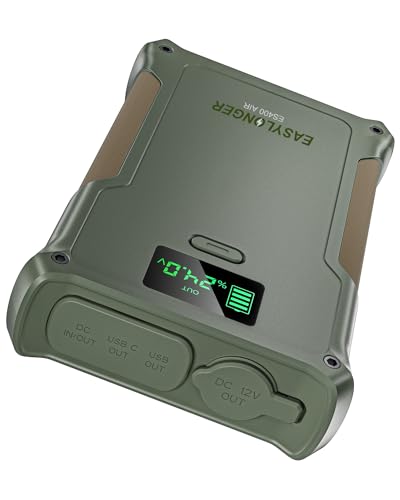
The EASYLONGER CPAP Battery ES400 AIR stands out as an ideal choice for travelers who need reliable, airline-approved backup power for their CPAP devices. With a 148Wh capacity, it supports popular models like ResMed S9, AirSense, and Philips DreamStation, ensuring a full night’s sleep off-grid. Its pass-through charging lets me run my device while recharging the battery, and three recharge options—AC, car, or solar—add flexibility. Built-in safety features protect against over-charging and overheating. Plus, with multiple ports, I can charge my phone or laptop too. Compact and lightweight at just over two pounds, it’s perfect for travel, camping, or RV adventures.
Best For: travelers and outdoor enthusiasts who need a reliable, portable backup power solution for their CPAP devices and additional electronics.
Pros:
- Supports a variety of CPAP models like ResMed and Philips DreamStation with a 148Wh capacity.
- Pass-through charging allows continuous device operation while recharging the battery.
- Multiple charging options (AC, car, solar) provide flexibility for off-grid use.
Cons:
- Solar panel (not included) requires additional purchase and setup.
- Slightly heavier compared to smaller portable power banks at 2.05 pounds.
- Limited to specific device compatibility, requiring appropriate cables for different models.
EASYLONGER ES270 CPAP Battery for Air Travel

Travelers who rely on CPAP machines will find the EASYLONGER ES270 battery an ideal solution, especially since it’s TSA and FAA approved for air travel. This compact, 99.9Wh power pack is compatible with popular devices like ResMed AirMini, AirSense 10/11, and Philips DreamStation. It provides about 8 hours of use with humidification off, making it perfect for overnight trips. The battery supports pass-through charging during outages and features fast charging via USB-C. Its small size and included cables make it easy to carry on planes or outdoor adventures. Built-in safety features guarantee reliable performance, giving you peace of mind wherever your travels take you.
Best For: travelers and outdoor enthusiasts who need a portable, TSA-approved power source for CPAP machines during air travel and outdoor adventures.
Pros:
- Compact and lightweight design, ideal for portability and travel.
- Compatible with a wide range of popular CPAP devices, including ResMed and Philips DreamStation.
- Supports fast charging and pass-through power, ensuring reliable use and convenient recharging.
Cons:
- May require additional cables for certain CPAP models not listed in the package.
- Extended run time for high-power devices may be limited unless humidification and heating are turned off.
- Does not include a built-in AC outlet; power is supplied via USB-C or DC input only.
EASYLONGER CPAP Battery Backup Power Supply (ES960)
The EASYLONGER CPAP Battery Backup Power Supply (ES960) stands out as an excellent choice for those who need reliable, airline-approved power backups for their CPAP devices during travel or emergencies. With a capacity of 297.6Wh, it can power devices like AirSense, AirCurve, DreamStation, and more—often for two nights or longer when humidifiers are off. It features multiple ports, including wireless charging, and is compatible with various models using included DC cables. Built with LiFePO4 cells, it’s safe, durable, and resistant to overcharging and thermal issues. Recharging options include Type-C, AC, or solar, making it versatile for different scenarios.
Best For: travelers, campers, and emergency preparedness individuals seeking a reliable, airline-approved backup power source for their CPAP devices.
Pros:
- High-capacity 297.6Wh battery provides approximately two nights of power for most CPAP models when humidifier is off.
- Versatile recharge options including Type-C PD, AC adapter, and solar panel compatibility.
- Built-in safety features with LiFePO4 cells ensure durability, safety, and long cycle life of up to 3000 cycles.
Cons:
- Does not support heated tube function for certain CPAP models like Luna G3.
- Solar charging requires additional equipment not included in the package.
- Power output may be insufficient for high-wattage devices or certain CPAP models requiring more than 180W.
Backup Power Supply & Travel Battery (2nd Gen), Swappable 150Wh Cell Pack, Compatible with CPAP Devices

If you rely on a CPAP device during travel or outdoor activities, the Backup Power Supply & Travel Battery (2nd Gen) with its replaceable 150Wh cell pack is an essential choice. Its compact, lightweight design makes it perfect for camping, flights, or power outages. FAA-approved for in-flight use, it ensures safety and compliance. Compatible with most popular CPAP models, it comes with all necessary cables, so no extra charger is needed. The innovative replaceable cell pack extends runtime without limits, providing reliable backup power on the go. This portable option simplifies packing and enhances independence, making it ideal for active lifestyles.
Best For: travelers, campers, and outdoor enthusiasts who need reliable, portable backup power for their CPAP devices during trips or power outages.
Pros:
- Swappable 150Wh cell pack extends runtime without limits for extended use.
- Compact, lightweight design makes it highly portable and travel-friendly.
- FAA-approved for in-flight use, ensuring safety and compliance during air travel.
Cons:
- May require careful handling of the swappable cell pack during frequent exchanges.
- Compatibility is limited to devices that can connect with included cables, possibly excluding some less common models.
- Limited to 150Wh capacity, which might not be sufficient for very long power needs without swapping batteries.
Krisdonia AC Outlet Portable Laptop Charger (TSA-Approved) 27000mAh 130W Power Bank
For professionals who need reliable power on the go, the Krisdonia AC Outlet Portable Laptop Charger stands out with its impressive 130W AC outlet, capable of charging high-power devices like laptops and drones. With a 27,000mAh capacity, it offers around six charges for smartphones and 1.5 for a MacBook, recharging faster than standard models in just 4.5 hours. It features two USB-A ports with QC 3.0 technology for quick device charging and supports pass-through power, so you can recharge devices while the power bank itself recharges. TSA-approved and built with safety protections, it’s a dependable, travel-friendly solution for professionals needing portable power.
Best For: professionals and travelers who need reliable, portable power to charge high-power devices like laptops, drones, and smartphones on the go.
Pros:
- Supports up to 130W AC output, suitable for high-power electronics
- Fast recharging in just 4.5 hours with included charger, saving time
- Features pass-through charging and TSA approval for convenient travel
Cons:
- Limited to approximately 1.5 charges for larger laptops like MacBooks
- Bulkier than smaller portable power banks due to high capacity and AC outlet
- May be more expensive compared to standard power banks without AC outlets
Pilot-24 Lite 95Wh CPAP Battery Backup Power Supply

Travelers who rely on CPAP machines will appreciate the Pilot-24 Lite 95Wh battery backup, as it offers up to 16 hours of power on a single charge. It’s compatible with popular models like AirMini, AirSense 10, S9, and DreamStation Go, making it versatile for various devices (cables sold separately). Its rugged aluminum case and LG industrial-grade cells guarantee durability for outdoor use and travel. Weighing just 1.3 pounds and TSA-approved, it’s perfect for carry-on and quick recharging in 2–3 hours. Whether you’re camping, flying, or facing emergencies, this compact backup guarantees reliable sleep support off-grid.
Best For: travelers and outdoor enthusiasts who need reliable, portable backup power for their CPAP machines during trips, camping, or emergencies.
Pros:
- Compact and lightweight design (only 1.3 lbs) for easy portability
- Up to 16 hours of runtime per charge, ensuring reliable sleep support off-grid
- Durable construction with aluminum case and industrial-grade LG cells for longevity
Cons:
- Cables for some CPAP models are sold separately, requiring additional purchase
- Runtime varies depending on device and pressure settings, which may affect consistency
- Limited to 24V CPAP machines; incompatible with devices requiring different voltages
27000mAh Portable Laptop Charger with AC Outlet (TSA-Approved)

The 27000mAh Portable Laptop Charger with AC Outlet stands out as an ideal choice for medical professionals and patients who need reliable power on the go. Its TSA-approved 99.9Wh capacity supports devices under 130W, including laptops, phones, and small appliances like mini fridges or coffee makers. Compact at 6.5 x 5.9 x 1.6 inches and weighing only 2.6 pounds, it’s perfect for travel, camping, or flights. With a bright LED display, quick recharge in 4-5 hours, and multiple ports for simultaneous device charging, it combines convenience with safety, backed by built-in protections and a 12-month warranty.
Best For: travelers, medical professionals, and outdoor enthusiasts who need reliable, portable power for multiple devices on the go.
Pros:
- High-capacity 27000mAh/99.9Wh battery supports extended use and multiple device charges.
- Built-in AC outlet and multiple USB ports allow simultaneous charging of various devices, including laptops and small appliances.
- Compact, lightweight design with a bright LED display for easy battery monitoring and quick recharging in 4-5 hours.
Cons:
- Weighs 2.6 pounds, which may be considered heavy for some travelers seeking ultra-light options.
- Supports devices only under 130W, limiting its use with high-power equipment.
- Limited to 12 months warranty, which may be shorter than some users prefer for long-term peace of mind.
Pilot-24 Lite Battery with Car Charger, 95Wh CPAP Battery Backup Power Supply

If you need reliable backup power for your CPAP machine on the go, the Pilot-24 Lite Battery with Car Charger stands out as a practical choice. It offers a portable 95Wh capacity, compatible with popular models like AirMini, AirSense 10, and others, making it versatile for travel, camping, or emergencies. Weighing only 2.38 pounds and TSA-approved, it’s ideal for carry-on use and recharges in just 2–3 hours. Built with durable LG cells in a rugged aluminum case, it provides up to 16 hours of operation, ensuring your CPAP stays powered whether you’re on the road or off-grid.
Best For: travelers, campers, and emergency preparedness users seeking a reliable, portable backup power source for their CPAP machines on the go.
Pros:
- Compact and lightweight at 2.38 pounds, ideal for carry-on travel and outdoor use
- Rapid recharging time of 2–3 hours with durable LG cells for long-lasting power
- Compatible with multiple CPAP models including AirMini, AirSense 10, and others, providing up to 16 hours of operation
Cons:
- Discontinued by the manufacturer, which may affect availability and support
- Additional DC cables required for some CPAP models are sold separately
- Limited capacity of 95Wh may not support extended use for high-pressure or larger devices
Zopec Explore Mini CPAP Battery UPS Backup

The Zopec Explore Mini CPAP Battery UPS Backup stands out as the smallest and lightest travel battery, making it perfect for users who need reliable power on the go. Weighing just 1 pound and measuring 6.5 x 3 x 1 inches, it’s incredibly portable. It supports multiple voltages, including 24V, 12V, and 19V, and uses Panasonic Lithium-Ion cells for durability and quiet operation. With a runtime of up to 2 nights, rapid 1.5-hour recharge, and compatibility with most PAP devices, it’s an excellent travel companion. Plus, FAA compliance makes it ideal for air travel, camping, and RV trips, ensuring dependable power wherever you go.
Best For: travelers and outdoor enthusiasts who need a compact, reliable backup power source for CPAP or APAP devices on the go.
Pros:
- Ultra-lightweight at just 1 pound, making it highly portable for travel.
- Supports multiple voltages and device compatibility, including popular PAP models.
- Fast recharge time of approximately 1.5 hours and reliable runtime of up to 2 nights.
Cons:
- Limited runtime may not suffice for extended trips without additional batteries.
- Requires specific cables for different PAP devices, which may add to setup complexity.
- Slightly higher price point compared to bulk or lower-capacity portable batteries.
Renogy 72000mAh 12V Power Bank with PD and CPAP Backup

For travelers who need reliable power on the go, the Renogy 72000mAh 12V Power Bank stands out with its impressive capacity and versatile charging options. It supports five devices simultaneously, including laptops, phones, and CPAP machines, with a max output of 150W for CPAP devices via a cigarette port. The power bank features two USB-C PD ports—one for 60W laptop charging and another for rapid phone charging—as well as a 10W wireless pad. Recharging is adaptable, using solar panels, USB-C, or AC, making it ideal for camping, emergencies, or extended trips. Its advanced battery management ensures safe, efficient, reliable power wherever you are.
Best For: travelers, campers, and emergency preparedness users who need reliable, high-capacity power to charge multiple devices including laptops, phones, and CPAP machines on the go.
Pros:
- High capacity of 72,000mAh (266Wh) supports charging five devices simultaneously, including CPAP machines.
- Versatile charging options with two USB-C PD ports, wireless charging pad, AC adapter, and solar recharging capability.
- Compact and portable design with advanced battery management for safe, efficient, and reliable power.
Cons:
- Discontinued by the manufacturer, which may affect availability and support.
- No AC plug directly for CPAP devices; requires a separate adapter.
- Cannot use USB-C (1) and DC ports simultaneously, limiting concurrent charging options.
iWALK Magnetic Power Bank 10000mAh Wireless Charger with Fast Charging USB-C

The iWALK Magnetic Power Bank 10000mAh stands out as an ideal choice for travelers who need reliable, fast-charging power on the go, especially when flying. Its 30W PD fast charging support guarantees your devices, including iPhones and Samsung Galaxies, recharge quickly—up to 40% faster than typical packs. The Qi2-certified 15W wireless charging offers cable-free convenience, compatible with multiple devices. Safety is prioritized with iWALK’s MagCool 2.0 cooling system, preventing overheating. Its ergonomic design makes handling comfortable, and it includes essential cables for versatile use. This compact power bank delivers dependable, airline-approved performance perfect for medical devices and everyday travel needs.
Best For: travelers and on-the-go users who need a reliable, fast-charging power bank compatible with multiple devices, including smartphones and tablets.
Pros:
- Supports 30W PD fast charging for rapid device recharging, saving time.
- Qi2-certified 15W wireless charging provides cable-free convenience for compatible devices.
- Equipped with iWALK MagCool 2.0 cooling system ensures safe, overheating-free operation during use.
Cons:
- Limited to a 10,000mAh capacity, which may require recharging during extended use.
- Slightly larger size due to cooling system and ergonomic design may reduce pocket portability.
- Compatibility is primarily with Qi2-certified devices; older or non-standard devices may not support wireless charging.
EASYLONGER CPAP Battery Backup Power Supply (ES720)

If you need reliable, portable backup power for your CPAP device that meets airline regulations, the EASYLONGER CPAP Battery Backup Power Supply (ES720) is an excellent choice. It has a 266.4Wh capacity, compatible with popular models like AirSense, Dreamstation, and Luna G3 (heated tube not supported). It offers versatile power options, including a cigarette lighter socket, adjustable DC outputs, and USB ports, supporting various devices beyond CPAPs. With built-in safety features, pass-through charging, and four quick recharging methods, it’s perfect for travel, camping, or emergencies. Plus, its LED SOS light adds an extra layer of safety in critical situations.
Best For: individuals seeking a reliable, portable backup power solution for their CPAP devices during travel, camping, or emergencies that complies with airline regulations.
Pros:
- Compatible with popular CPAP models like AirSense, Dreamstation, and Luna G3, with multiple recharging options for versatility.
- Equipped with safety features such as over-charge, over-discharge, and short-circuit protection, ensuring secure operation.
- Includes an LED SOS light and multiple output ports (USB, DC, cigarette lighter) for powering various devices beyond CPAPs.
Cons:
- Heated tube support is not available for Luna G3 and some other models.
- Connecting via cigarette lighter port requires a voltage converter matching the CPAP device’s voltage.
- Slightly heavy and bulky for ultra-light travel compared to smaller, single-function power banks.
BLUETTI CPAP Battery Backup X30 297Wh Power Supply

When reliable power backup is essential for maintaining continuous sleep therapy, the BLUETTI CPAP Battery Backup X30 297Wh stands out as an excellent choice. Weighing just 3.9 pounds, it offers portable, dependable backup power for CPAP and BiPAP devices, supporting most units for 5-7 nights. Its rapid charging, safety features, and convenient handle with accessory bag make it easy to transport and use in emergencies, outdoor activities, or during power outages. Compatible with popular devices like ResMed and Philips DreamStation, it includes multiple DC cables and a USB port, ensuring versatile charging options. This compact power supply delivers peace of mind when uninterrupted sleep is critical.
Best For: individuals needing reliable, portable backup power for CPAP/BiPAP devices during outages, outdoor trips, or emergencies.
Pros:
- Lightweight and portable at only 3.9 pounds with a built-in handle for easy transport
- Compatible with a wide range of popular CPAP and BiPAP devices, supporting 5-7 nights of use
- Rapid charging and safety features enhance convenience and peace of mind
Cons:
- Limited to approximately 90% device support, may not power all models
- Slightly higher price point compared to basic portable power options
- Requires specific cables for different devices, which may need to be purchased separately for some models
Factors to Consider When Choosing Airline-Approved Battery Packs for Medical Devices

When selecting an airline-approved battery pack for your medical device, I recommend considering several key factors. These include compliance with airline regulations, battery capacity limits, device compatibility, recharge options, and portability. Keeping these points in mind helps guarantee safe, convenient, and hassle-free travel with your essential medical equipment.
Airline Regulations Compliance
Choosing airline-approved battery packs for medical devices requires careful attention to regulations set by authorities like the FAA and TSA. These agencies limit carry-on batteries to 100Wh or less, guaranteeing safety during flights. If a battery exceeds 100Wh but remains under 160Wh, airline approval and proper documentation are necessary. Lithium-ion batteries are classified as hazardous materials, so compliance with safety standards like UN 38.3 is vital. Proper labeling—showing capacity, watt-hours, and manufacturer details—is mandatory for onboard acceptance. Many airlines restrict or prohibit batteries over 160Wh to mitigate safety risks. Consequently, verifying that your battery pack complies with these capacity limits and safety standards is essential before traveling. Staying informed about these regulations helps facilitate a smooth boarding process and safe transport of your medical device batteries.
Battery Capacity Limits
Understanding battery capacity limits is essential for ensuring your medical device’s battery pack meets airline safety standards. Most airlines allow carry-on batteries up to 100Wh without special approval, making this the safest choice for compliance. Batteries between 100Wh and 160Wh often require airline approval and may face additional restrictions, such as limited quantities or specific packaging. To avoid complications, many airline-approved battery packs are designed to stay within the 100Wh limit, simplifying travel. Batteries exceeding 160Wh usually need airline approval and are often restricted to checked luggage or prohibited altogether. Knowing these capacity limits helps you select a battery pack that complies with regulations, reducing the risk of delays or confiscation during air travel. Always verify airline policies before packing your medical device batteries.
Device Compatibility
Selecting the right airline-approved battery pack for your medical device requires verifying that it’s compatible with your specific model. First, check that the battery’s voltage and connector type match your device’s specifications to guarantee proper fit and function. It’s essential that the battery supports your device’s power output and current needs, especially if it has features like humidifiers or heated tubing, as these can affect runtime. Additionally, confirm the battery’s capacity stays within airline regulations, typically around 100Wh to 160Wh, for carry-on approval. In conclusion, ensure the battery bears the necessary certifications and markings indicating airline approval and safety compliance. Compatibility isn’t just about fitting physically; it’s about ensuring reliable, safe operation during travel without risking regulatory issues.
Recharge Methods
When evaluating recharge methods for airline-approved battery packs, it’s important to contemplate their flexibility and convenience during travel. I look for packs that support multiple recharge options, like AC wall outlets, car chargers, and solar panels, to stay powered anywhere. Fast-charging capabilities, such as PD 65W or higher, are essential to minimize downtime and keep my devices ready. I also check that the battery’s capacity allows for over 3,000 recharge cycles, ensuring long-term durability. Pass-through charging is a bonus, letting me use my device while recharging without interruption. Additionally, I consider recharge times, preferring options that fully recharge within 2 to 5 hours, so I can quickly get back to using my device without delays during travel.
Portability and Size
Choosing the right airline-approved battery pack means paying close attention to its size and weight, ensuring it fits comfortably in your carry-on luggage. Most portable medical battery packs are compact, typically measuring 5 to 8 inches long, 2 to 4 inches wide, and less than 2 inches high. This size allows for easy handling and storage while complying with airline regulations. Battery capacity, usually under 100Wh, balances sufficient runtime with airline compliance. Features like built-in handles and TSA approval enhance portability and convenience. These packs are designed to be lightweight and unobtrusive, making travel smoother. With a well-chosen size, you can confidently carry your medical device’s power source without hassle or exceeding airline limits.
Safety Certifications
Ensuring your medical device’s battery pack has the proper safety certifications is vital for airline travel. I always check for FAA and TSA approval to confirm it meets airline safety standards. Certifications like UN 38.3 are essential—they verify the battery’s safety during transport. I also look for compliance with international safety standards such as IEC 62133 or UL 2054, which ensure the battery meets rigorous safety criteria. It’s important to verify that the battery’s capacity doesn’t exceed airline limits, typically 100Wh for carry-on approval. Additionally, I confirm the battery includes documented safety features like overcharge, over-discharge, short-circuit, and thermal protections. These certifications and safety features give me confidence that the battery is safe, reliable, and compliant for air travel with my medical device.
Power Output Compatibility
Matching your medical device’s power output with the battery pack’s specifications is essential for safe and reliable operation during travel. Make certain the battery’s voltage and wattage output align with your device’s requirements to prevent underperformance or damage. Check that the battery’s power output ports—such as DC, USB-C, or AC outlets—are compatible with your device’s connectors. It’s also important to verify that the battery can deliver sustained power at the necessary amperage and voltage for continuous use. Additionally, consider if the battery supports pass-through charging, allowing you to use and recharge your device simultaneously. Finally, confirm that the battery’s capacity provides enough runtime for your typical usage, while still meeting airline regulations. Proper power output compatibility ensures your device remains safe and functional throughout your journey.
Warranty and Support
When selecting an airline-approved battery pack for your medical device, it’s important to contemplate the warranty and support options provided by the manufacturer. A solid warranty, ideally at least one year, ensures that defects or malfunctions are covered, giving you peace of mind. Check that the company’s customer support is responsive and offers quick technical assistance, whether via phone, email, or live chat. Verify if the warranty includes battery replacement or repairs, especially for high-capacity or specialized packs. Choosing products from reputable brands with established support channels can considerably ease troubleshooting. Finally, review user feedback to gauge the reliability of warranty claims and support experiences. This diligence helps ensure your device remains safe, reliable, and ready for travel.
Frequently Asked Questions
Are Airline-Approved Batteries Suitable for All Types of Medical Devices?
Airline-approved batteries aren’t suitable for all medical devices. I’ve found they work well for specific portable equipment like CPAP machines or infusion pumps, but not for high-power or complex devices. It’s essential to check your device’s manufacturer recommendations and airline regulations before traveling. I always make sure my batteries meet safety standards and are compatible with my device to prevent issues during flights.
How Do Battery Size and Weight Impact Airline Travel Safety Regulations?
Did you know that batteries over 100Wh face stricter airline rules? I’ve found that larger and heavier batteries can complicate travel because airlines regulate their size for safety reasons. These regulations help prevent overheating or fires onboard. When traveling with medical devices, I always check the battery’s size and weight, ensuring they meet airline standards. Staying within these limits keeps my travel safe and hassle-free, giving me peace of mind.
Can These Battery Packs Be Used Internationally Without Voltage Issues?
Yes, these battery packs can typically be used internationally without voltage issues because they’re designed to be compatible with standard airline power regulations. I recommend checking the specific voltage and plug type for each country you visit, but most airline-approved battery packs are built to handle different voltage standards safely. Just make certain you follow the manufacturer’s guidelines and carry the correct adapters if needed for seamless use abroad.
What Is the Maximum Allowable Battery Capacity for Carry-On Medical Device Batteries?
The maximum allowable battery capacity for carry-on medical device batteries is generally 100 watt-hours. I recommend checking airline policies, as some may allow batteries up to 160 watt-hours with airline approval. Always guarantee your batteries are properly labeled, packed securely, and comply with regulations to prevent issues during travel. By following these guidelines, you can confidently bring your medical device batteries onboard without hassle or safety concerns.
Do Airline Policies Vary Between Different Countries Regarding Medical Device Batteries?
Yes, airline policies do vary between countries regarding medical device batteries. I’ve noticed that some airlines follow strict regulations, while others are more flexible. It’s essential to check with your airline before traveling, as rules can differ for battery capacity limits, packaging, and documentation. Being proactive guarantees a smooth journey and helps avoid any surprises at security or boarding. Always verify policies specific to your destination and airline to stay compliant.
Conclusion
Just like Icarus carefully chose his wings, selecting the right airline-approved battery guarantees your medical device stays powered and safe during travel. By considering capacity, compatibility, and airline regulations, you can soar confidently, knowing you’re prepared for any journey. Remember, the right battery isn’t just a piece of tech—it’s your trusted partner, helping you navigate life’s skies with peace of mind. Safe travels and stay powered!