Among these action cameras under $300, I rank the DJI Osmo Action 4 first for its large sensor and balanced feature set; the Insta360 X3 stands out for reframing 360-degree footage, while the compact GoPro HERO is a simpler pick for casual recording. The main tradeoff is between image quality and stabilization on one side, and lower cost, included accessories, or special formats on the other. Resolution claims alone do not tell the whole story: sensor performance, usable stabilization, battery life, and controls shape the footage you can capture. Bundles can add practical value, but a large memory card or accessory kit does not make a camera perform better. Read on for the full breakdown, ranking logic, and advice on which type best fits your plans.

Get your wardrobe favorites delivered free with Prime
- Fast, free delivery on millions of items
- Prime Video, Amazon Music and more included
- Member-only deals all year
Key Takeaways
- The DJI Osmo Action 4 leads on all-around capability: its 1/1.3-inch sensor gives it a stronger hardware foundation than the entry-level AKASO, icefox, and Hiicam options.
- The Insta360 X3 serves a different purpose than a conventional action camera: its 5.7K 360 capture lets you choose framing later, but that workflow may be unnecessary for buyers who already know where to point.
- Bundle contents and camera performance are separate decisions: several AKASO listings add memory cards or accessories, while the EK7000 and Brave 4 variants remain entry-level camera choices.
- Headline resolution does not settle the comparison: 4K60 models such as the ODDV, icefox, and Brave 8 appeal to buyers seeking high-frame-rate capture, but stabilization, low-light results, and ease of use matter too.
- There is overlap among the 15 listings: the GoPro HERO appears twice and the AKASO Brave 4 appears in several packages, so buyers should compare the exact camera and included extras rather than treating each listing as a distinct camera.
| AKASO Brave 4 Action Camera 4K30 Ultra HD Waterproof |  | Best Value for Basic Water Sports | Video: 4K at 30 fps | Photo resolution: 20 MP | Stabilization: Electronic image stabilization | VIEW ON AMAZON | See Our Full Breakdown |
| ODDV 4K60FPS 30MP Action Camera with Dual Screens |  | Best for Higher-Frame-Rate Recording | Video: 4K at up to 60 fps | Photo resolution: 30 MP | Stabilization: Six-axis electronic image stabilization | VIEW ON AMAZON | See Our Full Breakdown |
| GoPro HERO Compact Waterproof 4K Action Camera |  | Best Compact Pick | Video: 4K UHD | Waterproof depth: 16 ft (5 m) | Stabilization: HyperSmooth | VIEW ON AMAZON | See Our Full Breakdown |
| AKASO Brave 4 4K Action Camera with 64GB MicroSD Card |  | Best Ready-to-Record Bundle | Video: Up to 4K at 30 fps | Photo resolution: 20 MP | Waterproof depth: 131 ft with waterproof case | VIEW ON AMAZON | See Our Full Breakdown |
| Insta360 X3, 360 Action Camera with 5.7K 360 Active HDR Video | 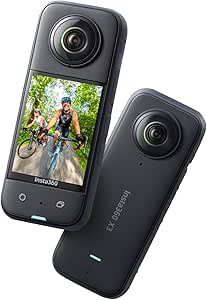 | Best for 360-Degree Reframing | 360 video: 5.7K Active HDR | Single-lens video: 4K at 30 fps | Stabilization: FlowState stabilization and horizon lock | VIEW ON AMAZON | See Our Full Breakdown |
| DJI Osmo Action 4 Waterproof Action Camera Bundle, 1/1.3″ Sensor |  | Best for Low-Light Adventure Footage | Sensor: 1/1.3-inch CMOS | Video: 4K up to 120 fps | Color: 10-bit; D-Log M | VIEW ON AMAZON | See Our Full Breakdown |
| GoPro HERO Compact Waterproof 4K Action Camera |  | Best for Simple, Lightweight 4K | Video resolution: UHD 4K | Photo resolution: 12 MP | Weight: 86 g | VIEW ON AMAZON | See Our Full Breakdown |
| icefox 4K 60FPS Action Camera with Dual Batteries |  | Best Value Bundle for Long Outings | Video resolution: 4K at 60 fps | Photo resolution: 30 MP | Lens viewing angle: 147° | VIEW ON AMAZON | See Our Full Breakdown |
| AKASO EK7000 4K Action Camera, 30 FPS, 20 MP, Wi-Fi, EIS, 131 ft Waterproof, Remote Control, 4x Digital Zoom – Black |  | Best for Deep-Water Kit Flexibility | Video resolution: 4K at 30 fps; 2.7K at 30 fps | Photo resolution: 20 MP | Image stabilization: Electronic image stabilization | VIEW ON AMAZON | See Our Full Breakdown |
| DJI Action 2 Dual-Screen Combo, 32GB |  | Best Compact Modular Pick | Video resolution: Up to UHD 4K at 120 fps | Weight: 120 g | Dimensions: 1.54 × 1.54 × 0.87 inches | VIEW ON AMAZON | See Our Full Breakdown |
| AKASO EK7000 Pro 4K Action Camera Bundle with 256GB MicroSDXC Card |  | Best Value Bundle | Video: 4K at 30 fps; 1080p at 60 fps | Photo resolution: 20 MP | Display: 2-inch IPS touchscreen | VIEW ON AMAZON | See Our Full Breakdown |
| DJI Osmo Action 4 Essential Combo |  | Best for Low Light and Cold Conditions | Sensor: 1/1.3-inch; 2.4µm pixel size | Video: 4K up to 120 fps | Field of view: 155° ultra-wide | VIEW ON AMAZON | See Our Full Breakdown |
| AKASO Brave 8 4K60FPS 33ft Waterproof Action Camera with 64GB Card Bundle |  | Best for High-Frame-Rate 4K | Sensor: 1/2-inch CMOS | Video: 4K at 60 fps; HDR up to 4K at 30 fps | Photo resolution: 48 MP | VIEW ON AMAZON | See Our Full Breakdown |
| Hiicam 4K Action Camera with Touch Screens, Wi-Fi, EIS, and Waterproof Housing |  | Best for Selfie Framing on a Budget | Video: 4K at 30 fps | Photo resolution: 20 MP | Displays: 2-inch rear touchscreen and 1.4-inch front display | VIEW ON AMAZON | See Our Full Breakdown |
| AKASO Brave 4 Action Camera with Floating Hand Grip and Carrying Bag Bundle |  | Best for Water-Sport Starter Kits | Video: 4K at 30 fps; 1080p at 60 fps | Photo resolution: 20 MP | Displays: 2-inch rear display and 0.96-inch front screen | VIEW ON AMAZON | See Our Full Breakdown |
| action cameras under 300 | Video | Photo resolution | Waterproof depth | Stabilization |
|---|---|---|---|---|
| AKASO Brave 4 Action Camera 4K | 4K at 30 fps | 20 MP | 40 m with waterproof case | Electronic image stabilization |
| ODDV 4K60FPS 30MP Action Camer | 4K at up to 60 fps | 30 MP | 132 feet with waterproof case | Six-axis electronic image stabilization |
| GoPro HERO Compact Waterproof | 4K UHD | — | 16 ft (5 m) | HyperSmooth |
| AKASO Brave 4 4K Action Camera | Up to 4K at 30 fps | 20 MP | 131 ft with waterproof case | — |
| Insta360 X3 | — | — | Not stated in the supplied product details | FlowState stabilization and horizon lock |
| DJI Osmo Action 4 Waterproof A | 4K up to 120 fps | — | 18 m | — |
| GoPro HERO Compact Waterproof | — | 12 MP | 5 m (16 ft) | — |
| icefox 4K 60FPS Action Camera | — | 30 MP | 30 m (98 ft) with included case | — |
| AKASO EK7000 4K Action Camera | — | 20 MP | 131 ft with case | — |
| DJI Action 2 Dual-Screen Combo | — | — | — | — |
| AKASO EK7000 Pro 4K Action Cam | 4K at 30 fps; 1080p at 60 fps | 20 MP | — | Electronic |
| DJI Osmo Action 4 Essential Co | 4K up to 120 fps | — | — | Standard, active, and roll-reduction modes |
| AKASO Brave 8 4K60FPS 33ft Wat | 4K at 60 fps; HDR up to 4K at 30 fps | 48 MP | — | — |
| Hiicam 4K Action Camera with T | 4K at 30 fps | 20 MP | — | Electronic image stabilization |
| AKASO Brave 4 Action Camera wi | 4K at 30 fps; 1080p at 60 fps | 20 MP | — | Built-in image stabilization |
More Details on Our Top Picks
AKASO Brave 4 Action Camera 4K30 Ultra HD Waterproof
The AKASO Brave 4 makes sense for buyers who want a straightforward camera for swimming, snorkeling, or casual rides without relying on a phone for framing. Its 40 m waterproof case, adjustable viewing angles, and included pair of batteries give it a useful starter setup, while electronic stabilization helps steady everyday footage. Compared with the ODDV 4K60FPS, it tops out at 4K30 and has a less advanced stabilization claim, so it is a weaker fit for fast action or smoother slow-motion-style clips. Its front display can help with self-framing, but the small screen is not a substitute for a large preview. The tradeoffs are roughly 90 minutes per battery and a wrist remote that is not waterproof; underwater use means operating the camera itself, not the remote.
Pros:- Records 4K video at 30 fps and captures 20 MP photos
- Includes two rechargeable batteries
- Waterproof case rated to 40 m
- Four adjustable viewing angles and dual screens
Cons:- Battery runtime is about 90 minutes per charge
- Wrist remote is not waterproof
- 4K recording is limited to 30 fps
Best for: Casual swimmers, snorkelers, and first-time action-camera buyers who want a waterproof-case setup with spare batteries.
Not ideal for: Fast-sport shooters who want 4K60 recording or buyers who need a waterproof remote for underwater control.
- Video:4K at 30 fps
- Photo resolution:20 MP
- Stabilization:Electronic image stabilization
- Waterproof depth:40 m with waterproof case
- Displays:2-inch rear and 0.96-inch front
- Viewing angles:170°, 140°, 110°, and 70°
- Battery:Two included 1050 mAh rechargeable batteries
- Connectivity:Wi-Fi and HDMI
Our verdict“Choose the Brave 4 for casual water activities and a useful included kit, but choose the ODDV if 4K60 matters more than simplicity.”
ODDV 4K60FPS 30MP Action Camera with Dual Screens
The ODDV 4K60FPS is the stronger fit in this group for buyers who want 4K at up to 60 fps, which can make quick movement look smoother than the AKASO Brave 4’s 4K30 footage. Its six-axis electronic stabilization and touch-sensitive rear display add useful control for action clips, and the front screen helps when filming yourself. The waterproof case is rated to 132 feet, exceeding the stated depth of the Brave 4, though both depend on a housing for deep-water use. This specification-forward package has practical gaps: no microSD card is included, so it is not ready to record out of the box, and the wrist remote is not waterproof. The listed weight is also substantial, making it less appealing for buyers prioritizing a light helmet or handlebar setup.
Pros:- Records 4K video at up to 60 fps
- Six-axis electronic image stabilization
- Touch-sensitive rear screen and separate front screen
- Waterproof case rated to 132 feet
Cons:- MicroSD card is not included
- Wrist remote is not waterproof
- Listed weight of 1.2 pounds may be cumbersome for mounted use
Best for: Action-sport buyers who prioritize 4K60 recording, dual screens, and a deep-water housing, and already have a compatible microSD card.
Not ideal for: Travelers seeking a lightweight camera kit or beginners who want included storage and a ready-to-record package.
- Video:4K at up to 60 fps
- Photo resolution:30 MP
- Stabilization:Six-axis electronic image stabilization
- Waterproof depth:132 feet with waterproof case
- Displays:2-inch touch rear screen and 1.4-inch front screen
- Viewing angle:170°
- Wireless connectivity:2.4 GHz Wi-Fi, up to 10 m
- Memory card:MicroSD card not included
Our verdict“Pick the ODDV if 4K60 and deep-water housing matter most, but the Brave 4 is the easier choice if you want batteries included and a lighter stated weight.”
GoPro HERO Compact Waterproof 4K Action Camera
The GoPro HERO Compact stands apart from the bulkier, case-dependent AKASO Brave 4 by keeping the camera itself waterproof to 16 feet and adding built-in mounting fingers. That makes it a convenient choice for shallow-water outings and quick mounting, without the extra housing needed for the Brave 4’s stated 40 m depth. Its HyperSmooth stabilization is aimed at reducing shake, while the touch screen and Quik app support a simple capture-and-share routine. The tradeoff is that this is not the pick for deep diving: its water rating is far below the ODDV’s 132 feet with case. It also requires a separate microSD card, and some app or cloud functions depend on a phone or internet connection. Choose it for a compact, straightforward camera, not for maximum depth or an all-in-one accessory bundle.
Pros:- Compact, lightweight design
- Waterproof to 16 feet without a case
- HyperSmooth stabilization helps reduce camera shake
- Touch screen and built-in mounting fingers
Cons:- Waterproof rating is shallow compared with the ODDV and Brave 4 in their cases
- MicroSD card is required but not included
- Some app and cloud features depend on a phone or internet connection
Best for: Travelers and casual riders who want a compact camera for shallow-water use, quick mounting, and phone-based playback.
Not ideal for: Divers and snorkelers who need a deep-water housing rating, or buyers who want storage included and minimal app dependence.
- Video:4K UHD
- Waterproof depth:16 ft (5 m)
- Stabilization:HyperSmooth
- Display:1.76-inch touch screen
- Lens:Wide angle
- Focus:Autofocus
- Storage:MicroSD card required
- Battery:One included lithium-ion battery
Our verdict“Choose the GoPro HERO Compact for a small, directly waterproof camera for shallow-water activities, not for deep-water recording.”
AKASO Brave 4 4K Action Camera with 64GB MicroSD Card
This Brave 4 bundle is the more convenient version of the standard AKASO Brave 4 for buyers who do not already own a memory card. It pairs 64GB of included U3 storage with two batteries, front and rear screens, adjustable viewing angles, and a case rated to 131 feet. That makes it a more complete starting kit than the standard Brave 4 listing, whose provided details specify two batteries but not a card. The core camera remains a 4K30 model, so the ODDV has the advantage for 4K60 clips, while the GoPro HERO is more compact and waterproof without a deep-diving case. Each battery is listed for up to 90 minutes, so longer outings still call for charging breaks or careful clip planning. This bundle favors convenience over higher frame rates or compactness.
Pros:- Includes a 64GB U3 microSD card
- Two rechargeable 1050 mAh batteries are included
- Waterproof case rated to 131 feet
- Four viewing angles and front-and-rear displays
Cons:- Video tops out at 4K30
- Each battery is rated for up to 90 minutes
- Remote wristband is not waterproof
Best for: New action-camera owners who want included memory and spare batteries for snorkeling, cycling, or day trips.
Not ideal for: Buyers seeking 4K60 capture, a very compact camera, or longer uninterrupted recording from a single battery.
- Video:Up to 4K at 30 fps
- Photo resolution:20 MP
- Waterproof depth:131 ft with waterproof case
- Storage:64GB U3 microSD card included
- Displays:2-inch rear and 0.96-inch front
- Viewing angles:170°, 140°, 110°, and 70°
- Batteries:Two rechargeable 1050 mAh batteries
- Battery runtime:Up to 90 minutes per battery
Our verdict“Choose this Brave 4 bundle if included storage and two batteries make setup easier; choose the ODDV for 4K60 recording.”
Insta360 X3, 360 Action Camera with 5.7K 360 Active HDR Video
The Insta360 X3 is the specialist choice here: its 5.7K 360 capture records the full scene so you can choose the viewing angle later in the app. That changes the workflow compared with the AKASO Brave 4, where you select a field of view before recording; the X3 suits motorcycle rides, winter sports, and vlogging when it is hard to point a camera precisely. It also offers 4K single-lens recording, FlowState stabilization, and horizon lock, giving it a conventional action-camera option when 360 capture is unnecessary. The cost of that flexibility is a more involved editing process and exposed 360 lenses that call for care. The product details provided do not state a waterproof depth, so buyers who need a defined underwater rating should favor the Brave 4 or ODDV instead.
Pros:- 5.7K 360 video supports reframing after capture
- 4K single-lens recording provides a conventional option
- FlowState stabilization and horizon lock help level moving footage
- 2.29-inch touchscreen
Cons:- 360 footage requires app-based reframing and editing
- Waterproof depth is not specified in the supplied product details
- Exposed 360 lenses need careful handling
Best for: Motorcyclists, winter-sports users, and vloggers who want to capture every direction and reframe clips after recording.
Not ideal for: Buyers who want a simple point-and-shoot workflow or need a clearly specified waterproof depth for underwater use.
- 360 video:5.7K Active HDR
- Single-lens video:4K at 30 fps
- Stabilization:FlowState stabilization and horizon lock
- Display:2.29-inch touchscreen
- Weight:200 g
- Connectivity:Bluetooth
- Storage:MicroSD; U3 or higher listed
- Waterproof depth:Not stated in the supplied product details
Our verdict“Choose the X3 if reframing a full 360-degree recording is more useful than a simple fixed-angle workflow or a clearly stated dive rating.”
DJI Osmo Action 4 Waterproof Action Camera Bundle, 1/1.3″ Sensor
Among these five picks, the Osmo Action 4 is the strongest fit for buyers who want capable footage beyond bright daytime conditions. Its 1/1.3-inch sensor and 10-bit D-Log M recording give more room for cleaner-looking low-light clips and color work than the compact GoPro HERO, whose appeal is simpler operation and a lower-fuss setup. The Action 4 also records 4K at 120 fps, supports three stabilization modes, and works down to -20°C, making it a better match for fast outdoor activity and cold-weather trips.
The bundle adds a 64GB card and a 58-piece accessory kit, but the camera’s strengths come with a learning curve: D-Log M benefits from editing, and the accessory bundle may include pieces some buyers never use. Its single included battery is another limitation beside the icefox’s two-battery package. I’d pick it for image flexibility, not for the most complete battery setup.
Pros:- Large 1/1.3-inch sensor is suited to cleaner footage in dimmer conditions.
- 10-bit color and D-Log M provide more latitude for post-production.
- 4K recording up to 120 fps supports slow-motion action clips.
- Waterproof to 18 m and rated for operation down to -20°C.
Cons:- Only one battery is listed in this bundle, limiting untethered recording time.
- D-Log M footage takes more editing work than straightforward standard-color video.
- The large accessory kit may include parts that are unnecessary for a buyer’s setup.
Best for: Outdoor creators who film in changing light, cold conditions, or fast action and want color footage they can edit later.
Not ideal for: Buyers who want simple point-and-shoot footage, multiple batteries in the box, or a minimal setup without unused accessories.
- Sensor:1/1.3-inch CMOS
- Video:4K up to 120 fps
- Color:10-bit; D-Log M
- Field of view:155° ultra-wide
- Waterproof depth:18 m
- Battery life:Up to 150 minutes
- Operating temperature:Down to -20°C (-4°F)
- Included bundle items:One battery, 64GB microSDXC card, 58-piece accessory kit
Our verdict“Choose the Osmo Action 4 if low-light flexibility, slow motion, and cold-weather use matter more than a multi-battery bundle or beginner simplicity.”
GoPro HERO Compact Waterproof 4K Action Camera
The GoPro HERO earns its place for buyers who want a compact camera that keeps setup and operation straightforward. At 86 g, it is lighter than the DJI Action 2 and has one-button controls for quick starts when there is little time to frame a shot. UHD 4K video, 12MP photos, and HyperSmooth stabilization cover the basics for casual rides, hikes, and family outings without the editing-oriented features found on the Osmo Action 4.
That simplicity comes with clear limits. Its 1.4-inch display is small for reviewing footage or changing settings, and its 5 m waterproof rating is much shallower than the icefox’s cased 30 m rating or the AKASO EK7000’s cased 131 ft rating. I’d choose it for portability and uncomplicated controls, not for deep-water use or the widest creative options.
Pros:- Light 86 g body is easy to carry or mount for long outings.
- One-button controls make recording less fiddly during activity.
- UHD 4K recording and HyperSmooth stabilization suit casual action footage.
- Includes a curved adhesive mount, mounting buckle, thumb screw, and USB-C cable.
Cons:- Waterproofing is limited to 5 m, shallower than several cased alternatives here.
- The 1.4-inch display makes framing and playback less convenient.
- 12MP photos and basic feature set offer less flexibility than the Osmo Action 4.
Best for: Casual travelers, cyclists, and families who prioritize a lightweight camera with simple controls for everyday 4K clips.
Not ideal for: Divers or users who need a larger preview screen, deeper underwater operation, or advanced color controls for editing.
- Video resolution:UHD 4K
- Photo resolution:12 MP
- Weight:86 g
- Waterproof depth:5 m (16 ft)
- Image stabilization:HyperSmooth
- Display:1.4 inches
- Connectivity:Bluetooth, Wi-Fi
- Battery life:141 minutes
Our verdict“Pick the GoPro HERO for portable, uncomplicated 4K recording, but choose a deeper-rated camera for regular underwater use.”
icefox 4K 60FPS Action Camera with Dual Batteries
The icefox makes the most sense for buyers who value a ready-to-go kit over premium image controls. Its headline advantage is practical: two 2150mAh batteries reduce interruptions on a long day out, while the included waterproof case, remote, and Wi-Fi app cover common mounting and sharing needs. It records 4K at 60 fps, giving it a higher frame-rate option than the AKASO EK7000’s 4K30 recording for smoother motion or basic slow-motion edits.
Its waterproof rating reaches 30 m, but only with the case installed; that adds bulk and makes access less direct than the case-free waterproof Osmo Action 4. Digital stabilization is also a more modest proposition than DJI’s three stabilization modes, and the remote is not waterproof. I’d favor the icefox for a broad accessory bundle and extended recording, while buyers focused on low-light image quality should look to the Action 4.
Pros:- Two 2150mAh batteries help extend recording between charging breaks.
- 4K at 60 fps offers more motion detail than the AKASO EK7000’s 4K30 mode.
- Included case supports waterproof use to 30 m.
- Wi-Fi app includes tools for editing and sharing footage.
Cons:- The camera needs its case for waterproofing, adding size and another setup step.
- Digital stabilization is less compelling for rough movement than the DJI options’ stabilization systems.
- The remote control is not waterproof.
Best for: Budget-minded travelers and water-sport users who want two batteries, a remote, and a deep-water case in one kit.
Not ideal for: Creators who prioritize strong stabilization, case-free waterproofing, or refined low-light and color performance.
- Video resolution:4K at 60 fps
- Photo resolution:30 MP
- Lens viewing angle:147°
- Image stabilization:Digital
- Batteries:Two 2150mAh rechargeable batteries
- Waterproof depth:30 m (98 ft) with included case
- Display:1.4 inches
- Weight:81 g
Our verdict“Choose the icefox if battery capacity and included water-ready accessories matter more than refined stabilization or a compact bare-camera setup.”
AKASO EK7000 4K Action Camera, 30 FPS, 20 MP, Wi-Fi, EIS, 131 ft Waterproof, Remote Control, 4x Digital Zoom – Black
The AKASO EK7000 is a practical pick for buyers who want a wrist remote, a larger screen, and a deep-rated housing without paying for high frame rates. Its 131 ft waterproof case gives it a deeper stated limit than the icefox’s 98 ft case, while the 2-inch LCD is roomier than the 1.4-inch displays on the GoPro HERO and icefox. Electronic stabilization can help steady everyday movement, and support for an external microphone adds a route to better audio than many entry-level action cameras offer.
Its ceiling is 4K at 30 fps, so it cannot match the icefox’s 4K60 motion capture or either DJI camera’s 4K120 mode. The 90-minute battery life is also shorter than the listed GoPro HERO runtime, and a microSD card is not included. This is a feature-packed basic kit, but I’d skip it for high-frame-rate sports footage.
Pros:- Case-rated waterproofing reaches 131 ft.
- 2-inch LCD is larger than the displays on the GoPro HERO and icefox.
- External microphone support gives creators an audio upgrade path.
- Includes a wireless wrist remote and two batteries.
Cons:- 4K recording is limited to 30 fps, below the icefox’s 4K60 mode.
- About 90 minutes of listed battery life is shorter than the GoPro HERO’s stated runtime.
- MicroSD card is not included, and the wrist remote is not waterproof.
Best for: Snorkelers, casual divers, and budget creators who want a wrist remote, a larger screen, and external-mic support.
Not ideal for: Fast-action shooters who want 4K at 60 fps or higher, longer stated battery life, or a memory card included.
- Video resolution:4K at 30 fps; 2.7K at 30 fps
- Photo resolution:20 MP
- Image stabilization:Electronic image stabilization
- Waterproof depth:131 ft with case
- Display:2-inch LCD
- Battery life:About 90 minutes
- Connectivity:Wi-Fi, up to 10 m range
- Memory support:MicroSDXC U3 V60; card not included
Our verdict“Pick the EK7000 for deep-case use and accessible controls, but choose a faster-recording model for sports where 60 fps or slow motion matters.”
DJI Action 2 Dual-Screen Combo, 32GB
The DJI Action 2 is the lineup’s most unusual option: a 120 g magnetic camera module that can be mounted in tight spaces and paired with a dual-screen module for framing and vlogging. It records up to 4K at 120 fps, matching the Osmo Action 4’s headline frame rate in a far smaller form. The camera unit is waterproof to 10 m on its own, while the optional case extends that rating to 60 m, giving it a useful path from compact everyday mounting to deeper water use.
The modular design is also its main compromise. The touchscreen and power modules are not waterproof, so the full setup needs care around water, unlike the Action 4’s simpler waterproof body. The Action 2 has 32GB installed storage, but temperature can limit 4K120 recording time. I’d choose it for tiny mounting positions and a front-facing screen, not as the most carefree camera for wet, extended shoots.
Pros:- Compact magnetic modules support flexible mounting and quick repositioning.
- Records up to 4K at 120 fps for high-frame-rate action clips.
- Camera unit is waterproof to 10 m without the optional case.
- Dual-screen combo supports framing and on-camera presentation.
Cons:- Touchscreen and power modules are not waterproof.
- 4K120 recording time can be limited by temperature.
- The modular waterproofing setup is less straightforward than the Osmo Action 4’s waterproof body.
Best for: Vloggers and action-camera users who need a very small magnetic module, flexible mounting, and a dual-screen setup.
Not ideal for: People who want the whole camera-and-screen setup waterproof or plan long sessions at 4K120 in warm conditions.
- Video resolution:Up to UHD 4K at 120 fps
- Weight:120 g
- Dimensions:1.54 × 1.54 × 0.87 inches
- Field of view:155° (title); 134.4° viewing angle (product information)
- Water resistance:Camera unit to 10 m; up to 60 m with optional Waterproof Case
- Display:1.76 inches
- Installed storage:32 GB
- Connectivity:Bluetooth, Wi-Fi
Our verdict“Choose the Action 2 for compact magnetic mounting and dual-screen framing, but favor the Osmo Action 4 for a simpler waterproof setup and longer outdoor sessions.”
AKASO EK7000 Pro 4K Action Camera Bundle with 256GB MicroSDXC Card
I’d pick the EK7000 Pro for buyers who want a ready-to-record kit rather than the highest frame rate. It captures 4K at 30 fps, and the included 256GB card and two batteries reduce the extra gear needed for a day out. Its electronic stabilization can help tame ordinary bumps, though it is a simpler setup than the advanced stabilization offered by the DJI Osmo Action 4 Essential Combo. The EK7000 Pro’s touchscreen gives it a more direct way to frame shots than a basic camera, but its waterproofing relies on the included case, making it less convenient for quick dips than a camera designed to operate bare. Battery recording time is listed at up to 140 minutes per battery, but actual sessions still call for spare power planning.
Pros:- Records 4K video at 30 fps and captures 20 MP photos.
- Includes a 256GB MicroSDXC U3 card, so no separate card purchase is needed.
- Two 1350mAh batteries provide backup power for longer outings.
- Case supports underwater use down to 131 feet.
Cons:- Waterproofing depends on installing the housing, which adds bulk and setup.
- 4K recording is limited to 30 fps, less suited to smooth slow-motion action.
- Electronic stabilization is less advanced than the DJI Osmo Action 4’s three stabilization modes.
Best for: First-time action-camera buyers who want a memory card and spare battery included for casual trips and water activities.
Not ideal for: Cold-weather adventurers or fast-action shooters who want high-frame-rate 4K, more advanced stabilization, or waterproofing without a housing.
- Video:4K at 30 fps; 1080p at 60 fps
- Photo resolution:20 MP
- Display:2-inch IPS touchscreen
- Stabilization:Electronic
- Storage included:256GB MicroSDXC U3 card
- Batteries:Two 1350mAh rechargeable batteries
- Connectivity:Micro HDMI, Wi-Fi
Our verdict“Choose the EK7000 Pro if you want a practical starter bundle with storage and spare power, not premium motion features.”
DJI Osmo Action 4 Essential Combo
Within this under-300 roundup, I’d rank the Osmo Action 4 Essential Combo for image quality and rugged use rather than accessory count. Its 1/1.3-inch sensor and 2.4µm pixels are aimed at keeping dim scenes more usable, while 4K recording up to 120 fps gives fast activity room for slow-motion edits. The 18m IP68 waterproofing works without a separate housing, a practical advantage over the case-dependent AKASO EK7000 Pro. Dual touchscreens also make framing from either side easier, and magnetic quick release speeds up mounting changes. The tradeoff is the Essential Combo’s sparse mounting kit: the curved adhesive base is omitted, so some setups need an extra purchase. Its listed 150-minute battery life may also fall short on long cold-weather days.
Pros:- Large 1/1.3-inch sensor is geared toward stronger low-light footage.
- Records 4K at up to 120 fps for slow-motion action.
- Waterproof to 18m without a housing and rated for operation down to -20°C.
- Dual touchscreens and magnetic quick release support quick framing and mounting changes.
Cons:- Essential Combo omits the curved adhesive base, limiting out-of-box mounting choices.
- Up to 150 minutes of battery life may not cover long sessions, especially in cold conditions.
- More advanced capabilities may be unnecessary for casual users who mainly need basic 4K clips.
Best for: Outdoor creators who film in dim light, freezing weather, or fast-moving conditions and value built-in waterproofing over a large accessory bundle.
Not ideal for: Buyers seeking a complete mount kit in the box or a camera for uninterrupted, extended cold-weather recording.
- Sensor:1/1.3-inch; 2.4µm pixel size
- Video:4K up to 120 fps
- Field of view:155° ultra-wide
- Displays:Dual full-color front and rear touchscreens
- Stabilization:Standard, active, and roll-reduction modes
- Battery:1770mAh; up to 150 minutes
- Operating temperature:Down to -20°C (-4°F)
Our verdict“Pick the Osmo Action 4 Essential Combo for demanding light and weather conditions, provided you can supply any mounts your setup needs.”
AKASO Brave 8 4K60FPS 33ft Waterproof Action Camera with 64GB Card Bundle
The Brave 8 suits riders, skaters, and other buyers who want 4K at 60 fps for smoother fast-action clips without stepping up to a more specialized setup. Its 1/2-inch sensor, 48MP stills, HDR mode up to 4K30, and slow-motion options give it more creative range than the 4K30 AKASO EK7000 Pro. It also works without a case in water down to 33 feet, while a separate housing is required for deeper dives. The dual-screen arrangement helps with self-recording, though the front screen is not touch-sensitive and the two displays cannot operate at the same time. The kit includes a 64GB card, two batteries, a visual remote, and mounts, but its stabilization relies partly on app processing, so editing may be part of the workflow.
Pros:- 4K at 60 fps captures fast movement more smoothly than 4K30 cameras.
- Waterproof to 33 feet without a case; optional case supports greater depth.
- Dual-screen layout and wristband visual remote aid self-recording.
- Includes a 64GB card, two batteries, and multiple mounts.
Cons:- Waterproof housing for depths up to 196 feet is not included.
- Front display is not touch-sensitive, and the front and rear screens cannot be used together.
- App-based stabilization processing may add steps before footage is ready.
Best for: Action-sports users who want 4K60 recording, selfie framing, and an included starter kit for surface-level water use.
Not ideal for: Divers who need deep-water protection in the box, or creators who want a fully touch-enabled front screen and stabilization without app processing.
- Sensor:1/2-inch CMOS
- Video:4K at 60 fps; HDR up to 4K at 30 fps
- Photo resolution:48 MP
- Displays:2-inch rear touchscreen and non-touch front screen
- Storage included:64GB card
- Batteries:Two 1550mAh rechargeable batteries
- Special modes:8K time-lapse and 8x slow motion
Our verdict“Choose the Brave 8 if 4K60 and self-recording matter more than getting a deep-water housing in the bundle.”
Hiicam 4K Action Camera with Touch Screens, Wi-Fi, EIS, and Waterproof Housing
I’d consider the Hiicam 4K when front-facing composition and a bundled remote matter more than high-frame-rate video. Its 1.4-inch front display gives vloggers a view while recording themselves, a useful difference from the AKASO EK7000 Pro’s single rear touchscreen. Both cameras record 4K at 30 fps and rely on electronic stabilization, so neither is the stronger pick for slow-motion sports; the AKASO Brave 8 is better suited to that with 4K60. Hiicam includes two batteries and a housing rated to 131 feet, but it does not include a memory card, adding a separate setup step. The 170° fisheye view takes in broad scenes, though that wide perspective can distort edges and may not suit every framing style.
Pros:- Front and rear displays make self-framing easier than on single-screen cameras.
- Includes two 1350mAh batteries and a remote control.
- Housing supports underwater use up to 131 feet.
- Supports MicroSD cards up to 256GB.
Cons:- Memory card is not included, unlike the EK7000 Pro and Brave 8 bundles.
- 4K recording is limited to 30 fps, so it lacks the Brave 8’s high-frame-rate option.
- Water protection depends on installing the housing.
Best for: New vloggers and family travelers who want front-and-rear framing, a remote, and a case for occasional underwater recording.
Not ideal for: Buyers who need a memory card included, want native waterproofing without a housing, or prioritize 4K60 action footage.
- Video:4K at 30 fps
- Photo resolution:20 MP
- Displays:2-inch rear touchscreen and 1.4-inch front display
- Stabilization:Electronic image stabilization
- Lens:170° wide-angle fisheye
- Storage support:MicroSD card up to 256GB; card not included
- Batteries:Two 1350mAh rechargeable batteries
Our verdict“Pick the Hiicam if dual-screen framing and a remote are your priorities and you are comfortable supplying a memory card.”
AKASO Brave 4 Action Camera with Floating Hand Grip and Carrying Bag Bundle
The Brave 4 bundle is the most water-trip-ready choice here for buyers who want a floating grip and carrying bag alongside the camera. Its housing supports depths up to 131 feet, and the floating grip adds a layer of security when filming near water. That makes this kit more purpose-built for casual water sports than the Hiicam, which also includes a deep-water housing but has no stated floating grip. The Brave 4 records 4K at 30 fps and captures 20MP photos, with adjustable viewing angles and stabilization for everyday movement. It is less compelling for fast action than the AKASO Brave 8, which records 4K60. The bundle’s two batteries and mounts help with outings, but battery runtime is not specified, so I would not rely on it for a full day without charging plans.
Pros:- Floating hand grip helps keep the camera accessible during water activities.
- Waterproof housing supports use down to 131 feet.
- Includes two batteries, multiple mounts, and a carrying bag.
- Offers 4K30 video, 20MP photos, and adjustable viewing angles.
Cons:- 4K recording is limited to 30 fps, unlike the Brave 8’s 4K60 mode.
- Battery life is not specified, making runtime harder to plan.
- Waterproofing depends on using the housing.
Best for: Families and recreational water-sport users who want a floating grip, waterproof housing, spare battery, and carry case in one kit.
Not ideal for: Fast-action filmmakers who want 4K60, or long-session users who need a clearly stated battery runtime.
- Video:4K at 30 fps; 1080p at 60 fps
- Photo resolution:20 MP
- Displays:2-inch rear display and 0.96-inch front screen
- Viewing angles:Four adjustable angles, up to 170°
- Stabilization:Built-in image stabilization
- Batteries:Two included
- Connectivity:Wi-Fi and HDMI
Our verdict“Choose the Brave 4 bundle for casual water outings where the floating grip and accessory kit matter more than high-frame-rate video.”

How We Picked
I ranked the options by how well their stated features answer common action-camera needs: clear footage, effective stabilization, practical controls, useful waterproofing, and a manageable shooting workflow. Sensor size and 360-degree capture affect what a camera can do in ways that resolution figures alone cannot, so I gave those distinctions weight. I also looked at whether a product’s display setup, battery bundle, memory card, or grip could make it easier to use, while keeping accessory value separate from image-making ability.
The order reflects role and tradeoffs, not a claim that one spec makes a camera best for everyone. The DJI Osmo Action 4 ranks first for its larger sensor and broad use case; the Insta360 X3 follows for distinctive reframing options, while compact or entry-level models suit simpler needs. Lower-ranked choices can still be the sensible pick when price ceiling, bundled gear, or a straightforward setup matters more than advanced capture. Since the list contains duplicate camera models and package variations, I treat those as listing differences rather than separate performance breakthroughs.
Factors to Consider When Choosing Action Cameras Under 300
Choosing among cameras in this group takes more than matching a resolution number. I would start with the conditions you film in, how much control you want over framing, and whether you will edit clips afterward. These broader checks can prevent paying for features you will not use or choosing a bundle that looks generous but does not solve your main recording problem.
Match the Sensor and Video Mode to Your Lighting
Action footage often moves between bright outdoors, shade, and indoor settings, so sensor size can matter more than a headline resolution. The Osmo Action 4’s 1/1.3-inch sensor gives it a hardware distinction in this lineup that a 4K label alone does not communicate. High frame rates can help capture fast motion or create slow-motion edits, but they may involve tradeoffs in recording time, file size, or available image modes. Think about where you will film most, rather than assuming a higher frame-rate specification guarantees better-looking clips. If your videos are mostly bright daytime rides, a basic 4K camera may be enough. For mixed lighting, prioritize the camera’s sensor and sample real footage from the exact model when possible.
Decide Whether Stabilization or 360 Reframing Matters More
Stabilization helps reduce distracting shake, but its effectiveness can depend on movement, settings, and the amount of correction applied. For a conventional forward-facing camera, compare stabilization capability with the kind of motion you expect: walking, cycling, or mounting on a vehicle can produce very different levels of vibration. A 360 camera such as the Insta360 X3 offers another approach, recording around you so framing can be chosen later. That flexibility can rescue a missed angle, but it adds editing steps and may not suit someone who wants ready-to-share clips straight from the camera. Do not choose 360 capture just because it sounds more advanced. Pick it when reframing after the activity is a benefit you will actually use.
Check Waterproofing as a Complete Setup
Waterproof claims are not interchangeable: some cameras are designed for use without a housing, while others rely on a protective case. Check the stated depth and whether the claim applies to the camera alone or only with its housing fitted. A case can add protection for water and impacts, but it may affect access to buttons, sound, or touch controls. Salt water, sand, and grit can also wear seals and connections, so rinsing and drying gear after exposure matters regardless of the specification. For regular diving or surf use, verify the exact depth rating and case availability for the package you plan to buy. For rain or occasional splashes, paying for deep-water capability may not bring much practical benefit.
Treat Bundles as Convenience, Not Camera Upgrades
A memory card, spare battery, floating grip, or carrying bag can reduce the number of accessories you need to buy separately. Those extras do not improve the camera’s sensor, stabilization, or controls, so compare the core device before letting a bundle determine your choice. Check the card’s capacity and compatibility, and remember that high-resolution video can fill storage quickly. Spare batteries are most useful for long outings where charging is not available, while a floating grip is relevant mainly around water. Several listings here package the AKASO Brave 4 or EK7000 with different extras, which makes package contents a bigger distinction than camera capability. Choose the bundle around your actual activity, not the longest accessory list.
Prioritize Controls You Can Use While Moving
Touchscreens and dual displays can make framing and settings easier, especially when filming yourself, but they are not automatically better in every situation. Small screens may be difficult to operate with gloves or wet hands, and a front display helps only if you frequently record yourself. Physical controls, remote operation, and a simple menu can matter more when the camera is mounted out of reach. Consider how often you will change settings mid-activity and whether you can set up a reliable recording mode beforehand. Beginners often benefit from fewer menus and clear status feedback rather than a long list of advanced options. If possible, check the control layout and app workflow before choosing a camera for hands-on sports.
Budget for the Whole Recording Setup
The camera is only part of what makes an action setup useful. Mounts, compatible batteries, memory cards, protective housings, and charging gear can affect convenience and total ownership cost. Before buying, confirm that the mounts you need are included or readily compatible, especially if you already own accessories from another camera system. A compact body may be easier to carry but can have different battery or screen compromises than a larger model. If you mostly record short clips, one battery and a modest card may be enough; full-day trips call for more capacity and a charging plan. Spend extra on accessories that solve a known problem rather than collecting gear you may leave at home.
Frequently Asked Questions
Which camera in this roundup is the strongest all-around choice?
I place the DJI Osmo Action 4 first because its 1/1.3-inch sensor gives it a notable hardware advantage and it suits a broad mix of action-camera uses. The Insta360 X3 is a better fit if you specifically want 360-degree capture and the ability to reframe later. A compact GoPro HERO may be simpler for casual recording, while lower-cost AKASO models can make sense when basic capture is enough. The best choice depends on whether image flexibility, compactness, or simple value matters most to you. Check the exact package contents before ordering, since bundles vary.
Should I choose a 4K60 camera over a 4K30 camera?
Choose 4K60 when capturing fast movement or creating slow-motion edits is a real part of your plan. A 4K30 camera may be sufficient for everyday travel clips, and its resolution label does not by itself determine footage quality. Sensor performance, stabilization, lighting, and recording settings all affect the result. Higher frame rates can also create larger files and may not be available alongside every other feature. Compare the actual modes you intend to use instead of buying on the largest number printed in a listing.
Is a 360 action camera a good first action camera?
The Insta360 X3 can suit a first-time buyer who wants to capture every direction and choose a viewpoint during editing. It can be less convenient if you prefer to aim once, record, and share with minimal editing. 360 footage also calls for a compatible editing workflow and enough storage for larger files. A conventional model such as the Osmo Action 4 or a compact GoPro HERO is a more direct choice for straightforward forward-facing clips. Choose 360 capture for its reframing freedom, not just because it offers a different format.
Are the AKASO Brave 4 and EK7000 bundles meaningfully different from their camera-only versions?
The camera’s core performance does not improve simply because a package adds a memory card, grip, or carrying bag. Those extras can still be useful if they match your plans and save you from sourcing compatible items separately. Compare the exact accessory list, card capacity, and camera variant, since several Brave 4 listings appear with different bundle contents. Also check whether the included gear is suitable for your mounts and activity. If you already own accessories, a larger bundle may add little value for your setup.
What should I check before using one of these cameras underwater?
Verify whether the specific model is waterproof on its own or needs its included housing, and check the stated depth limit for that configuration. Do not assume that a waterproof case gives every camera the same depth rating or preserves all screen and button functions. Inspect seals and closures before each outing, since grit or damage can let water in. After use in salt water, rinse and dry the camera and case as directed by the manufacturer. If underwater filming is a regular activity, prioritize a clearly rated setup over a bundle chosen mainly for its accessory count.
Conclusion
For the best overall balance in this group, I recommend the DJI Osmo Action 4, particularly for buyers who value its larger sensor. The best premium-style pick for creative reframing is the Insta360 X3, provided you are comfortable editing 360 footage. For best value, compare the AKASO Brave 4 and EK7000 packages by the extras you genuinely need; neither a card nor a grip changes the camera’s core capability. The best beginner choice is a straightforward compact option such as the GoPro HERO if ease and simple recording matter more than advanced workflows. For specific needs, look at the ODDV, icefox, or Brave 8 when 4K60 capture is a priority, and choose a waterproof setup based on its exact housing and depth rating. The list also repeats certain camera models, so make the final call by matching the actual camera and included accessories to your activity.