For most travelers, the DJI Osmo Action 4 Essential Combo is the best overall choice in this lineup: it pairs a rugged, waterproof design with 4K recording without the bulk of a 360 camera. The Insta360 X5 stands out for travelers who want to reframe 360-degree footage after a trip, while the DJI Osmo Pocket 3 is better suited to smooth, people-focused vlogs than rough activity footage. The main tradeoffs are ruggedness versus vlogging polish, and simple 4K recording versus more flexible but demanding 360 capture. I compare all 12 picks by travel usability, stabilization, durability, and fit for different shooting styles, so keep reading to find the one that suits your itinerary.

Get your wardrobe favorites delivered free with Prime
- Fast, free delivery on millions of items
- Prime Video, Amazon Music and more included
- Member-only deals all year
Key Takeaways
- The DJI Osmo Action 4 Essential Combo is the strongest all-around travel fit for buyers who want a compact, waterproof action camera without stepping up to a more specialized 360 model.
- The Insta360 X5 offers the most flexible framing because 360 capture lets travelers choose the shot later, but editing and handling footage take more effort than standard action-camera clips.
- The DJI Osmo Pocket 3 serves a different travel need: its gimbal-style design and 1-inch sensor favor polished vlogs, while its less rugged format makes it a poorer match for underwater or impact-prone use.
- The two DJI Osmo Action 4 bundles are close in camera capability; the choice between Essential and Standard should hinge on the included accessories, not an assumed difference in core image quality.
- Budget models such as the AKASO EK7000 and KPEP 5K emphasize basic recording and rugged-use claims, while premium picks place more weight on stabilization, reframing, or a more refined filming experience.
| KPEP 5K Action Camera, 50MP, IP68 Waterproof to 30M, EIS Stabilization, 170° FOV, Wi-Fi Remote, 160-Min Battery |  | Best for Housing-Free Water Trips | Video resolution: 5K (5120 × 2880) at 30 fps; 4K at 60 fps | Photo resolution: 50MP | Stabilization: Electronic Image Stabilization (EIS) | VIEW ON AMAZON | See Our Full Breakdown |
| SJCAM C400 4K Pocket Vlogging Camera with 64GB Storage |  | Best for All-Day Recording | Video resolution: 4K UHD | Storage: 64GB | Battery life: Up to 7 hours | VIEW ON AMAZON | See Our Full Breakdown |
| DJI Osmo Pocket 3 Vlogging Camera with 1-Inch CMOS Sensor and 4K Video | 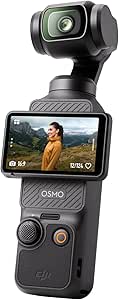 | Best for Travel Vlogging | Sensor: 1-inch CMOS | Video resolution: 4K, up to 120 fps in Slow Motion mode | Stabilization: 3-axis mechanical | VIEW ON AMAZON | See Our Full Breakdown |
| AKASO EK7000 4K30FPS 20MP WiFi Action Camera with EIS Ultra HD 131FT Waterproof Underwater Camera Remote Control 4X Zoom Support External Microphone Blue |  | Best for First-Time Action-Camera Buyers | Video resolution: 4K at 30 fps; 2.7K at 30 fps | Photo resolution: 20MP | Sensor: 1/3-inch CMOS | VIEW ON AMAZON | See Our Full Breakdown |
| DJI Osmo Action 4 Essential Combo Waterproof 4K Action Camera |  | Best for Rugged All-Weather Travel | Sensor: 1/1.3-inch, 2.4 μm pixels | Video resolution: Up to 4K; up to 120 fps at supported resolutions | Color depth: 10-bit | VIEW ON AMAZON | See Our Full Breakdown |
| Insta360 X5 Waterproof 8K 360° Action Camera |  | Best for 360° Travel Storytelling | Video resolution: Up to 8K at 30 fps | Sensors: Dual 1/1.28-inch CMOS | Field of view: 360 degrees | VIEW ON AMAZON | See Our Full Breakdown |
| Insta360 X3, 360 Action Camera with 5.7K 360 Active HDR Video | 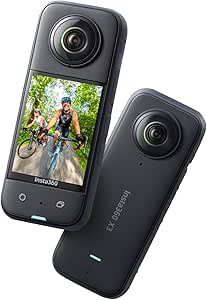 | Best Value 360° Camera | 360 video: 5.7K Active HDR | Single-lens video: Up to 4K at 30 fps | Maximum field of view: 170° at 2.7K60 MaxView | VIEW ON AMAZON | See Our Full Breakdown |
| DJI Osmo Action 6 Enhanced Combo 8K Waterproof Action Camera |  | Best Battery-and-Storage Travel Kit | Sensor: 1/1.1-inch square CMOS | Video resolution: 8K | Aperture: Variable f/2.0–f/4.0 | VIEW ON AMAZON | See Our Full Breakdown |
| AKASO EK7000 4K Action Camera with EIS, Wi-Fi, Remote, and Waterproof Case |  | Best for Simple, Case-Protected Water Trips | Video resolution: 4K at 30 fps; 2.7K at 30 fps | Photo resolution: 20 MP | Image stabilization: Electronic image stabilization | VIEW ON AMAZON | See Our Full Breakdown |
| DJI Osmo Action 4 Standard Combo Waterproof Action Camera |  | Best for Low-Light and Cold-Weather Trips | Sensor: 1/1.3-inch | Video: 4K, up to 120 fps | Color depth: 10-bit | VIEW ON AMAZON | See Our Full Breakdown |
| AKASO Brave 4 4K Action Camera |  | Best for Underwater Travel on a Budget | Video resolution: Up to 4K at 30 fps | Photo resolution: 20 MP | Viewing angles: 170°, 140°, 110°, and 70° | VIEW ON AMAZON | See Our Full Breakdown |
| 4K Mini Body Camera with EIS 6-Axis Stabilization, POV Action Camera |  | Best Compact Hands-Free POV Pick | Video resolution: 4K at 30 fps | Image stabilization: Electronic 6-axis stabilization | Display: 1.5-inch screen | VIEW ON AMAZON | See Our Full Breakdown |
| action cameras for travel | Video resolution | Stabilization | Battery life | Display |
|---|---|---|---|---|
| KPEP 5K Action Camera | 5K (5120 × 2880) at 30 fps; 4K at 60 fps | Electronic Image Stabilization (EIS) | Up to 160 minutes | 2 inches |
| SJCAM C400 4K Pocket Vlogging | 4K UHD | 6-axis EIS | Up to 7 hours | 2.29 inches |
| DJI Osmo Pocket 3 Vlogging Cam | 4K, up to 120 fps in Slow Motion mode | 3-axis mechanical | — | 2-inch rotating touchscreen |
| AKASO EK7000 4K30FPS 20MP WiFi | 4K at 30 fps; 2.7K at 30 fps | Electronic Image Stabilization (EIS) | — | 2 inches |
| DJI Osmo Action 4 Essential Co | Up to 4K; up to 120 fps at supported resolutions | Three stabilization modes | Up to 150 minutes | — |
| Insta360 X5 Waterproof 8K 360° | Up to 8K at 30 fps | Optical image stabilization, FlowState, and 360° Horizon Lock | 208 minutes | 2.5-inch touchscreen |
| Insta360 X3 | — | FlowState and Horizon Lock | — | 2.29-inch touchscreen |
| DJI Osmo Action 6 Enhanced Com | 8K | RockSteady, RockSteady+, HorizonBalancing, and HorizonSteady | Up to 4 hours | — |
| AKASO EK7000 4K Action Camera | 4K at 30 fps; 2.7K at 30 fps | — | 90 minutes | 2-inch |
| DJI Osmo Action 4 Standard Com | — | — | Up to 150 minutes | — |
| AKASO Brave 4 4K Action Camera | Up to 4K at 30 fps | — | — | — |
| 4K Mini Body Camera with EIS 6 | 4K at 30 fps | — | Up to 150 minutes | 1.5-inch screen |
More Details on Our Top Picks
KPEP 5K Action Camera, 50MP, IP68 Waterproof to 30M, EIS Stabilization, 170° FOV, Wi-Fi Remote, 160-Min Battery
The KPEP’s clearest travel advantage is its IP68 waterproofing to 30 meters without a housing, which avoids the bulk and button-access limits of the case required by the SJCAM C400 underwater. Its 5K video and 50MP photo claims also give travelers room to crop or reframe, while the 170° lens fits expansive scenery and close-up action. EIS and a supplied remote make it better suited to moving activities than a pocket gimbal camera such as the DJI Osmo Pocket 3, though neither spec guarantees perfectly smooth footage in every situation. The tradeoff is that this model relies on digital zoom and EIS rather than specified optical stabilization. I’d choose it for water-first itineraries, not for travelers prioritizing refined creator controls or a compact, polished vlogging setup.
Pros:- IP68 waterproof rating to 30 meters without an external housing
- 5K video and 50MP photo resolution provide cropping flexibility
- 170° field of view captures wide landscapes and action
- Includes a shooting remote and claims up to 160 minutes of battery life
Cons:- 5X zoom is digital, which can reduce image detail when magnifying
- Stabilization is electronic, with no optical stabilization specified
- A 2-inch display may feel cramped for reviewing footage and framing
Best for: Snorkelers, surfers, and adventure travelers who want a camera rated for underwater use without carrying a separate housing.
Not ideal for: Travel vloggers seeking a pocketable gimbal, advanced color tools, or optical zoom; the KPEP uses EIS and digital zoom.
- Video resolution:5K (5120 × 2880) at 30 fps; 4K at 60 fps
- Photo resolution:50MP
- Stabilization:Electronic Image Stabilization (EIS)
- Field of view:170° ultra-wide
- Battery life:Up to 160 minutes
- Connectivity:Wi-Fi
- Display:2 inches
Our verdict“Choose the KPEP for housing-free underwater travel and high-resolution capture, but skip it if you want a gimbal-style vlogging camera.”
SJCAM C400 4K Pocket Vlogging Camera with 64GB Storage
The SJCAM C400 is the pick here for travelers who need to keep recording through a long day: its stated seven-hour battery life stands apart from the KPEP’s 160-minute claim and the DJI Osmo Action 4’s up-to-150-minute figure. Its 6-axis EIS and detachable wireless controller suit hands-free clips and social content, while 64GB of included storage means there’s room to start recording without buying a card first. The C400 does ask more of its owner underwater: unlike the KPEP, it needs the supplied 30-meter waterproof housing, which can affect audio and access to controls. The stated weight is also substantial for a pocket travel camera, despite the compact framing of its product name. I’d favor it for long recording sessions and bundled accessories, not for minimal-pack or housing-free swimming trips.
Pros:- Stated battery life of up to seven hours supports extended recording
- 64GB storage is included
- 6-axis EIS and horizon correction help steady action footage
- Detachable wireless controller and accessory kit add hands-free flexibility
Cons:- Waterproofing requires the included housing, which can limit audio and button access
- Listed weight of 0.78 kg is heavy for a travel camera
- Proprietary operating system may take time to learn
Best for: Travel creators and families who record throughout long outings and want included storage, a remote controller, and mounting accessories.
Not ideal for: Snorkelers who prefer to film without a housing, or travelers trying to keep their camera kit especially light.
- Video resolution:4K UHD
- Storage:64GB
- Battery life:Up to 7 hours
- Stabilization:6-axis EIS
- Lens aperture:f/2.0
- Field of view:154°
- Display:2.29 inches
- Waterproofing:Up to 30 m with included housing
Our verdict“Pick the SJCAM C400 for long recording days and an accessory-rich kit, provided its housing requirement and listed weight suit your trip.”
DJI Osmo Pocket 3 Vlogging Camera with 1-Inch CMOS Sensor and 4K Video
The Osmo Pocket 3 is the lineup’s clearest choice for walking tours, talking-to-camera clips, and carefully framed travel stories. Its 3-axis mechanical gimbal steadies movement differently from the electronic stabilization in the DJI Osmo Action 4 or AKASO EK7000, while the 1-inch sensor and 10-bit D-Log M give creators more scope for low-light footage and color work. A rotating touchscreen makes switching between horizontal travel edits and vertical social clips straightforward, and ActiveTrack 6.0 can follow a moving subject. This is not the rugged water camera to take snorkeling: unlike the KPEP and Osmo Action 4, no waterproof rating is provided. The 4K/120fps mode is limited to slow motion, and recording requires a microSD card. I’d choose it for creator-led trips, not for rough, wet activities.
Pros:- 3-axis mechanical stabilization smooths walking and handheld footage
- 1-inch CMOS sensor and 10-bit D-Log M support flexible image work
- Rotating touchscreen supports horizontal and vertical framing
- ActiveTrack 6.0 and direct connection to two compatible DJI transmitters support creator workflows
Cons:- No waterproof rating is specified
- 4K at 120 fps is available only in Slow Motion mode
- Requires a microSD card, and the battery charger is sold separately
Best for: Travel vloggers and solo creators who prioritize smooth walking footage, flexible framing, and post-production color control.
Not ideal for: Swimmers, snorkelers, and action-sports travelers who need a camera with a stated waterproof rating or a rugged action-camera form.
- Sensor:1-inch CMOS
- Video resolution:4K, up to 120 fps in Slow Motion mode
- Stabilization:3-axis mechanical
- Display:2-inch rotating touchscreen
- Color profile:10-bit D-Log M
- Tracking:ActiveTrack 6.0
- Storage:MicroSD card required
- Audio connectivity:Connects directly to two DJI Mic 2 or Mic Mini transmitters
Our verdict“Choose the Osmo Pocket 3 for polished travel vlogs and smooth walking shots, not for underwater or high-impact adventures.”
AKASO EK7000 4K30FPS 20MP WiFi Action Camera with EIS Ultra HD 131FT Waterproof Underwater Camera Remote Control 4X Zoom Support External Microphone Blue
The AKASO EK7000 makes sense for travelers who want a straightforward action camera and a broad mounting kit rather than the higher-resolution capture of the KPEP or the creator controls of the DJI Osmo Pocket 3. It records 4K at 30 fps, captures 20MP photos, and uses EIS for steadier clips; its included waterproof case is rated to 131 feet, giving it a defined role for water activities. The wrist remote and Wi-Fi can simplify starting a shot or transferring clips, although the remote itself is not waterproof. Compared with the DJI Osmo Action 4, this model has a smaller 1/3-inch sensor and fewer stated color and stabilization options. That makes it a more basic travel choice, with less room for demanding low-light or editing workflows. I’d pick it for casual trips where the supplied accessories matter more than advanced image control.
Pros:- Records 4K video at 30 fps and captures 20MP photos
- EIS helps reduce shake in moving footage
- Waterproof case is rated to 131 feet
- Includes a wrist remote, two batteries, and a range of mounts
Cons:- Waterproofing depends on the case, and the wrist remote is not waterproof
- The listed 1/3-inch sensor and f/2.8 maximum aperture offer less headroom than the DJI Osmo Pocket 3’s 1-inch sensor
- No advanced color profile or mechanical stabilization is specified
Best for: First-time buyers and families who want a simple camera, wrist remote, and mounts for occasional travel activities.
Not ideal for: Creators who need advanced color control, stronger low-light specifications, or a waterproof remote for underwater operation.
- Video resolution:4K at 30 fps; 2.7K at 30 fps
- Photo resolution:20MP
- Sensor:1/3-inch CMOS
- Stabilization:Electronic Image Stabilization (EIS)
- Waterproofing:Up to 131 ft with included case
- Display:2 inches
- Connectivity:Wi-Fi; 2.4 GHz wrist remote
- Included batteries:Two 1050mAh lithium-polymer batteries
Our verdict“Choose the AKASO EK7000 for casual travel filming with a useful starter accessory kit, but look elsewhere for advanced image control or underwater remote use.”
DJI Osmo Action 4 Essential Combo Waterproof 4K Action Camera
The DJI Osmo Action 4 is the strongest fit in this group for travelers who expect changing weather, cold conditions, and regular action filming. Its 1/1.3-inch sensor and 10-bit color give it a more capable image-making foundation than the AKASO EK7000, while three stabilization modes let the user tailor smoothing to the activity. It is waterproof to 18 meters without a housing and rated to operate down to -20°C, making it more versatile for cold-water and winter trips than the SJCAM C400, which relies on its housing for underwater use. Front and rear touchscreens also make self-framing easier. The Essential Combo includes just one battery and a limited mounting set; it lacks the curved adhesive base, and its 120fps and 155° field of view have stated operating limits. I’d pick it for rugged travel, not for the longest battery claim.
Pros:- Waterproof to 18 meters without a housing
- Operating temperature rating extends down to -20°C
- 1/1.3-inch sensor and 10-bit color support detailed, flexible footage
- Front and rear touchscreens and magnetic quick-release mounting aid travel use
Cons:- Essential Combo includes one battery and does not include a curved adhesive base
- Up-to-150-minute battery life is shorter than the SJCAM C400’s stated seven hours
- 120 fps and 155° field of view have resolution or stabilization limitations
Best for: Adventure travelers filming in cold weather, rain, or underwater who want a rugged camera with front and rear screens.
Not ideal for: Travelers seeking the longest stated recording time or a kit with a broad selection of adhesive mounting accessories.
- Sensor:1/1.3-inch, 2.4 μm pixels
- Video resolution:Up to 4K; up to 120 fps at supported resolutions
- Color depth:10-bit
- Stabilization:Three stabilization modes
- Operating temperature:Down to -20°C (-4°F)
- Battery life:Up to 150 minutes
- Displays:Front and rear full-color touchscreens
Our verdict“Choose the Osmo Action 4 for rugged, cold-weather, and underwater trips, but plan for extra power or mounts if your itinerary calls for them.”
Insta360 X5 Waterproof 8K 360° Action Camera
The X5 suits travelers who want to choose the shot after the moment has passed. Its 360-degree, 8K capture records the surroundings in every direction, while AI-assisted reframing lets you make conventional clips from the footage later—handy for busy street scenes or group outings where aiming precisely is difficult. FlowState stabilization and horizon lock help keep moving footage level, and replaceable lenses offer a practical advantage for a camera likely to face travel wear. Compared with the Insta360 X3, the X5 raises capture resolution and adds larger sensors, which may help in low light but also means more footage to manage. It is a less straightforward choice than the single-view DJI Osmo Action 4: 360 reframing adds creative freedom, but requires editing, and a Micro SD card is needed to record.
Pros:- 8K 360-degree capture gives substantial flexibility to reframe travel footage.
- AI-assisted low-light processing and reframing support varied shooting conditions.
- FlowState stabilization and 360-degree horizon lock help smooth action footage.
- Replaceable lenses and wind-reducing four-microphone audio suit active trips.
Cons:- A Micro SD card is required and not listed as included.
- 360-degree footage requires reframing and editing to create standard-view clips.
- Listed weight of 0.5 kg is relatively substantial for travel carry.
Best for: Travelers who film fast-moving activities or groups and want to choose framing after recording.
Not ideal for: Travelers who want simple, ready-to-share clips, minimal editing, or a lighter camera; the 360 workflow adds post-production and the listed weight is 0.5 kg.
- Video resolution:Up to 8K at 30 fps
- Sensors:Dual 1/1.28-inch CMOS
- Field of view:360 degrees
- Stabilization:Optical image stabilization, FlowState, and 360° Horizon Lock
- Water resistance:Waterproof
- Display:2.5-inch touchscreen
- Battery life:208 minutes
- Memory:Micro SD; C10, UHS Speed Class 3, V30
- Audio:Four-microphone array with wind guard
Our verdict“Choose the X5 if flexible 8K 360-degree footage matters more to you than a simple camera-to-sharing workflow.”
Insta360 X3, 360 Action Camera with 5.7K 360 Active HDR Video
The X3 brings the main travel advantage of a 360 camera—reframing after recording—without the X5’s 8K capture. Its 5.7K 360 Active HDR video and 4K single-lens mode make it a flexible pick for trips that mix action footage with conventional wide shots. FlowState stabilization and horizon lock help steady moving clips, while the 2.29-inch touchscreen gives you a way to check framing on the camera. Compared with the newer Insta360 X5, the X3 has lower 360 resolution and lacks the listed replaceable lenses and larger sensors, so it is the more restrained choice for demanding low-light scenes or heavy cropping. In exchange, it weighs 200 g and covers both 360 and single-lens shooting. I would skip it if you want uncomplicated footage: reframing still calls for app editing, and a Micro SD card is required.
Pros:- 5.7K 360 capture lets you select a viewing angle after recording.
- 4K single-lens mode also supports more conventional action-camera footage.
- FlowState stabilization and horizon lock help level moving shots.
- Waterproof design and 200 g weight suit active travel.
Cons:- Lower 360 video resolution than the Insta360 X5.
- Reframing footage requires editing rather than choosing a final view in-camera.
- Micro SD card is needed; the listed bundle does not specify one.
Best for: Travelers curious about 360-degree capture who want both reframed footage and a conventional wide-angle mode.
Not ideal for: Travelers who need the highest available 360 detail, prioritize low-light capture, or prefer clips that need little editing.
- 360 video:5.7K Active HDR
- Single-lens video:Up to 4K at 30 fps
- Maximum field of view:170° at 2.7K60 MaxView
- Stabilization:FlowState and Horizon Lock
- Water resistance:Waterproof
- Display:2.29-inch touchscreen
- Weight:200 g
- Connectivity:Bluetooth
- Memory:Micro SD
Our verdict“Pick the X3 if you want the flexibility of 360 capture and single-lens video without prioritizing the X5’s higher resolution.”
DJI Osmo Action 6 Enhanced Combo 8K Waterproof Action Camera
The Osmo Action 6 is aimed at travelers who want high-resolution conventional footage without building a kit around separate accessories. It records 8K video, has 50 GB of built-in storage, and the Enhanced Combo adds two batteries, a battery case, and a 1.5 m extension rod. Those inclusions make it more trip-ready than the AKASO EK7000, which has a shorter listed battery life and requires a separate MicroSD card. Its 20 m waterproof rating without a case and multiple stabilization modes suit water activities and moving shots. The tradeoff is that the stated up-to-four-hour battery life applies under normal conditions, so actual recording time can vary. Unlike the Insta360 X5, this is not a 360 camera; choose it for straightforward action footage, not post-trip angle selection.
Pros:- 8K recording provides detailed conventional action footage.
- 50 GB of built-in storage reduces dependence on a separate memory card.
- Waterproof to 20 m without a case.
- Enhanced Combo includes two batteries, a battery case, and a 1.5 m extension rod.
Cons:- Listed four-hour battery life is under normal conditions and may vary.
- No memory card is specified in the product details.
- Unlike the Insta360 X5, it does not capture 360-degree video for later reframing.
Best for: Travelers recording long days of conventional action footage who value built-in storage, spare batteries, and an extension rod.
Not ideal for: Travelers who want 360-degree reframing, or who need battery runtime guaranteed across demanding recording conditions.
- Sensor:1/1.1-inch square CMOS
- Video resolution:8K
- Aperture:Variable f/2.0–f/4.0
- Waterproof depth:20 m without a case
- Battery life:Up to 4 hours
- Built-in storage:50 GB
- Stabilization:RockSteady, RockSteady+, HorizonBalancing, and HorizonSteady
- Weight:149 g
- Combo contents:1.5 m extension rod, two batteries, and multifunctional battery case
Our verdict“Choose the Action 6 Enhanced Combo if you want an 8K action camera with built-in storage and useful trip accessories.”
AKASO EK7000 4K Action Camera with EIS, Wi-Fi, Remote, and Waterproof Case
The EK7000 is a straightforward option for travelers who want basic 4K clips and a wrist remote rather than 360-degree editing or a high-resolution workflow. It records 4K at 30 fps, takes 20 MP photos, and includes two batteries, giving it a useful starter setup. Its standout travel feature is waterproofing to 131 ft with the case; unlike the DJI Osmo Action 4, which is waterproof without a case to 18 m, the AKASO relies on its housing for protection. The remote can help start recording when the camera is mounted out of reach, but it is not waterproof, so it is not a solution for submerged operation. At 2 oz, it is light to carry, though the 90-minute listed battery life is more limiting than the DJI’s stated 150 minutes. A MicroSD card is not included.
Pros:- Records 4K video at 30 fps and captures 20 MP photos.
- Waterproof to 131 ft when used with the included case.
- Wrist remote and Wi-Fi support convenient control and connectivity.
- Two included batteries provide a spare for travel days.
Cons:- MicroSD card is not included.
- Wrist remote is not waterproof.
- Listed battery life is 90 minutes, shorter than the DJI Osmo Action 4’s 150 minutes.
Best for: Travelers seeking a light, basic action camera for case-protected water activities, with a wrist remote for mounted shots.
Not ideal for: Travelers who need long recording sessions, want to operate controls underwater, or prefer waterproofing without a separate case.
- Video resolution:4K at 30 fps; 2.7K at 30 fps
- Photo resolution:20 MP
- Image stabilization:Electronic image stabilization
- Waterproof depth:131 ft with case
- Connectivity:Wi-Fi, up to 10 m
- Remote control:2.4 GHz wrist remote; not waterproof
- Display:2-inch
- Battery life:90 minutes
- Included batteries:Two lithium polymer batteries
Our verdict“Choose the EK7000 for lightweight, case-protected water filming if you can work around its short listed runtime and non-waterproof remote.”
DJI Osmo Action 4 Standard Combo Waterproof Action Camera
The Osmo Action 4 makes more sense for travelers who value reliable 4K action footage across changing conditions than those chasing the highest resolution. Its 1/1.3-inch sensor and 10-bit color support a richer image, while recording up to 120 fps gives compatible settings room for slow-motion clips. The camera is waterproof to 18 m without a case and is rated to operate at temperatures as low as -20°C, useful for cold-weather itineraries. Compared with the AKASO EK7000, it offers deeper case-free waterproofing and a longer listed battery life, though the AKASO includes two batteries and reaches a greater stated depth with its case. The Action 4 records 4K rather than the 8K offered by the DJI Osmo Action 6. Its 155° field of view also requires stabilization to be off, and 120 fps is limited to specified resolutions and aspect ratios.
Pros:- 1/1.3-inch sensor and 10-bit color support detailed, color-rich 4K footage.
- Records up to 120 fps at supported resolutions and aspect ratios.
- Waterproof to 18 m without a case.
- Rated for operation down to -20°C, with listed battery life up to 150 minutes.
Cons:- The 155° field of view requires stabilization to be turned off.
- 120 fps is limited to specified resolutions and aspect ratios.
- Standard Combo includes one battery, unlike the two-battery DJI Osmo Action 6 Enhanced Combo.
Best for: Travelers filming in cold climates, around water, or in changing light who want stabilized 4K footage and 10-bit color.
Not ideal for: Travelers who want 8K capture, the widest field of view with stabilization active, or a multi-battery kit out of the box.
- Sensor:1/1.3-inch
- Video:4K, up to 120 fps
- Color depth:10-bit
- Field of view:Up to 155°
- Waterproof depth:Up to 18 m
- Battery capacity:1770 mAh
- Battery life:Up to 150 minutes
- Operating temperature:As low as -20°C (-4°F)
- Standard Combo:One battery, protective frame, quick-release adapter mount, and curved adhesive base
Our verdict“Pick the Action 4 for cold-weather and water-focused trips where 4K image quality and case-free waterproofing matter more than 8K resolution.”
AKASO Brave 4 4K Action Camera
The AKASO Brave 4 suits travelers who want one camera for snorkeling, cycling, and everyday action footage without a complicated setup. Its included waterproof case supports use down to 40 meters, giving it a deeper stated rating than the 30-meter KPEP 5K Action Camera. The two included batteries and dual charger are useful for day trips, though each battery is rated for up to 90 minutes, so long excursions still call for charging breaks. Four viewing angles let you choose between a broad action view and a tighter frame, while electronic stabilization helps reduce shake. Compared with the more travel-focused DJI Osmo Action 4 options, this model offers a more basic feature set; the tradeoff is a simple package with useful mounts and accessories, rather than more advanced shooting tools.
Pros:- Waterproof case rated for depths up to 40 meters
- Two rechargeable batteries and a dual charger are included
- Four selectable viewing angles suit different action scenes
- Records up to 4K at 30 fps and captures 20 MP photos
Cons:- Recording time is up to 90 minutes per battery
- The wristband remote is not waterproof
- Electronic stabilization and overall feature set are more basic than the DJI Osmo Action 4 options
Best for: Snorkelers and casual adventure travelers who want a case-protected camera, spare batteries, and included activity mounts.
Not ideal for: Travelers who need long uninterrupted recording, a waterproof remote, or more advanced stabilization and shooting features.
- Video resolution:Up to 4K at 30 fps
- Photo resolution:20 MP
- Viewing angles:170°, 140°, 110°, and 70°
- Image stabilization:Electronic
- Waterproof depth:Up to 40 meters with waterproof case
- Screens:2-inch rear screen and 0.96-inch front screen
- Battery:Two 1050 mAh rechargeable batteries; up to 90 minutes per battery
- Connectivity:Wi-Fi and HDMI
- Weight:159 g
Our verdict“Choose the Brave 4 for case-protected underwater trips and a ready-to-mount accessory bundle, but skip it if you need longer recording sessions or a more advanced camera.”
4K Mini Body Camera with EIS 6-Axis Stabilization, POV Action Camera
At a listed 35 g, this mini camera is the roundup’s clearest choice for travelers who want hands-free footage without carrying a conventional action camera. Its clip and magnetic mounting options can attach to a strap, helmet, or bike, making it well suited to walking tours and activity clips where holding a camera would be awkward. The 1.5-inch display also gives it a practical advantage over screen-free body cameras: you can check framing before recording. It records 4K at 30 fps and offers landscape and portrait orientation, a useful fit for travelers creating both trip videos and vertical social clips. Unlike the case-and-accessory-focused AKASO Brave 4, its appeal is compact wearability. The listing describes a waterproof case, but gives no depth rating, and its small form factor may not suit buyers seeking a more established, feature-rich action camera.
Pros:- Very light at a listed 35 g, with magnetic and clip mounting options
- Records 4K at 30 fps and supports landscape and portrait orientation
- Six-axis electronic stabilization is designed to reduce movement shake
- Built-in 1.5-inch screen allows framing checks and playback
Cons:- No waterproof depth rating is provided for the included case
- The product information does not establish performance or durability comparable to established action-camera models such as the AKASO Brave 4
- Small body-camera format is less suited to travelers who want a conventional handheld shooting experience
Best for: Travel creators and cyclists who prioritize lightweight, hands-free POV clips and want to frame both landscape and portrait footage.
Not ideal for: Divers or travelers who need a clearly specified waterproof depth, long-term dependable action-camera support, or a conventional camera setup for varied shots.
- Video resolution:4K at 30 fps
- Image stabilization:Electronic 6-axis stabilization
- Display:1.5-inch screen
- Weight:35 g
- Battery life:Up to 150 minutes
- Connectivity:2.4 GHz Wi-Fi and Bluetooth
- Orientation:16:9 landscape and 9:16 portrait
- Sensor:1/2.3-inch CMOS
- Included protection:Waterproof case; depth rating not specified
Our verdict“Pick this mini camera for lightweight, wearable travel POV footage, but choose the AKASO Brave 4 or a dedicated waterproof action camera for trips centered on underwater shooting.”

How We Picked
I ranked these cameras by how well they suit the practical demands of travel: carrying them all day, switching quickly between scenes, capturing stable footage, and handling water or outdoor activity. I weighed stated video capabilities, stabilization, waterproofing approach, controls, storage, and whether the camera’s design suits action footage, vlogging, or both. A camera’s headline resolution did not automatically place it higher; useful footage, ease of use, and flexibility matter more on a trip than a large number on the box.
The ranking favors versatile, travel-ready options first, then models with a strong but narrower use case, followed by simpler or less clearly differentiated alternatives. The DJI Osmo Action 4 Essential Combo leads as a balanced rugged pick; the Insta360 X5 and DJI Osmo Pocket 3 rank highly for distinct filming styles rather than universal use. I also distinguish near-duplicate models and bundles, since accessory differences can matter more to a traveler than small spec changes. Where a listing gives limited detail, I avoid treating unverified claims as a proven advantage.
Factors to Consider When Choosing Action Cameras For Travel
Choosing among travel cameras is less about finding the highest resolution and more about matching the camera to what you will actually film. These broader buying factors can help avoid carrying a device that is awkward to use, difficult to edit, or poorly suited to the trip.
Match the camera shape to the footage you want
A traditional action camera is a practical choice for hikes, rides, water activities, and quick clips because its compact body is designed for mounting and rougher handling. A pocket gimbal camera, such as the Osmo Pocket 3, is better for walking shots, faces, and travel updates where smooth movement and a vlog-friendly view matter more than a rugged shell. A 360 camera can capture scenes without precise framing, but you will need to choose angles later in editing. Think about your most common shot before buying, not just the most exciting one. A specialist camera may produce distinctive footage, but it can spend much of a trip unused if it does not match your everyday filming style.
Read waterproof claims as a complete system
Water resistance may depend on a sealed camera body, a separate case, or both, and those approaches affect setup and sound. Check the stated depth rating and whether the camera needs its housing for the water activities you have planned. A case can add protection but also makes access to controls slower and can complicate audio. Salt water, sand, and repeated opening of seals call for careful rinsing and inspection after a trip. Do not assume that a camera described as waterproof is ready for every dive or water sport without checking its specific limits and included parts.
Plan for stabilization and the way you move
Stabilization can make walking, cycling, and handheld footage easier to watch, but it does not remove every shake or replace careful handling. Mount position matters: a helmet, chest, and handheld view each produce a different sense of motion and perspective. If you film fast action, check how stabilization works at the resolutions and frame rates you expect to use, since some modes can differ. Gimbal cameras steady footage mechanically and often suit deliberate walking shots, while action cameras are built for mounting and active use. Choose based on your typical movement rather than treating stabilization labels as interchangeable.
Budget for storage, batteries, and backup
High-resolution and 360-degree clips can fill storage quickly, especially on a multi-day trip with limited internet access. Check whether storage is removable, built in, or supplied with the camera, and plan how you will offload files before a card fills. Carrying a spare battery or a reliable charging plan may matter more than a small difference in listed recording time. Cold weather, long takes, and wireless features can change how long a battery lasts in practice. A camera that records more footage than you can store or back up can create a bigger travel headache than a camera with a lower headline resolution.
Count the editing work in your decision
Standard action-camera clips are usually easier to sort and share than reframed 360 footage. With a 360 camera, the ability to select the viewpoint later is useful when you cannot aim during an activity, but it adds an editing step and can increase storage needs. Decide whether you are willing to review and process footage after each travel day or prefer clips that are ready to use. Companion apps, phone compatibility, and file-transfer habits can shape that experience as much as camera hardware. If you mainly want quick memories to send home, a simpler recording workflow may be the better purchase.
Compare bundles by the accessories you will use
Bundle names do not always signal a different camera, so compare what is actually included before choosing a package. A useful mount, spare battery, or protective case can reduce the need to shop for extras, while an accessory you will never use adds little practical value. Check whether a remote, storage card, or microphone support is included or only mentioned as compatible. For travel, favor accessories that solve a real packing or filming problem rather than accumulating mounts for hypothetical activities. This is especially relevant when comparing the DJI Osmo Action 4 Standard and Essential Combos, where the bundle contents deserve closer attention than the shared model name.
Frequently Asked Questions
Should I choose a rugged action camera or the DJI Osmo Pocket 3 for a vacation?
Choose a rugged action camera if your plans include swimming, cycling, hiking in rough conditions, or mounting the camera during activities. The Osmo Pocket 3 is more suited to travel vlogs, walking footage, and filming people where a gimbal-like look is the priority. Its design is not a direct substitute for a camera built around waterproof action use. If your itinerary mixes both styles, consider which footage you are most likely to capture every day and whether you are willing to carry a second device. Buying for your routine shots usually pays off more than buying for one occasional activity.
Is a 360 camera worth the extra editing for travel?
A 360 camera makes sense when you cannot aim precisely during a ride, hike, or group activity and want to pick the framing later. That flexibility comes with larger, more involved files and an editing step that standard action cameras generally avoid. If you enjoy shaping clips after the trip, that tradeoff can be worthwhile; if you want to share footage immediately, it may feel like extra work. Think about your storage and phone or computer workflow before choosing one. A 360 camera is most valuable when reframing solves a real filming problem, not just because the format sounds novel.
Do I need a waterproof case if a camera is listed as waterproof?
Not always, but the answer depends on the model’s stated limits and how waterproofing is achieved. Some cameras are designed to resist water without a housing within a specified depth, while others rely on a waterproof case for deeper or more demanding use. Check the manufacturer’s conditions for the exact camera and bundle, including whether doors and seals must be closed in a particular way. A housing can add protection, but it may affect sound and make controls less convenient. After exposure to salt water or sand, follow the maker’s cleaning and seal-care guidance.
Are the DJI Osmo Action 4 Standard and Essential Combos different cameras?
Both listings identify the DJI Osmo Action 4, so compare the package contents rather than assuming the camera itself changes. The right bundle depends on whether its included accessories match your travel plans and whether you already own compatible mounts or batteries. Look closely at the current listing for each package, since bundle contents can vary. If you need a particular mount or spare power source, an included accessory may save packing and setup effort. If you already have what you need, the other package may be a cleaner fit.
What should I prioritize if I have never owned an action camera?
Start with a camera that has straightforward controls, a clear recording workflow, and a form that matches your usual activities. A conventional action camera is often easier to learn than a 360 model, which asks you to make more editing decisions after filming. Before a trip, practice changing modes, checking battery status, and transferring a short clip so you are not learning under time pressure. Also verify what storage and mounting gear you need; those details are easy for first-time buyers to overlook. The best beginner choice is the one you can operate confidently and carry regularly.
Conclusion
For a single camera that can handle varied travel activities, I recommend the DJI Osmo Action 4 Essential Combo as the best overall. The best premium pick is the Insta360 X5 for travelers who value 360-degree reframing and accept the added editing work; the DJI Osmo Pocket 3 is the stronger fit for polished, people-focused vlogs. For a best value direction, compare the AKASO EK7000 and AKASO Brave 4 around the basic recording and accessories you need, while keeping expectations aligned with their simpler positioning. Beginners who want a conventional action-camera format can start with an easy-to-operate standard model rather than a 360 workflow. For specific needs, choose the Osmo Pocket 3 for walking vlogs, the Insta360 X5 or X3 for reframing, and a rugged DJI Osmo Action model for water and active travel; skip features you will not use and choose the camera that fits your actual itinerary.
Halloween Picks
halloween
As an affiliate, we earn on qualifying purchases.