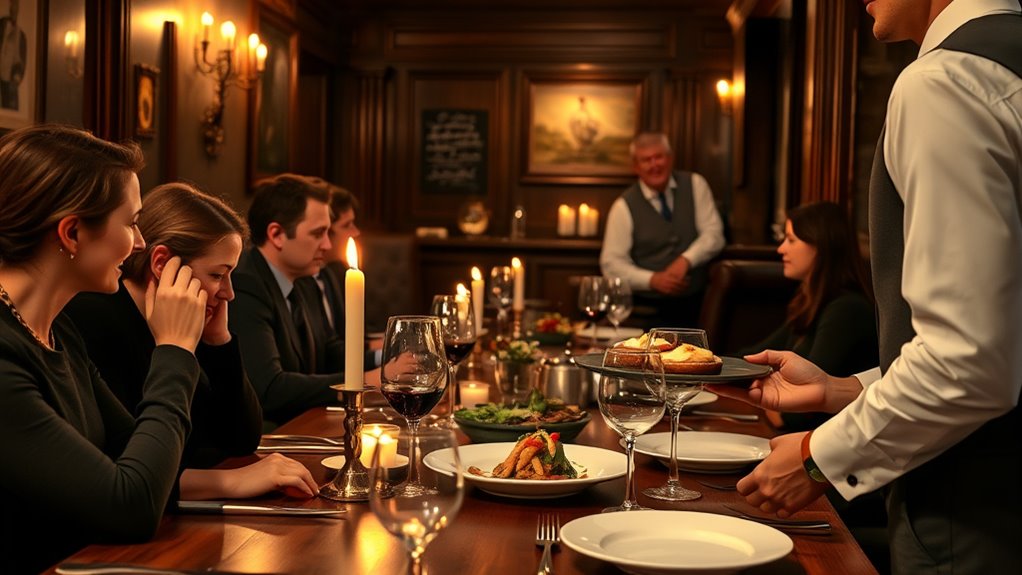

When dining abroad, it’s important to make reservations in advance at fine restaurants and confirm details politely, especially if language barriers exist. Tipping customs vary—15-20% in the US, but often none in Japan or South Korea—so research local practices. Respect local etiquette by observing cues, using appropriate utensils, and following diners’ lead. Paying attention to these details helps you enjoy a smooth experience and shows cultural sensitivity; discovering more tips will help you feel even more prepared.
Key Takeaways
- Research local reservation policies and make reservations in advance for fine dining; inquire about dress code and customs.
- Understand tipping norms: 15-20% in the US, no tips in Japan or South Korea, and check if service charge is included elsewhere.
- Observe and follow local dining customs, such as utensil use, table manners, and cue-based initiation of eating.
- Respect cultural behaviors by mimicking local etiquette and avoiding gestures or language that could be considered disrespectful.
- When unsure, ask hosts or staff about dining protocols to ensure respectful and enjoyable interactions abroad.

Have you ever wondered how dining experiences differ when you’re abroad? When you step into a restaurant in a foreign country, you quickly realize that local customs and dining manners can vary greatly from what you’re used to at home. Understanding and respecting these differences can make your experience more enjoyable and help you avoid awkward situations. For instance, in some cultures, it’s customary to wait for the host to start eating before you begin, while in others, diners are encouraged to dig in as soon as their food arrives. Paying attention to these cues shows respect for local customs. Additionally, the way people use utensils, such as chopsticks versus forks and knives, can differ considerably. Learning a few basic dining manners in the local language or observing what others do can go a long way. For example, in Japan, it’s polite to say “itadakimasu” before eating, which expresses gratitude for the meal. In France, keeping your hands on the table (but not elbows on the table) is the norm, and in many Middle Eastern countries, it’s customary to eat with your right hand. Being aware of these customs not only demonstrates cultural sensitivity but also enriches your dining experience. It’s best to observe how locals behave and follow their lead rather than assume your habits are universal. When it comes to tipping, again, customs vary. In the United States, tipping 15-20% is standard, but in other countries like Japan or South Korea, tipping isn’t customary and may even be considered rude. Conversely, in some European countries, a service charge is included, and additional tipping isn’t necessary. Researching the tipping etiquette before you dine guarantees you’re neither over-tipping nor underappreciating the service. Additionally, being aware of precious metals investment assets like gold coins or bars can be useful if you decide to diversify your assets during your travels or in your financial planning. Reservations are another aspect worth considering. In popular destinations or fine dining establishments, making a reservation in advance can save you from long waits or disappointment. Some countries prefer reservations to be made days ahead, while others accept walk-ins without issue. When calling or booking online, be polite and confirm the reservation details, especially if language barriers exist. If you’re unsure about the dress code or any specific customs, don’t hesitate to ask the host or hotel concierge for guidance.
Frequently Asked Questions
How Do I Find Local Dining Customs in a New Country?
To find local dining customs, start by researching online travel guides and blogs focused on cultural dining. Look for etiquette tips specific to the country, such as table manners, tipping practices, and meal customs. Ask locals or your hotel staff for recommendations. Observing how locals behave during meals also gives you valuable insights. Remember, showing respect and curiosity about their cultural dining practices helps you enjoy a more authentic experience.
Are Reservations Always Necessary for Popular Restaurants Abroad?
Think of reservations like securing a ticket to a coveted concert—you’ll want one for popular restaurants abroad. Often, reservation policies are strict, especially at renowned spots, so booking ahead guarantees you avoid disappointment. If you don’t have one, knowing walk-in etiquette can help; arrive early or be flexible. While not always necessary, making reservations is safer, especially during busy seasons, so plan accordingly to enjoy your dining experience.
What Should I Do if I Have a Food Allergy Abroad?
If you have a food allergy abroad, you should clearly communicate your needs to restaurant staff, preferably in the local language or with a translation card. Ask about gluten-free dining options and vegetarian choices, ensuring they understand your allergy. Always double-check ingredients and consider researching allergy-friendly restaurants beforehand. Carry allergy medications, and don’t hesitate to speak up if something seems unsafe, prioritizing your health and safety.
Is It Customary to Tip at Fast-Food or Casual Eateries?
In casual dining and fast-food places abroad, tipping practices vary, but it’s generally not expected or customary. You might leave a small tip if the service is exceptional, but often, rounding up the bill or leaving loose change is sufficient. In some countries, tipping at casual eateries is appreciated, so it’s wise to research local customs beforehand. Overall, always observe local practices, and when in doubt, ask locals or staff about tipping etiquette.
How Do I Handle Language Barriers When Ordering Food?
When facing translation challenges or menu navigation issues, you should prepare by learning basic phrases or downloading a translation app. Point to pictures or use gestures to communicate your order clearly. If you’re unsure, ask staff for recommendations or clarification. Being patient and polite helps bridge language gaps. Remember, most servers appreciate your effort to communicate, making the experience smoother and more enjoyable.
Conclusion
As you navigate dining abroad, remember that each experience is a delicate dance on a global stage. By respecting local customs, tipping appropriately, and embracing new etiquette, you’ll turn unfamiliar tables into welcoming encounters. Think of it as planting seeds of goodwill—you’ll harvest memories richer than any dish. So, step confidently into the world’s restaurants, and let your open mind serve as the best seasoning for a truly unforgettable journey.

Born in Dubai to Pakistani parents, Aisha deeply understands Middle Eastern and South Asian luxury markets. She excels in forging strategic partnerships with top-tier luxury brands worldwide, fostering cross-cultural collaborations that enhance our global presence.