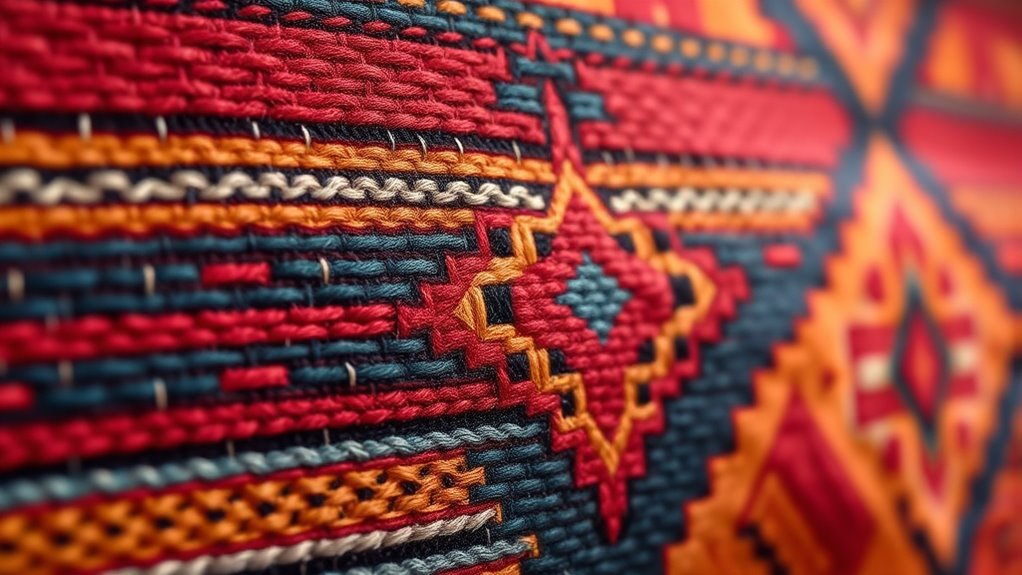

When using indigenous patterns, it’s essential to respect their cultural significance by understanding their meanings and origins. Avoid appropriation by sourcing from artisans who honor their traditions and ensuring they are fairly compensated. Always seek authentic, ethically made pieces with proper context or certification. Recognize that these patterns are sacred symbols tied to community identity and history. Continuing to learn will help you engage more thoughtfully and support the preservation of these rich cultural expressions.
Key Takeaways
- Understand and honor the cultural significance and meanings behind Indigenous patterns before using or sharing them.
- Source designs ethically from Indigenous artisans who retain rights and receive fair compensation.
- Avoid mass-produced or unauthorized reproductions lacking cultural context or community approval.
- Include proper acknowledgment or storytelling to respect the origins and significance of the patterns.
- Support initiatives that promote Indigenous preservation, ensuring their cultural expressions are maintained and respected.
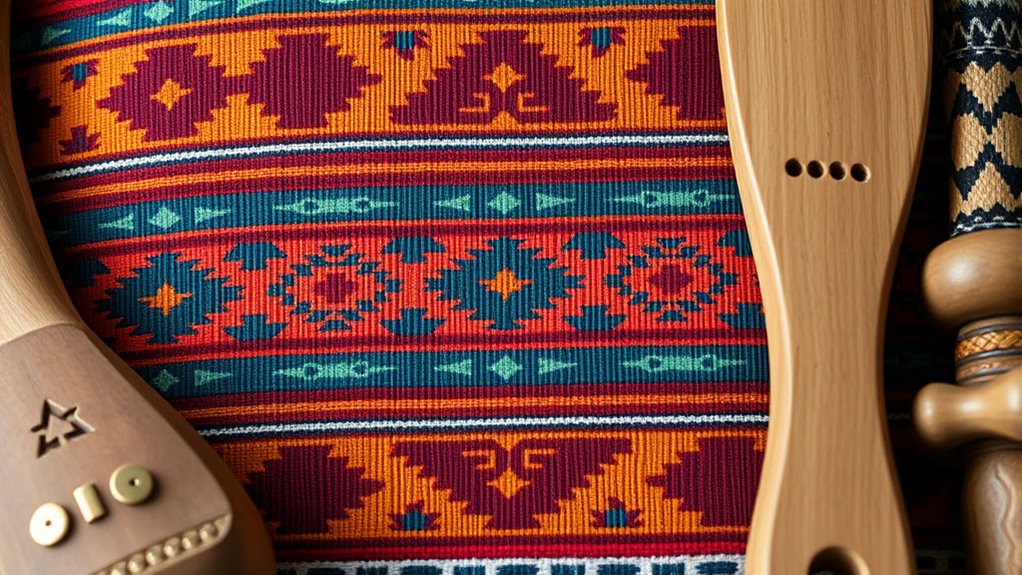
Have you ever noticed the intricate designs that adorn Indigenous textiles and artwork? These patterns are far more than just decorative elements; they carry deep cultural significance that reflects centuries of history, beliefs, and identity. When you encounter Indigenous patterns, you’re glimpsing stories, spiritual beliefs, and social structures woven into every line and symbol. Recognizing their cultural importance is vital because these designs aren’t simply aesthetic choices—they’re expressions of a community’s worldview and heritage. Respecting their cultural significance means understanding that these patterns are often sacred or reserved for specific ceremonies and individuals. Using such designs without proper context or permission can be dismissive and disrespectful, diminishing their meaning and value. It’s essential to approach Indigenous art with sensitivity, acknowledging that these patterns are part of a living tradition that embodies the community’s identity and spirituality. Additionally, understanding cultural significance helps foster respectful appreciation rather than superficial imitation.
Indigenous patterns embody living traditions, stories, and spirituality—respect and understanding are essential to honor their cultural significance.
Equally important is the concept of ethical sourcing. When you consider incorporating Indigenous patterns into clothing, jewelry, or home decor, you should prioritize sourcing from artisans and companies that respect Indigenous rights and traditions. Ethical sourcing guarantees that the original creators are fairly compensated for their work and that their cultural expressions aren’t exploited or commodified. It involves transparency about where the designs come from, how they’re made, and who benefits from their sale. Supporting Indigenous artisans directly helps preserve their craft and empowers communities rather than contributing to cultural appropriation or economic inequality. By choosing ethically sourced products, you’re making a conscious decision to honor the creators’ rights and the cultural importance embedded in their work.
Understanding and respecting Indigenous patterns requires more than just admiration; it demands active engagement and responsibility. When you seek out authentic, ethically sourced pieces, you’re helping to sustain these cultural practices and ensure they’re appreciated in a way that upholds their original meaning. Avoid generic or mass-produced imitations that strip away context and significance. Instead, look for products that come with stories or certifications from Indigenous communities. This way, you’re not only celebrating their artistry but also supporting their ongoing cultural expression and protection.
In the end, respecting Indigenous patterns isn’t just about avoiding cultural insensitivity—it’s about recognizing the value and importance of these designs to the communities they originate from. With awareness and intentional choices, you can appreciate these artistic expressions in a way that upholds their cultural significance and promotes ethical sourcing, helping to preserve Indigenous heritage for generations to come.
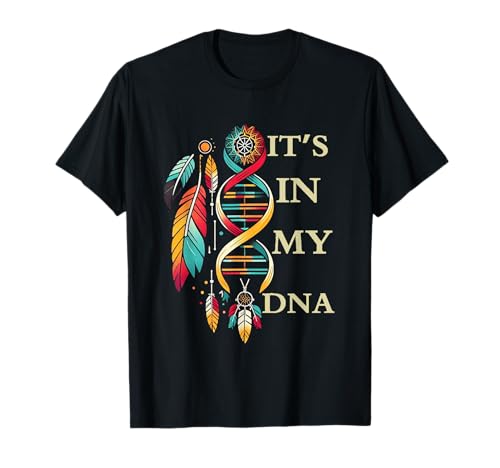
It's in My DNA Indigenous Native American Indian Day Pride T-Shirt
Native American Pride design. Native American Indian design. Makes a great present for men, women, teens, kids on…
As an affiliate, we earn on qualifying purchases.
As an affiliate, we earn on qualifying purchases.
Frequently Asked Questions
How Can I Identify Authentic Indigenous Patterns?
You can identify authentic indigenous patterns by researching their cultural significance and traditional meanings. Look for patterns that are specific to a community or region, and authenticate their origins through reputable sources or direct engagement with indigenous artists. Be cautious of generic or commercialized designs, and always respect the cultural context behind each pattern. Supporting indigenous creators ensures you honor their traditions and avoid cultural appropriation.
Are There Specific Symbols I Should Avoid Using?
You should avoid sacred symbols, cultural appropriation symbols, and anything that holds spiritual or cultural significance. Instead, respect authentic traditions, seek permission, and educate yourself about the meaning behind symbols. By doing so, you honor the culture, avoid misappropriation, and promote understanding. Remember, using sacred symbols without context can cause offense, so choose respectful, culturally appropriate designs that celebrate rather than exploit Indigenous traditions.
What Is the Best Way to Seek Permission for Use?
You should directly contact the Indigenous community or cultural organization to seek permission for using their patterns. Approach with cultural sensitivity and show genuine respect for their traditions. Ask about ethical sourcing and whether they approve of your intended use. Be transparent about your project, listen carefully, and follow their guidance. This respectful approach fosters trust, honors their rights, and ensures your use aligns with their cultural values.
How Do I Ensure Respectful Representation in Designs?
To guarantee respectful representation in your designs, prioritize cultural appreciation and engage in ethical collaboration with Indigenous communities. Listen actively to their stories and seek their guidance throughout the creative process. Avoid stereotypes and misappropriation by researching thoroughly and respecting their symbols and traditions. By fostering open communication and honoring their perspectives, you demonstrate genuine respect, affirming your designs celebrate Indigenous culture responsibly and ethically.
Can I Use Indigenous Patterns for Commercial Purposes?
Yes, you can use indigenous patterns for commercial purposes, but only if you approach it with cultural appreciation and ethical collaboration. If you don’t, you risk misrepresentation and disrespect. Before proceeding, seek permission from the community, understand the significance behind the patterns, and work together respectfully. This way, your use honors the culture and fosters genuine appreciation rather than cultural exploitation. Don’t underestimate the importance of doing it right.

Handmade in Japan: The Pursuit of Perfection in Traditional Crafts
As an affiliate, we earn on qualifying purchases.
As an affiliate, we earn on qualifying purchases.
Conclusion
By honoring indigenous patterns, you’re not just respecting ancient artistry—you’re protecting a cultural legacy more precious than a treasure chest overflowing with gold. When you use these patterns thoughtfully, you become a guardian of history and identity that’s been passed down through countless generations. Remember, your choices ripple far beyond surface beauty; they shape the future of these vibrant traditions. So, approach with respect, and let your actions be a true demonstration of cultural appreciation.
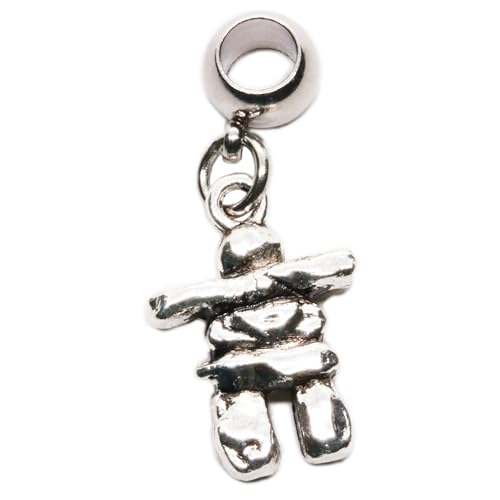
Dave The Bunny Native American Inukshuk Charm – Authentic Native American Jewelry & Decor – Handcrafted Inuksuk Charm for Cultural Appreciation & Unique Gift – Symbol of Hope & Friendship
Authentic Inukshuk Charm: This meticulously crafted charm represents traditional american decor and reflects native american history and art….
As an affiliate, we earn on qualifying purchases.
As an affiliate, we earn on qualifying purchases.
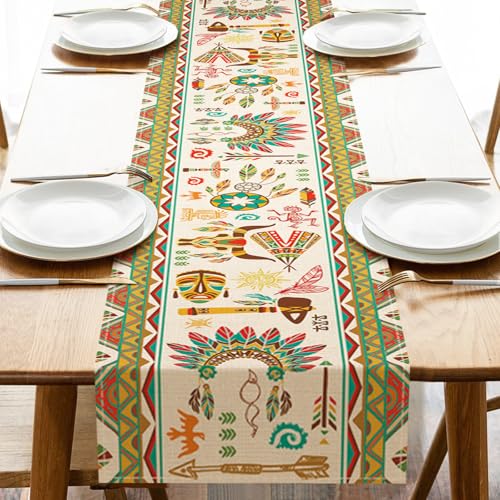
Croar Native American Heritage Month Dining Table Runner, Indian Tribe Ethnic Burlap Kitchen Decoration, Indigenous Pride History Indoor Outdoor Home Decor Party Supply 13 x 72 Inches
Uniquely Designed Table Runner: Our rustic tabletop runner is designed with the current elements to add style and…
As an affiliate, we earn on qualifying purchases.
As an affiliate, we earn on qualifying purchases.

Born in Dubai to Pakistani parents, Aisha deeply understands Middle Eastern and South Asian luxury markets. She excels in forging strategic partnerships with top-tier luxury brands worldwide, fostering cross-cultural collaborations that enhance our global presence.