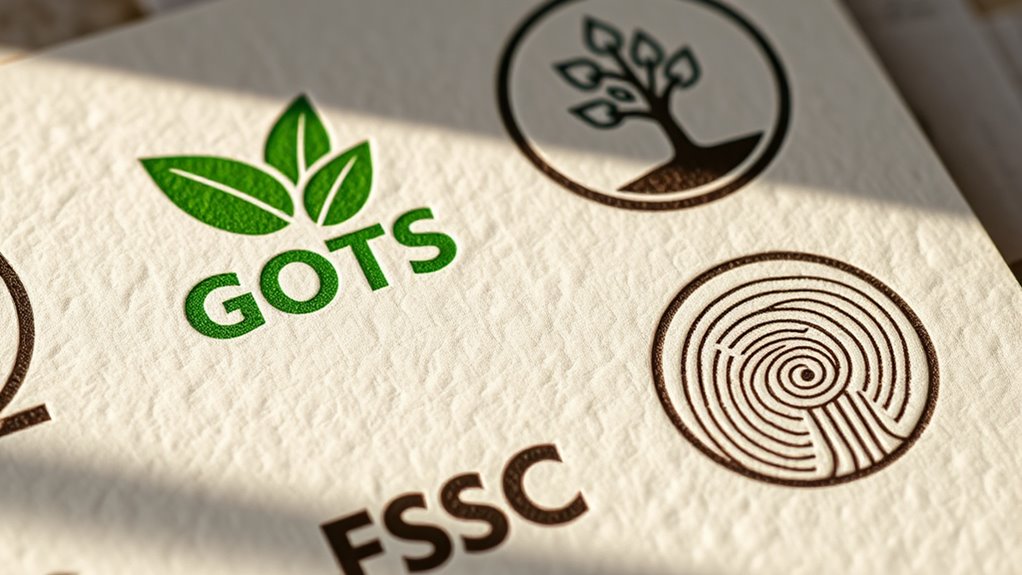

Certifications like GOTS, FSC, and others are powerful tools that prove your commitment to ethical sourcing, sustainability, and responsible business practices. They help you build trust with customers, stand out in the market, and guarantee supply chain transparency. These labels demonstrate compliance with environmental and social standards, making your products more credible and attractive to eco-conscious consumers. Keep exploring to discover how these certifications can strategically enhance your brand and strengthen your sustainable initiatives.
Key Takeaways
- GOTS certifies organic textiles and social responsibility, ensuring eco-friendly and ethical production practices.
- FSC verifies responsible forest management and sustainable sourcing of wood and paper products.
- Certifications like GOTS and FSC enhance brand credibility and consumer trust through third-party validation.
- They facilitate market access, compliance with regulations, and demonstrate commitment to environmental standards.
- Additional certifications cover various sectors, promoting transparency, ethical sourcing, and sustainable supply chains.

Have you ever wondered how certifications can boost your career prospects? They’re more than just badges; they’re proof of your commitment to responsible practices and can open doors to new opportunities. When it comes to sustainable industries, certifications like GOTS (Global Organic Textile Standard) and FSC (Forest Stewardship Council) play a vital role in demonstrating your dedication to ethical sourcing and supply chain transparency. These labels tell clients and partners that your products meet strict environmental and social standards, which can help you stand out in a competitive market.
Focusing on supply chain transparency is essential in today’s business landscape. Certifications require you to trace your raw materials from source to finished product, ensuring every step adheres to ethical sourcing principles. This transparency reassures your customers that your supply chain isn’t involved in practices like child labor, deforestation, or unsafe working conditions. By obtaining certifications such as FSC, which verifies responsible forest management, you not only comply with regulations but also build trust with consumers. They’re increasingly seeking products that reflect their values, and certifications are a clear signal that you prioritize responsible sourcing.
Certifications like FSC ensure responsible sourcing, build consumer trust, and demonstrate compliance with ethical standards.
Moreover, these certifications enhance your credibility and reputation. They act as third-party validation that your supply chain operates ethically and sustainably. This can be especially advantageous when negotiating with retail partners, entering new markets, or attracting eco-conscious consumers. Certification bodies conduct rigorous audits and assessments, which may seem burdensome initially, but the long-term benefits outweigh the effort. You demonstrate that you’re serious about ethical sourcing, which can lead to increased demand and customer loyalty.
In addition to improving your brand image, certifications can also streamline your compliance with international regulations. As governments and industry standards become more stringent, having recognized certifications in place makes it easier to meet legal requirements and avoid costly penalties. They often serve as a foundation for implementing sustainable practices across your operations, fostering continuous improvement. Over time, this commitment can drive innovation within your supply chain, leading to more efficient and eco-friendly processes.
Ultimately, earning certifications like GOTS and FSC isn’t just about ticking boxes; it’s about embedding responsible practices into your business model. It signals to your stakeholders that you value transparency and are committed to ethical sourcing. This dedication can differentiate your brand, attract conscientious consumers, and position you as a leader in sustainable commerce. As the demand for ethically sourced products grows, so does the importance of certifications in shaping a responsible and transparent supply chain that benefits everyone involved. Incorporating organic and natural juices into your product line can further showcase your commitment to sustainable and health-conscious practices, aligning with certification standards.

ORGANIC TEXTILES 100% Organic Cotton Pillow with Organic Cotton Cover – GOTS Certified, Adjustable Loft, Cooling and Breathable, Easy Care, Traveling and Long Flights – (Standard) – Pack of 1
100% ORGANIC COTTON PILLOW [GOTS CERTIFIED]: Our cotton filled pillows are filled and covered with 100% organic cotton,…
As an affiliate, we earn on qualifying purchases.
As an affiliate, we earn on qualifying purchases.
Frequently Asked Questions
How Do Certifications Impact Product Pricing?
Certifications impact your product pricing by adding certification costs, which can increase production expenses. However, they also boost consumer perception, making your products more appealing to eco-conscious buyers willing to pay a premium. While certification costs may raise prices initially, the improved reputation and customer trust often lead to increased sales and loyalty, balancing out the investment over time. Ultimately, certifications can help you position your brand as responsible and high-quality.
Can a Product Have Multiple Certifications Simultaneously?
Think of a product as a mosaic, with each certification adding a unique tile. Yes, your product can feature multiple certifications simultaneously, capturing multi certification benefits. Overlapping standards often complement each other, enhancing your product’s credibility and appeal. Achieving this shows your commitment to sustainability and quality, helping you stand out in a competitive market. Embracing multi certifications demonstrates your dedication to meeting diverse ethical and environmental standards.
Are Certifications Valid Worldwide or Region-Specific?
Certifications’ validity varies worldwide due to regional differences. While some, like GOTS and FSC, are recognized globally, their acceptance may differ across countries. You should check regional standards, as certification validity depends on local regulations and market acceptance. Always verify if a certification is acknowledged in your specific region to ensure your product meets local requirements and consumer expectations.
What Is the Certification Process for Small Businesses?
About 70% of small businesses find certification processes manageable, boosting supply chain transparency. You’ll need to prepare documentation, implement standards, and often undergo audits, which can vary in cost. Certification costs depend on your business size and scope, but they’re an investment in credibility. By pursuing certification, you demonstrate your commitment to responsible practices, helping you stand out and build trust with customers and partners.
How Often Are Certifications Renewed or Reassessed?
You need to renew your certifications regularly, typically every one to three years, depending on the specific program. The renewal frequency varies, but most certifications require reassessment procedures during each renewal period to make certain of ongoing compliance. You’ll submit updated documentation and undergo audits or inspections as needed. Staying proactive with these reassessments helps maintain your certification status and demonstrates your commitment to quality and standards.

PURPLECLAY Wooden Disposable Forks (300 PCS) FSC Certified Wood Compostable Forks, Eco-Friendly Compostable Utensils for Party, Plastic-Free Wood Utensil, Bamboo Utensils Alternative, Fork for Eating
FSC CERTIFIED ALL-NATURAL BIRCHWOOD: Crafted from 100% FSC Certified wood, these PURPLECLAY wooden forks for eating are made…
As an affiliate, we earn on qualifying purchases.
As an affiliate, we earn on qualifying purchases.
Conclusion
Exploring certifications like GOTS and FSC might seem like a quest straight out of medieval legend, but it’s really about making informed choices today. By checking for these labels, you guarantee your eco-friendly wardrobe isn’t just a fairy tale. Think of certifications as your modern-day Excalibur, empowering you to champion sustainability. So, don’t be a knave—seek out trusted marks and wear your values proudly. After all, in this age of information, knowledge is your greatest armor.
Principles of Supply Chain Management: A Balanced Approach
As an affiliate, we earn on qualifying purchases.
As an affiliate, we earn on qualifying purchases.

CEH Certified Ethical Hacker All-in-One Exam Guide, Fifth Edition
As an affiliate, we earn on qualifying purchases.
As an affiliate, we earn on qualifying purchases.

Born in Dubai to Pakistani parents, Aisha deeply understands Middle Eastern and South Asian luxury markets. She excels in forging strategic partnerships with top-tier luxury brands worldwide, fostering cross-cultural collaborations that enhance our global presence.