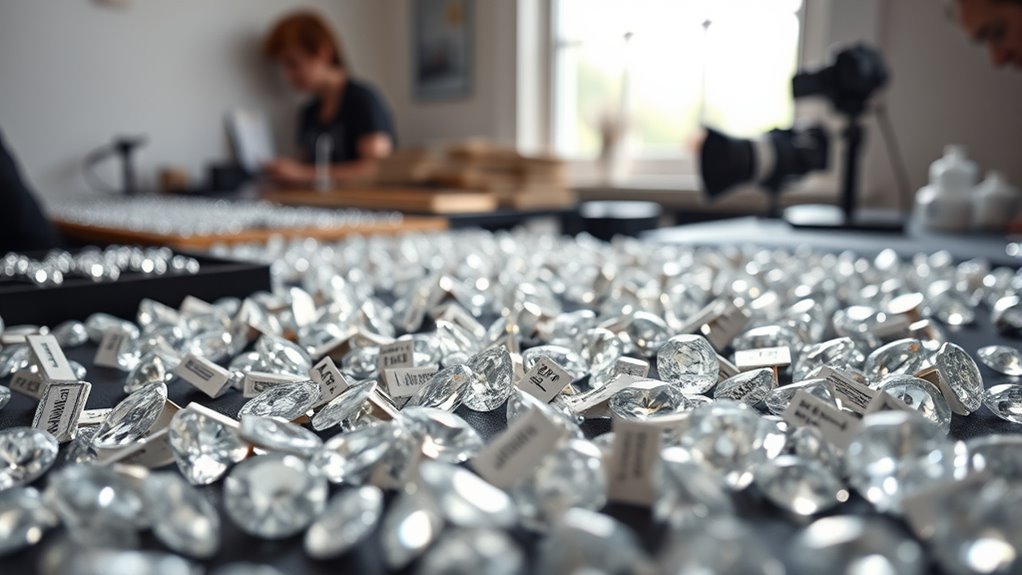

To understand the Four Cs—cut, color, clarity, and carat weight—beyond marketing hype, focus on what truly affects a diamond’s value and appearance. Learn how each factor impacts sparkle, transparency, size, and overall quality, and ask about ethical sourcing to guarantee responsibility. Recognizing these elements helps you make confident, informed choices that match your preferences and values. Keep exploring, and you’ll find how practical knowledge empowers your jewelry decisions even more.
Key Takeaways
- Focus on cut, color, clarity, and carat weight as objective factors influencing diamond value.
- Understand that marketing hype often emphasizes appearance over true quality attributes.
- Ask for certification and transparency regarding the diamond’s origin and grading reports.
- Balance size and quality to avoid overspending on larger stones with poor cut or clarity.
- Prioritize ethical sourcing alongside physical qualities for a responsible, informed purchase.
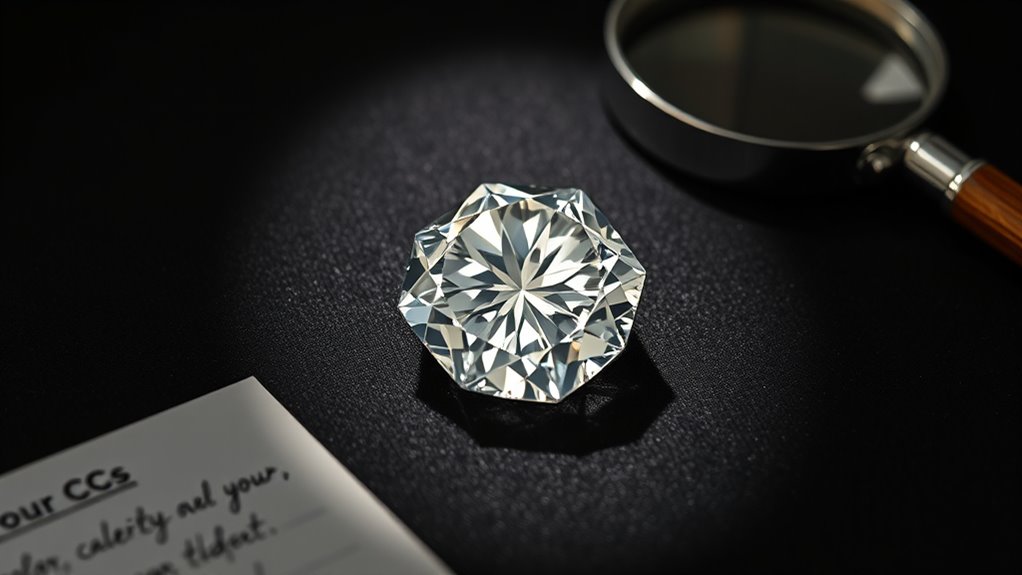
Have you ever found yourself overwhelmed by the buzz surrounding the Four Cs of diamond grading—cut, color, clarity, and carat weight? It’s easy to get caught up in the marketing hype, but understanding these factors without the hype means focusing on what truly matters. One vital aspect often overlooked is the ethical considerations involved in diamond sourcing. As a consumer, you should be aware of where your stone comes from, ensuring it’s ethically mined and conflict-free. This isn’t just about morality; it’s about making informed decisions that support responsible practices. Ethical considerations can influence your choice, especially when you understand the practical applications of transparency and fair trade initiatives in the diamond industry. Knowing that your purchase supports sustainable mining practices can add more value to your diamond beyond its physical attributes.
When it comes to practical applications, understanding the Four Cs helps you evaluate diamonds more objectively. For instance, knowing how cut impacts brilliance guides you in selecting a stone that maximizes sparkle without necessarily overspending on size. Similarly, understanding color grades allows you to choose a diamond that appears beautiful yet cost-effective, since slight differences in color often aren’t noticeable to the naked eye. Clarity can be a practical consideration too—certain inclusions are less visible and won’t affect the stone’s durability or appearance, enabling you to prioritize other attributes. Carat weight is straightforward but also critical; it influences price, but by understanding how to balance size with quality, you avoid overpaying for a larger stone with compromised features.
Focusing on these aspects practically means you’re less likely to be swayed by marketing hype and more inclined to make decisions based on value and authenticity. It encourages you to ask questions about the diamond’s origin, grading reports, and certification, fostering a more transparent buying process. This approach helps you avoid pitfalls like buying a diamond that’s been ethically sourced but poorly cut, or one that’s visually stunning but from questionable sources. Ultimately, understanding the Four Cs in a practical context empowers you to choose a diamond that aligns with your values and expectations, without falling prey to industry hype. It’s about making smarter, more responsible choices that reflect both aesthetic appeal and ethical integrity.
Amazon Product B0DT4RZWK6
As an affiliate, we earn on qualifying purchases.
Frequently Asked Questions
How Do the Four Cs Impact Diamond Pricing?
The four Cs directly impact diamond pricing, especially gemstone clarity and fluorescence. You’ll notice higher prices for diamonds with exceptional clarity, as fewer inclusions boost value. Fluorescence can either increase or decrease a diamond’s price depending on its strength; subtle fluorescence might add appeal, while strong fluorescence can lower value. By understanding these factors, you can better assess a diamond’s worth without falling for hype.
Can the Four Cs Be Evaluated Independently?
Yes, you can evaluate the four Cs independently, but it’s best to contemplate how cut consistency and color grading standards interact. Focus on one aspect, like excellent cut quality, to gauge brilliance, or assess color grading standards for hue and tone. However, remember that each C influences overall value. Ignoring the others might lead to an incomplete picture, so balance your evaluation for the best results.
Are the Four Cs Equally Important in Diamond Grading?
You might wonder if the four Cs hold equal weight in diamond grading. The truth is, each one influences the overall beauty, but cut craftsmanship often has the greatest impact, shaping how light dances within the stone. Color influence can enhance or diminish brilliance, while clarity and carat size add to allure. Ultimately, understanding their interplay helps you prioritize what truly matters when choosing your perfect diamond.
How Do the Four Cs Affect a Diamond’s Durability?
The four Cs influence a diamond’s durability mainly through clarity and cut quality. High clarity means fewer internal flaws that could weaken the stone, while excellent cut quality guarantees proper angles and facets, reducing the risk of chipping or damage. You should prioritize these aspects to enhance durability, knowing that a well-cut, clear diamond is not only beautiful but also more resilient over time.
What Role Do the Four Cs Play in Choosing an Engagement Ring?
You consider the four Cs when choosing an engagement ring because they guide you to find a gemstone that matches your style and values. You balance cut, color, clarity, and carat weight to guarantee durability and beauty, while also thinking about ethical considerations like conflict-free sourcing. Additionally, you appreciate the historical significance of certain styles, making your choice meaningful and personal without falling for hype.

3 Piece Framed Vintage Canvas Wall Art Set, Large Green Floral and Tree Landscape Farmhouse Painting Print, French Country Retro Flower Artwork Decor for Living Room, Bedroom and Fireplace
Finely Unique Set: Our vintage aesthetic wall art set of 3 features a serene green forest with soft...
As an affiliate, we earn on qualifying purchases.
Conclusion
Now that you’ve seen the real story behind the Four Cs, you’re probably wondering what’s next. Will mastering these skills truly *unlock* your potential, or is there more beneath the surface? The truth is, understanding the Four Cs is just the beginning. Stay curious, keep digging, and you might discover surprises that could change everything you thought you knew. The journey isn’t over—it’s only just beginning. Are you ready to see what’s ahead?
Amazon Product B08B4B9HC5
As an affiliate, we earn on qualifying purchases.
Amazon Product B0G2YFCRZC
As an affiliate, we earn on qualifying purchases.

Born in Dubai to Pakistani parents, Aisha deeply understands Middle Eastern and South Asian luxury markets. She excels in forging strategic partnerships with top-tier luxury brands worldwide, fostering cross-cultural collaborations that enhance our global presence.