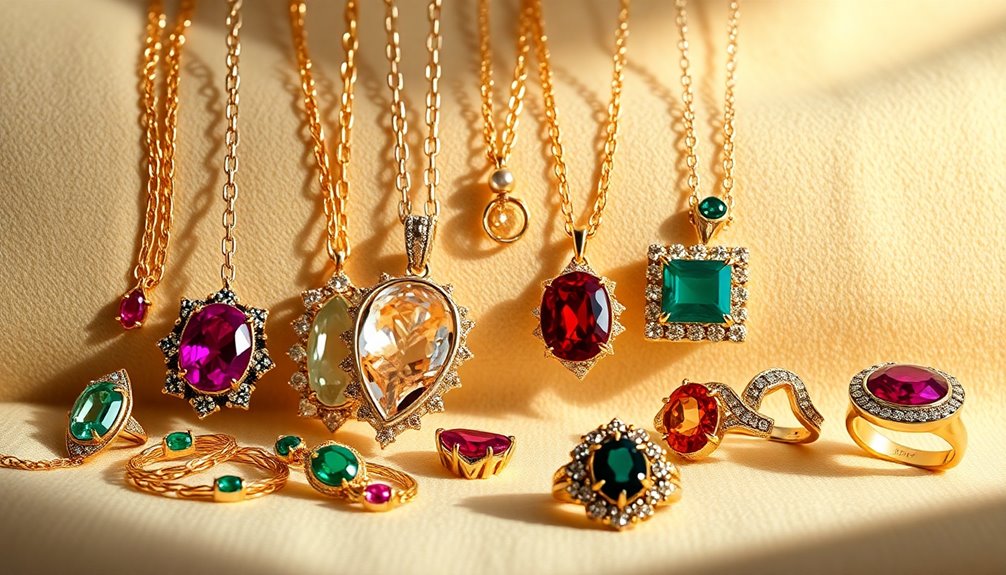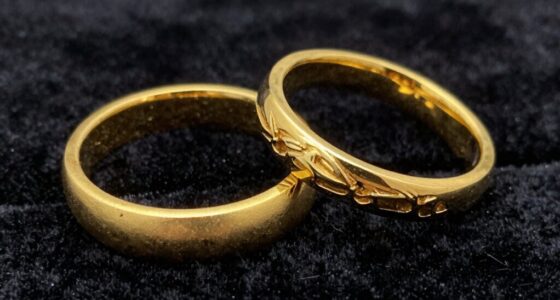

Understanding gold karats and alloys helps you know how pure and durable your jewelry is. Karats measure gold content, with 24K being pure gold, while lower karats like 14K or 18K blend gold with other metals for strength and color. Alloy composition ratios influence the jewelry’s appearance, strength, and value. By knowing these differences, you can choose pieces that match your style and lifestyle—learning more will help you make smarter jewelry decisions.
Key Takeaways
- Gold karats measure purity, with 24K being 100% pure gold, while 14K and 18K contain specific alloy ratios.
- Alloys are metal mixtures, typically including copper, silver, or zinc, which influence gold’s color, strength, and durability.
- Higher karat gold (like 18K) has more pure gold, making it softer and more valuable, whereas lower karat (like 14K) is stronger and more scratch-resistant.
- Alloy composition ratios determine the percentage of gold in jewelry, ensuring consistent quality and adherence to industry standards.
- Understanding alloy ratios helps in choosing jewelry that balances appearance, durability, and hypoallergenic properties.

Have you ever wondered what distinguishes a 14-karat gold ring from an 18-karat one? The key difference lies in the gold purity standards set by industry regulations and how the alloy composition ratios are balanced. Gold purity standards measure the proportion of pure gold in a piece, expressed in karats, with 24 karats indicating 100% pure gold. When you see a 14-karat piece, it contains about 58.3% gold, whereas an 18-karat piece has roughly 75% gold. These percentages are determined by the alloy composition ratios, which specify how much other metals, like copper, silver, or zinc, are mixed with the gold to create a durable, attractive alloy. The composition ratios are carefully calibrated to meet specific gold purity standards, ensuring consistency across different pieces and manufacturers. Understanding these alloy composition ratios is fundamentally important because they influence not only the appearance and durability of the jewelry but also its value. For instance, a higher karat number means more gold content, making the piece more valuable and often softer, since pure gold is quite malleable. Conversely, lower karat gold contains more alloy metals, which makes it stronger and more resistant to scratches and dents—ideal for daily wear. When you choose between 14-karat and 18-karat gold, you’re essentially selecting the balance between purity and strength, which varies based on your preferences and lifestyle.
The alloy composition ratios are carefully calibrated to meet specific gold purity standards, ensuring consistency across different pieces and manufacturers. For example, to create 14-karat gold, about 58.3% of the alloy is pure gold, with the remaining 41.7% made up of other metals. These ratios are important because they determine how the jewelry will look—some alloys can give a warmer, richer hue, while others may look more subdued or silvery. This is why understanding the mix of metals in your jewelry helps you make better choices based on color, durability, and even hypoallergenic properties, since certain alloy metals can cause sensitivities.
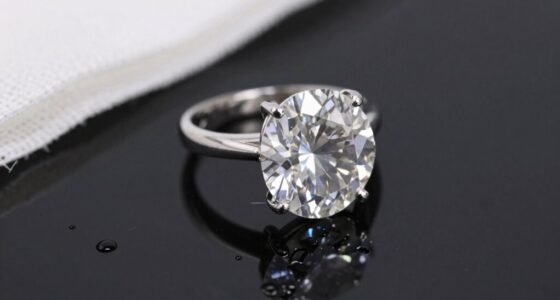
14K gold engagement ring
As an affiliate, we earn on qualifying purchases.
As an affiliate, we earn on qualifying purchases.
Frequently Asked Questions
How Does Karat Affect Gold’s Durability?
Higher karat gold has lower durability variations because it contains more pure gold, which is softer and prone to scratching. As the karat strength decreases, the gold becomes more alloyed with other metals, making it stronger and more durable for everyday wear. So, if you’re looking for a piece that withstands daily activities, lower karat gold offers better durability, while higher karat gold provides a richer color but less strength.
Can Gold Alloys Cause Skin Allergies?
Yes, gold alloys can cause skin allergies, especially if they contain nickel or other irritants. You might notice allergy symptoms like redness, itching, or rash after wearing certain jewelry. If you’re prone to allergies, look for hypoallergenic options such as 14k or 18k gold with minimal nickel. Always test new pieces on a small skin area first, ensuring you enjoy jewelry without discomfort.
What’s the Difference Between White and Yellow Gold Alloys?
White gold alloys typically contain palladium, nickel, or other white metals, giving it a silvery appearance. Yellow gold alloys mainly consist of gold combined with copper and zinc, resulting in a warm, yellow hue. The key difference is the metals used and their color. White gold often requires rhodium plating for shine, while yellow gold maintains its natural rich, golden tone. Your choice depends on your preferred look and skin sensitivity.
How Do Gold Alloys Impact Jewelry Resale Value?
Gold alloys considerably impact your jewelry’s resale value because higher gold purity, like 14K or 18K, generally fetches better prices. The alloy composition determines the gold’s durability and appearance, which buyers consider. Pure gold (24K) is more valuable, but less durable. If your jewelry contains a higher percentage of gold, its resale value will likely be higher, making it a smarter investment over time.
Are There Eco-Friendly Options for Gold Alloy Production?
Think of eco-friendly gold alloys as a green oasis in a desert of pollution. You can choose options made from recycled materials or those sourced sustainably, reducing environmental impact. Many jewelers now prioritize sustainable sourcing and use recycled gold to create beautiful pieces. By opting for these alternatives, you support a greener planet and enjoy jewelry that shines with integrity, proving beauty and sustainability can go hand in hand.
18K gold necklace
As an affiliate, we earn on qualifying purchases.
As an affiliate, we earn on qualifying purchases.
Conclusion
Now that you understand gold karats and alloys, you can make smarter jewelry choices. Did you know that 14-karat gold contains about 58.3% pure gold, making it more durable than 24-karat? Knowing these details helps you find the perfect balance between purity and strength. Keep this in mind when selecting your jewelry, so you get pieces that last and shine just the way you want.
gold alloy testing kit
As an affiliate, we earn on qualifying purchases.
As an affiliate, we earn on qualifying purchases.
hypoallergenic gold jewelry
As an affiliate, we earn on qualifying purchases.
As an affiliate, we earn on qualifying purchases.

Born in Dubai to Pakistani parents, Aisha deeply understands Middle Eastern and South Asian luxury markets. She excels in forging strategic partnerships with top-tier luxury brands worldwide, fostering cross-cultural collaborations that enhance our global presence.