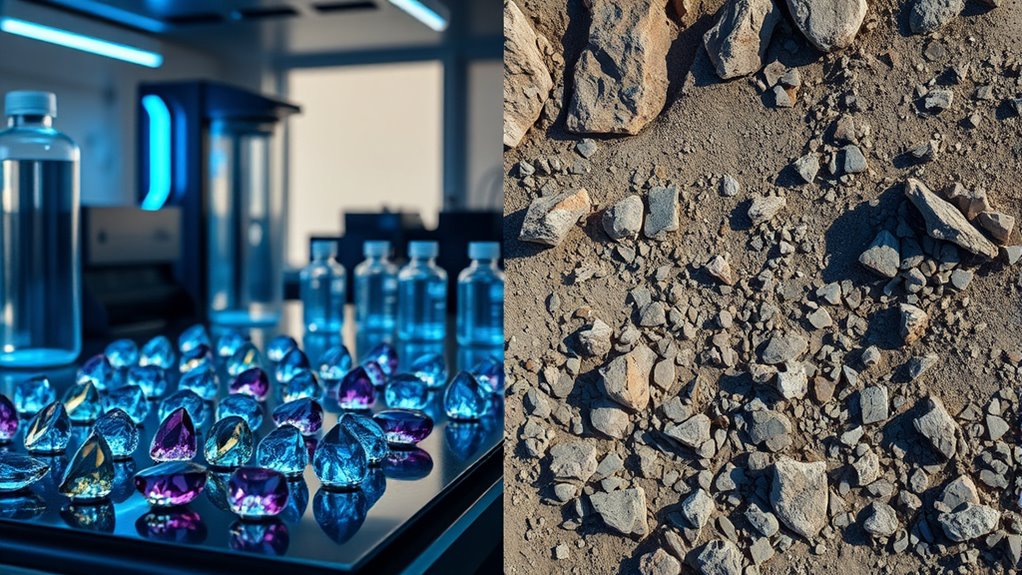

When choosing between lab-grown and mined products, you should consider ethical sourcing, environmental impact, and labor practices. Mined materials often involve complex supply chains with poor working conditions, low wages, and environmental degradation. In contrast, lab-grown options are produced in controlled environments with regulated labor standards and generally have a smaller ecological footprint. By understanding these differences, you can make more responsible choices that support sustainability and fairness—there’s much more to discover on this topic.

Get your wardrobe favorites delivered free with Prime
- Fast, free delivery on millions of items
- Prime Video, Amazon Music and more included
- Member-only deals all year
Key Takeaways
- Mined resources often involve poor labor practices, unsafe conditions, and exploitation, whereas lab-grown materials are produced under regulated, fair labor standards.
- Mining causes significant environmental damage, including habitat destruction and pollution, while lab-grown methods generally have a smaller ecological footprint.
- Ethical sourcing favors lab-grown materials that can be produced sustainably with renewable energy, reducing environmental and social harm.
- Transparent supply chains and third-party certifications help verify ethical practices in both mined and lab-grown resource sourcing.
- Consumer choices and corporate policies influence industry shifts toward more responsible, ethical, and sustainable sourcing methods.
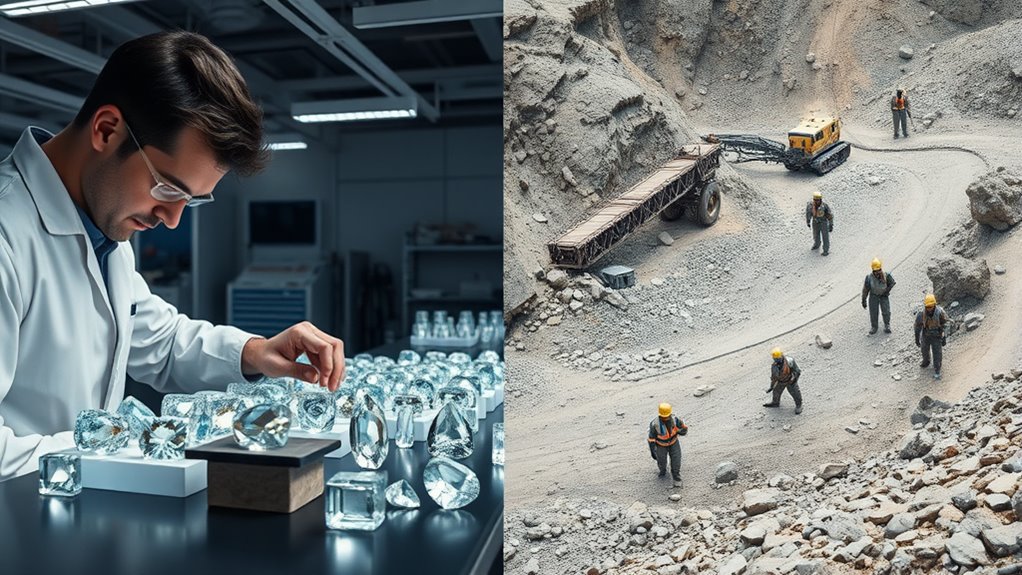
Ethical sourcing has become a essential consideration for consumers and companies alike, as more people demand transparency and responsibility in how products are made. When evaluating lab-grown versus mined resources, understanding the implications on labor practices and environmental impact is fundamental. You’ll find that lab-grown options often excel in these areas, but it’s important to consider the broader context.
Labor practices play a significant role in ethical sourcing. Mined materials typically involve complex supply chains, where workers may face poor conditions, low wages, or even exploitation. Mining operations in some regions have a history of unsafe environments, child labor, or inadequate oversight. When you choose products sourced from mined materials, you’re indirectly supporting these practices unless the company maintains strict ethical standards. Conversely, lab-grown materials are produced in controlled environments, often in facilities with regulated labor standards, ensuring fair wages and safe working conditions. This transparency can make lab-grown options more appealing to consumers concerned about labor practices.
Lab-grown materials are produced in controlled environments with regulated labor standards, ensuring fair wages and safe working conditions.
Environmental impact is another critical factor. Mining can cause extensive environmental degradation, including deforestation, soil erosion, water contamination, and habitat destruction. These consequences leave long-lasting scars on ecosystems, and the process itself consumes significant amounts of energy and resources. In contrast, lab-grown production tends to have a smaller environmental footprint, especially when powered by renewable energy sources. Since lab-grown methods often require less land and water, they pose fewer threats to natural habitats and reduce pollution. By choosing lab-grown products, you’re helping to lower environmental degradation and promote sustainability.
However, it’s not always black and white. Some argue that lab-grown processes still consume considerable energy, especially if powered by fossil fuels, and that manufacturing facilities need to implement eco-friendly practices. Nonetheless, overall, they typically present a more sustainable and ethically sound alternative to mined resources. When you prioritize ethical sourcing, it’s essential to research how companies manage their supply chains and production methods. Look for transparency about their labor practices and environmental policies. Certifications or third-party audits can serve as indicators of a company’s commitment to ethical standards.
Additionally, ongoing developments in AI security and safety measures are crucial for ensuring the responsible deployment of lab-grown technologies and other innovations, helping to prevent potential misuse or unintended consequences. In the end, your choices can influence broader industry shifts. By supporting lab-grown materials that emphasize fair labor practices and sustainability, you contribute to reducing exploitation and environmental harm. Ethical sourcing isn’t just about the final product; it’s about the entire journey of how that product is made. Being informed allows you to vote with your wallet, encouraging companies to adopt more responsible and environmentally friendly practices. Your decisions can make a real difference in fostering a more ethical and sustainable future.
As an affiliate, we earn on qualifying purchases.
Frequently Asked Questions
How Do Lab-Grown and Mined Gems Compare in Durability?
Lab-grown gems generally match or exceed mined gems in durability, offering excellent wear resistance. You’ll find that lab-grown diamonds, for example, are just as hard as natural ones, making them great for everyday wear. Mined gems can vary in durability depending on their type and quality, but overall, lab-grown options tend to be more consistent in their wear resistance, ensuring your jewelry stays beautiful longer.
Are Lab-Grown Gems Chemically Identical to Mined Ones?
Yes, lab-grown gems are chemically identical to mined ones. Their chemical composition matches because they form through similar processes, creating the same crystal structure and mineral content. The main difference lies in the growth process: lab-grown gems develop in controlled environments, while mined gems are extracted from the earth. This similarity guarantees that, visually and chemically, lab-grown gems are indistinguishable from their mined counterparts.
What Is the Environmental Impact of Mining Versus Lab Cultivation?
Mining has a significant environmental footprint, causing habitat destruction, water pollution, and resource depletion. In contrast, lab cultivation of gems minimizes these issues, using less energy and water while avoiding land disruption. By choosing lab-grown gems, you help reduce environmental impact and conserve natural resources. You get beautiful, ethically sourced jewelry without contributing to the environmental degradation associated with traditional mining.
How Do Costs Differ Between Lab-Grown and Mined Gemstones?
Think of the cost comparison as a tug-of-war—you’ll find lab-grown gemstones generally more affordable than mined ones. Lab cultivation offers greater control, reducing expenses like mining, labor, and environmental safeguards, making them more accessible. The affordability differences can be significant, often cutting costs by up to 50%. So, if budget matters, lab-grown options usually bring more value for your money, shining just as bright without breaking the bank.
Can Consumers Verify the Origin of Their Gemstones Easily?
You can verify your gemstone’s origin more easily with certification standards and traceability methods. Reputable labs provide certificates that detail the gemstone’s source, whether lab-grown or mined. Look for certifications like GIA or IGI, which include origin info. Additionally, advanced traceability methods such as blockchain technology help track a gemstone’s journey from source to sale, giving you confidence in its ethical sourcing.
Conclusion
When you choose between lab-grown and mined, you decide the story you want to tell. Will your choice reflect the sparkle of innovation or the weight of tradition? Will you embrace the clean, conscious shine of lab-grown, or carry the rugged, raw essence of mined? Ultimately, your decision paints a picture of ethics, transparency, and responsibility. With each choice, you shape a future where beauty and integrity shine side by side, guiding your values with every sparkle you wear.
Halloween Picks
halloween
As an affiliate, we earn on qualifying purchases.