
To effectively frame the horizon in your landscape, you should use silhouettes like tall trees or structures at the edges, creating a clear boundary. Layering plants of different heights guides your eye outward, while uncluttered space near the horizon keeps it open and prominent. Strategic lighting, especially at dawn or dusk, enhances contrast and drama. Keep the horizon unobstructed for a seamless view. Explore these techniques further to transform your outdoor space into a mesmerizing scene.
Key Takeaways
- Use tall, slender trees or shrubs at the yard edges to naturally draw attention toward the horizon.
- Create silhouettes with dark, defined shapes against the sky during dawn or dusk for added contrast.
- Arrange landscape elements in layers, placing taller features in the back to emphasize depth and focus on the horizon.
- Keep the area near the horizon clear and unobstructed to maintain an unobstructed view and highlight this boundary.
- Incorporate strategic lighting behind silhouettes to enhance contrast and make the horizon a striking visual focal point.
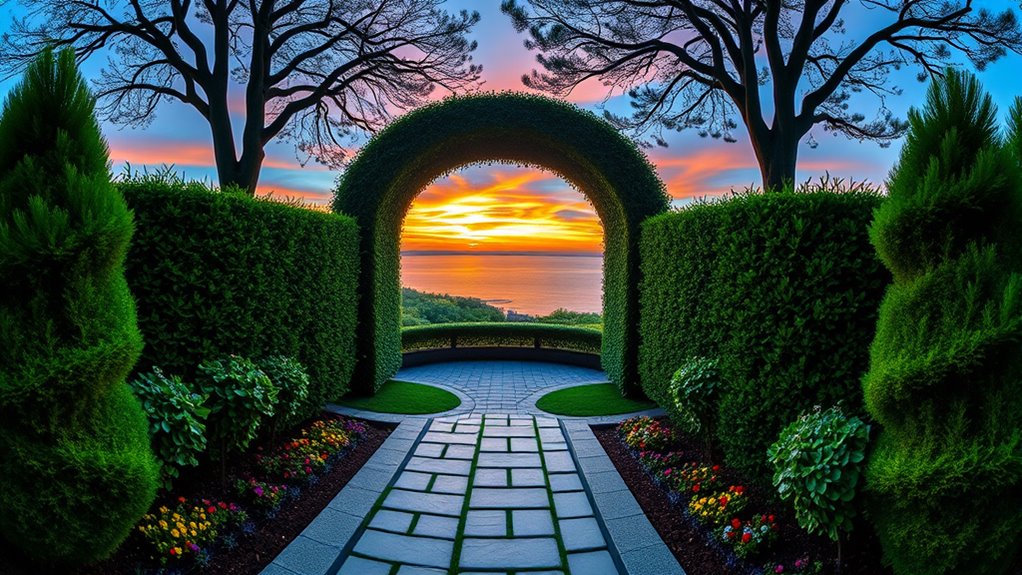
Have you ever wondered how to turn a simple landscape into a stunning visual frame for the horizon? It all starts with understanding how to use landscaping elements to emphasize the horizon line, creating a compelling scene that draws the eye naturally outward. Horizon accentuation is about positioning and choosing the right plants, trees, and structures to highlight where the sky meets the land, making that boundary more pronounced and visually appealing. When done correctly, your landscape can transform into a seamless picture where the horizon isn’t just a distant line but a focal point that enhances the entire view.
One of the most effective ways to achieve horizon accentuation is through the use of landscape silhouettes. These are the dark, defined shapes created by strategically placed trees, shrubs, or structures against the sky. When you select elements with strong, clean outlines, especially during the early morning or late evening, they create striking silhouettes that contrast sharply with the lighter sky. This contrast helps to frame the horizon, giving it depth and prominence. Think about planting tall, slender trees along the edge of your property or in specific sections to form natural borders that guide the eye toward the horizon. These silhouettes also add a layer of drama and mystery, making the view more engaging.
To maximize horizon accentuation, consider the placement of your landscaping elements carefully. Position taller plants or structures at the edges of your yard or along key sightlines. This creates a visual boundary that naturally draws attention toward the horizon. Keep the area near the horizon clear of clutter so the line remains clean and unobstructed—allowing the sky to be fully appreciated. Additionally, using layered planting techniques can help add depth, with taller plants in the back and shorter ones in front, creating a sense of perspective that emphasizes the vastness of the horizon.
Lighting plays an integral role too. During dusk or dawn, when the sky is painted with colors, silhouettes become more vivid. If you add subtle landscape lighting behind some of your silhouette elements, you can create a stunning backlit effect that further highlights the horizon. This approach not only accentuates the boundary between land and sky but also adds an atmospheric quality to your landscape, making the horizon more dramatic at different times of the day.
In essence, by thoughtfully selecting and positioning landscape silhouettes, you guide the eye toward the horizon and turn an ordinary view into an extraordinary visual experience. The key is to balance elements that frame and highlight this boundary, transforming your outdoor space into a living picture where the horizon becomes the masterpiece.

Hotop 3 Pcs Fairy Garden Silhouette Stakes Decoration Metal Fairy Silhouette Statue Butterfly Flower Tree Branch Wall Ornaments for Indoor Outdoor Home Yard Patio Lawn
Sufficient Quantity: you will receive 3 pieces of fairy silhouette statues in different shapes, including a butterfly fairy…
As an affiliate, we earn on qualifying purchases.
As an affiliate, we earn on qualifying purchases.
Frequently Asked Questions
How Do I Choose Plants That Won’T Outgrow My Space?
To choose plants that won’t outgrow your space, consider their mature plant height and root spread. Pick species that stay within your desired size, and avoid aggressive root systems that could damage structures or other plants. Check the plant tags or consult with local nurseries for mature size details. Regular pruning and maintenance also help keep plants manageable, ensuring your landscape remains balanced and visually appealing without overtaking your space.
What Are the Best Color Schemes for Horizon Framing?
Think of color schemes as the secret sauce for horizon framing. For a stunning view, choose colors that create harmony, like soft blues and warm earth tones, or go bold with contrasting shades for visual balance. You want your landscape to complement the sky and surroundings, so pick a palette that guides the eye naturally. This way, your horizon becomes a masterpiece, drawing attention without overwhelming the scene.
How Can I Maintain Privacy While Highlighting the Horizon?
To maintain privacy while highlighting your horizon, you should use garden fencing or privacy screens strategically. Choose tall, dense screens or fencing that block unwanted views but don’t overshadow the scenic horizon. Planting shrubs or trees along the fence line also adds natural privacy. Regularly trim and maintain these elements to keep the view clear yet private, creating a balanced, beautiful landscape that showcases the horizon without sacrificing your privacy.
What Budget Considerations Are Involved in Horizon Landscaping?
When planning horizon landscaping, you should focus on cost planning and budget allocation to stay on track. Determine your priorities, like choosing affordable plants or DIY projects to reduce costs, and set a clear budget for materials and labor. Consider ongoing maintenance expenses, and always allocate extra funds for unexpected costs. This approach helps you create a stunning horizon view without overspending, ensuring your landscape remains beautiful and within your financial limits.
Are There Environmental Impacts to Consider When Designing Horizon Landscapes?
Yes, there are environmental impacts to consider. You should aim to maintain ecological balance by selecting native species that support local ecosystems. Avoid invasive plants that could disrupt biodiversity and harm native wildlife. Additionally, think about water use and soil health to prevent erosion and resource depletion. By prioritizing native plants and sustainable practices, you’ll create a horizon landscape that benefits the environment and enhances natural harmony.

Gardencoin Solid Brass Outdoor Landscape Spotlights, 12V Heavy Duty Low Voltage LED Spot Light Waterproof for Garden and Yard Up Lighting, Bronze Accent Lighting Fixture Without Bulb, 6 Pack
SOLID BRASS MATERIAL: Fixture housing made of die-cast brass, thickened tube walls make it stronger, unique finish pickling…
As an affiliate, we earn on qualifying purchases.
As an affiliate, we earn on qualifying purchases.
Conclusion
By carefully landscaping to frame the horizon, you can dramatically enhance your outdoor space’s beauty and depth. Did you know that homes with well-designed landscapes see an average increase of 15% in property value? So, next time you plan your garden, think beyond just plants—consider how your choices shape the view. With thoughtful landscaping, you’ll create a stunning horizon that draws the eye and elevates your entire landscape.

Mixrug 1502+ Mixed Organic Fruit Tree Seeds for Planting, 400 Strawberry 300 Mulberry 200 Cranberry 200 Blueberry 20 Cherry 300 Raspberry, 6 Variety Individual Packs Fruits Seeds for Garden
Garden Adaptability: Suitable for various garden spaces and container growing; Different varieties thrive in USDA zones 3-9; Includes…
As an affiliate, we earn on qualifying purchases.
As an affiliate, we earn on qualifying purchases.

Custom Size Wall Murals, Black & White Forest & Slender & Bushy Trees & Misty Fog, Self-Adhesive Removable Peel and Stick Wallpaper, for Living Room/Bedroom/Office
Customisable Murazorika Wall Murals for Every Space: Tailor your mural to any size, from sleek feature walls to…
As an affiliate, we earn on qualifying purchases.
As an affiliate, we earn on qualifying purchases.

Born in Dubai to Pakistani parents, Aisha deeply understands Middle Eastern and South Asian luxury markets. She excels in forging strategic partnerships with top-tier luxury brands worldwide, fostering cross-cultural collaborations that enhance our global presence.