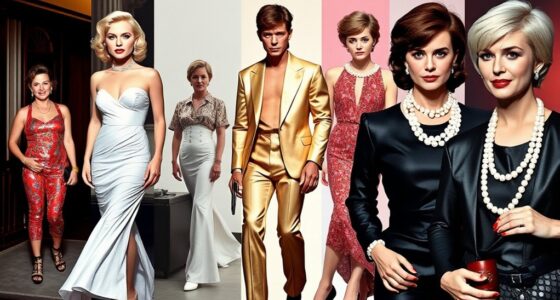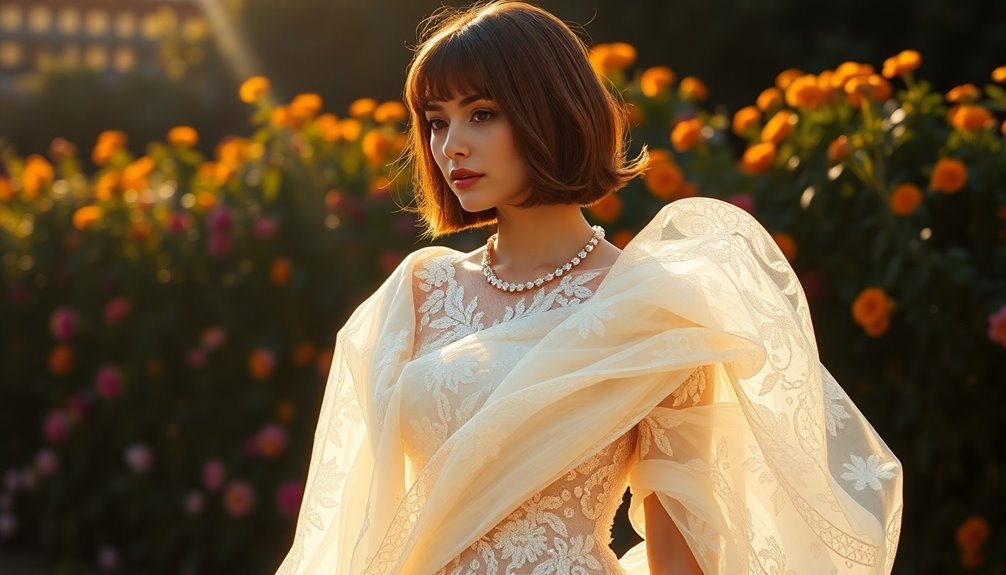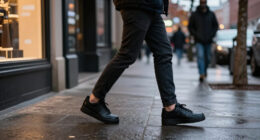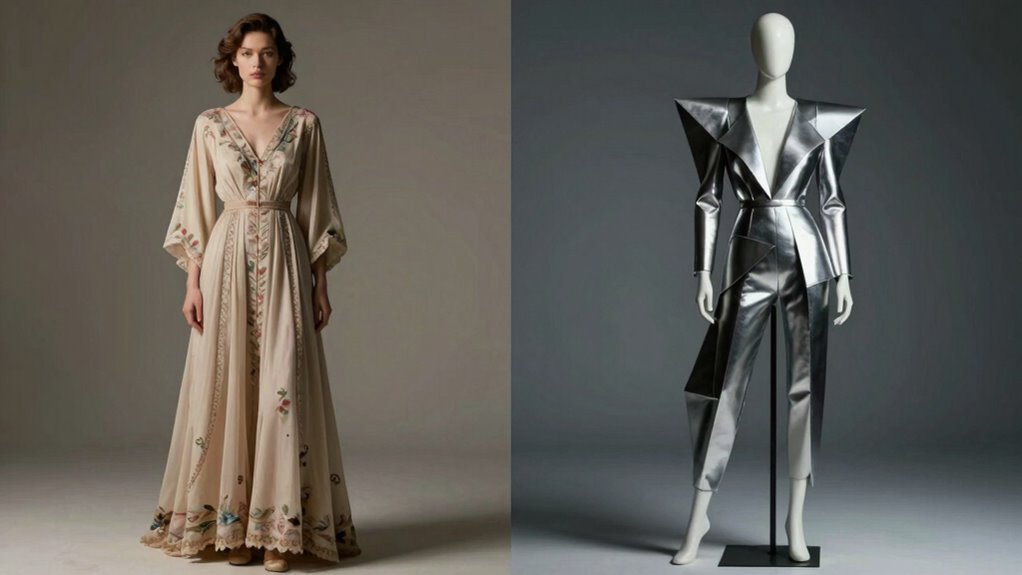

Fashion mood reflects your current feelings, vibe, or attitude, allowing for personal expression that can change daily. Trends, on the other hand, are driven by industry influences, designers, or seasonal factors, often fleeting and less personal. Understanding this difference helps you stay authentic while incorporating seasonal updates selectively. Recognizing when you’re dressing for your mood versus following trends keeps your style genuine. If you explore further, you’ll discover how balancing both can enhance your unique personal style.

Get your wardrobe favorites delivered free with Prime
- Fast, free delivery on millions of items
- Prime Video, Amazon Music and more included
- Member-only deals all year
Key Takeaways
- Fashion mood is a personal, evolving expression, while fashion trend is driven by industry and seasonal influences.
- Mood reflects individual feelings and style choices; trends are more about popularity and collective movement.
- Personal style remains consistent despite shifting trends, but it can adapt based on current mood.
- Trends are temporary and industry-led, whereas mood is fluid and linked to personal circumstances.
- Understanding the difference helps create authentic, intentional wardrobe choices aligned with both self-expression and seasonal context.
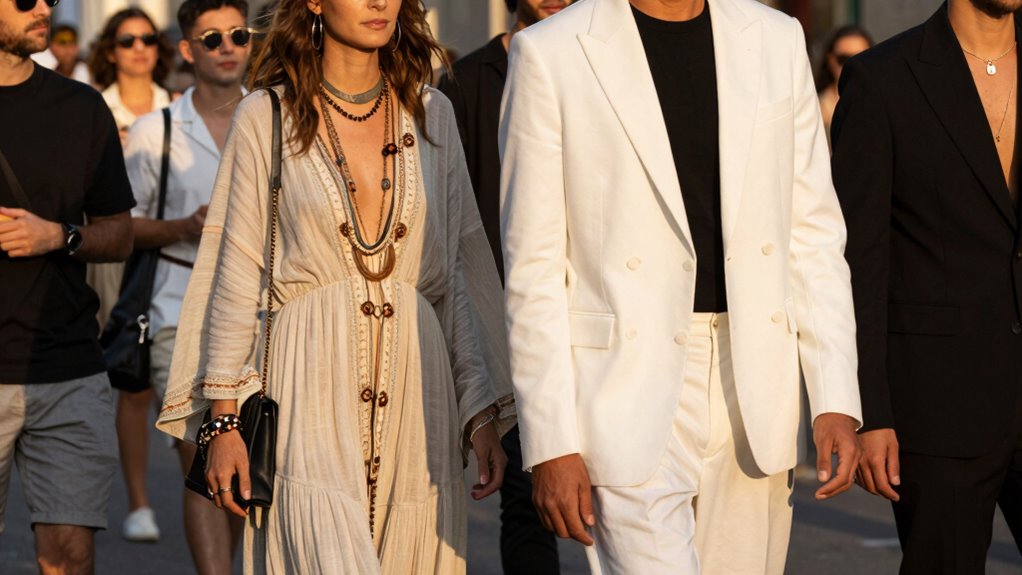
Understanding the difference between fashion mood and fashion trend is essential if you want to develop a personal style that truly resonates with you. While both influence how you dress, they serve different purposes and originate from different sources. Fashion mood reflects your current feelings, vibe, or attitude. It’s a personal expression that can shift daily or weekly, depending on your mood or circumstances. Fashion trend, on the other hand, is driven by the industry, designers, or seasonal influences that set the tone for a broader audience. Trends are more about what’s popular at a given time, often dictated by runway shows, social media, or cultural movements. Recognizing this distinction helps you craft a style that’s authentic to you, rather than just following fleeting fads.
Your personal style is built on your unique preferences, lifestyle, and personality. It’s a reflection of who you are, not just what’s trending. While seasonal influence plays a role in shaping fashion trends—like cozy knits in winter or breezy linens in summer—it shouldn’t dictate your entire wardrobe. Instead, you can incorporate seasonal trends into your personal style selectively, making sure they align with your mood and comfort. For example, if you’re feeling vibrant and energetic, you might choose bold colors or playful accessories, regardless of whether they’re trending. Conversely, if your mood is more subdued, you might prefer muted tones or minimalist pieces, even if bolder styles are in vogue. This way, your wardrobe stays true to your authentic self, and your style remains consistent despite changing trends. Being aware of the seasonal influence allows you to make more intentional choices that complement your overall aesthetic.
Understanding that fashion mood is more fluid allows you to experiment and adapt without feeling pressured to follow every trend. Trends come and go, but your personal style is what makes your look uniquely yours. Seasonal influence can inspire you to refresh your wardrobe, but it shouldn’t override your sense of what feels right for you. When you recognize that mood and trend aren’t the same, you gain the freedom to dress in a way that genuinely reflects your current state of mind while still respecting seasonal shifts. This balance ensures your style stays personal, vibrant, and authentic, rather than a copy of what’s hot right now. Ultimately, your ability to differentiate between mood and trend empowers you to make intentional fashion choices that enhance your confidence and express your true self. Recognizing the importance of fashion industry dynamics helps you better navigate how to incorporate trends thoughtfully into your wardrobe.
Popular right now

TCL 85 Designer Series QD-Mini LED TV (Model 85A400U) with Google Smart TV

Bose QuietComfort Ultra Earbuds (2nd Gen), Deep Plum

Sony WH-1000XM4C Wireless Noise-Cancelling Headphones, Black
As an affiliate, we earn on qualifying purchases.
Frequently Asked Questions
How Can I Identify My Personal Fashion Mood?
To identify your personal fashion mood, pay attention to what makes you feel confident and comfortable. Think about the styles, colors, and textures that resonate with your mood expression. Reflect on your personal style—are you more relaxed, edgy, or sophisticated? Experiment with different looks and notice which ones boost your confidence. Over time, you’ll discover your signature fashion mood that authentically reflects who you are.
Are Fashion Moods Seasonal or Timeless?
Like a changing tide, your fashion moods can be seasonal or timeless. You might embrace seasonal clothing, reflecting the current weather or festivities, or opt for timeless styles that resonate regardless of trends. Your mood shifts with the seasons, but some feelings and styles remain constant, anchoring you in your personal expression. Embracing both keeps your wardrobe dynamic yet rooted, allowing you to navigate fashion’s ebb and flow confidently.
Can Fashion Trends Influence My Personal Style?
Yes, fashion trends can influence your personal style. The fashion industry and cultural influences shape these trends, inspiring you to try new looks and incorporate fresh elements into your wardrobe. While trends are often fleeting, they can spark creativity and help you express your personality. By staying aware of current trends, you can evolve your style, blending your unique tastes with popular influences for a modern, authentic look.
How Do Fashion Moods Impact Wardrobe Choices?
Picture your wardrobe as a canvas, each piece reflecting your current mood. Fashion moods influence your wardrobe choices through color psychology and mood expression, guiding you to wear vibrant reds when confident or calming blues when relaxed. These moods shape what you choose to wear, allowing your outfit to mirror your inner feelings. Embracing fashion moods helps you feel authentic and connected to your personal style each day.
Is It Possible to Combine Multiple Fashion Moods?
Yes, you can definitely combine multiple fashion moods through mood-based styling. By understanding fashion mood psychology, you’ll see how different moods influence your choices, allowing you to mix elements that reflect various feelings. For instance, blending bold, energetic pieces with calm, relaxed styles creates a unique, personalized look. Experimenting with contrasting moods keeps your wardrobe versatile and expressive, helping you craft outfits that match your evolving emotions and moods each day.
Conclusion
Understanding the difference between fashion mood and trend helps you create a more authentic style. While 60% of consumers say they feel more confident when they wear clothes that reflect their mood, many still follow fleeting trends. Remember, embracing your unique fashion mood lets you express yourself genuinely, rather than just chasing the latest fads. So, trust your instincts—your personal style is far more powerful than any passing trend.