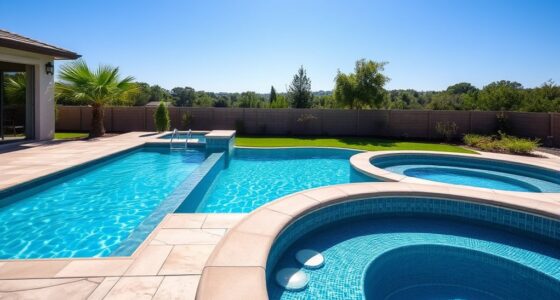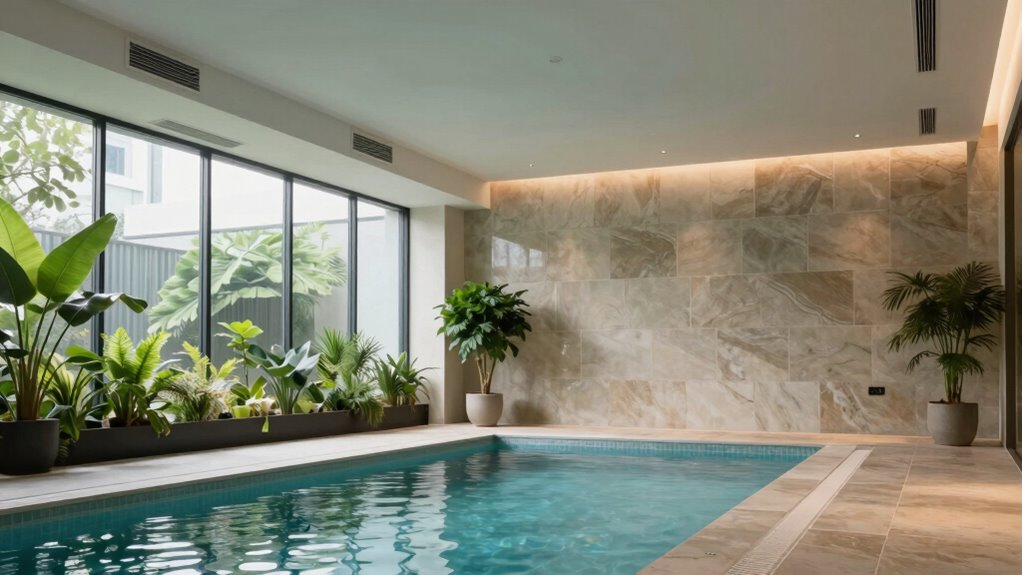

When designing an indoor pool room, prioritize a robust ventilation system, like exhaust fans or dehumidifiers, to control excess moisture. Use vapor barriers and moisture-resistant insulation to protect structural elements. Opt for low-heat, damp-rated lighting to reduce heat buildup and enhance safety. Regular maintenance and humidity monitoring help keep conditions balanced, preventing mold and damage. Focusing on these strategies now will guarantee a comfortable, durable space—and if you continue exploring, you’ll discover all the essential details to get it just right.

Get your wardrobe favorites delivered free with Prime
- Fast, free delivery on millions of items
- Prime Video, Amazon Music and more included
- Member-only deals all year
Key Takeaways
- Integrate effective ventilation and dehumidification systems tailored to the pool room’s size and moisture output.
- Use moisture-resistant insulation and vapor barriers to prevent structural damage from humidity.
- Install humidity monitoring devices for real-time adjustments of ventilation and dehumidification systems.
- Choose low-heat, damp-rated lighting like LEDs to reduce heat and humidity buildup.
- Schedule regular maintenance and inspections of humidity control systems for optimal performance.
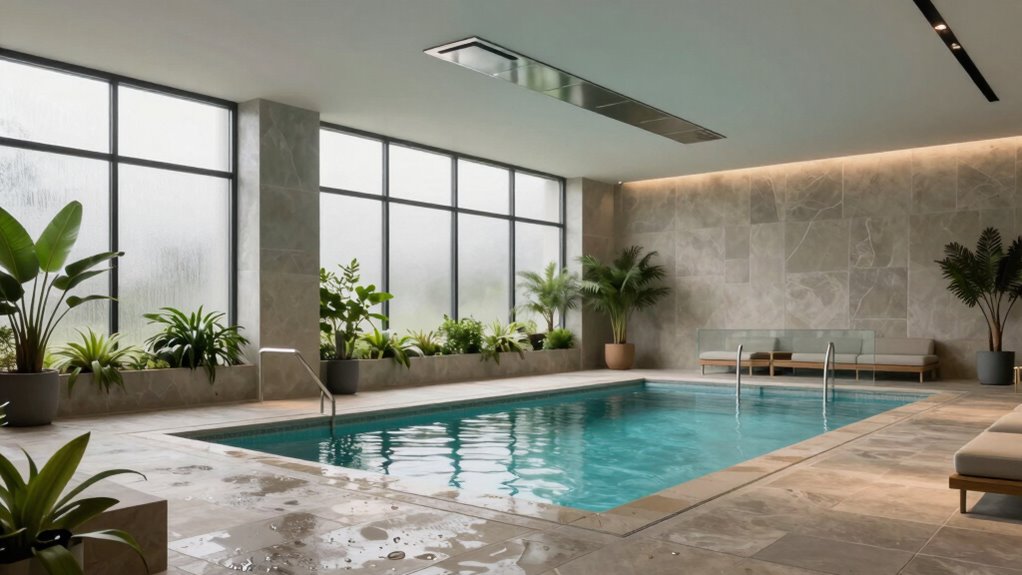
Designing an indoor pool room requires careful planning around humidity, which can considerably impact both comfort and building integrity. Excess moisture from the pool creates high humidity levels that, if not properly managed, can lead to mold, mildew, and structural damage. To keep humidity in check, you need a well-thought-out ventilation system. Proper ventilation is vital for removing humid air and replacing it with drier, conditioned air. Consider installing an exhaust fan specifically designed for high-moisture environments or a dedicated dehumidification system. These options help maintain ideal humidity levels, preventing condensation on walls, ceilings, and fixtures. When selecting ventilation systems, pay attention to airflow capacity, ensuring it can handle the size of your space and the volume of moisture produced.
Lighting plays a key role in creating a comfortable environment, but it also influences humidity control. Pool lighting, especially if it’s LED or other low-heat options, can help reduce heat buildup and minimize additional humidity. Proper lighting not only enhances the aesthetic appeal but also improves visibility, safety, and the overall ambiance of your indoor pool area. When planning your lighting, consider fixtures that are rated for damp or wet environments to prevent electrical issues caused by moisture exposure. Position lights strategically to avoid shadows and ensure even illumination, which makes the space more inviting and safer. Additionally, lighting placement can influence how effectively humidity is managed, as well-placed lights can reduce heat accumulation that contributes to moisture issues. Incorporating humidity-sensitive lighting can further optimize the environment by adjusting illumination based on humidity levels. Regular inspections and adjustments to your lighting setup can help maintain a balanced atmosphere and improve overall air quality. Implementing humidity monitoring devices allows for real-time adjustments, ensuring optimal conditions are maintained consistently.
In addition to ventilation and lighting, you should also focus on moisture barriers and insulation. Use vapor barriers on walls and floors to prevent moisture from seeping into structural components. Insulation should be moisture-resistant to avoid deterioration over time. These measures work together with your ventilation system to create a balanced environment that handles humidity effectively. Incorporating moisture control techniques can significantly enhance the longevity of your indoor pool space. Proper installation and maintenance of these barriers are essential for ongoing protection, especially in high-humidity environments. Regularly inspecting and maintaining these barriers ensures ongoing protection against humidity-related problems, thereby extending the lifespan of your indoor pool environment.
Regular maintenance is another essential aspect. Check and service your ventilation and dehumidification systems routinely to keep them functioning at peak efficiency. Keep an eye on humidity levels with a reliable hygrometer and adjust your systems as needed. Proper airflow, lighting, and moisture management aren’t just about comfort—they safeguard your investment by protecting the building’s structure and reducing long-term repair costs. With proper system maintenance and ongoing vigilance, you can prevent costly damage caused by excess moisture. With careful planning and ongoing maintenance, you’ll create an indoor pool room that’s both enjoyable and durable, regardless of the humidity challenges.
As an affiliate, we earn on qualifying purchases.
Frequently Asked Questions
What Is the Ideal Humidity Level for an Indoor Pool Room?
The ideal humidity level for an indoor pool room is between 50-60%. To maintain this, you should use outdoor ventilation to exchange moist indoor air with drier outside air and install humidity sensors for precise control. Regularly monitoring humidity helps prevent mold and damage, while proper ventilation guarantees comfort. Keep these elements in check to create a safe, comfortable environment for swimmers and your space.
How Often Should Humidity Levels Be Monitored and Adjusted?
You should monitor humidity levels at least daily to maintain ideal conditions. Studies show that improper moisture control can cause damage within weeks. Use humidity sensors to get accurate readings and adjust your dehumidifiers or ventilation systems accordingly. Regular monitoring helps prevent mold growth and structural issues, ensuring a safe, comfortable environment. Staying vigilant with moisture control keeps your indoor pool area pristine and functional.
What Are the Best Dehumidification Systems for Indoor Pools?
You should consider using a combination of ventilation strategies and a high-efficiency dehumidifier for indoor pools. Look for systems with a strong dehumidifier comparison to guarantee ideal moisture removal, like those with integrated heat exchange or corrosion-resistant components. Ventilation strategies, such as exhaust fans and air exchangers, work best alongside these dehumidifiers, helping maintain perfect humidity levels and preventing mold growth, ensuring a comfortable and safe environment.
How Does Humidity Affect Indoor Air Quality and Health?
High humidity can worsen indoor air quality, leading to mold, bacteria, and respiratory issues. You should implement effective ventilation strategies to keep the air fresh and dry, reducing health risks. Using humidity sensors helps monitor moisture levels, ensuring the environment stays comfortable and safe. Proper ventilation and humidity control are essential for maintaining healthy indoor air, preventing mold growth, and protecting your respiratory health.
Can Specific Building Materials Help Control Humidity in the Room?
Like armor protecting a knight, certain building materials can shield your indoor pool room from humidity. Opt for moisture-resistant materials like sealed concrete, ceramic tiles, or vinyl linings, which are durable and resist mold. Combine these with effective ventilation strategies, such as exhaust fans and dehumidifiers, to control moisture levels. This approach keeps your space comfortable, prevents damage, and maintains air quality.
Conclusion
By carefully planning for humidity, you turn your indoor pool room into a sanctuary rather than a soggy swamp. With the right ventilation, dehumidification, and moisture barriers, you’ll keep humidity levels in check, like a skilled conductor guiding an orchestra. This harmony ensures your space remains inviting, dry, and enjoyable for years to come. Remember, a well-designed humidity plan is the backbone of a perfect indoor pool experience—maintaining your oasis as fresh as a spring breeze.
Halloween Picks
halloween
As an affiliate, we earn on qualifying purchases.