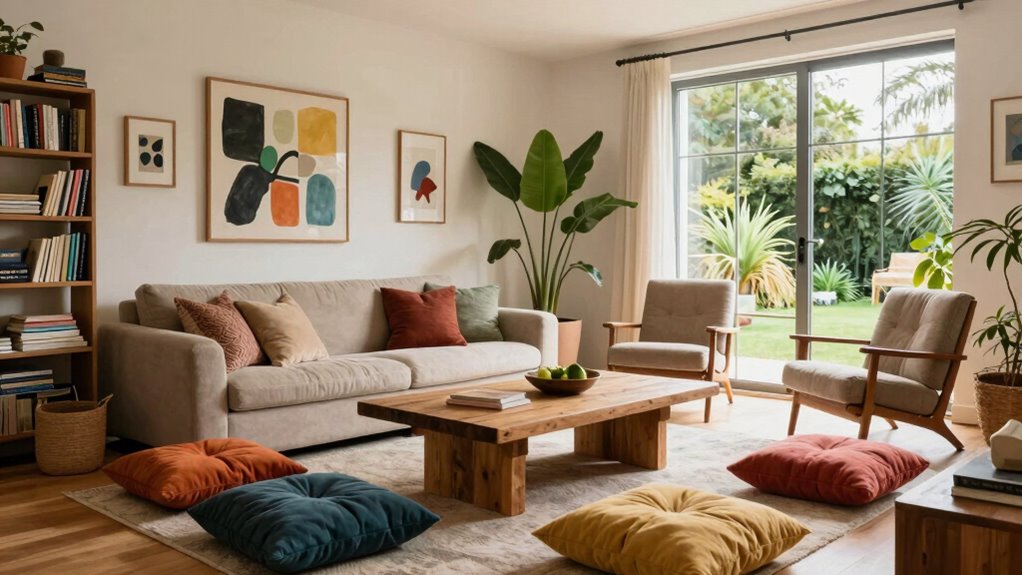

To create a home that encourages conversation and creativity, focus on flexible spaces with good lighting, using natural light and adjustable fixtures. Incorporate sound-absorbing materials to reduce noise and enhance clarity. Use movable furniture and writable surfaces to support collaboration and spontaneous interactions. Keep spaces open with clear sightlines, adding personal touches like art and plants for warmth. If you want detailed tips to transform your home into a social hub, keep exploring how to optimize your space.

Get your wardrobe favorites delivered free with Prime
- Fast, free delivery on millions of items
- Prime Video, Amazon Music and more included
- Member-only deals all year
Key Takeaways
- Incorporate layered lighting with adjustable fixtures to create a warm, inviting atmosphere conducive to conversation and inspiration.
- Use soft materials and sound-absorbing elements to enhance acoustics and reduce noise distractions.
- Design versatile, flexible furniture arrangements to facilitate spontaneous reconfigurations and dynamic interactions.
- Maintain clear sightlines and include personal touches like artwork and plants to foster connection and comfort.
- Develop dedicated zones for individual reflection, group work, and casual chats, equipped with suitable lighting and sound considerations.
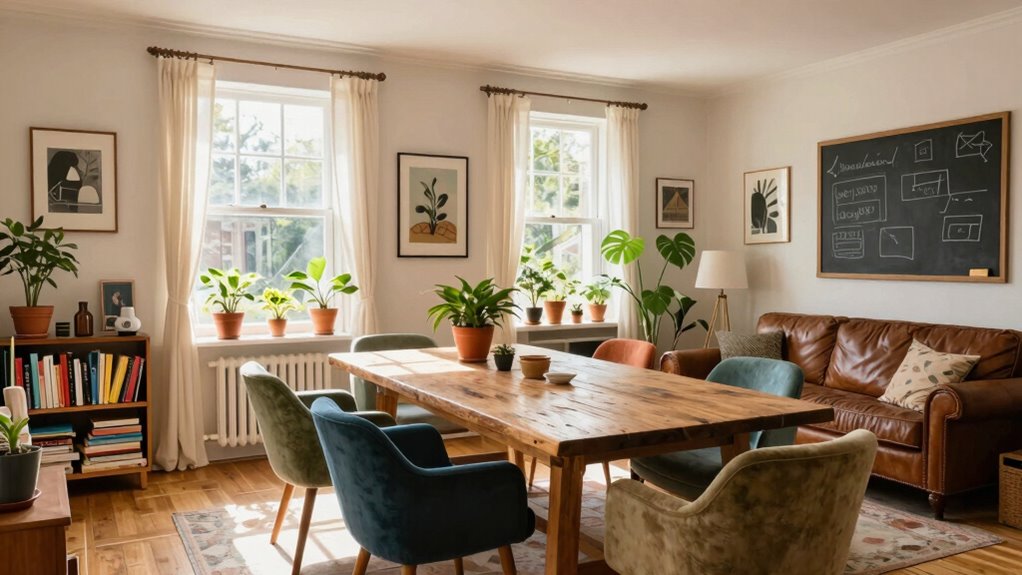
Creating a home that fosters conversation and sparks creativity begins with thoughtful design choices. You want spaces that invite dialogue and inspire innovation, and that starts with how you use interior lighting and acoustic design. Bright, well-placed lighting can set a lively mood or create cozy corners, encouraging people to gather and share ideas. Use a combination of natural light during the day and layered artificial lighting at night. Adjustable fixtures, like dimmable overhead lights and warm-toned lamps, help you create versatile environments suited for different activities—be it a brainstorming session or a relaxed chat. Avoid harsh, fluorescent lighting that can feel sterile; instead, opt for softer, warmer tones that promote comfort and openness. Incorporating lighting design principles ensures your space remains adaptable and inviting for various social and creative interactions. Additionally, understanding the importance of ambient lighting can enhance the overall atmosphere and mood of your rooms. To further enhance the environment, consider incorporating lighting control systems, which allow you to customize lighting settings easily for different occasions. Properly integrating lighting layers can help you achieve a balanced and dynamic space that adapts to your needs. Acoustic design plays an essential role in fostering conversations and creative thinking. You need to control sound quality to prevent noise from becoming a distraction or barrier. Incorporate soft materials—like plush rugs, upholstered furniture, and textured curtains—that absorb sound and reduce echo. These elements help guarantee that voices come through clearly, making conversations more natural and less strained. If you have an open-plan layout, consider adding acoustic panels or decorative soundproofing elements that blend seamlessly into your decor. Strategically placing bookshelves or fabric-covered partitions can also break up spaces and improve sound quality without sacrificing openness. Your furniture choices should support the flow of conversation and creativity. Opt for flexible seating arrangements—like modular sofas or movable chairs—that encourage spontaneous reconfigurations. Keeping a variety of writable surfaces, such as whiteboards or chalkboards, nearby can also stimulate collaboration and idea generation. When designing your space, think about creating zones: a cozy nook for individual reflection, a communal table for group work, and a lounge area for casual chats. Each zone should be equipped with appropriate lighting and acoustic considerations to make them inviting and functional. Lastly, don’t overlook the importance of visual openness and personal touches. Keep sightlines clear to foster eye contact and ease of communication. Use art, plants, or personal objects to infuse your space with inspiration, ensuring it feels welcoming and stimulating. When you combine thoughtful interior lighting with effective acoustic design, you create an environment where conversation flows effortlessly and creativity flourishes. Your home becomes more than just a living space—it becomes a hub of connection and innovation that supports your social and inventive pursuits.
Popular right now

TCL 85 Designer Series QD-Mini LED TV (Model 85A400U) with Google Smart TV

Dyson Big Ball Multi Floor Canister Vacuum, Yellow

TCL 85-Inch QM6K Series QLED Mini LED 4K HDR Smart Google TV
As an affiliate, we earn on qualifying purchases.
Frequently Asked Questions
How Can I Incorporate Natural Light Into My Design?
To incorporate natural light into your design, focus on strategic window placement to maximize sunlight flow throughout your spaces. Use large, unobstructed windows or glass doors to invite in more sunlight. Complement this with thoughtfully chosen sunlight fixtures that mimic natural light, especially in areas where daylight can’t reach. Keep window treatments minimal and opt for light-colored walls to reflect and amplify the natural brightness, creating an inviting, vibrant environment.
What Are Cost-Effective Ways to Improve Acoustics?
To improve acoustics cost-effectively, you can use soundproofing techniques like sealing gaps around doors and windows to reduce noise leaks. Adding affordable acoustic panel options, such as DIY fabric-covered panels or foam tiles, helps absorb sound and reduce echo. Placing rugs, heavy curtains, and furniture also dampens sound reflections. These simple steps enhance sound quality while staying budget-friendly, creating a more conducive environment for conversation and creativity.
How Do I Choose Furniture That Fosters Interaction?
To choose furniture that fosters interaction, focus on furniture arrangement and seating comfort. Opt for a circular or conversational layout that encourages face-to-face contact and easy eye contact. Select comfortable, inviting seating like plush chairs or sofas that invite people to lounge and stay longer. Avoid blocking pathways, and include versatile pieces to adapt the space for various group sizes. This setup naturally promotes conversation and creativity.
What Are Some Eco-Friendly Building Materials?
You should consider eco-friendly building materials like sustainable insulation and recycled flooring. Notably, using recycled materials can cut construction waste by up to 85%. These options reduce your carbon footprint and promote a healthier home environment. Sustainable insulation improves energy efficiency, while recycled flooring gives your space a unique look. By choosing these materials, you’re making a positive impact on the planet and creating a home that’s both stylish and eco-conscious.
How Can I Personalize a Creative Space Without Clutter?
You can personalize your creative space with thoughtful decor that reflects your style, like inspiring artwork or meaningful objects. To avoid clutter, prioritize clutter management by using smart storage solutions and regularly decluttering. Incorporate multifunctional furniture to save space, and keep surfaces clear to maintain a tidy environment. This way, your space remains inspiring and functional without feeling crowded, allowing your creativity to thrive effortlessly.
Conclusion
By designing your home with intention, you’re planting seeds for vibrant conversations and blooming creativity. Think of your space as a canvas, where each room is a brushstroke contributing to a masterpiece of connection. As you nurture these environments, your home transforms into a symphony of ideas and laughter, echoing the harmony of a well-tuned instrument. With thoughtful touches, you turn everyday spaces into a sanctuary where inspiration and dialogue flourish like wildflowers in spring.