Installing skylights is a great way to flood your space with soft, natural light, creating a warm, inviting atmosphere. Choose from fixed or vented styles to suit your needs, and consider size and placement for the best effect. Flat or domed designs can match your home’s architecture. It’s wise to get professional help to guarantee proper installation and safety. Keep exploring to discover more ways to maximize natural light in your home.
Key Takeaways
- Choose fixed or vented skylights based on your need for natural light or ventilation.
- Select appropriately sized skylights to maximize soft natural illumination without overwhelming the space.
- Install skylights in optimal locations, such as south-facing roofs, to enhance natural light quality.
- Consider skylight styles (flat, domed, pyramid) that complement your home’s architecture for aesthetic harmony.
- Hire professional installers to ensure proper sealing, safety, and optimal light diffusion.
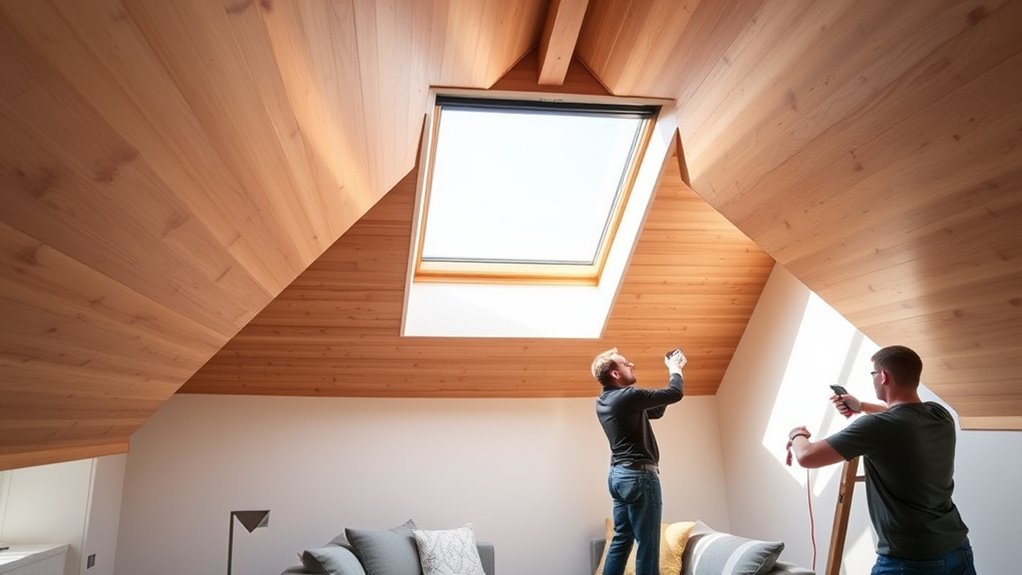
Installing skylights can transform your space by flooding it with soft, natural light that creates a warm and inviting atmosphere. Not only does this enhance the aesthetic appeal, but it also offers practical benefits, such as improving ventilation and reducing your reliance on artificial lighting. When considering skylights, you’ll find a variety of skylight styles available, each suited to different architectural needs and personal preferences. From fixed models that provide a constant stream of light to vented options that open to allow fresh air in, the right style can substantially boost your comfort and energy efficiency.
Transform your space with natural light, enhanced ventilation, and stylish skylight options.
One of the key advantages of installing skylights is their ventilation benefits. Ventilated skylights, often called skylight vents or operable skylights, can be opened to allow stale air to escape and fresh air to circulate throughout your home. This natural airflow can help regulate indoor temperature, reduce humidity, and improve air quality. If you live in a warm climate or have spaces prone to moisture buildup, such as kitchens or bathrooms, these skylights are especially beneficial. They provide a seamless way to bring in fresh air without compromising your privacy or aesthetics. Plus, by reducing dependency on mechanical ventilation systems, you can save on energy costs over time.
When choosing skylight styles, consider how they will complement your space. Fixed skylights are perfect if you want maximum natural light without the need for ventilation. They’re simple, durable, and often less expensive, making them ideal for areas where light is the primary goal. On the other hand, vented skylights come with a built-in mechanism that allows you to open and close them, giving you control over airflow. Some models even include rain sensors that automatically close the skylight when it detects rain, providing peace of mind and maintaining the integrity of your interior. Additionally, best restaurants in your area can often recommend specialists or contractors experienced with skylight installation, ensuring professional and reliable service.
The diversity of skylight styles also means you can select those that match your home’s architectural character. Flat skylights blend seamlessly into modern designs, while domed or pyramid-shaped skylights can add a touch of elegance to traditional or contemporary homes. Additionally, skylight size and placement are essential; larger windows can dramatically brighten a room, but smaller ones might be more suitable for specific areas like hallways or bathrooms.
Frequently Asked Questions
What Permits Are Required for Skylight Installation?
You’ll need to check your local building codes and homeowner permits before installing a skylight. Most areas require a permit to guarantee the project meets safety standards and zoning regulations. Visit your city or county building department’s website or contact them directly to find out the specific requirements. Securing these permits beforehand helps you avoid fines or delays, making the installation smooth and compliant with all regulations.
How Long Does a Typical Skylight Installation Take?
You’ll find that a typical skylight installation takes about one to two days, depending on your home’s specifics. During this time, you’ll go through essential installation steps like measuring, cutting, and sealing to verify a perfect fit. While cost considerations play a role, focusing on quality during each step helps avoid future issues. Rushing might cut corners, so plan for a bit of patience to enjoy beautiful, soft natural light in your space.
Can Skylights Be Installed in Any Roof Type?
You can install skylights on most roof types, but roof pitch and style influence your options. Steeper roofs typically accommodate more skylight styles like fixed or vented, while flatter roofs may need specialized installations. Always consider the roof’s material and structure, as some may require reinforcement or specific flashing. Consulting a professional guarantees you choose the right skylight style and installation method for your roof type.
What Maintenance Is Needed for Skylights?
To keep your skylight shining and secure, you need regular maintenance. You should routinely clean the skylight with gentle glass cleaner to remove dirt and debris, preventing smudges and smears. Check the sealant around the frame for cracks or leaks, reapplying sealant as needed to prevent water damage. Properly maintained, your skylight stays pristine, providing soft, stunning sunlight while staying sealed, secure, and spectacular.
Are There Energy Efficiency Considerations With Skylights?
Yes, skylights can improve energy efficiency by increasing natural light, reducing your need for artificial lighting, and providing insulation benefits when properly installed. They help you save energy by allowing sunlight to warm your space during colder months, lowering heating costs. However, guarantee your skylights are well-sealed and have good insulation to prevent heat loss or gain, maximizing energy savings and comfort in your home.
Conclusion
So, after all that effort installing skylights, you might find yourself longing for the soft, natural glow you expected—only to realize your new skylights are more like glaring spotlights. Ironically, those windows designed to bring in gentle light can sometimes turn your cozy space into a daytime stadium. But don’t worry—just a few tweaks, and you’ll have that perfect, dreamy ambiance, proving that even in lighting, sometimes less really is more.

Born in Dubai to Pakistani parents, Aisha deeply understands Middle Eastern and South Asian luxury markets. She excels in forging strategic partnerships with top-tier luxury brands worldwide, fostering cross-cultural collaborations that enhance our global presence.