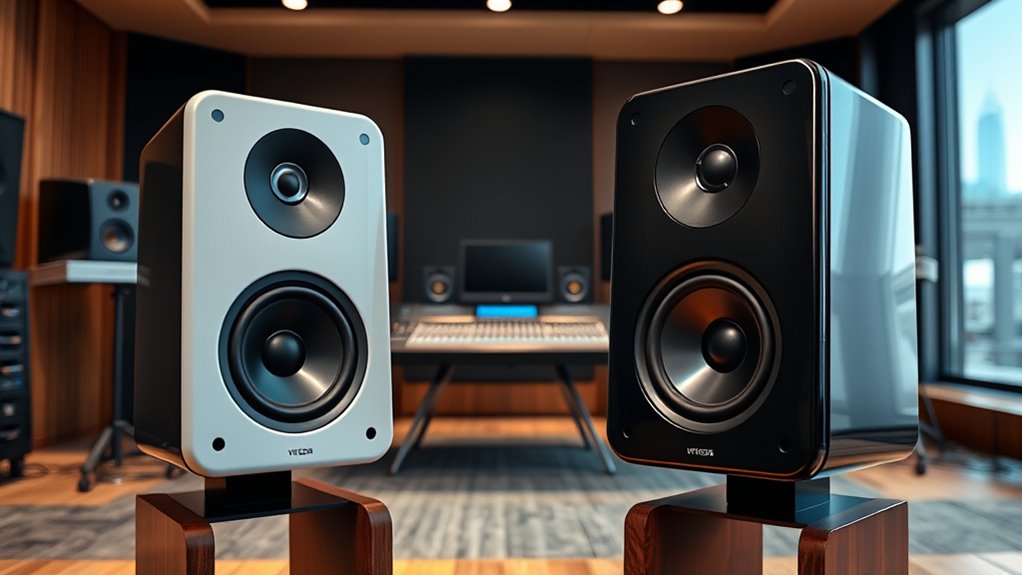

Studio monitors are essential for accurate sound reproduction in music production, mixing, and mastering. The PreSonus Eris E4.5 stands out as the overall top choice for balanced sound and affordability, while the JBL 305P MkII delivers impressive clarity for professional use. For those prioritizing portability, the IK Multimedia iLoud Micro Monitor offers wireless convenience without sacrificing sound quality. Choosing the right monitor involves weighing factors like size, connectivity, accuracy, and budget. Continue reading to see how these models compare and find the best fit for your studio needs.

Get your wardrobe favorites delivered free — and shop member deals
- Fast, free delivery on millions of items
- Access to Prime Big Deal Days deals on October 6–7
- Prime Video, Amazon Music and more included
Key Takeaways
- The best studio monitors balance sound accuracy with build quality and affordability.
- Size and power output are key considerations depending on your studio space and volume needs.
- Connectivity options like Bluetooth and multiple inputs increase versatility, especially for home setups.
- Premium models tend to offer flatter frequency response, crucial for mixing accuracy.
- Portability and ease of setup make some monitors better suited for mobile or multi-location studios.
| PreSonus Eris 3.5 Powered Studio Monitors, Pair |  | Best Compact Entry-Level Studio Monitors | Power: 50W | Woofer: 3.5″ woven-composite | Tweeter: 1″ silk-dome | VIEW ON AMAZON | See Our Full Breakdown |
| Edifier MR3 Powered Studio Monitor Speakers, Hi-Res Audio Certified Bluetooth V5.4 Active Bookshelf Loudspeakers, 2.0 Computer Speaker with Headphone Output RCA AUX Balanced TRS Input – Black (Pair) |  | Best for Versatile Connectivity and Hi-Res Listening | Power Output: 18W*2 RMS | Frequency Response: 52Hz – 40kHz | Connectivity: Bluetooth V5.4, RCA, AUX, TRS, Headphone | VIEW ON AMAZON | See Our Full Breakdown |
| Edifier QR65 RGB Light Desktop Active Monitor |  | Best for Visual and Audio Aesthetic Integration | Power: 70W RMS | Tweeter: 1.25″ silk dome | Mid-Low Drivers: 2.75″ aluminum diaphragm | VIEW ON AMAZON | See Our Full Breakdown |
| PreSonus Eris E4.5 2-Way 4.5-Inch Near Field Studio Monitor (Pair) |  | Best for Accurate Studio Monitoring in Small Rooms | Speaker Size: 4.5 inches | Amplification: 50W (25W per speaker) | Inputs: ¼-inch TRS, RCA, ⅛-inch TRS aux | VIEW ON AMAZON | See Our Full Breakdown |
| JBL 305P MkII 5″ 2-Way Active Studio Monitors (Pair) |  | Best for Accurate and Immersive Sound in Larger Spaces | Number of Speakers: 2 | Speaker Size: 5 inches | Power: Dual 41-Watt Class-D | VIEW ON AMAZON | See Our Full Breakdown |
| IK Multimedia iLoud Micro Monitor 50W Portable Wireless Bluetooth Studio Monitors |  | Best Portable Studio Monitor | Power: 50W RMS | Frequency Response: 55Hz – (upper limit not specified) | Tweeter: 3/4” silk dome | VIEW ON AMAZON | See Our Full Breakdown |
| Edifier G1500 MAX 2.1 RGB Light Gaming Speakers with 4″ Wood Subwoofer |  | Best Gaming-Focused Speakers | Power: 60W peak | Subwoofer Size: 4 inches | Connectivity: Bluetooth 5.3, USB-A, USB-C, AUX | VIEW ON AMAZON | See Our Full Breakdown |
| Edifier MR4 Powered Studio Monitor Speakers, 4-inch Active Near-Field Reference Speakers – Black (Pair) |  | Best Near-Field Studio Monitors | Speaker Size: 4 inches | Tweeter: 1 inch silk dome | Inputs: 1/4″ TRS, RCA, AUX | VIEW ON AMAZON | See Our Full Breakdown |
| Ortizan C7 Dual-Mode 2.0 Studio Monitors, Active Monitor Speakers for Music Production, Bluetooth 5.3 Wireless, Bookshelf Speakers (Pair, Black) |  | Best Versatile Bluetooth Monitors | Connectivity: RCA, Bluetooth 5.3, AUX, TRS | Speaker Size: 3.5-inch mid-bass | DAC: 24-bit digital-to-analog converter | VIEW ON AMAZON | See Our Full Breakdown |
| Rockville APM8B Bundle: 8″ 500W Peak/250W RMS Active USB Studio Monitor Speakers, Pair with Stands and Isolation Pads |  | Best Power and Included Accessories Bundle | Speaker Size: 8 inches | Peak Power: 500W | RMS Power: 250W | VIEW ON AMAZON | See Our Full Breakdown |
| Edifier MR4.5 Bi-Amped Studio Monitor Speakers – Black |  | Best for Versatile High-Resolution Listening | Power: 80W RMS | Woofer Size: 4.5 inches | Tweeter: 1 inch silk dome | VIEW ON AMAZON | See Our Full Breakdown |
| Yamaha HS4 Powered Studio Monitor (Pair) |  | Best for Accurate, Studio-Grade Monitoring | Type: 2-way bass-reflex powered speaker | Woofer Size: 4.5 inches | Tweeter Size: 1 inch | VIEW ON AMAZON | See Our Full Breakdown |
| Mackie CR3.5 3.5-inch Creative Reference Powered Studio Monitors |  | Best for Compact, Versatile Desktop Use | Speaker Size: 3.5 inches | Tweeter: Silk dome | Woofer: Woven | VIEW ON AMAZON | See Our Full Breakdown |
| studio monitor | Tweeter | Inputs |
|---|---|---|
| PreSonus Eris 3.5 Powered Stud | 1" silk-dome | TRS, RCA, auxiliary |
| Edifier MR3 Powered Studio Mon | — | — |
| Edifier QR65 RGB Light Desktop | 1.25" silk dome | — |
| PreSonus Eris E4.5 2-Way 4.5-I | 1-inch silk-dome | ¼-inch TRS, RCA, ⅛-inch TRS aux |
| JBL 305P MkII 5" 2-Way Active | — | XLR/TRS |
| IK Multimedia iLoud Micro Moni | 3/4” silk dome | — |
| Edifier G1500 MAX 2.1 RGB Ligh | — | — |
| Edifier MR4 Powered Studio Mon | 1 inch silk dome | 1/4" TRS, RCA, AUX |
| Ortizan C7 Dual-Mode 2.0 Studi | — | — |
| Rockville APM8B Bundle: 8" 500 | — | USB, XLR, TRS, RCA |
| Edifier MR4.5 Bi-Amped Studio | 1 inch silk dome | — |
| Yamaha HS4 Powered Studio Moni | — | XLR/TRS combo, RCA, Stereo Mini |
| Mackie CR3.5 3.5-inch Creative | Silk dome | TRS, RCA, 3.5 mm |
More Details on Our Top Picks
PreSonus Eris 3.5 Powered Studio Monitors, Pair
The PreSonus Eris 3.5 stands out for its compact size combined with professional-grade sound quality, making it ideal for small spaces or desktop setups. Compared to larger monitors like the JBL 305P MkII, these are less capable of handling deep bass, but they excel in clarity and detail, especially for critical listening. The adjustable tuning controls help optimize sound in imperfect rooms, yet their small 3.5-inch woofers limit bass response, requiring a subwoofer for full-range accuracy. Their multiple input options increase versatility, but the limited power may fall short in larger rooms.
bestFor: Space-constrained producers or streamers needing accurate sound without bulk.
notIdealFor: Those seeking deep bass performance or working in very large rooms.
- High-quality, studio-grade sound
- Adjustable room tuning controls
- Multiple connectivity options
- Powerful enough for small to medium rooms
- Limited bass response due to small woofer
- May require additional acoustic treatment
Verdict: This pick makes the most sense for desktop users who prioritize clarity and flexibility in a compact form.
- Power:50W
- Woofer:3.5″ woven-composite
- Tweeter:1″ silk-dome
- Frequency Range:80 Hz–20 kHz
- Inputs:TRS, RCA, auxiliary
- Color:Black
Our verdict“Best Compact Entry-Level Studio Monitors — a strong pick in this lineup.”
Edifier MR3 Powered Studio Monitor Speakers, Hi-Res Audio Certified Bluetooth V5.4 Active Bookshelf Loudspeakers, 2.0 Computer Speaker with Headphone Output RCA AUX Balanced TRS Input – Black (Pair)
The Edifier MR3 offers a balanced combination of high-resolution audio certification and broad connectivity options, standing out against the more straightforward PreSonus Eris 4.5. While the Eris 4.5 provides a more traditional studio monitor experience with room tuning controls, the MR3’s Bluetooth V5.4 with LDAC support enables wireless convenience and superior mobility. Its MDF cabinet design reduces distortion, but its 18W per channel power output may be insufficient for larger spaces, limiting its use to smaller rooms or desktop environments. The app-based EQ adjustments offer customization, although they can be complex for casual users.
bestFor: Professionals or enthusiasts prioritizing wireless flexibility and high-res audio in a compact form.
notIdealFor: Those needing high volume levels or working in large rooms.
- High-Res Audio certification ensures accurate sound
- Multiple wired and wireless connectivity options
- App-based EQ for customizable sound
- Reduces distortion with MDF cabinet
- Limited power output for large spaces
- Requires app for full customization, which may be complex
Verdict: This is best suited for users who want flexible, high-quality sound with wireless features on a desktop or small room setup.
- Power Output:18W*2 RMS
- Frequency Response:52Hz – 40kHz
- Connectivity:Bluetooth V5.4, RCA, AUX, TRS, Headphone
- Drivers:3.5″ mid-low, 1″ tweeters
- Design:MDF cabinet
- Peak SPL:92.5dB
Our verdict“Best for Versatile Connectivity and Hi-Res Listening — a strong pick in this lineup.”
Edifier QR65 RGB Light Desktop Active Monitor
The Edifier QR65 combines high-powered audio with customizable RGB lighting, making it ideal for visually dynamic environments like streaming or gaming. Its 70W RMS output surpasses many competitors like the Eris E4.5, providing ample volume and clarity for larger desks. The inclusion of aluminum stands helps direct sound effectively, while the companion app allows personalization of lighting and sound profiles, though learning the full feature set takes time. Its detailed specifications are somewhat limited on ports, but its LDAC Bluetooth and USB-C charging add modern convenience. However, the complex setup and distracting lighting effects may not suit minimalist or dark room settings.
bestFor: Creators who want immersive audio combined with customizable lighting and visual flair.
notIdealFor: Users seeking straightforward, no-fuss monitors or minimalistic setups.
- High-resolution audio with LDAC Bluetooth
- Customizable RGB lighting effects
- Includes adjustable stands for optimal sound direction
- Powerful 70W RMS output
- Setup complexity due to multiple features
- Lighting effects may be distracting in dark environments
Verdict: This monitor is perfect for visually expressive environments where audio quality and aesthetics are equally important.
- Power:70W RMS
- Tweeter:1.25″ silk dome
- Mid-Low Drivers:2.75″ aluminum diaphragm
- Bluetooth:5.3 with LDAC
- Lighting:Customizable RGB
- Charging:65W TurboGaN USB-C
- Included Accessories:Speaker stands
Our verdict“Best for Visual and Audio Aesthetic Integration — a strong pick in this lineup.”
PreSonus Eris E4.5 2-Way 4.5-Inch Near Field Studio Monitor (Pair)
The PreSonus Eris E4.5 delivers precise, studio-quality sound in a compact package that rivals larger monitors like the JBL 305P MkII. Its 50W dual amplifier and silk-dome tweeter provide clear, detailed audio with wide stereo imaging, making it a strong choice for mixing and critical listening. The room tuning controls allow some customization, but the smaller 4.5-inch woofer means bass may be lacking without an external subwoofer, which could be a drawback for bass-heavy music producers. Its multiple input options add flexibility, but its power output might limit performance in larger or more acoustically challenging rooms.
bestFor: Home studio owners or producers working in small spaces needing accurate sound reproduction.
notIdealFor: Users seeking deep bass or working in large, untreated rooms.
- Accurate, studio-quality sound
- Wide stereo imaging
- Multiple input options
- Room tuning controls
- Limited bass response without a subwoofer
- Power may be insufficient for very large rooms
Verdict: This monitor makes the most sense for small studio environments where precision matters over deep bass.
- Speaker Size:4.5 inches
- Amplification:50W (25W per speaker)
- Inputs:¼-inch TRS, RCA, ⅛-inch TRS aux
- Tweeter:1-inch silk-dome
- Woofer:Woven-composite
- Power Saving Mode:Yes
- Optional Subwoofer:Eris Sub 8BT compatible
Our verdict“Best for Accurate Studio Monitoring in Small Rooms — a strong pick in this lineup.”
JBL 305P MkII 5″ 2-Way Active Studio Monitors (Pair)
The JBL 305P MkII offers a step up in size and power, with 5-inch drivers and dual 41-watt Class-D amplifiers that produce a broad, detailed soundstage. Its adjustable EQ settings, including boundary and HF trim, make it adaptable to various room acoustics, similar to the Eris E4.5, but with a wider sweet spot that minimizes the need for precise placement. The MDF enclosure gives it a durable, professional look. While larger and more capable than the PreSonus Eris 3.5, they still require proper placement to maximize sound quality. The size and power make them suitable for mid-sized rooms, but overkill for casual or small setups.
bestFor: Intermediate to professional producers needing accurate sound in larger rooms.
notIdealFor: Small bedroom setups or users with limited space who prefer compact monitors.
- Clear, immersive audio with a wide sweet spot
- Adjustable boundary and HF Trim EQ
- Robust MDF build for durability
- Professional input options
- Space required for optimal placement
- May be overpowered for small rooms or casual listening
Verdict: These monitors suit larger or more acoustically treated spaces where accurate, immersive sound is essential.
- Number of Speakers:2
- Speaker Size:5 inches
- Power:Dual 41-Watt Class-D
- Inputs:XLR/TRS
- Enclosure Material:MDF
- Features:Boundary EQ, HF Trim
Our verdict“Best for Accurate and Immersive Sound in Larger Spaces — a strong pick in this lineup.”
IK Multimedia iLoud Micro Monitor 50W Portable Wireless Bluetooth Studio Monitors
The iLoud Micro Monitor stands out for its compact design that delivers surprisingly accurate sound with deep bass, making it ideal for mobile producers and musicians. Unlike larger studio monitors such as the Rockville APM8B, it sacrifices some low-end extension for portability. Its Bluetooth connectivity and customizable EQ enable flexible use, but limited frequency response details mean it might fall short in critical mixing environments. The lightweight build and included travel bag make it perfect for on-the-go use, though it may require additional equipment for full studio integration. This pick is best for traveling musicians or producers needing reliable sound on the move.Pros:- Compact, portable design ideal for travel and studio use
- Accurate sound reproduction with deep bass response
- Wireless Bluetooth connectivity for streaming
Cons:- Limited frequency response details provided
- May require additional equipment for full studio integration
Best for: Musicians, producers, or content creators who need portable, accurate monitoring and value wireless convenience.
Not ideal for: Large studio setups or critical mixing environments where full-range frequency response and higher power are essential.
- Power:50W RMS
- Frequency Response:55Hz – (upper limit not specified)
- Tweeter:3/4” silk dome
- Woofer:3” high-rigidity custom composite
- Connectivity:Bluetooth, Stereo RCA, 1/8″ aux
- Portability:Lightweight, travel bag included
Our verdict“This monitor suits mobile users who prioritize portability and convenience over full-range fidelity.”
Edifier G1500 MAX 2.1 RGB Light Gaming Speakers with 4″ Wood Subwoofer
The Edifier G1500 MAX offers a robust 60W peak power with a 4-inch wood subwoofer, making it well-suited for gaming and multimedia. Compared to the Rockville APM8B, which targets studio clarity, the G1500 emphasizes immersive sound and visual flair with vibrant RGB lighting. Its multiple connectivity options, including Bluetooth 5.3 and USB, support diverse devices, while the dedicated sound modes enhance gaming, music, or movies. The RGB lighting can be a double-edged sword, adding ambiance but potentially distracting for some users. Its size and space requirements mean it’s less ideal for small desks, and the sound tuning favors entertainment over critical listening. This system is best for gamers and multimedia enthusiasts seeking immersive audio and visual effects.Pros:- Vibrant RGB lighting enhances gaming atmosphere
- Multiple connectivity options for various devices
- Dedicated sound modes for gaming, music, and movies
Cons:- Requires space for subwoofer and speakers
- RGB lighting may be distracting during focused work
Best for: Gamers or multimedia consumers who want vibrant lighting and versatile connectivity for an immersive experience.
Not ideal for: Professional audio production or users with limited space who prefer minimalist setups.
- Power:60W peak
- Subwoofer Size:4 inches
- Connectivity:Bluetooth 5.3, USB-A, USB-C, AUX
- Sound Modes:Gaming, Music, Movie
- RGB Lighting:10 preset effects
Our verdict“This pick is perfect for gamers and entertainment lovers prioritizing visual effects and versatile connectivity.”
Edifier MR4 Powered Studio Monitor Speakers, 4-inch Active Near-Field Reference Speakers – Black (Pair)
The Edifier MR4 offers a balanced, flat response suited for professional and casual listening, somewhat akin to the PreSonus Eris 4.5 but with a more stylish MDF cabinet. Its 1” silk dome tweeter and 4” woofer deliver clear, detailed sound for mixing or critical listening. Unlike wireless options like the Ortizan C7, it relies on wired connections such as TRS, RCA, and AUX, giving it a more stable signal. User controls for sound modes and frequency adjustments add flexibility, but its near-field design limits its usefulness at larger distances. It’s not ideal for open spaces or multi-room setups. This monitor is best suited for desktop studios or serious hobbyists seeking high-quality, wired reference speakers.Pros:- High-quality, flat response ideal for mixing
- Multiple wired input options for versatility
- Compact, stylish design fits desktop environments
Cons:- Limited to near-field listening environments
- No wireless connectivity options
Best for: Audio professionals or serious hobbyists needing accurate near-field monitoring with wired connectivity.
Not ideal for: Casual listeners or those wanting wireless or portable studio solutions.
- Speaker Size:4 inches
- Tweeter:1 inch silk dome
- Inputs:1/4″ TRS, RCA, AUX
- Material:MDF wood
Our verdict“This monitor works best for desktop-based production where wired, accurate sound is essential.”
Ortizan C7 Dual-Mode 2.0 Studio Monitors, Active Monitor Speakers for Music Production, Bluetooth 5.3 Wireless, Bookshelf Speakers (Pair, Black)
The Ortizan C7 offers high-fidelity sound with multiple input options, including Bluetooth 5.3, RCA, AUX, and balanced TRS, targeting both music production and casual listening. Compared with the Edifier G1500 MAX, it emphasizes professional tuning and high-quality digital conversion, making it suitable for both studio and entertainment use. Its Bluetooth 5.3 pairing is quick and reliable, but setup might be complex for newcomers, and the lack of included stands limits placement flexibility. The 3.5-inch mid-bass and silk dome tweeter provide a balanced sound profile, yet detailed specs on power output are scarce. This monitor is best for users who want a flexible, wired and wireless speaker for both production and entertainment.Pros:- Multiple input options for versatile connectivity
- Bluetooth 5.3 for quick wireless pairing
- High-fidelity sound with professional tuning
Cons:- No included stands or mounting options
- Potentially complex setup for beginners
Best for: Music producers and audiophiles seeking a versatile, high-fidelity bookshelf speaker with wireless capability.
Not ideal for: Beginners or users requiring plug-and-play simplicity with minimal setup or no additional equipment.
- Connectivity:RCA, Bluetooth 5.3, AUX, TRS
- Speaker Size:3.5-inch mid-bass
- DAC:24-bit digital-to-analog converter
- Color:Black
Our verdict“This model suits users who value flexible connectivity and high-quality sound for both professional and casual listening.”
Rockville APM8B Bundle: 8″ 500W Peak/250W RMS Active USB Studio Monitor Speakers, Pair with Stands and Isolation Pads
The Rockville APM8B bundle delivers powerful sound with 500W peak and 250W RMS, making it a strong choice for home studios and larger spaces. Its 8-inch woofers provide deep bass and broad frequency response, surpassing smaller monitors like the Edifier MR4 in volume and impact. The included stands and foam pads help optimize positioning and reduce vibrations, but its weight and size could be a challenge for small desks. While its controls are straightforward, the 110V power requirement might mean adapters are needed in regions outside North America. Compared to more compact monitors, it sacrifices portability for raw power and clarity. This setup is best for producers needing high-volume output and full-spectrum sound in a dedicated studio space.Pros:- Powerful 500W peak output for large or demanding spaces
- Includes adjustable stands and foam pads
- Broad frequency response for accurate monitoring
Cons:- Heavy and bulky for small desks
- Limited to North American power standards
Best for: Home studio owners or content creators who require high power and full-range sound with included accessories for convenience.
Not ideal for: Small or portable setups, or users with limited space and mobility needs.
- Speaker Size:8 inches
- Peak Power:500W
- RMS Power:250W
- Frequency Response:30Hz-20kHz
- Inputs:USB, XLR, TRS, RCA
- Included Accessories:Stands, foam pads
Our verdict“This bundle is well-suited for serious producers seeking high volume and full-range sound in a dedicated studio environment.”
Edifier MR4.5 Bi-Amped Studio Monitor Speakers – Black
The Edifier MR4.5 stands out for its impressive combination of high-resolution audio and extensive connectivity options, including Bluetooth 6.0 LDAC and multiple inputs like XLR, TRS, RCA, and AUX. Compared to the Yamaha HS4, which prioritizes studio accuracy with a more straightforward setup, the MR4.5 offers customizable sound through room calibration and EQ controls, making it a better fit for those who want both professional and casual high-fidelity listening. However, its setup complexity and premium features may be overwhelming for casual users or those with very small spaces. The 4.5-inch drivers and broad frequency response from 50Hz to 40kHz deliver a rich soundstage, but the calibration process requires patience to optimize sound quality.
Pros:- High-resolution audio with wide frequency range for detailed sound
- Multiple input options including Bluetooth 6.0 LDAC for wireless convenience
- Customizable sound with room calibration and 9-band EQ controls
- Compact size suitable for various placement options
Cons:- Requires some setup effort to achieve optimal calibration
- May be too large for very small or cluttered spaces
Best for: Audio enthusiasts and professionals seeking flexible, high-res sound with room customization in a versatile setup.
Not ideal for: Casual listeners or users with very limited space who prefer plug-and-play simplicity without setup complexity.
- Power:80W RMS
- Woofer Size:4.5 inches
- Tweeter:1 inch silk dome
- Frequency Response:50Hz–40kHz
- Connectivity:XLR, TRS, RCA, AUX, Bluetooth 6.0 LDAC
- Controls:Room calibration, 9-band EQ, adjustable low cutoff
Our verdict“This monitor set is ideal for those who want flexible, high-quality sound with detailed customization options, accepting a bit of setup complexity.”
Yamaha HS4 Powered Studio Monitor (Pair)
The Yamaha HS4 offers a clean, transparent sound profile suited for critical listening and mixing, with its 4.5-inch woofer and 1-inch dome tweeter providing a balanced response from 60Hz to 22kHz. Unlike the Edifier MR4.5, which emphasizes versatility and high-res features, the HS4 focuses on delivering a straightforward, reliable monitoring experience, making it ideal for professional studios or serious hobbyists. Its 26W power output limits its suitability for larger rooms or loud environments but ensures precise, distortion-free audio at moderate volumes. The inclusion of room and high trim controls allows some tailoring, though it lacks the extensive customization options of the MR4.5, making it less flexible but more streamlined for straightforward use.
Pros:- Clear, neutral sound profile ideal for mixing and mastering
- Multiple input options including XLR/TRS combo and RCA
- Includes useful accessories like cables and anti-slip pads
- Compact and straightforward design for focused studio use
Cons:- Limited power output may not suit large or loud spaces
- Frequency response starting at 60Hz may lack deep bass for some users
Best for: Studio producers and engineers seeking accurate, uncolored sound for mixing and critical listening in small to medium rooms.
Not ideal for: Casual users or those wanting wireless or multi-input flexibility, as the HS4 is primarily wired and less feature-rich.
- Type:2-way bass-reflex powered speaker
- Woofer Size:4.5 inches
- Tweeter Size:1 inch
- Frequency Response:60 Hz – 22 kHz
- Power Output:26 W
- Inputs:XLR/TRS combo, RCA, Stereo Mini
Our verdict“This monitor is perfect for professionals and serious hobbyists prioritizing accuracy over features, provided their space is not too large.”
Mackie CR3.5 3.5-inch Creative Reference Powered Studio Monitors
The Mackie CR3.5 delivers surprisingly versatile sound for its small size, with a 3.5-inch woofer and silk dome tweeter that suit casual music production, gaming, or general multimedia use. Compared with the Edifier MR4.5, which offers a broader feature set, the CR3.5’s main advantage is its compact form factor and straightforward controls like the tone knob and mode switch, making it ideal for desktop setups. While its bass may lack depth without an external subwoofer, this monitor’s adjustable tone and multiple inputs (TRS, RCA, 3.5mm) make it adaptable to various devices. Its limited size restricts its use for professional mixing, but it’s a solid option for those needing space-saving, all-in-one desktop monitors.
Pros:- Compact size perfect for limited desk space
- Multiple connectivity options for various devices
- Adjustable tone control for personalized sound
- Switchable placement modes for desktop or bookshelf use
Cons:- Limited bass response may require external subwoofer for rumble
- Not suitable for critical mixing or large-room applications
Best for: Creative professionals, gamers, or students who need a small, flexible monitor that fits easily on a desk without sacrificing too much sound quality.
Not ideal for: Audiophiles or professional studio users looking for deep bass and high-fidelity monitoring, as the small size limits low-end response.
- Speaker Size:3.5 inches
- Tweeter:Silk dome
- Woofer:Woven
- Inputs:TRS, RCA, 3.5 mm
- Features:Tone knob, location switch, headphone output
Our verdict“This monitor works well for space-constrained environments where flexible, casual listening or basic production is needed, accepting its bass limitations.”
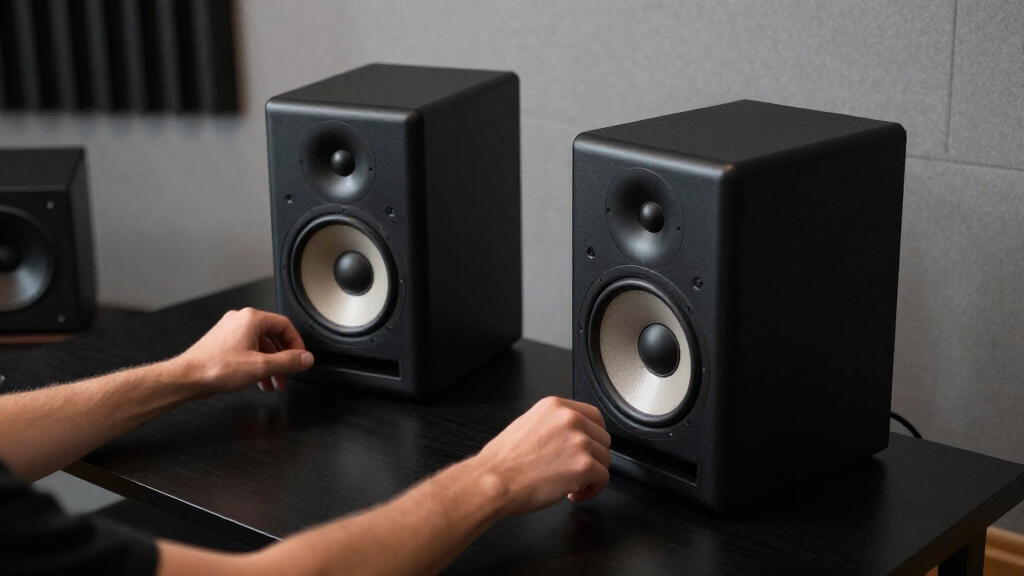
How We Picked
Our selection process focused on performance, build quality, and usability. We evaluated each monitor’s frequency response, clarity, and distortion levels to ensure they deliver accurate sound reproduction. Ease of setup, connectivity options, and size were also considered to match different studio environments and user needs. Additionally, we balanced value by including options across various price points, ensuring there’s a suitable choice whether you’re a beginner or a seasoned professional. The ranking reflects a combination of technical excellence, versatility, and overall user experience, aiming to guide buyers toward the best fit for their specific scenario.Factors to Consider When Choosing Studio Monitors
Choosing the right studio monitor involves understanding key factors that influence sound quality, usability, and value. Considering these factors can help prevent common mistakes, such as overpaying for unnecessary features or selecting monitors that don’t suit your space or workflow. Here are the main considerations to keep in mind:Size and Power Output
Monitor size, indicated by driver diameter (e.g., 4-inch, 5-inch), influences bass response and overall presence. Larger drivers typically produce deeper bass but require more space and power. Power output, measured in watts, determines how loud the monitors can get without distortion. Matching power to your room size is important; small rooms need less wattage, while larger studios benefit from higher power for clarity at higher volumes. Balancing size and power ensures your monitors perform well without overwhelming your space or budget.
Frequency Response and Accuracy
For mixing and mastering, flat frequency response is vital. This means the monitor reproduces sound without emphasizing or de-emphasizing any frequency range. Cheaper monitors often color the sound, which can mislead mixing decisions. Investing in monitors with a broad and flat frequency response helps achieve more reliable results, especially if you’re working on detailed audio projects. Remember, the most accurate monitors may not sound the most exciting but will provide the true representation needed for professional work.
Connectivity Options
Multiple input options like TRS, XLR, RCA, and Bluetooth increase flexibility, especially if you connect multiple devices or switch between studio and entertainment use. Wireless connectivity, such as Bluetooth, adds convenience but may introduce latency or slight audio compression, which might not suit critical listening. Ensure the monitors support your preferred setup to streamline your workflow and avoid needing additional adapters or interfaces.
Build Quality and Durability
Studio monitors should be sturdy enough to withstand long-term use, especially if you move or adjust them frequently. Look for well-constructed cabinets with vibration-resistant materials to prevent unwanted resonance. Good build quality also impacts sound clarity since poorly made enclosures can color the sound. While premium models tend to last longer and perform better, a solid, well-designed budget option can serve well in less demanding environments.
Budget and Value
Prices vary widely, from affordable beginner monitors to high-end professional gear. A higher price often correlates with better accuracy, build quality, and feature set, but this isn’t always necessary for casual or hobbyist use. Consider your specific needs and future plans—spending more on a monitor with flatter response and better durability can pay off in improved results and longevity. Conversely, if you’re starting out, a budget-friendly model that covers basic needs may be the smarter choice.
Frequently Asked Questions
Do I need powered monitors or passive ones?
Most modern studio monitors are powered, meaning they include built-in amplifiers, which simplifies setup and reduces external gear. Powered monitors are generally more convenient for home studios, as they require just a power source and audio input. Passive monitors, which need separate amplifiers, are more common in large, professional setups where custom amplification and precise tuning are critical. For typical home or project studios, powered monitors tend to be the better choice due to ease of use and integration.
How important is flat frequency response for my studio monitors?
Flat frequency response is essential if you want your mixes to translate well across different playback systems. It ensures that the monitor doesn’t color the sound, providing an accurate representation of your audio. Non-flat monitors might sound more pleasing initially but can lead to inaccurate mixing decisions. For professional work, prioritize monitors with a reputation for flat response, but for casual listening or entertainment, a slightly colored sound might be acceptable.
Should I prioritize size over accuracy?
Size often influences the bass response and overall presence, but it shouldn’t come at the expense of accuracy. Larger monitors can produce deeper bass, which is useful in bigger spaces, yet they might be less precise in midrange detail. Smaller monitors are more suited for near-field listening with less room for bass buildup, often providing a more accurate and focused sound. Evaluate your space and listening distance before choosing size—aim for a balance that matches your workflow and room dimensions.
Is Bluetooth connectivity reliable for critical listening?
Bluetooth offers convenience, especially for casual or secondary listening, but it’s generally not recommended for critical audio work. Wireless transmission can introduce latency, compression, and slight audio degradation, which hinder precise mixing. If you’re doing professional or detailed editing, wired connections like XLR or TRS are preferable for their stability and transparency. Use Bluetooth only if convenience outweighs the need for absolute accuracy in your workflow.
How much should I spend on studio monitors?
The amount you should spend depends on your needs, space, and budget. Entry-level monitors can be found for a few hundred dollars and are suitable for hobbyists or beginners, offering decent accuracy for their price. For professional quality, investing in higher-end models from reputable brands can significantly improve sound fidelity and durability, often costing over a thousand dollars per pair. Consider your long-term goals: spending more on quality monitors can lead to better mixes and fewer upgrades later, but make sure your budget aligns with your actual requirements.
Conclusion
For beginners or casual producers, models like the PreSonus Eris 3.5 or Yamaha HS4 offer reliable accuracy at accessible prices. The JBL 305P MkII provides a great balance of clarity and value for mid-level users. Professionals seeking premium sound and durability should consider the Edifier MR4.5 or IK Multimedia iLoud Micro Monitor. Budget-conscious buyers will find solid options in the Rockville APM8B, while those needing portability might prioritize wireless features. Ultimately, your choice hinges on your space, workflow, and budget—select the model that best aligns with your specific studio setup and goals.
As an affiliate, we earn on qualifying purchases.Fall Picks
fall essentials