To select the appropriate air purifier, focus on CADR, which measures how quickly it filters pollutants like dust and smoke. Match the CADR with your room size to guarantee effective cleaning, and consider the type of filter—HEPA is best for allergens. Don’t forget to verify energy use, noise levels, and filter maintenance. If you want to understand how to balance these factors for ideal air quality, keep exploring further.
Key Takeaways
- Match the air purifier’s CADR rating to your room size to ensure effective pollutant removal.
- Measure your room’s square footage to select a purifier with appropriate capacity for optimal air cleaning.
- Higher CADR values mean faster filtration but may require more frequent filter replacements.
- Choose filters like HEPA with proper ratings (e.g., MERV) for targeted removal of allergens and particles.
- Consider additional factors such as energy efficiency, noise level, and filter maintenance for long-term performance.
What Is CADR and Why Is It Important?
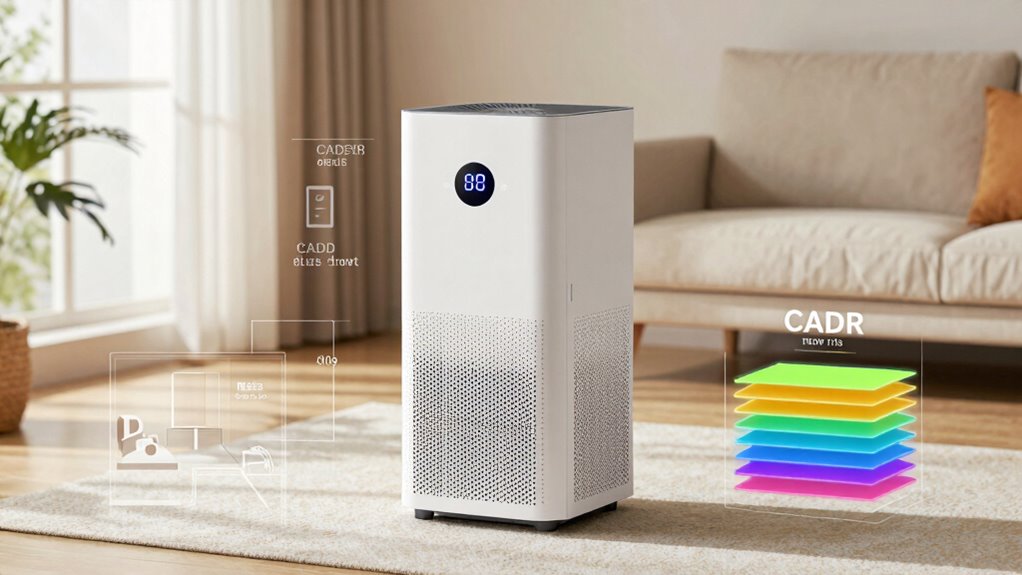
Have you ever wondered how to determine if an air purifier can effectively clean your space? That’s where CADR, or Clean Air Delivery Rate, measures how quickly an air purifier filters out pollutants like smoke, dust, and pollen. A higher CADR means better air quality faster, helping you breathe easier. It also influences the filter lifespan because a unit with a high CADR works harder and may need filter replacements more often. Understanding performance metrics helps you choose a device suited for your room size and pollution levels. Additionally, considering air purifier certifications ensures the device meets industry standards for efficiency and safety. These certifications often verify that the device has undergone rigorous testing for air cleaning efficiency, giving you extra confidence in its performance. It’s a reliable way to gauge performance and ensure your air purifier will improve your air quality without overworking the filters. In short, CADR is key to effective, efficient air cleaning and maintaining optimal indoor air quality.
How to Calculate the Right Room Size for Your Air Purifier

To guarantee your air purifier works effectively, you need to match its capacity to the size of your room. First, measure the room’s square footage. Then, consider the air exchange rate needed for your environment, which depends on occupant density and activity level. Higher occupant density or increased activity means more frequent air exchange to maintain air quality. For example, a crowded living room requires a higher Clean Air Delivery Rate (CADR) than a quiet bedroom. Use the room size and recommended air exchange rate to select an air purifier with a suitable CADR. This ensures it can filter the air efficiently and keep pollutants at bay. Proper sizing prevents overworking your purifier and guarantees ideal air quality in your space. Understanding airflow dynamics can also help optimize your purifier’s placement for maximum effectiveness. Additionally, considering filter types and their efficiencies can enhance the purifier’s performance in various environments. Being aware of airflow patterns within your room can further improve the purifier’s efficiency by ensuring even distribution of clean air. Recognizing how airflow behavior influences pollutant removal can also help you make better placement decisions.
Understanding Air Filters: Types, Ratings, and Maintenance

Understanding air filters is essential for maintaining ideal indoor air quality because not all filters perform equally or last the same amount of time. Different air filter materials, such as fiberglass, pleated synthetic, or HEPA filters, vary in efficiency and durability. HEPA filters, for example, capture tiny particles like allergens and bacteria, but may need more frequent replacement. The filter rating, often expressed as MERV, indicates how well it filters airborne particles, with higher ratings offering better purification. Knowing the filter lifespan helps you plan replacements to maintain maximum performance and avoid air quality dips. Regular maintenance ensures your air purifier continues to effectively remove pollutants, safeguarding your indoor environment and your health. Additionally, understanding different filter materials can help you select the most suitable option for your specific needs. Properly sized filters and consistent filter replacements are crucial for optimal air purification. Furthermore, selecting the right air purifier size based on room dimensions can significantly improve overall air quality and efficiency. Being familiar with filter ratings can help you make informed choices to enhance your indoor air quality. Regularly inspecting your filters and understanding their performance indicators can also prevent unexpected declines in air purifier efficiency.
Choosing the Best Air Purifier Capacity for Your Needs

Choosing the right air purifier capacity guarantees your indoor air stays clean and healthy. To improve air quality effectively, select a unit with the appropriate room coverage and CADR rating. If your space is large or has persistent odors, opt for a higher capacity model that can handle increased pollutant levels. A purifier with sufficient capacity ensures better odor removal and maintains consistent air quality. Additionally, considering air quality measurements can help determine the necessary size and features for your specific environment. Regular monitoring of indoor air quality can provide valuable insights into the effectiveness of your chosen purifier. For homes with specific concerns like allergens or chemical sensitivities, choosing a device with appropriate filter types is crucial to target those pollutants effectively. Properly integrated connected home fitness technology can even help monitor indoor air quality as part of a comprehensive wellness routine. Conversely, choosing a device too small for your room won’t filter air efficiently, leading to limited odor control and lingering pollutants. Consider your room size, air quality concerns, and odor issues when sizing your air purifier. Proper capacity not only enhances air quality but also ensures your environment feels fresher and healthier every day. Choosing the right capacity is essential for optimal performance and long-term satisfaction.
What Other Factors Should You Consider? Energy, Noise, and Cost

When selecting an air purifier, it’s vital to take into account factors beyond capacity that can impact your overall satisfaction and long-term use. Energy efficiency is important because a model with low power consumption will save you money on electricity bills over time. Look for units with an Energy Star rating to guarantee you’re choosing an efficient option. Noise levels also matter, especially if you plan to run the purifier in a bedroom or workspace. A quieter model allows for continuous operation without disturbance. Additionally, consider the upfront cost and ongoing maintenance expenses like filter replacements. Balancing energy efficiency, noise levels, and cost helps you select an air purifier that fits your needs and lifestyle, guaranteeing effective air cleaning without sacrificing comfort or budget. Moreover, vintage-inspired designs can add a unique aesthetic touch that complements retro decor themes while still offering modern performance. Being aware of environmental considerations like energy use and sustainability can further guide your choice toward models that are environmentally friendly and cost-effective over time.
Frequently Asked Questions
How Often Should I Replace or Clean My Air Purifier Filters?
You should replace or clean your air purifier filters based on the manufacturer’s recommended filter maintenance and replacement schedule, typically every 3 to 6 months. Regularly check the filters for dirt and buildup, and clean or replace them as needed to guarantee peak performance. Neglecting filter maintenance can reduce air quality and the efficiency of your purifier, so stay consistent with the schedule to keep your indoor air clean and healthy.
Can an Air Purifier Effectively Remove All Indoor Allergens?
Did you know that up to 90% of indoor allergens can be removed with the right air purifier? While no device can eliminate every allergen, high-quality air purification efficiency greatly reduces dust, pet dander, pollen, and mold spores. To maximize allergen removal, choose an air purifier with a HEPA filter and proper room size. Regular maintenance ensures you get the best performance and cleaner, healthier indoor air.
What Is the Ideal Placement for an Air Purifier in a Room?
You should place your air purifier in a central location to optimize airflow and maximize its effectiveness. Keep it away from furniture that blocks airflow and avoid corners where air circulation can be limited. Position it at least a few feet above the ground for better circulation. Adjust furniture placement if needed to prevent obstructions, ensuring the purifier can efficiently filter the air throughout the room and improve indoor air quality.
How Does Room Layout Affect an Air Purifier’s Performance?
Room layout influences your air purifier’s performance by affecting airflow patterns and furniture placement. If furniture blocks vents or restricts airflow, the purifier won’t clean the air effectively. You should position your purifier where air circulates freely, avoiding corners and clutter. Keep it elevated, and guarantee there’s enough space around it for ideal airflow. This way, your purifier works efficiently, cleaning your air better and improving your room’s overall air quality.
Are There Specific Certifications to Look for When Choosing an Air Purifier?
You should look for certification standards and quality marks when choosing an air purifier. These certifications, like Energy Star, AHAM Verifide, or CARB compliance, guarantee the device meets safety, efficiency, and performance benchmarks. They prove the purifier’s filters, CADR ratings, and overall quality are reliable. Checking for these marks helps you select a trustworthy product that effectively cleans your air without wasting energy or posing health risks.
Conclusion
Now that you’re armed with the secrets of CADR, room size, and filters, you can navigate the air purifier world like a seasoned captain steering through clear skies. Choosing the right model isn’t just about numbers—it’s about creating a gust of fresh air in your daily life. So, trust your instincts, consider all the factors, and let your new purifier be the breeze that keeps your space sparkling and your lungs happy.