To fit sourdough baking into a busy schedule, focus on maintaining a healthy starter with regular feedings at flexible intervals, adjusting hydration levels to control fermentation speed, and keeping temperatures stable for reliable results. Wetter starters ferment faster, so you can plan accordingly, while drier starters give you more timing control. Small tweaks keep the process manageable without sacrificing flavor or texture—there’s more to learn about optimizing your sourdough routine efficiently.
Key Takeaways
- Maintain a healthy starter with regular feedings, which can be scheduled every few days to fit your routine.
- Use lower hydration doughs to reduce handling time and simplify kneading and shaping processes.
- Keep fermentation at stable, consistent temperatures to ensure reliable rise without frequent adjustments.
- Adjust hydration levels to control fermentation speed, accommodating your available time and baking schedule.
- Focus on simple, adaptable techniques that allow flexibility without compromising bread quality or flavor.

Have you ever wondered what makes sourdough bread truly special? It all starts with the starter, a living culture of flour and water that relies on a process called fermentation. Starter fermentation is the magic behind the bread’s tangy flavor and chewy texture. When you feed your starter regularly, natural yeast and beneficial bacteria multiply, creating the leavening power needed to rise the dough. This fermentation process is quite forgiving, especially if you keep your starter at consistent temperatures, making it perfect for busy schedules. You don’t need to be around the entire time; just feed it daily or even every few days, depending on your routine, and it’ll remain active and healthy.
Starter fermentation creates sourdough’s tangy flavor and chewy texture, thriving with regular feeding at consistent temperatures.
Another vital factor in the success of your sourdough is managing hydration levels. Hydration refers to the ratio of water to flour in your dough or starter. This ratio influences the dough’s consistency, fermentation speed, and flavor development. Higher hydration levels, which mean more water, typically produce a wetter, stickier dough that develops a more open crumb and a lighter texture. Conversely, lower hydration results in a firmer dough that’s easier to handle but may produce a denser loaf. Adjusting hydration levels is a simple way to tailor your bread to your lifestyle and preferences. For busy bakers, a slightly lower hydration dough can be easier to work with during rushed mornings or evenings, reducing kneading time and minimizing mess.
Balancing hydration levels also affects fermentation. A wetter starter ferments faster because water facilitates yeast activity and bacterial growth. This means your bread could rise quicker, which is helpful when you’re short on time. On the other hand, a drier starter ferments more slowly, giving you more control over the timing and flavor development. Experimenting with hydration levels allows you to customize your baking schedule without sacrificing quality. It’s a simple tweak that makes managing your sourdough more adaptable to your hectic life.
Additionally, maintaining the right drivetrain components, such as gears and chain, can impact your bread’s fermentation process by ensuring smooth operation of your bike, which is essential if you’re using your bike to deliver or fetch ingredients. Understanding starter fermentation and hydration levels empowers you to produce consistently delicious sourdough bread, even on a busy schedule. You don’t need hours to master it; just a bit of planning and attention to these key factors can lead to impressive results. With a well-maintained starter and mindful hydration, you can enjoy the art of sourdough baking without feeling overwhelmed. It’s about making small adjustments that fit into your routine, so you can savor the process and the bread alike.
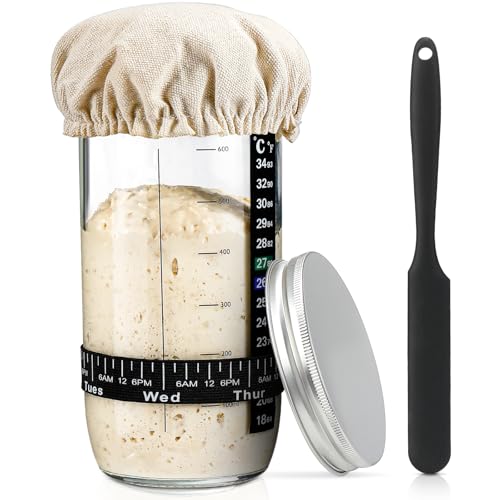
Sourdough Bread Baking Supplies,24 oz Sourdough Starter Jar Glass, Sourdough Starter Kit with Date Marked Feeding Band, Thermometer, Silicone Scraper, Sewn Cloth Cover & Aluminum Lid, Sourdough Jar
Ideal Starter Kit: The sourdough starter kit contains silicone spatula, temperature sticker, date tracking tape, breathable cloth lid,…
As an affiliate, we earn on qualifying purchases.
As an affiliate, we earn on qualifying purchases.
Frequently Asked Questions
Can I Make Sourdough Without a Starter?
You can’t truly make authentic sourdough without a starter because fermentation alternatives like commercial yeast won’t produce the same flavor and texture. While you can try quick bread recipes or use starter maintenance techniques to create a sourdough-like loaf, they won’t have the depth of flavor authentic starters provide. To get the best sourdough, start a starter and maintain it regularly, even if you’re busy, for consistent, delicious results.
How Do I Store Sourdough for Long Periods?
To store sourdough long-term, you should prioritize starter maintenance through fridge fermentation. Keep your starter in a clean jar, feed it weekly, and store it in the fridge to slow fermentation. When you’re ready to bake, take it out, feed it, and let it warm up. This method preserves your starter, minimizes daily care, and guarantees your sourdough remains healthy for future baking sessions.
What Are Common Signs of a Healthy Starter?
Did you know that over 80% of successful sourdough starters show visible signs of activity within the first 48 hours? A healthy starter exhibits active fermentation bubbles, a pleasantly sour smell, and a bubbly, airy texture. These signs indicate strong microbial activity, ensuring your dough will rise well. If your starter looks lively with consistent bubbling and smells inviting, you’re on the right track for perfect baking!
Can I Adapt Recipes for Gluten-Free Sourdough?
Yes, you can adapt recipes for gluten-free sourdough by using gluten-free flours like rice, buckwheat, or sorghum. You’ll need to make some recipe modifications, such as adjusting hydration levels and fermentation times, since gluten-free flours behave differently. Experimenting with different flours and maintaining a lively starter can help create a tasty, gluten-free sourdough bread that suits your dietary needs.
How Do I Troubleshoot Sourdough That Won’T Rise?
If your sourdough won’t rise, check your starter maintenance first—ensure it’s active and bubbly. Adjust fermentation timing; if it’s too cold, give it more time or find a warmer spot. Make sure you’re feeding your starter regularly so it’s strong enough to leaven your dough. Sometimes, a longer proof or a few extra feedings help. Keep experimenting until your dough consistently rises well.

Etekcity Food Kitchen Scale, Digital Grams and Ounces for Weight Loss, Baking, Cooking, Keto and Meal Prep, LCD Display, Medium, 304 Stainless Steel
𝗘𝗳𝗳𝗼𝗿𝘁𝗹𝗲𝘀𝘀 𝗪𝗲𝗶𝗴𝗵𝗶𝗻𝗴: Supports 5 units (oz/lb:oz/fl'oz/g/mL), tare function, and includes 2 AAA batteries for hassle-free operation
As an affiliate, we earn on qualifying purchases.
As an affiliate, we earn on qualifying purchases.
Conclusion
Mastering sourdough doesn’t have to be time-consuming. With a consistent routine, you can enjoy fresh, homemade bread even on your busiest days. For instance, imagine waking up to the aroma of your own sourdough loaf, prepared the night before with minimal effort. Like Sarah, who balanced her hectic schedule by fermenting her dough overnight, you too can create delicious bread effortlessly, proving that great sourdough fits perfectly into any busy lifestyle.

Sourdough Proofing Basket Gift Set, 9" Round and 10" Oval Banneton Bread Baking Supplies, Sourdough Baskets with Bread Lame, Danish Whish, Bowl Scraper, Sourdough Scraper, and Linen Liner
What You Get: 1 9-inch round banneton bread proofing basket , 1 10-inch oval proofing basket, 2 liners,…
As an affiliate, we earn on qualifying purchases.
As an affiliate, we earn on qualifying purchases.

"SAINT GERMAIN Premium Hand Crafted Bread Lame for Dough Scoring Knife, Lame Bread Tool for Sourdough Bread Slashing with 10 Blades Included with Replacement with Authentic Leather Protector Cover"
PREMIUM QUALITY: Premium hand crafted wood handle with stainless steel stick to attach replaceable blades. Built to last.
As an affiliate, we earn on qualifying purchases.
As an affiliate, we earn on qualifying purchases.

Born in Dubai to Pakistani parents, Aisha deeply understands Middle Eastern and South Asian luxury markets. She excels in forging strategic partnerships with top-tier luxury brands worldwide, fostering cross-cultural collaborations that enhance our global presence.