Choosing between semi-automatic, super-automatic, and manual espresso machines depends on how much control and convenience you want. Semi-automatics let you control the shot timing while automating water flow, offering a good balance. Super-automatics handle everything automatically for quick, consistent results, perfect if you prioritize convenience. Manual machines give you full control over every step, ideal if you enjoy customizing. If you want to explore more details, you’ll find helpful tips ahead.
Key Takeaways
- Manual machines require full user control over brewing parameters, offering customization but demanding skill and effort.
- Semi-automatic machines automate water flow but need user input for grind, tamping, and start/stop, balancing control and convenience.
- Super-automatic machines handle grinding, brewing, and cleanup automatically, prioritizing ease and consistency with minimal user involvement.
- Manual machines provide maximum control for experienced users, while super-automatics are ideal for beginners seeking quick, reliable espresso.
- Choice depends on desired control level, brewing skill, convenience preference, and budget considerations.

Breville Barista Express Espresso Machine BES870XL, Brushed Stainless Steel
The Breville Barista Express delivers third wave specialty coffee at home using the 4 keys formula and is…
As an affiliate, we earn on qualifying purchases.
As an affiliate, we earn on qualifying purchases.
What Are the Main Types of Espresso Machines?

There are several main types of espresso machines, each designed to suit different brewing preferences and skill levels. Your choice depends on factors like machine durability and how hands-on you want to be with espresso extraction. Manual machines require you to control every step, giving you maximum influence over the process but demanding skill. Semi-automatic machines balance control and convenience, letting you manage extraction while the machine handles water pressure. Fully automatic and super-automatic machines automate most tasks, making espresso quickly and consistently. Durability varies across these types; high-quality machines often last longer and provide consistent espresso extraction, ensuring you get great results over time. Additionally, machine durability plays a crucial role in long-term satisfaction, as investing in a well-built machine can save money and effort in the long run. Considering technology and how it affects performance and maintenance can further help you find the best fit for your needs. Moreover, understanding the design and build quality of the machine can significantly impact its longevity and your overall brewing experience. To ensure you select the right machine, evaluating materials used in construction can also contribute to better durability and maintenance ease. A well-designed machine often incorporates advanced features that enhance user experience and simplify upkeep.
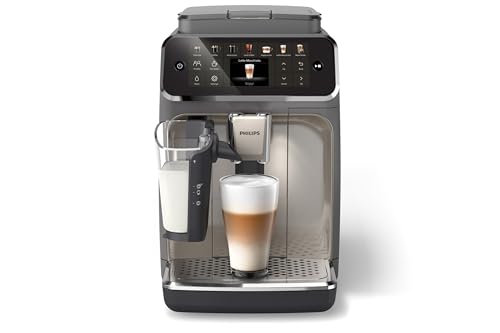
Philips 4400 Series Fully Automatic Espresso Machine, LatteGo Milk System, Integrated Grinder, 12 Hot & Iced Coffee Pre-Sets, Quick Start, SilentBrew, 15-Bar Pressure, Black Chrome (EP4444/90)
12 PRESETS, ENDLESS COMBINATIONS: Hot drinks like espresso, coffee, lattes, and cappucinos, to iced coffee, or simply hot…
As an affiliate, we earn on qualifying purchases.
As an affiliate, we earn on qualifying purchases.
How Do Semi-Automatic and Super-Automatic Machines Differ?

Semi-automatic and super-automatic machines differ mainly in how much control you have over the brewing process. With semi-automatics, you manage some steps, like grinding and tamping, while the machine handles the espresso extraction. Super-automatics take over almost everything, giving you a hands-free experience with minimal user input.
Degree of Automation
Understanding how semi-automatic and super-automatic espresso machines differ in their level of automation can help you choose the right one for your needs. Semi-automatics require more user involvement, giving you control over grinding, tamping, and shot timing. Super-automatics handle most tasks at the push of a button, reducing automation complexity and user effort.
| Feature | Semi-Automatic | Super-Automatic |
|---|---|---|
| Automation Level | Moderate | High |
| User Involvement | Significant (manual steps) | Minimal (automatic processes) |
| Customization | Greater control over extraction | Limited customization |
| Ease of Use | More skill required | User-friendly, set-and-forget |
| Maintenance | Regular, hands-on | Less frequent, automated |
User Control Level
Have you ever wondered how much control you have over your espresso when using different machines? With semi-automatic machines, you get more user control—you choose when to start and stop the shot, allowing you to adjust grind quality and water temperature for your perfect brew. You’ll manually grind beans and set the water temperature, giving you hands-on involvement. In contrast, super-automatic machines handle most tasks automatically, from grinding to water temperature regulation. While they simplify the process, you sacrifice some control over these variables. If you prefer fine-tuning your espresso, a semi-auto offers more flexibility, especially with grinder quality and water temperature adjustments. Super-automatics prioritize convenience but limit your direct control over key brewing factors. Safety checklists and proper maintenance can also impact your control over the brewing process and overall machine performance.

CASABREWS CM5418 Espresso Machine 20 Bar, Compact Espresso Maker with Steam Milk Frother, Stainless Steel Coffee Machine with 34oz Removable Water Tank for Cappuccino, Small Latte Machine, Silver
Make Your Favorite Espresso Coffee At Home: The CASABREWS coffee machine with milk frother allows you to prepare…
As an affiliate, we earn on qualifying purchases.
As an affiliate, we earn on qualifying purchases.
Which Espresso Machines Are Easiest for Beginners?
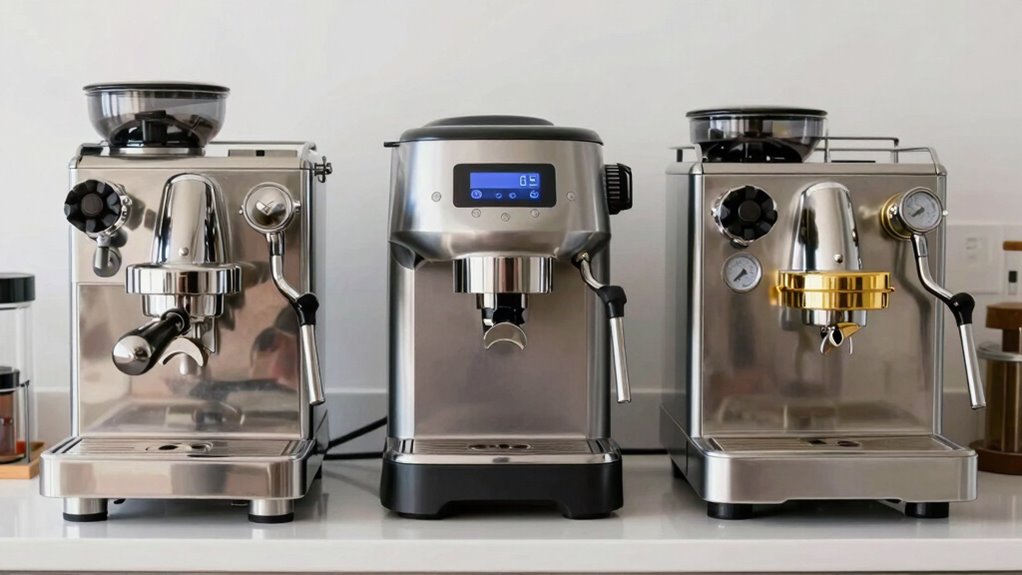
If you’re new to making espresso, you’ll want a machine with a user-friendly interface and simple controls. Automated features can help you brew consistent cups without much effort. These design elements make it easier to enjoy quality espresso with less guesswork. Additionally, choosing a reliable power source ensures your machine operates safely and consistently, preventing interruptions during your brewing process. For added convenience, selecting a machine with easy maintenance can minimize cleaning time and keep your equipment in optimal condition. Moreover, models designed with compact size are often better suited for small spaces and easy to maneuver. Ensuring proper piercing care and hygiene practices can also help maintain your equipment and prevent issues over time. Incorporating proper storage practices can further prolong the lifespan of your espresso machine and ensure optimal performance.
User-Friendly Interface Design
For beginners, choosing an espresso machine with a user-friendly interface can make the difference between enjoying your morning brew and feeling overwhelmed. Look for machines with interface simplicity and intuitive controls that minimize confusion. These machines often feature straightforward buttons or touchscreens that guide you through each step. Clear and accurate labeling of controls helps prevent mistakes and streamlines the brewing process. To find the best fit, consider models with: – Clear, labeled buttons for essential functions – Simple menus that avoid clutter – Easy-to-understand indicators or displays This design approach helps you operate your machine confidently, reducing the learning curve. An intuitive interface allows you to focus on brewing quality coffee rather than deciphering complicated controls. Ultimately, a user-friendly design makes espresso making accessible and enjoyable for everyone, especially beginners.
Automated Coffee Features
Automated coffee features can particularly simplify the espresso-making process, making it especially helpful for beginners. With automatic brewing, you don’t need to worry about precise timing or pressure, as the machine handles these details for you. Many super-automatic machines offer drink customization options, allowing you to select your preferred strength, size, and temperature at the push of a button. This makes it easier to achieve consistent results and experiment with different flavors without much effort. If you’re new to espresso, machines with these features reduce the learning curve and help you craft quality drinks quickly. Overall, automated coffee features streamline the process, giving you more confidence and flexibility as you enjoy your favorite espresso beverages.
How Do Manual Espresso Machines Give You Full Control?

Manual espresso machines give you full control over every step of the brewing process, allowing you to tailor your shot to your exact preferences. With this level of manual control, you can adjust variables like grind size, tamping pressure, and water flow. Your barista skills become essential, as precise technique directly impacts flavor. You decide when to start and stop extraction, giving you the ability to fine-tune each shot. This hands-on approach offers a deeper connection to your brew and the opportunity to develop your skills. Key aspects include:
- Customizing extraction time for ideal flavor
- Adjusting pressure during brewing for consistency
- Monitoring temperature to ensure perfect crema
manual espresso machine techniques play a crucial role in achieving optimal results. Additionally, mastering brewing variables allows you to refine your method and produce consistently excellent espresso, making your barista skills a vital component of the process. Developing proficiency in extraction control can significantly enhance your espresso quality over time.
What Features Matter Most When Choosing an Espresso Machine?
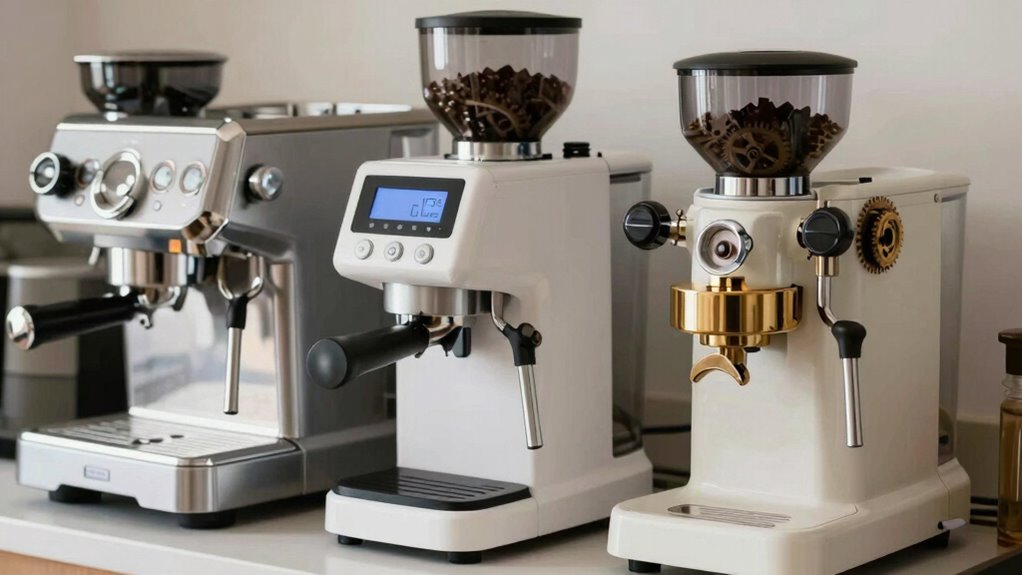
When choosing an espresso machine, focusing on key features guarantees you select one that meets your brewing needs and preferences. Brew strength control is essential, especially if you like customizing your coffee’s intensity. Look for machines that allow you to adjust extraction time or grind size to get your ideal flavor. Water filtration is equally important, as it improves water quality, enhances taste, and prolongs your machine’s lifespan. A built-in water filter or compatibility with external filters can make a significant difference. Consider how easy it is to adjust settings for brew strength and whether the machine supports filtration options. Prioritizing these features ensures you get a consistent, flavorful espresso tailored to your preferences while maintaining your equipment’s longevity.
How Do Maintenance and Cleaning Requirements Vary?
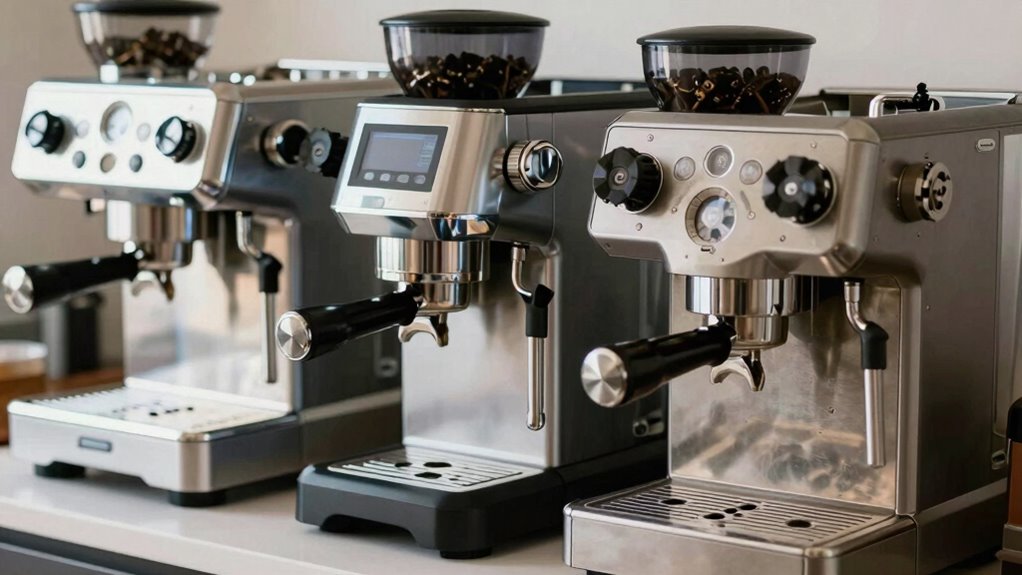
Maintenance and cleaning requirements can vary considerably between different types of espresso machines, affecting how much time and effort you’ll need to keep your equipment in top shape. With semi-auto models, you’ll need to regularly clean the brew group and perform descaling procedures every few months, depending on water hardness. Super-auto machines demand more frequent cleaning of the bean hopper and drip tray, along with automatic cleaning cycles that reduce manual effort. Manual machines often require the most hands-on maintenance, including thorough cleaning of the portafilter and regular descaling. To keep your machine performing *at its best*, consider these factors:
- Cleaning frequency varies based on usage and water quality
- Descaling procedures are essential for longevity
- Regular maintenance minimizes buildup and ensures consistent flavor
- Proper cleaning and maintenance help preserve the performance of your espresso machine over time
Additionally, using appropriate cleaning agents can enhance the effectiveness of your maintenance routine and extend the lifespan of your equipment. Be aware that water quality plays a crucial role in maintenance needs, influencing how often descaling and cleaning should be performed. Regularly inspecting internal components and keeping them free of mineral buildup can also contribute to maintaining optimal machine performance, especially when combined with proper storage practices to prevent dust and debris from affecting delicate parts.
What’s the Best Value for Your Budget? Comparing Different Espresso Machines
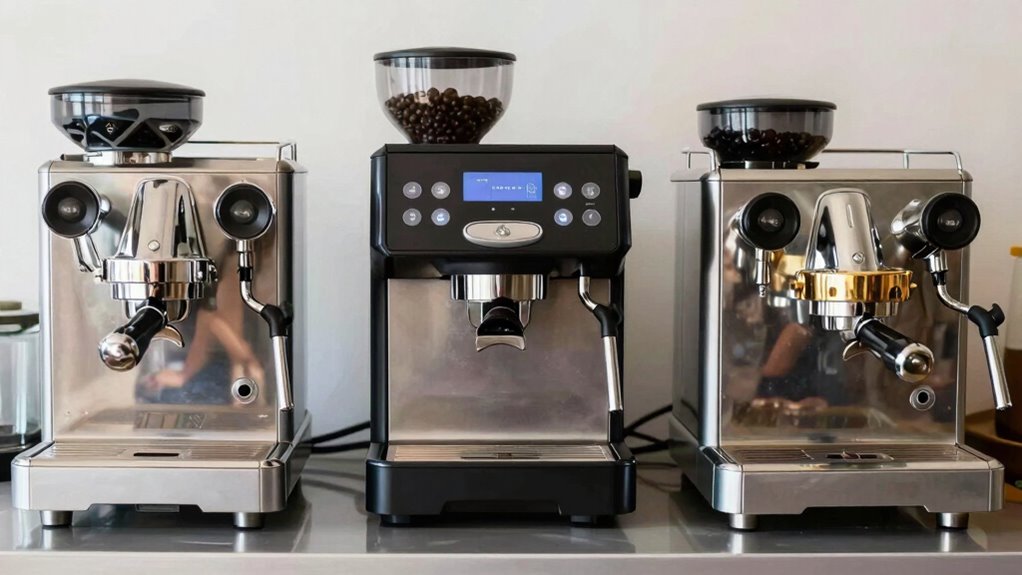
Choosing the right espresso machine depends heavily on your budget and how much value you get for your money. If you’re on a tight budget, semi-auto machines often provide excellent value, allowing you to control extraction while keeping costs reasonable. Investing in a machine with good coffee bean selection options lets you customize flavors easily, enhancing your brew quality. Consider models with integrated water filtration systems to improve water quality and flavor, which can save you money on bottled water and maintenance. Super-automatic machines tend to be pricier but offer convenience and consistency, making them ideal if you prefer quick, hands-off brewing. Manual machines might be less expensive upfront but require skill and maintenance, so weigh these factors to find the best balance between cost, features, and long-term value. Understanding home espresso and coffee grinders can also help you maximize your investment by ensuring optimal grind consistency and flavor extraction. Additionally, exploring maintenance practices can extend the lifespan of your espresso machine and ensure consistently great coffee. Being aware of machine durability can help you choose models that last longer and reduce replacement costs over time.
How to Pick the Right Espresso Machine for Your Brewing Style

Selecting the right espresso machine begins with understanding your brewing style and how hands-on you want to be in the process. If you prefer control over every shot, a manual or semi-auto machine allows you to refine coffee extraction techniques and customize flavors. For convenience and consistent results, a super-automatic offers ease without sacrificing espresso durability or quality. Consider these factors:
- Your comfort with brewing complexity and precision
- The importance of espresso durability for long-term use
- How much control you want over extraction variables
Matching your style ensures you enjoy your coffee routine without frustration. Think about whether you enjoy experimenting or value quick, reliable shots—this will guide you toward the machine that best fits your preferences and skill level. Additionally, understanding the different espresso machine types can help you make an informed decision aligned with your passion for Italian espresso.
Final Tips for Maintaining and Using Your Espresso Machine
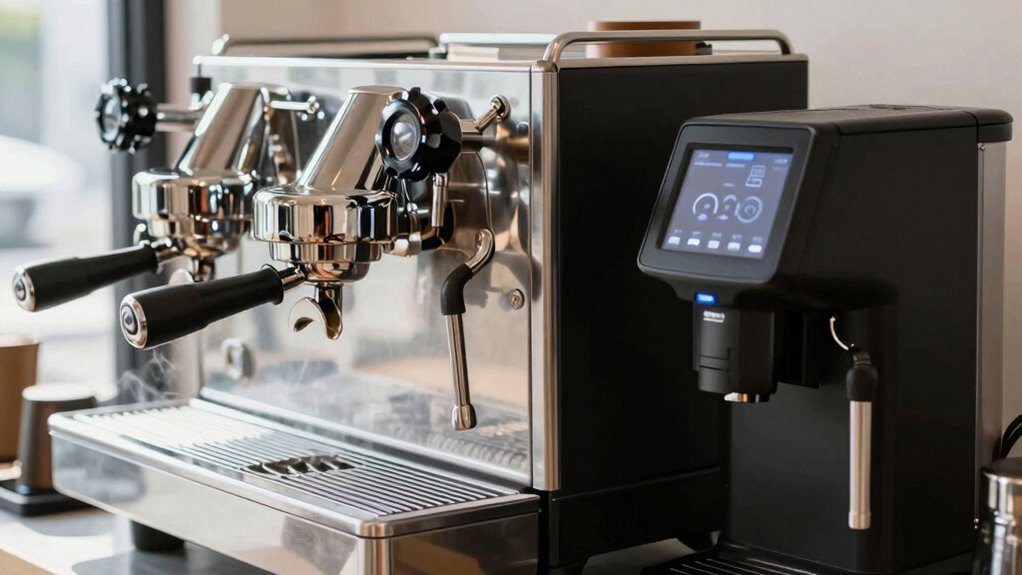
Once you’ve found the perfect espresso machine for your brewing style, keeping it in top condition guarantees it continues to perform at its best. Regularly check your coffee grind; a consistent, fine grind ensures ideal extraction. Avoid over- or under-packed filters, which can affect flavor. Pay attention to water temperature, as it influences the strength and taste of your espresso—aim for around 195-205°F. Clean your machine daily, including the portafilter and steam wand, to prevent buildup. Descale periodically to remove mineral deposits, especially if you have hard water. Always use fresh water and proper cleaning products designed for espresso machines. Proper maintenance not only extends your machine’s lifespan but also guarantees each shot tastes as good as the first.
Frequently Asked Questions
Can I Make Espresso Without a Traditional Machine?
Yes, you can make espresso without a traditional machine using handheld espresso devices or portable brewing options. Handheld espresso makers allow you to brew a shot directly into your cup, perfect for travel or quick fixes. Portable brewing devices, like AeroPress or portable espresso makers, offer convenience and quality. These methods are great if you want fresh espresso on the go without investing in a full-sized machine.
What Are the Energy Consumption Differences Among Machine Types?
You’ll find that super-auto machines tend to have higher power consumption due to their integrated features, making them less energy-efficient. Semi-auto models usually consume less power because they require manual control, allowing you to manage energy use. Manual machines are typically the most energy-efficient since they lack electronic components. If energy efficiency matters to you, opt for a manual or semi-auto, but remember that super-auto offers convenience at a higher power consumption.
Are There Specific Brands Known for Durability?
You’ll be blown away by brands like La Marzocco and Rancilio, known for their legendary durability. Their reputation for building models that last decades is unmatched, turning your investment into a lifelong coffee companion. These brands’ model longevity is truly extraordinary, giving you confidence that your espresso machine will perform flawlessly through countless mornings. If durability’s your top priority, these names are your best bet for a reliable, long-lasting brew.
How Do Water Quality and Hardness Affect Machine Performance?
Water quality and hardness notably impact your espresso machine’s performance. Hard water with high mineralization causes scale buildup, which can clog components and reduce efficiency. You should regularly descale your machine to prevent mineral deposits from forming. Using filtered or softened water helps maintain ideal performance, extends the machine’s lifespan, and preserves the quality of your espresso. Prioritize water quality and descaling to keep your machine running smoothly and consistently.
Is It Possible to Upgrade Parts on Semi-Auto or Manual Machines?
Yes, you can upgrade parts on semi-auto or manual machines. Many models offer part replacement options, allowing you to enhance performance or fix issues without buying a new machine. While some upgrades involve simple replacement, others may require technical skills. Don’t worry—manufacturer support often provides the necessary guidance. Upgrading is a smart way to extend your machine’s lifespan and customize your brewing experience, making it more enjoyable and tailored to your needs.
Conclusion
Choosing the right espresso machine is like finding the perfect dance partner—once you match your style and skill level, every brew becomes a smooth performance. Whether you prefer the hands-on control of a manual or the convenience of a super-automatic, understanding your needs guarantees your coffee ritual stays enjoyable. With the right machine by your side, you’ll turn each cup into a masterpiece—making every morning feel like a well-choreographed dance.