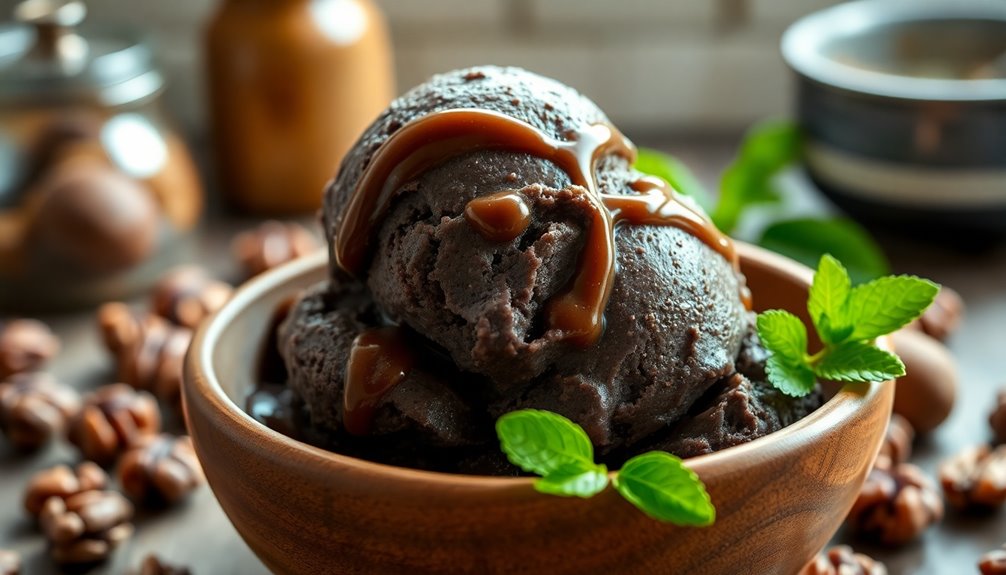

To taste chocolate like a pro, start by examining its aroma to identify initial notes, then let it melt slowly on your palate to experience evolving flavors. Pay attention to the texture and aftertaste, spotting subtle differences in bitterness, creaminess, or fruitiness. Customize your experience by pairing chocolates with complementary ingredients like nuts or fruits, and experiment with contrasting flavors such as spicy chili or floral infusions. Keep exploring, and you’ll uncover even more of chocolate’s hidden depths.
Key Takeaways
- Examine aroma, texture, and aftertaste to analyze the chocolate’s flavor profile thoroughly.
- Recognize different chocolate types by their origin, cocoa content, and processing methods.
- Use contrasting and complementary pairings, like spices or fruits, to enhance tasting and reveal nuanced flavors.
- Engage all senses actively during tasting to identify subtle flavor notes and develop palate sensitivity.
- Experiment with flavor combinations and note how accompaniments influence the chocolate’s taste experience.
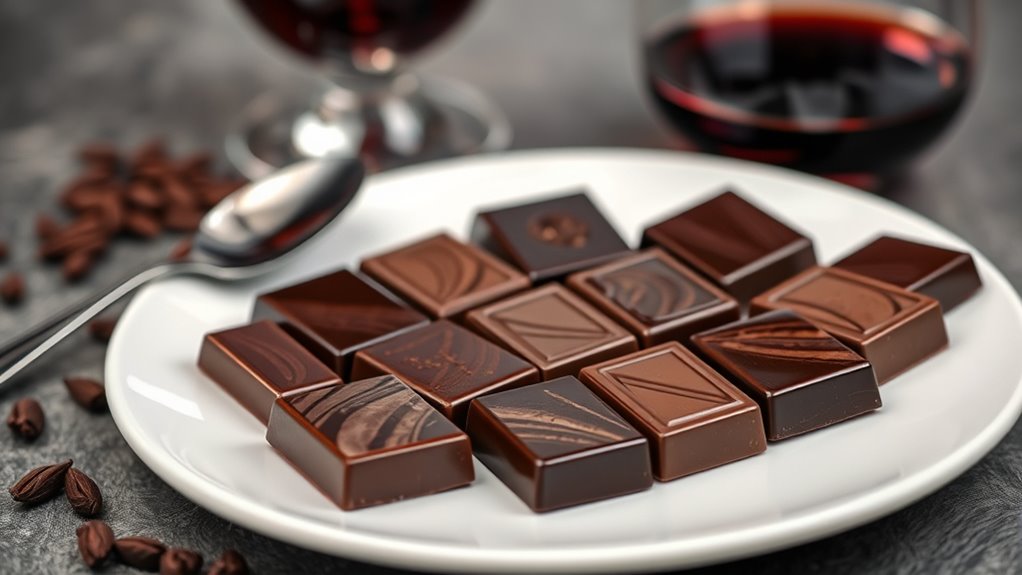
Ever wondered how to truly appreciate the complex flavors of fine chocolate? It’s not just about tasting; it’s about understanding the nuances, the subtle notes that make each piece unique. To do this like a pro, you need to explore pairing techniques that highlight the chocolate’s flavor profiles. The right accompaniments can transform your tasting experience, revealing depths you might have missed before. Start by considering the chocolate’s origin, cocoa content, and processing methods. Dark chocolates with higher cocoa percentages tend to have more intense, bitter notes, while milk chocolates often offer creamier, sweeter flavors. White chocolates, on the other hand, showcase buttery and vanilla undertones. Recognizing these differences sets the foundation for effective pairing techniques.
Next, think about the flavor profiles that complement each type of chocolate. For darker chocolates, try pairing with elements that balance or enhance their bitterness—like a splash of red wine, a dash of sea salt, or even dark coffee. These pairings intensify the chocolate’s richness and bring out hidden layers. Milk chocolates, with their softer, sweeter profile, work well with mild fruits such as strawberries or bananas, or even nutty flavors like hazelnuts and almonds. White chocolates shine when paired with citrus fruits or tropical flavors like mango or pineapple, which cut through their creamy sweetness and add a zing of freshness.
As you refine your tasting skills, experiment with contrasting and complementary flavor combinations. For instance, a pinch of chili or spices can add a surprising kick to dark chocolate, emphasizing its robustness. Conversely, pairing chocolate with delicate floral notes like jasmine or lavender can elevate the experience, exposing more complex floral and fruity undertones in the chocolate. Using proper tasting techniques such as examining aroma and texture enhances your ability to identify the nuanced flavor profiles more precisely. Use your senses actively: smell the aroma before tasting, notice how the flavors evolve on your palate, and pay attention to the aftertaste. This multisensory approach helps you identify the flavor profiles more precisely.
Frequently Asked Questions
What Are the Best Chocolates for Beginners?
If you’re new to chocolate tasting, start with milk chocolates and smooth, creamy varieties, as they’re easier to appreciate. Use pairing techniques like matching chocolates with fruits or nuts to enhance flavors. Follow tasting etiquette by letting chocolates melt slowly on your tongue and savoring each bite. This approach helps you identify subtle notes and enjoy the experience, building confidence as you explore more complex dark and artisanal chocolates later on.
How Can I Identify Quality Chocolate?
To identify quality chocolate, start by checking the bean origin, which influences flavor complexity. Look for a smooth, glossy surface—indicating good cocoa processing—and minimal blemishes. Read the ingredient list; high-quality chocolates list cocoa mass, cocoa butter, and sometimes vanilla, without added fillers or artificial ingredients. The aroma should be rich and inviting. Tasting and smelling are key to discerning fine cocoa processing and authentic bean origins.
What’s the Ideal Temperature for Tasting Chocolate?
You should aim for around 70°F (21°C) when tasting chocolate—anything cooler and you’ll miss its true complexity. Think of it as chocolate’s perfect “dress code.” Proper chocolate storage guarantees it stays at this ideal temp, preserving flavor. Master tasting techniques like letting it melt on your tongue. If your chocolate’s too cold, flavors hide like a shy introvert; too warm, and they melt away into a mess.
How Do Different Cacao Percentages Affect Flavor?
You’ll notice that higher cacao content, like 70% or more, brings out a richer, more intense flavor, often with bitter or earthy notes. Lower percentages, such as 50%, tend to be sweeter and milder. By paying attention to the cocoa content, you can better understand the flavor profile, whether you prefer the boldness of dark chocolate or the smoothness of milk chocolate. Adjust your tasting to discover your favorite cacao percentage.
Are There Health Benefits to Chocolate Tasting?
Chocolate tasting can boost your health, thanks to its caffeine content and antioxidant properties. You might find yourself feeling more alert and energized, while antioxidants help fight free radicals, supporting overall wellness. By savoring different chocolates mindfully, you can maximize these benefits. So, indulge in this delightful, delicious activity, knowing that each tasting session not only satisfies your senses but also potentially promotes your health and happiness.
Conclusion
Now that you’ve learned to taste chocolate like a pro, imagine yourself as a sommelier, savoring each note and nuance. I once watched a novice swirl a piece of dark chocolate, surprised how it revealed complex flavors similar to a fine wine. Remember, chocolate tasting is a journey, not a race. With practice, you’ll discover hidden layers, turning every bite into a delightful adventure. Embrace the process and enjoy the rich world of chocolate—your palate’s new best friend.

Born in Dubai to Pakistani parents, Aisha deeply understands Middle Eastern and South Asian luxury markets. She excels in forging strategic partnerships with top-tier luxury brands worldwide, fostering cross-cultural collaborations that enhance our global presence.