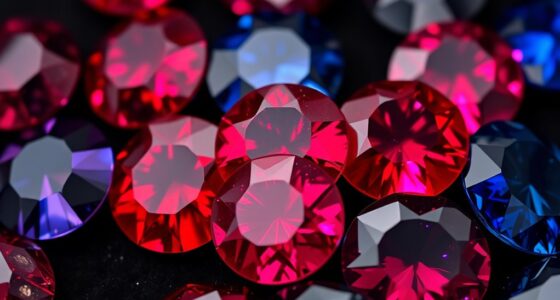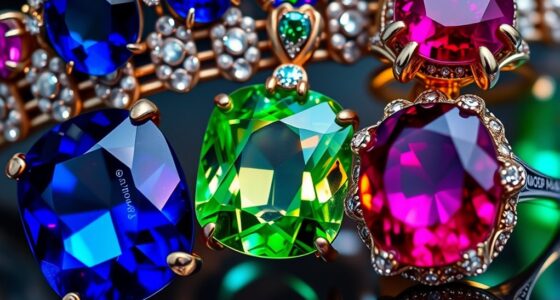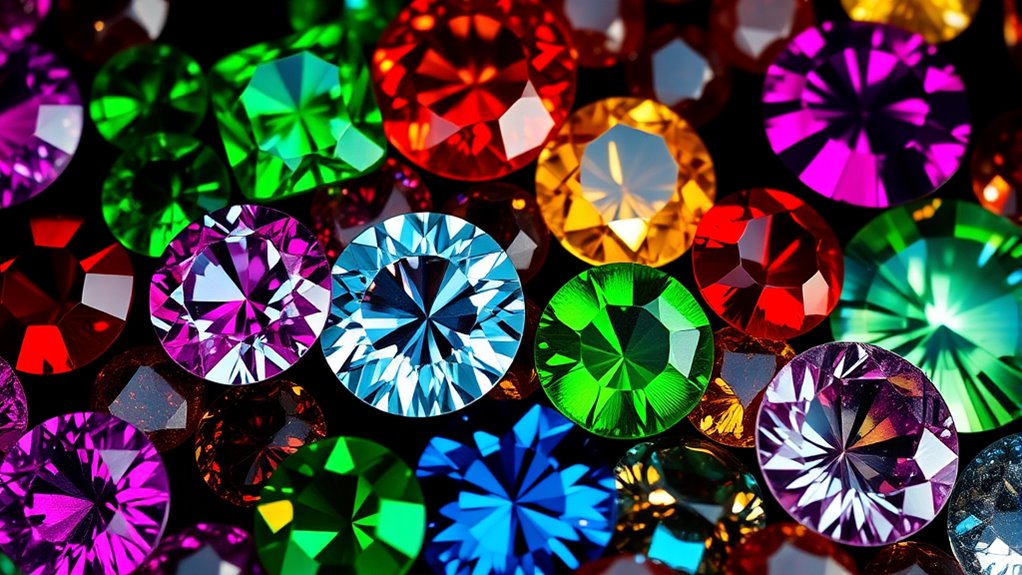

The language of color in gemstones speaks volumes beyond their beauty, conveying emotions, symbolism, and cultural meanings. For example, red stones like rubies symbolize passion, while blue sapphires represent wisdom and loyalty. Green gemstones suggest growth, and purple stones relate to spirituality. Understanding these colors helps you choose jewelry that aligns with your intentions and personal stories. Keep exploring to discover how different hues deepen your connection with these meaningful gems.
Key Takeaways
- Gemstone colors serve as a visual language conveying emotions, symbolism, and cultural meanings.
- The hue of a gemstone influences its perceived value and the message it communicates.
- Different colors in gemstones symbolize qualities like passion, wisdom, growth, or spirituality.
- Cultural and personal associations with colors deepen the symbolic significance of gemstones.
- Understanding gemstone color symbolism enhances personal connection and appreciation of jewelry.
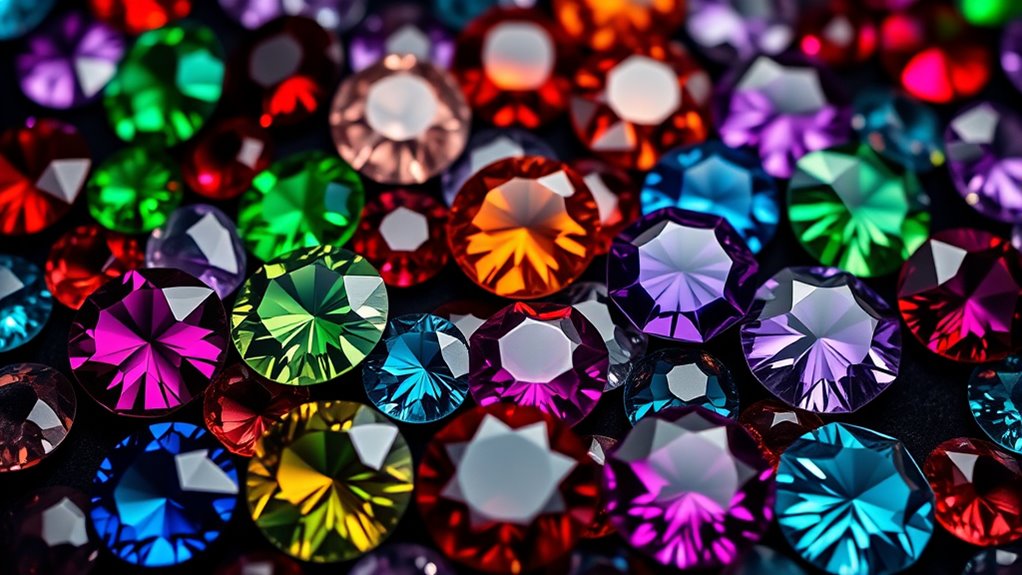
Color plays a pivotal role in how we perceive and value gemstones, conveying meaning and symbolism that goes beyond their beauty. When you look at a vibrant ruby or a calming sapphire, you’re not just admiring their aesthetic appeal—you’re also interpreting the messages their colors send. This is where color symbolism comes into play, shaping our understanding of a gemstone’s significance and personal meaning. The hue of a gemstone isn’t arbitrary; it carries a language that can express love, passion, tranquility, or protection, depending on its color. Recognizing gemstone hue significance helps you connect more deeply with the jewelry you choose or gift, as each color can symbolize different emotions or intentions.
Colors in gemstones convey deep symbolism, expressing love, passion, tranquility, and protection beyond their visual beauty.
Red gemstones, like rubies, symbolize passion, energy, and vitality. Their fiery hue often signifies love and courage, making them popular choices for romantic gifts or tokens of admiration. On the other hand, blue gemstones, such as sapphires, are associated with wisdom, serenity, and loyalty. Their cool tones evoke calmness and trust, making them ideal for meaningful milestones like weddings or anniversaries. Green gemstones, including emeralds, represent growth, renewal, and harmony, often linked to health and prosperity. Their lush hue speaks to nature’s vitality, giving them a grounding presence in jewelry pieces meant to inspire balance.
The significance of gemstone hue extends further into cultural and spiritual contexts. For instance, yellow or golden stones like topaz or citrine are thought to bring happiness and abundance. Purple gemstones like amethyst have long been associated with spirituality, intuition, and protection. The specific shade—whether a deep violet or a soft lavender—can influence the message it conveys, underscoring the importance of hue in the gemstone’s overall symbolism. When you select a gemstone, understanding its hue significance allows you to choose one that aligns with your intentions or the sentiments you wish to express. Additionally, the cultural associations of certain colors can deepen their meaning and significance in different traditions and beliefs.
In essence, the color of a gemstone is more than skin deep; it’s a language that communicates on an emotional and symbolic level. Every shade has its own story and significance, influencing how you perceive its value and what it represents. Whether you’re drawn to the passionate redness, calming blues, or growth-inspired greens, knowing the color symbolism behind a gemstone enhances your appreciation and connection. It transforms a beautiful stone into a meaningful emblem of your personal story, beliefs, or aspirations. So, next time you admire a gemstone’s hue, remember it’s speaking a language rich with symbolism and significance, waiting for you to interpret its message.

LPBeads 4mm Ruby Jade Tiny Beaded Bracelets For Women, Energy Gem Charm Jewelry Adjustable Bracelet Gifts for Mom, Daughter, Wife, Coworkers, Friends, Bestie
- Material: 4mm Ruby Jade and stainless steel beads
- Size: 7.5 inches with 1.5-inch extension
- Comfort: Lightweight and comfortable for daily wear
As an affiliate, we earn on qualifying purchases.
As an affiliate, we earn on qualifying purchases.
Frequently Asked Questions
How Does Lighting Affect Gemstone Color Perception?
Lighting profoundly impacts how you perceive a gemstone’s color. When light intensity is high, the gemstone’s true color becomes more vivid and vibrant. Conversely, lower light levels may dull or alter its appearance. Additionally, color temperature matters; warm lighting enhances golden tones, while cool lighting emphasizes blue or green hues. You should view gemstones under different lighting conditions to truly appreciate their color and find the best lighting for their display.
Can Gemstone Color Change Over Time?
Yes, gemstone color can change over time, though it’s usually subtle. While some stones maintain their color stability, others may fade or shift due to environmental factors. Treatments like heating or irradiation can enhance or alter color permanently, but untreated stones tend to stay consistent. You should regularly care for your gemstones to preserve their vibrant hues, knowing that both natural qualities and treatments influence how their colors evolve over years.
What Causes Color Zoning in Gemstones?
Color zoning occurs because of variations in mineral inclusions or changes in chemical composition during gemstone formation. You’ll notice it as different color intensities or patterns within the stone. These zones form when conditions like temperature, pressure, or mineral content fluctuate, causing uneven distribution of color-causing elements. Mineral inclusions can also influence zoning, creating distinct layers or patches that give the gemstone its unique appearance.
Are There Synthetic Gemstones With Authentic Color Qualities?
Yes, you can find synthetic gemstones with authentic color qualities. These gems often mimic natural colors through advanced manufacturing, ensuring authenticity in hue and tone. While some use color enhancement techniques, truly synthetic gemstones can replicate the vividness, saturation, and subtle color variations of natural stones. This makes it possible for you to enjoy stunning, genuine-looking gems that are ethically sourced and often more affordable than their natural counterparts.
How Do Cultural Differences Influence Gemstone Color Symbolism?
Cultural differences greatly influence gemstone color symbolism, shaping how you interpret their meanings. In some cultures, red symbolizes passion and luck, while in others, it represents danger or warning. Regional preferences also dictate popular gemstone colors, with certain hues favored for rituals, status, or beauty standards. By understanding these cultural symbols, you can better appreciate the significance of gemstone colors across diverse societies and personalize your jewelry choices accordingly.
Conclusion
Understanding the language of color in gemstones helps you truly appreciate their beauty and meaning. Just like a painter’s palette, each hue tells a story and evokes emotion. When you recognize these subtle shades, you connect more deeply with your gemstone, making it more than just a jewel—it becomes a vibrant expression of nature’s artistry. So, next time you admire a gemstone, see it as a colorful poem waiting to be read.

Born in Dubai to Pakistani parents, Aisha deeply understands Middle Eastern and South Asian luxury markets. She excels in forging strategic partnerships with top-tier luxury brands worldwide, fostering cross-cultural collaborations that enhance our global presence.