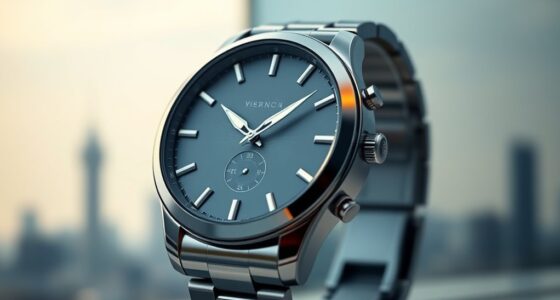
Magnetism can affect your watch’s accuracy because magnetic fields from everyday electronics or magnetic clasps can magnetize its metal parts. When your watch’s internal components, especially the delicate hairspring or balance wheel, become magnetized, it may run fast, slow, or stop altogether. To prevent or fix this, you can have it demagnetized professionally. Want to understand how magnetism interacts with your watch and how to keep it accurate? Keep exploring to learn more.

Get your wardrobe favorites delivered free — and shop member deals
- Fast, free delivery on millions of items
- Access to Prime Big Deal Days deals on October 6–7
- Prime Video, Amazon Music and more included
Key Takeaways
- Metal watch cases can become magnetized from exposure to magnetic fields, affecting internal components.
- Magnetization causes the watch to run inaccurately, either fast, slow, or stopping altogether.
- Common sources include electronic devices, magnetic clasps, and household electronics.
- Demagnetization by professionals neutralizes magnetic fields, restoring watch accuracy.
- Using non-magnetic materials or protective measures helps prevent magnetization issues.

Have you ever wondered how magnetism can affect your watch? It’s a common question, especially since many modern watches feature metal cases that can interact with magnetic fields. When your watch is exposed to magnetic fields—whether from everyday electronics, speakers, or even magnetic clasps—the metal case can become magnetized. This magnetization, in turn, influences the delicate internal components, particularly the movement, which is highly sensitive to magnetic interference.
Your watch’s metal case acts as a shield but can also be a magnet’s magnet. Metal, especially ferromagnetic materials like steel, can easily become magnetized when exposed to magnetic fields. Once magnetized, the case can attract or retain magnetic flux, creating a persistent magnetic field around the watch. This magnetic field can extend inward, affecting the movement’s balance wheel and hairspring. When these parts are influenced by magnetism, your watch might start to run fast, slow, or even stop altogether. The more powerful the magnetic field, the greater the risk of disturbance.
In daily life, magnetic fields are everywhere, from the magnetic clasps on handbags and wallet magnets to the speakers of your smartphone or tablet. If your watch’s metal case comes into contact with these sources, it can pick up magnetism over time. That’s why many watchmakers design cases with non-magnetic materials or incorporate protective elements to guard against magnetic interference. Still, even a seemingly harmless magnetic field from a nearby electronic device can cause your watch to lose accuracy or behave unpredictably.
Once magnetized, your watch’s internal parts might need a professional demagnetization. This process involves exposing the watch to a controlled magnetic field that neutralizes the residual magnetism. Without this step, your watch can continue to be affected, leading to inconsistent timekeeping. To prevent this, keep your watch away from strong magnetic sources, especially if it has a metal case that’s more susceptible to magnetization. If you notice your watch is running fast or slow, especially after exposure to magnetic environments, it’s a good idea to have it checked and demagnetized. Additionally, some modern watches incorporate anti-magnetic materials to help resist such influences and maintain accuracy.
As an affiliate, we earn on qualifying purchases.
Frequently Asked Questions
Can Magnetism Affect Smartwatch Functions Differently Than Traditional Watches?
Yes, magnetism can impact your smartwatch differently than traditional watches. Smartwatch sensitivity to magnetic fields is higher because of their electronic components, which can interfere with sensors and connectivity. This magnetism impact might cause your device to malfunction, misread data, or lose signals. Unlike traditional watches, which are usually non-electronic, your smartwatch’s electronic parts are more vulnerable to magnetic interference, so keep it away from strong magnets.
Are There Specific Materials in Watches More Vulnerable to Magnetic Interference?
Certain materials in watches, especially those containing magnetic materials like soft iron or certain alloys, are more vulnerable to magnetic interference. If your watch has a steel or metal watch case made from magnetic materials, it’s more susceptible to magnetism, which can disrupt its accuracy. To protect your watch, choose a case made of non-magnetic materials like titanium or ceramics, and keep it away from strong magnetic sources.
How Can I Test if My Watch Has Been Magnetized?
Imagine your watch as a tiny compass spun out of control. To test if it’s magnetized, you can perform a magnetic field detection by bringing a small magnet close to it—if the watch’s hands jump or stick, it’s magnetized. For reassurance, use watch demagnetization techniques like a demagnetizer. This process realigns internal components and restores accuracy, ensuring your watch keeps time as steady as a lighthouse beam.
Does Exposure to Magnetic Fields Harm My Watch’s Internal Components Long-Term?
Exposure to magnetic fields can harm your watch’s internal components over time, especially if it’s not protected by magnetic shielding. Magnetic fields can cause parts like the balance wheel or hairspring to stick or become misaligned, affecting accuracy. To prevent long-term damage, keep your watch away from strong magnets and consider professional magnetic shielding if you frequently encounter magnetic environments. Regular checks can also help guarantee your watch remains in good condition.
Are Certain Activities More Likely to Magnetize My Watch Than Others?
Like a modern-day Indiana Jones, you’re more likely to magnetize your watch during activities involving metal detectors or close contact with electronic devices. These activities expose your watch to strong magnetic fields, similar to a magnetic storm in a science fiction novel. Regularly, metal detectors and electronic devices generate magnetic fields that can influence your watch’s internal components. Be cautious during these activities to avoid unintended magnetization.
Conclusion
Remember, a little knowledge goes a long way. While magnetism can affect your watch, understanding how to protect it keeps you ticking smoothly. Keep your watch away from strong magnetic fields, and you’ll avoid unnecessary repairs. As the saying goes, “An ounce of prevention is worth a pound of cure.” Stay mindful of your environment, and your watch will serve you faithfully for years to come. After all, taking care of small details makes a big difference.
Fall Picks
fall essentials
As an affiliate, we earn on qualifying purchases.