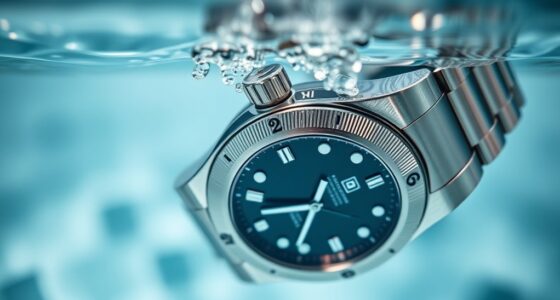
Choosing the right straps and bracelets depends on your style, activity, and comfort needs. Leather adds a classic touch but requires care, while rubber or silicone offers durability and easy maintenance for active use. Metal bracelets are sturdy and stylish but can be heavier, so your fit should be snug but comfortable. Adjustable features help you find the perfect fit, enhancing both comfort and appearance. Keep exploring for tips on selecting the best materials and fit for you.
Key Takeaways
- Match strap material and style with watch face design for a personalized look and enhanced outfit coordination.
- Choose durable materials like silicone or rubber for active use, and handle leather carefully to prevent damage.
- Metal bracelets, such as stainless steel or titanium, offer longevity and a polished appearance but may be heavier.
- Adjust straps for a snug, comfortable fit to prevent slipping and ensure optimal aesthetic appeal.
- Consider material interactions with skin and environment to select long-lasting straps suited to your lifestyle.
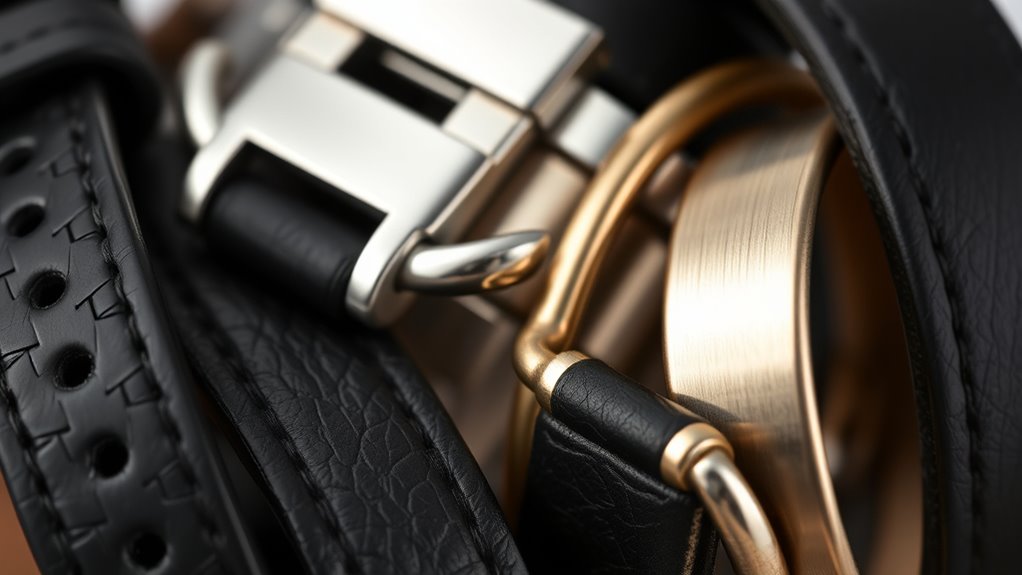
Straps and bracelets are versatile accessories that can instantly elevate your style and express your personality. When choosing the right piece, it’s essential to take into account the watch face styles you prefer, as they influence the overall look. Whether you lean toward classic, modern, or sporty designs, your strap can make a significant difference in how your watch complements your outfit. For example, sleek leather straps pair beautifully with traditional dress watches, adding a touch of sophistication. On the other hand, rubber or nylon straps tend to go well with casual or sport watches, emphasizing comfort and practicality.
Choose straps that match your watch face style for a perfect, personalized look.
One key aspect to keep in mind is strap material durability. Not all materials are created equal, and your choice impacts how long your accessories last and how well they withstand daily wear and tear. Leather straps, for instance, offer timeless elegance but require more care. They can develop a beautiful patina over time, adding character, but they’re also susceptible to water damage and sweat. If you’re active or often exposed to moisture, a silicone or rubber strap might be a better option due to their high resilience and ease of cleaning. Metal bracelets, such as stainless steel or titanium, provide excellent durability and a polished look that can endure harsh conditions, but they can also be heavier and might cause discomfort if not properly fitted.
Adjusting the fit of your straps and bracelets is equally important for comfort and style. A snug fit ensures your watch stays in place without feeling restrictive, while too loose can lead to slipping and distraction. Many straps come with adjustable features, like multiple holes in leather or fabric designs or links in metal bracelets, making it easier to customize the fit precisely. When selecting a strap material, think about not only its durability but also how it interacts with your skin and daily activities. For example, some materials might cause irritation or wear down faster when exposed to sweat or sunlight. Additionally, understanding the importance of material durability can help you choose accessories that last longer and perform better over time. Ultimately, your choice of strap and bracelet should reflect your lifestyle and personal style. Think about the watch face styles you favor and how different materials align with your needs. A durable, comfortable strap that complements your watch face can transform your look and boost your confidence. It’s worth investing in quality materials and adjustable features to get a perfect fit that lasts. In the end, selecting the right strap isn’t just about functionality; it’s about making a statement and showcasing your unique personality through a well-chosen accessory.

BISONSTRAP Watch Strap 18mm, Vintage Leather Replacement Watch Band, Brown
SIZE SELECTION: Available in 14mm 15mm 16mm 17mm 18mm 19mm 20mm 21mm 22mm 23mm and 24mm, please accurately…
As an affiliate, we earn on qualifying purchases.
As an affiliate, we earn on qualifying purchases.
Frequently Asked Questions
How Do I Measure My Wrist for the Perfect Fit?
To measure your wrist for the perfect fit, start by using a flexible measuring tape or a piece of string. Wrap it around your wrist where you want the strap to sit, ensuring it’s snug but not tight. Mark the spot and then measure the length with a ruler. Use this wrist measurement to determine your strap sizing, making sure your bracelet or watch fits comfortably without slipping or feeling too tight.
Are Leather Straps Suitable for Swimming or Water Exposure?
Think of leather straps as delicate whispers of elegance, not meant for water’s embrace. Water-resistant leather offers some protection but isn’t designed for swimming or heavy water exposure. If you wear leather near water, it’s like inviting a storm into your jewelry box. To keep it shining, follow leather care tips like avoiding prolonged water contact, cleaning gently, and conditioning regularly. Your leather will thank you with lasting beauty.
Can I Mix Different Materials on One Bracelet or Strap?
Yes, you can mix different materials on one bracelet or strap for style mixing and unique looks. Just make certain the materials are compatible and won’t cause damage or discomfort. For example, combining leather with metal or silicone can create a versatile accessory. Be mindful of how different materials wear over time, and choose combinations that complement your style while maintaining durability and comfort.
How Often Should I Replace or Adjust My Watch Strap?
Think of your watch strap like a trusted friend—sometimes, it needs a break. Generally, you should replace or adjust your strap every 1-2 years, depending on wear and tear. If it feels loose, shows signs of cracking, or loses its shine, it’s time for a change. Regularly checking your strap’s condition guarantees your watch stays secure and stylish, optimizing its longevity and your comfort.
What Are the Best Cleaning Methods for Different Strap Materials?
For watch strap maintenance, cleaning tips vary by material. Leather straps should be wiped with a damp cloth and conditioned occasionally, avoiding water. Metal bracelets can be cleaned with a soft brush and mild soap, then rinsed and dried thoroughly. Rubber or silicone straps are best cleaned with warm water and gentle soap, ensuring they dry completely to prevent mold. Regular cleaning keeps your straps looking new and extends their lifespan.

Sport Silicone Band Compatible with Apple Watch Bands 40mm 38mm 41mm 44mm 45mm 42mm 49mm Women Men,Soft Wristband Waterproof Replacement Sport Strap for iWatch Bands Series 9 8 7 6 5 4 3 2 1 SE Ultra
【Fit All Models】SuperNaNa Sport silicone watch band compatible with apple watch bands 40mm 38mm 42mm 44mm 41mm 45mm…
As an affiliate, we earn on qualifying purchases.
As an affiliate, we earn on qualifying purchases.
Conclusion
Choosing the right straps and bracelets isn’t just about style; it’s about harmony—between your wrist and your accessories. When materials and fit align perfectly, your look becomes a seamless expression of you. So, trust your instincts, select wisely, and wear your pieces with confidence. After all, the right accessory isn’t just an addition—it’s the beat that completes your unique rhythm, turning everyday moments into a symphony of style.

Stainless Steel Mesh Bracelet Wristband 8mm Wide Cuff Bangle Watch Band Style with Adjustable Buckle Mesh Link Chain for Slide Charms Jewelry Making 2 PCS (Silver)
Material: The mesh bracelet made of stainless steel
As an affiliate, we earn on qualifying purchases.
As an affiliate, we earn on qualifying purchases.

JOREST Watch Link Removal Kit, Resizing Tool for Bracelet Adjustment & Replacement, Pin Remover for Sizing Strap, Watch Adjuster, Hammer for Watch Repair, Adjust Band, with User Manual, Punches
【Liftable platform】The liftable platform is designed for better alignment of the punch pin and the watch link pin…
As an affiliate, we earn on qualifying purchases.
As an affiliate, we earn on qualifying purchases.

Born in Dubai to Pakistani parents, Aisha deeply understands Middle Eastern and South Asian luxury markets. She excels in forging strategic partnerships with top-tier luxury brands worldwide, fostering cross-cultural collaborations that enhance our global presence.